
Sports
Afghanistan ease to victory after South Africa fold for 106

England. Pakistan. Sri Lanka. New Zealand. Australia. And now South Africa.
That is a list of teams Afghanistan have beaten in white-ball internationals in the last 11 months.
The first three of those results came in ODIs at last year’s 50-over World Cup, which secured Afghanistan’s automatic qualification for next year’s Champions Trophy. The last two were at this year’s T20 World Cup, where Afghanistan reached the semi-finals. In between, there was a T20I win over Sri Lanka and now, there is an ODI win over South Africa, in the first meeting the two teams have had outside of World Cups.
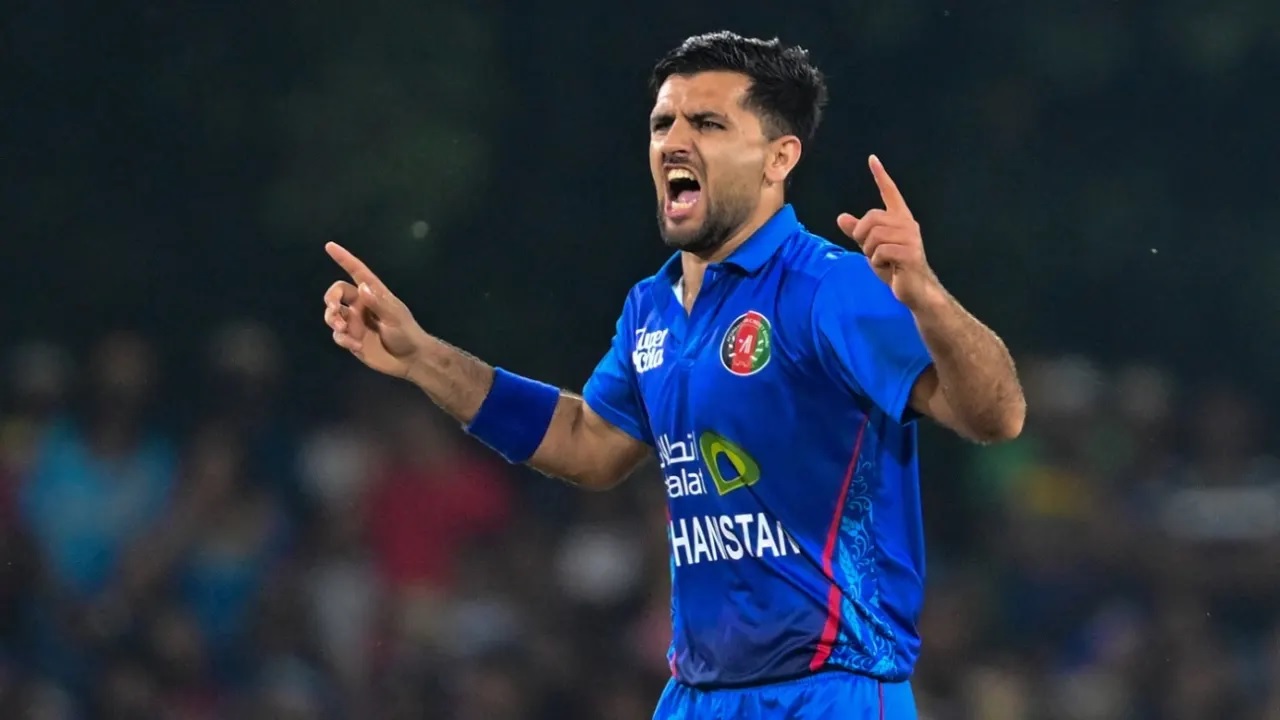
Afghanistan’s opening bowlers, Fazalhaq Farooqi and AM Ghazanfar, stunned South Africa in the powerplay and reduced them to their worst start in ODIs: 36 for 7 after ten overs. A 39-run eighth-wicket stand between Wiaan Mulder and Bjorn Fortuin ensured South Africa escaped being bowled out for their lowest ODI total – 69 – but they were still shot out for the lowest score by a top-ten ranked team against Afghanistan on a slow and dry surface.
Afghanistan have never failed to chase a score below 130 and although they did find run-scoring easy early on, they were not about to end that record. From 38 for 3 in the 14th over, Hashmatullah Shahidi steadied them before a fifth-wicket partnership of 47 between Azmatullah Omarzai and Gulbadin Naib off 48 balls took them to a massive win. Afghanistan polished off the total with 24 overs to spare.
The margin underlines their dominance from the opening exchanges. Farooqi, whose first 11 deliveries cost 14 runs, decided to change his angle from over to around the wicket and it worked a charm. The final ball of his second over was well wide of Reeza Hendricks, but the South African opener reached for it anyway and played on. At the end of Farooqi’s next over, Aiden Markram, who was standing in as captain in place of an ill Temba Bavuma, went exactly the same way. In his next over, Farooqi picked up his third wicket when Tony de Zorzi top-edged a pull to Shahidi at midwicket.
At the other end, Ghazanfar, playing in just his third ODI, had to wait a little longer – until the first ball of his fourth over – for success. Tristan Stubbs, his own ODI career only two ODI matches old, tried to push Ghazanfar to mid-off but edged to slip instead. Five balls later, Jason Smith was beaten by turn as he tried to defend and was bowled. South Africa’s difficulties reading Ghazanfar continued when Kyle Verreynne did not anticipate the turn back into him and was hit on the pad. He reviewed the on-field umpire’s out decision, but it was upheld on umpire’s call.
Andile Phehlukwayo saw off four Ghazanfar balls, and survived an lbw appeal, but then wandered out of his crease while the ball was still alive and was run out by a game-aware Gulbadin Naib. And that is how South Africa slipped to 36 for 7.
Fortuin started the counterattack with two boundaries off Rashid Khan’s third over as South Africa limped towards 50. They got there in the 16th over. Then it was over to Mulder, who was the most assured player of spin in his side, albeit the bar was not particularly high. Mulder hit the only six of the innings off Rashid over long-off, brought up South Africa’s hundred with a pull over midwicket and his half-century off 80 balls. When he became Farooqi’s fourth – and final – victim, in the 33rd over, South Africa’s innings was all but over. They were bowled out inside 34 overs with plenty of questions over their approach.
They will also want to consider the composition of their attack, which included only one specialist spinner in Fortuin, to Afghanistan’s three. Still, they seamers made early incisions. Lungi Ngidi had Rahmanullah Gurbaz caught at deep third off the third ball of the innings to put Afghanistan in early trouble. Ngidi and Nandre Burger kept Afghanistan quiet for most of the first seven overs – and Ngidi thought he had Rahmat snaffled down the leg side and reviewed but replays showed the ball hit his pad – and the pressure told. When Fortuin was introduced in the eight over, Rahmat missed a sweep off a full, flighted ball and was out lbw.
Afghanistan’s first boundary came after that when Riaz Hasan pulled a Burger short ball over backward square leg. Burger was given the same treatment on the other side of the powerplay by Shahidi and Afghanistan were gaining momentum. Mulder could have broken it when Riaz, on 11, flicked him to Tony de Zorzi at midwicket but despite a decent jump, de Zorzi could not hold on. The drop only cost South Africa five runs as Riaz missed a Fortuin arm ball and was bowled in the next over.
Fortuin’s follow-up was five wides and he was then replaced by Markram, who Azmatullah Omarzai hit over mid-on for Afghanistan’s first six. Markram kept himself on and could have had Shahidi caught at slip in his next over but Hendricks was surprised by the chance. Shahidi was out lbw three balls later and then South Africa opted for spin from both ends.
Azmatullah enjoyed the flight and hit Markram for six more down the ground. Markram then took himself off and brought Burger back but he was dispatched for back-to-back sixes by Naib. He finished things off with 13 runs off Phehlukwayo’s second over to joyous scenes from the Afghanistan dressing room and the small Sharjah crowd.
Brief scores:
Afghanistan 107 for 4 in 26 overs (Azmatulla Omarazi 25*, Gilbadin Naib 34*; Lungi Ngidi 1-06, Bjorn Fortuin 2-22, Aiden Markram 1-21) beat South Africa 106 in 33.3 overs (Wiaan Mulder 52,; Fazalhaq Farooqi 4-35, A M Ghazanfar 3-20, Rashid Khan 2-30) by six wickets
[Cricinfo]


Shaheen Shah Afridi and Marnus Labuschagne, captains of Lahore Qalandars and Hyderabad Kingsmen, walked out with two team sheets each for the toss ahead of the opening matchof PSL 2026 and selected their final XIs based on which way the coin fell.
This was in accordance with a new regulation in the PSL playing conditions, which permits the captains to submit two team sheets to the match referee before the toss and finalise one of the submitted line-ups after the toss.
The clause 1.2.1 in the “Nomination and Replacement of Players” section reads: “Before the toss, each captain may submit two (2) different XI lineups in writing to the PSL Match Referee. Each lineup must include 11 players and a maximum of 4 substitute fielders (subject to Clause 1.2.5). After the toss, each captain must finalise one of the two submitted lineups by signing the selected team sheet. Once the final lineup has been nominated, no player listed in the selected playing eleven may be changed before the start of the match without the consent of the opposing captain.”
Tosses can play a significant role in this part of the world in night matches as a result of dew. The ball often gets wet and difficult to grip for the spinners, making them ineffective in the second innings. This change in the playing conditions is expected to provide a level playing field – a team batting first can add a fast bowler instead of a spinner while a team batting second can look to add depth to their batting.
There were no signs of dew in the first match of the season however because of the wind throughout the day and cloud cover.
[Cricinfo]

The Japan Premier League (JPL) T20 competition is cricket’s unlikely outpost – a self-sustaining though struggling-to-survive tournament far away from cricket’s traditional centres. It’s on a growth path just over a decade into its existence, starting to connect local players to those outside, and looking to create a cricketing community in the country.
It was founded in 2015 with four regions – North, South, East and West Kanto (Tokyo region) – in the fray, with games held at the home venues of each of the teams. That model was scrapped owing to low turnouts, and the tournament has since been played at one or the other venue, while Kansai (Osaka region) has come in as the fifth team.
In 2026, the JPL will be a three-day competition – May 2 to 4 – with 12 games at the Sano International Cricket Ground. All the buzz in the lead-up is about the participation of former Sri Lanka captain Dimuth Karunaratne, BBL winner Josh Brown, and Nepal allrounder Karan KC.
“A major goal,” Alan Curr, the Japan Cricket Association (JCA) chief operations officer, says, “is to showcase a good standard of cricket for Japanese fans so that they can really see and understand what the sport looks like.”
The challenge there is that despite being played in Japan since 1863, cricket hasn’t found a niche. There has been some systemic progress, with the formation of the JCA in the 1980s, five-year plans running up to 2032, and the presence of men and women’s leagues for juniors and seniors – including the JPL, which struggled to find traction early on.
One of the reasons for excitement recently was that a significant majority of the 15 players in Japan’s squad at the 2020 Under-19 World Cup came through the Cricket Blast, the junior participation programme. However, that’s not translated to mass acceptance or participation.

“Often, for us, cricket in itself isn’t enough to attract people to the ground,” Curr says. “We have to be creative and come up with other things – dance, music, food, drinks and Japanese commentary. But the hope is that if they see the game, it’s of a high standard because when fans see players doing special things, it’s easier to be impressed.”
When it comes to the players, not everyone is too ambitious. Those that are have rewards to aim for as the JPL can have a significant effect on selection for the national side. Having said that, those in the national side are not professionals – they are students or are employed – and use their annual leaves for international assignments. Making time can be a challenge.
“A lot of the players here play recreationally,” Curr says. “Cricket is a recreational hobby to them rather than a high-performance pursuit. For us, concentrating the talent, getting players together at once to give local players the opportunity to play at a higher standard, and going overseas and playing cricket isn’t a feasible option. [So] to be able to bring high-level cricket here is really important.”
The last bit is why Brown, especially, coming to JPL in 2024 was critical. Brown is a “pro player” – each team gets one – and will be returning for his third year in a row.
“He signed up quite a long time in advance – that year he had a breakthrough year in the Big Bash,” Curr says. “He scored 140 off 57 balls against Adelaide Strikers. We had him locked in when he did that, but we hadn’t announced it. Then his profile went up, and he started playing leagues around the world. Fair play to him, he still came.
“That year, people were pretty excited when we made that announcement, and people did come and the live-streaming certainly got up. It was the first time we had someone of genuine stature coming over and being involved.”
Other than pro players, the 14-player squads have four retained from the previous year’s teams. All of them find their teams in a draft – this year’s draft took place on March 24.

Where do these players come from, and how do they make their way? “Inside Japan is through domestic performances and trials at the start of the year for any new players,” Curr says. “The overseas talent right now comes from our own contacts as we want to make sure we get players who really understand what the tournament is about. It’s a development league; there’s no salary for these players. We just cover their costs.”
As for the future, there are different avenues for expansion. One is getting more pro players into teams, which, according to Curr, could squeeze out local players, making it a less-than-ideal option. Having more teams is more appealing, as is the prospect of having a nine-day tournament than one only over a long weekend.
“All of those things require funding. At the moment, we are relying heavily on the goodwill of people, who are happy to come out and play for no payment and out of the kindness of their heart,” Curr says. “We know that’s not sustainable. If we can get financial backing, getting a sponsor on board will really make a big difference.”
So far, cricket in Japan made news when the national team did anything of note, like qualifying for the 2020 and 2026 men’s Under 19 World Cups. If the JPL can take the next steps towards becoming bigger and better, maybe it will start attracting interest from other parts of the world in a more significant way. And that in turn could mean the next step for cricket in Japan as a whole.
[Cricinfo]


A stubborn knock of 59 runs by Praveen Rukunayake helped Trinity College recover from a disastrous start to post 173 runs against Nalanda College on day one of their Under 19 Division I Tier ‘A’ quarter-final played at the BOI Ground on Thursday.
Trinity suffered an early setback when open batsman Puleesha Thilakarathne and one-drop Mahendra Abeysinghe were dismissed in quick succession with the scoreboard yet to move. The early blows left Trinity struggling, and they continued to lose wickets at regular intervals as Nalanda’s bowlers maintained pressure.
With the innings in danger of collapsing completely, number eight batsman Praveen Rukunayake produced a determined effort, compiling a valuable 59 runs. His fighting knock helped Trinity recover from the early damage and guide them to a modest but competitive total of 173.
For Nalanda, Malsha Fernando led the bowling attack with an impressive spell, claiming four wickets for 49 runs, while Hasitha Rathnayake provided solid support with three wickets for 38.
In reply, Nalanda too found scoring difficult against a disciplined Trinity bowling attack. At the close of play on day one, Nalanda were struggling at 98 for five wickets, leaving the quarter-final finely poised heading into the second day.
Kumarasiri’s 11-wicket haul sets up thrilling finish
The Under 19 Division I Tier B cricket quarter-final between Sri Dharmaloka College, Kelaniya and Sri Sumangala College, Panadura was finely balanced after an eventful second day which saw 20 wickets tumble at Kuruvita on Thursday.
At stumps, Sri Sumangala were 59 for two wickets chasing a modest target of 156 runs, leaving the Panadura outfit needing fewer than 100 runs with eight wickets in hand when play resumes on the final day.
The biggest question heading into the decider will be whether the wicket continues to behave the same way it did on the second day when bowlers dominated proceedings throughout the day.
Sri Dharmaloka, who secured a useful first innings lead of 67 runs, failed to capitalise on the advantage as they collapsed dramatically in their second innings. Left-arm spinner Mevindu Kumarasiri produced a match-turning spell claiming six wickets to complete an outstanding match haul of 11 wickets.
Kumarasiri received excellent support from Methum Fernando as the pair shared all ten wickets between them while Sri Dharmaloka were bowled out for just 89 runs. Only Tharusha Mihiranga showed some resistance with a top score of 24.
Sri Dharmaloka appeared steady after moving past the 50-run mark for the loss of four wickets, but their middle and lower order folded quickly within the space of 14 overs to hand Sri Sumangala a realistic chance of victory.
Chasing 156 runs, Sri Sumangala made a confident start despite losing an early wicket. Opener Vidura Basuru played an aggressive knock of 33 runs which included three fours and a six and shared a valuable 41-run stand for the second wicket with Sandeepa Wijeratne.
Basuru was eventually dismissed by Koshitha Adithya, leaving Wijeratne unbeaten on 17 at the close of play with the match delicately poised.
Earlier in the day, Sri Dharmaloka’s bowlers staged a strong fightback to dismiss Sri Sumangala for 144 runs in reply to their first innings total of 211.
Tishan Nipun led the attack with impressive figures of 4 for 43 while Sathindu Praboda provided strong support with 3 for 44 as the pair shared seven wickets between them. Koshitha Adithya (2/27) and Mewan Randeepana picked up the remaining wickets.
With Sri Sumangala needing under 100 runs and Sri Dharmaloka requiring eight wickets, an exciting finish is on the cards when the teams return for the final day. (RF)

Presidential Suite at Sri Jayewardenepura General Hospital opened to the public

Cabinet Sub-Committee appointed to streamline the Public Service meets for the second time

PSL 2026: Teams allowed to submit two XIs and pick one after toss

Japan Premier League [JPL], building cricket from the ground up

Showers may occur at a few places in the Sabaragamuwa province and in Galle, Matara, Kalutara and Nuwara-Eliya districts in the evening

Energy Minister indicted on corruption charges ahead of no-faith motion against him

‘Dates have the highest sugar content to fight Coronavirus’

Sunday Island 27 December – Headlines

#SundayIsland 17th December – Headlines

Sunday Island – 28th March

Sunday Island Headlines – 21 March

Sunday Island – 21st February – Headlines
-

 News3 days ago
Senior citizens above 70 years to receive March allowances on Thursday (26)
-

 Features5 days ago
Trincomalee oil tank farm: An engineering marvel
-
 News22 hours ago
Energy Minister indicted on corruption charges ahead of no-faith motion against him
-

 News2 days ago
US dodges question on AKD’s claim SL denied permission for military aircraft to land
-

 Features5 days ago
The scientist who was finally heard
-

 Business2 days ago
Dialog Unveils Dialog Play Mini with Netflix and Apple TV
-

 News3 days ago
CEB Engineers warn public to be prepared for power cuts after New Year
-

 News3 days ago
Japanese boost to Sri J’pura Hospital, an outright gift from Tokyo during JRJ rule