
Life style
Adolescents of today

by Zanita Careem
Our teenagers have a beautiful shadow to their lives. Today, they are more aware, more health conscious, and they are regulars at the gym, they are also masters of self defence and strike gold in martial arts.
They know everything about protein and carb intake and tons of eating junk food.
They grow to be fitter, thanks to media awareness. They are conscious of substance abuse. At this age reducing weight is tried just for the fun of it. They even have their own ways of spirituality! They realize that God isn’t just in a mosque or temple but also within their hearts. They connect to whatever they need to connect. Romantic relationships are more common – something every spiritual school of thought encourages. Understanding sexual relationships is a chapter that is no longer taboo. It is respected and understood by teenagers with the repercussions it may bring.
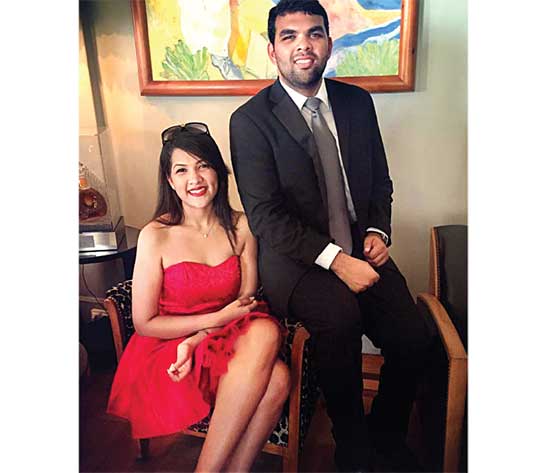
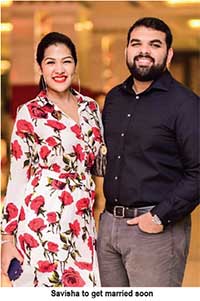
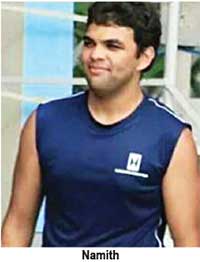
Namith Swarnasinghe and her sister Savisha Swarnasinghe from Kandy are living examples of two beautiful teenagers in modern society,
They have a relationship with their own ego and they no longer see it as a mask. Besides that, they share a loving relationship with their family and in all this they are trying to create an identity in every sphere of life and mark and space for themselves. When this generation become the citizens of tomorrow, they will be healthy in body, mind and soul. The quote by Annanis Inn says it all: ‘And the time came that the pain it took to remain in a tight bud was far greater than the pain it took to bloom!’
The two adolescents namely Namith Swarnasinghe and Savisha Swarnasinghe I met spoke about their teen years, how their lives have been shaped by their parents, their education and their life styles.
They are no different to other young people whose lives are saturated by mobile technology and social media, but they never go out of the box.Brought up in a Kandyan conservative family their teenage years were shaped by family values and social ethos.
Our parents are our role models said the tall and swanky Namith and beautiful Savisha who is an icon of beauty. A fashionista in the making Savisha is lovable and pretty and versatile.
How do you feel to be in the millennial generation?
N&S:
Honestly, I think Mil
lennials are a very lucky bunch of people. We’ve got to experience so many things during our short period of existence.We mean we can remember waiting patiently while the cassette rewinds on the VHS player to watch movies. And today we have movies on demand on the palm of my hand at the click of a button. We’ve sent letters, postcards, SMS, MMS and even used telegrams faxes. So, we’ve experienced both sides of the tape so to speak and we think that’s a good thing. There are many changes going on in the world and personally we think it’s a very interesting time to be experience.
– A time of opportunity
and risks
N&S: High risk, high reward. If you quantify the risk, it’s always correlated with competition. So competition is very high, be it from existing players or newcomers. This is a perfect situation as far as we’ve concerned. The higher the stakes the more motivated we are to improve our business and to make sure we carry forward our 70 years of history.
Are u both move buffs who is your favourite icon in cinema
?
N&S:
Oh yes! we both are a big fan of Martin Scorsese and Christopher Nolan. I think Scorsese is a very clean story teller while Nolan has this mesmerizing ability to push the limits of what is and is not possible in film. They’re both artists of the highest order as far as I’m concerned.
– Do you both feel anxiety and depression at any time
N&S:
Karl Marx predicted this long ago. Alienation is unfortunately an inevitable by-product of capitalism, and we are living in the most capitalist time of human history. Also its no longer taboo to say you’re suffering from anxiety or depression. There’s lot of research that has gone into mental health that has proven how harmful it can be if left untreated or neglected. So while we’ve been lucky enough not to through depression, we’ve handled our fair share of anxiety well.
– How do spent your
leisure hours
N&S-
We’ve got several hobbies that keep us busy whenever we have some free time. I love to cook, it’s always been a passion of mine. I also spend time playing my guitar, watching movies and sports.
Are you into serious reading
N& S
. I’m deep down reading Polemicist Rabbit Hole these days. I love reading Richard Dawkins, and Christopher Hitchens and these days I’m reading Jordan Peterson’s books. I like people that question and provide cohesive arguments against the status quo.
The best movies you both enjoy
N&S:
The Dark Knight Arrival
The Terminal
You Dietary plans, are you both conscious of a particular dress code and do you both passionate about specific brands?
S:
– Our diet has always been kind of top priority at home with a little indulgence in our guilty pleasures once in a while. But we have pushed ourself to be more serious about it lately, with my big day approaching. Well, our dress code defines who you are, and yes, quite conscious of it. I love branded stuff; you could say I am obsessed with it.
N&S:
Your schooling in Kandy
We both schooled in Kandy, I went to Hillwood College and my brother went to Trinity. For my higher studies I obtained my degree from the Excelsior University in Albany and my brother pursued his higher studies at the University of London and later at the Chartered Institute of Management Accounting.
Your international exposure in Malaysia
N:
It has been a very interesting experience for me so far. The ability to live in a completely foreign country made me to be independent and broaden my knowledge.Meeting people from different cultures was a benchmark in my career
Your vision for the future?
S:
My vision is to see Sri Lankans designers,artisans, jewellers, designers are well known. Our designs are universally accepted and we hailed from a business family. Our gem industry and gem business are part of our life. We had business in our blood so it was natural for us to follow our father’s footsteps and carry the business forward.



Bernie Stefan is the Chairman and Managing Director of Nestlé Lanka Limited, overseeing Nestlé’s operations in Sri Lanka and the Maldives. He assumed this role in March 2023. Under his leadership, Nestlé has strengthened its footprint in Sri Lanka, touching individuals and families, communities and spearheading sustainable development.
Since taking charge in 2023, Stefan has brought with him over two decades of international experiences, steering the company with a clear focus on sustainability, innovation and long term growth.
Bernie describes the anniversary as a moment of pride and reflection on over a century of commitment to Sri Lanka and its people.
Under his leadership, Nestle has expanded its footprint while staying true to its mission: to improve lives by providing nutrition and wellness for all Sri Lankans. Beyond the commercial success, the company has focused on community impact – supporting local farmers. promoting sustainable practices and contributing to public health initiatives.
 (Q) Nestlé has been part of Sri Lankan homes for 120 years. How has the brand evolved alongside the changing lifestyles of Sri Lankan families?
(A) We at Nestlé are extremely proud of our 120 year journey of enriching Sri Lankan lives. It has been a journey guided by purpose and working together for good – touching individuals and families, the community, and the planet. As lifestyles and needs have evolved, so, too, have our products – offering convenient, tasty and nutritious solutions that meet everyday moments, whether it’s energy on the go or a quick and tasty meal. A true symbol of this legacy is our flagship brand, Nestomalt – synonymous with power, strength and energy – which today is enjoyed as the first cup of the day by a majority of Sri Lankan households.
(Q) Many Sri Lankans have grown up with Nestlé products at their breakfast table or during tea time. How does the company stay emotionally connected with generations of consumers?
(A) Our product range caters to the nutritional needs of consumers from birth to old age. We always ensure that the consumer is at the centre of everything we do. This deep understanding of consumer preferences, ensures not only that our products deliver taste and nutrition but also our communication is in tune to the local context. Our brands have been deeply rooted in the lives of the Sri Lankan community over many decades – be it through Milo school sports programmes or Nestomalt marathons. Being an organisation that has been present in Sri Lanka for such a long time, it also means that consumers hold many nostalgic memories from their childhood with our products.
(Q) From childhood treats to everyday beverages, Nestlé products often carry nostalgic memories. How important is this sense of nostalgia to the brand’s identity?
(A) Brands need to evolve with time and remain relevant. Nostalgia does bring a deep bond and connect with consumers. However, through product and packaging renovations, we have successfully ensured that our brands remain relevant to consumers. One of our oldest Nestlé brands in Sri Lanka, Milkmaid , today, has an online recipe platform with over 300 recipes. This is another example where we have ensured that our brands are able to connect with today’s consumers.
(Q) Has Nestlé adapted its products to suit modern lifestyles while still respecting local tastes?
(A) Our ability to cater to local taste preferences has been a crucial factor to the success of our brands. With the setting up of our local manufacturing operations in 1984, we now manufacture over 90% of Nestlé products sold locally. The deep consumer understanding our teams possess, combined with our global R&D expertise in the food and beverage sector, have given us the ability to tailor make our products to cater to the Sri Lankan taste palette while offering convenience. This is evident in the success of our Nescafe and Nestea 3-in-1 variants and the Ready-to-drink beverage range of Milo and Nescafe, that deliver convenience and great taste.
(Q) How is Nestlé aligning its practices to sustainability and mindful living?
(A) We are committed to reaching net zero carbon emissions by 2050. Promoting circularity is also a focus area in this journey. We have plans to be 100% plastic neutral this year. Our sustainability initiatives cover the entire value chain, from farm to fork. In Sri Lanka, we are focusing a lot on increasing yield and promoting regenerative agricultural practices across our dairy and coconut value chains. In our manufacturing operations, we have continuously striving towards reducing water and energy usage. We have also implemented numerous initiatives to reduce our carbon footprint in logistics, such as the adoption of rail transportation. We also focus on fostering behavioural change on responsible waste disposal amongst the youth through our School Waste Management Programme.
(Q) What moments or milestones best reflect its connection with everyday life in the country?
(A) Our ability to provide consumers with good food moments each and every day is something that I and the team are extremely passionate about. Also, the deep connect we have with the community, be it our dairy and coconut farmers, the numerous suppliers and trade partners, has been built on trust over the years. Today, we have farmers, suppliers and even employees from across generations and this speaks volumes about our business practices and the trust we have built in Sri Lanka for over a century.
(Q) Nestlé is known globally for innovation. How do you balance global expertise with the unique lifestyle and culinary culture of Sri Lanka?
(A) As I mentioned, understanding the taste palette, nutritional needs and the lifestyles of Sri Lankan consumers and ensuring our products fulfill these needs is key. Having access to one of the world’s leading R&D facilities gives us the unique ability to ensure our products deliver to these consumer needs and preferences. Further, it enhances our ability to ensure the freshness and bio-availability of certain nutrients contained in our products. We’ve also made significant strides in packaging innovation, where we use less plastic and materials that are better suited for recycling. The introduction of Coconut Milk Powder in 1986 was a first for Sri Lanka, and this is another great example of the deep understanding we have of local culinary culture.
(Q) How is the younger generation engaged with the brand today?
(A) Appealing to the discerning youth population will be key to ensuring the future success of our brands. Understanding the nuances of each generation is important. It is also evident that consumption patterns and lifestyles across generations are evolving rapidly. Staying abreast of these changes is something we are deeply committed to. In addition to delivering on taste and nutrition, being trendy and youthful – the purpose for which our brands stand for – is equally important. NESCAFÉ and MAGGI PAPARE BLAST are two brands that have developed a strong connect with Sri Lankan youth.
(Q) What vision do you have for the next chapter in Sri Lanka, especially in shaping lifestyle trends?
(A) Looking ahead, our vision is to continue enriching Sri Lankan lives by providing tasty and nutritious products and promoting healthier and active lifestyles. We will keep innovating to meet evolving consumer needs, while strengthening local sourcing and reducing our environmental impact. The next chapter is about deepening our positive impact – supporting communities, empowering youth and contributing to a resilient food system.
(Q) As the head of Nestlé Sri Lanka, what does celebrating 120 years personally mean to you?
(A) Celebrating 120 years in Sri Lanka is deeply meaningful to us, as it reflects the trust generations of Sri Lankan families have placed in Nestlé. This milestone is a testament to the dedication of our people and the strong partnerships we have built across the country. For me personally, it is both a moment of pride and a responsibility – to honour this legacy while continuing to work together for good, doing what is right for our consumers, our communities, and Sri Lanka.
By Zanita Careem
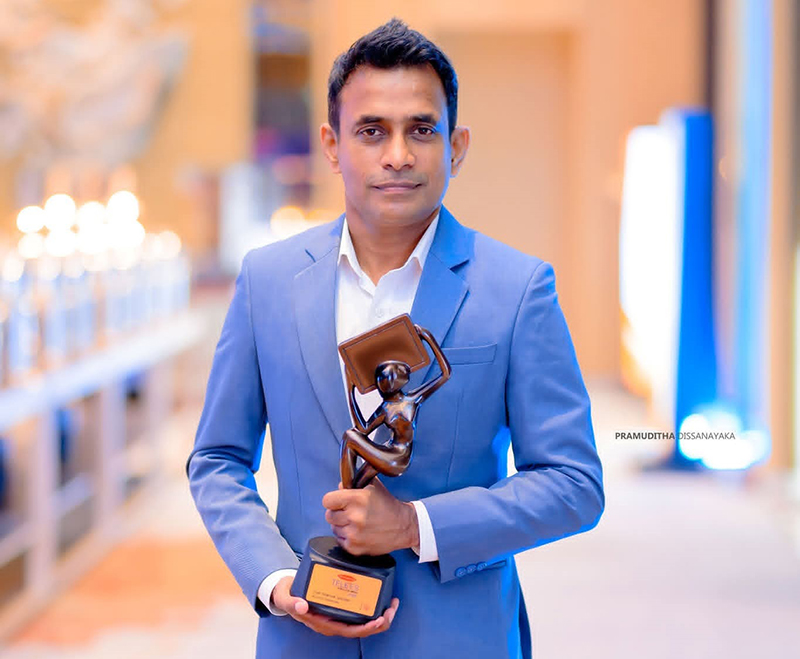
At a time when entertainment often overshadows education on television, K.C. Saranga has rewritten the script—securing a remarkable third consecutive win for Best Educational Programme at the Raigam Tele’es 2025.
His flagship programme, Jeevithayata Vidyawa (Science for Life), aired on Ada Derana, has not only dominated its category but also elevated the standards of educational broadcasting in Sri Lanka.
Reflecting on the milestone, Saranga described the win as more than a personal achievement. “Maintaining an award ceremony of this magnitude for 22 years is no small feat. Raigam Tele’es plays a pivotal role in uplifting the industry. By consistently recognising and rewarding Sri Lankan creators, it provides the necessary oxygen for television to evolve as a professional craft,” he said.
A veteran with over 25 years in the industry, Saranga—currently General Manager (News and Current Affairs) at TV Derana and Head of the Ada Derana News Channel—has seamlessly transitioned from hard news to impactful educational programming. His success underscores a broader vision: to harness television’s full potential as an audio-visual learning tool.
“There is a significant void in Sri Lankan television when it comes to high-quality educational productions,” he noted. “Television is an audio-visual medium; its true power lies in its ability to show, not just tell. We use multimedia elements—graphics, animation, and dynamic presentation—to grip the viewer’s attention.”
Saranga emphasised that his goal was to match global benchmarks. “If world-class science documentaries are available in English, our mission was to bring that same global standard to the Sinhala-speaking audience,” he said.
Through Jeevithayata Vidyawa, complex scientific concepts—from aerodynamics to cyclones—are presented in a manner that is both accessible and engaging, redefining the notion of “edutainment” in local television.
Expressing gratitude, Saranga credited his team and network for the continued success.
“This achievement is a result of a shared vision. My deepest gratitude goes to the management of Ada Derana. In an industry often driven by conventional ratings, they have consistently provided a sanctuary for creative freedom, allowing ‘out-of-the-box’ ideas to flourish,” he said.
He added: “To my incredible production team—this trophy belongs to you. Your technical skill and commitment have transformed simple ideas into a national standard. Finally, thank you to our viewers; your curiosity is our ultimate motivation. We will continue to prove that learning is an inspiring journey.”
Saranga’s hat-trick stands as a testament to the power of innovation in educational broadcasting—proving that knowledge, when presented with creativity and purpose, can captivate audiences just as effectively as mainstream entertainment.
By Ifham Nizam

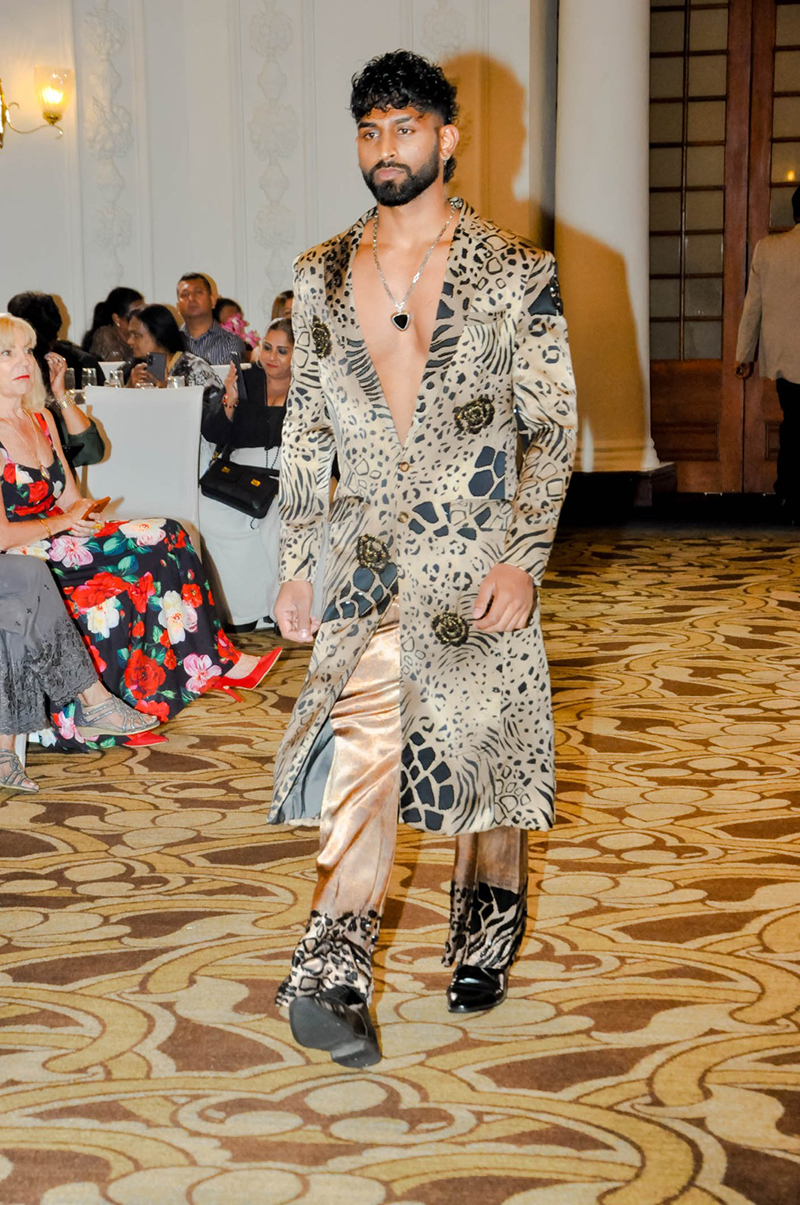
The event “Style Surge,” organised by the Lions Club Elevate, was an evening filled with glamour, leadership and purpose collided in a spectacular fusion. The grand Ballroom at Galle Face Hotel became a canvas of fashion; every detail, from the floral centrepiece to the curated lighting, whispered elegance, while glamour set the stage, purpose was the back bone.
The show featured a curated selection of Sri Lankan designers, each bringing their signature styles to the stage.
The designers captivated the audience with bold, contemporary silhouettes that fused modern trends with traditional influence, creating pieces that were both sophisticated and wearable.
The batik ensembles by doyen of Batiks, Eric Suriyasena, were masterpieces, demonstrating the designer’s mastery in balancing artistry and practicality. Each piece told a story, highlighting the cultural nuances of Sri Lanka, while contributing to the glamour of the event.
The hair and make up for the models were curated by Salon Avra by Thushari de Silva and was nothing short of perfection,
From sleek, modern looks to elegant textured styles, Salon Avra ensured every model complemented the designer’s vision, highlighting the intricate details of each ensemble. The artistry on stage reflected a seamless collaboration between fashion beauty and presentation.
Style Surge unfolded an evening of elegance, creativity and purpose. It brought together Colombo style conscious crowd, social leaders and fashion enthusiasts and transformed the venue into a vibrant celebration of couture and compassion.
As the lights dimmed,the runaway came alive with a striking showcase of designs, ranging from contemporary chic to timeless sophistication, by designers like Eric Suriyasena, Anushko, Azeena Sulaiman and Jaywanthi Panibharatha. Leading fashion brands showcased were Aluminium, Disala, Eriq and Elegant Closet, and they presented a blend of contemporary and traditional fashion. Jewellery for the show was designed and sponsored by Blue Majestara Ceylon, . The Chief Guest was District Governor Lion Mahesh Borolugoda and his wife Lion Lady Sunethra Borolugoda.
Beyond glamour, this event, Style Surge, carried a meaningful mission to help rennovate two schools and improve educational facilities for future students
Lions Club of Colombo Elevate district 306D6, the organisers of this event, have been long synonymous with community development .The event underscores the power of fashion as a force of good.
Proceeds and awareness generated though the evening will be directed towards the clubs ongoing humanitarian initiatives, reinforcing its commitment to uplifting communities while engaging the public in an inspiring way.
In every sense, the event was more than a fashion show, it was a statement. This event reaffirms that glamour can also carry a purpose, creativity can spark compassion, and a runaway that can become a powerful platform for social change. This fashion show was graced by distinguished guests of honour , including designers Aseka Wijewardena, Michael Wijesuriya, Yolande Aluwihare, and Shyara Mendis
This event was organised by Lion Diana Nilanthi, Shen, Lion Thushari de Silva and Lion Shashika Hettiarachchi, whose commitment to creativity and attention to detail transformed the event into a truly memorable evening. They were the driving force that brought the vision of the show to life. Their meticulous planning, conceptualising the theme, coordinating the designers ensured the show ran seamlessly, from start to finish Pix by Thushara Attapathu
By Zanita Careem

-

- Thushari de Silva



-
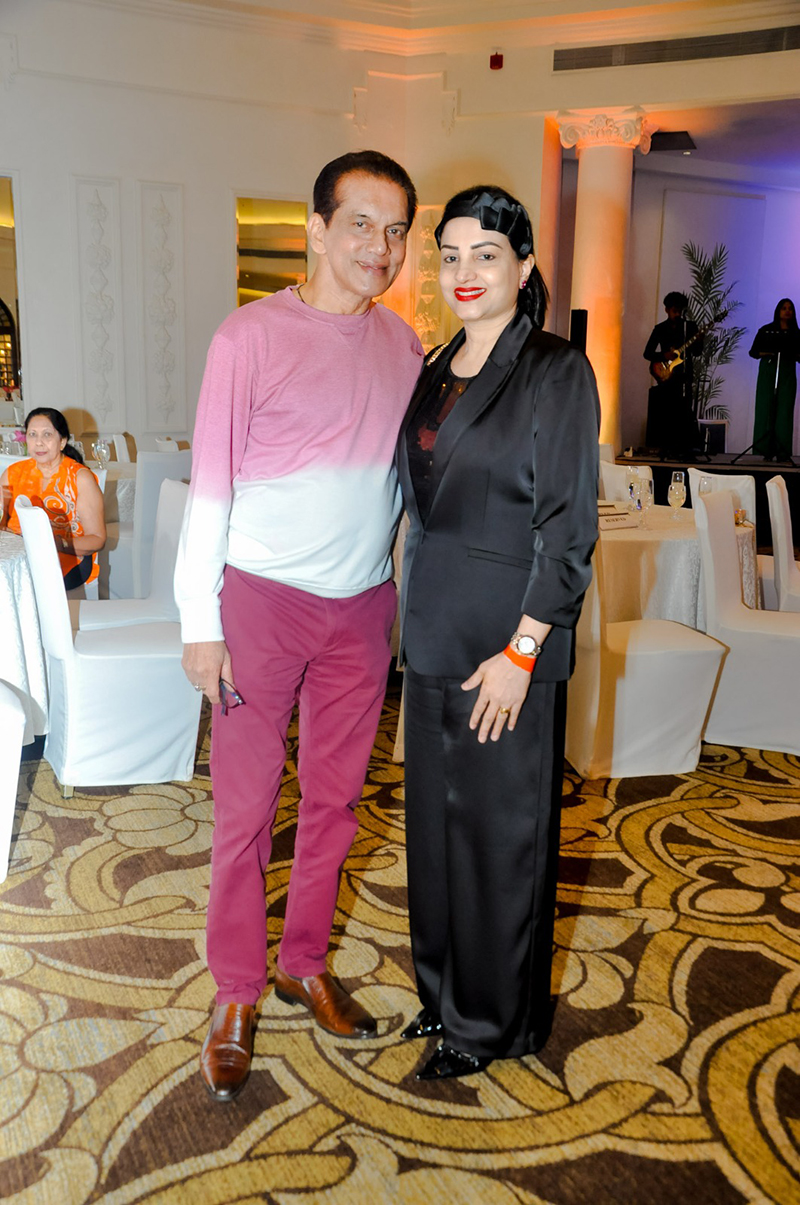
- Kamal Addiarachchi
-

- Azeena with a guest
-

- Enjoying the Kamal Addiarachchi night of style

Seven Eritrean players fail to return home after international match

Artemis II crew head for home after travelling further from Earth than anyone before

Washout gives Kolkata Knight Riders first point after Bartlett’s new-ball burst

Hasaranga, Pathirana yet to undergo SLC-mandated fitness tests

Sun directly overhead Dehiwala, Maharagama, Pannipitiya, Padukka, Eheliyagoda, Maskeliya, Siyambalanduwa and Pottuvil at about 12:13 noon. today (07th)

Showers will occur at several places in the Northern, North-central, Central, Sabaragamuwa, Uva and Southern provinces after 1.00 p.m.

‘Dates have the highest sugar content to fight Coronavirus’

Sunday Island 27 December – Headlines

#SundayIsland 17th December – Headlines

Sunday Island – 28th March

Sunday Island Headlines – 21 March

Sunday Island – 21st February – Headlines
-

 Features3 days ago
Ranjith Siyambalapitiya turns custodian of a rare living collection
-

 News6 days ago
2025 GCE AL: 62% qualify for Uni entrance; results of 111 suspended
-

 News3 days ago
Global ‘Walk for Peace’ to be held in Lanka
-
 Business7 days ago
Hour of reckoning comes for SL’s power sector
-

 Editorial6 days ago
Search for Easter Sunday terror mastermind
-

 Opinion5 days ago
Hidden truth of Sri Lanka’s debt story: The untold narrative behind the report
-
Editorial7 days ago
Ideological confusion and identity crisis
-

 Opinion6 days ago
Is there hope for Palestine?