
News
‘Abolishing provincial councils is like playing with fire’ : Maithripala Sirisena


Former President Maithripala Sirisena gave an interview to India’s The Hindu newspaper recently. Given below are some excerpts of the interview that appeared on 30 December 2020.
Q: You say you are open to two options ahead of the provincial council elections when they are held. Some within the government want the provincial councils abolished, while the Prime Minister asked officials to expedite arrangements. Some others want the elections held after the proposed new Constitution is out. How do you view these contradictory positions within the government?
A:
We have had the provincial council system for over 30 years now. We haven’t seriously evaluated if they have been successful in serving the purpose they were supposed to. The government should analyse if the councils have actually served our people. I believe there are some amendments needed in the provincial council system. One of the main problems is that of the total allocations to the provincial councils annually, only 25 % or so goes into the actual development of the provinces. Nearly 75 % goes towards salaries, vehicles, telephone and electricity bills. There is an excessive number of employees in the provincial councils.
When the central government pumps in money into the provincial councils, it is done as an investment for the development of the country. However, the return on such investment has been less. So we need to reduce wasteful expenditure, perhaps by reducing the number of councillors and employees, in order to increase the return on investment. There are differences within the government, and it is upto the government to decide on the right course of action.
From a development perspective, I think a set up at the district-level, like a District Development Board, would work better than the provincial councils, given the fact that we are a small country. You can set up a development board at the district level, comprising members of Parliament representing the district, chairpersons and mayors of local government authorities. For a big country like India, a provincial system is good, but we are a country of 21 million.
Q: So how would you respond to those within government, calling for the abolition of provincial councils established pursuant to the 13th Amendment to the Constitution?
The 13th Amendment is a product of the Indo-Lanka Accord of 1987. The Provincial Councils Act is a product of the 13th Amendment. So, I know it is not that easy to abolish provincial councils. India could get a little upset with us if we completely do away with the 13th Amendment. In our region, the friendship with India is very important to Sri Lanka. The friendship between the two countries is of utmost importance and should be strengthened by all governments. Abolishing provincial councils is like playing with fire.
At the same time, the 30 year-experience of running provincial councils has not yielded desired results in terms of developing all parts of the country. That is why it is important that we arrive at a compromise with understanding. As I mentioned, creation of the provincial councils was an investment, we have been keeping them going for 30 years, and when they don’t yield the benefits that were expected in terms of development, people and the government should take a fair decision.
Q: You keep referring to democracy. In your recent speech too, you spoke of many governments sliding towards authoritarianism, where rights of minorities are under threat. How do you see the Sri Lankan context in that respect?
A:
As a majority ethnic group, it is our responsibility to seriously think about the minorities who form part of this country all the time. It is a fact that in Sri Lanka the Sinhalese are the majority. Bearing that in mind, we must ensure Tamils, Muslims and Burghers have equal rights as minorities.
For example, take the issue of mandatory cremation of victims of Covid-19. Muslims must be given the right to bury their relatives who succumbed to it. The WHO [World Health Organization] says it is possible to bury. As a former Minister of Health, I stand by the opinion of the WHO.
You cannot develop the country when the sentiments of minority communities are hurt. We have to ensure that democracy and economic development are shared equally by all ethnic groups in this country.
Buddhist philosophy offers us ample guidance on the principle of equality. There were hundreds of religions and languages in India when the Buddha was born. Although there were hundreds of religions and languages, the Buddha, when he began preaching the religion, had no problem with any other religion or community. He continued preaching without any conflict with other religions.
You spoke about the importance of the friendship between India and Sri Lanka. When you came to power in 2015, you vowed to follow a neutral foreign policy, and reset relations with many partners. How do you evaluate the foreign policy choices of this government?
It appears to me that the government has a good relationship with India. I am happy about that. The principle of non-aligned foreign policy was introduced to then Ceylon by S.W.R.D. Bandaranaike, the leader of my party, in 1956. I believe all governments that come to power in Sri Lanka should stick to a non-aligned foreign policy.
Q: Do you have any regrets about your time in office?
I believe the people of Sri Lanka still enjoy the freedoms and the democracy that I won for them. The Right to Information Act passed during my term was a historic move. The powers given to the independent commissions and the people were significant. I pursued a 360 degree-friendship foreign policy. I pursued strong friendship with all countries — US, China, Russia, India, Japan, Pakistan.
It is not easy to be the President of a country [laughs]. I could balance everything only because of my over 50 years’ experience in politics. I am happy with what I did, they were done with good intentions. I have some regrets about the things I could not do. The internal strife within the government held me back from delivering on some things.
No leader ever goes home after his time in office after completing all that he intended to. When a parent passes away, a lot of children worry that they could have cared more about their parents. Similarly, when a really patriotic leader leaves office, he leaves with the feeling that he couldn’t do enough for the country. I am also like that.
Q: Anything you did that you regret?
A:
No, I am happy with everything I did. I did everything with good intentions. My time in office is historic for the fact that no government-owned rifle ever shot at a citizen. During my time, there were protests every day on the streets, by students, by workers. I had ordered the police and army not to ever resort to shooting. I told them they could take legal action later, but should never fire a single shot, even though the protests gave me a lot of mental agony. That is one of my greatest achievements as a leader.
In my time, I launched five major projects like the anti-drugs campaign, the environment programme, children’s programme, a programme for those suffering from kidney ailments – there are 5,000 new patients every year — and then one to enhance local food production. I am happy about those.

News
Prime Minister of Sri Lanka holds a bilateral meeting with Minister for Education and Skills Development of Bhutan

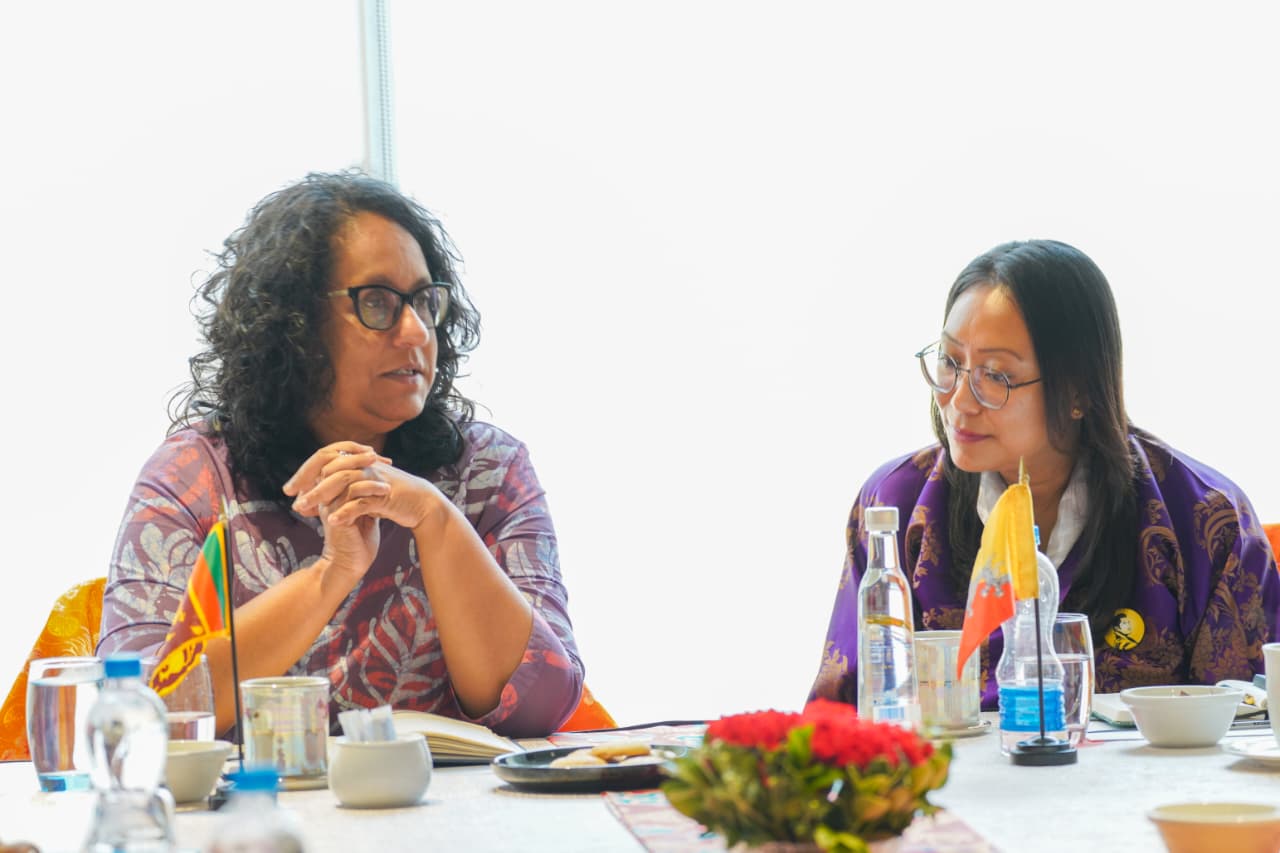
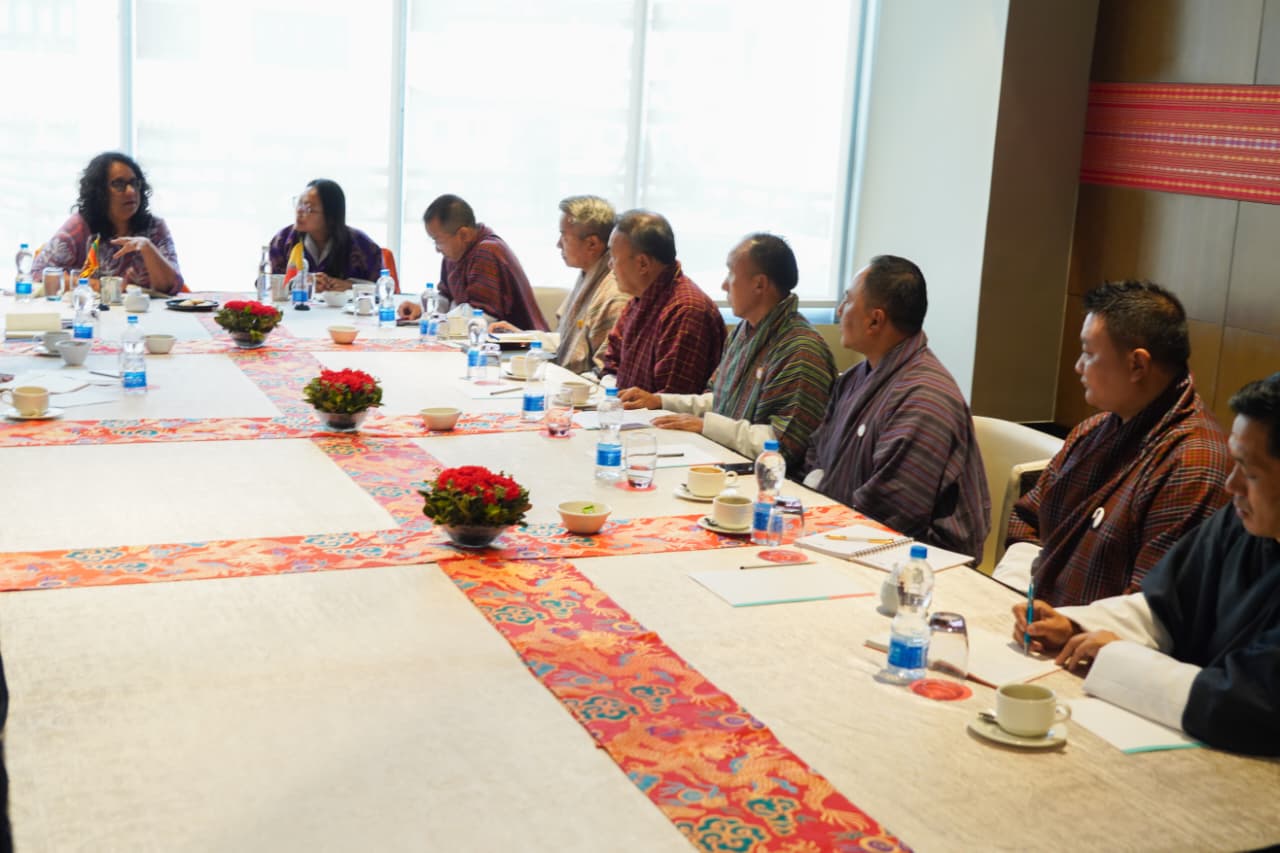
On the sidelines of the inaugural Global Conscious Food Systems Summit 2026, being held in Bhutan from 31 August to 4 September 2026, Prime Minister of Sri Lanka, Dr. Harini Amarasuriya, in her capacity as Minister of Education, Higher Education and Vocational Education, held a productive bilateral meeting with Yeezang De Thapa, Minister for Education and Skills Development of Bhutan, on 03 September 2026.
The discussions focused on further strengthening and expanding Sri Lanka-Bhutan cooperation in the education sector, with particular emphasis on developing mutually beneficial initiatives through enhanced Government-to-Government engagement.
Both sides underscored the importance of deepening institutional cooperation and exploring new avenues for collaboration in education, higher education and vocational training, with a view to creating greater opportunities for students, educators and academic institutions of both countries.
During the meeting, both sides agreed to initiate discussions towards the finalization and signing of a Memorandum of Understanding (MoU) on cooperation in the fields of education and vocational training. It was also agreed that the implementation of the MoU could be facilitated through the establishment of a Joint Working Group, headed at the Secretary level, with meetings to be convened annually to review progress, identify new areas of cooperation, and facilitate the effective implementation of agreed activities.
The major areas of cooperation discussed included enhancing collaboration among universities and academic institutions, promoting academic and faculty exchanges, joint research and university programmes, strengthening training and capacity-building opportunities for educators and teachers, and sharing expertise and best practices in the education and vocational training sectors.
The two sides also discussed strengthening child protection and safeguarding mechanisms, promoting ethical values among students, and addressing violence against children while ensuring their safety, protection, well-being and access to quality education.
Opportunities for Bhutanese students to pursue undergraduate studies at universities in Sri Lanka were also discussed, with particular emphasis on Dentistry, Medicine (MBBS), and allied health disciplines such as Physiotherapy. The discussions further covered opportunities for postgraduate studies in medical and health sciences at Sri Lankan universities, as well as enhanced collaboration among universities and other academic institutions of the two countries.
The meeting provided a valuable opportunity for Sri Lanka and Bhutan to advance cooperation in education and vocational training and explore new avenues for long-term collaboration for the mutual benefit of students, educators and academic institutions of both countries.
(Prime Minister’s Media Division)
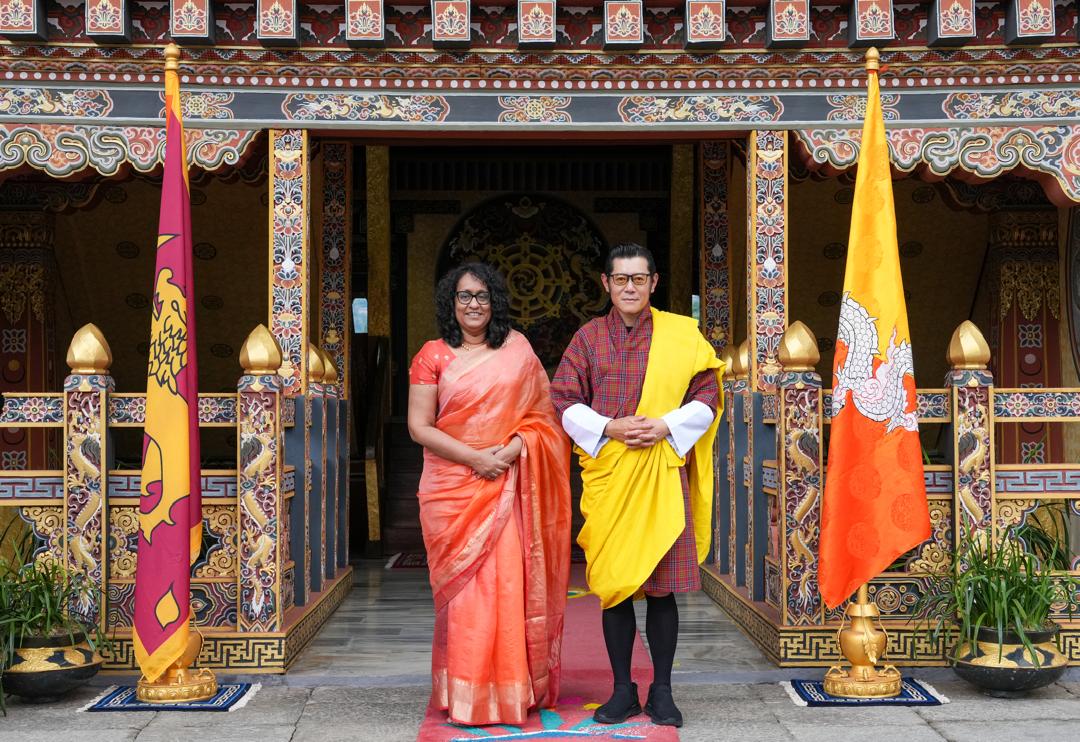
Prime Minister Dr. Harini Amarasuriya had an audience with His Majesty King Jigme Khesar Namgyel Wangchuck at the Tashichhodzong in Thimphu on September 02, during her official visit to the Kingdom of Bhutan.
The cordial discussion focused on Bhutan’s future development priorities and opportunities for cooperation between the two countries.
His Majesty expressed Bhutan’s interest in drawing on Sri Lanka’s experiences and expertise in areas relevant to its development plans. The discussion also focused on promoting investment between the two countries, including the possibility of establishing an investment zone in Bhutan.
The two sides also exchanged views on demographic challenges facing Bhutan, including the increasing migration of young people and its impact on the country’s population and future workforce.
The meeting highlighted the importance of strengthening bilateral cooperation and sharing experiences and best practices in support of the sustainable development of both countries.
(Prime Minister’s Media Division)
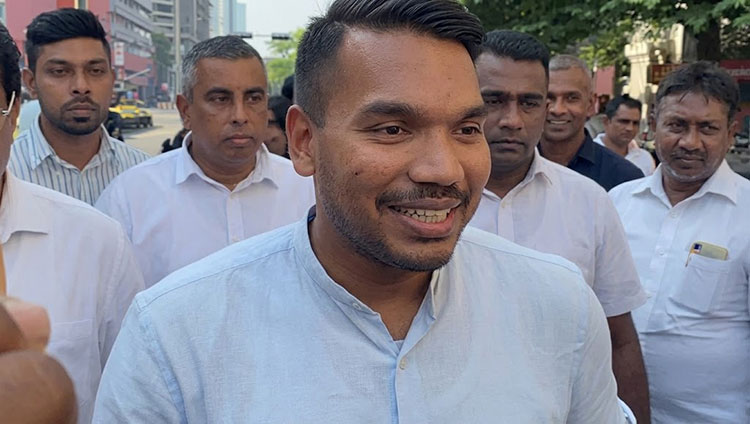
Sri Lanka Podujana Peramuna (SLPP) Member of Parliament Namal Rajapaksa has been arrested by the Commission to Investigate Allegations of Bribery or Corruption (CIABOC).
Namal Rajapaksa had been summoned by CIABOC to provide a statement in connection with investigations into the controversial Airbus deal. He was subsequently arrested by CIABOC after recording his statement for over 5 hours.

Prime Minister of Sri Lanka holds a bilateral meeting with Minister for Education and Skills Development of Bhutan

Prime Minister Meets His Majesty the King of Bhutan

Kusal Mendis, Binura Fernando ruled out of T20I series in England

SLPP MP Namal Rajapaksa arrested by CIABOC

Devapathiraja clinch U15 Division I title with 33-run win over Royal

Mandhana’s record ton powers India into semi-finals

‘Dates have the highest sugar content to fight Coronavirus’

Sunday Island 27 December – Headlines

#SundayIsland 17th December – Headlines

Sunday Island – 28th March

Sunday Island Headlines – 21 March

Sunday Island – 21st February – Headlines
-

 Features6 days ago
“Wrap Me Up in My Blazer”— A Gentlemanly Bradby Reminiscence
-

 Features5 days ago
When Sri Lankan stories find their own voice
-
 Features6 days ago
JVP/NPP government as seen from outside by Lionel Bopage now domiciled in Australia
-
 News5 days ago
BASL takes exception to Justice Ganepola being denied a place in SC
-

 Editorial7 days ago
Govt. trying to dupe UN Rapporteur?
-
 Features6 days ago
Prof. Savitri Goonesekere: What has she done?
-

 News2 days ago
Denied of promotion to SC despite vacancies, justice Gurusinghe retires
-

 Latest News2 days ago
Grade 5 scholarship exam results released