
Features
A World of Books:Martin Wickramasinghe in Colombo


by Uditha Devapriya
Continued from last week…
Almost immediately, the 16-year-old Martin Wickramasinghe was thrown into an unfamiliar environment. When he arrived, Colombo was being rocked by an outpouring of anger and hostility. A group of carters had begun a protest against municipal laws and regulations, and they had virtually brought the city to a standstill.
“[It was t]he first occasion during which a labour dispute in Ceylon reflected… the strong feeling of discontent against the government.”
Kumari Jayawardena, The Labour Movement in Ceylon
In 1907, a year after Wickramasinghe arrived in Colombo, Twentieth Century Impressions of Ceylon was published. Edited by Arnold Wright, the book describes in great detail the roads, the areas, and the institutions in Colombo, the world that Wickramasinghe was now part of. The Fort or Pettah area, where he worked, was the site of numerous commercial houses and administrative buildings. This was one of the most densely populated areas of the city, if not country, “inhabited almost entirely by ‘natives.’” Not far from Pettah lay the Cinnamon Gardens, which in the early 20th century had transformed into the most fashionable suburb in the city, housing the residences of its most affluent elites.
It was against this setting that Wickramasinghe began reading as many books as he could. Lacking formal education, he made the most of what he had by subscribing to foreign magazines, attending public discussions, and learning to write.
We have two sources for the books he read at this point in his life. The first are his memoirs, Upan Da Sita. The second is the bibliography of his collection at the National Library. While the latter has been well catalogued and offers a vivid glimpse into the titles, authors, and genres he was immersing himself in, Wickramasinghe’s recollections give us a clearer picture of the books that caught him and transfixed him in his first few years in the city.
Colombo came as a revelation to him. In Koggala, Wickramasinghe had been playing truant whiling away the time with his friends. In Colombo he became a different man. At home he had been curious about science and nature. In the city he sought to satisfy this curiosity through books and periodicals. It was against this backdrop that he came across rationalist writers and freethinkers and began reading them.
“My mind was possessed by a desire to learn about the beginning and end of the world. None of the bookshops in Colombo carried these books.”
Martin Wickramasinghe, Upan Da Sita
Translated by Malinda Seneviratne
One of the first authors he recollects in his memoirs is Robert Ingersoll. A rationalist, an orator, one of the leading figures of the age of free thought in the United States, Ingersoll had by now exercised a profound influence on the course of radical thought and politics in India and in Sri Lanka. His relentless criticism of organised religion, in particular Christianity, caught on in Ceylon, then at the heyday of the Buddhist Revival. The likes of Ingersoll and the British rationalist Charles Bradlaugh found common ground between their critique of Christianity and their affinity for Eastern religions.

Cinnamon Gardens, 20th century. Taprobane Collection
“In Ceylon, the literature of the free-thought movement was available and had been quoted during the Panadura debate.”
Kumari Jayawardena, The Labour Movement in Ceylon
Having come across Ingersoll, young Wickramasinghe seems to have been taken up by his writings. Interestingly, it seems to have been through Ingersoll that he made his discovery of Charles Darwin. In Upan Da Sita Wickramasinghe remembers sifting through the pages of the Rationalist Press Association. Founded by the English secularist Charles Watt in 1885, the Rationalist Press Association became the main outlet for the leading scientific thinkers and freethinkers of the time. Among the authors they published were the British science writer Samuel Laing and the German zoologist Ernst Haeckel. The biologist Thomas Huxley, one of Darwin’s most fervent defenders, also caught his attention.
From Ingersoll, Laing, Hackel, Huxley, Darwin, and the Rationalist Press Association, young Wickramasinghe moved on to other writers. A perusal of the first few chapters of Upan Da Sita, and the catalogue of the Wickramasinghe Collection at the National Library, reveals to us a fairly eclectic range of academics and freethinkers. The list of science and rationalist writers he read at this stage included Edward Clodd, Dennis Hird, A. C. Haddon, L. C. Miall, Paul Carus, and Hans Reichenbach.
What is important to note is that while these were all contrarian thinkers, not all of them thought alike, or subscribed to the same beliefs. Dennis Hird for instance was a clergyman, a member of the Church of England who converted to socialism and became an advocate of the working classes. A. C. Haddon was a leading anthropologist who had done fieldwork in South-East Asia, including Borneo. Paul Carus was one of the leading advocates of monism, a philosophy which sought not so much to disprove religion as to unearth a synthesis between science and faith. Carus’s The Gospel of the Buddha, first published in 1894, transfixed Martin Wickramasinghe. Reflecting on Carus’s work and philosophy, he noted how popular such writers and books had become in Colombo.
“Even Buddhists in the East, who did not know English, were familiar with the two books authored by Paul Carus, Gospel of the Buddha and Nirvana… He was the editor of the monthly magazine Open Court and the magazine Monist. I was a subscriber to both magazines by the time I was 20 years of age.”
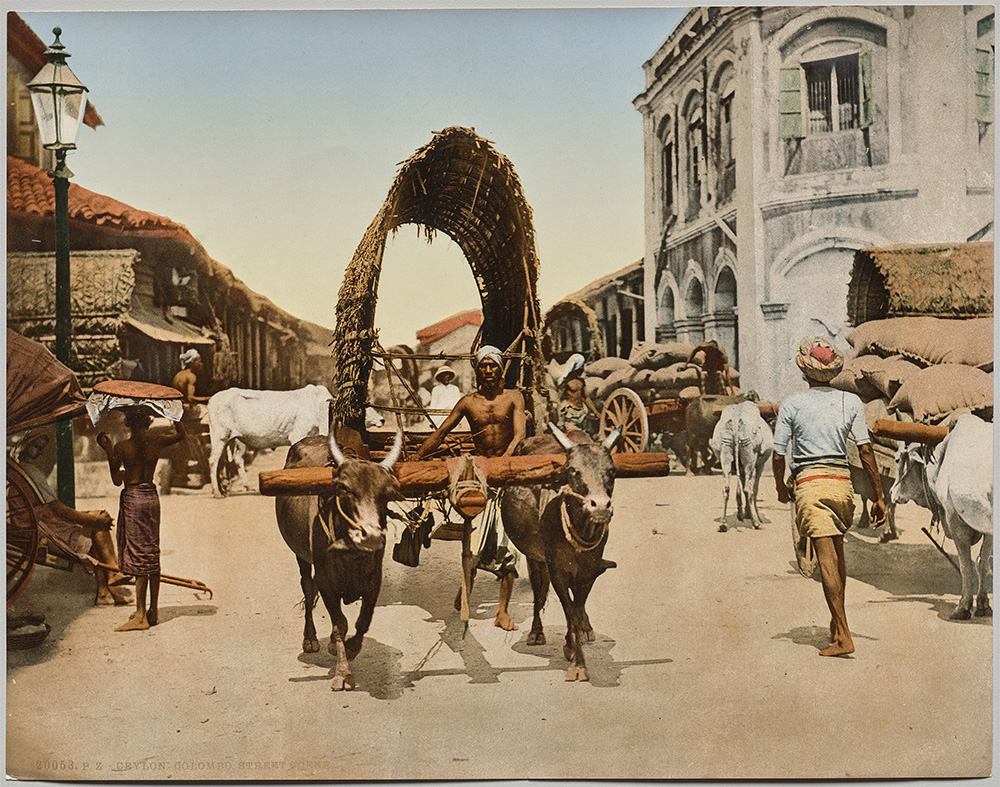
Colombo, early 20th century. Public domain
Martin Wickramasinghe, Upan Da Sita
Translated by Malinda Seneviratne
The popularity of these works among non-English speakers seems to have intrigued Martin Wickramasinghe. Yet by the early 20th century such works had become affordable and accessible to a great many people, even in places like Colombo.
“’Progress’, emancipated from tradition… seemed to imply a militant break with ancient beliefs which found passionate expression in the behaviour of the militants of popular movements, as well as of middle-class intellectuals. A book named Moses or Darwin was to be more widely read than the writings of Marx himself.”
Eric Hobsbawm, The Age of Capital, 1848-1875
The popularity of these magazines and journals helped transmit the most radical ideas and ideas to the most open minds. For someone like Wickramasinghe, this proved to be a crucible of learning. Yet what is relevant here is not that he read widely, or that he immersed himself in many writings. It is that he did not read blindly and did not respect these writers and thinkers merely because of their reputation abroad.
“It was after four or five years… that I understood that Ingersoll was not a wise man but a clever lawyer and an orator who had a booming voice.”
Martin Wickramasinghe, Upan Da Sita
Translation by Malinda Seneviratne
In other words, the more he read, the more he reflected on what he read. And the more he reflected on what he read, the more he became critical of the writers he encountered in Colombo. This gave him the elasticity he needed to become a writer himself.
To that end, Martin Wickramasinghe’s time in Colombo made three distinct contributions to his career as the leading writer and public intellectual of 20th century Sri Lanka. First, it helped him disassociate himself from the popular writers of his time in the country. Perhaps the most popular of these contemporaries was Piyadasa Sirisena.
More a pamphleteer than novelist, more a propagandist than critic, Sirisena had staked his reputation on a series of novels which essentially portrayed Buddhists in a positive light and Christians in a negative light. As the dramatist and critic Ediriweera Sarachchandra later contended, Wickramasinghe disagreed with Piyadasa Sirisena’s world-view. Indeed, writing of Wickramasinghe’s first novel Leela, Sarachchandra noted that:
“… it appears (though the impression may well be wrong) that ‘Leela’ is a veiled attack on Piyadasa Sirisena and his novel ‘Jayatissa and Rosalind’.”
Ediriweera Sarachchandra, The Sinhalese Novel
Second, it fuelled in him a desire to write to public outlets. At the turn of the 20th century the main platform for the exchange of ideas, in a society like Sri Lanka, was the newspaper. Wickramasinghe wrote his first novel in 1914. Fuelled by the rationalist periodicals and journals, he wrote his first article to a newspaper, the Dinamina, two years later. His first article, simply titled “Plants and Animals”, landed him in the thick of controversy: in it he raised hard-hitting questions about rebirth and reincarnation.
“People were intrigued, and some outraged, by this unheard-of man questioning not only Buddhist but also Hindu belief in rebirth.”
Nalaka Gunewardene
Interview with Uditha Devapriya, 12 March 2025
Third, as he graduated from one writer to another, the books that he read encouraged him to study and become more proficient in English. Ironically, it also encouraged him to brush up his knowledge of Sinhala language and literature. The result is that he became well-versed in both English and Sinhala, giving him a foundation that was to equip him with the intellectual skills he needed for his later writing career.
“My cousin introduced me to U. P. Ekanayake. I went to see him twice a week at his bookshop… and read the Guttilaya, Kavyasekhara, and Hansa Sandesaya.”
Martin Wickramasinghe, Upan Da Sita
Translated by Malinda Seneviratne
These were arguably Martin Wickramasinghe’s most fruitful years. At the end of it all, he had progressed quite far in his thinking. Having read some of the leading scholarly publications of his time, he was now ready to embark on a career as a thinker and public intellectual. It was against this backdrop that he found employment at the Dinamina in 1920. The leading Sinhala daily of the time, the Dinamina gave him the financial and intellectual freedom to explore topics and subjects which had engrossed him in Colombo. Reflecting on this period later, he acknowledged how crucial it had been in shaping his thinking.

Times of Ceylon 1963
“In the village I engaged in games which were physically demanding. I rowed boats on the river, ventured into the jungle to pick guava, madan, mango, and cashew and enjoyed myself thoroughly. One year in Colombo had changed me… I spent the money I earned on books without thinking about Amma [mother]. When I realised that this was very selfish of me I was very hurt. Spending on books without thinking is also a vice.”
Martin Wickramasinghe, Upan Da Sita
Translated by Malinda Seneviratne
Ladies and gentlemen, I began my presentation with a quote. I would like to return to it.
“Reading books was his only way forward.”
Dr Rajiva Wijesinha
Interview with Uditha Devapriya, 13 June 2025
But what, ladies and gentlemen, does it mean? This is a question Dr Wijesinha has answered for me, and it is one I will try to answer here.
As I have mentioned more than once, Wickramasinghe lacked formal education. Yet the little education he received, in Koggala, Unawatuna, and Ahangama, gave him the foundation to read. More importantly it built in him a love for reading which was to last his entire lifetime. On at least one occasion he confessed this turned him into an omnivorous reader, someone who immersed himself in books purely for the intellectual pleasure it brought.
Yet at the turn of the 20th century, not a few freethinkers and public intellectuals, even novelists, followed this trajectory. Here one can draw parallels between Wickramasinghe and the British writer H. G. Wells. Today Wells is known for his visionary science-fiction novels, The Time Machine, The Invisible Man, and The War of the Worlds. Yet what is not that well known about him is that he, too, had to abandon formal education. As with Wickramasinghe, he had to find work, and only later find fulfilment as a writer. What one biographer noted about Wells, one could almost apply to Wickramasinghe.
“He had begun to understand what his own capacities were: to learn fast, to plan his work, to observe people about him, to know what he value most, to fight for what he wanted and to win. He knew he enjoyed good conversation, difficult books, intellectual puzzles and challenges, and the beauty of the natural world… He noticed the world around him with exceptional vividness and thought about it.”
Claire Tomalin, The Young H. G. Wells
“He noticed the world around him with exceptional vividness and thought about it.”
Could any sentence better sum up the impact that the books he read had on Martin Wickramasinghe and on his writing career? I think not, ladies and gentlemen. And on that note, I end my presentation. Thank you all for listening.
(Uditha Devapriya is a writer, researcher, and analyst whose work spans a range of topics, including art, culture, history, geopolitics, and anthropology. At present he is working on a study of Martin Wickramasinghe and an oral autobiography of Sumitra Peries. He can be reached at udakdev1@gmail.com)

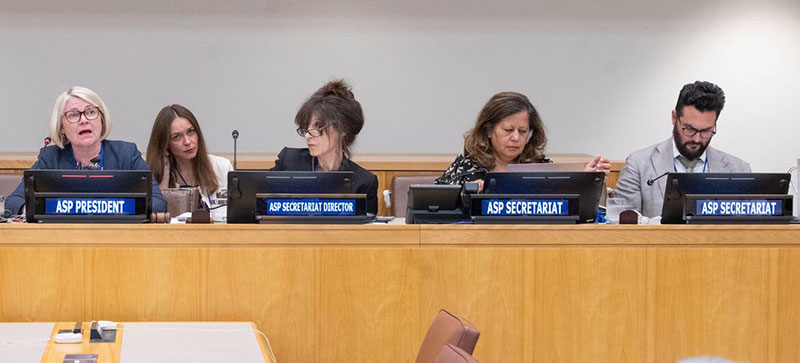
 US Secretary of State Marco Rubio’s warning to the International Criminal Court (ICC) was stark: ‘Either the ICC will end its threats, or we will end the ICC.’ It followed US central administration accusations that the court was unfairly targeting Americans on the basis of trumped-up war crimes charges.
However, a new plethora of sanctions has been clamped on the ICC by the US, which in turn has spurred accusations by sections of the world that the latter has unleashed an ‘assault’ on the international legal order.
What some of the sanctions would mean for the ICC was outlined by Rubio: ‘We will ban transactions with this rogue court, cutting off their resources and crippling their ability to operate against us.’
The ICC has shown consistency of purpose over the years. Despite some operational constraints it has indicted a large number of political strongmen from around the world, accused of war crimes and other governance excesses that come under its purview. Two such recent figures are: Russian President Vladimir Putin and Israeli Prime Minister Benjamin Netanyahu.
Rather than enjoy a mere nominal presence in the world community, the ICC has proved its effectiveness by detaining and bringing to justice scores of VIP politicians and others of their ilk who have been found guilty of human rights abuses and kindred excesses that come within the terms of reference of the ICC.
Accordingly, the international justice system would be stymied considerably as a result of the ICC being dis-empowered, particularly financially. Needless to say, potential and real perpetrators of the species of crime coming under the jurisdiction of the ICC would stand to gain most from such anarchic tendencies. That is, political repression globally would be enabled to enjoy a new lease of life.
A detailing of the types of crime coming under the purview of the ICC provides an idea of what it would cost the international community if the ICC’s operations are gravely hampered. They are mainly: genocide, war crimes, crimes against humanity and the crime of aggression.
That is, the part of the world to be worst affected would be the global South, since the latter is awash with the mentioned crimes. Needless to say, a chronically-disaffected South will sooner rather than later undermine the well being of the world dangerously. The world is already being put through these paces.
At the time of writing, ‘illegal migrants’ from the South, for example, are aggravating many a Western economy’s woes, besides creating for them acute law and order issues. The fact that these migrants’ presence goes on to become a virtual test of the migrant receiving states’ ability to forge domestic social inclusion in the face of jingoistic protests by mainly white supremacist groups is evidence of the latter. As is known, the US, to take just one example, has been up against this crisis for quite a while.
Accordingly, it will be in the best interests of the West if ‘illegal’ migrant arrivals on their shores are stemmed. If the socio-political and economic problems assailing the South are effectively managed through North-South collaborative, ‘trouble-shooting’ efforts the causes leading to ‘illegal’ migration and connected issues could be resolved at source as it were. For, it is the aggravation of the South’s material questions that lays the basis for the emergence of repressive and anti-democratic regimes in the hemisphere.
Until such time that the aforementioned issues in North-South relations are visited afresh and addressed urgently, a vibrantly functioning ICC would be needed. For, the latter would prove a deterrent to Southern political and military strongmen, highly prone to power abuse and like excesses, from coming into being in the wake of the South’s chronic material woes and the wars and conflicts that result from them.
It stands to reason then that the US would be acting in its own interests by enabling the ICC to perpetuate its mandate without hindrance. For a crop of issues that impinges negatively on internal law and order would be defused.
Meanwhile, there needs to be a meeting of minds among the rest of the West to put back in place a North-South dialogue process aimed at reducing some of the economic pressures that are weighing on the South.
Since economics usually drives politics it will be in the interests of the world community to scrutinizingly re-visit North-South issues of the past and put in place economic relief packages for Southern publics that would enable them to tide over their material hardships rather than permit the latter to aggravate into social disaffection and eventually armed militancy. It is the latter juncture that paves the way for the emergence of authoritarian rulers in the South who then go on to be a blight on their publics.
Accordingly, the Southern-based global development thinking of the past that envisaged a more equitable world economic order needs to be seen as an urgent need. That is, NAM’s international development paradigms need to be resuscitated to the extent possible.
It is unlikely that rightist governments of the West, such as the current Republican administration in the US, would find these projects feasible, but democratic states of Europe, led by perhaps the UK, are likely to think otherwise. For it would not be beneficial for the democratic world to be having on their hands repressive governments in the South who would be gravitating towards the major military and economic actors of the South, such as Iran and North Korea, who tend to be in constant power struggles with the West.
However, until such time that the mentioned, pro-people initiatives are given serious thought the ICC would need to be enabled by the international community to be in place comfortably and carry on with its mandate of bringing repressive rulers to book. Besides the ICC should pave the way for the peoples of the developing world to enjoy some substantial respite from the political repression and even terror which tend to be their lot.
Meanwhile, the wars of West Asia are relentlessly aggravating the economic hardships of people everywhere, driving the point home to enlightened sections that there is no alternative to peacemaking. A challenge is to convert the US under President Trump to this line of thinking.

 This week, I give you five simple, time-tested homemade remedies that help reduce the appearance of blemishes, control excess shine and leave your skin feeling softer and smoother.
The Honey and Lemon Brightening Dab:
For stubborn blemish marks, this is a classic. Mix one teaspoon of pure bee honey with three to four drops of fresh lemon juice. Apply gently, only on the affected spots, and leave for 10 minutes before rinsing with lukewarm water. While honey soothes and softens, lemon helps to brighten naturally. Use twice a week in the evening.
Besan and Rose Water Oil-Control Pack:
An ideal remedy to combat shine, especially on the T-zone. Take two teaspoons of besan (gram flour) and mix with sufficient rose water to form a smooth paste. Add a pinch of turmeric for its antiseptic goodness. Apply evenly, keep for 15 minutes and wash off. It absorbs excess oil without over-drying, leaving a beautiful matte finish.
Aloe Vera and Cucumber Ice Soother:
Blend fresh aloe vera gel with the juice of a grated cucumber and freeze the mixture in an ice tray. Each morning, wrap one cube in a soft muslin cloth and gently rub over a cleansed face for 30 seconds. It calms, tightens pores and imparts a baby-soft smoothness.
Oatmeal and Curd Gentle Polish:
Roughness and old blemish marks need gentle exfoliation. Combine one tablespoon of finely powdered oatmeal with one tablespoon of fresh curd (yoghurt). Massage very gently, in circular motions, for one minute, leave for five minutes and rinse. It removes dead cells and unveils softer, clearer skin.
Multani Mitti and Green Tea Magic Mask:
Brew some green tea and allow it to cool completely. Mix one and a half teaspoons of Multani Mitti (Fuller’s Earth) with the tea water to make a fine paste. Apply for 10 to 12 minutes – do not let it dry and crack completely – and wash off. It draws out impurities, fades blemishes and bestows a fresh, shine-free glow.
A Gentle Reminder:
As with any natural remedy, always do a patch test on your inner arm first. For those with oily or combination skin, avoid heavy coconut oil application and harsh scrubbing, as they tend to aggravate shine and blemishes.

 Dream of performing on a world stage? Well, here is your unique, golden opportunity!
The World Championships of Performing Arts (WCOPA) — the one and only official “Talent Olympics” — is the world’s premier global platform for aspiring singers, dancers, actors, models, instrumentalists, etc., to compete, shine and be discovered!
And, yes, this world stage is open to YOU, Sri Lankans living in Sri Lanka and overseas!
Held annually in glittering Las Vegas, WCOPA brings together over 70 countries, all competing for Gold, Silver and Bronze Medals, just like the traditional Olympics.

Lakisha Bernard: Will represent Team Sri Lanka at WCOPA 2027
Outstanding performers vie for the coveted titles of Junior and Senior Grand Champion Performer of the World, with winners and standout participants awarded over $500,000 in scholarships, cash awards and prizes to catapult their education and careers!
Sri Lanka is already making waves! At WCOPA 2026, Natharie Wickramasinghe, representing Team Sri Lanka, made the nation proud by winning a Bronze Medal in the Ethnic/Folklore Dance category!

Lakisha: Accomplished freelance Model and Fashion Design graduate
Recruitment for this prestigious competition is handled through a system of scouts and licensed National Directors — and this is where our very own Chris Rajendra, now based in Las Vegas, and National Director for Team Sri Lanka, comes into the scene.
If you are a singer, dancer, actor, model, instrumentalist — if you have talent burning inside you — contact Chris Rajendra today for registration and, who knows, you may find yourself in Las Vegas, and proudly draped in the Sri Lankan flag, at WCOPA 2027!
The contact address is: Chris Rajendra, wcopa.nationaldirector.sl@gmail.com
or chris.rajendra@gmail.com
Meanwhile, a star is born for 2027, in the form of Lakisha Bernard who is all set to represent Team Sri Lanka at WCOPA 2027.
Originally hailing from the sun-drenched coastal city of Colombo and now carving out her creative career in Canada, 22-year-old Lakisha is stepping into the international spotlight.
This accomplished freelance Model and Fashion Design graduate has officially been appointed as the Team Sri Lanka Promoter for Canada as she prepares to represent Team Sri Lanka at WCOPA in Las Vegas.
Lakisha brings a unique blend of high-fashion sensibility, captivating camera presence and expert garment design to the Team.
Having built her career, from local college shoots to high-glamour concepts, Lakisha’s inspiring journey embodies the true spirit of cultural bridge-building and creative resilience, bringing immense pride and recognition to Sri Lanka on the global stage.
WCOPA 2027 will be held at the legendary Westgate Hotel & Casino, Las Vegas, from 12th to 20th July – the very same iconic arena where the late, great Elvis Presley himself performed!
Your moment is now. Your stage is Las Vegas, so hurry and contact Chris Rajendra.
-

 News7 days ago
NDB fraud Rs 60mn more than reported
-

 News7 days ago
Removing monk’s robes matter for Sangha to decide: Mahanayake Theras
-

 News5 days ago
Sri Lanka escalates anti-graft drive with Shiranthi’s jailing
-

 News6 days ago
NPP govt. reminded of its responsibilities as US warship leaves Colombo
-
 Latest News6 days ago
Farhan, Sadaqat help Pakistan ace 183 chase to go 1-0 up
-
 News7 days ago
BHC, Colombo: “LTTE remains a proscribed org. in the UK”
-

 Latest News4 days ago
Farhan and Sadaqat help Pakistan seal series in style
-
 News5 days ago
Iranian ships stranded, Lanka fears US sanctions