
Opinion
A Tribute to Mr.W.D. Ailapperuma; An Exemplary Public Servant and a Rare Human Being

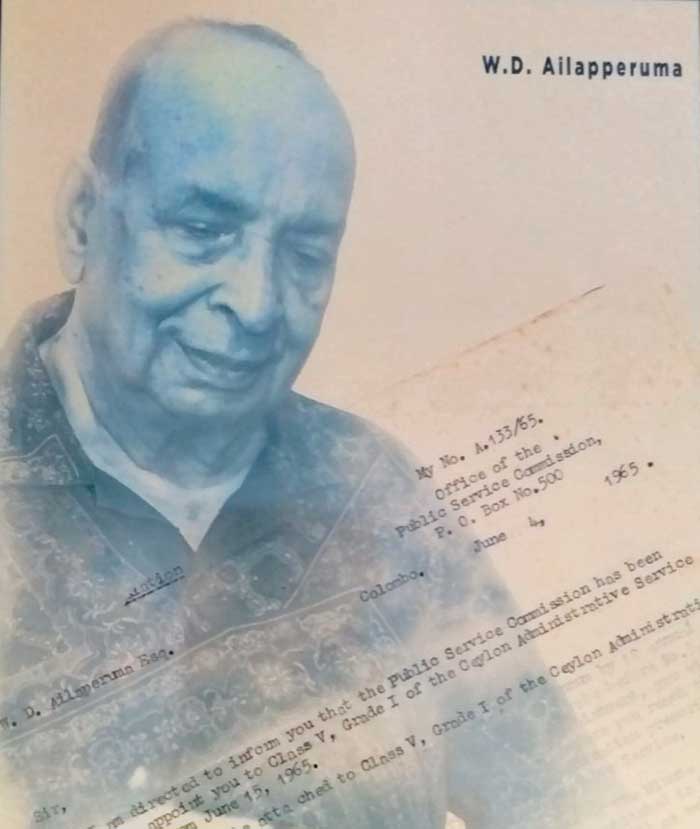
By Desamanya K.H.J. Wijayadasa;
Former Secretary to the President
The news of the untimely death of Wijepala Dharmasiri Ailapperuma – an exemplary public servant, a top administrator and a rare, humane, human being, exactly an year ago came as a rude shock to all of us, especially his contemporaries at the University of Ceylon, Peradeniya and his colleagues in the Public Service.
I am a firm subscriber to the view that breeding and upbringing are the two most critical factors that come into play in moulding the character and integrity of an exemplary citizen. Aila was an embodiment of these two fundamental characteristics.
He was born on the April 12, 1938 at Millewa, a beautiful village in the vicinity of Horana to educated and cultured middle class parents of standing and repute. His mother was a trained teacher, while his father was a small time businessman of integrity. Aila’s father passed away when he was only six years of age and his mother teaching in a remote school in Kegalle District at the time had no alternative but to place Aila in the care of her sister and brother in law who were both teachers at Weherawatta Sinhala School in Anguruwatota.
This is where he had his entire primary education and spent his formative years; a blessing in disguise under the given circumstances. Aila confided in me that he made the best use of these fortuitous circumstances and also made a firm resolution that he would reach the top of the ladder in his chosen profession. This indeed was the turning point in his illustrious career.
Like many of our contemporaries, Aila was a brilliant product of free education plus liberal English medium education, which was thrown away with the bath water for political expediency in the 1960’s. He received his secondary and senior secondary education at Taxila College Horana, where he excelled in academic studies, sports and extra curricular activities.
In 1958 he gained admission to the University of Ceylon, Peradeniya, followed a special course in Sociology and graduated with honours in 1962. Having performed exceptionally well in the open competitive examination, he was admitted to the Ceylon Administrative Service in 1965; successor to the coveted Ceylon Civil Service which was unceremoniously abolished in 1963.
He received Post Graduate Training in Development Administration at the University of Cambridge and subsequently obtained Fellowship of the World Bank Institute in Washington in Managing Urban Growth.
Aila’s Public Service career was both wide and varied and slow and steady. He was always prepared to take on challenging jobs and break new ground. He held a string of sensitive and responsible positions such as Director General of the Central Environmental Authority and the Urban Development Authority. Director Planning, Ministry of Local Government, Housing and Construction, Chairman, National Housing Development Authority, Secretary, Ministry of Urban Development, Housing and Construction and Advisor to the Minister of Housing and Cultural Affairs with great distinction.
He was one of the most trusted and sought after public servants of President Premadasa, for a period of 15 years from 1978 – 1993. This indeed is an enviable feat considering President Premadasa’s fluctuating moods, idiosyncrasies and his habit of under cover surveillance of his senior staff officers.
It is said that the closer you are to the throne, the greater the chance of getting beheaded instantly. In this case Aila was the perfect blend of caution and instinct. He of course did not have one foot here and one foot there. He looked after his boss’s interests meticulously. He did not gossip nor did he denounce anyone. He was in the know of state secrets, political manoeuvres and even family quarrels of his bosses. But, he did not breath a word about those even to his wife, let alone the outside world.
Aila was an unassuming, harmless and saintly character. He was extremely loyal and faithful to his superiors. He not only carried out instructions given to him meticulously but also added his own colours and flavours to the tasks assigned to him. We, Civil Servants of yore were taught to comply first and complain later. In Aila’s case he always complied, never complained but compromised in the best possible manner.
He was humble, quiet and unassuming in his demeanour. He knew how to win friends and influence people. Perseverance and application to detail was the hallmark of his success. It is no exaggeration to state that he brought compassion, honesty and humility to the Administrative Service.
Aila was an embodiment of the famous dictum that “Reading Makes a Complete Man”. He was a prolific and avid reader. He did not spend a single minute of his life moping and groping. He read anything and everything that came his way till the wee hours of the morning. His brain was a vast storehouse of knowledge. This is probably why he excelled in playing scrabble. Moreover, his command of the English language was immaculate.
He was a great environmentalist who advocated a gentle and non aggressive attitude towards nature and living beings. He shunned conspicuous consumption and wasteful use of wealth and resources. I, along with Aila served as founder Chairman and Director General respectively of the nascent Central Environmental Authority for well over a decade in perfect unison and harmony and paved the way for the growth of this monolithic organization to what it is today.
Aila was a perfect embodiment of virtuous living. He led an exemplary life as reflected in the famous Buddhist dictum “contentment is the highest gain”. He was a man of principles who practiced what he preached. He considered frugality as a virtue in its own right. May be, influenced by Gandhian Philosophy he did not attach much value or importance to luxurious living. He did not live by precept alone. He lived both by precept and example. He never seemed to be worried or flurried. He was never in a hurry. In other words everything he did was well planned, organized and under his control. Men of such self confidence and self control are very rare indeed.
Aila’s married life of 56 years has been smooth and cosy. He was the loving and caring husband of his guardian angel Pushpa who not only provided motherly care but also pampered him at every turn. Aila adored his son Chulaka and daughter Maheshi. For Aila Maheshi was the “Apple of his eye” as portrayed by the following words of appreciation she penned about him from far away Texas, USA.
(I quote) “Thathi was my hero. Everyday of my life he believed in me. He instilled in me all the morals and values, I have. He taught me to be kind, confident and strong. I was able to learn and emulate his strong work ethics of hard work, patience and perseverance. He was never boastful and arrogant. He was the better father, I could ever ask for or wish for. The perfect person created just for me”(End of quote)
I am glad that my impressions about Aila do tally with those of his daughter, Maheshi’s. The moral of the story is that, if people such as heWije are born in their thousands, Sri Lanka will be a better place for all of us to live happily and die peacefully. May he attain the Supreme Bliss of Nibbana.

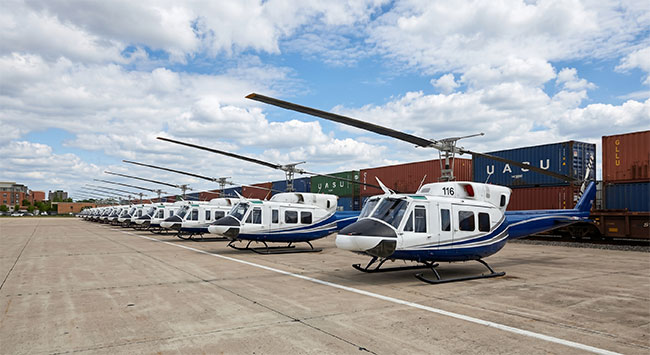
The US Government has gifted 10 Bell 206, Sea Ranger Helicopters to the SLAF for Training and Humanitarian Assistance and Disaster Relief (HADR) purposes. The full specifications are as follows.
Contractor:
Bell Helicopter Textron
Date Deployed: First flight: 1961; Operational: 1968
Propulsion: One Allison 250-C20BJ turbofan engine
Length: Fuselage – 31 feet (9.44 meters); Rotors turning – 39 feet (11.9 meters)
Height: 10 feet (3.04 meters)
Rotor Diameter: 35 feet 4 inches (10.78 meters)
Weight: 1595 pounds (725kg) empty, 3200 pounds (1455 kg) maximum take-off
Airspeed: 138 miles (222 km) per hour maximum; 117 miles (188 km) per hour cruising
Ceiling: 18,900 feet (5,761 meters)
Range: 368 nautical miles (420 statute miles, 676 km)
Crew: One pilot, four students
While they are good for training, I have my serious doubts whether these helicopters are ideal for HADR. As they have only a single engine and They can’t even operate into high rise helipads in hospitals and hotels in Colombo. The law requires twin engine helicopters! What happens if there is an engine failure while operating over the sea or in a mountainous area? There will be hell to pay!
Three twin engine versions would have been better.
How many helicopter pilots does the SLAF require anyway?
Will we be stuck with junk? Like two Russian KA -26’s during the Sirimavo Government and French Aerospatiale Dauphins SLAF acquired. which were not ‘tropicalised’, during the JRJ Government.
Will the Sea Ranger Spares support be available, free of charge?
I doubt it.
There will also be other Geopolitical strings attached. There is no such thing as a free lunch.
Guwan Seeya

Global warming policies were expected to drive a rapid shift toward a renewables-based energy system dominated by wind and solar. While growth in these sources did occur, it has not matched the pace that was widely anticipated. In the United States, the rise of cheap and abundant shale natural gas significantly reshaped the energy mix, displacing coal and limiting the relative share of wind and solar in electricity generation. In China and India, the situation has been different.
Coal remains dominant because it is widely available domestically, while natural gas is more limited or expensive to secure at scale. As a result, coal has retained its central role in both countries’ power systems. Solar and wind always provide intermittent, variable power. It was widely assumed that a cost-effective, utility-scale electricity storage solution would emerge to solve this problem, but that has not yet happened at the scale originally expected. In the pre-AI era, solar and wind were typically integrated into power systems alongside more reliable sources such as coal, natural gas, and nuclear energy.
For example, if the sun was shining on a Monday, electricity demand could be met largely by solar power during the day. At night, coal, natural gas, or nuclear plants would supply the required electricity. If the following Tuesday was cloudy or gloomy, generation would shift back toward coal, gas, or nuclear to maintain supply. AI introduces a new and more demanding challenge. AI data centers require continuous, high-quality, always-on electricity, which solar and wind alone struggle to guarantee without large-scale storage or back-up systems. In addition, they require very large amounts of power.
As a result, the AI industry is now actively searching for new and expanded sources of reliable electricity. One of the major challenges in powering AI systems is electricity transmission. High-voltage transmission lines are expensive, slow to build, and often face regulatory and land-use constraints. As a result, some companies are exploring more localized power solutions, sometimes referred to as microgrids. These are self-contained energy systems that can operate independently from the main electricity grid. Technologies such as small modular nuclear reactors are an example of such microgrids.
In such isolated systems, the focus is on highly reliable, always available power generated close to the point of use. In this context, solar and wind are expected to play a limited role because their output is variable and depends on weather conditions, making them less suited as primary sources in fully self-contained AI-focused microgrids. The pace of AI infrastructure development is extremely rapid in both the United States and China. AI systems are widely seen as transformative technologies that promise significant new wealth creation, which is driving aggressive and sustained investment. As a result, development is moving quickly, without waiting for long-term solutions such as large-scale energy storage to mature alongside renewable energy systems.
In this environment, electricity demand is rising faster than new infrastructure can be built. In the United States, this reinforces the role of natural gas as the dominant source of reliable power. In China and India, where coal remains more established and readily available, it is likely to continue playing a central role in meeting growing demand. In India, AI data centers have not yet been built at the scale seen in the United States and China. When India does reach that stage, it will need to supply large amounts of reliable electricity. India has placed strong emphasis on solar energy in particular and has had some success in meeting the needs of ordinary consumers through renewable expansion. However, the key question is what choices will be made when large-scale AI data centers begin to arrive.
Will India rely more on coal generation, which is relatively cheap, widely available, and highly reliable, or on solar power, which is intermittent, variable, and often more expensive when reliability is taken into account? My view is that India is more likely to turn to coal to meet this demand, given its existing infrastructure and the need for dependable electricity supply. Then there is an overall question. Solar and wind were already struggling in the pre-AI days to displace coal and natural gas at the system level, despite strong expectations that they would become dominant sources of electricity. Now that AI is here and electricity demand is rising rapidly, will they push solar and wind further behind in the energy mix? (The Statesman)
(The writer is an expert on energy and contributes regularly to publications in India and overseas.)
by SUNIL SHARAN
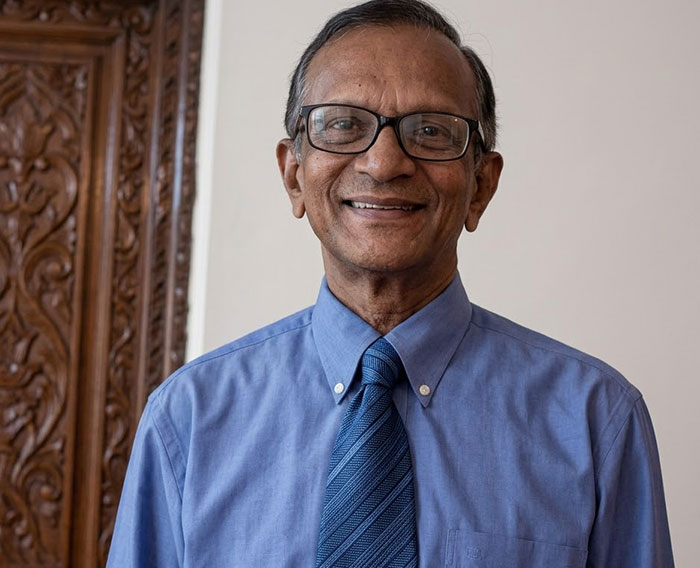
Celebrating the Life and Legacy of Dr Naomal P. S. Gunaratna 10 January 1931 – 07 May 2026
When a colossus of human virtue departs this earthly theatre, the silence left in its wake is not merely the absence of sound, but a profound, resonant reverberation that echoes through the very corridors of our souls. On that most distressing 07 of May, 2026, the mortal final curtain fell upon the magnificent, multi-faceted tapestry of a life lived to its exquisite pinnacle. Dr Naomal P. S. Gunaratna, having completed a glorious earthly sojourn of ninety-five years, surrendered his gentle spirit to the infinite, leaving behind a world demonstrably poorer for his departure.
To speak of him is to speak of an absolute gem of humanity, a mortal who walked among us with the quiet majesty of a king, the tender heart of a saint, and the flawless grace of a true nobleman. He was a Consultant Paediatrician of peerless distinction. Yet for all that, well above and beyond the glittering accolades of his noble vocation, he was, in the truest and most sublime sense of the phrase, a human being par excellence.
In attempting to encapsulate the vast depth of Naomal’s character, even the richness of the English language feels frustratingly inadequate, compelling one to search for words forged in the fires of profoundest reverence. He was a grandee possessed of sterling qualities so rare in this modern transactional era that his presence felt like an exquisite anachronism; a beautiful remainder of an age when honour was a man’s sanctuary, and integrity was his unwavering Northern Star. His uniqueness did not stem from an assertive, ostentatious display of superiority. It blossomed from the quiet, luminous radiance of an authentic soul. To have been counted among his close friends is a privilege of such monumental proportions that it stands as one of the most radiant blessings of my own life. Our bond was not woven from the fragile threads of casual acquaintance, but forged in the durable crucible of mutual respect, shared ideals, and a deep, unspoken understanding of the beauty inherent in lives dedicated to the service of others.
In an age where the ethical landscape is all too often obscured by the shifting mists of compromise and moral ambivalence, Naomal stood like an unyielding granite cliff against the turbulent seas of opportunism. His rectitude was absolute, non-negotiable, and entirely independent of an audience. He did what was right, not for the fleeting warmth of public adulation, but because his internal moral compass was tuned to an otherworldly frequency. His word was a sacred covenant, an unbreakable bond that required no legal seal or written witness. In his professional life as a Consultant Paediatrician, this supreme integrity manifested as an unswerving commitment to the highest principles of Hippocratic devotion. He was a healer who could neither be bought nor swayed by the seductive allure of material gain or institutional politics. He wielded his stethoscope not as an instrument of commerce, but as a sacred conduit of compassion, bridging the divide between clinical expertise and the tender vulnerabilities of human suffering.
How can one adequately depict the soft, enveloping warmth of a heart that beats in perpetual symphony with the distress of others? Naomal’s benevolence was not a performative gesture, nor was it a duty executed with cold, clinical precision. It was an effusive, spontaneous overflow of pure, unadulterated love. It was a kindness that possessed its own unique atmosphere, a soothing gentleness that disarmed fear and banished despair. When he entered a room, the emotional temperature invariably rose, thawed by the genuine, sparkling warmth of his magnificent smile. His eyes, windows to a soul completely devoid of malice, mirrored a profound empathy that could diagnose a broken spirit as swiftly as a physical ailment.
He was brought up in his early days at De Mazenod College in Kandana, St Peter’s College Colombo, Royal College Colombo, and during the period of World War II, in Glendale College, Bandarawela. In a glittering career that followed specialisation in paediatrics, he has worked in the Government Hospital in Gampaha and Kuliyapitiya, the Department of Paediatrics of the University of Peradeniya, North Colombo Medical College in Ragama and then at the Department of Paediatrics of the University of Kelaniya. To the thousands of children who passed through his healing hands across the decades, he was not merely a doctor in a sterile white coat; he was a grand, benevolent guardian angel, a comforting presence whose very touch possessed an alchemy that turned terror into tranquillity and tears into triumphant laughter. To scores of his students, he was a father figure, a mentor and a brilliant teacher. In the years gone by, he was the President of the Sri Lanka Paediatric Association, which is now the Sri Lanka College of Paediatricians, President of the Vaccines and Infectious Diseases Forum of Sri Lanka and a much-valued Council Member of the Independent Medical Practitioners Association (IMPA). The unblemished finesse that he exhibited in these positions is indeed an abiding lesson to all and sundry.
As a Consultant Paediatrician, Naomal’s brilliance was legendary, a beacon of excellence that illuminated the medical fraternity. Yet, his profound intellect was beautifully balanced by an equal measure of humility. He possessed the rare ability to untangle the most knotty, complex medical conundrums with a swift, intuitive diagnostic precision, all while maintaining a bedside manner that was as gentle as a summer breeze. He understood, with a depth that bypassed mere textbook knowledge, that a sick child is a fragile ecosystem, intertwined with the agonising anxieties of distraught parents. Consequently, his consultations were masterclasses in holistic healing. He did not merely treat a disease; he cradled a family. He would spend hours patiently explaining clinical intricacies to frightened mothers, his voice a calm, reassuring anchor in the midst of their emotional storms. He treated the children of royalty and the children of peasants, with the same meticulous care, the same overflowing affection, and the same absolute dedication, recognising the identical, priceless spark of divinity within each innocent soul.
A personal anecdote goes to show the most admirable and true spirit of the man. I did not know Naomal from Adam till 1990. In January of 1990, following my tenure of office in General Hospital Badulla, General Hospital Ratnapura and General Hospital Kurunegala, I was posted as the Consultant Paediatrician to Kalubowila Hospital by the Ministry of Health. Both Naomal and I did our Private Consultations at Asiri Medical Hospital. We worked on the same floor and became really close friends. He had loads of patients, while I had extremely few, as I was totally unknown. Most of the time, I was seated in my Consulting Room, twiddling my thumbs and waiting for some tangible work with children.
Then one day, Naomal came to my room and said that he needed to go abroad for an extended period of about six to eight months and asked me whether I could look after his patients. I was very happy to do it as at that time, as it was like ‘manna from heaven’ for me. So, it went on, I looked after his little patients, and I was financially the richer for it.
Then, when Naomal came back after all those months, I told all his patients that I was only covering up his work and that they should go back to him. However, some of them wanted to stay with me. I told them that the only way in which I would continue to look after their children was for them to get a note to that effect from Dr Naomal Gunaratna. I was quite sure that it would not come to pass that way. They went to him and told him what I said, and Naomal, most nonchalantly, graciously and with the greatest pleasure, issued a little note to each of them in which he had written “My dear BJC, please be kind enough to take over the care of this child“. Need I say more? What a man? What a fantastic person who showed by his quiet deeds that his values transcended petty considerations and monetary reflections?
The longevity of ninety-five years is a milestone granted only to a few. For Naomal, these nine decades plus were not merely a passive accumulation of days but a grand, purposeful march through time. He aged with an unparalleled, majestic dignity, his wisdom deepening like a fine vintage, while his youthful enthusiasm for life remained entirely unextinguished by the passing years. Even as his physical frame grew frail under the inevitable weight of time, his mind remained a brilliant, caerulean laboratory of thought, and his spirit retained its effervescent, childlike joy. He never allowed the cynicism of an evolving world to pollute the pristine waters of his optimism. To sit with him in his twilight years was to drink from a fountain of pure, unvarnished wisdom. He looked back upon his long journey not with the wistful regrets of a man mourning, but with the serene, tranquil satisfaction of an accomplished master craftsman who looks upon a masterpiece and knows he has given it his all, in the finest sense of the phrase.
We must also celebrate the quiet, understated grandeur of his private universe. Naomal was a man of exquisite tastes, an intellectual who found solace in the harmony of great literature, the majesty of classical arts, and the quiet contemplation of nature’s wonders. Yet, his greatest joy was found in the warmth of human connections. He was a loyal, fiercely protective friend, a steadfast pillar of strength upon whom one could lean with absolute confidence, even during life’s most turbulent seasons. In an era dominated by superficial relationships and digital illusions, his friendship was a solid, tangible sanctuary. His conversations were never trivial; they were rich and multi-layered tapestries woven with historical anecdotes, medical philosophies, gentle humour, and profound spiritual insights. To converse with him was to be elevated, and to be challenged to think more deeply, love more expansively, and live more honourably.
On that day of his departure from this mortal world, the world lost an exceptional treasure. The medical profession lost one of its most venerable elder statesmen, humanity lost an exemplary ambassador, and I lost a cherished brother of the heart. The grief we feel is heavy, a dark and suffocating shroud that threatens to overwhelm us. Yet, as we stand in the shadow of this monumental loss, we must not weep as those who have no hope. Naomal’s demise is not an absolute end but a glorious transition. It is the triumphant homecoming of a soul that has magnificently fulfilled its earthly mandate. The physical vessel which carried his inner being may return to the dust from which it came, but the essence of who he was, the kindness he disseminated, the lives he saved, the love he kindled, and the pristine integrity he modelled remain forever immortalised in the fabric of our realities.
He has crossed the ultimate horizon, entering that everlasting realm where pain is obsolete, and peace reigns eternal. We can almost see him now, walking through fields of everlasting light, his countenance radiant, his step light and free, greeted by a chorus of godly beings and even the grateful souls of the children he mended but who preceded him into eternity. The man has fought the good fight, he has finished the race, he has kept the faith with absolute, unyielding fidelity. His life was a beautiful, symphonic ensemble dedicated to the upliftment of humans, and its final stanza, though hushed in death, is an abiding opus which leaves an eternal melody playing in our hearts.
Farewell, my dearly beloved friend; goodbye, Dr Naomal P. S. Gunaratna. You were an absolute gem of a person, a human being par excellence, and a star that burned with a brilliant, comforting light in our earthly sky. Though you have gone away from our sight, your luminescence will continue to guide our steps through the gathering shadows until that glorious dawn when we shall meet again on the farther shore.
May your most beautiful, noble soul rest in eternal, serene, and uninterrupted peace. May you attain eternal bliss!
I conclude with the immortal words, as depicted by the great bard William Shakespeare in Julius Caesar (Act V, Scene 5) “His life was gentle, and the elements so mixed in him that nature might stand up and say to all the world, This was a man.”
By Dr B. J. C. Perera
Specialist Consultant Paediatrician

Confident Bangladesh pose Australia a fresh challenge after 15-year wait for an ODI series

Tehran calls off attacks on Israel; warns not to hit Lebanon

Philippines earthquake kills 15, prompts tsunami fears:

T20 World Cup: Heavyweights, hopefuls and a debutant headline Group 1

Showers in the Western, Sabaragamuwa and North-western provinces and in Galle, Matara, Kandy and Nuwara-Eliya districts

Diesel replacement costs up to Rs. 4.5 bn in April

‘Dates have the highest sugar content to fight Coronavirus’

Sunday Island 27 December – Headlines

#SundayIsland 17th December – Headlines

Sunday Island – 28th March

Sunday Island Headlines – 21 March

Sunday Island – 21st February – Headlines
-

 News7 days ago
Lankan duo emerge winners in Latin dance championship held in Blackpool, UK
-
 Latest News5 days ago
Kusal Mendis, Pathum Nissanka, bowlers put Sri Lanka 1-0 up
-
 News5 days ago
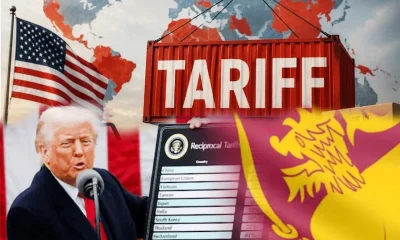
New US tariffs proposed on 60 countries, including Sri Lanka
-
 News7 days ago
Sri Lankan teen killed in Chennai clash; three arrested
-
 Features4 days ago
Power crept into the Sangha and is now tearing it apart
-

 Features4 days ago
Kondachchi wind farm and battery storage project to boost energy security, says Power Ministry Secretary
-

 News3 days ago
Asst. Manager, security officer arrested over Rs 30 mn snatch at Horana PB branch
-
 Features4 days ago
Saudi Arabia sets new benchmark in Hajj management as 1.7 million pilgrims complete sacred journey