
Business
‘ A new asset class – the Cryptos’


by Chandu Epitawala,
BSc, MBA Email: epitawala@yahoo.com
(Continued from yesterday)
Blockchain technology or platform has many real world applications in terms of transparent and efficient delivery of public services not to mention endless commercial applications/possibilities (Web3 is nothing short of an upgrade of the internet itself which enables secure exchange of value). For an example, the land registry or the vehicle registry (or any other Registry for that matter) can be on Blockchain allowing easy public access, swift and low cost transactions, transparency etc. etc.
Cryptos (AltCoins) – Tokens
Cryptos can be mined using high powered computers (a process which consumes vast amounts of electricity and to that extent environmentally unfriendly) or simply bought at the primary market from the Issuer at the Initial Coin Offering (ICO) and bought/sold in the secondary market in either centralized Exchanges (24/7 trading) or decentralized ones. Unlike Shares, they can also be swapped or exchanged for each other quite easily based on current market prices. They are stored in Wallets and every Wallet (the name used for equivalent to a bank account with a unique address/identification) is (or can be) linked to an Exchange. Just like share and commodity markets, all derivative/hedging instruments (futures contracts, short selling etc.) as well as margin trading facilities (a market based or constantly changing rate of interest charged on an hourly basis) are available at your fingertips (without any paperwork, approvals, phone calls or having to go to a physical location).
Other than Bit Coin, all other coins or tokens can be called Alt Coins. There are currently over 30,000 of them and 100s of new ones representing new business ideas (solving an existing problem in the sphere or catering to a market/commercial need) or new projects are added to the sphere everyday (no different to the real world of business). Almost 99% of them may fail or not gain traction and eventually disappear or go bankrupt not to mention the Scams and Frauds that are out there deliberately trying to cheat people out of their funds in a lightly regulated environment. Each one will have a White Paper explaining their project objectives/strategy, mission/vision etc and lay out the details of the team behind it.
I believe Crypto Coins or Tokens have baffled many experts, academics, regulators, and regular people alike mainly for the reason they carry or represent features of Securities, Commodities, and Currencies all rolled into one. They (Coins/Tokens) are issued (like Shares of a Company) at an Initial Coin Offering (ICO) and funds raised so to that extent it is a Security representing ownership of a set of assets/ idea/project/business. Some have limited (by algorithm which can’t be changed and forever be limited) issue of tokens and others are open to issue additional tokens at a later date (Dilution). They trade and fluctuate heavily in price (upto 30% within 24 hours) in the secondary market based on market supply and demand for the Coin (not necessarily based on earnings or assets of the Project/Business). To that extent they are like Commodities (Gold, Silver etc). The owner does not get any dividends in cash but may get additional coins/token like bonus shares. They trade in the secondary market (on many Centralized Exchanges as well as decentralized exchanges or DAX around the clock (24/7) like currencies and used like currencies for payments and money transfers. Most coins can be divided like currencies to make payment/transfer of any particular amount. Most coins, other than Stablecoins which are pegged to a real world fiat currency (1 for 1), fluctuate in price measured in terms of USD.
Stable Coins are digitized or tokenized real world currencies or fiat money (different to proposed Central Bank Digital Currencies). The dominant Stable Coin in the Crypto sphere is the USDT (T represent the issuing Company Tether which has a current market Capitalization of over $140 Billion as the 4th largest Cryptocurrency/Coin). Many other USD pegged Stablecoins will be established next year. There are many other USD pegged Stable Coins (USDC etc) and other Stable Coins pegged (1 for 1) to other Currencies such as Euro, AUD, UAE Dhiram etc. Remember Euro pegged Stable Coin can fluctuate in Price in terms of USD but stable (do not fluctuate) in terms of Euro.
As a result there is debate in the US and elsewhere as to which government agency (the Central Bank, the SEC, the Commodities Regulator or an entirely new Regulator like in UAE) should or better suited/placed to regulate the digital/virtual assets sphere.
The difference between Cryptos and proposed Central Bank Digital Currencies (CBDC)
Most Central Banks around the World are developing or contemplating issuing a Government backed Digital Currency of their own to facilitate easier/faster digital payments/transactions. However, they represent each countries’ fiat currency and will remain under central authorities and still subject to decisions made by bureaucrats/politicians specially in terms of money printing/expansion of money supply. And CBDC transactions by the users can be monitored by the Government which will most likely make them unpopular. BitCoin and many other Cryptos are on the other hand limited in their issue by an algorithm which can not be changed and cross border use/transfers can not be restricted by Governments. Cryptos that are limited/restricted in issue (ie BitCoin) by definition can be truly a solid hedge or protection against inflation/debasing of value of many fiat currencies in the World (including the USD). This remain one of the main attractions of Bit Coin as a store of value. Stable Coins are almost identical to CBDCs and used by the Crypto users as the interface between Virtual Assets and the real world.
The Macro Picture/Issues for the Authorities/Policy Makers/Regulators
Philosophically, the entire Crypto industry in general and BitCoin (the Creator is unknown) in particular was born and had taken root as a Libertarian concept/idea where those who generally distrust/despise governments/politicians/policy makers and who want to break free from their control and from the ill effects of their misguided decisions (particularly endless printing of fiat money all over the world and resultant inflation) seeking a decentralized (Community driven) alternative where wealth is preserved and trust in the currency/medium of exchange/store of value is restored. This technology/concept is favored by or popular with those who are opposed to centralized (few People) decision making in a Country. Therefore, all Governments may not welcome such technological innovations and its use by their citizens. The well known historian and author Yual Noah Hariri called BitCoin the currency of distrust.
From the developments I have observed in the last five years I can say Cryptos as a concept is here to stay as they and the underlying Blockchain technology have many useful real world, commercial applications. And the decentralized nature of the technology or the applications make them attractive to many consumers, buyers, sellers and also make it impossible for authorities to ban or eliminate them. So many policy makers/regulators around the world have gradually come to terms with these realities and now increasingly inclined to allow and encourage developments within this sphere while regulating the markets to prevent fraud, scams, hacking of accounts/wallets etc and protect the unsophisticated, retail participants. The industry which is community driven is self regulating (they regularly come up with remedies/solutions etc) as without the public trust and confidence it can’t prosper and grow.
And of course the Governments/ the Tax Authorities are interested in their fair share of the economic activity and profits/wealth that is generated. In fact the recent developments in the US (specifically after the election of Crypto friendly Donald Trump as President) will profoundly and favorably change the Regulatory environment for Cryptos all over the world as others take their cue from the developments in financial markets/regulations in the USA. For an example after years of deliberating, the US SEC authorized BitCoin Exchange Traded Funds (ETFs) in January 2024. This opens up a much larger pool of investors, savers, traders to participate or get exposure to this new Asset Class without directly buying them. Since then titans of the fund management industry (Fidelity, BlackRock etc.) have started BitCoin ETFs which have grown to over $33 Billion in Value in less than a year (Growth had been much faster than Gold ETFs ever was which after many decades currently stand at $32 Billion). I suspect, 2025 will be a watershed year for Crypto Industry once Donald Trump and his Team take office on 20th January.
In 2023, right after Sri Lanka’s economic/currency collapse, an American Venture Capitalist/BitCoin enthusiast called Tim Draper visited Sri Lanka and gave a proposal to the Central Bank/Government which was swiftly (and understandably) rejected by them (reported in many Newspapers and Websites). The Price of Bitcoin was around $20000 in the market at the time (Today it is $100000). With the benefit of hindsight, imagine the positive impact on the economy, inflation (prices), forex reserves, national debt etc., had SL accepted or adopted the proposal!! Some Countries and Companies in the US and elsewhere have already made BitCoin a part of their Reserves and I suspect more will join in the coming years. Much will depend on what the US policy makers (both State and Federal levels) and large Corporations would decide in the next few years. The year 2025 will see important developments for the industry coming from the US Government/Regulators.
Having said all this, it must be pointed out many prominent Academics, Economists, Financiers/Asset Managers (ie Warren Buffet, Christian La Guard, Ray Dalio, Paul Krugman, Jim Rogers, Jamie Dimon etc) are still not in favor of or negative about Cryptocurrencies. The number of Nay sayers though have gradually reduced in number over the last 10 years. The most prominent among the converts is Larry Fink (CEO/Chairman of BlackRock – the largest Asset Manager in the World with $11 Trillion under Management) who was initially opposed but now in favour of Digital Assets, Tokenization etc.
Some Statistics and Facts to illustrate the current global status/size, developments and benefits of the Technology/Industry/Markets
Total Market Cap of Cryptos today (10 Dec 2024) is around $ 4 Trillion out of which $2 Trillion is BitCoin (Gold market cap is around $17 Trillion and Silver stands at around $1.4 Trillion
Daily total Turnover/Volume of trades of all Cryptos in all Centralized and Decentralized Exchanges ranges from $100 billion to $350 billion
In 2023, BitCoin processed $36.6 Trillion transactions (Visa and Master Card together $24 Trillion) More interesting to find out the fees involved in both these Categories. BitCoin fees would be a fraction of Visa/Master Card transaction fees.
This year Dubai legalized payments in Crypto for Real Estate transactions, allowed Bank accounts to directly deal/convert to Crypto, licensed a Crypto Exchange (OKX). All Crypto transactions in Dubai are tax free. Dubai already have a Virtual Assets Regulator in place.
Many jurisdictions exempt capital gains taxes (CGT) from Crypto transactions but in some countries they can go upto 40%. This obviously could change with time.
As an interim step or development to facilitate greater use many Crypto Wallets are now linked to Visa or MasterCard (with over 100 mn Vender acceptance) so that the owner/holder of Crypto can freely use their Crypto funds via a Debit Card
El Salvadore which heavily depends on remittances from Salvadorians working abroad apparently pay annually $300mn to $400 mn to money transfer companies and Banks as commission and fees. Shifting to Cryptos as a method of fund transfers can save 90% of these costs which is beneficial to the individuals involved and the Country. Sri Lanka can do the same.
Statistics show BitCoin is being adopted by People at faster pace than the Internet itself. Currently there are 400 mn active Crypto Wallets (Accounts). This adoption is the most critical factor for the development/growth of the Industry and markets
Bills are being introduced in some US States (Pennsylvania, Florida, Texas, Ohio etc) and Countries such as Brazil allowing the holding of BitCoin as a Strategic Reserve Asset (like Gold).
The Company behind Ripple or XRP Token which specializes in facilitating global fund transfers (far cheaper, secure and speedier alternative to SWIFT) just became the number three Token in terms of Market Capitalization ($150 Billion) reflecting confidence in its business model/project. They already work closely with large global Banks and Financial Institutions.
Bhutan with a $4 billion Economy holds $1 bn in BitCoin and El Salvadore hold $600 mn in BitCoin as a Reserve Asset. Many more Countries (including some developed countries) are expected to join in accepting/holding BitCoin as a Reserve Asset in the coming years.( As of now, both the US and the Chinese governments each hold approximately 200,000 BitCoins.)
Over 60 Countries already have BitCoin ATMs installed at various public places where People can buy, sell or send/transfer BitCoins and other Tokens. Fees at ATM’s remain high though.
The challenge for all countries and regulators is to come up with measures to prevent, trace and interdict funds (accounts/wallets) involved in drugs, crime, corruption, money laundering, tax evasion, terrorist activities etc. from getting into the Crypto platforms in the first place by having proper KYC protocols etc. The problem is no different to the one faced and tackled by the Banking system. It is speculated some of the “dirty money” may already be in the system. The good news is the Blockchain enables all transactions to be traced and monitored and beneficiaries of all Wallets (Accounts) to be identified.
The economic possibilities available in the industry/markets in this arena are endless and the jobs and wealth creation that will come with it. It’s high time the Sri Lankan authorities/regulators take a serious look at this emerging digital economy/industry and its economic possibilities/opportunities for our youth initially at least within the Port City Colombo given that the Port City is already designated or Gazetted as a dollarized zone.
For Sri Lankan Portfolio Managers, this new/global asset class though volatile and risky represent new possibilities/opportunities for diversification of risk across currencies or hedge against Rupee depreciation (after obtaining the necessary permission/approvals from the regulator etc.). For Bankers (and others involved in fund transfers and payments), it is worth taking note of the new developments taking place in terms of shifts in the current payments and fund transfer platforms/models or risk losing business. New technological shifts have created a Kodak (which went bankrupt because of not adopting to the digital revolution in photography made them obsolete) moment.
In Conclusion, like it or not Cryptos as a concept/idea are here to stay but will evolve over time. The number of people actively using the platforms to transfer funds etc and have more confidence in a Digital Asset as an investment vehicle than on a real asset are growing. Since my introduction to this sphere in 2020, I was surprised to find out how many youths (hundreds of thousands) from rural areas in Sri Lanka are already involved in the sector even without much regulatory clarity coming from the authorities (other than the Central Bank warning the Public on the volatility/riskiness of the Asset). The Central Bank/Treasury has prohibited Credit Cards issued in Sri Lanka from purchasing Crypto since around 2019. That has not stopped Sri Lankans (mostly tech savvy youth in their 20s and 30s) being active in the market. I believe/suspect many working in the middle east and elsewhere have their funds on these platforms and using them for transfers etc. As a former fund manager I can say, though it is a highly volatile and therefor represent a degree of risk, it can’t be ignored anymore and could be very useful as a tool of diversification (across currencies and asset classes etc.) for Portfolio Managers/Companies in Sri Lanka once regulatory clarity is in place.
Furthermore, since Sri Lanka receives over $6 Billion annually as remittances through the official and unofficial (Undiyal etc.) channels from those working abroad, millions of dollars can be saved (for the individuals and for the Country) in terms of fees/commission by encouraging remittances via officially sanctioned Crypto platforms and wallets (I believe/suspect this is already happening in a significant way regardless). After steady growth over many months, November 2024 has seen a drop (via the Banking channels) in remittances to Sri Lanka. Is this a sign of those who are working abroad switching to alternative channels (including Crypto) to send their hard earned dollars to Sri Lanka? Time will tell. If the sector is allowed to operate openly and regulated appropriately, it can be a new source of tax revenue to the Government. Finally, BitCoin may be a future strategic reserve asset that can be considered for inclusion at the country/macro level for Sri Lanka as well.


By Ifham Nizam
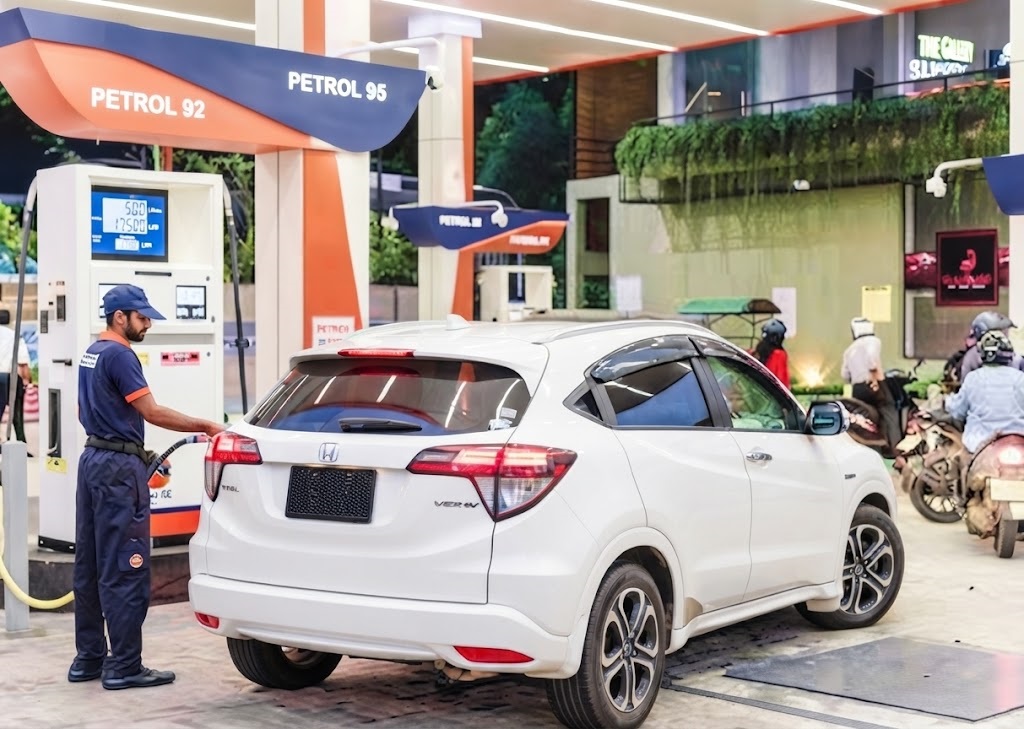
Sri Lanka’s fuel market is coming under renewed pressure as the escalating West Asian conflict and disruption to key oil-shipping routes push up international crude and refined-fuel prices, with a top Ceylon Petroleum Corporation (CPC) official saying the Corporation is closely monitoring developments and the potential impact on domestic fuel costs.
A top CPC official said the sharp rise in international oil prices was being driven by the conflict and disruptions to energy infrastructure and shipping routes in the region.
The official said Sri Lanka’s exposure to the international price shock would also depend on the timing of fuel purchases, as petroleum cargoes are ordered well before they arrive in the country and the final landed cost is determined when the cargo is delivered.
The CPC is also seeking to cushion consumers from the full impact of international price increases while maintaining uninterrupted supplies, the official said.
The latest developments come as Brent crude remains above USD 100 a barrel despite a recent retreat in prices following efforts by Saudi Arabia to maintain exports through alternative routes.
Brent crude futures fell to USD 104.74 a barrel yesterday, while West Texas Intermediate was trading at USD 101.60, according to Reuters. Saudi Arabia has been offering additional crude cargoes to Asian refiners through Oman to offset disruptions caused by attacks on its East-West pipeline.
The immediate concern for Sri Lanka is the potential impact on the country’s petroleum import bill, foreign-exchange requirements and inflation.
Higher international crude and refined-product prices mean that more dollars are required to finance fuel imports, while higher domestic energy costs can feed into transportation, manufacturing, agriculture, fisheries and logistics.
The pressure is already being felt elsewhere in Asia.
Pakistan has raised petrol prices by Pakistani Rs. 4.42 a litre and high-speed diesel by Rs. 6.10, taking the prices to Rs. 380.24 and Rs. 409.42 respectively. The latest increase is reported to be the sixth consecutive fuel price increase in the country.
The Philippines has also raised fuel prices, with petrol increasing by 5.68 Philippine pesos a litre, diesel by 4.31 pesos and kerosene by 4.62 pesos for the latest pricing period.
The developments provide an indication of how quickly international energy-market disruptions can feed into domestic fuel markets across fuel-importing Asian economies.
For Sri Lanka, the issue is particularly significant because petroleum remains a major component of the country’s import bill. The CPC’s current prices stand at Rs. 399 a litre for 92-octane petrol and Rs. 382 for auto diesel, according to the Corporation’s latest published prices.
The government is meanwhile facing pressure to balance consumer protection with the financial sustainability of fuel suppliers.
The Energy Minister has said several options are being considered, including fuel subsidies, price limits for private distributors and adjustments to retail prices. Private operators have reported substantial losses on diesel under prevailing prices, while the CPC has said it is currently absorbing losses on diesel through earnings from other petroleum operations.
A prolonged international oil-price shock could therefore have consequences extending well beyond the pump.
Higher fuel costs would raise operating expenses for transport-dependent businesses and could increase the cost of moving goods throughout the economy. For manufacturers and exporters, higher energy and logistics costs could also affect margins and competitiveness.
At the macroeconomic level, a sustained increase in petroleum prices could increase Sri Lanka’s foreign-exchange requirements and place additional pressure on the trade balance and inflation.
The international oil market, however, remains highly fluid. Saudi Arabia’s efforts to redirect crude exports through Oman have eased some immediate supply concerns, while expectations that its damaged East-West pipeline could return to operation within days have also helped push crude prices lower.
But shipping through the Strait of Hormuz remains severely disrupted and the wider conflict continues to pose risks to crude and refined-product supplies.
For Sri Lanka, the coming weeks will therefore be closely watched by fuel suppliers, importers and businesses as the country assesses whether the current international price shock proves temporary or develops into a more prolonged increase in the cost of energy.

The student, who obtained the highest marks in the Sinhala medium, at the Grade 5 Scholarship Examination – 2026, was felicitated by the National Savings Bank (NSB), recently, at the NSB Head Office, under the Hapan Pranama Scholarship Program -2026, organized by the Bank.
The Chairman of the Bank, Dr. Harsha Cabral PC, the Actg. General Manager/CEO, Rohana Bandara Weerakoon and the Corporate Management were present at the occasion.
Danoj Theekshana Weerasekara, a student of Ahatuwewa Model Primary School in Kurunegala District, has won the first place in Sinhala Medium at Grade 5 Scholarship Examination this year, with 193 marks. His remarkable achievement reflects not only his personal talents, but also the commitment of his family members, guidance of his teachers and support of the entire school community, who came together to make his triumph a reality.
The National Savings Bank, while complimenting his achievement, wishes him good luck, strength and courage for his future academic endeavors.
Being always committed towards realizing the educational goals of the children of the country, NSB organizes a seminar series, well in advance of the Examination, every year, to support them in preparation for the exam. The Bank has been able to hold more than 100 seminars islandwide this year as well.
Through these seminars, it is expected to provide the students with knowledge, guidance and mental strength, required to be successful at the Examination and the Bank has joined hands with them at an important juncture of their lives, assuring support and strength to face the exam with confidence. (NSB)

The Colombo Stock Exchange (CSE) has received the ‘Great Place to Work’ Certification’ for the 5th consecutive year in a row. Since 2022 the bourse has been continually awarded the certification in recognition of its commitment to providing a welcome, inclusive and safe environment.
“At CSE, our people remain our greatest strength.” remarked Rajeeva Bandaranaike, CEO of the CSE “Receiving the Great Place to Work Certification for the fifth consecutive year is a meaningful recognition of our commitment to creating a workplace culture founded on trust, respect, and collaboration. It is an achievement shared by every member of the CSE team and reflects the passion, commitment, and teamwork that continue to drive our success.”
The certification was awarded by Great Place to Work®, a global organization that grants this recognition across more than 180 countries and regions and represents over 20 million employees and 22,000 companies worldwide. The certification was based on the results of an anonymous, company-wide survey that evaluated workplace culture across five key dimensions: credibility, respect, fairness, pride, and camaraderie.
The certification reaffirms CSE’s commitment to its foundational values of Professionalism, Integrity, Care, Teamwork, Passion and Agility. By championing equity and inclusion, the CSE has built a welcoming, discrimination-free culture where every individual can thrive. A cornerstone of this success is CSE’s leadership in workplace diversity as an equal opportunity employer and signatory to the UN Women’s Empowerment Principles, alongside its close collaboration with the UN Global Compact and Respectful Workplaces initiatives. Additionally, the exchange fosters dynamic young talent, with early-career professionals accounting for 57% of its workforce.

Charani, Shafali power India past Japan and into Asian Games semi-finals

Athapaththu and Dilhari muscle Sri Lanka past Malaysia in mismatch

Abhishek Sharma hits record T20 ton as India beat Afghanistan by 127 runs

Trump administration approves sale of F-35 jets to Saudi Arabia

Banton steers England into unassailable 2-0 series lead

Showers expected in the Western, Norrh-western and Sabaragamuwa provinces and in Galle, Matara, Kandy and Nuwara-Eliya Districts.

‘Dates have the highest sugar content to fight Coronavirus’

Sunday Island 27 December – Headlines

#SundayIsland 17th December – Headlines

Sunday Island – 28th March

Sunday Island Headlines – 21 March

Sunday Island – 21st February – Headlines
-

 Latest News7 days ago
Sri Lanka thwart Fatima Sana challenge to secure Asia Cup final spot
-

 News6 days ago
Gnanasara Thero absconding after SC ruling
-

 News7 days ago
Ammunition cache found in old Kandy bungalow
-

 News7 days ago
Prof. Pieris says Buddha Dhamma recognised as source of law under Constitution
-

 News6 days ago
Green Climate Fund (GCF) Regional Dialogue for East and South Asia will be held from 14 to 17 September 2026 at Cinnamon Life at City of Dreams Hotel, Colombo
-

 Opinion5 days ago
From Galkissa (Mount Lavinia) to Tambuttegama
-

 News7 days ago
Bambalapitiya Railway Station renovated under the “Dream Destination” project opened to the public
-

 Latest News6 days ago
ITS Giuseppe Garibaldi’ departs Colombo