
Business
‘ A new asset class – the Cryptos’


by Chandu Epitawala,
BSc, MBA Email: epitawala@yahoo.com
(Continued from yesterday)
Blockchain technology or platform has many real world applications in terms of transparent and efficient delivery of public services not to mention endless commercial applications/possibilities (Web3 is nothing short of an upgrade of the internet itself which enables secure exchange of value). For an example, the land registry or the vehicle registry (or any other Registry for that matter) can be on Blockchain allowing easy public access, swift and low cost transactions, transparency etc. etc.
Cryptos (AltCoins) – Tokens
Cryptos can be mined using high powered computers (a process which consumes vast amounts of electricity and to that extent environmentally unfriendly) or simply bought at the primary market from the Issuer at the Initial Coin Offering (ICO) and bought/sold in the secondary market in either centralized Exchanges (24/7 trading) or decentralized ones. Unlike Shares, they can also be swapped or exchanged for each other quite easily based on current market prices. They are stored in Wallets and every Wallet (the name used for equivalent to a bank account with a unique address/identification) is (or can be) linked to an Exchange. Just like share and commodity markets, all derivative/hedging instruments (futures contracts, short selling etc.) as well as margin trading facilities (a market based or constantly changing rate of interest charged on an hourly basis) are available at your fingertips (without any paperwork, approvals, phone calls or having to go to a physical location).
Other than Bit Coin, all other coins or tokens can be called Alt Coins. There are currently over 30,000 of them and 100s of new ones representing new business ideas (solving an existing problem in the sphere or catering to a market/commercial need) or new projects are added to the sphere everyday (no different to the real world of business). Almost 99% of them may fail or not gain traction and eventually disappear or go bankrupt not to mention the Scams and Frauds that are out there deliberately trying to cheat people out of their funds in a lightly regulated environment. Each one will have a White Paper explaining their project objectives/strategy, mission/vision etc and lay out the details of the team behind it.
I believe Crypto Coins or Tokens have baffled many experts, academics, regulators, and regular people alike mainly for the reason they carry or represent features of Securities, Commodities, and Currencies all rolled into one. They (Coins/Tokens) are issued (like Shares of a Company) at an Initial Coin Offering (ICO) and funds raised so to that extent it is a Security representing ownership of a set of assets/ idea/project/business. Some have limited (by algorithm which can’t be changed and forever be limited) issue of tokens and others are open to issue additional tokens at a later date (Dilution). They trade and fluctuate heavily in price (upto 30% within 24 hours) in the secondary market based on market supply and demand for the Coin (not necessarily based on earnings or assets of the Project/Business). To that extent they are like Commodities (Gold, Silver etc). The owner does not get any dividends in cash but may get additional coins/token like bonus shares. They trade in the secondary market (on many Centralized Exchanges as well as decentralized exchanges or DAX around the clock (24/7) like currencies and used like currencies for payments and money transfers. Most coins can be divided like currencies to make payment/transfer of any particular amount. Most coins, other than Stablecoins which are pegged to a real world fiat currency (1 for 1), fluctuate in price measured in terms of USD.
Stable Coins are digitized or tokenized real world currencies or fiat money (different to proposed Central Bank Digital Currencies). The dominant Stable Coin in the Crypto sphere is the USDT (T represent the issuing Company Tether which has a current market Capitalization of over $140 Billion as the 4th largest Cryptocurrency/Coin). Many other USD pegged Stablecoins will be established next year. There are many other USD pegged Stable Coins (USDC etc) and other Stable Coins pegged (1 for 1) to other Currencies such as Euro, AUD, UAE Dhiram etc. Remember Euro pegged Stable Coin can fluctuate in Price in terms of USD but stable (do not fluctuate) in terms of Euro.
As a result there is debate in the US and elsewhere as to which government agency (the Central Bank, the SEC, the Commodities Regulator or an entirely new Regulator like in UAE) should or better suited/placed to regulate the digital/virtual assets sphere.
The difference between Cryptos and proposed Central Bank Digital Currencies (CBDC)
Most Central Banks around the World are developing or contemplating issuing a Government backed Digital Currency of their own to facilitate easier/faster digital payments/transactions. However, they represent each countries’ fiat currency and will remain under central authorities and still subject to decisions made by bureaucrats/politicians specially in terms of money printing/expansion of money supply. And CBDC transactions by the users can be monitored by the Government which will most likely make them unpopular. BitCoin and many other Cryptos are on the other hand limited in their issue by an algorithm which can not be changed and cross border use/transfers can not be restricted by Governments. Cryptos that are limited/restricted in issue (ie BitCoin) by definition can be truly a solid hedge or protection against inflation/debasing of value of many fiat currencies in the World (including the USD). This remain one of the main attractions of Bit Coin as a store of value. Stable Coins are almost identical to CBDCs and used by the Crypto users as the interface between Virtual Assets and the real world.
The Macro Picture/Issues for the Authorities/Policy Makers/Regulators
Philosophically, the entire Crypto industry in general and BitCoin (the Creator is unknown) in particular was born and had taken root as a Libertarian concept/idea where those who generally distrust/despise governments/politicians/policy makers and who want to break free from their control and from the ill effects of their misguided decisions (particularly endless printing of fiat money all over the world and resultant inflation) seeking a decentralized (Community driven) alternative where wealth is preserved and trust in the currency/medium of exchange/store of value is restored. This technology/concept is favored by or popular with those who are opposed to centralized (few People) decision making in a Country. Therefore, all Governments may not welcome such technological innovations and its use by their citizens. The well known historian and author Yual Noah Hariri called BitCoin the currency of distrust.
From the developments I have observed in the last five years I can say Cryptos as a concept is here to stay as they and the underlying Blockchain technology have many useful real world, commercial applications. And the decentralized nature of the technology or the applications make them attractive to many consumers, buyers, sellers and also make it impossible for authorities to ban or eliminate them. So many policy makers/regulators around the world have gradually come to terms with these realities and now increasingly inclined to allow and encourage developments within this sphere while regulating the markets to prevent fraud, scams, hacking of accounts/wallets etc and protect the unsophisticated, retail participants. The industry which is community driven is self regulating (they regularly come up with remedies/solutions etc) as without the public trust and confidence it can’t prosper and grow.
And of course the Governments/ the Tax Authorities are interested in their fair share of the economic activity and profits/wealth that is generated. In fact the recent developments in the US (specifically after the election of Crypto friendly Donald Trump as President) will profoundly and favorably change the Regulatory environment for Cryptos all over the world as others take their cue from the developments in financial markets/regulations in the USA. For an example after years of deliberating, the US SEC authorized BitCoin Exchange Traded Funds (ETFs) in January 2024. This opens up a much larger pool of investors, savers, traders to participate or get exposure to this new Asset Class without directly buying them. Since then titans of the fund management industry (Fidelity, BlackRock etc.) have started BitCoin ETFs which have grown to over $33 Billion in Value in less than a year (Growth had been much faster than Gold ETFs ever was which after many decades currently stand at $32 Billion). I suspect, 2025 will be a watershed year for Crypto Industry once Donald Trump and his Team take office on 20th January.
In 2023, right after Sri Lanka’s economic/currency collapse, an American Venture Capitalist/BitCoin enthusiast called Tim Draper visited Sri Lanka and gave a proposal to the Central Bank/Government which was swiftly (and understandably) rejected by them (reported in many Newspapers and Websites). The Price of Bitcoin was around $20000 in the market at the time (Today it is $100000). With the benefit of hindsight, imagine the positive impact on the economy, inflation (prices), forex reserves, national debt etc., had SL accepted or adopted the proposal!! Some Countries and Companies in the US and elsewhere have already made BitCoin a part of their Reserves and I suspect more will join in the coming years. Much will depend on what the US policy makers (both State and Federal levels) and large Corporations would decide in the next few years. The year 2025 will see important developments for the industry coming from the US Government/Regulators.
Having said all this, it must be pointed out many prominent Academics, Economists, Financiers/Asset Managers (ie Warren Buffet, Christian La Guard, Ray Dalio, Paul Krugman, Jim Rogers, Jamie Dimon etc) are still not in favor of or negative about Cryptocurrencies. The number of Nay sayers though have gradually reduced in number over the last 10 years. The most prominent among the converts is Larry Fink (CEO/Chairman of BlackRock – the largest Asset Manager in the World with $11 Trillion under Management) who was initially opposed but now in favour of Digital Assets, Tokenization etc.
Some Statistics and Facts to illustrate the current global status/size, developments and benefits of the Technology/Industry/Markets
Total Market Cap of Cryptos today (10 Dec 2024) is around $ 4 Trillion out of which $2 Trillion is BitCoin (Gold market cap is around $17 Trillion and Silver stands at around $1.4 Trillion
Daily total Turnover/Volume of trades of all Cryptos in all Centralized and Decentralized Exchanges ranges from $100 billion to $350 billion
In 2023, BitCoin processed $36.6 Trillion transactions (Visa and Master Card together $24 Trillion) More interesting to find out the fees involved in both these Categories. BitCoin fees would be a fraction of Visa/Master Card transaction fees.
This year Dubai legalized payments in Crypto for Real Estate transactions, allowed Bank accounts to directly deal/convert to Crypto, licensed a Crypto Exchange (OKX). All Crypto transactions in Dubai are tax free. Dubai already have a Virtual Assets Regulator in place.
Many jurisdictions exempt capital gains taxes (CGT) from Crypto transactions but in some countries they can go upto 40%. This obviously could change with time.
As an interim step or development to facilitate greater use many Crypto Wallets are now linked to Visa or MasterCard (with over 100 mn Vender acceptance) so that the owner/holder of Crypto can freely use their Crypto funds via a Debit Card
El Salvadore which heavily depends on remittances from Salvadorians working abroad apparently pay annually $300mn to $400 mn to money transfer companies and Banks as commission and fees. Shifting to Cryptos as a method of fund transfers can save 90% of these costs which is beneficial to the individuals involved and the Country. Sri Lanka can do the same.
Statistics show BitCoin is being adopted by People at faster pace than the Internet itself. Currently there are 400 mn active Crypto Wallets (Accounts). This adoption is the most critical factor for the development/growth of the Industry and markets
Bills are being introduced in some US States (Pennsylvania, Florida, Texas, Ohio etc) and Countries such as Brazil allowing the holding of BitCoin as a Strategic Reserve Asset (like Gold).
The Company behind Ripple or XRP Token which specializes in facilitating global fund transfers (far cheaper, secure and speedier alternative to SWIFT) just became the number three Token in terms of Market Capitalization ($150 Billion) reflecting confidence in its business model/project. They already work closely with large global Banks and Financial Institutions.
Bhutan with a $4 billion Economy holds $1 bn in BitCoin and El Salvadore hold $600 mn in BitCoin as a Reserve Asset. Many more Countries (including some developed countries) are expected to join in accepting/holding BitCoin as a Reserve Asset in the coming years.( As of now, both the US and the Chinese governments each hold approximately 200,000 BitCoins.)
Over 60 Countries already have BitCoin ATMs installed at various public places where People can buy, sell or send/transfer BitCoins and other Tokens. Fees at ATM’s remain high though.
The challenge for all countries and regulators is to come up with measures to prevent, trace and interdict funds (accounts/wallets) involved in drugs, crime, corruption, money laundering, tax evasion, terrorist activities etc. from getting into the Crypto platforms in the first place by having proper KYC protocols etc. The problem is no different to the one faced and tackled by the Banking system. It is speculated some of the “dirty money” may already be in the system. The good news is the Blockchain enables all transactions to be traced and monitored and beneficiaries of all Wallets (Accounts) to be identified.
The economic possibilities available in the industry/markets in this arena are endless and the jobs and wealth creation that will come with it. It’s high time the Sri Lankan authorities/regulators take a serious look at this emerging digital economy/industry and its economic possibilities/opportunities for our youth initially at least within the Port City Colombo given that the Port City is already designated or Gazetted as a dollarized zone.
For Sri Lankan Portfolio Managers, this new/global asset class though volatile and risky represent new possibilities/opportunities for diversification of risk across currencies or hedge against Rupee depreciation (after obtaining the necessary permission/approvals from the regulator etc.). For Bankers (and others involved in fund transfers and payments), it is worth taking note of the new developments taking place in terms of shifts in the current payments and fund transfer platforms/models or risk losing business. New technological shifts have created a Kodak (which went bankrupt because of not adopting to the digital revolution in photography made them obsolete) moment.
In Conclusion, like it or not Cryptos as a concept/idea are here to stay but will evolve over time. The number of people actively using the platforms to transfer funds etc and have more confidence in a Digital Asset as an investment vehicle than on a real asset are growing. Since my introduction to this sphere in 2020, I was surprised to find out how many youths (hundreds of thousands) from rural areas in Sri Lanka are already involved in the sector even without much regulatory clarity coming from the authorities (other than the Central Bank warning the Public on the volatility/riskiness of the Asset). The Central Bank/Treasury has prohibited Credit Cards issued in Sri Lanka from purchasing Crypto since around 2019. That has not stopped Sri Lankans (mostly tech savvy youth in their 20s and 30s) being active in the market. I believe/suspect many working in the middle east and elsewhere have their funds on these platforms and using them for transfers etc. As a former fund manager I can say, though it is a highly volatile and therefor represent a degree of risk, it can’t be ignored anymore and could be very useful as a tool of diversification (across currencies and asset classes etc.) for Portfolio Managers/Companies in Sri Lanka once regulatory clarity is in place.
Furthermore, since Sri Lanka receives over $6 Billion annually as remittances through the official and unofficial (Undiyal etc.) channels from those working abroad, millions of dollars can be saved (for the individuals and for the Country) in terms of fees/commission by encouraging remittances via officially sanctioned Crypto platforms and wallets (I believe/suspect this is already happening in a significant way regardless). After steady growth over many months, November 2024 has seen a drop (via the Banking channels) in remittances to Sri Lanka. Is this a sign of those who are working abroad switching to alternative channels (including Crypto) to send their hard earned dollars to Sri Lanka? Time will tell. If the sector is allowed to operate openly and regulated appropriately, it can be a new source of tax revenue to the Government. Finally, BitCoin may be a future strategic reserve asset that can be considered for inclusion at the country/macro level for Sri Lanka as well.

Business
Iran war threatens Sri Lanka’s fragile recovery; SMEs face “Survival Crisis” – Prof. Rohan de Silva

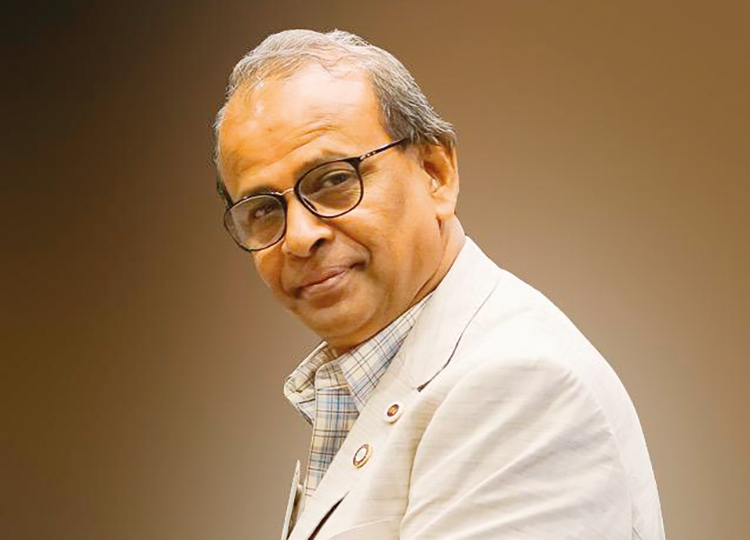
Sri Lanka’s already fragile economic recovery—still reeling from the aftermath of the 2019 Sri Lanka Easter Bombings, the pandemic, and the 2022 financial collapse—is now under renewed strain as the ongoing Iran war sends shockwaves through global energy, trade, and financial systems, experts warn.
Chartered Interior Architect and economic commentator Prof. Rohan de Silva cautioned that the Iran conflict is not an isolated external shock but a “multiplier crisis” that could severely undermine Sri Lanka’s recovery trajectory—particularly for small and medium enterprises (SMEs), which form the backbone of the economy.
Energy Shock Rekindles Crisis Conditions
At the heart of the emerging pressure is the sharp escalation in global oil prices and supply disruptions linked to instability around the Strait of Hormuz—a critical artery for global energy flows.
“Sri Lanka, which already spends around USD 4 billion annually on fuel imports, is extremely vulnerable to such shocks,” Prof. de Silva said. “Any disruption in supply chains or price spikes will immediately translate into domestic inflation and reduced economic activity.”
The situation, he noted, could force authorities to revisit emergency measures reminiscent of the 2022 crisis, including fuel rationing, restricted working days, and reduced transport services—directly impacting productivity.
Inflation Surge and Currency Pressures
Rising oil prices are expected to trigger a fresh wave of cost-push inflation, affecting transport, food, and essential goods. Increased war-risk insurance and shipping delays are further inflating import costs, placing additional pressure on the Sri Lankan rupee and already strained foreign reserves.
“The real danger is a re-triggering of balance of payments stress,” Prof. de Silva warned. “Higher fuel import bills, combined with potential declines in remittances from the Middle East and weaker export earnings, could destabilize external accounts once again.”
Sri Lanka’s export sectors are also facing mounting challenges. Tea exports to Iran and Gulf markets risk disruption, while apparel shipments are being delayed due to rerouted shipping lanes and rising freight costs.
“Transit times are increasing by up to two weeks in some cases. That erodes competitiveness and reliability—two key pillars for export markets,” Prof. de Silva explained.
Industrial supply chains are similarly under strain, with delays in raw materials and petroleum-based inputs threatening production continuity across sectors.
However, the most severe impact is being felt by SMEs, which Prof. de Silva described as “financially exhausted after enduring repeated shocks since 2019.”
“These businesses have not fully recovered from the Easter attacks, COVID-19 shutdowns, and the 2022 economic collapse. Now, they are facing a fresh crisis that is simultaneously increasing costs and reducing demand,” he said.
Operating expenses—including fuel, electricity, and logistics—have surged sharply, while constrained transport and reduced working days are limiting both customer access and employee attendance.
“This is a classic margin squeeze. For many SMEs, profits are not just shrinking—they are disappearing,” he added.
Compounding the crisis is tightening access to finance. With interest rates remaining elevated to control inflation, banks are becoming increasingly risk-averse, leaving SMEs struggling to secure working capital.
At the same time, declining household purchasing power is dampening demand, particularly in non-essential sectors such as retail, interior design, and construction-related services.
“Consumers are cutting back. SMEs are losing revenue streams. It’s a dangerous cycle,” Prof. de Silva said.
Export-oriented SMEs are also facing order cancellations and payment delays from Middle Eastern buyers, further squeezing foreign exchange inflows.
Employment and Social Pressures Mount
The SME crisis is already spilling over into the labour market. Businesses are reducing staff, cutting working hours, or halting expansion plans altogether.
“If this trend continues, we could see rising unemployment and underemployment, particularly among youth,” Prof. de Silva warned.
He also highlighted the risk of returning migrant workers due to instability in Gulf economies, which could intensify domestic job market pressures.
A Multi-Shock Economy on Edge
Prof. de Silva stressed that Sri Lanka is now grappling with a cumulative “multi-shock cycle”:
2019 Easter attacks → Tourism collapse
COVID-19 pandemic → Prolonged shutdowns
2022 economic crisis → Currency and fuel collapse
Iran war → External energy, trade, and financial shock
“Each crisis has weakened the resilience of SMEs. What we are seeing now is not recovery, but survival,” he said.
Without targeted intervention, Prof. de Silva warned of widespread SME closures, job losses, and a prolonged delay in national economic recovery.
“The Iran war is amplifying every existing vulnerability in Sri Lanka’s economy. SMEs are at the frontline of this crisis—and without immediate policy support, the consequences could be severe and long-lasting,” he cautioned.
By Ifham Nizam
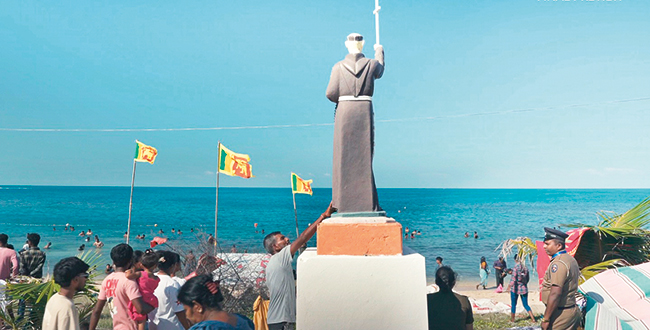
The International Centre for Ethnic Studies (ICES) will premiere its latest documentary, ‘The Saint of the Islands’ on 28th March. The 72-minute documentary, directed by Anomaa Rajakaruna, will be screened at the Tharangani Theatre of the National Film Corporation in Colombo, Bauddhaloka Mawatha, Colombo 7, starting at 4 pm on the 28th.
The film explores the shared devotional traditions surrounding St Anthony of Padua, the patron saint of sailors and fishermen, against the backdrop of the annual feast on the island of Kachchateevu. In Sri Lanka, devotion to St Anthony often crosses religious and cultural boundaries, bringing together different communities that unite across practices of prayer and veneration. At the centre of the story is the annual gathering of devotees from Sri Lanka and India at the St. Anthony’s Shrine on the island of Kachchatheevu, located near the maritime border between the two countries.
Filmed during the annual feast at Kachchatheevu and on the nearby island of Neduntheevu (Delft Island), the documentary reflects on the intersection of faith, livelihood, and geopolitics in the Palk Strait. Kachchatheevu itself is a small, uninhabited island that remains deserted for most of the year.
Yet for two days every year, during the annual feast of St Anthony, it is transformed into a vibrant pilgrimage site as thousands of devotees brave the rough seas, and arrive by boat from both Sri Lanka and India. This year alone, almost 12,000 people from India and Sri Lanka, gathered on the island for prayer, worship, and community.
The film also captures the nearby island of Neduntheevu (Delft Island), one of the northernmost inhabited islands of Sri Lanka. Known for its distinctive landscape, coral-stone architecture, and long maritime history, Delft serves as an important point of departure for pilgrims travelling to Kachchatheevu. Through scenes of travel, pilgrimage, and worship, the documentary reflects on how the sea shapes the lives of coastal communities while also connecting people across national borders and across different religions.
More information can be found on the ICES website, www.ices.lk or by emailing uvini.ices@gmail.com
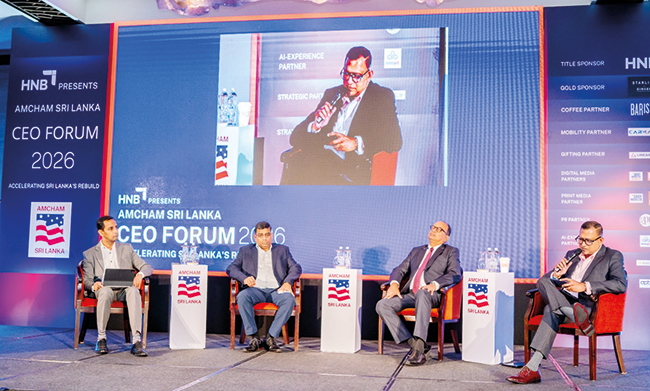
The American Chamber of Commerce in Sri Lanka concluded its flagship CEO Forum 2026 on 25 February with government officials outlining an ambitious plan to achieve 7% annual economic growth and progress toward a LKR 200 billion economy. The day-long summit, held under the theme “Accelerating Sri Lanka’s Rebuild,” brought together more than 200 C-level executives, senior policymakers, and international partners at Cinnamon Grand Colombo.
Dr. Harsha Suriyapperuma, Secretary to the Treasury, outlined priority reforms including strengthening fiscal stability, maintaining inflation at 5%, improving governance to attract foreign investment, upgrading port infrastructure, supporting IT and pharmaceutical sectors, accelerating digitization, and consolidating the banking sector. The government aims to double the economy within a decade while creating a more predictable business environment.
Opening the Forum, Her Excellency Jayne Howell, Chargé d’Affaires at the U.S. Embassy, called for expanded two-way trade and highlighted opportunities for Sri Lankan buyers to access American technology and energy solutions. She emphasized that growth in trade and logistics, including Port of Colombo expansion, strengthens supply chains and drives economic growth in both countries.
Deputy Minister Chathuranga Abeysinghe announced the establishment of the Industrial Transformation and Innovation Agency (ITIA), with LKR 300 million allocated for capacity-building and a “Level Up” program targeting 6,000 SMEs. Currently, only 20% of financial sector credit is accessible to SMEs, a constraint the new initiatives aim to address through simplified registration, expanded financial literacy, and improved equity financing access.

Devine’s all-round masterclass hands New Zealand 2-1 series lead

Senegal and Morocco tied by religion and trade but divided by AFCON fallout

Showers expected in the Central, Sabaragamuwa and Uva provinces and in Galle, Matara, Mannar, Anuradhapura and Vavuniya districts after 2.00 pm.

CIABOC tells court Kapila gave Rs 60 mn to MR and Rs. 20 mn to Priyankara

Opposition moves no-faith motion against Energy Minister Kumara Jayakody

NJC takes up cudgels on behalf of Sallay, who played pivotal role in combating terrorism

‘Dates have the highest sugar content to fight Coronavirus’

Sunday Island 27 December – Headlines

#SundayIsland 17th December – Headlines

Sunday Island – 28th March

Sunday Island Headlines – 21 March

Sunday Island – 21st February – Headlines
-

 Business4 days ago
Browns EV launches fast-charging BAW E7 Pro at Rs. 5.8 million
-

 Life style5 days ago
From culture to empowerment: Indonesia’s vision for Sri Lanka
-

 News2 days ago
CIABOC questions Ex-President GR on house for CJ’s maid
-
 Business6 days ago
Sri Lanka Institute of Information Technology raises the bar for academic excellence
-

 Life style5 days ago
Ranjith Fernando celebrates cricketing journey with Hob Nails to Spikes
-

 Latest News5 days ago
QR code system will be implemented for fuel with effect from 06.00 a.m. today (15th)
-

 News3 days ago
Australian HC debunks misleading travel risk claims for Sri Lanka
-

 News3 days ago
Sri Lankan marine scientist Asha de Vos honoured at UNGA opening