
Sports
A letter to Aravinda de Silva, from Mahela Jayawardena

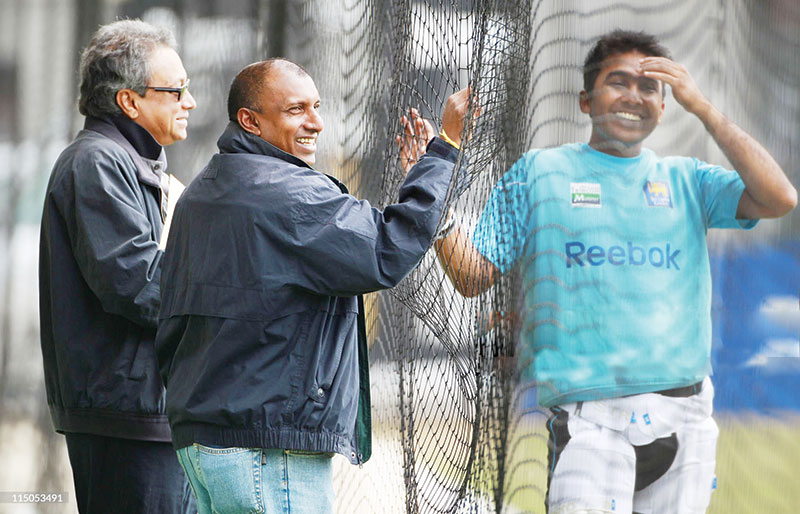
Following the ICC Hall of Fame announcement on 13 November 2023, open letters have been written to the inductees by those close to them, with their reactions to the news. Here, Mahela Jayawardena writes to inductee #110, Aravinda de Silva.
To Aravinda Aiya (big brother),
It is an honour to welcome you as the fourth Sri Lankan to be inducted to the ICC Hall of Fame. Though I can’t help thinking that if you asked any of the three of us already there – myself, Sanga [Kumar Sangakkara] or Murali [Muttiah Muralitharan] – we would all agree that it should have been you first.
We all grew up watching you and were part of a generation inspired by what you achieved. I remember the first time I met you, collecting your autograph when I was nine or 10. You were the new kid in the Sri Lankan team then but before long, you were our best batter. As young kids, we all looked at how you went about playing and tried to model our games on it.
I had coaches who told me to play a certain way but you showed the importance of adapting. Whether it was your stance or your backlift, it felt like you were consistently changing – it made it difficult to keep up! But it was a sign of your cricketing intelligence, something I would later be fortunate to tap into.
Of course, you will always be remembered for ‘that’ World Cup final in 1996, when you took three wickets and scored the amazing unbeaten century against Australia. Aged 18, I had a big final of my own that weekend, the last inter-school “big match” of my time at Nalanda College. Those two-day occasions were big deals and, on the Saturday, we must have had four or five thousand people in. On Sunday, it was down to just our parents and the prefects! Everyone else in Sri Lanka, it seemed, was watching the final you were involved in.
We finished our game early to watch the run chase and we were glued to our TVs. When you walked in, we were struggling on 23 for two, but you could see the determination in your eyes. You had shown that in the semi-finals as well, when were in trouble against India before you took the attack apart.
I will always remember how you took control in the final. The drives, the flicks, the pulls, and how you handled Shane Warne especially during that game-changing partnership for the third wicket, it was incredible. We partied in the streets long into the night and I treasure those memories.
You were a player who was a generation ahead of your time. Very aggressive and playing fast bowling better than anyone in that Sri Lankan line-up. In Australia, they would always try to intimidate the Sri Lankans but they never could with you. You would always take them down. Seeing that innings in the final against a quality Australian attack gave my generation the belief that this is the brand of cricket we need to play and that we are capable of. You gave us belief we could beat anyone in the world.
The fact that within a year I was sharing a dressing room with you and the rest of the World Cup winners was overwhelming. I was completely awestruck and on the first day of my Test debut, I walked into the dressing room, where everyone had their own places.
I had to wait around to see where a spot came up and I was lucky – there was a chair two spots down from you. From that point onwards, I realised this is a guy I wanted to talk to about cricket. I had to ask you questions and pick your brains and from that point onwards, that’s what I did, hopefully without you feeling badgered all the time! To bat with you in in my first Test, when we made the world record score of 952 for six against India, was an honour.
I have so much gratitude for the way you took me under your wing, having idolised you growing up. Sanga may have the numbers but if you ask either of us, you are the best batter Sri Lanka has ever produced. Your impact on Sri Lankan cricket cannot be matched and you showed us the way.
Being in the slip cordon alongside you was also an education. You would usually stand at first slip and we would talk about how the batter was shaping up. I remember how you would describe a weakness and outline how one of our bowlers could get him out. Vaasy [Chaminda Vaas] would bring the ball back in and it would happen, just as you said. It was fascinating.
I’m not sure your club teammates always had as enjoyable a time fielding with you, though. I still remember how much I laughed when Sanga told me the stories from your time at Nondescripts together. Whether it was taking off your shoes at first slip to ensure someone else would chase down anything that went through the cordon or scoffing tea buns out of your pocket, it sounds like there was never a dull moment. That’s something I can vouch for from our time in the dressing room together, though I soon learned I would not be able to keep up with you when it came to partying!
When it came to national team duty on the field, though, there was never any doubting how serious you were. We were the first generation to really grow up with that fitness culture and I remember you stressing its importance to us, with the game constantly evolving.
You fully deserve your place in the ICC Hall of Fame and I am very proud there are now four of us flying the Sri Lankan flag in there. Your place in Sri Lankan cricketing folklore is assured and I cannot thank you enough for the impact you have had on my career on and off the field.
Congratulations my friend.
Mahela









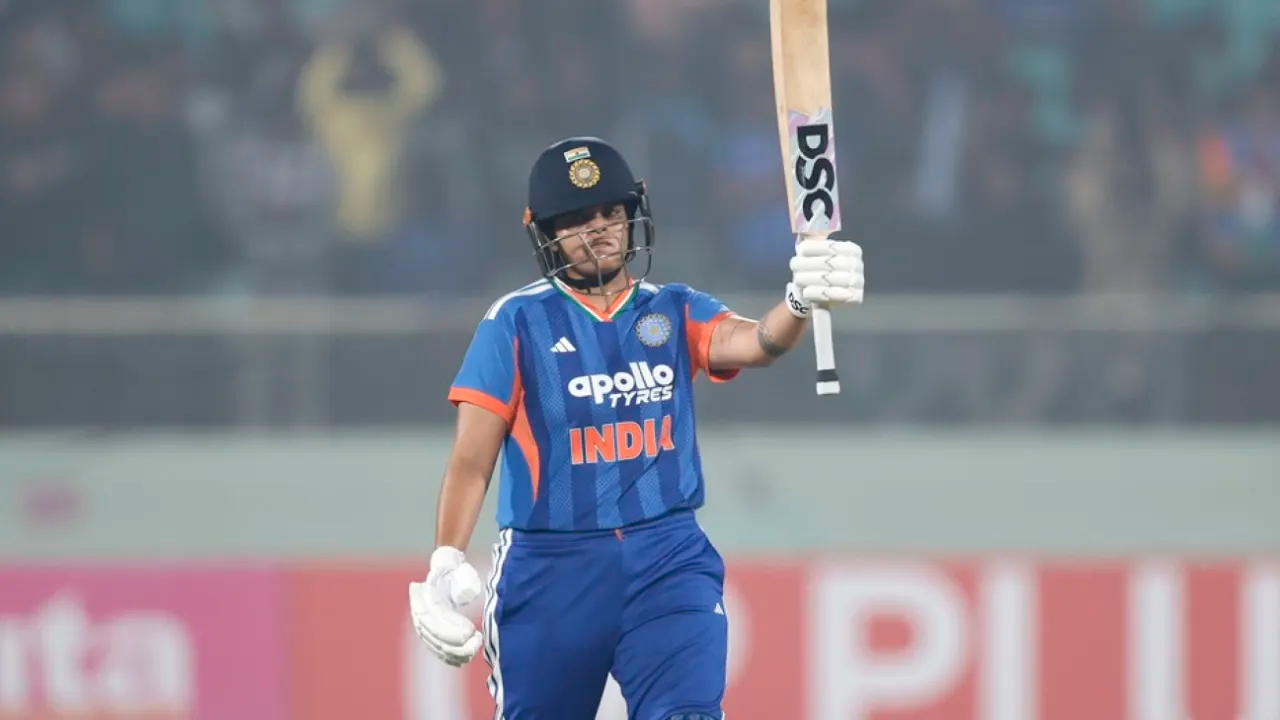
A quick glance at the head to head record is enough to show the gulf between India and Sri Lanka in women’s T20Is. Despite that, the manner in which India have swept Sri Lanka aside two games in a row would have surprised watchers and the hosts alike. The story in the second T20I followed a similar script to the first. Once again, India’s spinners squeezed Sri Lanka’s middle order before one of their top-order batters made easy work of the chase.
Left-arm spinners Vaishnavi Sharma and N Shree Charani picked up two wickets apiece after Sneh Rana, in the XI in place of the indisposed Deepti Sharma, sucked out the momentum from Sri Lanka’s batting. If it was Jemimah Rodrigues’ half-century in the first game, Shafali Verma was at her brutal best in the second, finishing on an unbeaten 69 in just 34 balls, to help India get to the 129-run target at a run-rate close to 11 an over with 49 balls to spare.
India went 2-0 up at the end of the Visakhapatnam leg, with the next three games to be played in Thiruvananthapuram.
Sri Lanka were jolted in the opening over after being asked to bat. Vishmi Gunaratne’s uppish drive was caught by Kranti Gaud in her follow-through. Chamari Athapaththu then started the charge. After the defeat in the first game, she asked her batters to step up and find ways of scoring. She was intent on leading from the front. She used her feet against Gaud to slash her in front of point. Two balls later, Gaud almost got back at the Sri Lanka captain.
Charani, who dropped two simple catches on Sunday, misjudged Athapaththu’s slash and conceded a six. She charged in from the boundary line and then ran back, missed the ball completely despite a leap. Athapaththu blazed away with the field restrictions on, scoring 31 off 24 balls out of Sri Lanka’s 38 in 5.3 overs at that stage.
After her dismissal, Hasini Perera and Harshitha Samarawickrama continued to bat with high intent. They primarily scored square of the wicket and added 28 in the three-and-a-half overs. And then came the squeeze from India.
On a day she was newly crowned the No. 1 T20I bowler in the ICC rankings, Deepti missed a T20I for the first time since 2019 – after 92 straight games – because of a mild fever. Harmanpreet Kaur has often turned to her when in search of control, but on Tuesday, Rana fit into the role with ease.
Playing her first T20I in India since 2016 – she played 15 away from home in between – Rana’s first task was to stop a belligerent Athapaththu, and she delivered. She kept the Sri Lanka captain guessing with flight and dip before dismissing her. With Athapaththu itching to cut loose, Rana generously flighted one. It landed slightly shorter than Athapaththu expected because of the dip, and she ended up miscuing it to long-off.
Rana then returned with Perera and Samarawickrama scoring at a good tempo, bowled a maiden and that turned the tide. It allowed left-arm spinner Charani to slip in a few quiet overs, which resulted in Perera’s dismissal. Vaishnavi also returned to pick up her first international wicket, with Charani, who denied her in the first T20I by dropping a dolly at short fine leg, taking a simple catch at the same spot after Nilakshika Silva top-edged a sweep.
Sri Lanka hit 11 boundaries in the first nine overs, but could hit only two fours in the rest of their innings. They lost six for 24 to be restricted to a below-par total for the second game in a row, which was never going to challenge the hosts. Three run-outs for a second game in a row did not help matters either.
If Sunday was an opportunity missed by Shafali, she more than made up for it on Tuesday. She was happy to bide her time at the start, with Smriti Mandhana being the aggressor. Once Mandhana fell, caught at point in a bid to hit Kavisha Dilhari’s offspin inside out over the off side, Shafali took centrestage. Inoka Ranaweera’s left-arm spin with the field restrictions in place was just the tonic she needed.
Shafali hit Ranaweera for successive fours in the penultimate over of the powerplay – both by dancing down the track and lofting her over cover. She then took apart Athapaththu’s offspin, hitting here for 4, 6, 4 in the sixth over of the chase: first sweeping a short ball through backward square leg, then thumping a full ball straight into the sight-screen and then lifting one over extra cover.
With the in-form Rodrigues for company, there was no respite for Sri Lanka’s bowlers. Rodrigues also tore into Ranaweera, hitting her for two fours and a six as the left-arm spinner was taken for 31 in her two overs.
In an attempt to maintain the high tempo, Rodrigues holed out to long-on. Shafali soon completed her fifty from just 27 balls. She picked Shashini Gimhani’s left-arm wristspin from the hand and thumped her for back-to-back boundaries in a 12-run over that put India on the brink.
Sri Lanka earned a consolation when Malki Madara’s dipping yorker deceived Harmanpreet. But they knew, as Athapaththu conceded after the game, that the batters failed to make the helpful conditions count in successive games.
Brief scores:
India Women 129 for 3 in 11.5 overs (Smriti Mandhana 14, Shafali Verma 69*, Jemimah Rodrigues 26, Harmanpreet Kaur 10; Malki Madara 1-22, Kavya Kavindi 1-3, Kavisha Dilhari 1-15) beat Sri Lanka Women 128 for 9 in 20 overs ( Chamari Athapaththu 31, Hasini Perera 22,Harshitha Samarawickrama 33, Kavisha Dilhari 14, Kaushini Nuthyangana 11; Kranti Goud 1-31, Sneh Rana 1-11, Shree Charani 2-23, Vaishnavi Sharma 2-32) by seven wickets
[Cricinfo]

Stripped of the captaincy on the eve of a World Cup, Charith Asalanka finds himself skating on thin ice. Suddenly, runs are not just runs; they are legal tender. In a game that is brutally transactional, weight of runs is the only currency that guarantees a seat on the flight. The soft will curse their luck and sulk in the corner. The tough roll up their sleeves, take guard, and play the long innings.
History, as ever, offers a handy cue card. Take Arjuna Ranatunga. Axed as captain after the controversial 1991 tour of New Zealand, he was reduced to a mere batter for the 1992 World Cup. What followed was one of the great redemption arcs. A backs-to-the-wall knock at the Basin Reserve against South Africa, with Allan Donald huffing and puffing fire and then that audacious chase against Zimbabwe that rewrote the laws of possibility with the game’s first successful 300-plus pursuit. By the time the confetti settled, Ranatunga was back at the helm, having dragged Sri Lanka to glory almost single-handedly. Asalanka, a fellow left-hander, could do worse than study that script.
When Asalanka took charge of the white-ball sides last year, the sense was that destiny had tapped him on the shoulder. This was a leader in the making, groomed patiently by Sri Lanka Cricket for over a decade. An Under-19 captain, exposed through development squads and domestic leadership roles, he appeared primed to become an all-format captain in due course.
With the bat, particularly in ODIs, he often played the role of the fireman, dousing flames after collapses or steering run chases with a cool head. As a leader, he spoke well, kept the dressing room together and was generous with praise. But just as the talk turned to a long reign, the wheels began to wobble and then, slowly but surely, came off.
Asalanka began treating First-Class cricket like a contagious disease, scarcely turning out for SSC. That absence hurt. The country’s premier club slipped into Division Two, losing First-Class status for the first time in its storied history and his name was firmly in the dock.
Then came murmurs of a clique, largely made up of his Richmond College schoolmates, a charge that rarely ends well in any dressing room. The Asia Cup only deepened the scrutiny. His bowling changes were pedestrian, with holding Dunith Wellalage back for the final over against Afghanistan’s Mohammad Nabi standing out as a tactical misread. The feeling grew that he wasn’t squeezing the most out of his resources.
Pakistan was worse. He looked out of shape, which is never a good look for a captain and the runs dried up in T20 internationals.
When Dasun Shanaka, the man he had replaced, was installed as his deputy, the writing was on the wall in bold capitals. Asalanka, though, failed to read the signs. His brinkmanship in Pakistan, including threats to pull out of the tour, proved to be the final straw.
At 28, Asalanka is still young and this episode may yet prove a necessary dressing down. He is no villain. By all accounts, he is a humble bloke who has momentarily lost his bearings. It happens, particularly to young athletes thrust into leadership before they fully understand the traps that come with it. Right now, he needs support, a steady arm around the shoulder and the chance to rediscover his game.
There is little doubt about his value. Asalanka remains the country’s best finisher, not the sort who clears the ropes four times an over, but the kind who finds gaps, runs hard, rotates strike and before the opposition realises it, has them gasping for air. These are not the fireworks merchants who hog the highlights, but they are the players who win you matches quietly and consistently.
If he is to reclaim his place and perhaps the T20 armband again, the path is simple and unforgiving. Bat first, talk later. In cricket, as in life, nothing silences critics quite like runs on the board.
by Rex Clementine

The Kelaniya Dharmaloka Central College swimming team won the Overall Championship at the swimming meet organised by the Biyagama Swimming, Diving and Life Saving Association and held at the Kiribathgoda Vihara Maha Devi Balika Vidyalaya Swimming pool recently.
The boys school championship was won by Mahara President College while the girls championship was won by Kadawatha Mahamaya Balika Vidyalaya. The mixed school championship was won by Kelaniya Dharmaloka Central College. The Club championship was won by Yakkala Wave Runners Swimming Academy.
Text and pics by DELGODA W.D.VITHANA

Shafali 69 not out , spinners lead India’s rout of Sri Lanka

Sri Lanka’s coastline faces unfolding catastrophe: Expert

SOC examines proposed amendments to the Microfinance and Credit Regulatory Authority Bill

CEB–NTPC joint venture seeks investors for 50 MW Sampur solar project

Students lead cleanup effort to restore Maha Oya-Kammalthota Estuary and its surroundings

A wise Christmas

‘Dates have the highest sugar content to fight Coronavirus’

Sunday Island 27 December – Headlines

#SundayIsland 17th December – Headlines

Sunday Island – 28th March

Sunday Island Headlines – 21 March

Sunday Island – 21st February – Headlines
-

 News1 day ago
Members of Lankan Community in Washington D.C. donates to ‘Rebuilding Sri Lanka’ Flood Relief Fund
-
 News6 days ago
Pope fires broadside: ‘The Holy See won’t be a silent bystander to the grave disparities, injustices, and fundamental human rights violations’
-

 News6 days ago
Pakistan hands over 200 tonnes of humanitarian aid to Lanka
-

 Business5 days ago
Unlocking Sri Lanka’s hidden wealth: A $2 billion mineral opportunity awaits
-

 News5 days ago
Army engineers set up new Nayaru emergency bridge
-

 News6 days ago
Officials of NMRA, SPC, and Health Minister under pressure to resign as drug safety concerns mount
-

 News6 days ago
Expert: Lanka destroying its own food security by depending on imported seeds, chemical-intensive agriculture
-

 Editorial6 days ago
Flawed drug regulation endangers lives