
Editorial
A jumbo conundrum


Thursday 27th August, 2020
Indian Congress leader Sonia Gandhi has outfoxed a group of party rebels who reportedly strove to oust her. She has had herself appointed the Congress Interim Leader pending a party overhaul. She seems to have taken a leaf out of UNP leader Ranil Wickremesinghe’s book. Having thus battened down the hatches, both Sonia and Ranil are waiting for political storms to blow over. They are adept at political escapology.
Many are those who aspire to the post of UNP leader. Some of them have tossed their hats in the ring, and prominent among them is former Speaker Karu Jayasuriya, who endeared himself to average UNPers by standing up to President Maithripala Sirisena and Mahinda Rajapaksa and foiling their attempt to capture power in Parliament, in late 2018. He is also the darling of the western members of the international community and a section of the Maha Sangha.
Wickremesinghe has reportedly said Jayasuriya, who is not a member of the UNP Working Committee, cannot be the party leader. Several prominent Buddhist monks are cranking up pressure on Wickremesinghe to appoint Jayasuriya the party leader. Theirs is an exercise in futility, we reckon.
One may recall that four Mahanayake Theras jointly wrote to Wickremesinghe, in December 2011, urging him to settle the UNP’s leadership struggle by appointing Jayasuriya the party leader. The signatories to the letter were Mahanayake of the Malwatte Chapter Most Ven. Tibbotuwawe Sri Siddhartha Thera, Mahanayake of the Asgiriya Chapter Most Ven. Udugama Rathanapala Buddharakkhitha Thera, Mahanayake of the Ramanna Chapter Most Ven. Weveldeniya Madhalankkara Thera and Mahanayake of the Amarapura Chapter Most Ven. Dauldena Gnanissara Thera. But Wickremesinghe did not accede to their request. (However, he, to his credit, brought down the mighty Rajapaksa government and became the Prime Minister four years later.) It is therefore highly unlikely that Wickremesinghe will heed appeals from lesser monks.
Opposition Leader Sajith Premadasa’s silence is puzzling. With 54 SJB MPs and the majority of the UNP’s rank and file on his side, he is now in a position to smash through the weakened defences of Wickremesinghe, unlike in the past. In fact, that is what the SJB kept saying before the recent general election. Its heavyweights vowed to march on Sirikotha and get rid of the Ranil faction, first thing after the polls. Why are they holding back? Is Sajith waiting till the UNP rolls out the red carpet for him? One of his trusted lieutenants, MP Nalin Bandara Jayamaha, has said the UNP should stop looking for ‘antiques’ (meaning aged politicians) to lead it as the rightful heir to its leadership is in the SJB.
Sajith is apparently in two minds. His party, the SJB, is strong and the UNP is lying supine with no prospect of regaining its former self in the foreseeable future. But a seasoned politician, Sajith cannot be unaware of the political reality. The SJB has fared reasonably well electorally as a newly formed party, but it will have its work cut out to keep its support base intact in case of the revival and revitalisation of the UNP under a new leader; it will lose a sizeable chunk of its vote bank to the UNP in such an eventuality. At the recent parliamentary polls, a majority of traditional supporters of the UNP voted for the SJB as they wanted to punish the UNP leadership and not the party; many of those who did so are likely to back the UNP again under a new leader.
Sajith has said it took a couple of years for the SLPP to emerge a formidable political force, but the SJB has done so within a couple of months. However, the fact remains that the SLPP has become an established political party with a solid vote bank, and the SLFP has chosen to play second fiddle to it because of the former’s popular and strong leadership and strength. The SLFP would have been in the same predicament as the UNP if it had gone it alone at the parliamentary polls instead of riding piggyback on the SLPP. The SLPP has consolidated its power by winning three elections in a row—local government, presidential and parliamentary—with huge majorities. The same cannot be said of the SJB. Most of all, the UNP cannot be written off.
Sajith must be finding it difficult to make up his mind. But he will have to decide soon.


Wednesday 10th June, 2026
The Criminal Investigation Department (CID) gave in to pressure from protesters and took former State Intelligence Service Chief Maj. Gen. (retd.) Suresh Sallay, in custody, to hospital and allowed his family members and lawyers to visit him. If it had done so previously and respected Sallay’s rights as a suspect, without leaving any room for allegations of physical and psychological abuse of him and other such police excesses, there would have been no protests.
Spokesman for the Archdiocese of Colombo Rev. Fr. Cyril Gamini Fernando has urged politicians and political parties to act with restraint and refrain from disrupting the ongoing investigations into the Easter Sunday terror attacks. The issue of Sallay allegedly undergoing ill-treatment at the hands of the CID is best left to the judiciary, he is reported to have said at a media briefing. His concerns should be heeded.
Protesters have categorically stated that they are not opposing the ongoing investigations in any manner and their intention is to ensure that the CID will stop violating the rights of Sallay held in custody under the PTA (Prevention of Terrorism Act), on a detention order issued by President Anura Kumara Dissanayake, who is also the Minister of Defence.
In this country, governments tend to undermine all institutions including the judiciary. They are no respecters of the doctrine of the separation of powers. There have been political witch-hunts against even some Chief Justices. The J. R. Jayewardene government sought to remove Chief Justice Neville Samarakoon over a public speech made by him; the Mahinda Rajapaksa administration ousted Chief Justice Dr. Shirani Bandarnayake in 2013 in a highly questionable manner, and the Maithripala Sirisena government removed Chief Justice Mohan Peiris in breach of due process in 2015. Political parties, lawyers’ associations and the media have been compelled to defend judicial independence against a proposed government move to raise the retirement ages of the Superior Court judges arbitrarily to the detriment of the judges awaiting promotion. It was vehement protests by lawyers, the Opposition and the media that prevented the Rajapaksa-Wickremesinghe government from summoning some Supreme Court judges before the Parliamentary Privileges Committee over a ruling that went against the interests of that administration.
Thus, given the overbearing nature of governments intoxicated with power, the task of protecting human rights cannot be achieved through judicial interventions alone. The challenge becomes even more daunting when the Attorney General’s Department and the police act in concert to serve the political interests of the powers that be.
Those who unashamedly cheered as their political opponents were arrested and detained under the PTA during previous governments have taken up the cudgels for Sallay’s rights. Prominent among them are SLPP and UNP politicians. However, the fact that previous governments abused the PTA and suspects suffered at the hands of the CID cannot be cited in extenuation of the continuation of the abuse of the PTA and the ill-treatment of detainees, including Sallay. The JVP-NPP government came to power, promising to usher in a new political culture and restore the rule of law. That pledge must be fulfilled.
Partisan politics does not spare anything in this country. The JVP-NPP government stands accused of having politicised the Easter Sunday carnage probe by appointing two members of the NPP’s Retired Police Collective as the Public Security Secretary and the CID Director. Is the Police Department short of competent investigators to handle crucial probes?
It is hoped that justice will be served for the victims of the Easter Sunday tragedy without injustice being done to the suspects under investigation.
Tuesday 9th June, 2026
The UNP has taken exception to a comparison made by a website (Manthri.lk) between the initial stages of the UNP-led Yahapalana government under the presidency of Maithripala Sirisena (MS) and the incumbent JVP-NPP administration led by Anura Kumara Dissanayake (AKD) in terms of legislative activity. Both governments came to power by effectively harnessing anti-incumbency sentiments and promising good governance. At the six-month mark, the MS administration led in legislative activity, Manthri.lk has pointed out. It gazetted three times the number of bills, compared to the corresponding period during AKD presidency and had twice as many passed. However, at the nine-month mark the AKD presidency overtook in terms of bills that were passed. By the 18-month mark the score changed. The AKD government passed 12 more bills than the MS administration, according to Manthri.lk.
Arguing in an accusatory tone that the aforesaid comparison, which appears in a Manthri.lk article titled, “Run Rate of Passing Laws in Parliament”, is quantitative and not qualitative, the UNP has said that a number of progressive laws were passed during the Yahapalana government during the first 18 months of the MS government. It has said they include the 19th Amendment to the Constitution, the Right to Information Act, the National Medicines Regulatory Authority Act, and the National Minimum Wage of Workers Act, but the Dissanayake administration has not delivered reforms as such; it has only scrapped some entitlements of the ex-Presidents and former MPs. The UNP has apparently manufactured a grievance to lay out some progressive laws it was instrumental in passing during the Yahapalana. However, what the UNP has left unsaid is that AKD’s JVP was a Yahapalana partner in all but name and pressured that government to honour its promises. Curiously, after being ensconced in power, the JVP has not cared to fulfil its key election pledges.
An interesting picture emerges when the comparison between the initial stages of the two governments is extended beyond the new laws and legal amendments they introduced. What matters most is not the “run rate” or the score as such, but how the game was played, so to speak. These memorable lines from Henry Newbolt’s “Vitaï Lampada” come to mind: “And it’s not for the sake of a ribboned coat / Or the selfish hope of a season’s fame / But his Captain’s hand on his shoulder smote — ‘Play up! play up! and play the game!’” Unfortunately, the spirit of duty and self-sacrifice are not virtues cherished in Sri Lanka politics.
The Yahapalana government carried out a mega racket, the Treasury bond scam, shortly after its formation in 2015, severely denting its anti-corruption credentials. The JVP-NPP administration did likewise in January 2025, a few weeks after sweeping a general election and securing a two-thirds majority. A freight container scandal ruined its reputation; that was followed by a coal procurement scam. Driven by political expediency, both governments unashamedly embraced the very rotten political culture they had vowed to upend while out of power.
MS and AKD secured the executive presidency by pledging to abolish it. But they reneged on that promise after savouring power. MS embarked on his reelection campaign and sought to gain a boost for it from his war on drugs, but the Easter Sunday terror attacks ruined his chances of contesting another presidential election. AKD remains silent on his much-advertised pledge to do away with the executive presidency. His election manifesto, A Thriving Nation: A Beautiful Life, promises to introduce a new Constitution, abolish the executive presidency and ensure that a President without executive powers will be appointed by the parliament, but several government politicians have said AKD will seek a second term. The JVP/NPP has thus demonstrated that it also acts out of expediency and not principle. It is emulating its predecessors notorious for their Machiavellian approach to promises. A common denominator among all governments since 1994 has been the unfulfilled promise to abolish the executive presidency.
Most criticisms of the UNP-led Yahapalana government under MS presidency apply, mutatis mutandis, to the incumbent administration led by the JVP.


Monday 8th June, 2026
Former Director of the State Intelligence Service Maj. Gen. (retd.) Suresh Sallay, currently being detained at the Criminal Investigation Department (CID) over the Easter Sunday terror attacks, has begun a hunger strike in protest against alleged inhumane treatment by CID officers. His wife has complained to Inspector General of Police (IGP) Priyantha Weerasuriya about the conditions of detention. She has told the media that Sallay is determined to continue his hunger strike. The police have denied mistreating Sallay.
Sallay has suffered physical and psychological abuse, at the hands of the CID, according to his lawyers. One of his counsel, Udaya Gammanpila, told the media on Saturday that Sallay was even denied proper meals, and the previous night the CID had served a small portion of rice with some gravy on a piece of newspaper placed on the floor of his cell. That had prompted Sallay to launch the hunger strike, Gammanpila said. Curiously, a notorious drug dealer, Nadun Chintaka alias Harak Kata, was allowed to consume food from the CID canteen while being detained at the CID.
Sri Lanka’s overcrowded, squalid remand prisons are hellholes, and even a brief stay there amounts to punishment, as is public knowledge. The same goes for the detention or holding cells at the CID headquarters. Degrading interrogation practices, including psychological coercion and physical abuse, aimed at breaking a suspect’s will, are antithetical to international good practices followed by modern crime investigators in civilised societies. Unfortunately, some officers of Sri Lanka police have used such cruel methods with impunity under successive governments. One may recall that a high-ranking police officer found guilty of having violated a suspect’s fundamental rights and the ban on torture was appointed IGP. Deshabandu Tennakoon is his name.
Allegations made by Sallay through his lawyers and family members against the police remind us of the horrors of the Spanish Inquisition, Nazi Straflager (punishment camps), Gestapo interrogation centres, the CIA black sites and the Batalanda torture chamber. Hence the need to do away with the draconian Prevention of Terrorism Act, which allows suspects to be detained indefinitely and made to undergo untold suffering in the name of interrogation.
A very serious allegation frequently levelled against Sri Lanka police is that they make arrests, detain suspects, and conduct investigations to support political motives rather than to establish facts impartially. Justice and public trust in the legal and judicial processes become the victims of the partiality, if not servility, of the police and some of the Attorney General’s Department personnel to the powers that be and their deplorable efforts to support popular political narratives about crimes.
The integrity of the ongoing CID investigation into the Easter Sunday terror attacks is severely compromised, for the JVP-NPP government has elevated a member of the NPP’s Retired Police Collective (NPPRPC), Shani Abeysekera, as the CID Director to probe the Easter Sunday terror attacks, which the CID itself failed to prevent while he was serving as its Director in 2019, when the current Public Security Ministry Secretary Ravi Seneviratne, also a member of the NPPRPC, was the Senior DIG in charge of the CID. All those who failed to prevent the carnage in spite of repeated warnings of the impending bomb attacks must be brought to justice. President Anura Kumara Dissanayake has caused quite a stir by making predictions about judgements to be delivered in court cases against his political opponents and drawn heavy criticism from the Bar Association of Sri Lanka and other lawyers’ associations for trying to raise the retirement ages of the superior court judges arbitrarily. How can the current dispensation be expected to uphold the rule of law, justice and fair play?
The denial of a suspect’s right to be heard, with the prosecutors, given to rehearsed, performative courtroom presentations, making various allegations designed to generate headlines and please the powers that be, violates the principle of natural justice. Justice must be served for the Easter Sunday terror victims, but without injustice to suspects in custody.

INS Sharda arrives in Colombo

India’s Sri Lanka Test tour set to begin in Galle on August 15

US strikes Iran in response to downing of military helicopter

The government is implementing a comprehensive programme to restore the livelihoods of fishermen and businesses affected by Cyclone Ditwah – PM

Air Canada pilot accused of flying for 17 years without proper licence

Rana and Mosaddek star as Bangladesh end 21-year wait with crushing win

‘Dates have the highest sugar content to fight Coronavirus’

Sunday Island 27 December – Headlines

#SundayIsland 17th December – Headlines

Sunday Island – 28th March

Sunday Island Headlines – 21 March

Sunday Island – 21st February – Headlines
-
 Latest News7 days ago
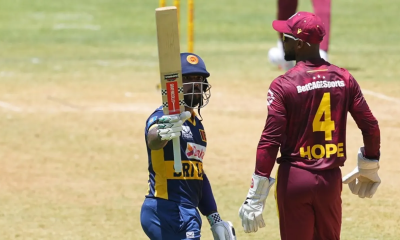
Kusal Mendis, Pathum Nissanka, bowlers put Sri Lanka 1-0 up
-
 News7 days ago
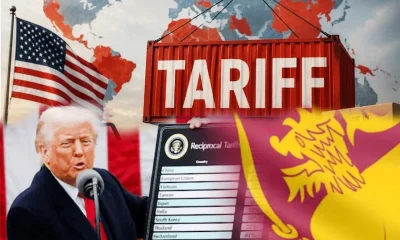
New US tariffs proposed on 60 countries, including Sri Lanka
-
 Features6 days ago
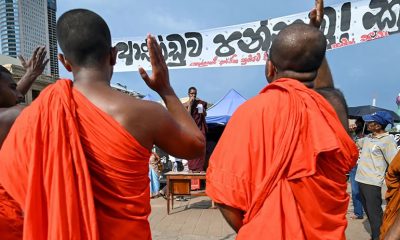
Power crept into the Sangha and is now tearing it apart
-

 Features6 days ago
Kondachchi wind farm and battery storage project to boost energy security, says Power Ministry Secretary
-

 News4 days ago
Women’s T20 World Cup 2026 warm-up: Chamari Athapaththu’s 94 helps Sri Lanka beat Pakistan
-
 Features6 days ago
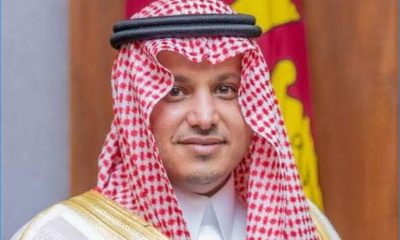
Saudi Arabia sets new benchmark in Hajj management as 1.7 million pilgrims complete sacred journey
-

 News5 days ago
Asst. Manager, security officer arrested over Rs 30 mn snatch at Horana PB branch
-

 Editorial3 days ago
Probe Sallay’s complaint