
Opinion
A golden opportunity missed due to communal mindsets

By Rienzie Wijetilleke
(rienzietwij@gmail.com), and
Kusum Wijetilleke
(kusumw@gmail.com)
There was a period in the late 80s and early 90s when Sri Lanka’s banking sector was beginning to expand its correspondent relationships around the world and strengthening these relationships through carefully structured facilities was critical. As the CEO of HNB, I was obliged to meet officials and counterparts of various banks around the world in order to negotiate our institutional relationships and thus expand and facilitate the growing import/ export industry as well as finalizing credit lines to Sri Lanka. On quite a number of occasions, I attended meetings in the UK and in various parts of Europe with heads of some of the leading banks in that region. We would discuss Sri Lanka and its economy, politics, the threat of terrorism whilst also working out trade products and negotiating funding lines. Every so often, I would hear remarks from the British and the Europeans regarding the size of our balance sheet. They would jokingly ask whether there are any zeroes missing from our balance sheet, implying that HNB was not of an adequate size to be considered a major financial player internationally.
A Sri Lankan Regional Financial Force
When I studied the local industry at the time, it became apparent that culturally, the banking industry had an issue. The State owned and controlled banks such as BOC and People’s Bank had a major advantage due to their large deposit base and state backing, yet their loan portfolio was much weaker, mainly due to lending to State Owned Enterprises. At that time, due to state ownership, these banks viewed risk differently to private commercial banks. HNB was lending to a myriad of industries which were in their infancy but with a much smaller deposit base. Many of the private commercial banks had the necessary expertise to lend to large projects and new industries, but the institutions themselves were not large enough to participate in some of these transactions. This meant that a lot of the lending had to be syndicated with a foreign bank as well as with a state bank.
Thus, it became clear that HNB would have to grow its funding base in order to compete against the state banks and eventually against foreign banks in the region. Over many decades, Sri Lanka’s banking sector has evolved into a stable industry with an equally effective regulator and sound policy management. There was no reason why Sri Lanka’s finance industry could not find success in markets such as India, Pakistan, Bangladesh, Vietnam and Cambodia. My dream was that HNB would grow into a truly regional powerhouse, but this would require consolidation within the Sri Lankan industry to create a financial force that could compete regionally with a balance sheet large enough to entice investors.
HNB needed to buy over a competitor and perhaps through an amalgamated entity, try to enter foreign markets at least with basic financial products before expanding into infrastructure funding and investment banking. If we could start small and get our foot in the door in countries like Bangladesh and Vietnam, this Sri Lankan financial giant could open itself up to new opportunities in markets spread throughout the burgeoning South East Asian region. As the CEO of HNB, I had already overseen the purchase of the local branches of IndoSuez, Emirates Bank and Habib Bank and thus had the necessary confidence to oversee a larger, more meaningful acquisition/merger.
I engaged a few trusted advisors and we decided on presenting some preliminary numbers to key Board Members in private meetings. I had anticipated and received the unqualified support of the Chairman, the late Mr. Chrishantha Cooray and Director and one of its major shareholders: Mr. Harry Jayawardena (DHSJ). As Chairman, Mr. Cooray had always supported me, he was a thorough gentleman and always kept the organization’s best interests at heart. In DHSJ, I was always assured of the steadfast support of the country’s pre-eminent businessman and industrialist, someone that shared my vision. One sticking point was the need to raise fresh capital to partly finance the take-over. Mr. Cooray’s shareholding interest through Brown and Co. was unable to raise significant capital, but DHSJ was ready and willing to infuse the necessary capital. As CEO I had to walk a fine line, as both Mr. Cooray and DHSJ were dear friends of mine and at Mr. Cooray’s request, I had to agree not to take any action that might lead to a dilution of Brown and Co’s share-ownership.
Insecurity of the Regulator
Furthermore, many within the regulator were very much against what they perceived as an attempt by myself to promote individual ownership and domination of the banking industry in Sri Lanka. Personally, this was not a consideration for me, as I was responsible for the bank; a merger or acquisition was very much in the best interests of the organization. However given the sensitivity of the situation on all sides, I needed to be extremely tactful. It seemed obvious to me that the regulator was willing to forego international expansion to restrict individual domination of the industry and prevent a concentration of power. However, I was of the view that a consolidation would not only align with HNB’s vision, but was undoubtedly in the national interest.
Despite some reticence by members of the Board and Senior Management, I received the green light to do whatever needed to merge with or acquire Sampath Bank, even if it was interpreted as a hostile takeover. We opted for Sampath because of the enormous potential it showed at that time. I admired some of their senior management and indeed I even counted as friends some amongst their directorate, but our vision was more important than personal relationships. HNB had an opportunity and the entire country and economy would benefit from a consolidation which would have been unprecedented in Sri Lanka.
At the time, it was my expectation that the regulatory authority would have backed the creation of a Sri Lankan regional financial entity, given the obvious advantages it would bring to Sri Lanka. However, during the initial negotiations, it became apparent that Sri Lanka’s communal divisions had poisoned the hearts and minds of so many Sri Lankans: there was resistance from unexpected quarters.
Communal Divisions come to the Fore
Hatton National Bank, with its roots in the hill-country town of Hatton, was initially known to be a bank that served the plantation industry. Over the years, through the efforts of many, we successfully shed this image and created a new one. HNB came to be known as a “Partner in Progress” to all Sri Lankans and one of the things I am most proud of from my time as CEO was the Gami Pubuduwa scheme which was targeted at Sri Lankans around the country living outside urban areas, to provide them with lines of credit that were sorely lacking. I was also proud that HNB, especially during the mid-90s, had hired some of Sri Lanka’s brightest sportsmen and women, especially cricketers, both household names and up and coming youngsters with enormous potential. At HNB we celebrated all cultures and we would not spare any expense for Bakthi Gee and Christmas events for staff. HNB had become a truly multicultural organization.
To my surprise and utter disappointment, many people involved in the negotiations seemed to consider HNB a “Tamil Bank”. Thus, any potential takeover of Sampath was suddenly viewed through the lens of communal division. The idea of creating a regional powerhouse was now framed as a hostile acquisition of a ‘Sinhala’ Bank by a ‘Tamil’ Bank.
Personal Attacks and Posters
During the coming months, some enterprising members of the Sampath Bank Union began printing “kalapathara” (posters) making various allegations about HNB, its Directors and its management, myself included. HNB’s attempted takeover of Sampath was seen as part of a movement to dilute the Sinhalese culture, and I was viewed as the foremost villain in this story; the Sinhala Buddhist CEO who was selling his people out. There were various threats issued to me and my family. The Board of Directors at HNB was so concerned that they arranged a special security detail for me. We had to shuffle some of the staff that were working under me due to allegations that they were involved. I had to warn my wife that only specific staff would be allowed to enter my residence. On many evenings we received phone calls, with a variety of threats made against me personally and against my family, some of the language used I dare not repeat. On one occasion my youngest son, who was barely a teenager at the time had answered the telephone when my wife and I were not in the house. He conveyed to us that a man had called asking for me had then proceeded to scold my son in filth and warn him that his father’s limbs would be broken soon.
Senior officials of the Central Bank would call me at odd hours and we would discuss the move at length. The accusation was that HNB was trying to take over the banking industry, but I kept repeating that we were trying to consolidate, not dominate. Many at the CBSL were worried about monopolies and I sensed they had been listening to other industry professionals who were against potential domination of the industry by HNB. I can state as fact that I know of some very prominent bankers who despite seeing the obvious advantages, did not want to see HNB succeed in this venture.
The Dream that Died
As the war went from bad to worse, with bombs striking in the business district in Colombo and the government of Sri Lanka not having adequate means to respond, the temperature was starting to increase. The pressures were immense, the negative publicity around the merger/acquisition plus my additional responsibilities were starting to take its toll and I could not in good conscience endanger my family any further. Whilst I had the support of most of the Directorate at HNB, I realized that politically, the transaction would be painted by the communal narrative; the well had been poisoned.
As I think back, the idea to build a major regional financial player would most certainly have succeeded and the rewards would have been handsome. Take the example of Mr. Ishara Nanayakkara and the recent $600 Mn transaction involving the sale of shares in his Cambodian finance company, PRASAC. LOLC and Mr. Nanayakkara are reaping the rewards of taking a long-term view and diversifying into frontier markets with immense growth potential.
In the 90s, South East Asia and the Asian region as a whole was on the cusp of an economic boom. Young economies such as Vietnam and Bangladesh were starting to get organized and open up for trade and investment. An entity with the expertise of HNB and Sampath Bank with a large balance sheet would have taken a foothold in many of these markets and would have enjoyed a stake in their shared prosperity.
Unfortunately, small minds prevailed and Sri Lanka’s communal divisions would continue to dictate the country’s policies and initiatives, it might be argued that this sorry state of affairs still continues to this day.

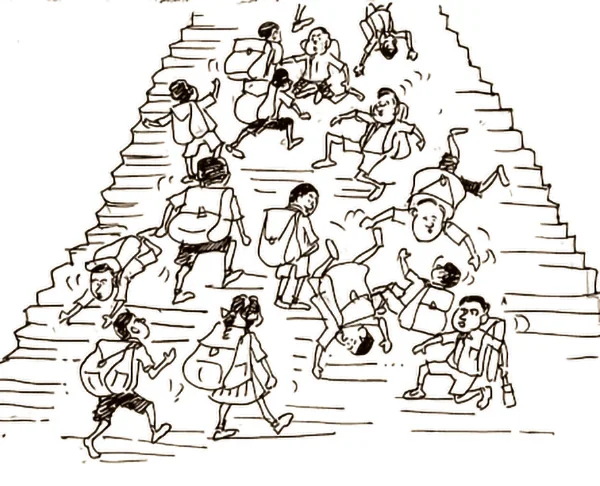
Education is widely recognised as the foundation of a country’s development. In Sri Lanka, free education has provided generations of children with the opportunity to attend school regardless of their economic background. Despite these advantages, many students still leave school before completing their education. School dropout is a significant social issue because it affects not only the lives of young people but also the country’s economic and social progress. Understanding the reasons behind school dropout is essential for finding effective solutions.
One of the main reasons students leave school is financial hardship. Although education in Sri Lanka is free, families still have to spend money on uniforms, stationery, transportation, private tuition, and other school-related expenses. For low-income families, these costs can be difficult to manage. Some students are forced to work to support their families instead of continuing their education. In rural areas especially, children may help with farming, fishing, or family businesses, reducing the time and motivation they have for school.
Another important factor is academic pressure. Sri Lanka’s education system is highly competitive, especially because of major examinations such as the Grade Five Scholarship Examination, the G.C.E. Ordinary Level, and the G.C.E. Advanced Level. Many students feel stressed by the heavy workload and the pressure to achieve high marks. Those who struggle academically may lose confidence and believe they have little chance of success. As a result, some choose to leave school rather than continue facing disappointment and failure.
Family problems also contribute significantly to school dropout rates. Children who experience divorce, domestic violence, alcoholism, or the loss of a parent often face emotional and financial difficulties. Some students become responsible for caring for younger siblings or elderly family members. Without proper support, balancing family responsibilities with education becomes extremely challenging. In such situations, education may become a lower priority.
Another reason is the lack of interest in traditional classroom learning. Every student has different talents and learning styles. However, the education system often focuses mainly on academic achievement rather than practical or vocational skills. Students who are gifted in sports, arts, technology, or technical work may not feel motivated in a classroom that emphasises examinations and textbook learning. Without opportunities to develop their unique abilities, some students become bored and eventually stop attending school.
Bullying and mental health issues are also important causes of school dropout. Some students experience bullying because of their appearance, disability, ethnicity, language, or family background. Others suffer from anxiety, depression, or low self-esteem but do not receive the counseling they need. When students feel unsafe or unwelcome at school, they may begin missing classes and eventually leave school altogether. Schools that lack proper counseling services may struggle to identify and support these vulnerable students.
In some parts of Sri Lanka, long travel distances and transportation difficulties discourage students from attending school regularly. Rural students often travel several kilometers every day, sometimes on foot or using unreliable public transport. During the rainy season, flooded roads and poor infrastructure make travel even more difficult. Frequent absenteeism caused by transportation challenges may eventually lead students to drop out.
For some girls, early marriage and teenage pregnancy become barriers to continuing education. Although these cases are less common than in some other countries, they still affect certain communities. Young mothers often find it difficult to balance childcare with school responsibilities. Social stigma and limited support can further reduce their chances of returning to education.
The COVID-19 pandemic also increased the number of students at risk of dropping out. During school closures, many families lacked internet access, smartphones, computers, or stable electricity for online learning. Students from disadvantaged backgrounds fell behind in their studies, and some never returned to school after classes resumed. The pandemic highlighted inequalities in access to education across the country.
The consequences of school dropout are serious. Students who leave school early often have fewer employment opportunities and may earn lower incomes throughout their lives. They are more likely to experience poverty, unemployment, and social exclusion. School dropout can also contribute to higher crime rates, child labor, and poor health outcomes. For the country, losing educated young people means a less skilled workforce and slower national development.
Several solutions can help reduce school dropout rates in Sri Lanka. The government can strengthen financial assistance for low-income families through scholarships, school meal programmes, and transportation support. Schools should provide counseling services to address mental health concerns and prevent bullying. Teachers can receive training to identify students who are at risk of dropping out and provide timely support. Expanding vocational education and technical training would also give students more opportunities to pursue careers that match their interests and abilities. Finally, parents, schools, communities, and government agencies should work together to encourage regular school attendance and create a supportive learning environment.
In conclusion, school dropout is a complex issue caused by economic difficulties, academic pressure, family problems, mental health challenges, transportation issues, and limited educational opportunities. Although Sri Lanka has made remarkable progress in providing free education, ensuring that every child completes their schooling requires continued effort from all sectors of society. By addressing the root causes of school dropout and supporting vulnerable students, Sri Lanka can build a more educated, skilled, and prosperous future for the next generation.
Saumya Aloysius
saumyaaloysius@gmail.com

by Eng. Parakrama Jayasinghe
El Niño is here! It is now official. With the fear of it being even a super El Niño, the authorities have been summoned by President Anura Kumara Dissanayake for an urgent discussion and instructions have been given on measures to initiate possible mitigation measures. These have spanned a wide spectrum of sectors which are in danger of being gravely affected. While food production and energy have received much attention, even the drinking water supply is expected to be adversely affected.
However, by and large the feeling that an ordinary citizen gets, on listening to the reportage on public media, is that at least on this critical issue there are no cohesive, detailed pragmatic plans and strategies being discussed and promoted.
It may not be impossible to mitigate the possible effects of El Niño fully, but what we can hope for is a degree of mitigation. El Niño is nearly upon us and there is no time for longdrawn discussions or time-consuming plans.
Specific comments on electricity sector
I would like to focus on the electricity sector in particular and its unavoidable links to irrigation and domestic water supply.
We have already discussed in earlier articles, how power cuts are being avoided by using diesel for power generation, with grave impacts on balance of payments as well as the economy. In response to a query, in public media, the Chairman of the National System Operator (NSO) has said he expects a fuel subsidy to continue until September and therefore there will be an increase in cost of diesel and consequently a hike in electricity tariff.
The Proposals for safeguarding the Electricity Supply
An analytical review of our past electricity generation mix records would reveal this eminently feasible and attractive way forward.
At the above public energy committee meeting, it was further noted that while the electricity utility consumed over 900,000 litres of diesel per day for power generation, in April 2026, the amount came down to some 350,000 litres per day in May. It is important to consider and recognise the circumstances which led to this turnaround, even if not adequate to solve the problem.
The Island newspaper reported on 8 June 2026 that to overcome the deficit of some 27 GWh of coal power, caused by substandard coal imports, the gap had to be filled with diesel power once more. Lack of courage to face the problem and declare limited power cuts to overcome it ,is the reason for this state of affairs. The resultant extra cost is said to be Rs 4.5 Billion.
Accordingly, the startling fact is that the unit cost of diesel power generation was Rs 166/kWh, but the utility charges only Rs 100/kWh for consumers with a monthly consumption over 180/kWh since 11 May . Those with lower consumption are charged much less. These figures highlight the unsustainable reliance on diesel.
It is very likely that there would be a call for increasing the consumer tariff once more in September when the next tariff review is due. This is in spite of the lowered world crude oil prices on 17 June 2026, due to a framework for peace signed between the USA and Iran. As per the IMF edicts, the Utility has to recover all its costs from consumers, irrespective of their mode of operation and efficiency or the lack thereof.
Change from April 2026 to May 2026 is illustrated above. (See image 1)
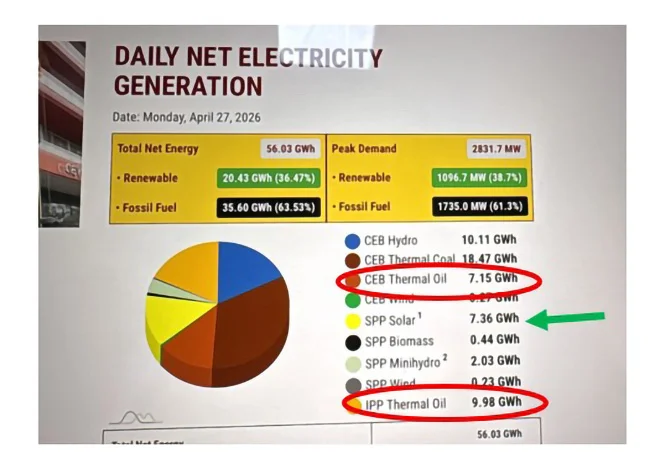
Further the dramatic decline in use of diesel highlights the past scenarios we illustrated earlier with possible increase in the availability of major hydro power in May with the onset of the monsoon. With added increase in ground mounted solar. It is to be noted that the large input from rooftop solar PVs is not recognized here.
Sri Lanka has experienced the most encouraging instances of generating all its electricity without the use of any oil including diesel, furnace oil or Naptha on isolated days, all too infrequent, but it is noteworthy. (See image 2)
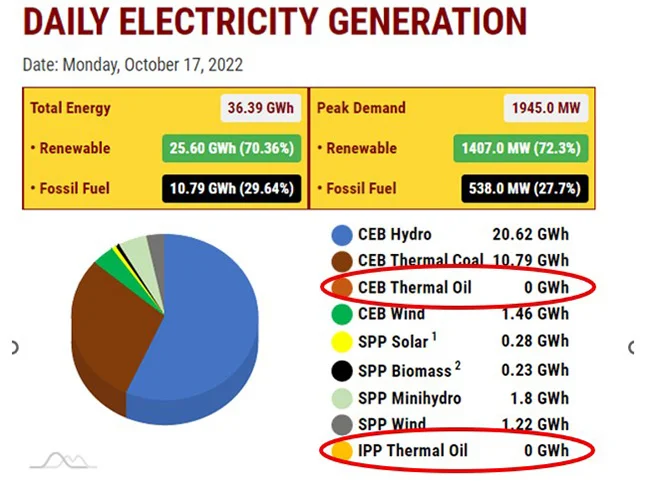
The days of zero or near zero use of oil for power generation listed below, unfortunately did not receive the attention of either the Utility or the Ministries of Power or Finance. Such attention could have resulted in a much more progressive electricity sector and a much lower consumer prices and saving of billions of dollars over the past decade. (See Table 1)
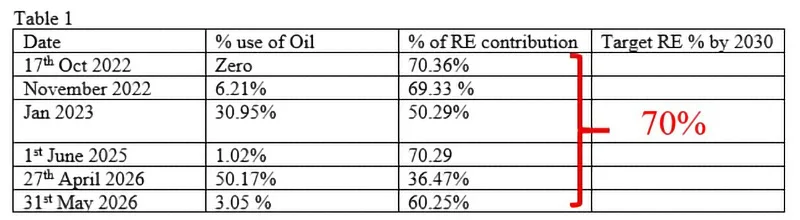
The bottom line is that when there is good May–Dec hydro generation, there is a scant need for oil-based generation. Past records show that in such good hydro years, the CEB was making profits and not in need of Treasury handouts. However, the dry season of January to April results in low hydro generation and generation costs rise. No one bothered to consider the means of filling the gap of lower hydro during the dry months with other available economical and indigenous renewable resources. Instead, the easy solution and perhaps the more profitable solution for some, and obviously not for the country, or the consumer, was the use of oil and even the so-called emergency power at enormous cost to the consumers.
The authorities professed that there was no solution. Slow adoption of mini-hydro, wind, and biomass was making only a small impact. There was a singular lack of support for accelerating development of such projects in spite of the setting up of the Sri Lanka Sustainable Energy Authority in 2007, expressly to facilitate and promote the development of the sector.
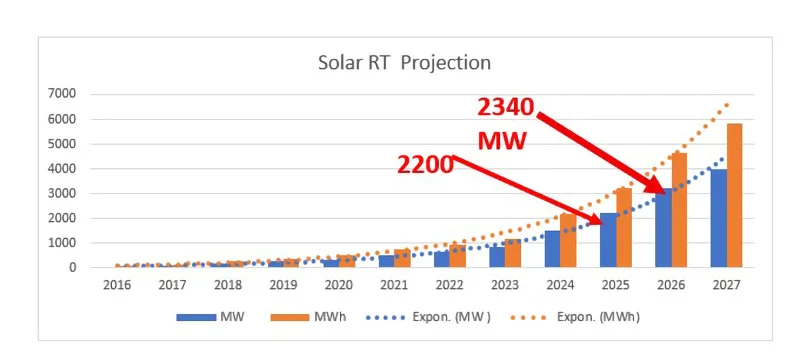
That was the case until the acceleration of solar power development. (See graph 1)
The ignored impact of Surya Bala Sangraamaya
Matters changed in 2010 with the declaration of the Surya Bala Sangramaya, opening the door for smallscale rooftop solar PV development. Further impetus was given by Net Plus and Net Accounting schemes. From 2016, exponential growth in the solar PV sector was recorded, reaching over 2300 MW through 150,000 mostly with sub MW scale domestic rooftop solar PV installations.
The power generation industry was no longer the sole purview of large wealthy corporations. The consumers themselves became generators thus becoming “Prosumers”
However, in 2025, the Surya Bala Sangraamaya suffered a setback, because of the machinations of the utility and others in authority; they did not recognize its true value.
It is necessary to recognise the growing contribution of rooftop solar PV, recognised world over along with its variable nature and not unique to Sri Lanka. An attempt was made to include such strategies in the successive Long-Term Generation Plans, but without much success.
How do we face the El Nino , already with us ?
It is under these circumstances that we have to face El Niño or even a Super El Niño. At least in the electricity sector, the past records point to a way forward.
It does not require much intelligence to discern the fact that
* When there is good hydro we manage without oil and CEB can make good profits
* But when there is low hydro, we have the advantage of much higher Solar energy
* Only intervention that is needed is to provide storage batteries so that solar energy can be stored and used at night as well and thus avoid the need for thermal generation.
* There is now some 2500 MW of rooftop solar and 400 MW of ground mounted solar and 170 MW of wind already installed, just waiting for the batteries to be added.
* The Utility is dragging its feet on adding the large batteries at grid substations and ignoring the fact that much more urgent need for early benefits is by adding batteries at the distribution substations and even individual distribution transformers.
* The Prosumers with 2500 MW of rooftop solar are ready and waiting to add the behind-the-meter batteries, provided that the Utility is willing to accept that option.
Will this happen? Or, will anyone in the government realise this possibility and get cracking.
Electricity and Irrigation
It is argued that as for water allocation in case of drought conditions, priority should be given for drinking water and agriculture. While this is logical, I have never seen any figures related to the actual water needs and water discharge.
Naturally, drinking water is the first priority. But what percentage is needed for this? Have we got logical strategies to maintain a balance between drinking needs and the power generation or Irrigation? Can’t we have the cake and eat it by making sure that the water released for irrigation also generates electricity?
Short-term approach with long lasting advantages
Therefore, it is my contention that the maximum attention should be paid to adding behind-the -meter batteries to get ready in case El Nino results in draughts, even during the conventional high rainfall periods, say June to December. If not, it would give us an opportunity to get ready with the infrastructure needed to make the best use of the basic facilities already built by the Prosumers and also to attract new Prosumers to install solar with batteries. These could then be ready to face the likely dry months from January to May 2027, however severe they are.
My appeal is to the current Prosumers with rooftop solar and the many others, whose requests for grid connections have been rejected out of hand to install rooftop solar and batteries to operate in the off-grid mode and thus reduce their dependence on the grid significantly. This would automatically reduce the peak load demand and the need for diesel based generation and enable the reduced hydro resource to be used to meet the peak load at much lower cost. This is an interim measure and they should be permitted to participate by exporting any excess during peak hours, once the FIT scheme presently being developed is active.
This is not the time and place to quote detailed numbers, but suffice it to say that if 100,000 Prosumers with 5 kWh batteries go off the grid during peak hours, it will help reduce the peak demand by 500 MW. The current peak load is only about 2900MW. This positive contribution could in fact be much greater if there is even the slightest signal of support from the state.
If further evidence is needed the following table illustrates the contribution made by the Renewable Energy Sector to the Country on an annual basis. (See Table 2)
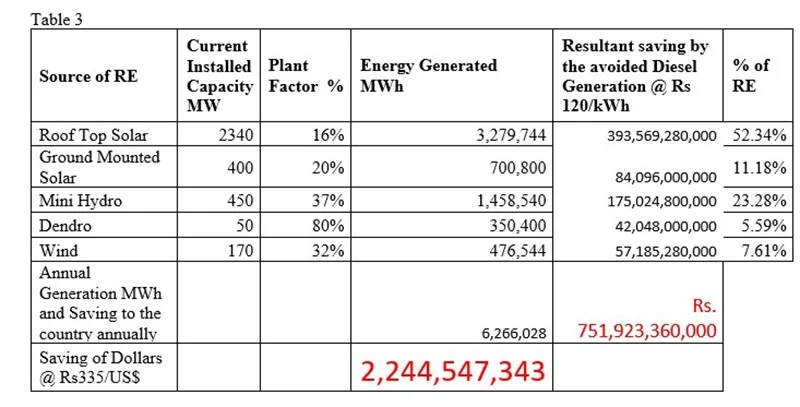
The potential is unlimited. Therefore, the current El Nino scare should be treated as a warning as well as an opportunity to get control of the electricity sector and ensure future energy security.
(The writer can be contacted at
parajayasinghe@gmail.com)

Terminally Ill:
 Anyone with a minimal rational understanding of international relations and the functioning of multilateral organisations would know that South Asian Association for Regional Cooperation (SAARC) has gone the same way the Non-Aligned Movement had gone before. That is, to total oblivion and inconsequence. Maintaining these organisations today is a waste of taxpayers’ money from countries which can hardly afford extra cash for inconsequential diplomatic performances.
In June 2026, amidst an official visit to Colombo, SAARC’s outgoing Secretary General, Md. Golam Sarwar made several public statements about the future of the organisation during engagements at the Regional Centre for Strategic Studies and the SAARC Cultural Centre. It is instructive to see what he said. He did recognise the organisation was in trouble when he noted the need for member nations to engage more proactively with each other to overcome the present difficulties the organisation faces and “re-ignite” it. He also noted at Colombo’s RCSS that “an inspiring momentum is emerging as visionary leadership across the region works to keep broader cooperation at the heart of the conversation.” He further said, “when member nations champion this collective vision together, they can successfully elevate the dialogue around shared progress, ensuring that deep, meaningful regional integration remains a vibrant and lasting priority for all.”
But where exactly is this wonderful world of cooperation and visionary leadership emerging in the messiness that typifies domestic and international relations in South Asia? Where exactly can one see this inspiring momentum? Not on the ground for sure. In more realistic terms, what he has articulated is not fact or what is possible, but hope, against hope. What he outlined also does not constitute ongoing action on the ground. The reality beyond diplomatic sound bites is something very different. That reality merely mirrors the fractured history and dysfunctionality of SAARC over the last four decades.
In an essay titled ‘As SAARC Faces Unprecedented Setback, Time to Rethink the Rigid Boundaries of Its Nation States’ published in 2016, my former colleague Ravi Kumar and I noted the need to rethink how actually SAARC works. We wrote at a time when India, Bangladesh, Afghanistan and Bhutan refused to attend the 2016 SAARC summit scheduled to be held in Islamabad affectively scuttling the important meeting. Despite its forty-year history, the last summit took place twelve years ago in 2014 in Katmandu indicating the utter dysfunctionality of the organisation. What organisation can function when it cannot even successfully hold regular mandatory summits? This inability comes fundamentally from the India-Pakistan rivalry that flows into decision-making and more crucially, due to the unpractical expectation of 100 percent consent across all nations to proceed with all significant programmes.
In this background, when Mr Sarwar claims SAARC is the “irreplaceable beacon of hope” for the 2 billion people in South Asia, it means nothing more than utter naivety. It is precisely this ostrich attitude of its leaders and officials which have at one level ensured SAARC’s established dysfunctionality and track record in relatively unimaginative programing. That is, they have not moved beyond the practices and hurdles so typified by nation states and mere sound good rhetoric as in this case.
Beyond this, SAARC should never have been merely focused on a geographic grouping led by nation states with their often-irreconcilable idiosyncrasies and rivalries. This is what Ashish Nandy had referred to as “garrison states.” Where are the region’s people, their collective organisations, their cultural productions and their hopes and histories beyond the overused rhetoric of people-to-people relations? This is what Kumar and I raised in 2016. That is, whether it was possible, “from the continued existence and overall usefulness of the regional grouping, to the foundational concern of how to work out issues of regional cooperation.”
In this situation, mere “politics and economics of nation states” have “become the most significant dimension of the hegemonic discourses of regional cooperation.” Unfortunately, “in this process, it loses track of the actual sites inhabited by people, which are the messy cultural and emotional spaces beyond these territorial boundaries.” Moreover, “this has become evident in the way states have to work through their own formal bureaucratic mechanisms, while the initiatives of the people, and the imagination of scholars and creative people of the region, have often been very different and more inclusive than that of the state.”
Beyond the matter of leadership, the other area where SAARC has failed is in its lack of creative imagination in the way it should work. If it could put in place a process beyond the usual bureaucratic performances where there is more grounded involvement of people, there can be some hope. However, as Kumar and I had noted in 2016, “these non-hegemonic approaches have not been recognised at the level of formal statecraft. The obvious disconnect between the people and the nation is reflected in the constitutive character of the SAARC.” This is why even when visual artists, singers, dancers and sometimes scientists take part in purportedly SAARC-led initiatives, they are drawn from lists of supporters maintained by individual national governments and constituent political parties rather than from repositories of people who have actually worked tirelessly and excelled in their respective fields. The result is consistent mediocrity.
Mr Sarwar reportedly noted at RCSS that the “SAARC Cultural Centre in Sri Lanka” is “a vital node of technical expertise driving a practical, bottom-up approach to regional problem-solving.” Since when does this organisation do this kind of thing? While this is certainly possible when it comes to discourses on issues such as heritage management and preservation, the Centre’s mandate is to “promote regional unity through cultural integration and intercultural dialogue” and to “contribute towards preservation, conservation and protection of South Asia’s cultural heritage within the framework of the SAARC Agenda for Culture.” In any case, this organisation as well as SAARC more generally have never been about working through a bottom-up approach to address regional problems. Given their bureaucratic personalities, they are top-down by definition like all such multilateral organisations.
Notwithstanding that the SAARC Cultural Centre has become far more active in very recent times than it ever has been in the recent past due to changes in its leadership affected under the auspices of the Sri Lankan government, it is nevertheless reduced to run programmes mostly online. The inability to undertake more proactive programming despite the Centre’s present enhanced interest comes from both funding restrictions as well as the unnecessary rivalry between member states, particularly between India and Pakistan that percolates into the way the Centre is expected to function. It also does not help when the ability to be creatively independent in its programs is severely curtailed by unpractical norms of consent across member nations.
The Secretary General’s observations on the South Asian University in Delhi were far more disappointing as were they also completely wrong. Referring to the University’s now meaningless slogan, “knowledge without borders,” he described the university as a “visionary investment in our collective intellectual capital” that inculcates a shared regional consciousness by functioning as a “living bridge of mutual trust and academic collaboration” transcending political boundaries. Clearly, despite being the current Secretary General of SAARC, Mr Sarwar is completely unaware of what the university has become in more recent times, and particularly under his own watch.
What he has outlined are the expectations and hope upon which the university was established, which was also put into practice in the first decade or so of its existence. However, this is far from the reality now. Under its present and continuing India-appointed leadership, where no other South Asian nation has been able to appoint a President, the university has not only become completely North Indian (not even simply Indian) for all practical purposes in so far as its discission-making apparatus is concerned, but it has also become an organ of Hindutva and upper caste dominance. This transformation has affectively made it a mere extension of domestic Indian politics.
It no longer admits students from Pakistan and Afghanistan. And students from countries beyond India that include Sri Lanka and the Maldives hardly show any interest in joining the university given its seriously dented reputation and toxic environment as regularly reported in the Indian press. Even the number of students joining from Nepal – compared to early years – has also come down for the same reasons. This is an unfortunate but conscious deviation from its original intentions. What has happened in the process is its mandated South Asian identity and consciousness that the Secretly General himself referred to, has been violently uprooted. All this has happened officially under the auspices of SAARC and unofficially under the guidance of the Indian government while all member states have remained silent. The university’s deterioration into what is at best a mediocre regional ‘coaching centre’ has been well-documented in the Indian press over a long period of time. In this context, the Secretary General seeing the failed South Asian University experiment as a “living bridge of mutual trust and academic collaboration” is truly shocking.
In this overall situation, as opposed to the Secretary General’s over-optimistic and naïve assessment of SAARC’s future not grounded on regional realities, it is creditable that some of the Sri Lankan participants did bring up the South Asian University’s deterioration as well as what actually is meant by rhetoric such as South Asian identity and consciousness.
Ceylon Today of 28 June 2026 quoted the Secretary General as asking rhetorically, “without SAARC, what is the alternative?” This is indeed an important question. The answer to this question has been provided by the Secretary General’s own public pronouncements of naivety. Rather than a dynamic diplomatic institution, SAARC has become a moribund entity that merely reemploys retired diplomats and officials from the region, appoints others on secondment and employs junior officers on an unenviable pay scale, none of which have effectively contributed to serious and long-term institution-building. It is merely a burden on the region’s hapless taxpayers.
All this suggests the necessity for SAARC to radically and completely reinvent itself if it is not to become even more irrelevant than it already is. Its only hope is to rediscover itself within a “sense of embedded subversiveness in the acts of reasonable people” which cannot be done within the shackles of officialdom and dysfunctionality SAARC and the nation states which reluctantly fund it are straddled with. To be functional, the organisation also must be rescued from the India-Pakistan rivalry and its consequences. We know, all this is impossible as things stand today. This is why SAARC should be formally put to rest while its functioning organisations can be reinvented – where necessary and if it makes economic and financial sense – in the national personalities of the countries where they are located as South Asian University has already done.
Let me conclude by answering in plain terms the Secretary General’s question, “without SAARC, what is the alternative?” South Asia’s future is clearly not with SAARC. It lies squarely with individual nation states and their ability to forge bilateral and multilateral relations in areas that matter to them and in ways that benefit their national interests while at the same time self-consciously remaining out of the shadows and devious plans of any single hegemon.

Archer, Tongue hand India their biggest T20I defeat

“Badhu Shakthi 2026” National Tax Week begins

Renovated Narahenpita Railway Station reopens to the public under the ‘Dream Destination’ initiative

High-scoring draw gives West Indies rare series win

Bus Sector Clustering Pilot Program on route numbers 170, 177, and 190

Switzerland face Argentina in World Cup quarterfinal after beating Colombia

‘Dates have the highest sugar content to fight Coronavirus’

Sunday Island 27 December – Headlines

#SundayIsland 17th December – Headlines

Sunday Island – 28th March

Sunday Island Headlines – 21 March

Sunday Island – 21st February – Headlines
-

 News3 days ago
Singapore-based Buddhist monk marks nearly four decades of humanitarian service
-

 News4 days ago
Freedom 250: US Embassy celebrates America’s 250th Independence Day through magic of American cinema
-
 News5 days ago
CIABOC to question Harak Kata on Rs. 200 mn bribery allegation
-
 News5 days ago
SLAF conducts successful rescue mission under UN command in Central African Republic
-

 News2 days ago
AI concerned over proposed SL military deployment in Haiti
-
 News5 days ago
UNEP support pledged to strengthen Sri Lanka’s Environmental Priorities
-

 Business5 days ago
‘Dialog Air Fibre powers a new era of Ultra Fast Home WiFi’
-

 Features3 days ago
The NPP’s New Challenge: Balancing Easter Lawfare and Economic Welfare