
Editorial
A breath of fresh air


The result of the September 21 presidential election promises, more than anything ever before, the ‘system change’ demanded in 2002 by the Aragalaya as well as many other segments of the Sri Lanka polity outside the agitation. Commentators were correctly unanimous that none of the front runners, President Anura Kumara Dissanayake, Opposition Leader Sajith Premadasa and then President Ranil Wickremesinghe would clear the 50 percent plus one vote margin eliminating a preference vote count for the first time in the country’s presidential election history.
But very few predicted that the eventual winner would be as clearly ahead of the two challengers as AKD was. Neither Premadasa nor Wickremesinghe cleared the 40 percent barrier, while the winner chalked up 42.31%. Wickremesinghe finished a very poor third with just 17.27% of the vote against Premadasa’s 32.76%. Namal Rajapaksa trailed far behind managing 02.57% percent raising doubts of whether the deeply divided SLPP, with Mahinda Rajapaksa showing clear signs of physical infirmity, Basil Rajapaksa gone to his new homeland and Gotabaya sulking in his tent, would remain relevant at the forthcoming parliamentary election. Likely contenders to enter and re-enter parliament positioned themselves for the next round of battle at the now completed presidential contest and the campaign leading to it. Many of them are likely to come a cropper..
There will be no debate that the new president and his NPP/JVP team ran an election campaign unparalleled for its efficiency and organizational brilliance enabling a new player from outside the elite to enter what was often described as a thattu maru field where the UNP and SLFP and their various offshoots took turns running the country. True, the JVP too participated in what it called the “probationary” government of Chandrika Bandaranaike Kumaratunga in 2001 and held three ministries (AKD was the minister of agriculture) there. It also helped Mrs. Sirima Bandaranaike and her leftist allies (LSSP and CP) to sweep out in 1970 the Dudley Senanayake government elected in 1965.
But a few months later in April 1971 it launched an armed insurrection to topple the government for the first time in the country’s contemporary history. Popularly dubbed a “handbomb revolution,” rebels using homemade bombs and shotguns commandeered countrywide from farmers and other weapon holders, the outfit styled the Che Guevara movement was able to overrun a few police stations. The government was compelled to enlist military support from neighbouring countries like India and Pakistan as well as the West although no foreign troops were directly involved in suppressing the insurgency.
JVP founder Rohana Wijeweera and the other leaders of the 1971 insurrection were jailed under a Criminal Justice Commission mechanism but were freed by the J.R. Jayewardene regime elected by a landslide in 1977. Asked at that time what would happen if the JVP returned to arms, Jayewardene famously said “let them then first look for a place to hide.” The party thereafter took the parliamentary route towards capturing power when Wijeweera ran for president against Jayewardene and Hector Kobbekaduwa of the SLFP. He succeeded in polling 4.19% of the total vote cast, higher than AKD’s 3.16% at the November 2019 presidential election. This number alone, plus the fact that the NPP/JVP polled under four percent of the vote at the August 2020 parliamentary election, winning just three seats, is evidence enough of the surge in that party’s popularity within a short span of four years.
As readers well know, the JVP’s second armed adventure in 1988-89 was much bloodier than the 1971 insurrection both in terms of rebel action and state retaliation. Thousands of lives were lost on both sides with the Sri Lanka state fighting a civil war in the north taking on, with no holds barred, a bloody insurrection in south. That was a time when a chit delivered by a boy on bicycle could close factories and offices. Wijeweera was executed and much of the party’s leadership and cadre including many innocents liquidated. Dissanayake and his team succeeded to a great extent in persuading the electorate that its bloody history is a thing of the past by broadening the political formation to the NPP/JVP, led no doubt by the JVP but including other liberal organizations, to broaden its remit.
Following AKD’s victory, the NPP/JVP has made the right noises and many who once feared them now look forward to good governance and an end to the corruption in which the greens, blues and the purple satakas consorted. Although many promises have been made by parties that have governed the country, corruption has reigned supreme. The president made a brilliant choice in Dr. Harini Amarasuriya for prime minister. She has made many friends for the party during her short stint in the legislature as a National List MP. Whether she would remain in that position after the parliamentary election is an open question. There has been speculation that whoever wins the most preference votes on the NPP list at the forthcoming election would get the job.
Fridays news that the VFS visa scheme is out and Mobitel’s Electronic Travel Authorization reinstated from midnight has been loudly applauded. Increased fertilizer subsidies for farmers and cheaper fuel for fishermen are likely to win votes. A Westminster-style first-past-the-post election would have surely won a landslide for the NPP. But the forthcoming contest will be on proportional representation and less favourable. AKD will, no doubt, try to inspire those who didn’t vote on Sept. 21 to exercise their franchise. There will be many new faces in the NPP candidate list while the established parties would, most likely, field too many tired old faces reluctant to bow out of the scene.

The Grim Reaper apparently rides shotgun in many vehicles on Sri Lankan roads, where chaos is the norm, with drivers and riders moving like bats out of hell and jaywalkers darting across arterial roads and busy streets in a suicidal rush. The situation takes a turn for the worse during festive seasons, when road users behave as if they had a death wish. This may explain why as many as 44 lives were lost in 42 fatal accidents across the country between April 10 to 15 this year.
Road fatalities average seven to eight a day in Sri Lanka, and an increase therein is to be expected during a festive season. We can only hope that there won’t be any more tragedies like the ones we witnessed at Kotmale and on the Ella-Wellawaya road, in 2025.
Last year, as many as 2,562 lives were lost in fatal road accidents, according to media reports. On 7 April 2026, Director of the Police Traffic Control and Road Safety Division, SSP Manoj Ranagala, told the media that 676 fatal road accidents had occurred by the beginning of the current month. When the aforesaid 42 accidents and 44 fatalities are added to the official statistics, the picture becomes even gloomier.
Road fatalities jolt the police, politicians, road safety officials and the public into expressing concern and finding ways and means of reducing them only when they receive intense media attention. They sadly end up as mere statistics afterwards, making one wonder whether Sri Lankans have become desensitised to the lives lost in road accidents or adopted a fatalistic attitude towards them. There is no other way one can explain the absence of a well-coordinated national effort to make roads safe. Not that the authorities tasked with ensuring road safety have not done anything all these years. They have worked hard, and their good work is to be appreciated, but why they have failed to achieve their goal needs to be examined, and remedial action taken to save lives.
Road fatality statistics are shocking, but they shed light on only a part of the grave problem, which is far more complex than it looks. A World Bank report, Delivering Road Safety in Sri Lanka; Leadership Priorities and Initiatives to 2030, which we have discussed in a previous editorial comment, has revealed that ‘the high road crash fatality and injury rates on Sri Lanka’s roads undermine the economic growth and progress made over the past decade on reducing poverty and boosting prosperity’. The report says the annual crash deaths per capita in Sri Lanka are twice the average rate in high-income countries and five times that of the best performing countries in the world! Sri Lanka reportedly has the worst road fatality rate among its immediate neighbours in the South Asia region.
Last year, Director of the Colombo National Hospital Orthopaedic Services Department, Dr. Indika Jagoda, rightly called road fatalities a ‘silent epidemic’, which had not received the same public attention as dengue and other such diseases. Road accidents also exert a severe strain on the state-run hospitals, besides claiming lives, and their economic and social costs are enormous. In some cases, the victims of fatal road accidents happen to be the breadwinners of their families. Most of the road accident victims are young, as President of the Sri Lanka Medical Association Dr. Manilka Sumanatilleke has revealed at a recent media briefing.
SSP Ranagala has identified the primary causes of road accidents as poor road conditions, reckless driving, excessive speeding, and driving under the influence of alcohol. He is spot on. There are other causative factors, such as distractions, fatigue, inclement weather conditions, tailgating, improper lane changes, inexperience of drivers, poor eyesight of drivers, unroadworthy vehicles, lack of proper road markings, and time pressure. Much is being spoken these days about poor-quality coal consignments, and rightly so, but not much attention has been paid to the sham training courses conducted by the so-called driving schools and corruption in the process of issuing driving licences. These corrupt practices are also responsible for road accidents.
It is clear from the sheer number of lives lost in traffic accidents and the increasing vulnerability of all road users that we have been only scratching the surface of the problem of road fatalities all these years. The time has come for us to make an all-out effort to make roads safe for everyone.

Saturday 18th April, 2026
Never a dull day in Sri Lanka. CEO of HSBC Georges Elhedery has caused quite a stir here by claiming that Sri Lanka paid as much as USD 286 per barrel of oil, far above the global benchmark prices. He said so during a recent investment forum in Hong Kong. “What worries me is not the headlines,” he is reported to have said, adding that buyers sourcing oil from the Middle East are currently paying between USD 140 and USD 150 per barrel, and the highest amount for oil he has come across is a staggering USD 286 per barrel paid by Sri Lanka.
Elhedery’s remarks galvanised the Opposition into action here, with its propagandists going into overdrive, blaming the government for paying so much for oil, and hinting at a corrupt deal. Chairman of the Ceylon Petroleum Corporation (CPC) D. J. Rajakaruna has denied buying crude oil at USD 286 per barrel.
Addressing the media yesterday, Rajakaruna produced documentary evidence to support his claim, asserting that the HSBC CEO’s statement had been distorted to mislead the public into believing that the CPC had purchased crude oil at USD 286 per barrel. Asked by a journalist whether any kind of oil had been purchased at that price, Rajakaruna answered in the affirmative. He said refined oil was sold on the basis of five-day price averages, and the CPC had no alternative but to pay the amounts determined accordingly. If a shipment of refined oil had arrived between the end of March and early April, the prices would have risen steeply to the levels at issue, and nobody would have been able to do anything about it, Rajakaruna said.
True, the HSBC CEO did not specify that the oil he was referring to was crude. Therefore, it is not fair to compare the prices of crude with those of refined oil purchased at the height of the Iran war. However, the fact remains that according to the HSBC CEO Sri Lanka paid the highest amount for (say refined) oil, and the question is why it opted to pay that much while other countries were paying less.
Rajakaruna says the CPC was desperate to replenish the country’s oil stocks to prevent an energy crisis and had to buy oil at higher prices. His argument sounds tenable. However, other developing countries faced the same problem, and why didn’t they pay as much as USD 286 per barrel of refined oil? Did the supplier set a higher price for the oil arbitrarily, earned unconscionable profits at the expense of the Sri Lankan public, and shared the ill-gotten gains with someone in authority? Anything is possible in this country. What would be the situation if the JVP/NPP were in the Opposition today?
The CPC has passed its legacy debts on to the public in the form of a loss-recovery levy on fuel, amounting to Rs. 50 a litre, and therefore the public has a right to know why the CPC paid as much as USD 238 for refined oil per barrel while other countries were paying less for oil.
An investigation must be conducted to ascertain whether the CPC paid more for some oil shipments that could have been obtained at lower prices, and whether anyone cut a corrupt deal and lined his pockets. It must also be found out what the global prices of refined oil were when the CPC opted to pay USD 238 per barrel.

Friday 17th April, 2026
Chinese Foreign Minister Wang Yi is reported to have told his Iranian counterpart, Abbas Araghchi, in a telephone conversation, that reopening the Strait of Hormuz is a unanimous demand from the international community. He has stressed that Iran’s sovereignty, security, and legitimate rights should be respected as a littoral state of the Strait of Hormuz, but the freedom of navigation and safety through the strait should be ensured. One cannot but agree with the Chinese Foreign Minister.
A prolonged closure of the Hormuz Strait will only aggravate global economic woes and therefore be counterproductive. Tehran has a lot to gain on the diplomatic front; even some staunch allies of the US have taken exception to US-Israeli military aggression against Iran. It ought to take the shifting dynamics of the conflict into consideration and change its strategy accordingly.
The Chinese Foreign Minister has rightly noted that the current situation has reached a critical juncture between war and peace and the window of peace is opening. Iran must seize this opportunity. Araghchi has informed Wang Yi that his country is willing to continue to seek a rational and realistic solution through peaceful negotiations. It is hoped that the fragile ceasefire will be extended, and Pakistan will be able to bring the warring sides to the negotiating table again and help work out a compromise formula.
The US has imposed a naval blockade on Iran, targeting ships that enter or leave the Iranian ports, especially though the Hormuz Strait, through which about 20% of world oil supply passes. It has already turned back several ships that sought to enter Iran. Ironically, the US is doing what it has condemned Iran for—restricting international navigation through the Hormuz Strait. With its naval blockade, Washington is likely to incur more international opprobrium. It still has no way of forcing Iran to allow all ships to sail through the strategic chokepoint freely. However, the US naval blockade is likely to have a crippling impact on Iranian oil exports. With both Iran and the US using the Strait of Hormuz as a strategic lever, the countries that have nothing to do with the conflict have to sail between Scylla and Charybdis in the Gulf region.
Some experts are of the view that the China-Iran railway will help mitigate the impact of the US naval blockade and counter Washington’s efforts to isolate China and Iran, but this option could give rise to unforeseen logical and geopolitical issues.
About one-third of global seaborne trade in fertiliser reportedly passes through the Strait of Hormuz. The Gulf countries are key producers of nitrogen fertilisers. They also manufacture about 20% of phosphate fertilisers and 25% of global Sulphur. Urea prices have increased by 25% in the US, and the American Farm Bureau Federation has written to President Donald Trump, warning that production shocks will threaten national food security. The situation is far worse in the developing world. Sri Lanka is running out of its fertiliser stocks, and farmers are up in arms. Máximo Torero, the Chief Economist of the Food and Agriculture Organization of the United Nations, has warned that the ongoing disruption to the Strait of Hormuz trade corridor has triggered “one of the most severe shocks to global commodity flows in recent years, with significant implications for food security, agricultural production, and global markets”.
Meanwhile, Sri Lanka is playing politics with its national energy conservation strategy amidst a global crisis while all other countries are strictly enforcing regulations in place to curtail fuel consumption. The suspension of the QR-based fuel quota system on account of the traditional New Year celebrations must have led to a huge increase in fuel consumption for non-essential purposes, as evident from the record revenue from the expressways. What should have been done was to increase the fuel quota instead of suspending the rationing system so that the public would be compelled to consume fuel sparingly during the festive season. The West Asian conflict is far from over, and the crisis management strategies must not be compromised.

‘Agents of the devil’ seeking to block Easter probe, Cardinal warns

Nation to mark Easter Sunday attacks with countrywide observances, march for justice

IMF hails Lanka’s progress, signals ongoing support at Spring Meetings

Lankan-origin gymnast Tiana Sumanasekera shines with Bollywood-inspired NCAA floor routine

Bloodied roads

Viktor Orban, Benjamin Netanyahu and Donald Trump: The Terrible Threes of the 21st Century

‘Dates have the highest sugar content to fight Coronavirus’

Sunday Island 27 December – Headlines

#SundayIsland 17th December – Headlines

Sunday Island – 28th March

Sunday Island Headlines – 21 March

Sunday Island – 21st February – Headlines
-
 Latest News6 days ago
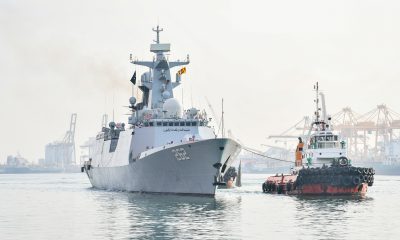
PNS TAIMUR & ASLAT arrive in Colombo
-
 Latest News6 days ago
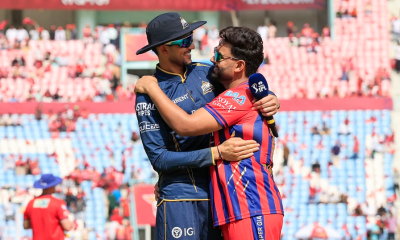
Prasidh, Buttler set up comfortable win for Gujarat Titans
-

 News3 days ago
PNS TAIMUR & ASLAT set sail from Colombo
-

 Latest News5 days ago
“I extend my heartfelt wishes to all Sri Lankans for a peaceful and joyous Sinhala and Tamil New Year!” – President
-
 Latest News7 days ago
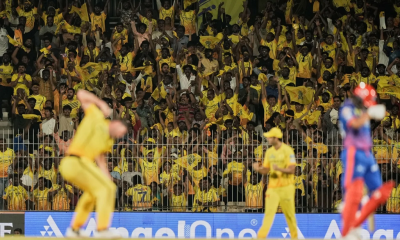
Sanju Samson and Jamie Overton deliver first points for Chennai Super Kings
-
 Latest News6 days ago
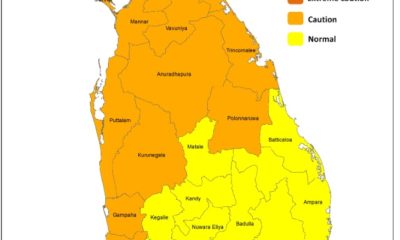
Heat Index at Caution level’ in the Northern, North-central, North-western, Western and Southern provinces and in Trincomalee district.
-
 Latest News6 days ago
Salt and Patidar power RCB past Mumbai Indians
-
 Latest News5 days ago
US blockade of Iran would worsen global energy crisis, analysts say