
Opinion
Is Mahinda bluffing again about 13A?


By Rohana R. Wasala
Most Venerable Mahanayake Theros, I would like to beseech you Reverend Sirs, in all humility and with the deepest respect, to please write to Mahinda Rajapaksa MP or summon him before you, to demand that he explain to the nation why he now supports a measure that is likely to prolong the suffering and insecurity of the people and to endanger the survival of the Buddha Sasana, and, if it is something unavoidable at this stage, how he is going to make the proposed change harmless …
The Most Venerable Mahanayake theras of the Three Nikayas (Siyam, Amarapura and Ramanna) wrote to president Ranil Wickremasinghe admonishing him not to fully implement the 13th Amendment to the Constitution two weeks ago, on February 2, as reported in The Island Mahanayakes tell President not to implement 13A’/February 3, 2023). The Buddhist prelates reminded the president that his predecessors did not implement 13A fully because of the devastating consequences this would have on the country, and that the executive presidency was established to safeguard the people’s sovereignty. The Mahanayake theras warned him of public anger rising against him if he carried out activities that tend to weaken the central government. It is evident that the senior monks are aware of the current economic crisis that the country is going through. They understand that Sri Lanka needs the assistance of global powers to overcome these difficulties. However, they correctly point out that proposals that undermine the sovereignty and territorial integrity of the country must be rejected. According to The Island report, the Mahanayakes also told the president that the country as a whole.. ….” faced many difficulties during the war. The government must do more to develop the North and East and uplift the livelihood of people who faced the most damage. Politicians who come from those parts hold Cabinet posts and can do a lot to develop these areas. At such a time, fully implementing the 13th amendment will create confusion….”
Is this dabbling in politics on the part of the Mahanayakes? Absolutely not. They are just attending to the hallowed duty assigned to the bhikkhus of our country by a tradition that began 2260 years ago with the official introduction of Buddhism: to come forward/usually to offer advice to the ruler when the country, the people and the Buddha Sasana are in jeopardy. Sri Lanka is a Buddhist majority country. Countries that possess such a long unbroken history of the same spiritual culture are extremely rare. Doesn’t that imply something about the dominant cultural background of the country and the people’s beliefs and ideas about the living of life, worldly happiness, social obligations, spiritual fulfillment, and so on? As the spiritual guides of at least 70% of the Sri Lankan population, they have a historic responsibility to advise the ruler when they realise that the interests of the people of the country (including non-Buddhists) are threatened as understood at present by a large majority of the population.
The Maha Sangha are arguably the most democratic community of clerical men and women on earth. They are averse to totalitarian control of any kind (something hinted at by the president in the Buddha’s admonition to his followers “Be a lamp unto yourself” with which pithy quote he ended his policy statement, though its appositeness in that context may be in question).
In their missive, the Buddhist prelates express their sincere concern about the need to address the current economic issues with special attention to the livelihood problems of the people of the North and the East who faced the brunt of the civil conflict. At the same, they urge the president not to carry out the full implementation of the 13th Amendment. (Though the Venerables didn’t mention it, the 13th Amendment was forcibly imposed on Sri Lanka grossly violating her sovereignty in 1987 in less than ideal, less than democratic circumstances as the older generation of Sri Lankans knew at first hand.)
While presidents, prime ministers, and governments come and go from time to time, changing their powers and policies as appropriate or otherwise, the Mahanayakes who are symbols of wisdom and compassion remain more permanent, like the sovereign state itself. However, hardly ever do they usurp a ruler’s role. The intrinsic secular nature of Article 9 (relating to Buddhism) of Sri Lanka’s existent republican constitution is something that Western observers, and even our own politicians including the nationalists among them do not or do not want to understand; the latter seem to be abysmally ignorant of the term ‘secularism’, and play havoc with it.
Contrary to what people expected, in his ceremonial policy statement from the Speaker’s chair in parliament on February 8, President Wickremasinghe did not seem to respond to the Mahanayakes’ earnest advice conveyed to him nearly a week previously, but he did so by implication, towards the end of his speech. Some of his utterances, probably, increased their apprehensions. He talked about having to take unpopular decisions. “I am not here to be popular!”, he said. Ranil Wickremasinghe can well say that since it was not because he was popular that he became executive president.
He, as a would-be technocrat, can take unpopular decisions, as he thinks fit, in dealing with purely economic issues. But if his economic policies are based on wrong political decisions, it’s a different issue, where his personal moral values get tested (in spite of his indispensability at this juncture).
The president devoted the first half of his speech to dealing with strictly economic matters: Rebuilding the nation, foreign reserves, IMF negotiations, revival of tourism, economic reforms, etc. To properly handle these, it will be helpful for him to keep in mind the concerns raised by the monks. For example, one of the worries of these leading monks, though not mentioned in the letter, relates to the preservation of the Buddhist archaeological heritage of the northern and eastern areas. The archaeological treasures connected with the history of Sinhalese habitation in the northern, north central and eastern parts of the island have been under threat for decades; some of them have been deliberately destroyed, reburied, built over or falsely claimed by non-Buddhists. There is history written on rock in the form of rock inscriptions right across the country from north to south and from east to west that bear witness to the presence of the Sinhalese throughout the island. Archaeological remains and sites are great tourist attractions, which means their preservation is economically very important, too.
Most of the other half is about establishing communal harmony. President Wickremasinghe takes great pains to convince the Tamil and Muslim minorities about his determination to solve their problems.
He had discussed with R. Sampandan MP in 1977 (i.e., 45 years ago) about how to resolve the Tamil ethnic issue. The time has come at long last for them to achieve their goal. Ranil had been made aware of problems of the Muslims by minister A.C.S. Hameed, presumably in the latter 1980s, i.e., 35 years ago. All sensible Sri Lankans appreciate Ranil Wickremasinghe’s desire to resolve minority problems, but he should remember that no politician has a moral right to disregard the human rights interests of the majority community.
While listening to the policy statement streamed live on February 8th, I felt that the president displayed less enthusiasm in talking about the problems that the majority community suffer from. It looked as though he thought those problems were less substantive than the ones that the minorities faced. His single apathetic utterance in this regard was: “The Sinhalese community is also facing issues of their own which require open discussion. We expect to recognize the communities that are marginalized in society especially due to caste discrimination”. This is tantamount to associating the caste issue with the Sinhalese instead of the Tamils, particularly those in the North, who are persecuted by religion sanctioned casteism. The caste problem among the Sinhalese – historically borrowed from Tamil Hindu culture – is very mild, confined perhaps to party politics and matrimonial occasions, and is fast disappearing. Tamil civil society activist Arun Siddharthan often mentions this problem among Tamils. Rear Admiral (Retd) Sarath Weerasekera MP said in Parliament recently stated that blood needed for blood transfusion in Jaffna hospitals was in short supply due to (Hindu religion based) caste discrimination and had to be donated by Sinhalese soldiers. Of course, how seriously the particular form of social injustice affects the Tamil society can’t have escaped the president’s attention.
Paradoxically, though, in stark contradiction with basic Buddhist teachings, caste distinctions are still observed by Sri Lankan Buddhist monks, who have divided themselves into caste-based nikayas, something initiated by the Siyam nikaya in unalterable historical circumstances in the 18th century. It’s an evil that the Mahanayakes could have corrected, at least decades before, had they been less worldly, and more devoted to the Dhamma, and more dedicated to the welfare of the Buddhist laity, and the society in general. At least now, they must bury these undue divisions among themselves, and unite as a single body and realize and demonstrate to the world what the power of the Maha Sangha is. This is urgent for the survival of the Buddha Sasana.
President Wickremasinghe expressed his determination for bringing in maximum devolution of power within a unitary Sri Lanka (not united Sri Lanka as he used to say in the past). How he can secure this is yet to be disclosed. The people must be wary, for the devil is in the details. He says quite correctly that reconciliation alone will not bring about economic development: people’s attitudes must change. (Of course, this should apply not only to the majority, but also to the minorities.) This is perhaps a reference to his decision to get Tamil diaspora entrepreneurs involved in the development of the war-damaged North, for which he will create a separate department. We remember that, even months before, diaspora representatives indicated their readiness to bring in foreign funds to ease Sri Lanka’s dollar crunch, but that was with the proviso that those funds will be utilized exclusively for the economic development of the North.
During his closing words, president Wickremasinghe said:
“,,,,,,,We are all bound to protect the State of Sri Lanka. Any citizen has the opportunity to democratically change Governments through the elections. However, no one has the right to create anarchy in Sri Lanka. Not any political party. Not any group.
“We cannot allow our motherland to become an economic or social colony. Anarchy cannot be allowed. No one who truly loves the nation will allow such a situation. We all should stand on the side that supports the nation and not that which is bent to destroy the country..”.
That is a kind of assurance given that the sovereign Sri Lankan state will remain whole; there will be no division of the country. Governments will be changed democratically through elections. This means that the sort of annihilationist anarchy that the chaotic medley of leaderless directionless political and religious desperados of the foreign funded, anti-national, conspiratorial ‘Aragalaya’ will not be allowed. The president promised that his proposals will be implemented through the National Assembly of the Parliament. What better guarantee can be given than this that the kind of undemocratic coercion that forced the 13th Amendment on a hapless Sri Lanka in 1987 under a dictatorial president who had succumbed to undue Indian pressure will not be applied in the present situation?
If the 13th Amendment must be implemented in full, let it be implemented in that democratic way. But we know that the present parliament doesn’t have a legitimate mandate to achieve that end. The SLPP was returned to power with a near two thirds majority, having fought elections on the platform of ‘One country, One law’. It is still an SLPP government. So they do not have the moral right to pass legislation that is entirely opposed to the original rallying cry that brought it to power. To cut a long story short, it is only Mahinda Rajapaksa MP who can persuade the unelected, president by default, Ranil Wickremasinghe from using the sitting parliament to enact 13A in its entirety without consulting the public regarding it through a referendum or a general election. Of course, in the past, Mahinda Rajapaksa used to repeat that he’d offer a 13A+. But I thought he was just bluffing then. Now Ranil seems to have called his bluff. Almost all members of parliament including Mahinda Rajapaksa, except a small splinter group who have left the SLPP alliance, have expressed agreement to the president’s decision to execute the full implementation of 13A. So, legally, there is no obstacle to his plan. But it is undemocratic and immoral.
It is the conscientious assertion of a nation’s dominant moral values by the three branches of government in a democracy – the executive, the legislature and the judiciary – in their activities that saves that nation from collapse and disaster. In the final analysis, Mahinda Rajapaksa, former president and prime minister, despite his, perhaps, unmatchable past achievements, is responsible for the present unprecedented crisis, especially, the ruinous political chaos. Only he can put an end to it by putting the country before himself, if possible. He used to say that his Priority Number One, Number Two, and Number Three was the same: the Motherland/the Nation. Let him redeem his lost honour and popularity, and also win back the love of the people he tried to serve.
Most Venerable Mahanayake Theros, I would like to beseech you Reverend Sirs, in all humility and with the deepest respect, to please write to Mahinda Rajapaksa MP or summon him before you Reverends, to demand that he explain to the nation why he now supports a measure that is likely to prolong the suffering and insecurity of the people and to endanger the survival of the Buddha Sasana, and, if it is something unavoidable at this stage, how he is going to make the proposed change harmless. Please remind him that he was a former prime minister, president, and a minister for Buddha Sasana.

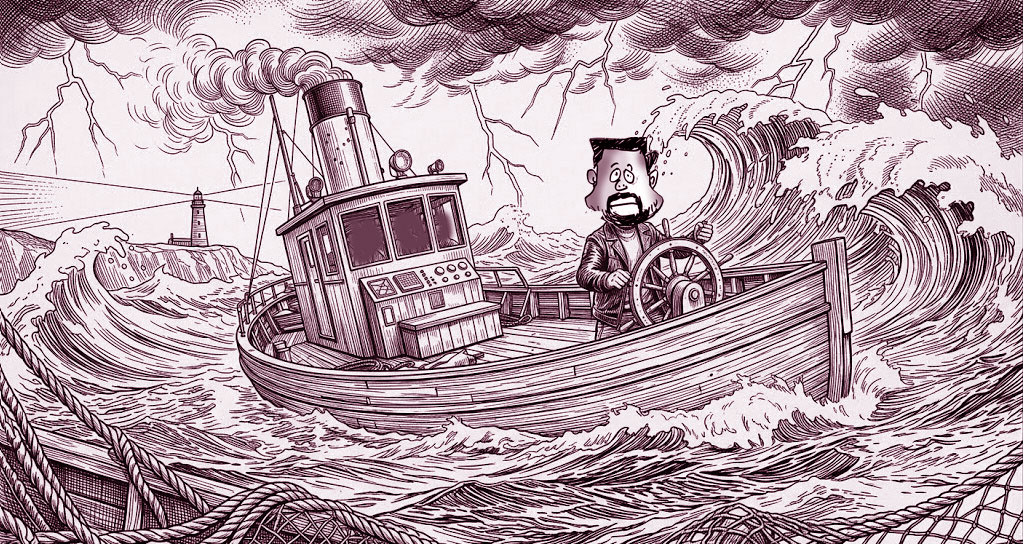
by Sena Thoradeniya
I Refer to the article published under the above title in The Island of 14 Sept. It was written by Dr. Uswatte-aratchi, whose insights into art, literature, and culture have long resonated with mine. In those domains, we have shared similar views; yet in matters of political theory, political leadership, and governance, our perspectives have not converged.
I do not intend to discuss the entire article by Dr. Uswatte, for he is entitled to his views on our politicians, even to the point of publicly attacking them when opportunity arises. I am neither an apologist nor an agent of any among those he has named. My concern here is solely to highlight Uswatte’s curious attribution of his knowledge of mathematics and physics to a person who, in his public addresses, has revealed no trace of intellectual capacity.
Dr. Uswatte says: “Unlike the earlier rulers Dissanayake (referring to the President) attended government schools in Tambuttegama and Kelaniya University. He studied science and mathematics. He can differentiate an equation for you and speak intelligently about Paul Dirac and Higgs Boson with the same felicity as accusations against former politicians”.
We are waiting for a theoretical or scientific publication by the current President that might justify such a claim. To ascribe scholarly depth to one whose record is not noticeable is absurd. It is a gesture that compliments without foundation and confers laurels where none have been earned.
This is what Dr. Uswatte says about the Prime Minister: “There is a Prime Minister who can talk to you impromptu about Auguste Comte and Claude LéviStrauss”.
A person who is said to have studied sociology should be knowledgeable about Comte, regarded as the father of sociology and the founder of positivism, and Claude Lévi-Strauss, a leading figure in structural anthropology; yet we remain uncertain whether she speaks of them with genuine familiarity and scholarly understanding, or is merely name-dropping them in an impromptu fashion. What on earth is she saying about these men on public platforms?
Since I possess no knowledge of either physics or mathematics, it was sheer curiosity that led me to consult AI only to discover what a marvelous President we have!
Paul Dirac was a pioneering English physicist, who helped establish quantum mechanics, co-founder of quantum electrodynamics and contributed to quantum field theory. In 1933, he shared the Nobel Prize in Physics. The Higgs boson is a fundamental particle discovered in 2012 that explains how particles acquire mass, solving a central mystery in physics. Peter Higgs, a British theoretical physicist won the Nobel prize for physics in 2013, decades after Anura Kumara obtained his degree.
Trying to rediscover theoretical physicists among ordinary science graduates who left university decades ago is indeed a futile exercise, like looking for a needle in a haystack. Theoretical physics thrives on continuity, requiring sustained engagement with evolving mathematics, new theories and experimental findings, and is a discipline that demands lifelong intellectual engagement.
Dr. Uswatte should listen to speeches made by his new found friends at public meetings and see the reaction of social media activists. As Chairman Mao observed, theory divorced from reality is useless. “No investigation, no right to speak (“Preface and Postscript to Rural Surveys” -1941).
For the time being, I refrain from commenting on some of the President’s promises, such as ‘producing graphite from graphene’ (which ought, of course, to be the reverse), producing sulphuric acid using seawater, fortifying the stem of the banana through advanced research, devising lifesaving remedies for cancer, or unveiling the world’s first app for locating shoals of fish. The list is too long to reproduce here. An exaggerated parade of claims and the sheer implausibility of such boasts are not the stuff of theoretical physics.

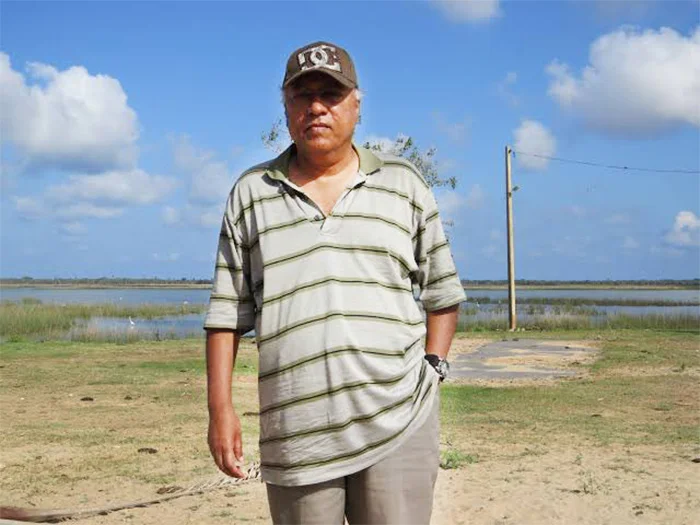
by Jehan Perera
There are some journalists whose work we read and then move on. And there are others whose writing makes us stop, think and look at the country differently. D. B. S. Jeyaraj who passed away on 17 May 2026 was one of them. Whenever I saw an article by DBS, as he was widely known, appear in a newspaper, it was the first I read. He was primarily a columnist and political analyst, with a deep knowledge of the history of Sri Lanka’s ethnic conflict. But his columns were not simply analysis or opinion. They were rooted in what was happening in Sri Lanka and in what people involved in those developments were saying. We could see this in his frequent references to first-hand comments from people he had spoken to. He did this both when he lived in Sri Lanka and later, when he was living in Canada. That was no easy task.
In a 2013 interview, after returning to Sri Lanka for the first time in 25 years, DBS described how he had continued to report on Sri Lanka from Canada by maintaining contacts at home. He said that he broke his rest daily to communicate with contacts in Sri Lanka and that this dual existence of living physically in Canada and mentally in Sri Lanka took a heavy toll on his health and finances. But that commitment mattered and allowed him to write about Sri Lanka from afar without losing touch with what was happening on the ground. His writings gave readers a sense of what was happening in the north and east, as well as of politics more generally in Sri Lanka.
Speaking at the commemoration and book launch organised by the Tamil Media Alliance last week, Vijitha Yapa, the founding editor of The Island and Sunday Times, under whom DBS worked, captured an important quality of his journalism when he said, “DBS had no venom. That was his greatness.” He also recalled how DBS stood up to pressure and threats and continued writing about the Tamil community while insisting on fair play irrespective of race or religion. M. A. Sumanthiran, General Secretary of the ITAK, put another aspect of DBS’s contribution even more directly: “Truth is the first casualty of war. DBS fought to keep the truth alive.” He recalled that DBS always cross-checked his news and noted that even those who hated him read his columns to find the truth.
These observations capture two qualities that made DBS special. The first was his commitment to truth and, second, was his ability to write about a deeply divisive subject without venom. DBS was a Tamil writing about the north and east and the Tamil national question in a deeply polarised environment. Yet he wrote for the mainstream English-language press and was widely read not only by Tamils but also by people from other communities. His writing helped make the concerns, political aspirations and historical experiences of the Tamil community accessible to readers beyond it. His importance was not limited to his being a Tamil journalist. His writing mattered because it addressed the country as a whole. Issues and perspectives that might otherwise have remained within particular communities could become part of a wider national debate.
Another noteworthy feature of DBS was his ability to be realistic in his assessments. With his wide knowledge of history, he understood that each side in the national conflict had its own history, fears and perceptions of threat. He recognised that the conflict could not be properly understood through the narrative of one side alone. He understood that there could be no unilateral solution imposed by one side or the other. That realism is particularly important in a country where political positions have often been presented as if the concerns of one community could be resolved without addressing those of another. A journalist who understands this complexity needs to do more than simply take sides. He or she can help readers understand why the conflict has endured, why trust has been so difficult to establish, and why lasting peace requires more than one dominant story.
There was also something revealing about DBS’s return to Sri Lanka in 2013. In the interview he gave during that visit, he said he deliberately avoided politics. He wanted to experience the country from the perspective of an ordinary person rather than through the views of politicians or political associates. He observed a disconnect between the needs of the people and those of the political class. In retrospect, that observation was remarkably prescient. The disconnect he identified in 2013 would become dramatically visible in the Aragalaya of 2022.
In the same interview, he offered an observation that deserves to be remembered. A journalist may not be able to write all that he or she wants because of external constraints, he said. But no journalist should write what he or she does not want to write because of external pressure. His commitment to independent journalism came at a considerable personal cost. He was arrested and detained by the Sri Lankan Police in 1987 after his reporting on the war in Jaffna, and in 1993, while living in Canada, he was brutally assaulted by LTTE supporters who fractured both his legs.
For all these reasons, I consider DBS to have been a mentor of mine. I never said so to him. Mentors are not always people who formally teach us or with whom we have a close personal relationship. Sometimes they are people whose work we follow, whose judgement we respect and whose example helps shape our own understanding of what we should strive to do. DBS was such a person for me. His passing has left a gap. His journalism was informed by history but connected to the present, rooted in facts but open to interpretation, and concerned with the realities of all communities.
The collection of his writings launched in his memory by the Tamil Media Alliance is therefore more than a record of an important period in Sri Lanka’s history. It is also a reminder of what journalism can be at its best. DBS showed that a journalist could understand one community without becoming confined to it, analyse conflict without being partisan, and take a position without losing sight of complexity. Above all, he showed the value of journalism that seeks to keep the truth alive. For those who read him regularly, the greatest reminder of his absence is the absence of his next column.
by N. A. de S. Amaratunga
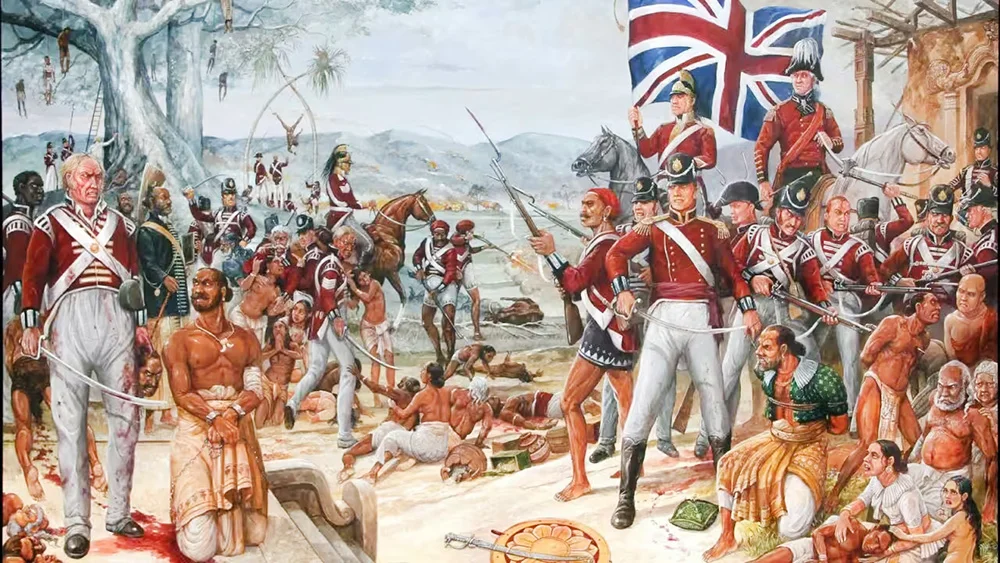
At a time when the word genocide is used with political motive and defensive war misconstrued as genocide, and a brutal genocide is taking place on a global scale with impunity, one should reflect on genocide committed by those who falsely accuse the Sri Lankan armed forces and the government for such crimes. The British who systematically annihilated people including “babies suckling”, in Uva-Wellassa in 1818 and the LTTE, which carried out numerous massacres to drive away the Sinhalese and Muslims in the so-called border villages are now shamelessly levelling unsubstantiated allegations of genocide against the Sri Lankan military. The British, jointly with the US, massacred about a million people, including children, in Iraq on a fabricated charge of possessing weapons of mass destruction. The British helped the LTTE continue their genocide of the Sinhalese and Muslims in the North and the East in an attempt to drive them away and grab their lands, and such crimes constitute genocide according to 1948 Genocide Convention.
“Slaughter every man, woman and child”
“Slaughter every man, woman, and child (including babies suckling at the breast)” was the order given by Governor Robert Brownrigg (3rd British Governor of Ceylon from 1813 – 1820) to Maj. Gen. Hay MacDowell in 1818. The British left the entire Uva-Wellassa region in a state of famine and starvation. The British used the scorched earth policy including mass murder and genocide of Sinhala civilians to crush the rebellion. British human rights campaigners now pointing accusing fingers at Sri Lanka have forgotten the Madulla Massacre, which led to razing and annihilating entire villages. In the entire Uva region members of the male population above the age of 18 were killed in revenge for resisting British imperial occupation under Governor Brownrigg.
Britain at present is leading a core group at the UNHRC Geneva, which bashes Sri Lanka for alleged human rights violations. Britain seems to have no remorse about its genocidal violence in Sri Lanka and happily leads the way in castigating Sri Lanka on unsubstantiated allegations of human right violations during the war against the LTTE. The US, which is the biggest war criminal in the world, is supporting these neo-colonial strategies to control and exploit the poor countries.
The Chemmani mass grave
The Chemmani mass grave has become a political tool liberally used by the pro-LTTE groups and their supporters in the West and also their local agents to pressure the government to take action against the war winning armed forces. Let the government be urged to get to the bottom of the mass graves found in the North and elsewhere. People of this country owe it to the armed forces who saved their country to ensure that the name of the national military is cleared. And if there are any war criminals among them, punish them after conviction. Sri Lanka is not Israel, the US or the UK.
The Genocide Convention was conceived largely in response to World War II, which saw atrocities such as the Holocaust that lacked an adequate description or legal definition. Polish-Jewish lawyer Raphael Lemkin, who coined the term genocide in 1944 to describe Nazi policies in occupied Europe and the Armenian genocide, campaigned for its recognition as a crime under international law. Lemkin also linked colonialism with genocide, mentioning colonial genocides outside of Europe in his writings. The Convention defines genocide as any of five “acts committed with intent to destroy, in whole or in part, a national, ethnic, racial or religious group.” These five acts include killing members of the group, causing them serious bodily or mental harm, imposing living conditions intended to destroy the group, preventing births, and forcibly transferring children out of the group. Victims are targeted because of their real or perceived membership of a group, not randomly.
Genocide in Gaza
However, Israel in collaboration with the United States, which has the worst record in genocidal warfare, has violated this Convention with impunity in Gaza, knowing that the rest of the world cannot act against it except condemn its actions. The UN has miserably failed to take any action against Israel, though it has the necessary tools like the Convention mentioned above. Its Commissioner for Human Rights Volker Turk visited the Chemmani mass grave and issued a strongly-worded statement calling for investigation under international supervision. He has not visited the place where genocide is currently taking place in broad daylight. Neither has the UNHRC made any worthwhile response in respect of Iraq, Syria, Libya and other parts of the world, where the US and Europe have been engaged in genocidal warfare. This type of double standards will further erode the credibility of the UNHRC, and if countries tend to ignore its writ, it has itself to blame.
We still don’t know the identities of the people whose skeletal remains have been found in the Chemmani mass grave. It was a prolonged war situation that created these graves. There were allegations of killings, including civilians, by both parties to the war.
The Office of Missing Persons has received about 10,000 complaints about missing persons from the north and east and investigations into these complaints are ongoing (source – reports of the OMP). Apart from verbal complaints there is very little incriminating evidence, if at all, against the armed forces. A few isolated incidents where excesses were committed have been investigated and action is being taken against the suspects.
Campaign by Pro-LTTE groups
Pro-LTTE groups are trying their utmost to connect the missing persons with the mass graves. They claim that the people who went missing were buried in the Chemmani mass grave. The Island journalist Shamindra Ferdinando dealt with this matter comprehensively in the Midweek Review on 9 September. He shows that the narrative built up by the pro-LTTE groups and the Western imperialists regarding the alleged disappearances could be more myth than fact.
The LTTE massacred hundreds of civilians in cold blood in many places, such as Sri Maha Bodhi, Aluth Oya, Aranthalawa (where the victims were Buddhist monks), Kattankudy mosque, Palliyagodella, Eravur, Gonagala and Kebethigollewa. Most of those killings, committed outside the war zone, were aimed at terrorising the ordinary people, and that amounts to genocide according to 1948 Genocide Convention. The LTTE carried out many bomb attacks on civilian targets, such as the Central Bus Station in Pettah, the Central Bank, crowded trains and buses. In the eastern villages people were bludgeoned and slashed to death so that ammunition could be saved.
Apart from killing and injuring, the LTTE chased away Muslims and Sinhalese from the Northern province, which amounted to ethnic cleansing, an act of genocide according to the above mentioned Convention. The people who were chased away have not yet returned to their homes and property, perhaps because of the memory of terror they had experienced in the North. Aren’t these acts of genocide ? The 1948 Convention defines genocide as any of five “acts committed with intent to destroy, in whole or in part, a national, ethnic, racial or religious group.”
Attacks on centres of worship like temples and mosques and killing of priests are unpardonable acts of terror aimed at destroying religious groups. Similarly murdering surrendered police officers is butchery of the worst kind. It was such acts of naked terrorism and insane mass murder that made the FBI label the LTTE “the most brutal terrorist organization in the world”.
Silence of UNHRC
Isn’t the UNHRC keen to ensure that justice is done for the victims of genocide committed by the LTTE? Perhaps, we should not make such a request to an organisation that keeps mum while genocide is rampant in the contemporary world ? Palestinians are being systematically murdered and driven away from their country with the UNHCR doing nothing to protect them. The US President is threatening the countries which support the Palestinians.
Sri Lanka must call for an international investigation into genocide committed by the LTTE.

Showers expected in the Western, Norrh-western and Sabaragamuwa provinces and in Galle, Matara, Kandy and Nuwara-Eliya Districts.

Bid for Basil’s extradition nears final stage: Police

High blood pressure, diabetes lead to about 80% of deaths in Sri Lanka

Ex-NTC chief in remand over 56 bus permits

Order for calling investment proposals for exploration, development of petroleum resources approved

Fuel market faces fresh pressure as Asian prices rise

‘Dates have the highest sugar content to fight Coronavirus’

Sunday Island 27 December – Headlines

#SundayIsland 17th December – Headlines

Sunday Island – 28th March

Sunday Island Headlines – 21 March

Sunday Island – 21st February – Headlines
-

 Latest News6 days ago
Sri Lanka thwart Fatima Sana challenge to secure Asia Cup final spot
-

 News5 days ago
Gnanasara Thero absconding after SC ruling
-

 News6 days ago
Ammunition cache found in old Kandy bungalow
-

 News6 days ago
Green Climate Fund (GCF) Regional Dialogue for East and South Asia will be held from 14 to 17 September 2026 at Cinnamon Life at City of Dreams Hotel, Colombo
-

 News6 days ago
Prof. Pieris says Buddha Dhamma recognised as source of law under Constitution
-

 News7 days ago
Bambalapitiya Railway Station renovated under the “Dream Destination” project opened to the public
-

 Latest News6 days ago
ITS Giuseppe Garibaldi’ departs Colombo
-

 Opinion4 days ago
From Galkissa (Mount Lavinia) to Tambuttegama