
Opinion
A simple, immediate solution to potentially dangerous shortage of air traffic control officers

BY Capt. G A Fernando MBA
gafplane@sltnet.lk
RCyAF/ SLAF, Air Ceylon, AirLanka, SIA, Sri Lankan Airlines.
And CAASL
In a recent interview conducted by Chamuditha Samarawickrama of Truth with Chamuditha fame with Thisara Amarananda, President of the Sri Lanka Air Traffic Controllers’ Association (SLATCA), it was revealed that the existing cadre of Air Traffic Control Officers was dangerously low due to migration of senior Air Traffic Control Officers (ATCOs) seeking more lucrative jobs abroad.
There are only 80 ATCOs instead of the required 138. They currently work overtime to keep air traffic services going. If four more ATCOs leave, it will lead to cumulative fatigue which may eventually bring the services provided in Sri Lankan airspace to a halt.
As a possible consequence our airspace of over 60,000 square nautical miles will be carved out amongst adjoining or regional countries such as Indonesia, Australia, Maldives and India. Sri Lanka will lose valuable foreign exchange revenue amounting to an average of $35,000 per day, derived from payment by airlines for flying through Sri Lankan airspace. Sri Lanka in turn provides the carriers with flight monitoring and traffic Information, and search and rescue facilities.
An Air Traffic Controller’s job is unique, requiring a good standard of English and communication skills. While the job generally maintains a lower profile than most others in the eyes of the general public, the service is provided day in and day out 24/7. Maintaining the flow of aircraft in and out of airports and en route is essential to aviation safety. This is also why the work of Air Traffic Control is rated as one of the most stressful in the world (Montgomery, 2010).
ATCOs function at three levels. (1) Aerodrome Controllers who use their eyes and ears while in the control tower of an airport up to an altitude of about 4,000 feet; (2) Approach Controllers who monitor and control air traffic on radar from 4,000 feet to 15,000 feet; and (3) Area Controllers (from Ratmalana) who control traffic above 15,000ft on radar and Controller Pilot Data Link Communications (CPDLC) when beyond line of sight. (Radar works on line-of-sight only.) It is obvious that a competent ATCO cannot be produced overnight.
The aviation environment is generally assumed, by the general public in particular, to be safe. The importance and significance of an ATCO’s job will only come into focus in the event of a high-profile incident or accident. In the past, all control and separation of air traffic was maintained by the use of headings and altitudes provided to the aircraft, known as ‘tactical radar vectoring’. With the introduction of new/future air navigation systems, separation of the majority of aircraft arrivals and departures at airports are looked after automatically. As a result, old skills of Air Traffic Controllers are lost and new skills have to be learnt. Separation and sequencing of aircraft could be done en route, long before their arrival at the destination airport. Because all aircraft are still not equipped with future air navigation systems, and the air traffic control systems are in the process of being modernised, the Air Traffic Controller enforces a ‘mixed mode’, i.e. controlling the old and the new, adding further stress to the conduct of the job.
The job of an Air Traffic Controller requires extensive training, knowledge, experience and skill, enabling the individual to ensure a safe, expeditious and orderly flow of air traffic with economy, collectively known as ‘Air Traffic Management’ (ATM). According to Costa (1996), there are six main ‘Stressors’ that affect the Job of Air Traffic Controllers: (1) Demand; (2) Operating Procedures; (3) Working times; (4) Working tools; (5) Working environment; and (6) Work Organisation.
(1) Demand: The number of aircraft under the purview of an Air Traffic Controller will constantly vary during a given duty period. The stress factor is directly proportional to this number. Accordingly, there will be highs and lows in the Air Traffic Controller’s workload during a given duty period. There could be unanticipated, nonessential traffic causing distractions, as well as unexpected events such as bad weather, medical and technical emergencies occurring in air traffic under their control.
(2) Standard Operating Procedures: Another stress factor is the need to operate within Standard Operating Procedures (SOP) required by the relevant organisations (Airport and Aviation Ltd and Civil Aviation Authority Sri Lanka) while striving to perform under constant, real-time pressure, sometimes creating the need to even bend the rules to get the work done. Working on the edge of maintaining control while realising the terrible consequences of a genuine human error adds to the anxiety and stress.
(3) Working Times: The working times could be any time of day or night and the Air Traffic Controller is expected to work at 100 percent efficiency (and nothing less) irrespective of the circadian (body clock) lows. Usually the job involves shift duties which sometimes lead to extended duty time to cover for an absent colleague. This adds to the stress. (Job and Home)
(4) Working Tools: The equipment an Air Traffic Controller has to work with, such as microphones, headsets, telephones, badly designed control panel layouts and radar display screens that may be old and outdated, is another source of stress. On the other hand, there is the need to become competent with futuristic technology for Communication, Navigation and Surveillance (CNS), including (CPDLC). The controllers need to regularly attend training courses and certification, to update themselves, thereby causing stress.
(5) Work Environment: Noise, light, temperature, ventilation, sitting posture, cafeteria and rest facilities, coupled with lack of seclusion from the distractions of the outside world, create stress for the Air Traffic Controller.
(6) The Work Organisation: Relationships with colleagues, salary, sometimes responsibility without authority. With the advent of Future Air Navigation Systems (FANS), there is a change of roles and responsibilities of the Air Traffic Controllers, and is bound to be stressful.
In Sri Lanka all ATCOs are University Mathematics graduates who had applied for the job as advertised in the Government Gazette. They had little or no knowledge of what the work involved. Therefore, they have to be orientated and trained ‘from scratch’. Unlike in the past in Sri Lanka, and the practice in other parts of the world, no qualified pilots were recruited to the job. The last pilot in the system retired in 2017.
Now, SriLankan Airlines has yet again advertised for Cadet Pilots and Junior First Officers. It is estimated that there are almost 200 eligible applicants. Unfortunately, many are called but only a few are selected. The selection process is not fool-proof, but considered to be the best under the circumstances.
Flight training is expensive. The requirement for eligibility is knowledge to sit and pass the Air Transport Pilots’ Licence (ATPL) theory examination and have enough flying experience and skill to be awarded a Commercial Pilots’ Licence and Instrument Rating (CPL/IR) with a twin-engine qualification endorsed on the licence. This will cost the student pilot in excess of Rs. 10 million, and take more than two years to accomplish. One has to be at least 17 years old to start basic flying training. Some go to the USA for training and exposure. Some foreign universities offer a pilot’s licence with a degree.
Unquestionably, parents undergo untold hardship to put their children through flight school. Some even get into debt and mortgage their only property. That’s the stark reality. It may not be wrong to say that most candidates are from middle class families where parents make many such sacrifices to be able to fund their children’s training for a so-called glamorous job which pays high salaries.
Airlines today have a good safety record, and although not acknowledged by the west, since 1947 Air Ceylon, Air Lanka and SriLankan Airlines have not lost a single passenger due to an air accident. All lives lost resulted from acts of terrorism. The ATCOs too, should be given due credit for the unseen and unsung role they have played and continue to play to maintain safe skies over Sri Lanka.
Due to a bottleneck in the pilot training process, SriLankan Airlines cannot recruit large numbers at once. Usually, recruitment occurs once approximately every 18 months. Those who are unsuccessful in joining the national carrier the first time have to spend three to five years applying over and over again before they find a slot in their chosen career, or become over-age. Meanwhile some become instructors in the many flying schools, or secure airline jobs abroad, while the rest (read: majority) simply give up their ambitions of becoming a pilot. There are many variables in the selection process, with an element of luck playing a large part.
Make no mistake, most young people who aren’t selected as cadets or Junior First Officers are bright, talented, enthusiastic and eager to work in the aviation industry. It is their passion that keeps them going. Unfortunately, they are not utilised in other aviation fields like Air Traffic Control. This valuable resource of qualified but inexperienced pilots, trained at great expense to their parents and the country (the latter in terms of foreign exchange for fuel, spares and equipment), isn’t recognised by either the Civil Aviation Authority Sri Lanka (CAASL) or Airport and Aviation Services Ltd (AASL).
Rather than recruiting personnel ‘off the street’ as it were, these young lads and lasses could enhance the ATCO cadre as Aerodrome Controllers. They have basic aviation sense and airmanship (common sense) and will need minimum training. That’s how it was in the Sixties and seventies. While it is likely that many will later move on to their chosen profession as airline pilots, there will be a few who will opt to stay as ATCOs, thereby enriching the competency levels of the aviation industry. It is a case of resource management. This is how it happens in most parts of the world.
Could this be the solution to the potentially dangerous problem in Sri Lanka?








Sri Lanka today stands at a sensitive crossroads where national security, economic recovery, and intercommunal trust intersect. Recent developments including heightened security measures around areas popular with Israeli tourists and the arrest of local youth under suspicion have sparked understandable concern, especially within the Muslim community. These reactions are not mere emotional outbursts. They reflect deeper anxieties about fairness, dignity, and equal treatment under the law.
At the same time, it would be a grave mistake to ignore the broader security environment. In the post-Easter Sunday attack reality, intelligence-led policing often operates in a preventive mode. Locations associated with foreign nationals, including Israeli visitors, have featured in past threat assessments as potential soft targets. In such circumstances, even routine inquiries can appear intrusive. This is the uncomfortable truth of modern counter-terrorism: it is cautious, sometimes heavy-handed, and frequently misunderstood by the very communities it seeks to protect.
Yet, security effectiveness ultimately depends on legitimacy. When segments of the population begin to believe that certain groups are being disproportionately scrutinised whether that perception is accurate or not public confidence erodes. A dangerous narrative is quietly taking root in parts of the Muslim community: that Israeli visitors are receiving heightened protection while local citizens, particularly Muslims, face heightened suspicion. Whether this reflects operational reality or perception alone, it must be addressed with urgency and transparency. In matters of security and social cohesion, perception often carries as much weight as fact.
Equally troubling is the risk of politicisation. Isolated incidents are already being amplified, reframed, and at times distorted to serve narrow political interests. Islamophobia remains a potent and dangerous weapon in the hands of opportunistic actors. When legitimate security concerns are conflated with communal targeting, or when routine policing is portrayed as systemic discrimination, the result is a toxic cycle of mistrust that benefits no one except those who wish to see Sri Lanka divided.
Sri Lanka cannot afford this trajectory.
Tourism remains a vital pillar of our economic recovery. Israeli tourists, like visitors from every other nation, contribute meaningfully to local economies, especially in Arugam Bay, Weligama, and the southern coast. Ensuring their safety is not a political concession; it is a basic sovereign responsibility. However, that responsibility must never be implemented in a manner that undermines the rights and dignity of Sri Lankan citizens.
The way forward demands balance, discipline, and foresight. Here are five practical steps that can help restore both security and trust;
First, strengthen communication.
When arrests or detentions occur under security-related suspicion, law enforcement agencies must explain the basis within legal limits, clearly and promptly. Silence creates a vacuum that speculation quickly fills. In the age of social media, every unexplained action becomes fertile ground for rumours. A short, factual statement can prevent days of damaging speculation.
Second, ensure operational professionalism.
Security operations must remain intelligence-driven rather than perception-driven. Officers on the ground need proper sensitisation training on the broader societal impact of their conduct. A question asked in the wrong tone, a stop conducted without explanation, or a detention perceived as arbitrary can damage community relations for years. Professionalism is not a weakness, it is the hallmark of effective policing in a diverse society.
Third, institutionalise community engagement.
Trust cannot be built reactively after tensions flare. It must be cultivated continuously through structured dialogue. The Muslim community has historically played a vital role in supporting national security efforts. That partnership must be nurtured, not weakened by avoidable missteps. Regular meetings between security agencies, community leaders, and civil society organisations can help identify problems early and prevent misunderstandings from escalating.
Fourth, craft a clear national narrative.
Sri Lanka must consistently and publicly reaffirm one simple principle: we protect all citizens and visitors alike equally under the law. Security is not selective; it is universal. Political leaders, religious figures, and media outlets must reinforce this message without ambiguity. Mixed signals only fuel suspicion.
Fifth, exercise political and media restraint.
Exploiting security incidents for short-term political gain whether by inflaming communal fears or by painting the state as either weak or biased is deeply irresponsible. Leadership at this moment requires maturity, not rhetoric.
The media, too, must resist the temptation to sensationalise. Responsible reporting is a national duty, not an optional extra.
Sri Lanka’s greatest strength has always been its remarkable ability to absorb
complexity without fracturing. We have emerged from a brutal civil war, survived the Easter Sunday tragedy, and navigated multiple economic crises. But this strength is not automatic. It must be actively maintained through wise policy, honest communication, and genuine inclusivity.
The current situation is not yet a crisis. It is, however, a clear warning. Handled with wisdom and fairness, it can become an opportunity to strengthen security practices, rebuild trust, and reinforce social cohesion. Mishandled, it risks deepening divides that both domestic extremists and external actors would be quick to exploit.
The real test before us is not whether we prioritise security or rights. The true challenge is whether we are capable of safeguarding both with fairness, clarity, and quiet confidence.
Sri Lanka has faced far greater tests in its history. What we need now is not more division, but renewed commitment to the values that have held this nation together: justice, equality, and mutual respect.
The choice is ours. Let us choose wisely.
By Mahil Dole SSP Rtd
Mahil Dole, SSP (Retired), is the former Head of the Counter-Terrorism Division of the State Intelligence Service of Sri Lanka, and has served as Head of the Sri Lankan Delegation at three BIMSTEC Security Conferences. With over 40 years of experience in policing and intelligence, he writes on regional security, interfaith relations, and geopolitical strategy.

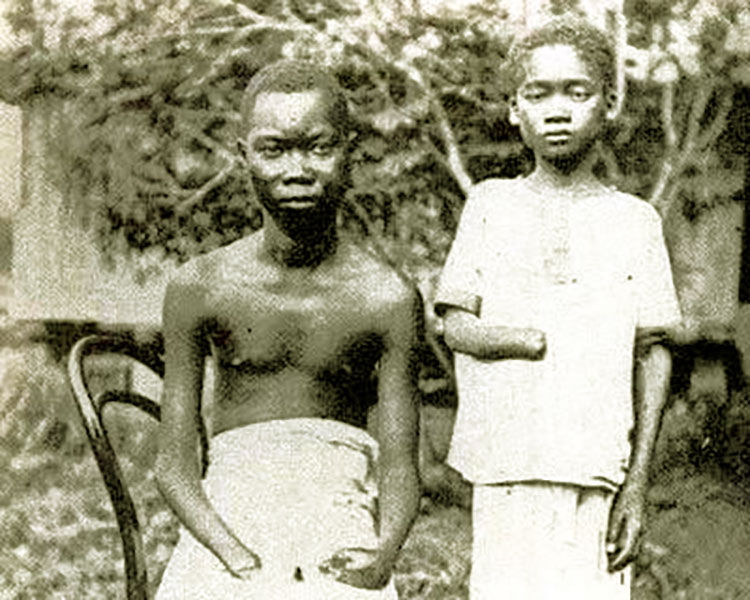
The central part of Africa was privately owned by King Leopold II of Belgium. It was 76 times the size of Belgium, established in 1885, and called the ‘Free state of Congo’. All sorts of expatriate Belgian, South African and other European white folk ran the colony whose people, it was said, were treated as children at best and animals at worst. They were whipped, maimed and killed, at the drop of a hat. Many had their right arms cut off as punishment. There were also many white missionaries who were outraged. Initially, the natives were never taught to read or write. Then, there were also Arab slave dealers running a roaring slave trade, by raiding and decimating villages to capture the natives. It was literally the law of the jungle. There were over 250 tribes within the Congo.!
While many European countries were limiting their operations to the coastal areas of Africa, King Leopold’s minions, led by a Welsh -American agent called Henry Morton Stanley (of “Livingston I presume” fame), worked at the King’s behest to find the source of the Congo River and there discovered 200 miles of turbulent ‘Rapids’ after which there were miles and miles of calm water. So, it was Stanley who suggested that steamboats be dismantled and carried by cart roads upriver to be re-assembled and used for transportation. Many trading posts were established along the river. A railway line was also built. There was a French team of explorers, too.
Initially, the main products from Congo were Ivory and Rubber. Rubber sap came from vines and not from trees. After the pneumatic tire was invented by John Boyd Dunlop, in 1888, the demand for Rubber was even greater. The Congo Free State, now nicknamed the ‘Dark Continent’ by many writers who experienced the appalling conditions that the natives (savages) had to work under. In 1889, at the Paris Exhibition, commemorating hundred years after the French revolution, they even had a human Zoo from the colonies, displaying people, including from the Congo, in a so-called ‘natural’ or ‘primitive’ state. Writers such as Stanley himself and Joseph Conrad of ‘Lord Jim’ fame, wrote about the Congo and imperialism in The Heart of Darkness.
Although King Leopold never set foot in Congo, it was big money for him. There were a few others like the UK educated Frenchman Edward Dene Morel, a shipping clerk and a surveyor/activist named Roger Casement who noticed that trade was only one way from Congo. Goods from Antwerp, Belgium, to Congo, Africa, consisted mainly of arms, ammunition and manacles (handcuffs). That seemed rather odd. They wrote a report about it in 1904. The phrase ‘Human Rights’ was first used in these writings. Arthur Conan Doyl and the American writer, Mark Twain, too, commented about the appalling conditions that prevailed. It was then that the world suspected that all was not well in the dark continent and brutality of the King’s regime. The King then appointed a Commission of inquiry into the affairs of the Congo Free State. (Sounds familiar?)
Eventually, under international pressure, in 1908 the Belgian Government took over its running and the Congo ceased to be ‘private property’ of the King. The State of Free Congo became Belgian Congo. Interestingly, in 1915, high grade (65% pure) Uranium was discovered in the Shinkolobwe Mines in the Katanga Province in the Congo. It was from here that Uranium was supplied for the two Atom bombs dropped on Hiroshima and Nagasaki by the USA to end WWII. The world discovered that Congo was also mineral rich in Copper, Cobalt and Diamonds. The western world and the USA cast their greedy eyes on them.
In Belgian Congo, living conditions of the natives slightly improved as in a ‘normal’ colony. Now there were missionary schools which gave rise to educated elites who then started clamouring for independence from Belgium.
On 30th June,1960, Belgium, without much warning (lead time), granted independence to the country. It was now called the Democratic Republic of Congo (DRC). A Congolese activist Joseph Kasavubu was elected as President, while another charismatic young activist, by the name of Patrice Emery Lumumba, a one-time postal clerk from a rival political party, was elected as Prime Minister. Since they could not individually form a government, they had to go for a ‘Coalition’. At the Independence Day ceremony King Boudouin (a kinsman of King Leopold II) was in attendance.
He said, “The Independence of the Congo is formed by the outcome of the work of King Leopold II’s genius, undertaken by him with tenacious and continuous courage with Belgium’s perseverance.”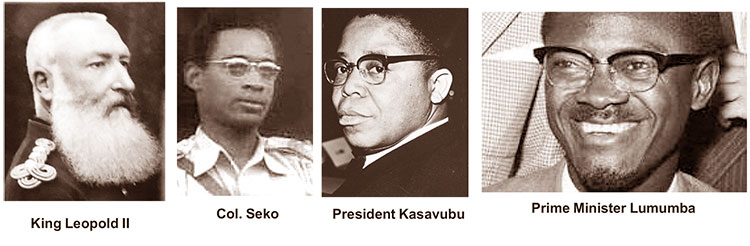
President Kasavubu made it a point to acknowledge and thank the Belgian Authorities for all they had done in the past.
Then Prime Minister Lumumba, who was not even scheduled to speak, stood up and recalled all the atrocities carried out by agents of Belgium. How the natives were controlled and impoverished. He spoke about white supremacy and exploitation. (An estimated 15 million were killed in the process while Belgium got rich.) He was only 35 years old.
He said “Although this independence was proclaimed today by agreement with Belgium, no Congolese will ever forget that independence was won in struggle. We are deeply proud of our struggle and our wounds are too fresh, too painful to be forgotten.”
“We have experienced forced labour in exchange for pay that did not allow us to satisfy our hunger, to clothe ourselves, to have decent lodgings or to bring up our children as dearly loved ones. Morning, noon and night, we were subjected to jeers, insults and blows because we were ‘Negroes’. We have not forgotten that the law was never the same for the White and the Black. That it was lenient to the one and cruel and inhuman to the other. Our lot was worse than death itself.”
Lumumba’s speech did not go down with the King and Belgian nation and the Western world. They were furious. From that day he became a marked man among the CIA and Belgian Intelligence. They plotted to assassinate him as he spoke up for the whole of Africa and not only Congo.
It seemed that independence was only on paper. Almost immediately afterwards the army, expecting quick changes, mutinied. Their leaders were still Belgian Officers with no change in their attitudes towards the natives. Many white Belgians fled the country and Belgium claimed that Belgians were at risk. Then the Belgian army moved, in without the permission of the new government. Almost simultaneously, the mineral rich Katanga, instigated by the mining companies, declared independence under the leadership of a pro Belgian Congolese politician Moise Tshombe as their head. Obviously, Belgium and the western world wanted to retain control of the mines which were the economic heart of DRC.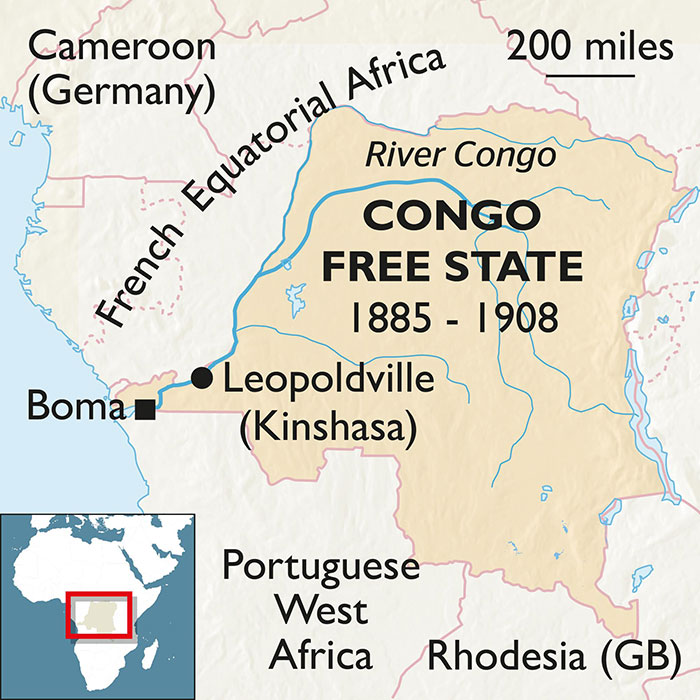
Lumumba appealed to the UN to intervene and send UN troops to get the Belgian forces to leave. The UN Secretary General, Dag Hammarskjold, under pressure of Western powers and the USA, refused such action. UN peacekeeping troops were sent with strict instructions to not interfere. Nikita, Krucheve of the USSR, called for the resignation of the Secretary General Hammarskjold, saying that he was pro Belgium. Lumumba had no alternative but to turn to Soviet Union for help.
This was during the height of the cold war. In the eyes of the USA, and the western world, Lumumba was confirmed to be a communist which he was not. He was only a nationalist. Looking at the declassified information, Allen Dulles, head of the Central Intelligence Agency (CIA) was authorised by President Eisenhower, for Lumumba to be eliminated. Lumumba’s CIA code name was ‘Satan’.
The country was in chaos. The rift between President Kasavubu and Prime Minister Lumumba widened. In early September, 1960, Kasavubu announced on radio that Lumumba had been sacked by him. A few days later Lumumba announced on radio that Kasavubu was sacked! However, there was a coup carried out by the army head Col. Mobutu, on14 September, 1960, to neutralise both politicians. It is now known that Mobutu was a CIA agent and was a secret supporter of President Kasavubu, the ‘Belgian puppet’.
Prime Minister Lumumba was put under house arrest. While the UN forces watched. He attempted to escape one night with his family, but was located by CIA and Belgian intelligence, captured by Mobutu’s forces, brutally beaten up in front of his wife and son and then imprisoned. A few days later he and two others were flown to an airfield in Katanga and killed by a firing squad. His body parts were subsequently dissolved in Sulfuric acid and destroyed, lest the Congolese rally round his burial place and make it a sort of mausoleum. He was still very popular among the people. Killed on 17 January, 1961, at the age of 36, two or three days before John Fitzgerald Kennedy (JFK) took oaths as the 35th President of the United States of America.
The declassified secret CIA documents and investigations by the Parliament of Brussels in 2001/2002 that the above action was planned in Washington and Brussels and executed in Africa. The incumbent police Commissioner, Gerrard Soete, who had been present at Lumumba’s execution and destruction had kept a tooth as a souvenir. This was returned to the family and buried with full honours.
One wonders where Congo and the rest of Africa would have been if Lumumba survived till JFK, another Charismatic young leader was appointed. Today, there are statues and roads named after Patrice Emery Lumumba in Congo and other parts of Africa and Brussels, Belgium. Patrice Lumumba Peoples’ Friendship University Moscow, to help nations to assist countries that had recently achieved independence from colonial powers was also established in 1960.
Col. Mobutu Sese Seko, ruled as a dictator for 32 long years. The name of Congo was changed to Zire (River), on 27th October 1971. After his overthrow in 1997, the country was known again as Democratic Republic of Congo (DRC).
What a shame!
God Bless America and no one else!
by Guwan Seeya
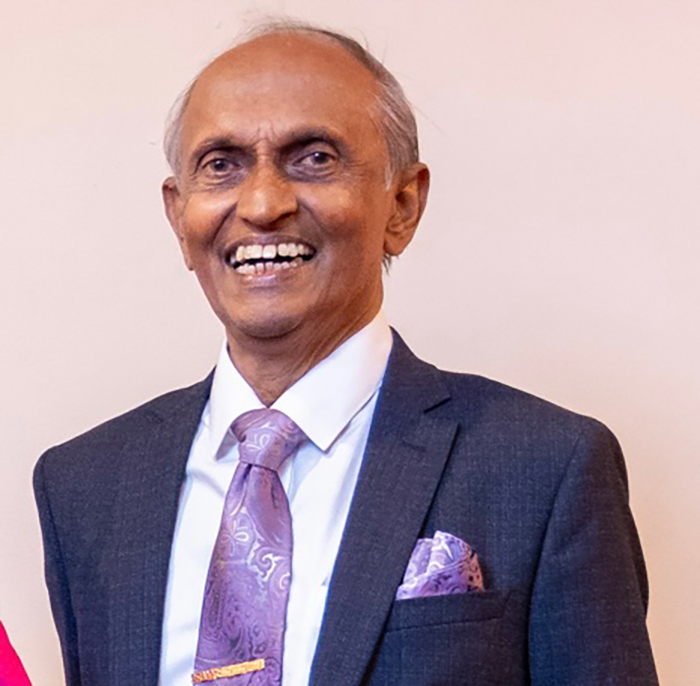
Twelve months, still feels like yesterday. A void in our hearts and minds that could never be filled. The world changed the day I lost you and suddenly, every lesson you gave by example, made sense.
Thaththi was a man of integrity and character, wisdom and intelligence, honesty and simplicity and most importantly a man of unwavering faith in Jesus Christ. His smile, witty humour and his ability to converse with almost anyone regardless of their age or status, was no doubt a rarity that set him apart. It was often said, that Mr. Jayamaha had an answer to any question and a solution to every problem, offering his wisdom with a calm assurance that brought comfort to those around him. A sing song with a whiskey in his hand and impromptu piano sessions will always be the fondest memories to those who were lucky enough to know him as he truly was. In other words, as my late maternal grandfather described Thaththi as “a man for all seasons”.
Thaththi worked tirelessly to give us the best, showering us with fatherly love and made us feel like royalty. Whatever duty he undertook, he made sure he did it to the best of his ability, in both his personal and professional life. When the days’ work was completed he made sure that everything was meticulously put away to its place.
Thaththi held my hand when afraid, cheered me in victory and listened without judgement. He was a man of quiet strength, wisdom and unconditional love. He treasured Ammi in a quiet way and was an exemplary husband.
We watched old movies and were introduced to actors of his time, enjoyed walks on the road and on the beach, listened to his achievements and stories of old, and laughed a lot. A weekly swim at the SSC and the daily practice of Yoga was a discipline he maintained throughout his life. Music was also a form of relaxation to him and at times all four of us would take turns on the piano and the violin.
Thaththi was always ready for adventure and vacation. During the civil war conflict in Sri Lanka when local travel was restricted, our vacations were mostly overseas. We were privileged to have travelled abroad at a very young age and explored the world together. Strangely Thaththi never forced us to study. After school we would always be taken out to
visit family or friends, to a dinner or a concert. Shows at the Lionel Wendt and the annual Christmas concert by the Symphony Orchestra of SL and Shakes were regular events we attended together as a family.
He had a passion for recording life as it happened, always behind the JVC GR-AX27 vintage camcorder, quietly capturing the excitement of our most meaningful moments be it, birthday parties and Christmas parties organized at our home, first holy communion, holidays overseas and out of Colombo and ballet concerts where my sister and I performed at the Lionel Wendt under the guidance of the late aunty Oosha and even my cousins’ wedding to name a few. It was a time before Instagram, when moments weren’t shaped for an audience but simply captured for the joy of remembering.
He was blessed to have enjoyed the special moments when Akki and I completed our professional exams. He especially enjoyed the box seat at the Royal Albert Hall for the 25th Anniversary performance of The Phantom of the Opera as well as attending the final rehearsal of the Opening ceremony of the 2012 London Olympics, at which Akki was a volunteer dancer. Thaththi’s career in the legal profession began soon after the untimely demise of his late father Don Hector Nicholas Jayamaha Proctor SC & Notary Public. To Thaththi his profession was never about the number of cases or the clients, neither did he want to put up a sign board at his office.
All that mattered was the service he rendered, with commitment and dedication irrespective of who the client was. He was one of a kind that never insisted on pomp and pageantry. In my brief years at the office I was lucky to have been introduced to many of his colleagues, friends and clients and observed the strong relationships and trust he built with them, which was indeed remarkable.
Thaththi was one who never hesitated to share his knowledge with anyone seeking clarity on legal matters. A telephone call was all that took, to get my father initiating a conversation. To me it was a sign of humility and a gift of being able to give back without being afraid of losing anything. An abundance mindset we rarely see in today’s society. What else could one expect from a legal luminary with 56 years at the Bar. I am grateful to have had my apprenticeship under my own father’s guidance.
During his distinguished years of service, he was appointed Director of the Ceylon State Hardware Corporation in 1980 and later served as a Director of the Ceylon Petroleum Corporation, where he also held the position of Chairman of the Audit Committee from February 2002 to April 2004. He went on to become the first Chairman and Managing Director of Ceylon Petroleum Storage Terminals Limited, serving on its Board from November 2003 to April 2004. In addition, he was a Director of Lanka Cement Limited and chaired its Audit Committee from March 2002 to April 2004. Most recently, he served on the Board of Directors of Lake House Printers and Publishers PLC.
One of the most meaningful lessons I will carry with me is to always have faith and trust in the Lord, even in the most difficult moments. Thaththi made it a habit to say a prayer before leaving home, upon returning, and throughout the day. No matter how long or tiring the day had been, the family Rosary was never missed. The greatest gift he gave my sister, my mother, and me is the gift of faith. He passed away on the Feast of Divine Mercy last year, and we rejoice knowing he is in heaven and find comfort trusting that he is our guardian angel guiding us from above.
Priyanti and Lasika (akki) Jayamaha

INS Sindhukesari arrives in Colombo

Minister of Health of the Russian Federation attends the Sri Lanka–Russia Medical Forum

Members of Sri Lanka Cricket Transformation Committee Officially Appointed

Three prison guards arrested following the death of an inmate

Showers or thundershowers will occur at most places of the island after 1.00 pm.

CJ urged to inquire into AKD’s remarks on May 25 court verdict

‘Dates have the highest sugar content to fight Coronavirus’

Sunday Island 27 December – Headlines

#SundayIsland 17th December – Headlines

Sunday Island – 28th March

Sunday Island Headlines – 21 March

Sunday Island – 21st February – Headlines
-
 News7 days ago
Treasury chief’s citizenship details sought from Australia
-

 News6 days ago
Rooftop Solar at Crossroads as Sri Lanka Shifts to Distributed Energy Future
-
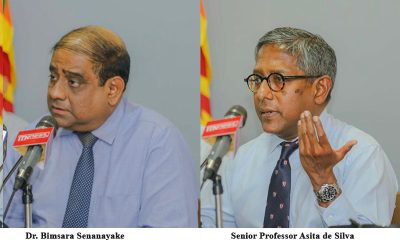
 News5 days ago
“Three-in-one blood pressure pill can significantly reduce risk of recurrent strokes”
-

 News7 days ago
Central Province one before last in AL results
-

 Sports7 days ago
Well done AKD!
-
 News2 days ago
USD 3.7 bn H’tota refinery: China won’t launch project without bigger local market share
-
 News19 hours ago
CJ urged to inquire into AKD’s remarks on May 25 court verdict
-

 News5 days ago
Alarm raised over plan to share Lanka’s biometric data with blacklisted Indian firm