
Business
‘Upholding the spirit of privatization essential to unlocking the true potential of RPCs’


By Planters’ Association of Ceylon Chairman,
Senaka Alawattegama
Despite the remarkable resilience of our people, industries and enterprises, Sri Lanka’s economic outlook in 2023 – along with approximately 1/3rd of all countries according to the IMF – appears bleak. Worse yet is the fact that this economic fall from grace was entirely predicted for many years, even prior to the onset of the COVID pandemic.
The fact that Sri Lanka’s policy makers chose to do nothing to avoid economic catastrophe despite being clearly, forcefully and repeatedly warned about this inevitable outcome has been a source of shock to many.
But to those in the plantation industry who have been grappling with systematic ineptitude from policymakers for decades, their consistency in making the wrong decisions is an all too familiar pattern that only helps to illustrate the root cause of these issues, namely the absence of credible and informed stakeholder consultation in policy making.
One of the best examples of this dynamic has been the disastrous decision to convert Sri Lanka into 100% organic agriculture overnight. Implemented with zero consultation or consideration of the interests of the industry and its stakeholders, almost every expert agrees that this decision was the proverbial straw that broke this nation’s back.
Nearly 500 million missed opportunities
From the time it was first announced, the plantation and agriculture sector, including tea smallholders and Regional Plantation Companies (RPC) alike were unanimous in their opposition and scientific criticism of this policy.
Yet instead of taking these accurate perspectives into account, logic was discarded in favour of agri-policy derived from election podiums, leading to a total ban on the importation of all synthetic agri-chemicals. Based on the performance of Sri Lankan tea alone, we now have a minimum dollar value to illustrate the size of that mistake.
Today the Sri Lankan tea industry has been set a target of US$ 1.5 billion in precious export revenue. A shortage in supply of quality Greenleaf means that Sri Lankan tea has also benefited from some of the highest dollar prices on tea exports since 2017. Coincidentally, Sri Lanka’s export earnings from tea at that time stood at approximately US$ 1.5 billion, meaning that our current target is simply to do as well as we did in 2017.
However, despite having regained the same favourable prices that we enjoyed in 2017, in 2022, our nation was only able to produce approximately 250 million kg of tea, where in 2017, we had produced 307 million kgs. The result is that we only generated just under US$ 1.1 billion in tea exports last year, as compared with US$ 1.5 billion in 2017. The shortfall was worth approximately US$ 466 million – funds that could have been utilized for the purchase of fuel, gas, and medicines and other essential items.
Given the rapidly deteriorating global economic climate that we all face in 2023, all Sri Lankans must now appreciate that as a nation, we have no margin of error left. In that spirit, on behalf of all RPCs, we wish to once again reiterate our industry’s core policy priorities over the coming year.
Wage reform towards productivity-linked earnings
The debate surrounding wages has been a longstanding one, and has once again come under the spotlight with the increase in the cost of living. Two years ago, our industry was compelled for the first time since 1992 to enter into litigation as a result of the ill-advised decision on the part of Trade Unions to abandon the terms of the Collective Bargaining Agreement by involving the Wages Board to pay a daily wage of Rs. 1000 per day.
Despite challenges faced within the industry, we must reiterate that we have been able to honour our commitment even at present, to pay the said amount amidst certain factions having falsely accused RPCs for not doing so.
While certain parties demand limiting the pay to Rs. 1,000, The Planters’ Association of Ceylon have time and again advocated for a model that will allow a worker to earn beyond this. We believe it is long past time to move away from the archaic colonial era daily wage model and into a system that will incentivize workers based on performance. A productivity linked wage model has seen a positive impact on many estates and has proven its effectiveness among tea-small holders who contribute to 70% of the tea production in the country.
Typically on estates where it has been tested, harvesters have, on average, increased their output from 18kg to 24kg and have earned over Rs. 65,000. While some trade unions and other groups continue to offer knee-jerk opposition to these reforms, workers with actual first-hand experience with the productivity linked wages are overwhelmingly in support of them.
This is because, on average, they have the potential to increase their earnings by 80% -100% relative to the current fixed daily wage of Rs. 1,000 that was forced on the sector through the Wages Board. Moreover, productivity-linked wages offer flexibility to harvesters in the time spent on the fields and are incentivized based solely on performance and output.
We believe this could also provide a solution to the shortage of labour experienced in the industry at present. For the RPC sector, our workforce has reduced from 300,000 down to approximately 100,000 to date, and shows no signs of stopping. Especially if Sri Lanka is to achieve its national production targets our first priority is to implement every viable measure to reverse the migration of labour out of the plantation sector.
Land use policies and diversification – our way forward
While tea and rubber have put Sri Lanka on the map, we believe it is an opportune time for Sri Lanka’s plantation sector to diversify its product offerings to the world. It is absolutely critical for Sri Lanka to harness its resources and assets in the most optimum level possible, however to do this RPCs need to be given a free hand to determine its own land use policies should it be beneficial for the economy.
In instances where the land has become unsuitable for crops like tea or rubber, plantations should be looking to instead produce other valuable crops like coffee and spices which most of our RPCs have been successful in doing so, however, there is more that can be done. Companies are already experimenting with crops like avocado and berries which have yielded successful results, and valuable new export opportunities.
In that regard, another crop with strong export earning potential is Oil Palm. We cannot overlook the economic benefits this golden crop could offer Sri Lanka, especially at a time when the country requires dollars to purchase essentials like fuel, medicines and gas. At present Sri Lanka produces approximately 25,000 MT, where Sri Lanka imports 200,000 MT of palm oil for domestic usage. The value of those imports is now over Rs. 24Bn.
Like the 100% organic strategy before it, the campaign against oil palm cultivation has long been proven to be completely lacking scientific facts, and PA has since the beginning provided evidence as to how this crop can be grown in an ethical and sustainable manner without causing harm to the environment.
Diversification is not merely a revenue growth strategy – it is a de-risking strategy, which ensures that even when one industry experiences a downturn, others may be able to continue, ensuring the financial viability of the whole. However to do this successfully, RPCs require support from the government by enabling and providing the necessary assistance to grow crops that are financially viable and freedom to utilize the land in the best possible way.
Crisis as an opportunity for greater collaboration
Since the privatization of the plantation sector in 1992, RPCs have come a long way, with the past two years being incredibly challenging for all. This has pushed the sector become innovative and use technology to unlock new potentials in the industry – an example to this is the online auction system which was implemented during a short period of time.
RPCs have also been experimenting with precision agriculture, in order to optimize plant nutrition and effective utilization of agri-chemicals following the ban with some even going into producing their own fertilizer to cut down on cost and to be able to meet their requirement.
These promising advancements are a testament to the plantation sector’s ability to adapt and find innovative methods amidst crisis. However if we are to unlock the full potential of this billion US dollar industry it is imperative that we learn from the mistakes of the past, and work together to prevent any further repetitions of the kinds of policies that got us to this point.
Privatisation in its true form is therefore the only way forward, to allow business to do business, while the government should stay focused on policy that is led by individuals who understand and are focused on commercial realities. It is safe to say that the spirit of privatization is the spirit of democracy where collaboration is essential to securing the best outcome for all.

Business
Ambeon Securities hosts exclusive investor forum on Sri Lanka’s economic and market outlook

Ambeon Securities recently hosted an exclusive investor forum, bringing together clients, investors, business leaders, and market professionals for an insightful discussion on Sri Lanka’s economic outlook and investment opportunities amidst a challenging global landscape.
The event was organized with the objective of providing investors with valuable insights to make better-informed investment decisions while further strengthening the firm’s engagement with its growing client base.
The forum featured Baqar Zaidi, Director and Chief Economist for Sri Lanka and India at Citi Research, as the keynote speaker. Sharing his perspectives on the evolving global macroeconomic environment, Mr. Zaidi discussed key themes influencing emerging and frontier markets, Sri Lanka’s economic trajectory, and the opportunities lie ahead.
The keynote address was followed by an engaging panel discussion comprising Baqar Zaidi, Aravinda De Silva, respected investor, entrepreneur, and the Chairman of Arcasia Holdings. Hasitha Premaratne, Group Managing Director of Brandix and Asanka Herath, Chief Executive Officer – Unit Trusts and Head of Equities at LYNEAR Wealth Management.
Moderated by Imran Furkan, the panel explored a range of topics including Sri Lanka’s macroeconomic outlook, the future of the Colombo Stock Exchange, sectoral opportunities, capital allocation strategies, investor confidence, and the role of policy reforms in attracting investment and supporting long-term growth.
Speaking at the event, Charith Kamaladasa, Chief Executive Officer of Ambeon Securities, reaffirmed the company’s commitment to facilitate quality insights, informed perspectives, and meaningful dialogue to support their clients while building lasting relationships with them. He noted that in an environment where uncertainty has become the new normal, equipping investors with timely information and expert perspectives is essential for successful wealth creation.
The event was well attended by a distinguished gathering of institutional investors, high-net-worth investors, and business leaders. Among those present were members of the Ambeon Group Board, including Group Chairman Sujeewa Mudalige, Group CEO Dr. Sajeeva Narangoda, and Chairman of Ambeon Securities Mangala Boyagoda. Their presence, together with the participation of Ambeon Group shareholders and valued clients, enriched the discussions and contributed to a vibrant networking session, fostering meaningful dialogue and stronger connections within the investment community.
Through initiatives such as this, Ambeon Securities continues to reinforce its commitment to helping clients navigate evolving market conditions, make informed investment decisions, and achieve their long-term financial goals.
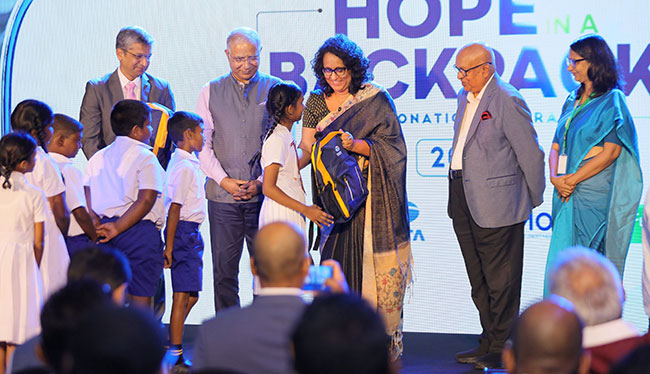
The Tata Group, in partnership with ChildFund and DIMO, has successfully implemented a humanitarian education support initiative for disaster-affected schoolchildren in Sri Lanka, reaffirming its commitment to helping communities recover from the impacts of Cyclone Ditwah and the subsequent floods.
Following a formal request for support from Sri Lanka, an on-ground assessment was conducted in December 2025. Recognizing the urgent need, several Tata companies joined forces to implement the response program.
As part of this initiative, the ‘Hope in a Backpack’ programme, which provides disaster-affected children with essential educational supplies, was launched by the Tata Group at Taj Samudra, Colombo, in the presence of the Chief Guest, Hon. Prime Minister Dr. Harini Amarasuriya; the Guest of Honour, Hon. Indian High Commissioner Santhosh Jha; Ranjith Pandithage, Chairman of DIMO; Chacko Thomas, Group Chief Sustainability Officer, Tata Sons; and Aditi Ghosh, Country Director, ChildFund.
This initiative is part of DIMO’s Social and Community Pillar, under the project theme ‘Lassana Hetak,’ which focuses on giving the future generation a helping hand towards a better future.
This collective effort was further strengthened by volunteers from Tata and DIMO, who actively mobilized on the ground to pack, distribute, and support affected communities. During the proceedings, specially invited schoolchildren received the backpacks with essential supplies as well.
Commenting on the partnership, Ranjith Pandithage, Chairman of DIMO, said: “DIMO is proud to collaborate on this meaningful initiative alongside the Tata Group and ChildFund as the local implementation and logistics partner. Our relationship with Tata spans more than six decades and has been built on a shared commitment to ethical business practices, trust, and creating lasting value for the communities we serve. These values have shaped our partnership over the years, extending beyond business to initiatives that make a meaningful difference in people’s lives.”
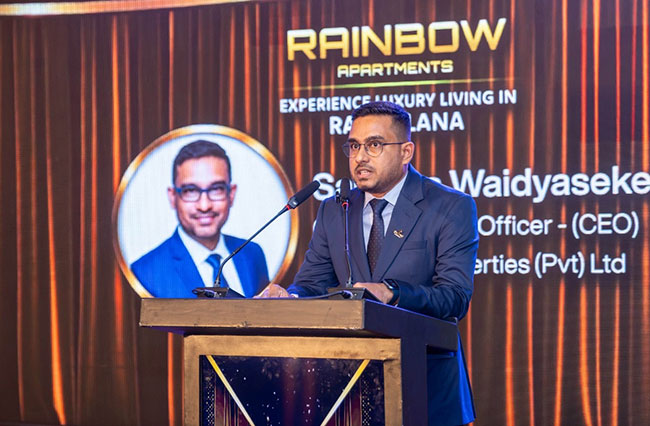
NovaNest Properties (Pvt) Ltd has officially launched Rainbow Apartments, a new residential development in Ratmalana. The announcement was made at an official launch event held at the Shangri-La Hotel, Colombo, marking the company’s latest addition to Sri Lanka’s growing apartment market.
The development is designed to cater to homebuyers seeking modern urban living, as well as investors looking for long-term value. Rainbow Apartments is located in Ratmalana, an area of increasing residential interest, and benefits from the suburb’s established social infrastructure, proximity to major transportation links, and accessibility to Colombo.
The project reflects NovaNest Properties’ commitment to delivering quality residential developments that combine contemporary design with practical living. Intended to satisfy the evolving lifestyle demands of today’s homeowners, Rainbow Apartments features thoughtfully designed living spaces supported by modern amenities. These include two infinity pools, a gym, fully functional workspaces, a mini theatre, stylish cafés, a mini-mart, and a children’s daycare. Additionally, it features a full time medical centre backed by Nawaloka Hospitals PLC Colombo, with a 24-hour ambulance service.
Commenting on the launch, the Chief Executive Officer of NovaNest Properties (Pvt) Ltd, Samitha Waidyasekera, said, “Today’s buyers are looking beyond square footage. In addition to providing long-term value, they want homes that are close to the places where they work, learn, and spend their time. With that shift in mind, Rainbow Apartments was created to bring together a strategic location, thoughtful design, and quality construction in a way that will continue to meet buyers’ needs for years to come. Through our promise of ‘Luxury Beyond Expectations,’ we are committed to delivering an elevated lifestyle experience that combines comfort, convenience, and modern living.

Garry Sobers dies, aged 89

Magnitude 7.3 earthquake quake strikes off Mexico coast

Can Argentina and Messi beat Spain and Yamal to defend World Cup?

Anushka Sanjeewani, Vishmi Gunaratne return for Pakistan ODIs

Lennox stars again as New Zealand take series lead after West Indies collapse

Former IGP C.D. Wickramaratne found dead at his residence

‘Dates have the highest sugar content to fight Coronavirus’

Sunday Island 27 December – Headlines

#SundayIsland 17th December – Headlines

Sunday Island – 28th March

Sunday Island Headlines – 21 March

Sunday Island – 21st February – Headlines
-

 Features6 days ago
Prison riots and politics: NPP’s biggest challenge and Sri Lanka’s biggest opportunity
-

 Editorial7 days ago
What’s the world coming to?
-
 Features3 days ago
Dirty Money
-

 Editorial6 days ago
Much ado about crime: Fish or cut bait
-

 Features6 days ago
More on Saudi Arabia: ARAMCO and beyond
-

 Midweek Review3 days ago
The sordid tale of theft and tragedy at Finance Ministry
-

 News20 hours ago
Money laundering case against Yoshitha, fixed for pre-trial conference
-

 Latest News4 days ago
Oil prices hit 1-month high as US-Iran attacks dim Strait of Hormuz outlook