
News
‘Suicidal thoughts strike every day’: India’s sextortion scourge


Bikaner and Sidhi, India –Shyam, a truck driver in northern India’s city of Prayagraj, had not had sex with his pregnant wife for six months when he saw an advertisement on the Telegram messaging app promising to make his fantasies come true.
Shyam, 44, was impressed by the ad’s formal tone and eagerly followed a link to a pink-themed website, where he was asked to pay a registration fee of 4,000 Indian rupees ($48.28).Shyam made the payment at his local bank and returned home excitedly to access the website, only to be asked to pay an additional 6,000 rupees ($72.44) for every session of cyber-sex. He paid the sum and was told to wait for a video call during the next 24 hours.
A few hours later, Shyam received a video call from an unknown number. Removing his shirt, Shyam stood in front of his phone’s camera and answered. After a few seconds, a naked young woman touching herself appeared on the screen. Then the call was cut short.As Shyam tried to figure out what had happened, he received a WhatsApp message from the same number along with a recording of the video call. The message came with a threat: Deposit 15,000 rupees ($181) to this bank account within 24 hours or this video will go viral.
Shyam estimated it would take him 10-12 months to save up that amount with his monthly salary of 20,000 rupees ($241), which is barely enough to support his family of four.
“My finances were already running dry, so I had to use the money I was saving for my son’s tuition,” Shyam told Al Jazeera, speaking on the condition that he be referred to by a pseudonym.
“My relief was short-lived as the payment was followed by calls and SMS messages blackmailing me to deposit 30,000 rupees ($362.14), which I eventually did by borrowing from friends.”
Shyam is among the growing number of victims of online sextortion in India.Once a phenomenon associated with public figures in Bollywood and politics, such scams have become more prevalent across all sections of Indian society alongside the ubiquitous rise of smartphones and fast internet.
While statistics on online sextortion scams are not available, 52,974 cybercrimes were reported in India in 2021, according to the National Crime Records Bureau (NCRB), up from 44,735 cases in 2019.A total of 13,196 of those cases were registered under Section 67 of The Information Technology Act, 2000, which penalises the publication or distribution of obscene material in electronic form.
Many experts believe online sextortion is vastly underreported due to data-collection constraints and the social stigma of coming forward. – Al Jazeera
“The cases of this fraud saw a spike during the COVID-19 lockdowns as most people were confined at home working and got exposed to the internet more than ever before,” Rakshit Tandon, a cybersecurity expert based in Noida, told Al Jazeera.
“Internet penetration has also increased as smartphones and the internet reach lower-income groups.”
India has more than 932 million internet users, more than any other country apart from China, according to Statista. Statista estimates that figure will grow to more than 1.5 billion by 2040.People who are lonely or stuck in sexless relationships, young adults desperate to lose their virginity and older people with no outlet for desires are among those vulnerable to sextortion. People with poor digital literacy are considered especially at risk.
Scammers typically use fake personas to target their victims through social media, dating apps, spam text messages and online advertisements.The scam often begins with a friend request or message from a fake profile of an attractive female. Potential targets’ friends are also often contacted to use for the eventual blackmail. Before the scammers approach their target, their social media profile may be examined for evidence that they enjoy a flashy lifestyle.
Another common method involves posting links to scam websites and social media accounts under popular reels and videos on Instagram and Facebook, in Telegram groups, or on popular websites and forums. The scam websites often go to significant lengths to appear professional. In some cases, a pornographic video or sex worker is used to entice the person to perform sexual acts.
“The website pattern contributes to the formation of an authentic impression with a formal tone that is seen as professional,” Natwar, a 26-year-old admitted cyber-fraudster in Mewat, eastern Rajasthan, told Al Jazeera, asking to only be identified by his first name.
For would-be scammers in undeveloped regions such as Mewat, where the illiteracy rate is more than 30 percent, building an entire website can be difficult and time-consuming.Calling a target directly via WhatsApp or engaging them on social media is often more appealing.
“The chances of turning every attempt into a success are roughly the same in all techniques,” said Natwar, who has been arrested several times for cyber-fraud.
“Once we’re successful, we’ll make sure to save the naked photographs and screen record the video, which is blank from our end and lasts only six to 10 seconds, and cut the call.”


The NPP government has not taken a final decision regarding filling of the vacancies in the judiciary.
A group of Opposition MPs, led by SJB leader Sajith Premadasa, on 12 June, requested Speaker Dr. Jagath Wickremeratne to take up the issue of judicial vacancies with President Dissanayake. Opposition sources said that there were four vacancies, each in the Court of Appeal and the Supreme Court, and the inordinate delay had adversely affected the judiciary.
Government sources indicated that there was no change in the status quo as regards filling of vacancies. Referring to the government proposal to extend the retirement age of judges, authoritative sources said that no final decision had been taken yet.
SJB lawmaker Dayasiri Jayasekera told The Island that they would raise the issue in Parliament this week.
He said that the deliberate delay in making appointments to superior courts and the move to extend the retirement age couldn’t be taken separately.
The MP noted that the Bar Association of Sri Lanka, the Lawyers’ Collective, the Colombo High Court Lawyers’ Association, Colombo Magistrate’s Court Lawyers’ Association and the Bar Association of Badulla had opposed the government move.
There hadn’t been any public statements in support of the government move, MP Jayasekera said, urging the government to end uncertainty in the judiciary.
by Shamindra Ferdinando
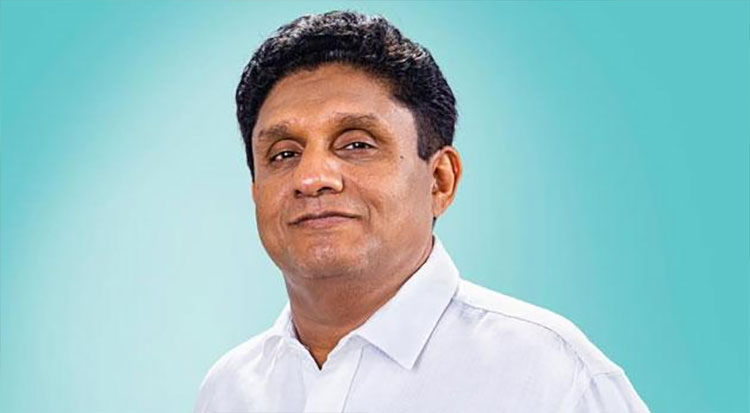
SJB leader Sajith Premadasa has invited the UNP and other political parties to join his party. Premadasa, who is also the leader of the Opposition, has emphasised that the UNP and the SJB could reach a consensus on policies but his party wouldn’t, under any circumstances, accept whatever formula to share positions. Premadasa said so, speaking to the media over the weekend, after meeting the Mahanayaka Thera of the Malwatta Chapter of the Siyam Nikaya Most Venerable Thibbatuwawe Sri Siddhartha Sumangala Thera.
A statement issued by the Opposition Leader’s Office quoted MP Premadasa as having extended an invitation to all political parties to give up extremist policies and join the SJB.
The SJB leader alleged that the NPP government feared facing elections and that was the reason for the inordinate delay in holding Provincial Council polls. PC polls were last held in 2012, 2013 and 2014, on a staggered basis. Premadasa said that if PC polls were held his party would definitely win the majority of PCs.Premadasa also urged the government to reduce electricity tariffs and fuel prices.
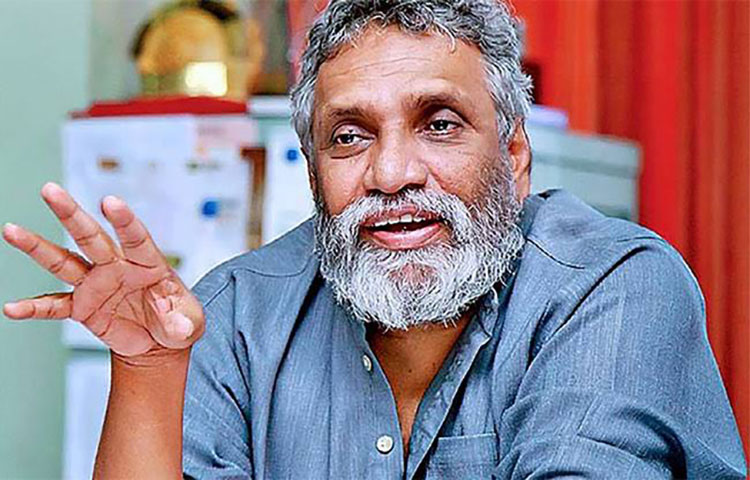
Former Chairman of the Election Commission, Mahinda Deshapriya, on Saturday, strongly criticised the continued postponement of local government elections, declaring that every day without elections constitutes a violation of both the Constitution and democratic principles.
Speaking during an interview with journalist Bhanuka Rajapaksa, on Hiru TV, on Saturday, Deshapriya described the current administration of local government institutions by unelected officials as fundamentally undemocratic and contrary to the spirit of representative governance.
Deshapriya said local authorities, across the country, are presently being managed by secretaries and bureaucrats rather than elected representatives, depriving citizens of their democratic right to be governed by individuals, chosen through the electoral process.
“If the Constitution recognises and provides for local government institutions, then it is the responsibility of the State to ensure that elections are held and that these bodies are administered by representatives, elected by the people,” he said.
Deshapriya rejected attempts to justify the prolonged delay, arguing that responsibility for the situation rests with the government.
He noted that while various political parties have publicly stated their readiness to face elections, the ruling administration possesses the authority to resolve any issues relating to the electoral system.
The former Election Commission chief pointed out that the government enjoyed a two-thirds majority in Parliament, enabling it to enact any legislative amendments required to facilitate the conduct of elections. Instead, he said, successive committees and review processes had been used to postpone a final decision.
He also referred to efforts by opposition legislators who have moved motions seeking to address concerns relating to the electoral framework and expedite the holding of local government polls.
Deshapriya warned that any attempt to appoint a fresh delimitation committee could further delay the electoral process, making it unlikely that local government elections would be held within the current year.
He also dismissed claims that financial constraints have prevented the conduct of elections. Expressing surprise at such assertions, he questioned how funding shortages could be cited as a reason for postponement while expenditure continues in other sectors.
According to Deshapriya, the existence of laws establishing local government institutions imposes an obligation on the State to ensure that those institutions are populated through democratic means.
“The legal framework exists. If elected representatives are not appointed through elections and institutions continue to function under unelected administrators, that is a failure of the State,” he said.

Lamine Yamal scores first World Cup goal as Spain thrash Saudi Arabia

Shahidi sanctioned for running on the pitch during Chennai ODI

Kapp’s 81* seals South Africa’s come-from-behind win against India

Belgium see red in goalless World Cup draw with Iran in Los Angeles

Showers in the Western, Sabaragamuwa and North-western provinces and in Galle, Matara, Kandy and Nuwara-Eliya districts

Judicial vacancies: President keeps country guessing

‘Dates have the highest sugar content to fight Coronavirus’

Sunday Island 27 December – Headlines

#SundayIsland 17th December – Headlines

Sunday Island – 28th March

Sunday Island Headlines – 21 March

Sunday Island – 21st February – Headlines
-

 News6 days ago
Beijing Capital Airlines to resume flights to Colombo signalling boost to tourism
-

 Features5 days ago
Killing of Colombo’s ancient trees — a warning on UN’s World Desertification Day – 17 June
-

 News3 days ago
Creditor receives USD 2.5 mn as Lankan public bears loss from theft of Treasury funds
-

 News2 days ago
Creditor not yet paid
-
 News2 days ago
Consumers bearing 22% tax burden despite 18% VAT claim: Dr. Harsha de Silva
-

 Opinion4 days ago
Beyond diagnosis: A strategic design for 7% growth by 2029 (Part I)
-

 Opinion6 days ago
Fifty years after Soweto uprising
-
 News5 days ago
India provides military stores worth USD 5.5 mn to SL