
Business
‘SLT-MOBITEL Enterprise’ renews contracts and strengthens relationships with SME Solution Partners to help businesses grow

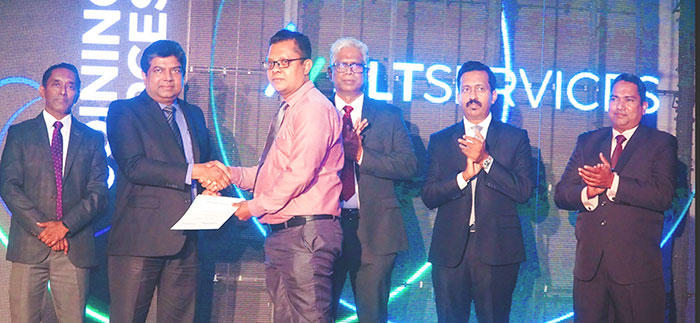
‘SLT-MOBITEL Enterprise’ hosted a Partner Forum recently, to recognise and reward SME Solution Partners and sign agreements strengthening their mutual relationship, with the aim of helping small businesses scale and grow with ICT specific products and services.
The forum comprised of two key segments, namely the awards ceremony and the signing of contracts with selected partners for the next two years.
The SME Solution Partnership operation was introduced to develop a strong value preposition, empowering ‘SLT-MOBITEL Enterprise’ to win competitive SME solution business deals. Begun in 2019, the SME vendor partnership operation initially contracted 27 Partners.
The SME Solution partner operation has enabled ‘SLT-MOBITEL Enterprise’ to gain a leading market position as the one stop total solution provider in the SME segment. Which enabled SME customers to continue their business operation during pandemic and several national level projects.
Speaking about the event, SLT CEO Janaka Abeysinghe said, “Today marks a significant milestone for ‘SLT-MOBITEL Enterprise’, as we recognise our local solution partners. ‘SLT-MOBITEL Enterprise’ excels in integrated solution offerings. However, we recognise the importance of building a solid partner ecosystem to develop a coherent value proposition for SMEs. The awards are in recognition of their contribution to unlocking greater opportunities in the SME market, as we gain a stronger foothold to support small companies leverage their potential.”
During the Forum, ‘SLT-MOBITEL Enterprise’ renewed and signed contracts with selected partners at the event including Fentons, Finco Technologies, Metropolitan Communications, PWJ Lanka, Smartcom, Ceylon Innovations, Advancement Technologies, SALA Enterprises, Sri Lanka Telecom Digital Services, Sri Lanka Telecom Services, Vista Solutions, Secvision, Softlogic Retail and Bartleet IT who were contracted for the next two years.
The agreements covered a wide range of solution categories including unified communication, networking and infrastructure, surveillance, cabling, business software and web development etc.
The Partner Recognition Awards ceremony held under the theme ‘Joining Forces ‘22’ concluded on a high note. Partners were presented awarded based on pre-determined criteria. Accolades were awarded to the ‘Best Partner’ with Hayleys Fentons winning Gold, Finco Technologies receiving Silver and the Runner-up Bronze prize presented to Advanced Network Technologies.
‘SLT-MOBITEL Enterprise’ bestowed four (04) ‘Best Contributor awards to Metropolitan Technologies for Quality of Service, Hayleys Fentons for Service Presence, Advanced Network Technologies for Innovative Solutions and Finco Technologies for Success Rate. The ‘Most Supportive & Agile Partner’ was presented to Sala Enterprises. Individual Awards were conferred for the ‘Best Coordination of Solution Operation’ to Nalaka Warusaithana from Hayleys Fentons who received a plaque and gift pack, Nalin Perera, Vista Solutions received the Runner Up and awarded a plaque and gift pack, while Danushka Gangoda- Sri Lanka Telecom Digital Services was awarded the 2nd Runner up with a plaque and gift pack.












Business
India–Sri Lanka Business Forum highlights new momentum in trade, investment and connectivity

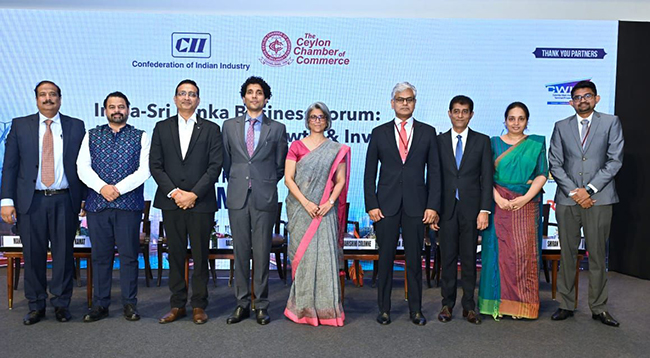
The Ceylon Chamber of Commerce, in partnership with the Confederation of Indian Industry (CII), organised the India–Sri Lanka Business Forum: Partnering in Sri Lanka’s Growth and Investment and the CII – Ceylon Chamber CEOs Interaction in Mumbai on 13 May 2026. The events brought together senior government representatives, industry leaders, policymakers, and business delegates from India and Sri Lanka to deepen economic engagement and explore new avenues for cooperation across priority sectors.
The discussions reflected growing optimism about India-Sri Lanka economic relations and focused on expanding collaboration in trade, investments, connectivity, tourism, renewable energy, logistics, digital transformation, infrastructure, healthcare, education, manufacturing, and technology.
Participants included Mahishini Colonne, High Commissioner of Sri Lanka to India; Duminda Hulangamuwa, Senior Economic Advisor to the President of Sri Lanka; Dr Rajesh Ravindra Gawande, Secretary (Protocol, FDI, Diaspora & Outreach) and Chief of Protocol, Government of Maharashtra; Ms Priyanga Wickramasinghe, Consul General of Sri Lanka in Mumbai; Krishan Balendra, Chairperson, The Ceylon Chamber of Commerce and Chairperson, John Keells Holdings PLC; Anurag Agarwal, Co-chairman, CII Western Region Sub-committee on International Trade & Investment and Chief Executive Officer, Polycab India Ltd; Vishal Kamat, Chairman, CII Western Region Sub-Committee on Tourism and Hospitality and Executive Director, Kamat Hotels India Ltd; Bingumal Thewarathanthti, Vice Chairperson of the Ceylon Chamber and CEO Standard Chartered Bank Sri Lanka, Vinod Hirdaramani – Deputy Vice Chairperson of the Ceylon Chamber and Chairman Hirdaramani Group, and Shiran Fernando, Secretary General & CEO of the Ceylon Chamber.
Welcoming the delegates, Anurag Agarwal, highlighted the growing momentum in India–Sri Lanka economic relations and the emergence of future-oriented sectors driving bilateral cooperation.
He noted that India and Sri Lanka are at an important phase of economic collaboration, where connectivity, investments, innovation, and sustainable partnerships are creating new opportunities for shared growth. He further emphasised the significant potential for deeper engagement in sectors such as renewable energy, tourism, ICT, logistics, digital services, healthcare, manufacturing, education, and infrastructure.
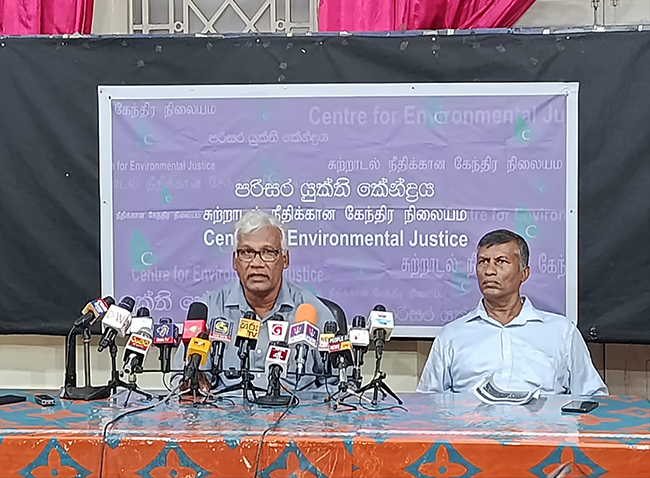
Move to reconsider the ban on oil palm cultivation has triggered a heated debate among environmentalists, economists and plantation sector stakeholders, with critics warning that replacing rubber plantations with oil palm could weaken one of the country’s most valuable export industries while exposing the nation to long-term environmental and trade risks.
Environmental groups argue that the issue is no longer purely ecological, but a major economic policy question with implications for exports, foreign exchange earnings, rural livelihoods and Sri Lanka’s standing in international markets.
Sri Lanka banned oil palm cultivation in April 2021 through Extraordinary Gazette No. 2222/13 issued by former President Gotabaya Rajapaksa, citing environmental degradation, biodiversity loss, soil erosion and threats to water resources.
However, plantation companies are now reportedly lobbying for the reversal of the ban, arguing that oil palm offers higher short-term commercial returns compared to traditional plantation crops.
Environmentalists and policy analysts, however, caution that the long-term economic costs could outweigh the immediate profits.
Hemantha Withanage of the Environmental Justice Centre said Sri Lanka risks undermining a globally competitive rubber industry in pursuit of a commodity that generates comparatively limited national value.
“Rubber remains one of Sri Lanka’s strongest industrial export sectors. Replacing rubber with oil palm would be economically shortsighted because the downstream rubber manufacturing industry generates far greater export earnings, employment and industrial value addition, he said.
Industry statistics reveal a worrying decline in the rubber sector over the past four decades. Rubber cultivation has fallen from 171,126 hectares in 1982 to around 84,000 hectares in 2024, while production has dropped from 133,200 metric tons in 1980 to approximately 69,185 metric tons last year.
Despite shrinking cultivation, the rubber sector continues to deliver significant export revenue. Sri Lanka earned nearly USD 994 million from rubber exports in 2024, while rubber-based manufactured products generated more than USD 2.5 billion in export income.
The country also imports over USD million worth of raw and processed rubber annually to sustain domestic manufacturing demand, highlighting the strategic importance of maintaining local rubber production.
Analysts warn that further reductions in rubber cultivation could increase import dependency, weaken industrial supply chains and place additional pressure on foreign exchange reserves.
By contrast, Sri Lanka’s palm oil sector contributes relatively little to export earnings. In 2025, Sri Lanka imported 38,210 metric tons of palm oil and 33,696 metric tons of coconut oil, while the value of palm oil imports in 2023 stood at approximately USD 23 million.
Critics argue that oil palm cultivation mainly benefits plantation-level profitability rather than the broader national economy.
Thilak Kariyawasam of FIAN Sri Lanka said the environmental externalities associated with oil palm could eventually translate into significant economic costs.
“The industry’s impact on water resources, soil quality and ecosystems creates hidden financial burdens for the country. Pollution control, water management and biodiversity losses all carry long-term economic consequences that are often ignored in short-term investment calculations, he said.
Environmental groups also raised concerns that Sri Lanka could face reputational risks in export markets if environmentally controversial plantation policies are pursued.
The European Union, one of Sri Lanka’s most important export destinations and the provider of GSP+ trade concessions, has tightened regulations linked to deforestation and environmental sustainability.
By Ifham Nizam
Business
Talawakelle Tea Estates achieves International Organic Certification for Great Western and Logie Teas
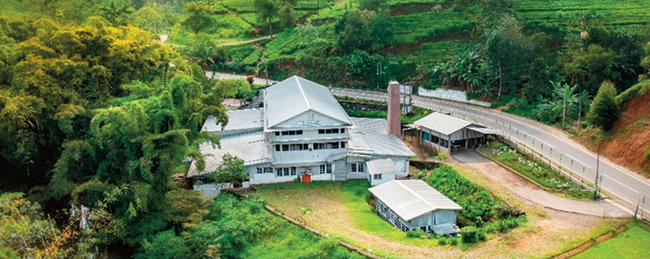
Talawakelle Tea Estates PLC has secured internationally recognised organic certification. A member of the Hayleys Plantations Sector and one of Sri Lanka’s premier Regional Plantation Companies, this milestone enables the Company to market certified organic teas under its renowned Great Western and Logie garden marks.
The certification spans three major global standards: the EU Organic Regulation of the European Union, the National Organic Program (NOP-US) of the United States Department of Agriculture, and the Japanese Agricultural Standards (JAS) for organic products. With this achievement, Talawakelle Tea Estates is now positioned to supply premium organic teas to international markets that demand the highest standards of certification, traceability, and product integrity.
“We are proud to reach this significant milestone after more than four years of dedicated effort to build a fully compliant organic cultivation and processing system that meets stringent international standards. This achievement shows the strength of our partnerships with the Tea Research Institute (TRI) and internationally qualified consultants and, most importantly, the commitment and collaboration of our estate and corporate teams. Together, we have established a robust and sustainable organic management framework that will support our long-term vision.” Talawakelle Tea Estates, Director / CEO, Nishantha Abeysinghe added.
To ensure consistent compliance with international standards, Talawakelle Tea Estates appointed dedicated full-time personnel from its estate teams and corporate sustainability division to oversee and manage every stage of the organic value chain – from cultivation to final manufacture.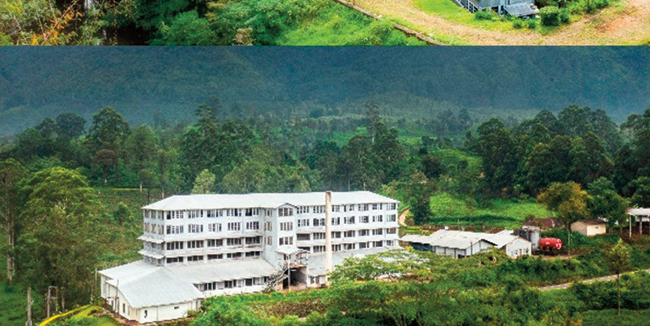
The Company has also developed an end-to-end organic cultivation and processing management system covering the full value chain – from field-level practices to final manufacture – ensuring a structured and carefully monitored approach to organic tea production.
To safeguard product integrity and eliminate the risk of cross-contamination with conventional teas, the Company has designated low-risk fields exclusively for organic cultivation and dedicated the Logie factory entirely to organic tea production, minimising the risk of cross-contamination.
Following a series of rigorous audits, Talawakelle Tea Estates has secured full certification and is now set to launch its certified organic tea range globally under the prestigious Great Western and Logie garden marks names bringing together heritage and sustainability.
This achievement marks an important step in the Company’s broader journey to build a more sustainable, nature-based product portfolio in response to growing global demand. By combining strong garden identities with internationally recognised organic standards, Talawakelle Tea Estates continues to strengthen its position in the premium tea segment.

Tulsi Gabbard to resign as US director of national intelligence

SpaceX launches massive Starship V3 rocket on test flight

Everest record holder warns of Nepal danger as two Indian mountaineers die

Angkrish Raghuvanshi ruled out of IPL 2026 with concussion, finger fracture

Sunrisers Hyderabad win big but Royal Challengers Bengaaluru, Gujarat Titans seal top two spots

Flood warning issued to the Aththanagalu Oya basin extended until 0600AM on Monday [25]

‘Dates have the highest sugar content to fight Coronavirus’

Sunday Island 27 December – Headlines

#SundayIsland 17th December – Headlines

Sunday Island – 28th March

Sunday Island Headlines – 21 March

Sunday Island – 21st February – Headlines
-

 Features6 days ago
Sri Lankan Airlines Airbus Scandal and the Death of Kapila Chandrasena and my Brother Rajeewa
-

 News6 days ago
Kapila Chandrasena case: GN phone records under court scrutiny
-

 News6 days ago
Rupee slide rekindles 2022 crisis fears as inflation risks mount
-
 Features3 days ago
Octopus, Leech, and Snake: How Sri Lanka’s banks feast while the nation starves
-

 Business6 days ago
Expansion of PayPal services in Sri Lanka officially announced
-
 News2 days ago
Steps underway to safeguard Sri Lanka’s maritime heritage
-

 News6 days ago
Court orders further arrests in alleged USD 42 Mn NDB fraud case
-
 Opinion2 days ago
Murder of Ehelepola family, Bogambara Wewa and Sightings of Wangediya