
Opinion
Rohan Abeywickrema – A pioneer in transport professionalism

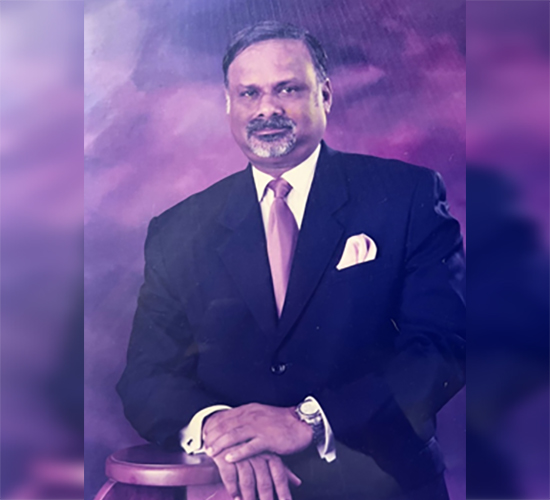
Rohan Abeywickrema was my friend and professional colleague for over three decades. He passed away on the 9th of November. His contribution to my own life will live on to the end of my days, as it would in and through the life of countless people who allowed Rohan into their lives and was influenced by him.
Rohan (or Rohaan as he would spell) joined the then Ceylon Shipping Corporation (CSC) in 1973 as a Management Trainee fresh from – Ananda College, Colombo. His father passed away when he was 17 years and he decided to take responsibility of the family. He received a UN Fellowship for his higher studies and obtained a B.Sc. in International Transport from the University of Wales, Cardiff in the UK (being probably one of the first-degree holders in Transport for a Sri Lankan). On his return in 1978, he was appointed to the R&D Department of the CSC.
He provided leadership in planning and implementation for a 560 TEU container service replacing break bulk, the first of its kind in South Asia. He was instrumental in negotiating Neptune Orient Lines, Singapore, one of the best in South Asia at that time to partner with CSC. His proposal for a service to USA via Hong Kong also materialised when Maersk Lines entered in 1983. His contributions to the shipping sector in that critical time of reform and advent to containerisation were significant, particularly his pioneering work in promoting coastal / feeder shipping which began in 1980. He was also one of the early promoters of digitalisation in shipping. In 1986 he resigned as Manager, Research and Development CSC, and as Manager of Coastal Shipping of the vessel owning, Ceylon Shipping Lines, to which he had been seconded. Thereafter, in an effort to promote container traffic to Colombo, he co-founded Green Lanka Shipping (agents for Evergeen), thereafter Sea Consortium Lanka Ltd, where he was its Managing Director before setting up, Sathsindu- a Non-Vessel Operating Common Carrier (NVOCC) company in 1990.
My association with Rohan began during my early days with the Chartered Institute of Transport (CIT), as it was known before it merged with the Chartered Institute of Logistics in 2001 as the Chartered Institute of Logistics and Transport (CILT). In 1978, Rohaan was one of first Sri Lankans to become a member of CIT. He was most likely the first from the shipping sector to join with the likes of Derek Wijesinghe, Eng. L.S. de Silva, John Diandas, Mandri Sahabandu, Prof D.S. Wijeyesekera, MC Premaratne, and HA Premaratne to pioneer setting up CIT (Sri Lanka Section) in 1984.
Rohan sought me immediately after I had returned from my higher studies to bring me into the Exco. In those fledgling days of CIT, he actively sought young people with promise in the transport sector and badgered them to help CIT position transport as a profession in Sri Lanka. Rohan was the backstage manager who kept the institute operating allowing the bigger names to perform publicly. For well over a decade, the CIT/CILT office operated from his own office at Sathsindu. He and Anoma were eager hosts to all the informal functions of CIT/CILT and even the hosting of foreign visitors. More than one former Treasurer has confided how he made good all operational shortfalls personally.
Rohan took it upon himself to lay the foundation of CIT/CILT into what it became. His passing allows me to capture in writing this pioneering effort, which may easily get buried in the very trappings of its success. Vernon de Rosairo recounts how in 2000, Rohaan took him to meet Ministers and MPs to get CIT Incorporated under an Act of Parliament. He was always thinking ahead of leadership succession in CIT/CILT and was responsible for pressing many members to take up positions, me being one of many examples. He served on the CIT/CILT Council for over 30 years, was elected a Fellow member and served as its Chairman (Sri Lanka section) in 1993 and 1994. He was an International Vice President for CILT from 1997 to 2001 (the first from Sri Lanka) and appointed as an Honorary Fellow in 2005, being only the second Sri Lankan after John Diandas to be so recognised with CILT’s highest award of honour, which hardly anyone knows since he bore it so humbly.
He was a key figure to initiate memorial lectures in recognition of the contributions of early pioneers such as John Diandas, L.S. de Silva, and P.B. Karandawela. He served on the John Diandas Memorial Trust alongside me from its inception. In addition to CILT, he was an active member of the Jaycees, becoming the JCI National President in 1991. He was also a key figure in the British Scholars Association of Sri Lanka serving as its President in 2009/2010. He was also an active member of the Ceylon Association of Shipping Agents (CASA). It was natural for him to seek every opportunity to be involved significantly. I recall when talking about raising funds for a road safety publication, he promptly said he would find the funds. He did this, though I suspected most of it came from him.
It was Rohan who made road safety a personal passion for me with his insistence that professionals were not doing enough. He dragged me to meetings with every Minister and Secretary of Transport most of whom he knew personally, but sadly, they did little to support the enthusiasm and leadership he took. He did similar rounds with the insurance and media houses, challenging them, to their indifference to the rampant increase in road accidents. In 2001/2, we served in the advisory committee that proposed setting up of the National Road Safety Secretariat. In 2004, it was my turn to get him involved in the Ministry of Transport when professionals were invited to help reform the land transport sector. From day one, we faced opposition from within the government itself.
He sat with me on the boards of the National Transport Commission and the Sri Lanka Transport Board during those difficult times. He stood firm even when one of our consultants had to take a bullet. In 2019 we were invited back to serve on the Advisory Council of the Ministry of Transport, but it was too deep in multiple political strangleholds for us to salvage. He worked for the ADB in the Maldives. He served on scores of boards, expert panels, task forces, committees. In 2002, the Chartered Institute of Shipbrokers honoured him with a lifetime award for his services to the sector. Rohaan’s interest in land transport had not distracted him from his commitment to the shipping sector. He was a director of the Ceylon Freight Bureau. He championed getting cruise ships to Sri Lanka.
He was firm in his values which made up his professional judgment and opinions and unlike others who spoke in private circles, Rohan expressed his concerns publicly. His criticism of the decision to construct the Hambantota Port, political meddling with the terminals in the Colombo South Port, and the handling of the Xpress Pearl disaster last year, did not go well with those in power or even other professionals who did not want to displease those in power. He was one who took risks to fight for what was true and what was good for Sri Lanka and the shipping sector, even though it put his own business at risk. Such was his passion and commitment to transport in Sri Lanka. He was often a lone voice. Sri Lanka is in trouble today, just for the want of a handful of people like Rohan Abeywickrema who could have stood up with him, to say the right things at the right time.
Many were the attempts he took to reduce agricultural post-harvest losses. With Anoma being in air travel, he had keen insight into aviation matters as well. He was truly a multimodal transport professional, a fact that very few others could claim. He even contributed to academia, by actively supporting the formation of the Department of Transport & Logistics Management at the University of Moratuwa which he followed up by being a member of its Department-Industry Coordination Board. He was instrumental in getting the Sri Lanka Society of Logistics and Transport (SLSTL) get started in 2014. He never missed an invitation to any of its conferences or seminars and was a regular sponsor of the annual research awards. I was awed to realise that he had presented over 50 technical papers and presentations at conferences and seminar in Sri Lanka and overseas, sadly the last of which was a paper on road safety at the SLSTL conference two years ago.
He never allowed himself to be constrained by the schedule of a busy professional to listen to an opinion, respond to a need, or challenge someone to action. As a result, Rohan was rarely punctual for any meeting. He would roll in unceremoniously and be never in a hurry to leave even after the meeting. He would hold down those willing to hear him emphasise what CIT/CILT should be doing, which usually made him late for his next appointment!
He was genuinely concerned about people. He invested in creating good values and professional ethics in those who were willing to listen to him and was always hurt whenever someone he deeply cared for chose a different path. He would stick to the narrow and winding road when many colleagues chose the paths to glory and easy profit, especially during the last decade or two. He was pained to see the dismantling of institutional norms and attraction to the superficial and glamorous at the expense of the significant and what was beneficial to society. But Rohan was not one to throw in the towel or his hands in despair. He would challenge people at meetings, he would challenge them at elections. He did not abandon anything he had built up without trying his utmost to restore it to its founding objectives. He was always a servant of whatever he chose to be passionate about. I recall an instance when he contested an election on a matter of principle, notwithstanding a blatant threat of business retribution. He was moved to tears but would not be moved in his position. He lost. But so has the country that has gradually replaced hard work and commitment with shortcuts to positions and personal profit.
He was unafraid even of his own limitations. A slight stutter did not stop him from appearing on radio and TV interviews. Some saw him as a perfectionist, others as a strict disciplinarian. Yet to many, he was a mentor, a ready source of help and counsel. To many he was tough and stubborn, but only those who took the trouble to understand him, saw his kind heart and the concerns for which he stood his grounds. I have heard stories of how he went out of the way to help others in their time of need, including during the horrific riots of 1983. Rohan chose his paths clearly. He could have risen much in the eyes of the world if he did not purposefully get distracted by the needs of others, the profession, and the country. He earned his fair share of opponents and enemies from those quite comfortable climbing the ladders of corporate and professional success. He profited by giving. He cared little about what he got.
Rohan was proud of Seneka, the elder daughter taking up Logistics and Supply Chain and doing a MBA in Supply Chain, while he was thrilled that the younger daughter Aneka completed her higher studies in Economics and proceeding to higher studies in Corporate Finance based in Cardiff, where he completed his studies. Rohan was many things to many people. In many of his undertakings, he chose to elevate those in whom he saw the potential to higher platforms while staying in the background. Goodbye, my friend, it has indeed been more than a privilege, but a blessing to have known you. Thank you for leading by example. As Matshona Dhilwayo, the African-born philosopher and author has noted Rest assured that those that have valued and profited from your work, will continue to build on them, with love for Lanka and for all humankind.
Amal S. Kumarage, Senior Professor, University of Moratuwa

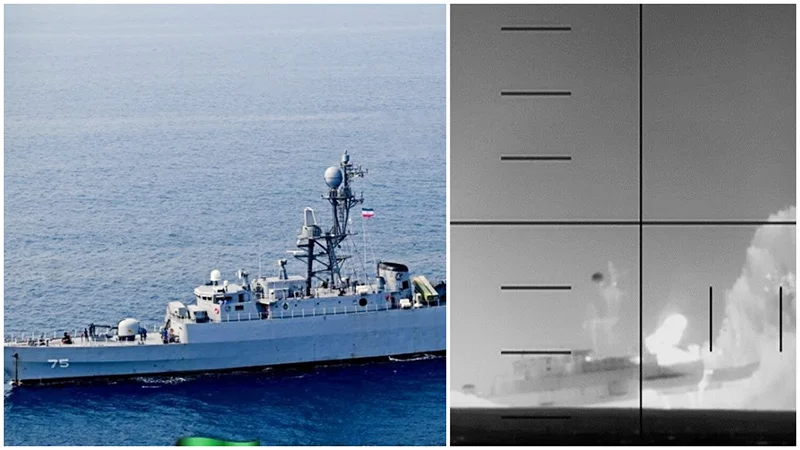
 The terms ‘nonalignment’ and ‘neutrality’ are being touted in local and global news due to Sri Lanka’s denial to Iran to dock three of its naval vessels in national harbors for an unplanned ‘goodwill visit’ between 9 and 13 March, and refusal to the United States to land two of its fighters at the civilian airport in Mattala between 4 and 8 March. Intriguingly, both requests were received on the same day, 26 February 2026, just 48 hours prior to the onset of hostilities.
Though Sri Lanka denied permission for the so-called ‘goodwill visit’ its Navy and Airforce rescued over 30 Iranian crew members and recovered over 80 bodies when their ship, the IRIS Dena was sunk by the US Navy and allowed another Iranian ship, the IRIS Bushehr to dock in Trincomalee as it claimed technical difficulties. This was done only after taking the ship under Sri Lankan control, by separating its sailors from the ship and bringing it to Colombo, thereby ensuring it no longer had any offensive military intent.
The Sri Lankan President in a press conference in Colombo on 5 March noted on the Iranian issue, “our position has been to safeguard our neutrality while demonstrating our humanitarian values.” As he further noted, “amidst all this, as a government, we have intervened in a manner that safeguards the reputation and dignity of our country, protects human lives and demonstrates our commitment to international conventions.” Explaining what he meant by neutrality, he noted, “we do not act in a biased manner towards any state, nor do we submit to any state … we firmly believe that this is the most courageous and humanitarian course of action that a state can take.” On the US issue, the President observed in Parliament on 20 March, “they wanted to bring two warplanes armed with eight anti-ship missiles from a base in Djibouti” and “we turned down the request to maintain Sri Lanka’s neutrality.”
In both incidents, in addition to reiterating Sri Lanka’s neutrality, the other point that has been emphasis+ed is Sri Lanka’s long-standing official position of ‘non-alignment.’ As the President noted in his parliamentary speech, “with two requests before us, the decision was clear… we denied both in order to avoid taking sides.” Suddenly, the concepts of neutrality and non-alignment are in the forefront of Sri Lanka’s political discourse after a considerable time, but it has emerged more in a rhetorical sense than at a considered policy position at the level of government thinking and popular acceptance.
I say this because two crucial concepts are missing in these conversations and pronouncements. These are ‘morality’ and ‘national interest’ even though they are irrevocably linked to the previous concepts which would be meaningless if adequate heed is not paid to the latter two. Let me be clear. I agree with Sri Lanka’s position with regard to both incidents and the diplomatic and statesman-like way both were handled. It brought to the fore something on which I have written about in the past. That is, the necessity and the reasonable possibility of smaller states to take clear positions when dealing with powerful countries. Sri Lanka has done so this time.
However, both neutrality and nonalignment cannot be taken out of context merely as terms. They must be situated in a broader historical and political context which can only be done if morality and national interest are not only brought into the equation, but also into policy and the public consciousness. Non-alignment as an international relations concept found its genesis at the time of the Cold War on the basis of which nations, which mostly consisted of former European colonies or what were known collectively at the time as the ‘Third World’, decided not to join major power blocs of the time, i.e. the US and the Soviet Union as well as former imperial centers.
At least, this was the official position and, in this sense, indicated a desire to follow an independent path stressing national sovereignty and national interest, rather than neutrality in the conventional sense. But in practice, even in the heyday of the Nonaligned Movement’s influence in the 1970s, many of its members were very clearly aligned to one or the other of the superpowers based on matters of political necessity and simple survival. The formal dictionary meaning of neutrality is, “not taking sides in a dispute, conflict, or contest, often implying a position of impartiality, independence, or non-participation.” These are the two rhetorical positions Sri Lanka took with regard to both incidents referred to above.
But both decisions should have been more specifically taken, and the local and global discourses emanating from them cautiously guided, based on principles of morality and national interest. These do not contradict nonalignment and neutrality in their general sense. Sri Lanka’s decision to not approve docking or landing rights to both warring countries in this context is correct. But where is morality? It is partly embedded in the President’s stated interest in ensuring no further lives were lost.
What is missing in this moral position however is the clearly articulated fact that the war against Iran by the US and Israel are illegal, immoral and contradicts all applicable international laws and conventions. Sri Lanka’s statements and what is publicly available on the President’s and the Foreign Minister’s reported conversations with Gulf leaders are inconsequential and bland. Despite Iran’s bleak track record when it comes to democracy and human rights within, the country has stood by Sri Lanka during the civil war years supplying weapons when very few states did, and also when Sri Lanka was named and shamed in the circus of the UN’s Human Rights Council for almost two decades. Taking a position regarding the illegality of the war against Iran does not mean Sri Lanka cannot be neutral or non-aligned. It could have still taken the same decision it has already taken. But it would have been able to do so from a moral high ground.
The other reason often given for harping on neutrality and non-alignment is the fear of being reprimanded by the mad men and women currently holding power in the US. But the Republican Party or President Trump are not the Caesars of the Roman Empire. Trump’s term ends in January 2029. The Republican Party is already feeling the negative consequences of the war at home. Given the chaos Trump has brought in, which has added to the cost of living of US citizens, the needless expenditure the war has burdened the US taxpayers with, and the US’s continued marginalisation in the international order, it is very unlikely any of the present practices (note: not policies) will be carried forward in the same nonsensical sense. This is precisely the time to take the moral high ground. If we do, and continue to do so, it will become apparent that we as a nation act upon principles and laws. Such continuity will earn the country respect in the global arena even though not necessarily make us popular. This is a crucial asset small nations must have when dealing with global powers. But this must be earned through consistent practice and not be the result of accidents.
This is also where national interest comes in as a matter of policy. Sri Lanka needs to reiterate not only for the present but also for the future that its decisions are based on national interest. This could include permitting the US or any other country to land or dock in a future conflict if it benefits us in terms of local defense. But such a decision should not be a decision forced upon us. This is not old-school nonalignment or neutrality. Instead, it is about taking a position – not a particular side – in the interest of safeguarding the national interest as a matter of principle and taking the moral high ground in international relations which will ensure both nonalignment and neutrality in a pragmatic and beneficial sense in the long term.
Our leaders and our people need to learn how to be pro-Sri Lankan both in domestic and global matters as a national operational principle.
Opinion
Question of integrity and corporate liability in Transnational Higher Education in Sri Lanka
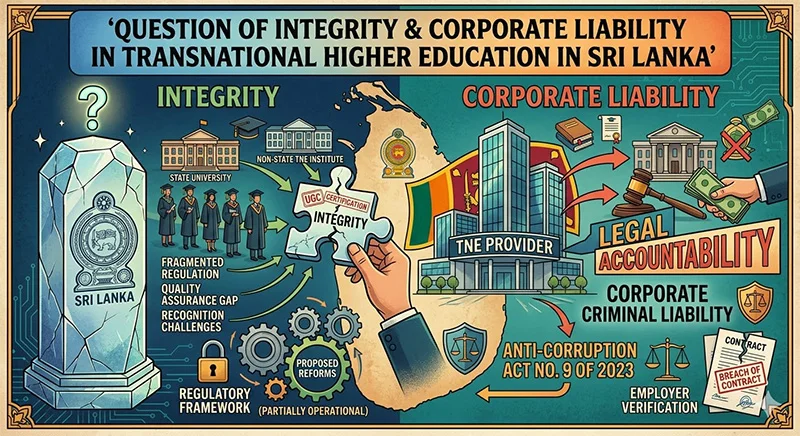
According to a paper commissioned by Anthony Welch for the 2021/2022 UNESCO Global Education Monitoring Report on “Non-state actors in Education Across Asia”, the rise of Transnational HE was underpinned by tensions between growth in demand, and, on the other hand, the inability or unwillingness of many governments to finance this expansion sufficiently (UNESCO & Welch, 2021). Globally, almost 70 million, or one in three of all students, are now enrolled in private HEIs (UNESCO & Welch, 2021). This pattern is similar and highly diverse in Asia where more than 35% of students are in the private sector.
However, enhance transparency in governance in Transnational education is of paramount importance as there is a corporate liability disregarded at a greater extent by the private HE mushrooming in this country. As Transnational Higher Education attracts many students, the responsibility of the relevant authorities should strengthen the integrity of governance of this sector and increase accountability.
On the other hand, corruption perception index in the 2025 (CPI) released by Transparency International, Sri Lanka, showed significant improvement, rising 14 places to rank 107th out of 182 countries, up from 121st in 2024. Despite such a movement ahead, accountability lies among the Private HEIs engaged in Transnational HE to prevent any risk leading to corruption.
Having considered the aforementioned scenario following cases, encountered in the recent past and I wonder what “higher education” do they offer.
Risk of corruption
An applicant, being a sole proprietor, has signed an agreement with another agent of private HEI in Nachchaduwa, Anuradhapura (Registered office), where operating office being the, Rathmalkatuwa, Inamaluwa, Kandalama, Dambulla, without looking at the agreements entered with the Foreign University by the respective agents. Sub agents are not aware on what conditions the principal foreign university has imposed, whether the respective university is authorised to offer such programmes in overseas. Have they been accredited in their countries by the accreditation authorities, despite their listing in the World Higher Education Database and Association of Commonwealth Universities. Whether these private HEIs are blacklisted organisations need to be checked with National Information Centres of the respective countries. All agents operating Transnational HE should be accountable and responsible as they are serving the poor students of this country who ultimately face consequences when they go on searching for employment opportunities. They are facing many issues with respective Qualification Frameworks operating in those countries.
Fake Credentials and Fabricating Documents
There are massive complaints regarding the issuance of fake certificates and forgery in Higher Education forwarded by many parties. Some organisations themselves print certificates without obtaining original certificates from the principal foreign university. Poor students do not know this situation of the higher education provider.
Call for State organisations to be aware of Transnational HE
There are many state organisations without proper verifications on credentials engage in recruitment of their employees just based on the listing of world higher education database and Association of Commonwealth Universities without further checking on the existence of such programmes in the respective countries with their accreditation authorities.
Recently while World Higher Education Database and UKEnic has clarified on the nonexistence of a respective university, there are instances where institutions that were accredited in the past but were not accredited now. The respective Universities in certain instances were listed and not currently listed due to non-acceptance by the accreditation authorities. Therefore, organisations need to be cautious about the accreditation of such universities in the respective countries as Sri Lanka is haunted by a massive network of agents and subagents of foreign HEIs operated as designated centres, appointed agents.
There are many ways to do Transnational education. There is distance education done with a local partner. There are several forms of arrangement in transnational education such as franchising arrangements, partnerships with local providers, either at the programme level or (occasionally) at the level of creating a whole new institution, branch campuses. However, there is a necessity of some kind of regulation as there is an escalation of fraud.
Overall regulations governing the operations of Transnational HE in Sri Lanka as a country aim to reach Sustainable Development Goals (SDG 4) was deemed as transparent and not fully understood by stakeholders, there are no local mechanisms to affirm and benchmark the quality of Transnational Education programmes to that of the local HE standards. There is a sense of flexibility in forging Transnational Education partnerships though the absence of regulations, which may over time negatively impact public perceptions of Transnational Education’s quality
Despite these circumstances there are countries that maintain their Agent network through proper training and licensing system to facilitate their regulation.
Transparency of Agents engaged in Transnational HE
A parent has made a complaint against a leading HEI for misleading through an unauthorised three-year degree programme (two-year top-up) and causing irreparable career damage and mental distress, wasting money and time. When she forwarded the matter to the Chief Executive, New Zealand Qualification Authority (NZQA) for entry into the teaching profession, she was informed that the HEI concerned was not permitted to engage in such programmes overseas. The question is how the MOU was signed and how programmes were offered in Sri Lanka.
Where is the corporate liability and integrity in these activities?
by Dr. Janadari Wijesinghe
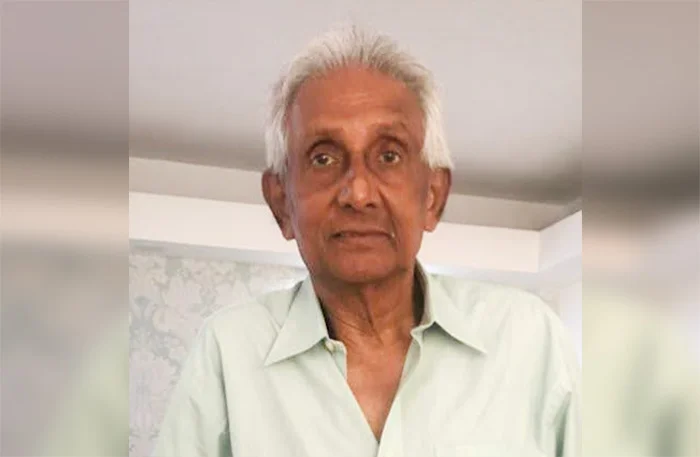
Tassil Samarasinghe passed away on Monday, March 16, 2026. Fondly known as ‘Kunjan’ to his family and close friends, Tassil hadn’t been in the best of health over the past few years. He experienced difficulty maintaining his balance, and, therefore, walking, which probably caused the fall at home, and resulting in an head injury, which took his life.
Tassil was my school friend. We were members of the 16th Colombo Cub pack and scout troop at S. Thomas’ College, Mt. Lavinia, in the 1950s and ’60s. I remember how he played Ali Baba’s mother in the scout concert, produced and directed by our scout master, the late Mr. Wilson I. Muttiah.
We were also next-door neighbours in Mt. Lavinia. During school holidays, in the early morning, Tassil and I would go on long walks, along the beach, sometimes helping the fishermen to draw in their nets. Tassil was a good conversationalist and highly opinionated, even as a teenager.
In those days a fellow beachcomber was former Prime Minister Sir John Kotelawala. We used to put our feet on his fresh footprints in the sand, and declare that we were walking in his footsteps!
The rest of the day we would play cards (304) with his mother and some of the boarders staying at their home. Then my family moved away to Colombo, but I was always a welcome guest at the Samarasinghe residence.
One of Tassil’s many hobbies, in addition to collecting stamps and playing bridge, was breeding ornamental fish in large ground tanks. I, too, was bitten by the aquarium fish bug. He was also a lover of good music, like his older brother Nihal – known to Thomian cubs and scouts of that era as ‘Local’ – who rose to fame as ‘Sam the Man’, the acclaimed Sri Lankan western musician, singer and band-leader.
In school, Tassil was popular with our GCE O-Level English teacher Mr. A.S.P. (Shirley) Goonetilleke.
After leaving school, Tassil and I were members of the Rotary Club together, where we would occasionally meet. Tassil married Shirani and they had two children, Tilani and Viswanath. Unfortunately, Viswanath lost his life in a bicycle accident several years ago.
I extend my deepest sympathies to Shirani, Tilani and family.
“You will always remember
Wherever you maybe,
The School of your boyhood,
The School by the Sea.
And you’ll always remember
The friendships fine and free,
That you made at S. Thomas’
The School by the Sea.”
(Rev Canon Roy H. Bowyer-Yin)
Farewell, dear friend. May you attain the supreme bliss of Nibbana.
‘GAF’

Esterhuizen, bowlers lead South Africa to 3-2 series win

IPL captains’ meeting: What’s on the agenda?

Russia launches 948 drones at Ukraine in largest attack over 24-hour period

Oil at $150 will trigger global recession, says boss of financial giant BlackRock

Showers will occur at several places in the Western and Sabaragamuwa provinces and in Galle and Matara districts after 2.00 pm

Senior citizens above 70 years to receive March allowances on Thursday (26)

‘Dates have the highest sugar content to fight Coronavirus’

Sunday Island 27 December – Headlines

#SundayIsland 17th December – Headlines

Sunday Island – 28th March

Sunday Island Headlines – 21 March

Sunday Island – 21st February – Headlines
-

 Features3 days ago
Trincomalee oil tank farm: An engineering marvel
-

 News7 days ago
Bailey Bridge inaugurated at Chilaw
-

 News6 days ago
CIABOC tells court Kapila gave Rs 60 mn to MR and Rs. 20 mn to Priyankara
-

 News7 days ago
Pay hike demand: CEB workers climb down from 40 % to 15–20%
-
 Features6 days ago
Science and diplomacy in a changing world
-

 Features3 days ago
The scientist who was finally heard
-

 News5 days ago
Colombo, Oslo steps up efforts to strengthen bilateral cooperation in key environmental priority areas
-
 News23 hours ago
Japanese boost to Sri J’pura Hospital, an outright gift from Tokyo during JRJ rule