
News
World population to reach 8 Bn tomorrow (15), says UN Report


The report says more than half the projected increase in population up to 2050 will be concentrated in just eight countries.
The United Nations has estimated that the world’s population will reach eight billion by November 15. It has further said in a report that India will replace China as the world’s most populous nation in 2023.The projection was revealed in UN World Population Prospects 2022 released on World Population Day on July 11 this year but is gaining traction now as the projected deadline is just days away. The agency also stated that the global population growth fell below one per cent in 2020 for the first time since 1950.
The report said that more than half the projected increase in population up to 2050 will be concentrated in just eight countries: Congo, Egypt, Ethiopia, India, Nigeria, Pakistan, the Philippines and Tanzania.According to the most recent UN estimates, the population of the world could increase to about 8.5 billion people in 2030, 9.7 billion in 2050, and then peak at about 10.4 billion during the 2080s and is expected to stay at that level till 2100.
The majority of sub-Saharan African nations, as well as some regions of Asia, Latin America, and the Caribbean, have experienced a “demographic dividend” as a result of recent fertility declines. This increase in the proportion of the working age population (ages 25 to 64) presents an opportunity for accelerated economic growth per capita.
“This is an occasion to celebrate our diversity, recognize our common humanity, and marvel at advancements in health that have extended lifespans and dramatically reduced maternal and child mortality rates,” UN Secretary-General Antonio Guterres is quoted as saying in the report.
The UN Secretary General also shed light on the responsibility of sustainability and sustainable goals. “At the same time, it is a reminder of our shared responsibility to care for our planet and a moment to reflect on where we still fall short of our commitments to one another,” he continued.A separate report by the UN said: It’s a milestone we can celebrate, and an occasion to reflect: How can we create a world in which all 8 billion of us can thrive?
The growth of our population is a testament to humanity’s achievements, including reductions in poverty and gender inequality, advancements in health care, and expanded access to education. These have resulted in more women surviving childbirth, more children surviving their early years, and longer, healthier lifespans, decade after decade.
Looking beyond the averages, at the populations of countries and regions, the picture is much more nuanced – and quickly takes us beyond the numbers themselves. Stark disparities in life expectancy point to unequal access to health care, opportunities and resources, and unequal burdens of violence, conflict, poverty and ill health.
Birth rates vary from country to country, with some populations still growing fast, others beginning to shrink. But underlying these trends, whichever way they point, is a widespread lack of choice. Discrimination, poverty and crisis – as well as coercive policies that violate the reproductive rights of women and girls – put sexual and reproductive health care and information, including contraception and sex education, out of reach for far too many people.
We face serious challenges as a global community, including the mounting impacts of climate change, ongoing conflicts and forced displacement. To meet them, we need resilient countries and communities. And that means investing in people and making our societies inclusive, so that everyone is afforded a quality of life that allows them to thrive in our changing world.
To build demographic resilience, we need to invest in better infrastructure, education and health care, and ensure access to sexual and reproductive health and rights. We need to systematically remove the barriers – based on gender, race, disability, sexual orientation or migration status – that prevent people from accessing the services and opportunities they need to thrive.
We need to rethink models of economic growth and development that have led to overconsumption and fuelled violence, exploitation, environmental degradation and climate change, and we need to ensure that the poorest countries – which did not create these problems, yet bear the brunt of their impacts – have the resources to build the resilience and well-being of their growing populations.
We need to understand and anticipate demographic trends, so that governments can make informed policies and resource allocations to equip their populations with the right skills, tools and opportunities.
But while demographic trends can help guide the policy choices we make as societies, there are other choices – including if and when to have children – that policy cannot dictate, because they belong to each individual.
This right to bodily autonomy underlies the full range of our human rights, forming a foundation for resilient, inclusive and thriving societies that can meet the challenges of our world. When our bodies and futures are our own, we are #8BillionStrong.


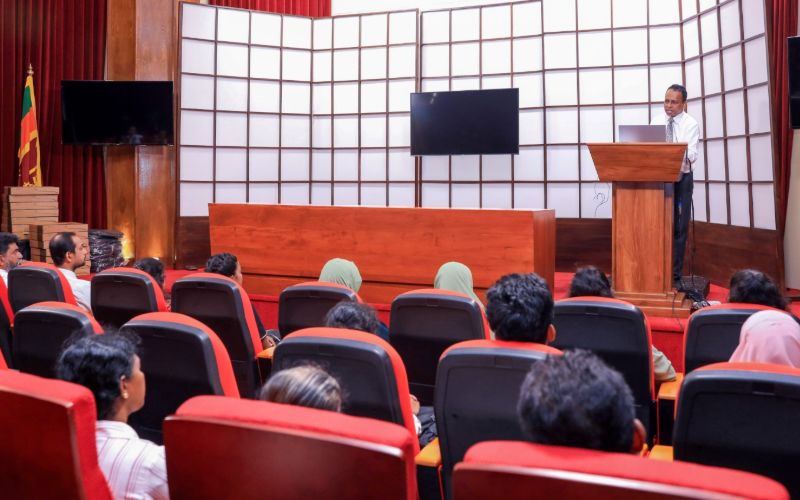
A programme to provide educational equipment to selected university students was held on Thursday (18) morning at the Head Office of the President’s Fund.
During the event, laptop computers were distributed to 14 students selected from applications received through Divisional Secretariat offices across the island. The President’s Fund has allocated Rs. 5.8 million for this initiative.
Accordingly, the President’s Fund has provided educational equipment to approximately 30 university students in 2025 and 2026. More than Rs. 9.8 million has been spent on this programme to date.
The event was attended by Secretary to the President’s Fund and Senior Additional Secretary to the President, Roshan Gamage, along with senior officials of the President’s Fund, parents, and other invitees.
(PMD)

Amidst ongoing accusations that the theft of USD 2.5 mn (nearly 1 bn Rupees) from the Treasury hadn’t been properly investigated, The Island learns that the relevant payments had been made to the actual creditor on the instructions of the Finance Ministry.
Confirming the inquiries made by us, authoritative sources said that payments had been made to several accounts through the US banks. Earlier, Sri Lanka released funds to fake foreign accounts in spite of warnings regarding the suspicions about the process.
The funds were part of a bilateral debt repayment to Australia with a settlement due in September 2025. The payment was part of a $ 22.9 million debt settlement.
The lapses occurred in the wake of far reaching changes regarding the debt management functions. In terms of a particular condition of the International Monetary Fund (IMF), Sri Lanka’s debt management functions that had been previously handled by the Central Bank were transferred to a new institution established under the General Treasury—the Public Debt Management Office (PDMO).
Sources said that regardless of the loss of USD 2.5 mn, Sri Lanka couldn’t have defaulted and therefore payments had been made.
Sources who closely followed the issue said that the government owed an explanation and public apology regarding the loss of USD 2.5 mn and how fresh payments were made.
Sources said that the USD 2.5 mn paid to fake accounts had been lost and could never be traced. CoPF Chairman Dr. Harsha de Silva has said that the NPP government has told the IMF that stolen USD 2.5 mn would be recovered from the public by introducing an amendment to the budget.
By Shamindra Ferdinando
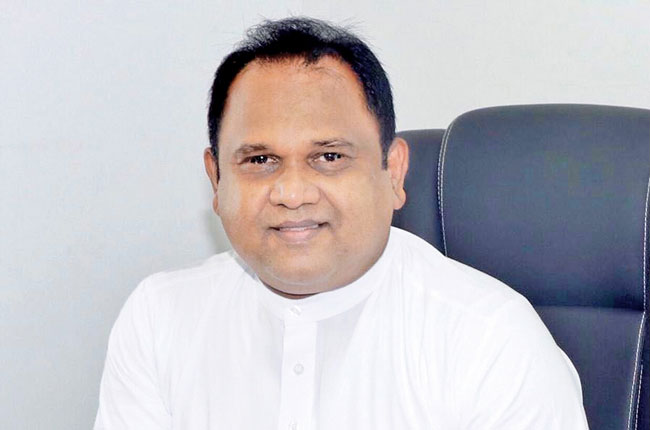
The Court of Appeal yesterday (18) postponed until June 25 the hearing of a petition filed by former Minister Nalin Fernando seeking the dismissal of an indictment brought against him by the Attorney General in connection with the controversial ‘Carrom Boards’ case.
The petition was taken up before a bench comprising Justices P. Kumararatnam and Pradeep Hettiarachchi.
Appearing for the petitioner, President’s Counsel Ali Sabry, instructed by Attorney-at-Law Ramzi Bacha, informed court that Fernando had already been convicted and sentenced to 30 years rigorous imprisonment in a case instituted by the Commission to Investigate Allegations of Bribery or Corruption (CIABOC) arising from the same incident.
Counsel argued that the Attorney General had subsequently filed a separate case based on the same set of charges and maintained that subjecting an accused person to a second prosecution for the same offence was contrary to law.
He submitted that preliminary objections on the issue had been raised before the Colombo High Court but were dismissed by the trial judge.
The petitioner has therefore sought a declaration from the Court of Appeal that the indictment filed by the Attorney General is unlawful and requested that the charges be set aside.
The court directed that the matter be called again on June 25, when the Attorney General is expected to present submissions on the petition.
The case stems from allegations that during the 2015 presidential election campaign, 14,000 carrom boards and 11,000 checkers boards were imported and distributed through Lanka Sathosa outlets for allocation to political offices of former President Mahinda Rajapaksa, resulting in an estimated loss of Rs. 39 million to the State.
Based on those allegations, the Attorney General has instituted proceedings against Fernando before the Colombo High Court under the Public Property Act.

Asia’s richest man Ambani announces what could be India’s biggest share sale

Educational equipment Provided to University Students through the President’s Fund

Fears for US-Iran deal as talks delayed by Israeli strikes on Lebanon

BCCI secretary hints at early start to IPL 2027

Cricket journalist and broadcast legend Qamar Ahmed dies aged 88

Stafanie Taylor, spinners help West Indies overcome Scotland threat

‘Dates have the highest sugar content to fight Coronavirus’

Sunday Island 27 December – Headlines

#SundayIsland 17th December – Headlines

Sunday Island – 28th March

Sunday Island Headlines – 21 March

Sunday Island – 21st February – Headlines
-

 News5 days ago
Release of 2025 O/L results likely to be delayed
-

 Sports5 days ago
Tharanga set for high-profile javelin clash in Ostrava
-

 Features6 days ago
Politics of protected species
-

 News4 days ago
Beijing Capital Airlines to resume flights to Colombo signalling boost to tourism
-

 News5 days ago
Theft of USD 2.5 mn from Treasury: CoPF accused of complicity in NPP cover-up
-

 News7 days ago
Commonwealth lawyers urge Lanka to uphold rule of law
-

 Opinion5 days ago
Decoding Trump’s 12.5% “Forced Labor Tariff” on Sri Lanka
-

 Features3 days ago
Killing of Colombo’s ancient trees — a warning on UN’s World Desertification Day – 17 June