
Opinion
A tsunami of diabetes cases!


Diabetes is a major killer of humans. It is very dangerous. It comes third or fourth after the chief killers namely, heart attacks and strokes. Anyone can develop diabetes by simply eating the wrong foods- by following the sweet path of ‘ignorance is bliss.’ But it makes your life very unpleasant and shortens it greatly. Also, the cost of treating diabetes with insulin has become sky high.After reading this article, you may decide to take a very great interest in the new scientific reports coming from the USA by medical and food researchers and other specialists in this field.
As in Sri Lanka, in America there is an epidemic of diabetes – millions of Americans have developed it and researchers are working hard to find the true causes of this epidemic. As a result of this research they are learning about different types of food, what food to avoid and what is the best for humans.They find that lack of general fitness and lack physical exercise over many years contributes to the onset of diabetes and conversely, physical activity can help to avert this disaster. There are strong signals that lack of robust exercise, and this excessive over-consumption of carbohydrates, are the major causes of diabetes.
Exercise makes the heart pump more blood round the body bringing nutrients and this blood reaches the brain and vitalizes it. That, and a good night’s sleep prevents dementia in older people.It is unfortunate to see beautiful young women putting on unsightly weight as they grow older. When asked why, they respond they get served too much rice at home by their mothers which they are then obliged to eat or appear odd and rebellious.
The human body is a complex of interconnections, of biological and chemical systems, of organs all interacting, supporting, balancing and so on.. the various body systems and functions. And it all comes without a set of operating instructions.
The US Government is financing research in this area because it is a massive problem and costly for all involved. American researchers, all medically trained, are examining human cases to see what is causing it and how to reduce its adverse effects on human lives. Some doctors claim they can reverse diabetes, if caught in the early stages of the progression of the disease.Then comes the other area of what vitamin supplements are needed to achieve and maintain good health, especially in later life.
All US researchers say that smoking is bad for your health, and so is drinking alcoholic drinks, but to a lesser extent. One researcher showed a slice of white bread and says this is equivalent to five teaspoons of carbohydrate. The body will use one teaspoonful but will react adversely to the other four and will work to neutralize them like a poison. The major point to make here is that we regularly eat enormous overloads of carbohydrates. So we get overweight and eventually, our body gets sick.
Our bodies are multi-fuel burners. We can use carbohydrates, proteins from meat, and fat. We burn these at different rates. Our bodies absorb carbohydrates very quickly. It comes as a big, sudden boost of food, and subsides just as quickly, and soon, you feel hungry again and want to eat more.
Eating meat is better, this is absorbed more slowly, giving you a gentle, more prolonged boost of energy, but the best food is to eat fat which doesn’t spike your insulin but gives a long low, prolonged source of energy..
The researchers say that if you do intermittent fasting this starving burns off excessive body fat and your systems can rest and recuperate from this activity. In addition, experts say, this will also prolong your lifespan.Doctors warn not to take advice from the internet and accept it, but certainly get information and ideas from the internet and then discuss them with health professionals and your doctor.
CAVEAT: The information given above has been gained from the large amount of information in short film clips to be found on YouTube. Always consult your doctor for advice on health matters.
Priyantha Hettige



“Vision without execution is hallucination.” – Thomas Edison
Introduction: Stabilisation Is Not Transformation
Sri Lanka has come a long way since the economic collapse of 2022. Inflation has been brought under control. Foreign reserves have improved. Debt restructuring has advanced. Government revenue has increased significantly through taxation reforms. The exchange rate has stabilised, and confidence has gradually returned to financial markets.
These achievements deserve recognition.
However, stabilisation should not be confused with economic transformation. A patient discharged from intensive care is not necessarily healthy. Likewise, an economy that has escaped collapse has not necessarily achieved sustainable prosperity.
The central economic question facing Sri Lanka today is no longer how to avoid another crisis. Rather, it is how to achieve sustained economic growth of at least 7% per annum by 2029.
Unfortunately, much of the current policy debate remains trapped in economic diagnosis. Policymakers, economists, and commentators repeatedly identify familiar problems: (i) low productivity, (ii) weak exports, i(iii) Inadequate innovation, (iv) poor competitiveness, and (v) insufficient investment. While these diagnoses are correct, they are not new.
Sri Lanka now needs economic engineering.
The country requires a clear, measurable, and actionable National Growth Strategy for 2026-2029 that identifies (i) where growth will come from,(ii) what investments are required,(iii) which institutions will lead implementation, and (iv) how success will be measured.
The difference between diagnosis and engineering is the difference between describing a problem and solving it.
The Missing National Growth Target
One of the most striking weaknesses in Sri Lanka’s economic discourse is the absence of a publicly articulated growth target supported by a detailed implementation framework.
Successful economies establish measurable objectives.
Sri Lanka should adopt the following growth trajectory:
2026 – 4%
2027 – 5%
2028 – 6%
2029 – 7%
Such targets would provide direction to investors, public institutions, universities, exporters, and development partners. Without a destination, even the best policies risk becoming disconnected initiatives.
Today, many policy interventions appear fragmented—valuable in isolation but lacking integration into a broader national growth framework.
Growth Will Not Come From Consumption
For decades Sri Lanka relied heavily on consumption, imports, remittances, tourism, and external borrowing.
That model has reached its limits.
No country has achieved sustained prosperity through consumption-led growth alone.
The countries that transformed themselves—Singapore, South Korea, Ireland, Vietnam, and China—generated growth through productive investment, exports, industrialisation, and integration into global markets.
Sri Lanka’s future growth must therefore be driven by investment and exports rather than domestic consumption.
The challenge is not increasing spending but increasing productive capacity.
Export-Led Growth: The First Pillar of Transformation
Every successful Asian growth story has one characteristic in common: exports.
Exports generate foreign exchange, create jobs, attract investment, encourage innovation, and improve productivity.
Sri Lanka should establish an ambitious target of doubling export earnings within the next decade.
This requires moving beyond traditional exports and expanding into:
High-value agriculture
Food processing
Information technology services
Logistics services
Advanced manufacturing
Professional services
Export growth must become a national mission comparable to post-war reconstruction efforts seen elsewhere in Asia.
Without a major expansion of exports, sustained 7% growth will remain elusive.
Manufacturing: The Forgotten Growth Engine
Manufacturing remains the single most important source of rapid economic transformation worldwide. Vietnam provides perhaps the best recent example.
Through (i) industrial zones, (ii) trade agreements, (iii) infrastructure development, and (iv) targeted investment attraction, Vietnam became deeply integrated into Asian production networks.
Sri Lanka possesses strategic advantages:
A prime Indian Ocean location
Strong port infrastructure
Educated labour force
Proximity to India
The country should establish specialised manufacturing clusters focusing on:
Electronics assembly
Medical devices
Processed food products
Boat building
Rubber-based products
Engineering components
Rather than attempting to compete with every country, Sri Lanka should specialise in selected niches where competitive advantages can be developed.
RCEP: The Strategic Door to Asia
Sri Lanka’s future lies increasingly in Asia.
The Regional Comprehensive Economic Partnership (RCEP) represents the largest trading bloc in the world and includes many of the fastest-growing economies.
Membership or closer integration with RCEP supply chains could provide Sri Lankan exporters with access to markets, investment, technology, and production networks that are currently beyond reach.
Unfortunately, discussion on RCEP remains limited compared with its strategic significance.
A dedicated national roadmap for RCEP engagement should become a top economic priority.
The question is not whether Sri Lanka can afford to integrate more deeply into Asia.
The question is whether Sri Lanka can afford not to.
Knowledge Economy: Turning Universities Into Growth Institutions
Sri Lanka’s universities produce thousands of graduates annually, yet their contribution to commercial innovation remains limited.
Globally, universities have become engines of economic development.
Research institutions should not merely produce graduates; they should produce patents, technologies, startups, and commercial solutions.
A national innovation framework should:
Link universities with industry
Encourage commercialisation of research
Support technology transfer
Expand startup financing
Reward innovation and entrepreneurship
Knowledge must become an economic asset rather than an academic exercise.
Dairy, Agriculture, And Import Substitution
Export growth alone is insufficient.
Sri Lanka must also reduce unnecessary import dependence.
The dairy sector offers a compelling example.
For decades, billions of rupees have left the country through dairy imports despite favourable climatic conditions and substantial agricultural potential.
A comprehensive dairy development strategy should focus on:
Improved genetics
Feed production
Commercial farming
Processing investment
Farmer productivity
The objective should be import substitution combined with rural income growth.
The same principle can be applied selectively to other sectors where domestic production is economically viable.
Creating A National Investment Targeting Agency
Sri Lanka does not need another bureaucracy.
It needs a professional institution dedicated exclusively to investment targeting.
Instead of passively waiting for investors, this agency would actively identify and attract strategic investments aligned with national priorities.
Its mandate would include:
Identifying priority sectors
Marketing opportunities globally
Coordinating approvals
Monitoring outcomes
Facilitating technology transfer
Singapore’s Economic Development Board and Ireland’s Industrial Development Agency demonstrate how targeted investment institutions can transform national economies.
Sri Lanka requires a similar mechanism adapted to local realities.
From Economic Diagnosis To Economic Engineering
The next stage of Sri Lanka’s recovery requires a fundamental shift in thinking.
The policy debate must move beyond identifying problems. The country already knows its problems.The challenge is implementation.Every policy proposal should be evaluated against a simple question:
Will this contribute to achieving 7% growth by 2029?
If the answer is no, resources should be redirected.
Economic engineering requires focus, prioritisation, accountability, and measurable outcomes. The era of fragmented initiatives must give way to a coherent national growth strategy.
Summary
Sri Lanka has achieved significant macroeconomic stabilisation, but stabilisation is only the first step toward sustainable prosperity.
To move from recovery to transformation, Sri Lanka should adopt a National Growth Strategy for 2026-2029 built around five pillars:
Export-led growth
Investment-led growth
Manufacturing expansion
Knowledge-economy development
Regional integration through RCEP and Asian supply chains
Supporting sectors such as dairy, tourism, logistics, and information technology should be strategically developed within this framework.
Most importantly, investment must be targeted rather than scattered, supported by specialised institutions and measurable performance indicators.
Conclusion
History demonstrates that no nation has become prosperous by accident. Economic success is rarely the product of isolated policies or short-term political initiatives. It is the outcome of a deliberate strategy pursued consistently over many years.
Sri Lanka stands at a crossroads.
One path leads to modest growth, periodic crises, recurring debt challenges, and continued vulnerability. The other leads to transformation through investment, exports, innovation, manufacturing, and regional integration.
The choice is ultimately strategic.
The time has come for Sri Lanka to move from economic diagnosis to economic engineering.
The future will not be determined by how successfully the country stabilised after the crisis. It will be determined by how effectively it builds the foundations for sustained growth thereafter. If Sri Lanka can articulate and execute a coherent investment-led growth strategy today, achieving 7% growth by 2029 need not be an aspiration.
It can become a national objective—and a national achievement, economic Engineering
The writer, among many, served as the Special Advisor to the Office of the President of Namibia from 2006 to 2012 and was a Senior Consultant with the UNDP for 20 years. He was a Senior Economist with the Central Bank of Sri Lanka (1972-1993). He can be reached via asoka.seneviratne@gmail.com
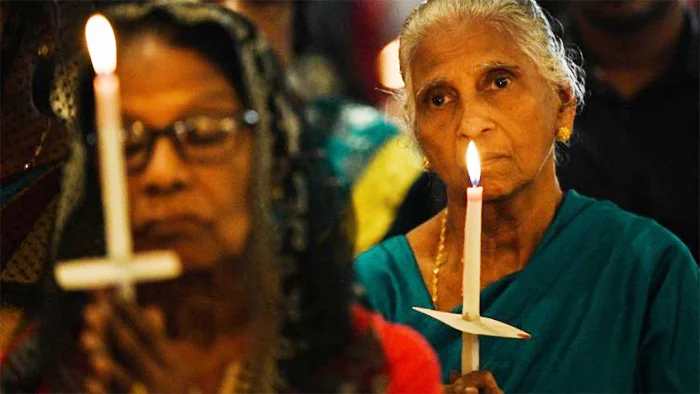
The intelligence existed, the targets were known and the warnings were delivered. What followed was one of the gravest failures of governance in modern Sri Lankan history.
The Easter Sunday bombings were not only a terrorist atrocity. They were a catastrophic failure of the state.
Long before the first explosion tore through St Anthony’s Shrine in Colombo, before worshippers were killed in pews and hotel guests buried beneath concrete and glass, Sri Lankan authorities had been warned that an attack was coming. The Intelligence warnings existed. The targets were identified. The threat was credible. Yet on 21 April 2019, the bombers proceeded almost unhindered.
By the end of the day, 269 people were dead. More than 500 others were injured. Children died beside their parents. Entire families were erased in seconds. Churches celebrating the holiest day in the Christian calendar became scenes of devastation. Luxury hotels that symbolised Sri Lanka’s post-war recovery became sites of mass murder. The attacks shocked the world. What should continue to shock us, seven years later, is something else: Sri Lanka was warned. Not after the attacks. Not hours before them. Weeks before them.
In the weeks leading up to Easter Sunday, Indian intelligence agencies repeatedly transmitted warnings to Sri Lankan authorities regarding an imminent terrorist threat. Those warnings, later examined by parliamentary investigations, criminal inquiries and court proceedings, identified the extremist network involved, named its leader, Zahran Hashim, and indicated that churches were likely targets of suicide bombings. This was not vague or speculative intelligence. It was actionable intelligence. It was precisely the type of information security agencies around the world spend years attempting to obtain.
Yet the attacks happened anyway
No nationwide security operation was launched. No meaningful public warning was issued. No visible police presence appeared outside churches preparing for Easter services. No coordinated effort disrupted the network before the bombers reached their targets.
The uncomfortable truth is that the Easter Sunday attacks were not simply a story about terrorism. They were a story about state failure.
In every country, intelligence failures occur. The United States failed to connect critical pieces of information before the attacks of 11 September 2001. Britain, France, Belgium and Spain have all suffered devastating terrorist attacks despite extensive intelligence and surveillance capabilities. But Easter Sunday belongs in a different category.
The defining question is not whether Sri Lanka’s security institutions failed to identify a threat. The defining question is why the state failed to act after the threat had already been identified. That distinction matters.
Governments cannot prevent every act of violence. Democracies cannot guarantee perfect security. Intelligence is often incomplete, contradictory and difficult to assess. But when authorities receive credible warnings that suicide bombers may target churches within days, the threshold for action has already been crossed.
Police patrols can be increased. Religious institutions can be warned. Known suspects can be placed under surveillance. Security checkpoints can be established. Counterterrorism units can be mobilised. Protective operations can begin immediately. None of these measures require extraordinary constitutional powers. They are the ordinary responsibilities of a functioning state.
This is what makes the events of April 2019 so disturbing. The issue was not merely a lack of information. The issue was the inability to transform information into action. Subsequent investigations painted a deeply troubling picture of institutional dysfunction. The Parliamentary Select Committee established after the attacks documented serious failures in communication, coordination and leadership across the state’s security apparatus. Intelligence warnings moved through government structures without triggering the urgency that the situation demanded. Information was received, circulated and discussed, yet effective preventative measures never materialised.
The result was catastrophic.
To understand the gravity of that failure, it is worth considering how other countries have responded to comparable threats. In 2006, British authorities disrupted the transatlantic aircraft bombing plot after intelligence agencies uncovered plans to destroy multiple passenger aircraft travelling between the United Kingdom and North America. Arrests were carried out before the attacks could occur. Security measures were immediately strengthened across airports.
Following intelligence warnings surrounding major public events, countries such as Australia, France and the United Kingdom have routinely deployed additional police units, expanded surveillance operations, established security perimeters and issued public advisories. Such measures are disruptive. They are expensive. They are often criticised as excessive. But they reflect a simple principle: when the state becomes aware of a credible threat to civilian life, inaction is not an option.
The social contract depends upon it
Political philosophers from Thomas Hobbes onward have argued that the legitimacy of the state rests fundamentally on its ability to provide security. Citizens surrender certain freedoms and empower public institutions because those institutions promise protection from violence. Without that basic guarantee, the authority of the state begins to erode.
The Easter Sunday attacks shattered that guarantee. They shattered trust in institutions. They shattered trust in leadership. They shattered trust in the belief that warnings would be acted upon and preventable dangers prevented. The consequences extended far beyond the immediate loss of life. The attacks devastated Sri Lanka’s tourism industry, one of the country’s most important sources of foreign exchange. International arrivals declined sharply in the months that followed. Hotels suffered significant losses. Businesses dependent on tourism faced severe hardship. Thousands of livelihoods were affected across the country.
The economic shock arrived at a moment when Sri Lanka’s broader economic foundations were already fragile. In many respects, Easter Sunday became one of the defining events that accelerated a period of instability from which the country would struggle to recover. The social consequences were equally profound. Communities that had coexisted for generations became vulnerable to suspicion and division. Muslim Sri Lankans, the overwhelming majority of whom condemned the attacks, faced heightened scrutiny, discrimination and, in some cases, violence.
Fear spread through a society still carrying the scars of a civil war that had ended only a decade earlier.
The bombings altered the trajectory of a nation
Perhaps most significantly, the attacks exposed profound weaknesses within Sri Lanka’s national security architecture. Subsequent investigations revealed serious failures in coordination, communication and institutional accountability. Intelligence warnings moved through different layers of the state without generating the urgent operational response that the threat demanded. Information existed within the system, yet the system itself failed to translate that information into action.
Effective national security depends not only on gathering intelligence but on ensuring that intelligence triggers clear decisions, coordinated responses and preventative measures. On Easter Sunday, that chain of responsibility broke down. The consequences were measured in human lives.
In January 2023, Sri Lanka’s Supreme Court delivered one of the most significant judgments in the country’s modern constitutional history. The court found that senior state officials had violated the fundamental rights of citizens by failing to act on intelligence that could have prevented the attacks. The ruling was remarkable not merely because it assigned responsibility. It was remarkable because it affirmed a principle often forgotten in discussions of national security: governments are not judged solely by how they respond to crises. They are judged by the crises they fail to prevent.
The Easter Sunday attacks were carried out by terrorists. Responsibility for the murders belongs first and foremost to those who planned and executed them. Nothing should diminish that fact. But democracies must also be capable of asking a second question: what happened after the warnings arrived?
That question is not about conspiracy theories. It is not about political point-scoring. It is about accountability. It is about competence. It is about whether institutions functioned as they were supposed to function when lives depended upon them. Seven years later, the central facts remain unchanged. The intelligence existed. The warnings were delivered. The targets were identified. The threat was known. The terrorists bear responsibility for the murders. But a democratic state entrusted with protecting its citizens had an opportunity to intervene before catastrophe struck. It failed.
The victims of Easter Sunday were killed by extremists. But they were also failed by institutions that possessed the information necessary to act and failed to do so. That is why Easter Sunday remains more than a story of terrorism. It remains a story about governance, accountability and the devastating human cost of institutional dysfunction. Nations can survive tragedy. What they cannot afford to survive is forgetting the lessons that produced it.
For Sri Lanka, the most important lesson is also the simplest: Warnings save lives only when governments choose to listen.
By Kithmi Gunaratne
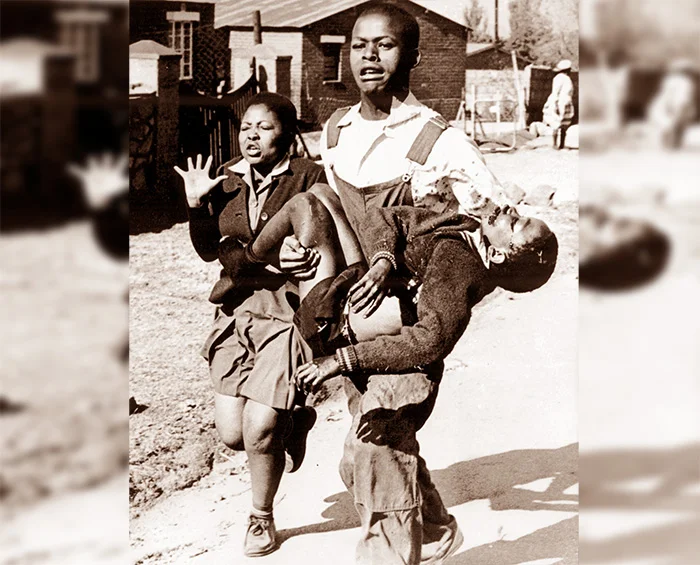
On 16 June 1976 began the revolt of school students in Johannesburg’s black underserved settlement complex, which kick-started the process of dismantling Apartheid.
Long before the formal advent of apartheid in 1948, South Africa functioned as a colonial extraction machine in which indigenous Africans were systematically subordinated to serve imperial economic interests. British and Afrikaner elites together built a political economy centred on mining, settler agriculture, and control of strategic sea routes around the Cape, dispossessing Africans of land and pushing them into cheap labour roles. The apartheid system installed by the National Party after 1948 did not create racial domination from nothing; it rationalised and intensified an existing colonial order into a more tightly codified regime of segregation, labour control, and political exclusion.
Education, Bantustans,
and Soweto as a system
The Afrikaner minority acted within this framework, as a settler elite securing both its own material interests and the wider stability of Western capital in southern Africa, especially for mining conglomerates extracting gold and other minerals. Apartheid laws on residence, movement, and employment guaranteed a dependable, rightless African workforce while insulating white society politically and spatially from the Black majority.
This structure of domination included education as a core instrument. The 1953 Bantu Education Act created a separate, inferior schooling system for Black South Africans, explicitly geared to produce a subservient labour force rather than citizens able to compete with whites in skilled or professional roles. Curriculum, funding, and language policy all reinforced the message that Africans had no legitimate claim to equal participation in the country’s political or economic life.
Simultaneously, between 1951 and 1970, the apartheid state constructed “Bantustans,” such as Transkei, Bophuthatswana, Venda, and Ciskei, designating them as supposed ethnic “homelands” for different African groups. By removing Africans from the national political community and assigning them to Bantustans, the regime tried to strip them of South African citizenship and rebrand them as “foreign” labour migrants inside what was still their own country.
Soweto (South Western Townships), purpose-built on the outskirts of Johannesburg, the urban counterpart to this system, functioned as a segregated dormitory zone to house Black labourers. They serviced, but had no permanent geographic, economic, or political rights in the white city. The Bantustans and Soweto formed two halves of the same apparatus: the former as reservoirs and political dumping grounds, the latter as tightly controlled labour depots feeding South Africa’s industrial and mining core. By 1976, this system had matured, with Bantustans entrenched, and Soweto grew into a massive, overcrowded township with acute housing shortages, poor services, and deep political resentment.
The Afrikaans decree and the spark in Soweto
Against this background, the decision to impose Afrikaans as a medium of instruction appeared as a provocation rather than a mere educational reform. In the mid1970s, the Apartheid government moved to require that key subjects, such as mathematics and social sciences, be taught in Black secondary schools in Afrikaans, while others would be in English. Black South Africans perceived Afrikaans as the language of the oppressor, associated with the police, the army, and the bureaucracy of apartheid, whereas they linked English to broader opportunities and international solidarity.
The policy hit Soweto’s schools amid rising enrolment, Black Consciousness ideas spreading among youth, and high levels of frustration over overcrowding, unemployment, pass laws, and Bantustan citizenship. Student organisations such as the South African Students’ Movement and local committees in Soweto mobilised against the Afrikaans decree, framing it as an attempt to deepen mental and material subjugation by forcing children to learn through a language many neither liked nor mastered, further sabotaging their prospects in an already unequal system.
On 16 June 1976, an estimated 10,000–20,000 students, many in school uniform, marched peacefully through Soweto to protest against the Afrikaans policy and to present their demands to authorities. The police confronted them, firing tear gas, and then using live ammunition on unarmed children, killing several. A photograph of the dying body 13-year-old Hector Pieterson travelled around the world and came to symbolise the brutality of apartheid.
The shooting of schoolchildren transformed what began as a focused protest on language into a broad uprising against apartheid itself. In Soweto, anger at the killings spilled into widespread unrest: clashes with police, the burning of government buildings and administration offices, seen as symbols of state control, and running street battles that lasted for days.
The state responded with escalating force, deploying heavily armed police and later military units, making mass arrests, and using banning and detention without trial in an attempt to crush the uprising. But rather than restoring the preexisting “calm,” repression helped spread the revolt. Protests, school boycotts, solidarity actions and general strikes erupted in other townships and cities across South Africa, including areas around Pretoria, Cape Town, Port Elizabeth, and parts of the Eastern Cape. This wave of unrest left hundreds killed (estimates place the death toll at more than 500) and thousands injured or detained, exposing the depth of youth anger and the fragility of everyday order in Black urban South Africa.
From Sharpeville to Soweto
The 1960 Sharpeville massacre marked an earlier turning point: the killing of protesters against “pass laws” led to the banning of the African National Congress (ANC) and Pan-Africanist Congress (PAC), the launch of underground armed struggle, and a decade of intense repression that enforced a harsh surface calm inside South Africa. However, at that time fewer independent African states existed nearby to provide safe haven, and internal organisations had less experience and fewer networks to sustain long-term clandestine activity.
Soweto 1976 occurred in a regional and international environment very different from that of Sharpeville. By the mid1970s, most African states north of South Africa gained formal independence, and the liberation struggles in Mozambique and Angola had succeeded in 1975, creating new frontline states sympathetic to antiapartheid movements. The South African military’s intervention in Angola in 1975–76, alongside Western-backed forces, underscored the apartheid regime’s determination to shape regional outcomes and, at the same time, highlighted its vulnerability to guerrilla and conventional resistance supported from neighbouring territories.
By 1976 the antiapartheid movement, both inside and outside the country, had matured. The Soviet Union and its allies (notably East Germany and Cuba) provided much-needed material help. Cities such as Lusaka and Dar es Salaam had established exile infrastructure; Mozambique and Angola had liberation governments; and South Africa contained expanded networks of student, religious, and community organisations. Soweto thus occurred at a moment when the system’s underlying tensions, generated by decades of dispossession, Bantustan policy, and labour exploitation, had grown cumulatively.
Within South Africa itself, the 1970s saw a resurgence of labour militancy (such as the Durban strikes of 1973), the growth of Black Consciousness, and a new generation of students and young workers with a shared experience of inferior schooling, Bantustan citizenship, and township life. In this environment, state violence in Soweto was not interpreted as an isolated atrocity but as confirmation that peaceful protest inside the existing constitutional framework had reached its limits.
Umkhonto we Sizwe
Before 1976, Umkhonto we Sizwe (MK), the armed wing of the ANC, operated mainly from exile, with a relatively small number of highly selected recruits engaged in sabotage and limited guerrilla operations, particularly after heavy repression in the 1960s. Estimates suggest that by the mid1960s only a few hundred recruits had managed to cross borders to join MK. The Soweto uprising changed this dramatically.
In the months and years after 16 June, thousands of politicised students and young people left South Africa, often via Botswana, Swaziland, Mozambique, and other neighbouring states, driven by grief, anger, and a desire to “strike back” at the regime. Many of these exiles joined MK camps and political schools run by the ANC and allied movements, with some studies estimating roughly 3,000 new recruits in the two years immediately following the uprising and more than 11,000 between 1976 and the unbanning of the ANC in 1990. This “1976 generation” carried with it the ideological imprint of Black Consciousness and the lived memory of township confrontation, helping transform MK from a small sabotage organisation into a larger force preparing for protracted guerrilla warfare and closer integration with internal township structures.
The mass youth rebellion and subsequent exodus to join MK represented a shift from incremental, “quantitative” changes in struggle capacity to a “qualitative” change in the nature and scale of resistance.
Shattering apartheid’s “stability” and the role of capital
The Soweto uprising shattered the illusion that apartheid could secure stable, lowcost resource extraction indefinitely. After 1976, South Africa experienced recurrent waves of township unrest, the growth of powerful trade unions, and a more sustained internal challenge that made large parts of the country intermittently “ungovernable” by the mid1980s. Repression remained intense, but each new cycle of violence tended to produce more recruits, deepen international isolation, and raise the political and economic costs of maintaining the system.
Internationally, the images of children shot in Soweto energised sanctions and divestment campaigns, while regionally the growing strength of liberation movements limited Pretoria’s freedom of action. Over time, powerful segments of domestic and international capital began to view apartheid not as a guarantor of order, but as a generator of risk and instability that threatened long-term profitability and access to markets and finance. In the 1980s, figures connected to major firms such as Anglo American and Consolidated Gold Fields played key roles in initiating quiet contacts between representatives of the apartheid state and the ANC in exile, including secret meetings facilitated by Michael Young of Consolidated Gold Fields in England.
Soweto 1976 can be seen as a structural break: it undermined the regime’s internal legitimacy, produced a new generation of militant activists, and accelerated the militarisation and politicisation of townships. Crucially, it set in motion feedback loops, through repression, resistance, international pressure, and capital’s recalculations, that made the eventual negotiated end of apartheid less a question of “if” than of “when.”
Vinod Moonesinghe, formerly chair of the Ceylon German Technical Training Institute and of the National Institute for Language Education and Training, serves as a Convenor of the Asia Progress Forum.
by Vinod Moonesinghe

Luis Diaz, Colombia defeat World Cup 2026 debutants Uzbekistan

Oil prices fall, stocks rally as US, Iran sign framework to end war

Kane double fires England past Croatia in World Cup thriller

G7 leaders to boost Ukraine air defences, tighten sanctions on Russia

Discussion on Sri Lanka Customs’ contribution for National Export Development Plan

Gill and Kishan hundreds carry India past 400 and to victory

‘Dates have the highest sugar content to fight Coronavirus’

Sunday Island 27 December – Headlines

#SundayIsland 17th December – Headlines

Sunday Island – 28th March

Sunday Island Headlines – 21 March

Sunday Island – 21st February – Headlines
-

 News6 days ago
CIABOC summons Yoshitha over his participation in British Navy training programme
-

 News3 days ago
Release of 2025 O/L results likely to be delayed
-

 News6 days ago
Justice Minister responds to social media claims he represented Easter Sunday ringleader
-

 Sports3 days ago
Tharanga set for high-profile javelin clash in Ostrava
-

 Features4 days ago
Politics of protected species
-

 News3 days ago
Theft of USD 2.5 mn from Treasury: CoPF accused of complicity in NPP cover-up
-

 News2 days ago
Beijing Capital Airlines to resume flights to Colombo signalling boost to tourism
-

 News5 days ago
Commonwealth lawyers urge Lanka to uphold rule of law