
News
India, too, should be investigated -Int’l HR organisations

Geneva resolution:
By Shamindra Ferdinando
Four international human rights organisations yesterday (20) said that atrocities perpetrated during the deployment of the Indian Army in Sri Lanka, too, should be properly investigated by the mechanisms proposed by the Geneva-based United Nations Human Rights Council (UNHRC).
Sri Lanka brought the war to a successful conclusion in May 2009.
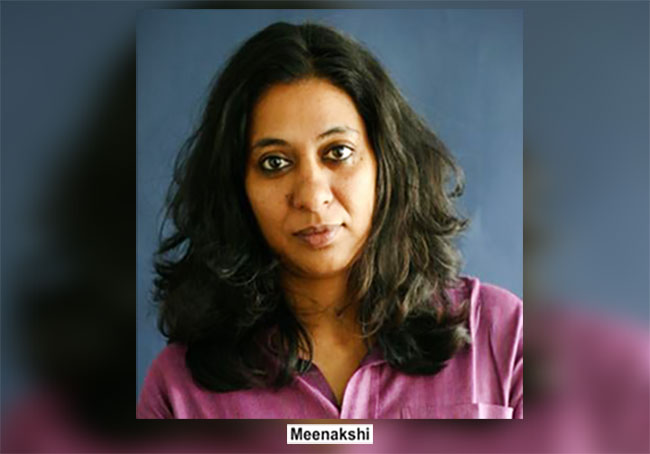
London-based Meenakshi Ganguly said that they sought a strong resolution on Sri Lanka to address all international crimes, including those that occurred during the conflict. “Indian troops had been deployed at the invitation of the then Sri Lankan government to enforce a truce agreement, and the abuses that occurred at that time should be properly investigated and those responsible held to account.
Ganguly said so when The Island sought their stand as regards India’s accountability. The Island asked her whether she believed the latest Geneva Resolution should also address India’s accountability as the Indian Army, too, had been accused of atrocities during its deployment in Northern and Eastern parts of Sri Lanka (July 1987-March 1990) and India having sponsored half a dozen terrorists groups in Sri Lanka?
The 51 regular sessions of the UNHRC are underway.
Ganguly responded on behalf of South Asia Regional Director, Amnesty International, Programme Manager, UN Advocacy, Asian Forum for Human Rights and Development (FORUM-ASIA), Human Rights Watch and UN Representative & Senior Legal Adviser, International Commission of Jurists.
However, Lucy McKernan, Acting Geneva Director, Human Rights Watch didn’t respond to The Island query.
Sri Lanka Core Group led by the UK has submitted a new resolution demanding punitive action against Sri Lanka. Former Minister and leader of Pivithuru Hela Urumaya (PHU) Udaya Gammanpila on Monday warned that Sri Lanka could lose the vote on the new resolution by a big margin in the 47-member council. The PHU leader warned that it could be tied to aid to Sri Lanka.
The four international human rights groups declared that the UNHRC should adopt a strong resolution that strengthened current UN mandates on accountability for crimes under international law and monitor Sri Lanka’s deteriorating human rights situation. They emphasized that the resolution should also request Sri Lanka to address the ongoing abuses, including by ending use of the draconian Prevention of Terrorism Act.
Asked whether the Indian intervention, too, should be investigated by Geneva, the Global Tamil Forum (GTF) spokesperson Suren Surendiran said that “Root causes why the Tamil youth took up arms in 1983 thirty five years after independence, Tamil political leaders tried their best to resolve through political negotiations the inequality, blatant discrimination and treatment of Tamils as second class citizens through constitutional means by successive Sinhala leaderships in the south should/must be publicly established. If part of that investigation should include the Indian involvement, so be it.”
Surendiran said that “Truth seeking mechanism is one of the four transitional justice pillars. Therefore, it is an important initiative. However, just by itself will not resolve or be accepted as part of serving justice to victims. Addressing accountability through a credible international mechanism needs to be part of the program. That’s what resolution 30/1 was going to address. However, successive governments of Sri Lanka keeps deferring or intentionally avoiding addressing this very point. Hence the resolution 46/1 went with the recommendations of the High Commissioner to address accountability via collecting and preserving evidence and serving justice through other international mechanisms including, universal jurisdiction.
“We know how pathetically successive governments have tried to hoodwink the international community by a half-baked Office of Missing Persons (OMP) and other reparation ideas.
“Until Sri Lanka acknowledges that international laws were breached during the war, especially at the end of the war, and charges persons who had command responsibility including the then political and civil service leaders, there will not be any let up by the international community. This is not just to punish for the alleged crimes committed but to ensure that there won’t be any such breaches of international law elsewhere in the world in the future.”








A specialists committee has been appointed by the Secretary to the Ministry of Agriculture, Livestock, Lands and Irrigation adhering to the decision of the Cabinet of Ministers dated 29.12.2025 for submitting appropriate recommendations analyzing the provisions of the draft bill formulation in regard to Animal Welfare.
Based on the recommendations of the said Committee, the Legal Draftsman has been instructed at the meeting of the Cabinet of Ministers held on 18.05.2026 to prepare the final bill on the animal welfare.
Wherefore, the Legal Draftsman has formulated the draft bill and the clearance of the Attorney General has been received in the connection.
Accordingly, the Cabinet of Ministers granted approval to the resolution furnished by the Minister of Agriculture, Livestock, Lands and Irrigation to publish the said draft bill in the
Government Gazette Notification and subsequently forward the same to the Parliament for its concurrence.
Under the legal provisions for elections in this country since 2004, it is mandatory for voters who come to mark their votes to verify their identity through a valid identity card, and it is also mandatory for all such voters to be marked with an appropriate mark using indelible ink. The dual purpose of these two functions is to prevent a voter from voting more than once in a single election.
It has been observed that having to follow two different
methods at the same time to achieve the same objective hinders the efficiency of the duties performed at the polling stations and also incurs additional costs to the government.
Therefore, it has been deemed appropriate to remove the legal provisions regarding the use of indelible ink and marking the voter with the appropriate mark from all election acts.
Accordingly, the development activities of the province, as well as national security, will benefit. Therefore, the Cabinet of Ministers has approved the resolution furnished by the
President to take necessary steps to remove the legal provisions
• Section 36 of the presidential Election Act, No 15 of 1981
• Section 38 of the Parliamentary Election Act, No 01 of 1981
• Section 36 of the Provincial Council Election Act, No 02 of 1988
• Section 53 A of the Local Government Elections Ordinance (262 Authority)
• Section 21 of the Referendum Act No 7 of 1981
News
Showers will occur in the Western, Sabaragamuwa and North-western provinces and in Galle, Matara, Kandy and Nuwara-Eliya districts


WEATHER FORECAST FOR 24 JUNE 2026
Issued at 05.30 a.m. on 24 June 2026 by the Department of Meteorology
Several spells of showers will occur in the Western, Sabaragamuwa and North-western provinces and in Galle, Matara, Kandy and Nuwara-Eliya districts. Showers or thundershowers may occur at a few places in the Uva province and in Ampara and Batticaloa districts after 2.00 p.m.
Fairly strong winds about (30-40) kmph can be expectedat times over the Western slopes of the central hills, the Northern, North-central, North-western and Southern provinces and in Trincomalee district.
The general public is kindly requested to take adequate precautions to minimize damage caused by temporary localized strong winds and lightning during thundershowers.

Munoz sends Colombia into World Cup knockouts with 1-0 win over DR Congo

Animal Welfare Draft Bill to be Gazetted
Legal provisions on marking voters using indelible ink during elections removed

Showers will occur in the Western, Sabaragamuwa and North-western provinces and in Galle, Matara, Kandy and Nuwara-Eliya districts

Court vacancy row throws Parliament into turmoil; sittings disrupted

Climate, pollution, forest loss now hitting economy: BASL chief

‘Dates have the highest sugar content to fight Coronavirus’

Sunday Island 27 December – Headlines

#SundayIsland 17th December – Headlines

Sunday Island – 28th March

Sunday Island Headlines – 21 March

Sunday Island – 21st February – Headlines
-

 News6 days ago
Creditor receives USD 2.5 mn as Lankan public bears loss from theft of Treasury funds
-

 News5 days ago
Creditor not yet paid
-
 News5 days ago
Consumers bearing 22% tax burden despite 18% VAT claim: Dr. Harsha de Silva
-

 Opinion7 days ago
Beyond diagnosis: A strategic design for 7% growth by 2029 (Part I)
-

 Features4 days ago
Nanda Pethiyagoda Wanasundara as three generations of family saw her
-

 Opinion6 days ago
SriLankan Airbus struck by lightning
-

 Features3 days ago
Sri Lanka developing independent hydrographic capabilities
-

 Latest News3 days ago
Sooryavanshi thumps fastest List A fifty as India A win tri-series