
News
CEB restructuring proposals to be finalised in two weeks


By Ifham Nizam
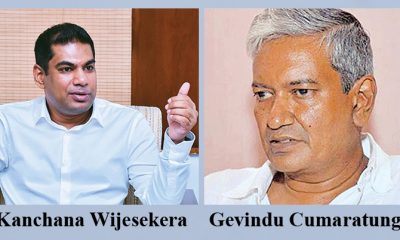
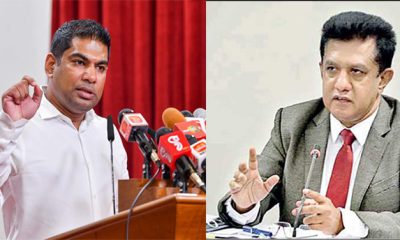
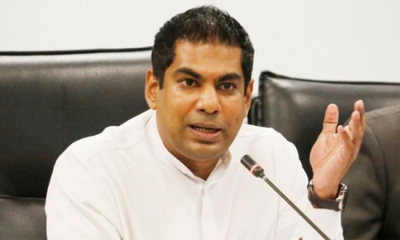
Proposals pertaining to the restructuring of the Ceylon Electricity Board (CEB) would be finalised within two weeks, a member of the committee handling them told The Island yesterday.Power and Energy Minister Kanchana Wijesekera, who had a lengthy discussion with the experts, said that the main framework would be presented to the Cabinet by the end of the month.
The committee, which was recently appointed by the Minister for restructuring the CEB, has held talks with development agencies, sector experts, stakeholders and is also due to meet political parties and the power sector regulator, the Public Utilities Commission of Sri Lanka (PUCSL) next week.Minister Wijesekera also said although there were capable and efficient workers at the CEB, the CPC, and the CPSTL, the majority were inefficient and incompetent.
“A good 500 workforce instead of the 4,200 could do the job efficiently at CPC, CPSTL, and half of the 26,000 workforces at the CEB,” the Minister added.
The committee appointed to restructure the CEB is headed by Dr R H S Samaratunge – Former Secretary, Finance Ministry , and other members are President’s Counsel Nihal Jayawardhane – Former Legal Consultant to the Public Enterprise Reforms Commission, Attorney at Law Harsha Fernando – Former Senior State Counsel at the AGs Department M M C Ferdinando, Former Secretary, Ministry of Power & Energy, Dr. Susantha Perera – Former AGM, CEB, Thilan Wijesinghe – Former Chairman, Board of Investment, Saliya Wickramasuriya – Chairman, Petroleum Development Authority and Director General, Port City Economic Commission, and Chandana Wijesinghe – Director, Ministry of Power and Energy Minister.
The Committee said that authorities had been struggling for some 24 years since 1998 to restructure the CEB and many efforts over the years to push through the much-needed reforms had failed due to stiff resistance from workers and others.
President Ranil Wickremesinghe has ordered that the restructuring process of unbundling the CEB by setting up state-owned companies jointly with the private sector management to take over the generation, transmission, distribution and other functions be expedited. Sources said there would be one joint venture each for generation and transmission and three or more for distribution, according to the CEB board paper devised recently for the approval of the board of directors before submitting it to the ministry to prepare the cabinet memorandum.
It has also been proposed to form separate power generation joint venture companies to undertake functions of the CEB relating to hydro-electricity, thermal electricity, coal power and non-renewable power generation, power generation, distribution, and other activities as well as Lanka Electricity Company.
These companies will serve as independent power producers (IPP) and will have to sell the energy they generate to the transmission company, along with other IPPs, the CEB board paper indicated.
A new Electricity Reforms Bill or an amendment to the Electricity Reforms Act No. 28 of 2002 will be drafted and presented in Parliament soon to facilitate the restructuring process.The CEB has incurred a large operating loss of Rs. 47.19 billion in the first four months of 2022 compared to the loss of Rs. 7.15 billion in the same period of 2021.









Latest News
Ms. U. L. Mathisha Jinanjalie Jayathilake, appointedto the post of Commissioner, Department of Probation and Child Protection Services

The Cabinet of Ministers approved the resolution furnished by the Minister of Women and Child Affairs to appoint Ms. U. L. Mathisha Jinanjalie Jayathilake, the officer in Grade I of Sri Lanka Administrative Service to the post of the Commissioner at the Department of Probation and Child Protection Services with immediate effect.
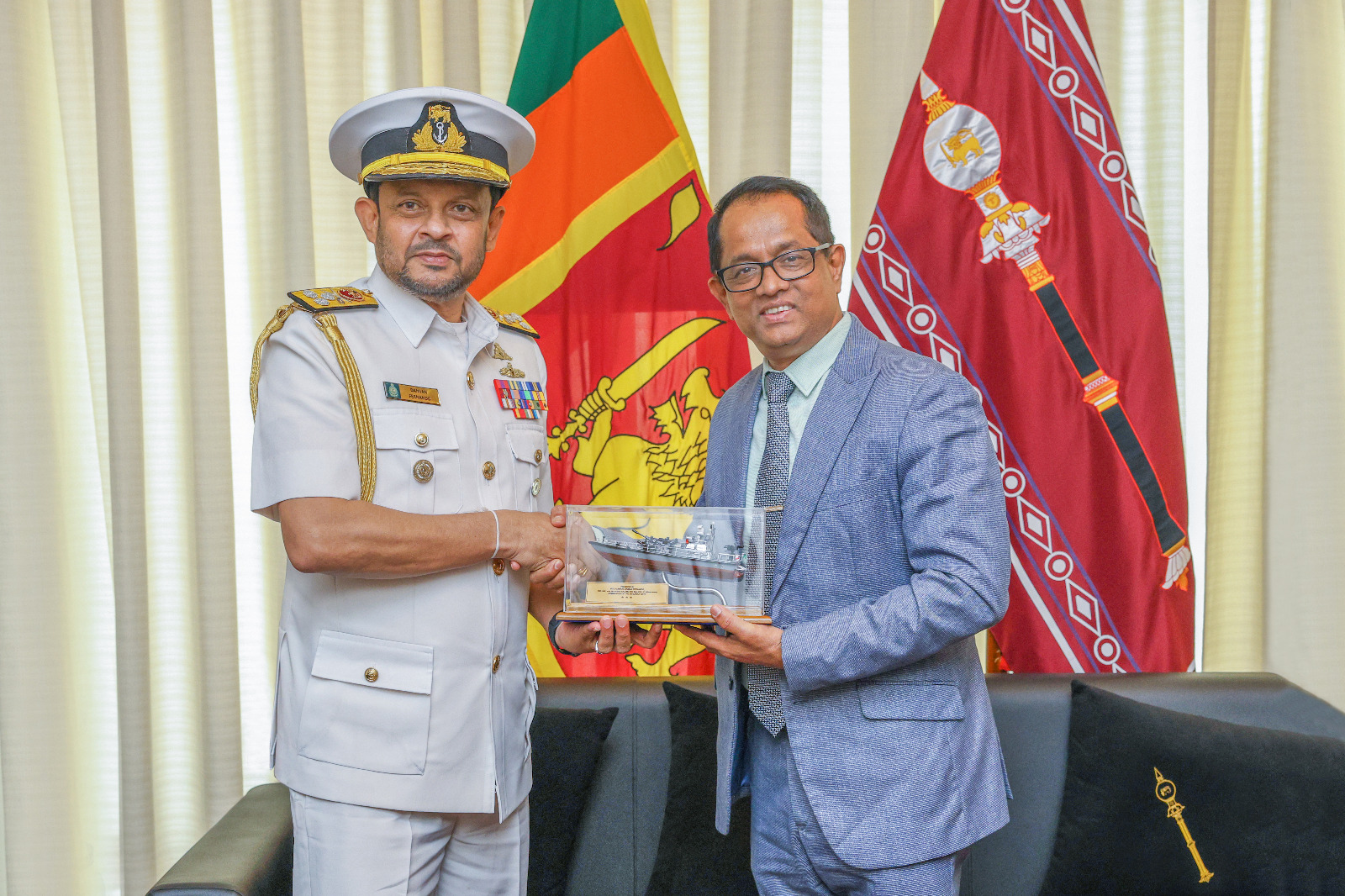
The Commander of the Navy, Vice Admiral Damian Fernando paid a courtesy call on the Speaker of the Parliament, Dr Jagath Wickramaratne at the Office of the Speaker, today (7 July
2026).
The meeting marked the Commander of the Navy’s first official interaction with the Speaker following his assumption of command of the Sri Lanka Navy. During the cordial discussion, they exchanged views on the Navy’s role in matters of national importance.
The formal meeting drew to a close with an exchange of mementoes, signifying the importance of the occasion.

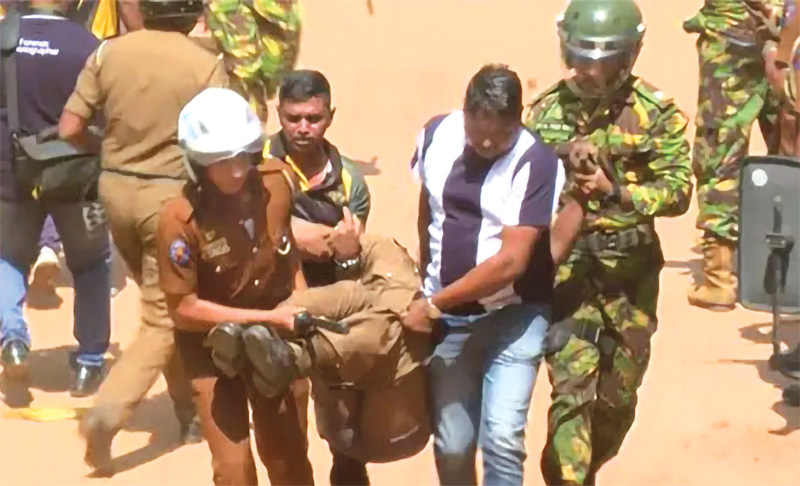
At least 26 people, including five prison officers and 20 inmates, have been confirmed dead following violent unrest at Negombo Prison, hospital sources said yesterday, as authorities struggled to restore full control over the facility.
According to unconfirmed reports the prison officers were killed by rioters yesterday morning, in retaliation, and weapons carried by those officers were grabbed by them.
Negombo General Hospital Director Consultant Dr. Pushpa Gamlath said nearly 100 injured persons had been admitted, following the clashes, and eight of the critically wounded had been transferred to the National Hospital, in Colombo, for further treatment.
The violence, which initially broke out on Sunday (5) between remand prisoners and convicted inmates, left two inmates dead and 38 others injured before being temporarily brought under control.
However, tensions flared again on Monday (6), with prison officials reporting renewed unrest inside the facility despite earlier assurances that the situation had stabilised.
Police said the initial confrontation was triggered by a dispute linked to the exposure of an alleged drug trafficking network, operating within the prison, and was reportedly orchestrated by a drug trafficker, identified as Suresh, who is said to have links to an underworld figure known as ‘Booru Moona’.
The violence rapidly escalated, with female inmates staging a protest on the Prison roof in support of those involved in the clashes, while relatives gathered outside demanding information on detainees. Police later facilitated visits for selected family members to hospitalised inmates.
The Negombo Prison, which houses around 1,800 remand and convicted inmates, descended into widespread disorder as rival groups clashed, with reports indicating that the violence later spread beyond the initial confrontation.
Authorities said rioting inmates had allegedly seized firearms during the renewed unrest on Monday, prompting heightened security measures.
The Sri Lanka Air Force deployed drones for aerial surveillance and a Bell 412 helicopter to monitor the situation, while additional military personnel were sent to reinforce security around the prison.
Prisons Department spokesperson A.C. Gajanayake said a special investigation team had been appointed, under the direction of the Commissioner General of Prisons, to probe the incident, while a separate police investigation is also underway.
Justice Minister Harshana Nanayakkara told The Island that he had called for a detailed report on the disturbances.
By Norman Palihawadane

Ms. U. L. Mathisha Jinanjalie Jayathilake, appointedto the post of Commissioner, Department of Probation and Child Protection Services

Argentina stage stunning late comeback to beat Egypt in World Cup last 16

Commander of the Navy pays courtesy call on Speaker of the Parliament

Woman suspected of Monaco bomb attack found dead in Ukraine

Balogun reprieve in vain as Belgium beat USA to set up Spain quarterfinal

Trump confirms he asked Fifa to review Balogun ban

‘Dates have the highest sugar content to fight Coronavirus’

Sunday Island 27 December – Headlines

#SundayIsland 17th December – Headlines

Sunday Island – 28th March

Sunday Island Headlines – 21 March

Sunday Island – 21st February – Headlines
-

 News3 days ago
Singapore-based Buddhist monk marks nearly four decades of humanitarian service
-

 News4 days ago
Freedom 250: US Embassy celebrates America’s 250th Independence Day through magic of American cinema
-
 News5 days ago
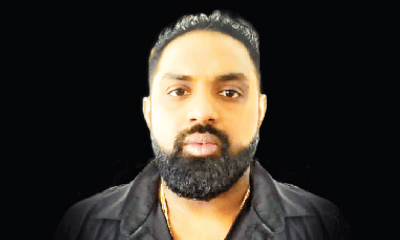
CIABOC to question Harak Kata on Rs. 200 mn bribery allegation
-
 News5 days ago
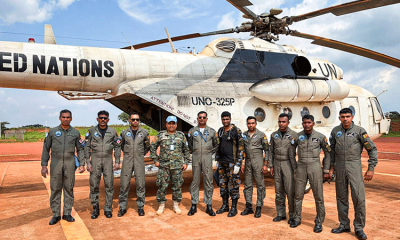
SLAF conducts successful rescue mission under UN command in Central African Republic
-

 Midweek Review7 days ago
H’tota port’s strategic status remains focal point of geopolitical scrutiny
-

 News2 days ago
AI concerned over proposed SL military deployment in Haiti
-
 News5 days ago
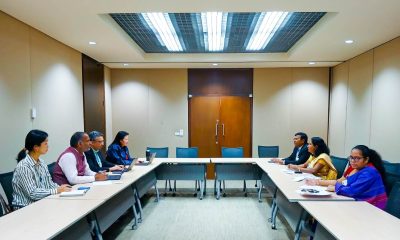
UNEP support pledged to strengthen Sri Lanka’s Environmental Priorities
-

 Features3 days ago
The NPP’s New Challenge: Balancing Easter Lawfare and Economic Welfare