
Business
Learning for Sri Lanka on SOE Reforms – Malaysia’s Khazanah Nasional Berhad

Introduction
A super-holding company for managing State-Owned Enterprises (SOEs) has been identified as a globally successful model for SOE management. This model allows the government to adopt a more arms-length approach to SOEs’ operational decision-making, relieving it of the direct responsibility of overseeing all SOEs dispersed across various industries, and redirect its budget and energy elsewhere. The merits of this model have enabled countries such as Malaysia and Singapore, which employ similar holding company structures, to ensure impressive performances of their SOEs.
This article is the second of a three-part series where part one and two provide an in depth analysis of the case of Singapore’s and Malaysia’s SOE holding company models (Singapore’s Temasek Holdings and Malaysia’s Khazanah Nasional), and their role in enabling economic growth and development for the respective countries. Part three will provide learnings for Sri Lanka, which can be adopted for the country’s SOE reform process. This series of articles is a joint effort by the Ceylon Chamber of Commerce (CCC) and the Colombo Stock Exchange (CSE).
Part Two: Malaysia’s Khazanah Nasional Berhad
Overview
Khazanah is a Malay word that originated from an Arabic word, which means ‘treasure’ so, Khazanah Nasional translates to ‘national treasure’. Khazanah was incorporated under the Companies Act in Malaysia in 1993 as a public limited company, that manages state assets in selected sectors on behalf of the Malaysian government. It also takes investment decisions on behalf of the government, including listing, divestment, and acquisition of shares.To balance the dual objectives required by the Malaysian economy, two separate funds have been established, namely; Commercial Fund (CF) and the Strategic Fund (SF) with distinct objectives, policies and strategies.The SF undertakes investments to deliver impactful and measurable economic and societal returns for Malaysia and its people, while CF focuses on investing responsibly and commercially to preserve and grow the long-term value of assets.
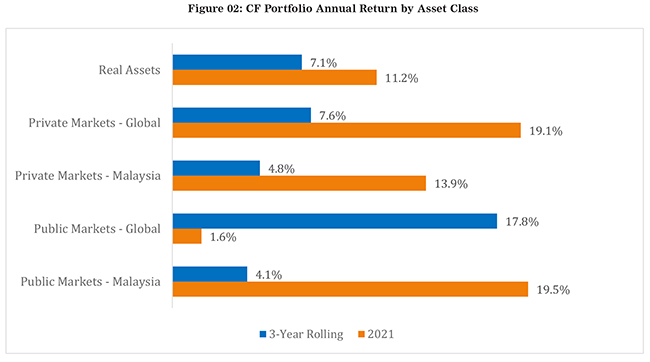
The CF generated a three-year rolling Time-Weighted Rate of Return (TWRR) of 7.0% against the targeted return of the Malaysian Consumer Price Index (CPI) at 3% on a five-year rolling basis. In 2021, the TWRR stood at a significant 19%. This was led by asset classes such as global private markets and public markets in Malaysia, which outperformed in 2021 when compared to the 3 year rolling of 7.6% and 4.1% respectively of the same asset classes (refer figure 02).
Source: Khazanah Nasional Berhad The two funds were valued RM 106 billion (around USD 25 billion) and RM 28 billion (around USD 7 billion) for CF and SF, respectively at the end of 2021. A majority of the investments (63.5%) were made within Malaysia, with the rest in China (14.8%), Asia – excluding China (12%), and around 10% in Europe, the Middle East, Africa (EMEA) and North America by the end of 2021.Consumer Goods, Energy, Financials, Healthcare, Industrials, Information Technology, Media, Real Estate, Telecommunications and Utilities are among the sectors Khazanah has invested in.
Why was Khazanah Successful?
Post the Asian Financial Crisis, most SOEs in Malaysia were not performing well. To address this Khazanah was revamped in 2004 to play an active role from the previous passive role to enable efficiency and to drive growth of the SOEs. This was coupled with major corporate restructuring and institutional reforms through the GLC Transformation Program (2005-2015) for which Khazanah functioned as the secretariat.
The revamp shifted Khazanah’s focus from a Sovereign Wealth Fund (SWF) to a Sovereign Development Fund (SDF). The salient feature of a SDF is that it not only delivers high financial performance but also fosters development. Today, Khazanah comprises two funds (CF and SF) which aim to achieve the dual objectives and its total Net Asset Value (NAV) has grown from RM79 billion to RM86 billion in 2021. The 10 key factors that were critical to its success are outlined below:
1. Clear Objectives
Khazanah focused on three clear objectives to drive its financial, economic and societal returns as given below. Performance – focusing on corporate restructuring to improve efficiency, productivity and value creation. This was achieved by issuing guidelines on KPIs and anchoring KPI’s to performance. Relevant KPIs were developed together with appropriate benchmarks and targets, and rewards were linked to performance coupled with time based contracts such as 3-year contracts. This was also enabled through reconstituting the senior management and implementing board composition reforms. National Development – focusing on national development goals such as creating jobs and economic multipliers. Supporting government policy formation and adopting a long-term view in catalysing social progress in Malaysia to deliver high social impact in communities.
Good Governance –took a holistic and multipronged approach to measure how public institutions conduct and manage public resources.
2. National Support
A degree of national consensus is vital with all relevant stakeholder groups involved and powered by political will. The reform process was carried out over 10 years from 2005 onwards where the reform of Khazanah started under the 4th Prime Minister of Malaysia, the GLC Transformation (GLCT) Programme under the 5th Prime Minister and continued under the 6th Prime Minister.
3. Communications, transparency, public accountability
Transparency and consistent periodic reporting are vital to the success of the programme. KPIs were announced publicly with regular public updates, with internal KPIs being identical to external KPIs. This was followed by consistent and relevant stakeholder engagement across multiple categories.
4. Active, competent, and empowered Holding Company
Khazanah was revamped as an active and strategic SDF (Sovereign Development Fund). Khazanah was also tasked to come up with an overarching programme for other funds from 2005 to 2015. This programme was known as the GLC Transformation Program (GLCT) with Khazanah acting as its Secretariat.
5. A robust Programme Management approach over 10 to 15 years
The GLCT Programme was carried out for 10 years with a careful designed implementation structure. It consisted of 22,981 man days of programme management and 29 meetings were chaired by the Prime Minister to review progress over the 10-year period. It is imperative to stay the course since the prize of seeing it through and the price of not doing so is large. However, it must be ensured that it’s done correctly.
6. Talent and Leadership
Right leadership is critical. Therefore, the Chief Executive Officer. the Board and the Senior Management should be selected under specified criteria to appoint individuals based on their capacity and knowledge to deliver in their role. This should also be followed by a robust selection process.
7. Transformation Acupuncture
Targeted 10 critical areas for improvement in corporate restructuring in key companies. The critical areas included Board governance, CSR, procurement, leadership development, performance based compensation, regulation, operational improvement and finance.
8. Accountability
This included headline KPIs, performance-based compensation, senior management limited to 3-year performance based contracts and a robust appointment process, emulating a carrot and stick approach.
9. Getting key sectors right in terms of the policy mix
It is important to identify the critical sectors such as electricity, telecom, banks, aviation, infrastructure, etc. that play a vital role in the economy. Planning the sector strategy, regulation, pricing, social policy, etc. for the selected sectors instead of reforming all the sectors will also divert resources to effective and efficient use.
10. Using the levers of ownership, financing and controls
Sorting between principally commercial and principally social enterprises is also pertinent. Understanding which particular category enterprises come under will provide clarity on how to run these enterprises such as whether to list or delist, to conduct partial or full asset sales and to understand the required capital structure controls, debt discipline, and external audits.
How has it contributed to Development Goals?
Khazanah’s principal funding is from shareholder equity. It utilises debt financing and proceeds from divestment activities to fund its investment activities. Khazanah’s ultimate holding body and hence the sole shareholder, is the Ministry of Finance (MoF).In terms of contribution, between 2004 and 2021, Khazanah paid RM15.6 billion in dividends to the government (or MoF) averaging RM 1.3 billion a year over the past five years. Dividends of RM2 billion each had been declared in 2020 and 2021.
Investment income contributed to 16.3% of total government revenue in 2021, of which Khazanah contributed to about 6% of investment income through its dividends. Though the contribution to government revenue through dividends remains marginal when compared to other tax revenue streams, Khazanah continued to deliver societal value and impact through various other initiatives.
During the pandemic, RM20 million was contributed by Khazanah as COVID-19 relief to the government. Therefore, Khazanah acts as a buffer against future pandemics and can assist the government in its relief measures.One of Khazanah’s foundations – Yayasan Hasanah – directly and indirectly assisted 1.5 million people through Covid-19 relief efforts and various other programmes, with an allocation of RM554 million in 2021.The Khazanah Research Institute was set up to undertake analyses and research on the pressing issues of the nation, and based on the research, provide policy recommendations to improve the well-being of Malaysians. A total of 30 publications were released in 2021.
Khazanah also works on development projects for the improvement of the Malaysian economy. This includes Dana Impak, which is a newly created project with an allocation of RM6 billion over 5 years. This is carried out to increase Malaysia’s economic competitiveness and build national resilience. This focuses on 6 areas namely; digital society and technology hub, quality health and education for all, decent work and social mobility, food and energy security, building climate resilience, and competing in global markets.The full brief can be accessed at: Holding Company for SOEs: Learnings for Sri Lanka
This article was developed as part of the Strategic Insight Series of the Economic Intelligence Unit (EIU) of the Ceylon Chamber of Commerce (CCC) in collaboration with the Colombo Stock Exchange (CSE). The Strategic Insight Series are a series of briefs that focuses on key contemporary topics that matter to the private sector.


The Automobile Association of Ceylon (AAC) is looking beyond the traditional boundaries of mobility and road safety toward the future of mobility through sustainable developments in vertical mobility applications under the global guidance of the Fédération Internationale de l’Automobile (FIA).
AAC President Mr. Dhammika Attygalle believes AAC has the potential to contribute sustainable and proven systems, regulatory understanding, and international mobility frameworks toward developing Sri Lanka’s future mobility landscape while supporting the country’s broader economic development.
Representing Sri Lanka at the recent FIA Regional Drone and Vertical Mobility initiative held in Nepal was AAC Executive Committee Board Member Indula Sumithraarachchi, who participated alongside regional delegates and international mobility experts discussing the applications of vertical mobility systems and evolving regulatory frameworks covering mobility integration, safety, aviation and legal regulations.
“As mobility technologies evolve globally, we see vertical mobility as a natural extension of future mobility ecosystems. We believe vertical mobility is connected to sustainable areas not limited to future urban mobility, transport and logistics, infrastructure integration, safety frameworks, disaster and emergency response, and environmental efficiency,” he stated.
Drones are already being commercially utilized in Sri Lanka for dronegraphy (photography and videography using drones), agriculture, surveying and mapping, events, and marketing. However, it is important that greater attention is given toward safety standards, operational protocols, and aviation regulations, licensing, approvals and career professionalism as drone pilots within Sri Lanka in order to make these technologies safer and more accessible to the public.
International mobility experts increasingly recognize drones as part of a wider vertical mobility ecosystem operating alongside aviation and respective local regulatory frameworks. Experts explain that drone systems are helping countries establish regulatory structures, safety standards, technical expertise, aerial management systems, and operational frameworks that may eventually support broader future mobility technologies.
For AAC, the relationship between drones and vertical mobility represents a wider future mobility framework involving how people, services, safety, infrastructure, information, and transport systems may operate in more connected, intelligent, and efficient ways beyond conventional road-based transportation.
For decades, AAC has played an important role in Sri Lanka’s mobility sector through road safety advocacy, motoring assistance, tourism support services, driver awareness initiatives, and public mobility education. The association has continuously contributed toward improving safe mobility practices for Sri Lankan road users and motorists.
AAC now aims to position Sri Lanka within these evolving international mobility conversations while ensuring that future mobility development remains safe, responsible, and aligned with international standards.
The association also believes collaboration between regulators, aviation authorities, educational institutions, private sector innovators, and international mobility organizations will become increasingly important as future mobility ecosystems continue to develop globally.
Through FIA-supported international engagement and regional collaboration, AAC hopes to contribute toward building awareness and understanding of future mobility opportunities while ensuring Sri Lanka remains connected to emerging global transportation developments.
As mobility increasingly moves toward smarter, interconnected, and technology-driven systems worldwide, AAC’s initiatives into vertical mobility reflect its broader vision of supporting safe, progressive, and future-ready mobility solutions for Sri Lanka and future generations.
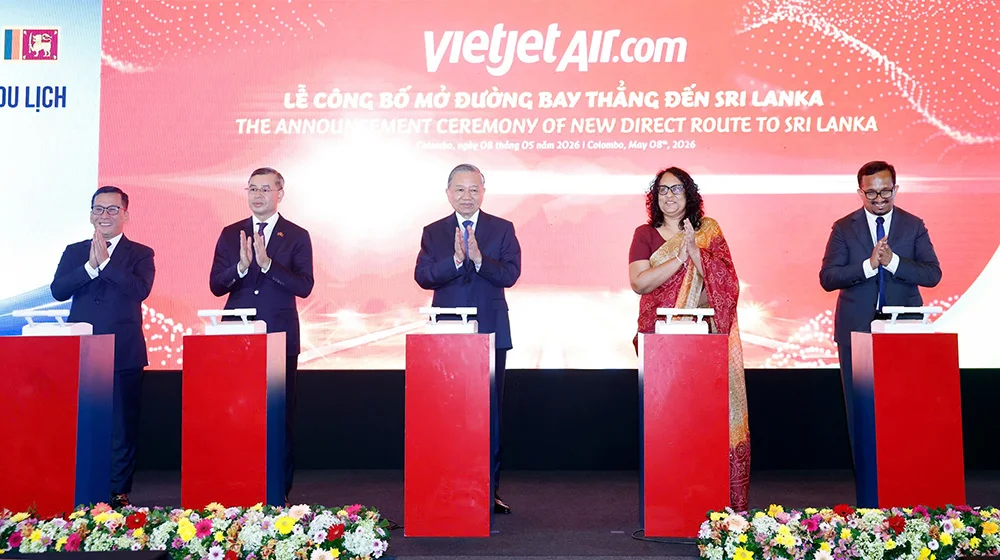
Vietjet Air, Vietnamese new-age hybrid airline, has announced its first direct service connecting Colombo to Ho Chi Minh City at the Sri Lanka – Vietnam Trade, Investment and Tourism Cooperation Forum. The announcement took place in the presence of General Secretary and President of Vietnam To Lam, Prime Minister of Sri Lanka Harini Amarasuriya, and senior officials from both countries.
This is the airline’s first direct service between Sri Lanka and Vietnam, supporting the airline’s international expansion while contributing to stronger economic, trade, tourism, and people-to-people ties between the two nations.
The Colombo – Ho Chi Minh City route is expected to commence in August 2026 with four round-trip flights per week. Travelers from Colombo will soon enjoy affordable fares and seamless connectivity to Vietnam’s leading tourism and business hubs, along with convenient access through Vietjet’s extensive international flight network to major destinations across the Asia-Pacific region, including Australia, Japan, South Korea, China, and beyond.
Business
SDB bank and Hayleys Mobility forge strategic partnership to advance sustainable mobility and private vehicle leasing

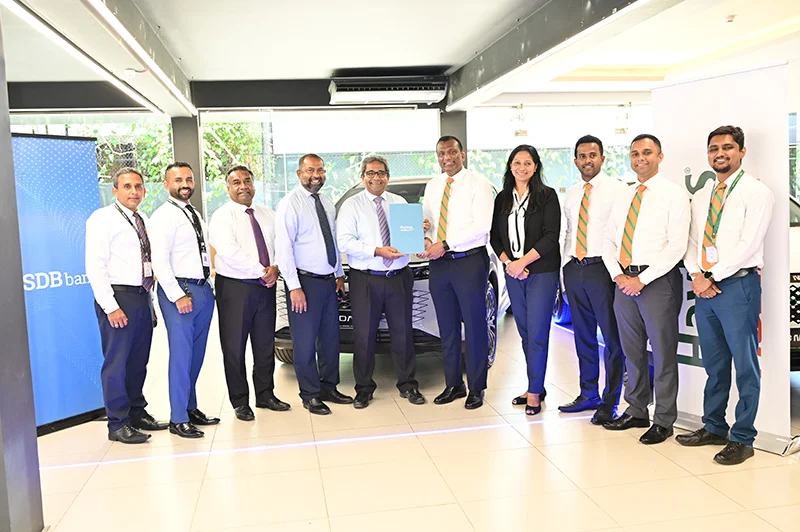
SDB bank has entered into a strategic partnership with Hayleys Mobility Limited through the signing of a Memorandum of Understanding, reinforcing the bank’s commitment to expanding access to structured mobility financing while advancing its broader sustainability banking agenda. The collaboration brings together two established institutions to support customers seeking leasing solutions for private vehicles, with a notable emphasis on electric vehicles as part of a more future-focused approach to transportation.
The MoU was signed recently at the Hayleys Mobility office in Union Place, in the presence of senior representatives from both organizations. Representing SDB bank Kapila Ariyaratne, Executive Director and Chief Executive Officer, Manoj Akmeemana, Deputy Chief Executive Officer, Chitral De Silva, Chief Business Officer, Lahiru Ekanayake, Head of Leasing and Tharanga De Silva Chief Manager, Business Banking were participated. Hayleys Mobility Limited was represented by Managing Director Hasith Prematillake, Director Roshani Dharmaratne, Mr. Panduka Rathnayake – General Manager Finance, and Mr. Suraj Chularathne – Assistant General Manager.
The partnership is designed to expand access to private and sustainable leasing solutions across Sri Lanka, while also responding to growing interest in cleaner and more responsible mobility choices. By placing special focus on electric vehicle leasing, the initiative reflects SDB bank’s recognition of changing customer preferences and the importance of supporting more sustainable transport options through accessible financing.
In addition to supporting conventional private vehicle financing, the collaboration enables customers to benefit from a more integrated experience that brings together vehicle selection and financing under a single proposition. Through the combined reach of SDB bank and Hayleys Mobility, the partnership is expected to improve accessibility and convenience for customers across the country, including professionals, self-employed individuals, business owners and other private vehicle buyers looking for reliable, structured leasing solutions.

Ex-SriLankan CEO’s death: Controversy surrounds execution of bail bond

Law applies to all, regardless of power or influence – Prez

Sri Lanka and Belarus to sign several MoUs

Compensation paymentsto voluntary retirees in power sector to begin soon

GL: Interference with judicial affairs punishable offence

Why Risk Mendis’ Purple Patch?

‘Dates have the highest sugar content to fight Coronavirus’

Sunday Island 27 December – Headlines

#SundayIsland 17th December – Headlines

Sunday Island – 28th March

Sunday Island Headlines – 21 March

Sunday Island – 21st February – Headlines
-

 News6 days ago
MIT expert warns of catastrophic consequences of USD 2.5 mn Treasury heist
-

 News3 days ago
Lanka Port City officials to meet investors in Dubai
-

 Editorial6 days ago
Clean Sri Lanka and dirty politics
-

 Editorial5 days ago
The Vijay factor
-

 News4 days ago
SLPP expresses concern over death of former SriLankan CEO
-

 News4 days ago
Police inform Fort Magistrate’s Court of finding ex-CEO of SriLankan dead under suspicious circumstances
-

 Features5 days ago
Palm leaf manuscripts of Sri Lanka – 1
-

 News4 days ago
President of Vietnam and delegation departs Sri Lanka