
News
PM: Sri Lanka negotiating with IMF as a bankrupt nation

Challenges JVP Leader to present his miracle six-month recovery plan for consideration
By Saman Indrajith
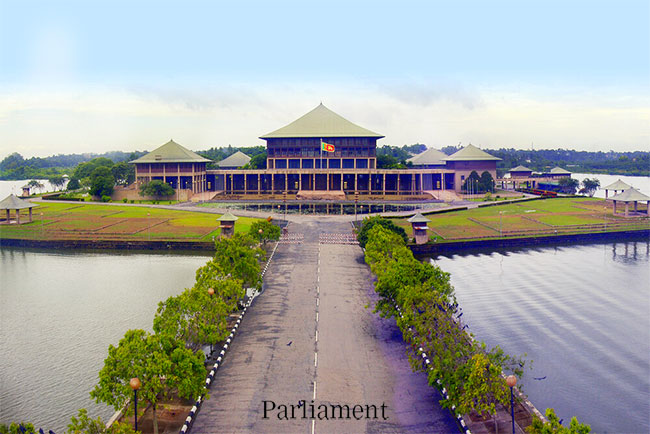
Prime Minister Ranil Wickremesinghe told Parliament yesterday that Sri Lanka was currently negotiating with the IMF as a bankrupt nation. Briefing Parliament on the government’s road map for economic recovery, he said the government had been able to complete several rounds of negotiations with the IMF successfully.
The PM made the special announcement following the previous day’s challenge by Chief Opposition Whip Kandy District MP Lakshman Kiriella to the government to inform the House of progress in the talks with the IMF because the media had reported that the talks had failed.
The Prime Minister said: “Once a staff-level agreement is reached, this will be submitted to the IMF Board of Directors for approval. But due to the state of bankruptcy our country is in, we have to submit a plan on our debt sustainability to them separately. Only when they are satisfied with that plan can we reach an agreement at the staff level.”
Full statement by the Prime Minister:
Today, in front of this Assembly and the citizens of this country, I am ready to outline the roadmap that we are following which will revive the economy that has collapsed.
We were able to successfully proceed with the round of negotiations with the International Monetary Fund (IMF).
Our country has held talks with the IMF on many occasions before. But this time the situation is different from all those previous occasions. In the past, we have held discussions as a developing country. In such a case, both parties have only to reach an agreement on the EFF or Extended Credit Facility. It is like moving along a straight line.
But now the situation is different. We are now participating in the negotiations as a bankrupt country. Therefore, we have to face a more difficult and complicated situation than in previous negotiations. Once a staff-level agreement is reached, this will be submitted to the IMF Board of Directors for approval. But due to the state of bankruptcy our country is in, we have to submit a plan on our debt sustainability to them separately. Only when they are satisfied with that plan can we reach an agreement at the staff level. This is not a straightforward process.
But we have been able to end the round of discussion effectively despite these difficulties. According to the IMF’s official announcement, “Positive and productive discussions were held on supportive economic policies and reforms. Significant progress was achieved.”
Now the next step is to submit to them the plan on debt restructuring and sustainability, which is being prepared by financial and legal experts Lazard and Clifford Chance. We hope to submit this report to the IMF by August.
Once this is done we will be able to reach an agreement. However, even after this agreement, it must be presented to the IMF Board of Directors for approval. After approval for this plan is provided, a comprehensive loan assistance program will be prepared for a period of 4 years. We are now on that path.
After obtaining the staff-level agreement, we will organize a donor-aid conference by bringing together the friendly countries that provide us with loan assistance, such as India, China, and Japan. We hope to create a system where we can get loan assistance through a common agreement.
Among the problems we are facing today, the primary problem is the fuel crisis. At the same time, we are also facing the problem of food availability. In terms of fuel and food, our country was going to have to face this crisis at some point in time. Fuel was scarce. Food prices went up.
Due to the recent global crises, this situation has become more acute and we who were in the frying pan fell into the oven. Due to the Ukraine-Russia war, our problem has been made worse. What has happened now is the addition of an international crises on top of our crisis. This situation is not unique to us. This affects other countries as well. India and Indonesia are also affected by this global crisis. Therefore, India has had to limit the loan assistance that they have given to us.
This situation affects the whole world equally. As a result of this, the United Nations Secretary-General has warned that the gap between developed and under-developed countries will increase. He also warns that the gap between the upper class and the lower class within a country may increase. No country in the world can isolate itself from this world crisis. We all have to face this.
We have prepared this road map considering all the domestic and global challenges that are facing us. We can refuse to change our ways. But if things do not change, the whole country will collapse.
Therefore, we should strive to move forward on this path. It is not an easy journey. I have reminded you of that from time to time. This will be a difficult and bitter journey. But we can get relief at the end of this journey. Progress can be made.
Our economy is currently shrinking. We are trying to reverse it. According to central bank statistics, our current economic growth rate is between negative four and negative five. According to IMF statistics, it is between negative six and negative seven. This is a serious situation. If we make a determined journey along this road map, we can achieve an economic growth rate of a negative one by the end of 2023.
By 2025, our aim is to create a surplus in the primary budget. Our effort is to raise the economic growth rate to a stable level. Our expectation is to establish a stable economic base by 2026.
I would like to give you an idea of the debt we have to pay off so far. $3.4 billion between June and December this year. $5.8 billion in 2023. $4.9 billion in 2024. $6.2 billion in 2025. $4.0 billion in 2026. $4.3 billion in 2027.
The total debt burden of the government at the end of 2021 was Rs 17.5 trillion and by March 2022 it has increased to Rs 21.6 trillion.
This is the real situation. In addition, we are facing the effects of many problems that have worsened in the past two or three years. These are not problems that can be solved in two days. We are suffering from the effects of certain traditional ideas that have been followed in our country for many years. Therefore, as I mentioned earlier, we will have to face difficulties in 2023 as well. This is the truth. This is the reality. Some may try to cover up this reality by showing the people a false image. But this reality will be confirmed in time.
Our plan is to control inflation. By the end of this year, inflation will rise to 60%. This is mainly due to the increase in the prices of goods in the world and the fall in the value of the rupee.
Due to the current inflation, the depreciation of the rupee has reduced the value of the money in the Employees’ Provident Fund and the Employees’ Trust Fund by 50% and the real value of pensions has also decreased by 50%. Think about how this situation affects our senior citizens. Poverty is spreading among all of them. The value of the money they receive has decreased by 50%. Their purchasing power has decreased by about 50%. Presenting positive ideas is easy. But it is difficult to find answers to these problems.
What is the solution to this? Stabilizing the rupee as soon as possible, strengthening the rupee without letting it fall. For that purpose, we have implemented a plan to limit the printing of money in the future.
In 2023, we will have to print money with restrictions on several occasions. But by the end of 2024, it is our intention to stop printing money completely.
We aim to reduce the inflation rate to between 4 and 6 percent by 2025.
Another top priority for us is to protect the banking and financial system. The pressure on these systems during an economic crisis does not need to be explained to this House. But due to this pressure, we will not allow the banking system to be pressured by poor policies. The government has given priority to strengthening the banking and financial system.
Meanwhile, we pay special attention to state banks. They have been beaten from both sides. On the one hand, the economic crisis, on the other hand, the huge amount of loans they have given to state enterprises.
As of March 31, 2021, SriLankan Airlines owes Rs. 541 billion as of May 31, 2022, the Electricity Board owes Rs. 418 billion. Petroleum Corporation owes Rs. 1.46 trillion.
When public enterprises continue to incur losses, the entire citizenry suffers. People who have never traveled on a plane in their lifetime are suffering from the loss of SriLankan Airlines. The people who have paid money for fuel all their lives are suffering from the loss of the petroleum corporation. After hours, days, and days of waiting in queues to get fuel, they pay compensation to the oil company to cover the loss of the company. The people who get electricity by paying money all their life, sit in the dark for several hours a day and suffer from the loss of the electricity board.
Excuses have been used for a long time to cover up the sufferings, persecutions, and troubles of the people and the compensation paid for the losses of the institutions. People’s resources, people’s property as well as the failure of the respective institutions are covered up by this mask. If these are real people’s properties and people resources, they should provide relief, convenience, ease, and profit to the people. But the people have inherited sufferings, troubles, and losses from these institutions.
Therefore, we have to think anew about such institutions which have become a burden to the country and the people. Is it fair to burden people like this for thirty or forty years? Should we continue to burden the people and run these institutions? Why can’t the services provided by these institutions be provided without burdening the people? Are there no other options for providing these services? Considering all these facts, we are taking immediate steps to restructure these institutions. It will be ensured that they are maintained in a manner that does not burden the country.
There are a number of other issues that need to be addressed in our journey forward to overcome the current challenges.
One is to prepare the background of getting food without shortages and keeping the increase in food prices under control.
On the other hand, taking steps to increase food availability. We have now prepared the necessary background for the successful harvest of the next season. All measures have already been taken to provide chemical fertilizers without shortage. Provisions for seeds and planting materials are allocated through the interim budget.
Also, we have started a program to increase food availability in collaboration with the World Food Program and the Food and Agriculture Organization. Currently, their delegation is studying the food crisis in Sri Lanka. At my invitation, the head of the Food and Agriculture Organization will visit Sri Lanka next week.
No matter how much we are in the middle of a huge economic crisis, we cannot forget the problems faced by the poorest sections of society regarding food. The upcoming interim budget will allocate money to provide short-term relief to the highest sections of society. This relief will be given to the people under the Social Welfare Benefits Act.
We are also launching activities to prevent malnutrition caused by a lack of food.
In parallel to these activities, necessary incentives are being provided for cultivation. Facilities are being provided. An island-wide cultivation program is being launched with the intervention of the Prime Minister’s Office along with the Ministry of Agriculture and other relevant ministries. The aim of this program is to increase food availability at a decentralized level. In this regard, the responsible institutions meet weekly and take necessary actions. We hope to increase overall food production in the next six to seven months.
We are taking steps to take a number of policy decisions to boost the export economy. The upcoming Interim Budget will include detailed information about it.
If we continue on this planned path, we can have hope for a brighter future. All of us should shoulder that task unitedly. We must all come together to lift the net we are tangled in and fly.
If we do so, we will be able to fulfill the expectation of reaching the situation we were in 2019 by 2025. This journey cannot be stopped from there. We have to continue this journey until we create a new economy.
We hope to prepare the necessary background for this progress through the interim budget.
When I assumed the responsibility of the Prime Minister, I made a written request from the opposition parties to come forward to work together for the country in this difficult and crisis situation. You all know about the responses received at that time.
The importance of this unity, the importance of getting out of this difficult time together, has been pointed out by a number of our Parliamentarians from time to time.
Remembering that, I once again request all party representatives in this House to come together to overcome this challenge.
Our ultimate goal is to create a highly competitive social market economy. Here we also have examples to take from countries like China and Vietnam. They are countries that successfully maintain competitive socialist market economies.
As far as I know, there are no shortcuts to achieving our goals. There is no magic or panacea. Dr. Harini Amarasuriya MP also emphasized that the other day. She said: “We get an empty pot. This is not easy. We don’t think that everything will be solved once we come to power. Everything will not be solved just by coming to power. There are several things that need to be done. It will take time to get this right. It will be a difficult time for all of us. You have to make commitments. You have to work very hard.”
As MP Harini Amarasuriya said, this crisis is not one that can be resolved in a few days or a few months. A more serious one.
But if there is a more effective plan than the one we have presented, if there is a faster plan, then present it. We can discuss it. Run it if it is the most effective path to recovery.
MP Anura Kumara Dissanayake has stated that if he is handed over the country, it will be restored in six months. Indeed, it would be a very good thing if it could be done. Taking a country whose economic growth has fallen from a negative six or seven to a positive economic growth rate in six months is an action that has never happened in any country in the world. But we cannot rule out Mr. Anura Kumara Dissanayake’s opinion that it has not happened so far. It would be great if he has a plan to restore the country within six months. With such a plan, we will be able to restore the economy in a short period of time. Not only that, but it also sets a good precedent for the world.
That is why I am asking MP Anura Kumara Dissanayake to submit this plan to the President. If you don’t want to go to the President, present it to this Parliament. Let us discuss it in this Parliament. If that plan is better and more effective than the plan we are implementing now, we will implement it. Such a plan would be brilliant enough to win the Nobel Prize in Economics.
So if there is such a plan, I am ready to resign and let him take up this position. I am ready to give up my position and support that program. Because the positions I hold are not new to me. At a time when the country has become anarchic and no one has taken responsibility, I have not accepted this position out of a desire for the chair.
At that time the country was in an anarchic and dangerous situation. If that situation had developed further, the country would have turned into a sea of blood. There would have been an environment where no country in the world would look at us with friendship.
I accepted this position with the aim of saving the country from that situation. I took up the responsibility for the country, using my experience and connections to help the country recover from its fallen state. That’s why I took over this anarchic country without any conditions and now we were able to prevent the country from falling into the abyss. Now we have to slowly raise the country again.
The main thing for me was not the power, but the country. Therefore, I have no desire or need for power. I only have a need to see this country recover. I would like to let this House know that we are moving forward in a planned and steady way towards meeting that need.
The journey we are on is a good opportunity to change the system that we followed in our country previously. Past experience has shown us that no victory or progress can be achieved by changing persons or characters. The importance of implementing a common national plan has been confirmed through past experiences.
So if there are better ways than the method we are following now, please point them out, and put them forward. Let us all join in the effort to lift the country up. Let’s join together as one people to rise again from this place. Let’s make this journey more acceptable through collective ideas and suggestions.




Latest News
Do not be misled by Fake news created using the PM’s name, photographs, and video footage – Prime Minister’s Media Division


It has been revealed that fake news created using the name, photographs, and video footage of Prime Minister Dr. Harini Amarasuriya along with the unauthorized use of official logos of various media institutions and news websites are being circulated on social media platforms.
Certain groups have published videos edited to appear as though the Prime Minister is expressing particular views, as well as fake social media posts featuring her photographs. Through such misleading content, false information has been circulated regarding various business and employment opportunities, as well as the country’s economy and tax policies.
These false stories have been created using Artificial Intelligence (AI) and modern technological tools. As the Prime Minister’s Media Division, we kindly urge the public not to be deceived by such misinformation and to remain vigilant regarding these matters.
Legal action will be taken against all individuals who create and distribute such false news through social media in a manner that harms the Government and the reputation of the Prime Minister.
[Prime Minister’s Media Division]
News
New High-Definition (HD) Television Studio at the University of Vocational Technology handed over to students with the participation of the Prime Minister
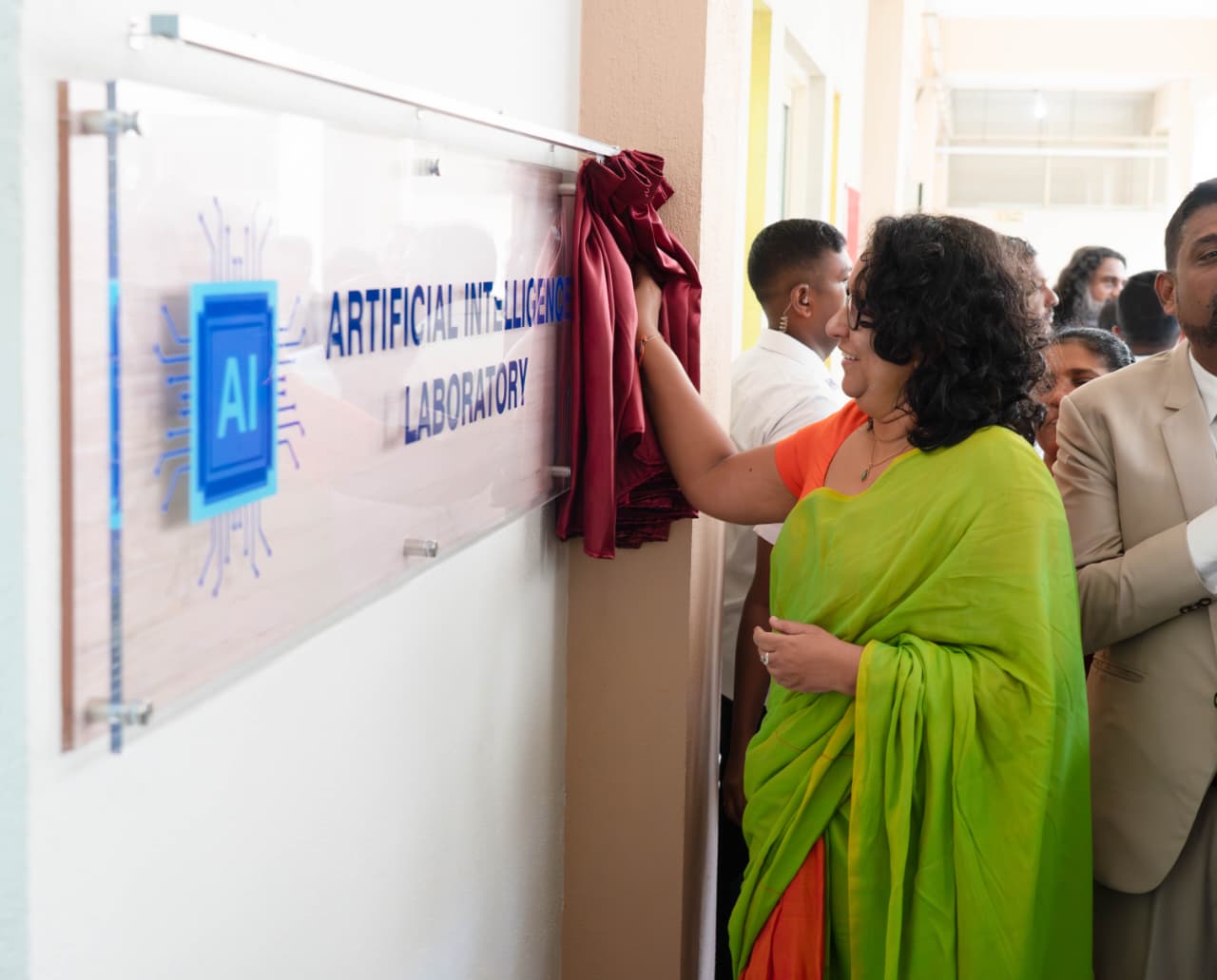
The newly equipped television studio, which had remained an incomplete component of the media complex constructed for the practical training of students at the University of Vocational Technology (UoVT), Ratmalana, was officially handed over to the students on Tuesday (26 May) with the participation of Prime Minister Dr. Harini Amarasuriya, following the installation of modern technological equipment and studio production facilities.
Following the opening of the television studio, several newly established affiliated centres aimed at expanding students’ practical and academic activities were also declared open.
Accordingly, a broadcasting studio providing opportunities for students to launch a range of educational services, including a web radio channel, an Artificial Intelligence Research Laboratory, and a Centre for Gender, Equity and Equality were inaugurated during the occasion.
Coinciding with the event, laptop computers were donated to support the uninterrupted continuation of the educational activities of students in at several schools affected by the recent floods and other natural disasters. In addition, the “UoVT Greening Policy,” formulated with a comprehensive understanding of technology and environmental inter connectivity, was officially launched during the occasion.
Following this policy, all construction and development activities within the university are expected to be carried out based on green concepts, with the goal of transforming the university into a carbon-neutral environmental unit by the year 2030.
One of the key objectives of this initiative is to encourage students pursuing vocational education to engage more actively in employment opportunities within industries that prioritise green concepts and sustainability.
Following the event, the Prime Minister also engaged in a discussion with representatives of the university student unions.
The event was attended by the Deputy Minister of Vocational Education Nalin Hewage, Secretary to the Ministry of Education, Higher Education and Vocational Education Nalaka Kaluwewa, Vice Chancellor of the University of Vocational Technology, Professor K.M.G. Prasanna Premadasa, along with several distinguished invitees.
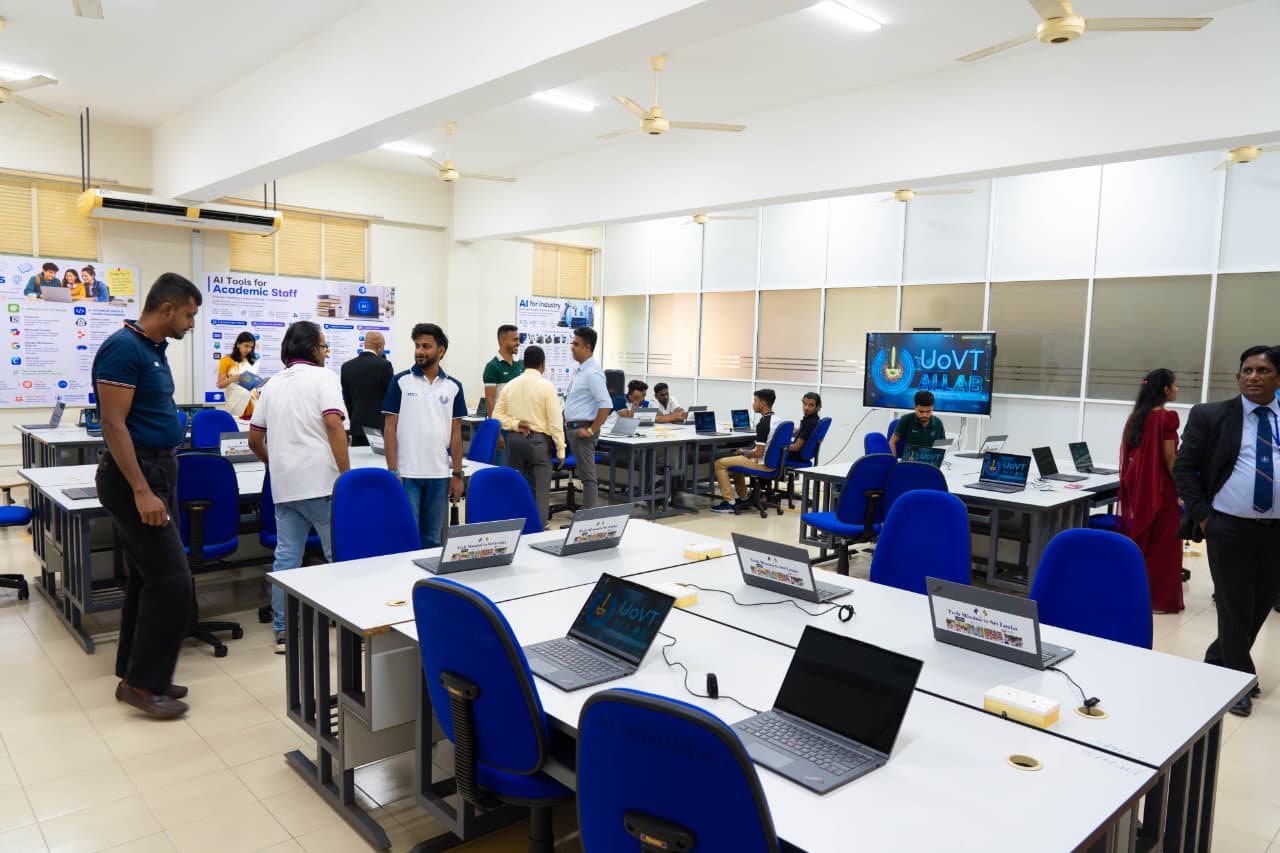
[Prime Minister’s Media Division]
Sri Lanka’s banking sector has provided a collective and categorical assurance that it remains stable, resilient, and secure despite a few recent isolated incidents of financial fraud, emphasising that these developments do not pose a threat to the safety of customer deposits or the overall integrity of the financial system.
While acknowledging that such incidents have understandably generated some concerns, the industry has reiterated that it is addressing these matters comprehensively and that it is well equipped to manage and mitigate these challenges. This assurance was conveyed in a statement issued to the media by the Sri Lanka Banks’ Association (SLBA), which represents all licensed commercial banks in the country.
Addressing recent reports of financial fraud and cyber-related incidents that have drawn heightened public attention, the Association underscored the strength of the sector’s fundamentals and the effectiveness of ongoing regulatory oversight and risk management frameworks.
“Recent reports of financial fraud and cyber-related incidents have understandably received public attention. Industry leaders and regulators emphasise, however, that the banking sector remains fundamentally strong, resilient, and well equipped to withstand such challenges, without compromising its core stability or the security of customer deposits,” the Chairman of the SLBA Sanath Manatunge stated.
He noted that while many social media posts are either misleading or carry inaccurate information, some recent cases, including electronic fund transfer fraud, have raised important questions about digital security. However, these incidents represent only a very small proportion relative to the substantial institutional capital buffers maintained by banks. Importantly, depositors are assured that customer funds remain secure, with any such losses being absorbed through institutional capital buffers rather than public deposits.
Other cybercrime cases reported in recent months, including phishing-related fraud which are not directly connected to the banking industry and hence do not manifest any vulnerabilities in the system, however underscore the evolving and increasingly sophisticated nature of digital threats faced by financial systems worldwide, the Chairman said, but stressed that these are isolated incidents and do not reflect systemic weaknesses across the banking industry.
Reinforcing this position, the Central Bank of Sri Lanka has confirmed that all licensed banks continue to maintain capital adequacy and liquidity ratios well above minimum regulatory requirements, the Association pointed out. The regulator has also reiterated its readiness to provide temporary liquidity support if required, ensuring the uninterrupted stability of the financial system.
“Sri Lanka’s banking sector collectively manages trillions of rupees in assets, supported by diversified portfolios and robust governance frameworks. This scale, combined with prudent risk management practices, provides a strong foundation for absorbing shocks while maintaining public confidence,” Manatunge said.
At the same time, the industry is actively strengthening its defences against emerging threats. Banks are continuously enhancing cybersecurity frameworks through investments in advanced Fraud Risk Management Systems, more rigorous monitoring protocols, and independent forensic audits. These efforts are complemented by ongoing regulatory and parliamentary initiatives aimed at strengthening governance, accountability, and transparency across the sector.
Recognising that customer awareness is a critical line of defence, banks have also intensified public education initiatives focused on safe digital practices. These include guidance on password security, phishing prevention, and the secure use of QR codes and other digital payment tools.
The SLBA noted that cyber fraud is not unique to Sri Lanka, with similar incidents reported in major economies around the world. In these markets, banking systems have remained stable, supported by strong regulatory oversight and continuous adaptation to emerging risks. Sri Lanka’s banking industry is demonstrating comparable resilience, with swift corrective measures and vigilant supervision reinforcing confidence in the system.
While recent incidents have highlighted certain challenges in the environment, the benefits of digital banking far outweigh such concerns, Manatunge added, reiterating that Sri Lanka’s financial sector remains robust, well-capitalised, and subject to close regulatory oversight. These incidents are isolated in nature and do not indicate systemic failure, and the corrective measures already underway are expected to further strengthen the sector’s resilience against future threats.
The SLBA concluded: “Sri Lanka’s banks continue to stand as pillars of stability, safeguarding customer deposits while supporting the country’s economic progress. We urge customers to remain vigilant in their own digital practices, even as the industry continues to enhance the safeguards that protect them.”

Five people found alive after week trapped in flooded Laos cave

Peace deal to fully reopen Hormuz as US military pulls out

World Cup contenders England and India hope to get their combinations right

Do not be misled by Fake news created using the PM’s name, photographs, and video footage – Prime Minister’s Media Division

Israeli strike in Gaza City kills new head of Hamas’s military wing

Sri Lanka Cricket launch a program to enhance coaching standards of school cricket

‘Dates have the highest sugar content to fight Coronavirus’

Sunday Island 27 December – Headlines

#SundayIsland 17th December – Headlines

Sunday Island – 28th March

Sunday Island Headlines – 21 March

Sunday Island – 21st February – Headlines
-

 Business6 days ago
Historic launch of CCWE Fashion Week & International Summit 2026
-
 Opinion7 days ago
Murder of Ehelepola family, Bogambara Wewa and Sightings of Wangediya
-
 News7 days ago
Steps underway to safeguard Sri Lanka’s maritime heritage
-

 News4 days ago
All-New GRAVITE launches at LKR 6.99 Mn
-
 News3 days ago
Police probe underway to ascertain links between criminals deported from UAE and local politicians
-
 Features4 days ago
The NPP’s pivot to the past
-

 Opinion6 days ago
The need to reform Buddhist ecclesiastical order
-
 News2 days ago
Easter Sunday carnage: Court told Maulana’s statement cannot be accepted without cross-examination