
Business
Flexibility within limits – the underlying premise driving the NBFI sector

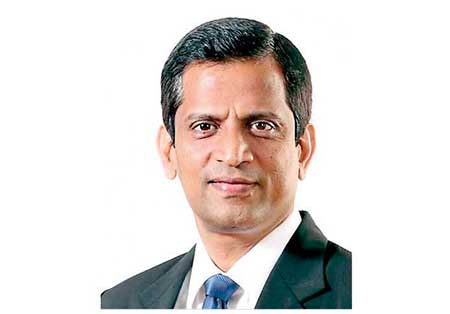
By Niroshan Udage
Council Member of The Finance Houses Association of Sri Lanka
As an integral part of the Country’s financial system, Licensed Finance Companies (LFCs) and registered leasing companies play a vital role in the development of the national economy. Collectively known as the Non-Bank financial (NBFI) sector, they offer a gamut of financial solutions to cater to individuals, proprietors, partnerships, corporates or business conglomerates. Most NBFI’s have also invested in developing an extensive island-wide presence that allows them to reach all sectors, social backgrounds and economic levels. Their ability to serve a wider cross section of the market makes the NBFI sector a key contributor towards the development of the SME and Micro enterprise segment in Sri Lanka. Leveraging on the expertise gained by serving the local SME and Micro segment, a few NBFI’s have even ventured outside Sri Lanka to set up operations overseas.
Regulatory supervision, governance and compliance
Dealing with the SME / Micro segment has resulted in NBFI’s being subject to increasing regulatory controls in the past few years.
As the words ‘Licensed Finance Companies’ denote LFCs are licensed and regulated by the Central Bank of Sri Lanka (CBSL).
LFCs conduct their business in conformity with the provisions of the Finance Business Act No.42 of 2011, Finance Leasing Act No.56 of 2000, Directions, Rules and Guidelines issued the said Acts, Consumer Credit Act, No.29 of 1982, Financial Transactions Reporting Act No.6 of 2006 and Prevention of Money Laundering Act, No.5 of 2006, under the direct supervision of CBSL and other applicable Statutes. Through these Statutes and regulations CBSL regulates the finance business and the finance leasing business to ensure the orderly function of the financial system.
In addition, LFC’s are required to abide by the Corporate Governance Directions issued by the CBSL. This helps to create an environment of trust, transparency and accountability, which is required to foster long-term investment, financial stability and enhance the business integrity of LFCs.
Another Direction noteworthy of mention is the Financial Customer Protection Framework outlined in Finance Business Act Direction No.01 of 2018 and the detailed Guidelines thereon. This direction provides the platform for customers of LFCs to assert their rights and to ensure that their rights are safeguarded. The key objective of the said Direction is to safeguard the interests of the customers and build trust in order to strengthen customer confidence in the sector. Since being introduced in 2018, the Financial Customer Protection Framework has become an integral part of the corporate governance culture and strategic decision making of the Boards of LFCs.
To ensure compliance with the applicable laws and regulations, LFCs have established a very strong and robust Compliance function, which is subject to regular reporting and monitoring by the CBSL.
The Challenge
Despite the stringent business and regulatory environment governing the NBFI’s, it is unfortunate that there is still a segment of the general public who have a negative perception towards the sector. Such unfounded perceptions appear to have arisen primarily due to the lack of awareness regarding the pricing mechanism and the foreclosure process followed by the NBFI sector. The purpose of this article is to provide some much needed clarity on these topics.
The Pricing Mechanism adopted by the NBFI sector
It is no secret that compared to the banking sector, the pricing structure of the NBFI sector for similar products is relatively higher. There are several fundamental reasons for this. Firstly, it is important to understand that the NBFI caters mainly to the SME and Micro segment of the market. Based on their profiles, SME and Micro segment customers fall into the high-risk category.
The typical SME / Micro customer who is often overlooked by the banking system due to their lack of credentials and financial sophistication, is then motivated to approach the NBFI sector with the expectation that their credit applications will be processed expeditiously even without necessary documentary proof or credentials. This puts NBFI’s in a tough spot. On the one hand NBFI’s are expected to be more flexible in their decision making process in order to secure their customer, while on the other hand they need to comply with established risk appetite limits in order to safeguard the business. Amidst this backdrop, the only rational way for NBFI’s to strike a balance is by building in a higher risk premium into their pricing structure. And with SME / Micro customers also likely to be more vulnerable to economic shocks, especially given their position at the lower end of the pyramid, NBFI’s are compelled to factor-in additional risk premiums into their pricing structure. Meanwhile being in the high-risk category, the cost of managing SME / Micro customers is also comparatively higher. From the additional background checks to site visits and managerial oversight to encourage customers to adopt proper financial control and discipline, NBFI’s incur significantly higher operational costs per customer, which leaves these companies with no option but to build cost buffers into their pricing structure.
Another key element that drives up the NBFI’s pricing structure is their high cost of funding. Unlike Banks, which have access to low cost funds through their CASA (Current and Savings Accounts) base, NBFI’s are funded largely by public deposits and often have to pay higher rates in order to attract deposits away from the banking system. On average more than 50% of the total interest costs of NBFI’s go towards servicing deposits. Lowering these cost elements is an extremely difficult task since NBFI’s do not have access to free funds such as current accounts.
Despite these challenges however, some NBFI’s have adopted dynamic pricing strategies in line with their business model and risk appetite, enabling them to offer very competitive rates, often on par with the banks. In this manner, the NBFI sector has remained firm in its commitment to nurture the SME / Micro segment – the “infants” of the economy, to the level of bankable customers, thereby contributing towards improving the Country’s overall credit culture over time.
Regulated foreclosure process
In the interest of protecting the rights of both Lessees and Lessors, NBFI’s follow a highly regulated foreclosure process for the repossession of assets. They cannot deviate from the repossession guidelines set out under the Finance Leasing Act, No.56 of 2000. The Finance Leasing Act was enacted in the year 2000 to provide for the regulation and monitoring of finance leasing businesses, to specify the rights and duties of Lessors and Lessees and suppliers of equipment and for matters connected therewith or incidental thereto. It is mandatory that all NBFI’s strictly adhere to the provisions of the Finance Leasing Act when engaging in the business of leasing.
Accordingly, a repossession notice can be issued only if the installments are in arrears more than the limit of substantial failure. However as directed by the Act, repossession is sought only as the last resort for the recovery of outstanding installments. Repossession orders are issued only after sending reminders, notices and notices of termination to Lessees and Guarantors according to the Act, within the stipulated timelines.
During the period leading up to the issue of a repossession order, NBFI’s are expected to make every endeavor to collect the installments in arrears, by visiting the customer, through telephone calls etc. The Act further states that if the Lessee is genuinely in a difficulty due to an unforeseen event, they are always welcome to visit the respective NBFI and make a formal request for deferment of recovery action. At this point NBFI’s are required to look into every avenue to offer relief to the customer including granting of concessions / deferment, whenever they are warranted.
Meanwhile if the leased property is repossessed, it is disposed of quickly in order to recover the outstanding according to the auction procedure that is laid down in the Act. Once the vehicle is repossessed, the final notice is sent to the Lessee giving a further 14 days for settlement. A newspaper advertisement is published in all 3 languages advertising the sale. At the same time, another letter is sent to the Lessee allowing a further 7 days for settlement of the outstanding. Finally, when the time period lapses, the repossessed vehicle is sold through tender process or at a public auction. Prior to the public auctions another paper advertisement is published which is the end point of the auction procedure.
Conclusion
It is hoped that this article provides some reasonable clarity regarding the framework within which NBFI’s operate, while also helping to alleviate some of the persistent misconceptions that have plagued the sector. Going forward, it is imperative that NBFI’s continue to serve the target market in utmost good faith. It is equally important that all players collaborate with the regulatory authorities to uphold the integrity of the NBFI sector at all times.
The writer is an Executive Director of LB Finance PLC with 30 years of experience in the Finance industry.


The Asian Development Bank (ADB) is actively engaging with Sri Lanka on a potential budget financing package, following recent discussions between ADB President Masato Kanda and President Anura Kumara Dissanayake.
Describing the request as “crucial,” Kanda said the proposal is now under internal consideration, with a broader framework being developed to ensure funds are directed toward priority sectors such as energy security, food security, and overall budgetary support. While no figures or timelines were disclosed, he emphasised the need for a carefully structured and mutually agreed resource allocation strategy
Sri Lanka is among several countries that have approached the ADB for similar assistance, reflecting mounting fiscal pressures across the region.
Speaking at one of the key meetings of the 59th Annual Meeting of the ADB in Samarkand, Kanda outlined a broader institutional shift in response to escalating global economic uncertainties, particularly those stemming from tensions linked to the Iran conflict.
“Asia and the Pacific can’t afford to retreat into isolation,” he said, reiterating a paradigm shift in how the ADB responds with greater speed, flexibility, and coordination.
Reaffirming the bank’s commitment to the region, Kanda stated, “We will step forward as one, while the ADB will be your steadfast anchor,” signaling a more proactive and unified approach to crisis response and economic stabilisation.
As part of this renewed strategy, the ADB has launched a $70 billion initiative aimed at strengthening regional connectivity through integrated power grids and digital infrastructure. The program is expected to play a transformative role in boosting cross-border energy cooperation and technological integration. By 2035, the bank aims to facilitate the integration of approximately 20 gigawatts of renewable energy capacity across national borders, supporting both energy transition goals and regional resilience.
Kanda also detailed a multi-tiered response framework to address immediate and long-term economic disruptions. In the short term, the ADB is leveraging its Trade and Supply Chain Finance Program to provide rapid liquidity support. This is complemented by fast-disbursing budget assistance designed to shield vulnerable populations from economic shocks.
Over the medium term, the bank plans to deploy resilience-building tools to help the regional economies stabilise and adapt to ongoing geopolitical and financial stresses.
The evolving strategy reflects a recognition that traditional development financing models may be insufficient in the face of increasingly complex and interconnected global crises. For countries like Sri Lanka, the outcome of these discussions could prove pivotal in facing current economic challenges while laying the groundwork for sustainable recovery.
As deliberations continue in Samarkand, the focus remains on translating high-level commitments into tangible support mechanisms tailored to the specific needs of ADB”s member countries.
By Sanath Nanayakkare in Samarkand, Uzbekistan
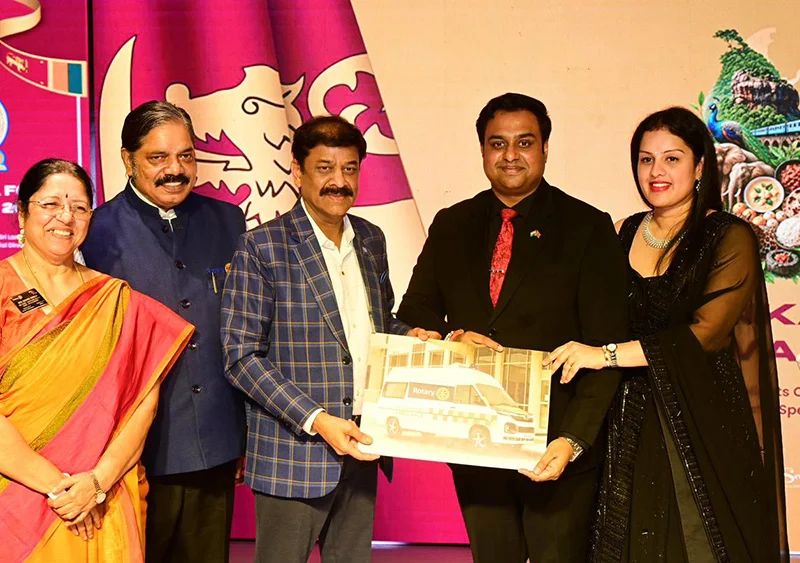
At the initiative of the Deputy High Commissioner of Sri Lanka, Dr. Ganesanathan Geathiswaran, the Deputy High Commission of Sri Lanka in Chennai successfully organized the first-ever “Sri Lanka Food Festival 2026” from 24th to 26th April at Green Meadows Resort, Chennai.
The Festival provided a unique platform to showcase the rich and diverse culinary heritage of Sri Lanka, offering guests an authentic experience of traditional Sri Lankan cuisine.
The event was organized in collaboration with esteemed partners, including the Ministry of Foreign Affairs, Foreign Employment and Tourism of Sri Lanka; Sri Lanka Tourism Promotion Bureau; Cinnamon Grand Hotel, Colombo; Ministry of External Affairs of India; India Tourism, the Government of India, the Tourism Department of the Government of Tamil Nadu, Dwarka Productions Chennai, and Tarlton Tea.
The primary objective of the festival to further strengthen cultural ties between Sri Lanka and South India while promoting tourism, trade, and people-to-people connections through a shared appreciation of culinary heritage was successfully achieved.
The occasion was further honoured by the presence of Suresh Jain, District Governor of Rotary District 3234; Navin Gupta, President of the Rotary Club of Chennai Coastal; and the Chief Guest, Dr. Ishari K. Ganesh, Founder, Chairman and Chancellor of Vels University.
The event was also attended by Mr. Blaze Kannan of Dwarka Productions; Nazoomi Azhar, General Manager of Cinnamon Grand Hotel, Colombo; and Sri Lankan actor Kalana Gunasekara, whose presence added further distinction to the occasion.
The festival witnessed the participation of diplomatic Corps, South Indian actors and actresses, distinguished business leaders, members of travel and tourism associations, members of Rotary Clubs, Round Table members, and members of the media fraternity, making it a prestigious and diverse gathering.
Over 700 guests attended the festival across the three days, reflecting strong interest and engagement from the local community.
In addition, the Rotary Club of Chennai Coastal announced its initiative to donate an ambulance to Sri Lanka and to renovate 30 schools across the country, further strengthening goodwill and support in the healthcare and education sectors between the two regions.

Since its UK debut in January 2025, JAECOO has recorded 28,232 new vehicle registrations within its first year, validated by the SMMT, making it the fastest-growing mainstream automotive brand Britain has seen in over a decade. Its flagship model, the JAECOO J7 PHEV, ranked among the most popular retail cars in the UK within its first year and emerged as the best-selling new car in Britain in March 2026.
These results have been further reinforced by a series of prestigious industry accolades:
Carwow Brand of the Year 2026
 Leasing.com Overall Car of the Year
Recognised by Google as the most searched Chinese automotive brand in the UK in its Year in Search 2025
Supporting this growth is JAECOO’s parent company, Chery Group, ranked 233rd in the Fortune Global 500 (2025) and China’s No. 1 passenger vehicle exporter for 23 consecutive years.
This global momentum is beginning to translate into local demand, with growing interest in the JAECOO J7 PHEV across Sri Lanka. Designed to combine premium styling with advanced technology and everyday practicality, the model is well suited to both urban driving and more challenging terrain. It offers a combined range of up to 1,200 km, fast-charging capability (30% to 80% in 20 minutes), and acceleration from 0–100 km/h in under 8.5 seconds. Safety and reliability are reinforced through advanced driver-assistance features, a five-star Euro NCAP rating, and a seven-year warranty offered by Hayleys Mobility.

INS Sindhukesari arrives in Colombo

Minister of Health of the Russian Federation attends the Sri Lanka–Russia Medical Forum

Members of Sri Lanka Cricket Transformation Committee Officially Appointed

Three prison guards arrested following the death of an inmate

Showers or thundershowers will occur at most places of the island after 1.00 pm.

CJ urged to inquire into AKD’s remarks on May 25 court verdict

‘Dates have the highest sugar content to fight Coronavirus’

Sunday Island 27 December – Headlines

#SundayIsland 17th December – Headlines

Sunday Island – 28th March

Sunday Island Headlines – 21 March

Sunday Island – 21st February – Headlines
-

 News7 days ago
Treasury chief’s citizenship details sought from Australia
-

 News6 days ago
Rooftop Solar at Crossroads as Sri Lanka Shifts to Distributed Energy Future
-

 News5 days ago
“Three-in-one blood pressure pill can significantly reduce risk of recurrent strokes”
-

 News7 days ago
Central Province one before last in AL results
-
 News23 hours ago
CJ urged to inquire into AKD’s remarks on May 25 court verdict
-

 Sports7 days ago
Well done AKD!
-

 News2 days ago
USD 3.7 bn H’tota refinery: China won’t launch project without bigger local market share
-

 News5 days ago
Alarm raised over plan to share Lanka’s biometric data with blacklisted Indian firm