
Business
Food Security in the BIMSTEC Region: Lessons from Sri Lanka’s Smart Farmingax


By Dr Manoj Thibbotuwawa
Sri Lanka is hosted the fifth Bay of Bengal Initiative for Multi-Sectoral Technical and Economic Cooperation (BIMSTEC) summit on 30 March 2022. Established in 1997, BIMSTEC is a seven-member regional organisation comprising Bangladesh, Bhutan, India, Nepal, Myanmar, Sri Lanka, and Thailand. BIMSTEC pays significant attention to agriculture and food security, with agriculture included as a stand-alone sector in 2005 in recognition of its importance. Sri Lanka, the lead country for the coordination of activities in the Science, Technology and Innovation Sector, is in the midst of a food crisis even as it plays host. Against this backdrop, this blog discusses food security challenges in the BIMSTEC region, Sri Lanka’s experiences in smart farming, and its expectations from the summit.
Food Security Challenges in
the BIMSTEC Region
BIMSTEC’s growing population is exerting tremendous pressure on the agriculture sector and food security. The need is to find ways to enhance agricultural growth to meet the present and future demand for food, but achieving this goal is complicated due to the region’s numerous inherited challenges. These include the inefficient use of inputs such as water and fertiliser, poor technologies, lack of market integration leading to stagnating crop yields, declining profitability, and the deteriorating value of food production in these countries.
The BIMSTEC region remains among the poorest in the world, with lower per capita GDPs and higher Poverty Headcount Ratios. Nepal, Myanmar, India, and Bangladesh have a per capita GDP of less than USD 2,000 and a poverty headcount ratio of over 21%. Climate change, inconsistent domestic and trade policies, and weakened agricultural institutions are further aggravating the aforesaid challenges on food availability and access to food mainly for vulnerable populations including smallholder farmers and poor households.
Food utilisation is also not optimal, as shown in the FAO nutrition indicators for the region. For example, the stunting rate is the highest in India (30.9%), followed by Bangladesh (30.4%) and Nepal (30.2%). Even Myanmar (25.2%) and Bhutan (22.4%) have higher stunting rates than the world average of 22%. Another indicator of malnutrition, wasting, is highest in India (17.3%), followed by Sri Lanka (15%) and Bangladesh (10%), and these figures have not improved much over the years.
Moreover, a significant share of the population suffers from other malnutrition indicators like low birth weight and undernourishment. In addition, the COVID-19 pandemic is likely to cause a reversal of whatever achievements have been made so far by BIMSTEC countries in terms of food security. Crucially though, the continued implementation of smart farming in agriculture can help mitigate some of these food security problems experienced in the region.
Sri Lanka began its gradual push towards smart farming with its E-agriculture Strategy in 2016 which was the first in the Asia Pacific. This was motivated primarily by the belief that several opportunities exist through innovative Information Communication Technology (ICT) solutions to address numerous challenges to food security. In particular, access to the right information at the right time enables farmers to make informed decisions and improve their livelihoods, thereby playing a major role in ensuring food security. The country also has a vibrant ICT sector with wide adoption and awareness of ICTs in other critical areas such as telecom and banking which provided the transformative potential for agriculture stakeholders. The rapid growth of mobile voice and the internet in Sri Lanka also provided new avenues to share and access information.
A Public-Private-Producer partnership has been identified as one of the key strategic development areas to achieve the E-agriculture Strategy in Sri Lanka. With the content support from the Ministry of Agriculture and the Ministry of Health, private telecommunications service provider Dialog’s Govi Mithuru offers customised and timely advice to farmers on land preparation, cultivation, crop protection, harvest and improved family nutrition. Dialog is now looking at digitising the leaf colour index, helping farmers check the nutrition status and deficiencies of plants and developing Internet of Things (IoT) enabled automation tools for the agricultural sector.
Govipola is a trilingual mobile phone app and web-based programme which allows farmers, buyers and sellers to access prices. The European Union’s Technical Assistance to the Modernization of Agriculture Programme (TAMAP) assisted the Mahaweli Authority of Sri Lanka (MASL) to launch a pilot ‘Smart Farming Village’ programme while training MASL staff, vendors and farmers in the use of digital apps with an extensive outreach and communication plan by partnering private sector Digital Service Providers and transport services such as PickMe.
Sri Lanka’s large agribusiness companies such as Chemical Industries Colombo (CIC) and Hayleys are increasingly using the latest innovation to provide crop application requirements to suit the local conditions from the Department of Agriculture and relevant research institutions. These include drones for scanning fields and distributing agrochemicals and fertiliser with minimum human involvement and wastage and cutting-edge greenhouse technology, such as automated climate control and fertigation as well as hydroponics to enable “climate smart,” year-round production. Building upon Sri Lanka’s unique experience, the BIMSTEC region can strengthen science, innovation, and technological cooperation in agriculture to mitigate food security challenges.
Way Forward
Given that the agricultural sector research and development (R&D) is very low, and the agriculture and food processing sectors continue to use outdated technologies and inefficient manufacturing techniques, the region needs more innovation to boost its global competitiveness, harness its knowledge base, enhance its economic position, and tackle the food security challenges. However, rising protectionism in technology and intellectual property rights (IPR) markets has made the acquisition of advanced technologies a severe challenge to developing countries in the region.
Therefore, South-South Cooperation (SSC), like BIMSTEC, provides a good platform to govern technology transfer among BIMSTEC economies. Similar factor endowments such as land, labour, capital, entrepreneurship in the region can mutually contribute to addressing regional developmental needs, including rural income generation, poverty alleviation and food security. Moreover, technologies and knowledge pools available in these countries are more cost-effective and easily and swiftly adaptable to the prevailing conditions in these countries.
As decided during the 17th BIMSTEC Ministerial Meeting in 2021, Sri Lanka must take the necessary steps to establish an Expert Group on Technology to coordinate cooperation in the technology sub-sector and to develop a Plan of Action to strengthen cooperation in technology, including in agriculture and food processing sectors. Further, establishing a regional network of Technology Transfer Offices of major research organisations like the European Technology Transfer Offices Circle will ensure efficient and effective scientific and technological exchanges, sharing technological know-how, joint R&D, and industrial application of higher technology. Finally, local industries could increasingly harness more benefits through participation in regional value chains (RVCs) and global value chains (GVCs).
Link to the full Talking Economics blog: https://www.ips.lk/talkingeconomics/2022/03/29/food-security-in-the-bimstec-region-lessons-from-sri-lankas-smart-farming/
Manoj Thibbotuwawa is a Research Fellow at IPS with research interests in agriculture, agribusiness value chains, food security, and environmental and natural resource economics. He holds a BSc (Agriculture) with Honours from the University of Peradeniya, an MSc (Agricultural Economics) from the Post-Graduate Institute of Agriculture at the University of Peradeniya, and a PhD from the University of Western Australia. (Talk with Manoj – manoj@ips.lk)

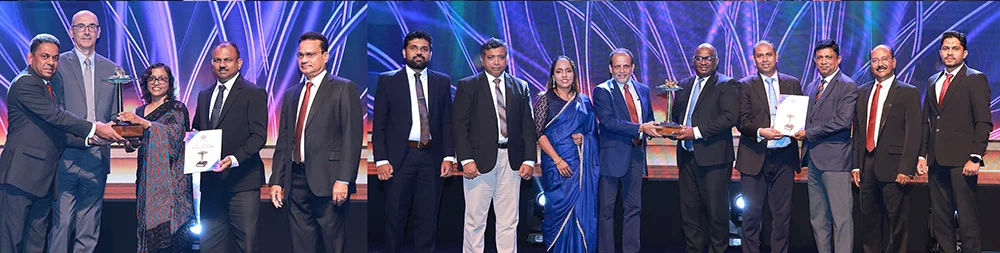
Corporate accolades underscore the alignment between its operational excellence and national development
In an era where national competitiveness is intrinsically tied to digital connectivity, strengthening the country’s digital backbone has become an urgent priority. Within this context, the evolving role of Sri Lanka’s leading telecommunications provider, SLT-MOBITEL, offers valuable insight into how technological infrastructure can underpin broader economic resilience.
Telecommunications and digital networks are foundational to economic transformation. By expanding high-speed broadband access, upgrading enterprise cloud capabilities, and bridging the urban-rural connectivity divide, SLT-MOBITEL helps reduce business transaction costs, streamline supply chains, and enable micro, small, and medium enterprises to reach global markets.
Recent corporate accolades further underscore this alignment between operational excellence and national development. SLT-MOBITEL’s triple triumph at the National Business Excellence Awards 2026 – winning in the Infrastructure and Utilities sector, Performance Management, and ICT Services categories – highlights its growing impact. Notably, the recognition of eChannelling’s contributions to digital healthcare reflects a broader strategic pivot toward integrated technology solutions.
“Institutional efficiency of this nature is critical for attracting foreign direct investment, as global partners increasingly assess a country’s digital maturity and systemic stability before committing capital,” noted industry observers.
Moreover, the company’s transition from a conventional telecom utility to a comprehensive digital solutions provider aligns seamlessly with Sri Lanka’s national digitalisation agenda. As the country pursues public sector modernisation, enhanced e-governance, and a competitive knowledge economy, the private sector must step up to deliver secure, scalable, and future-ready networks. Investments in data centres, cybersecurity frameworks, and advanced ICT infrastructure act as strategic buffers, ensuring that Sri Lanka’s economic apparatus remains agile and resilient amid future global uncertainties.
However, industry experts caution that while these achievements are commendable, SLT-MOBITEL still has a considerable distance to cover in fully enabling a truly digital economy.

Port City Colombo (PCC) took a prominent role as Platinum Sponsor at the second edition of Sri Lanka Beyond Your Dreams, a high-level diplomatic and investment engagement hosted by the Consulate General of Sri Lanka in Dubai and the Northern Emirates. The event, held on 2nd September 2026 at the Hilton Dubai Al Habtoor City, brought together over 400 senior UAE-based business leaders, investors, diplomats, and institutional stakeholders, alongside Sri Lanka’s most senior government representatives.
The gathering was graced by Dr. Thani bin Ahmed Al Zeyoudi, UAE Minister of Foreign Trade, as Guest of Honour, and Vijitha Herath, Sri Lanka’s Minister of Foreign Affairs, Foreign Employment and Tourism. A high-level Sri Lankan delegation – including the Secretary to the Prime Minister, the Chairman of the Board of Investment, the Chairman of the Export Development Board, and the Director General of Commerce – underscored the government’s strong commitment to deepening economic diplomacy with the UAE.
In his keynote address, Minister Herath reaffirmed the centuries-old ties between Sri Lanka and the Arab region, emphasising the UAE’s vital role as a key economic partner. He stressed the urgency of finalising a Comprehensive Economic Partnership Agreement (CEPA) with the UAE, which would establish a robust framework to elevate trade, investment, and bilateral cooperation. Declaring Sri Lanka “open and ready for business,” he positioned Port City Colombo as the physical embodiment of this economic mission – a modern Special Economic Zone (SEZ) with a dedicated legal framework and competitive incentives, offering UAE investors a natural gateway to South Asia while maintaining strong Gulf connectivity.
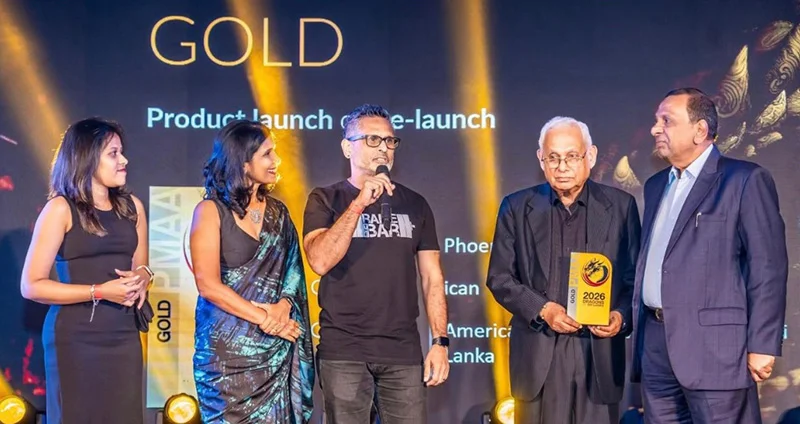
American Premium Water has secured four wins at Dragons of Sri Lanka Awards 2026, including three Gold Dragons and one Black Dragon, marking a significant milestone for the brand following its relaunch last year.
Part of the prestigious Dragons of Asia awards, Dragons of Sri Lanka brings the program’s regional platform to the local market, celebrating creative and effective marketing communications, with entries evaluated on strategic thinking, creativity, execution and impact. Established in 2000, Dragons of Asia is one of Asia’s premier results-driven marketing awards programs.
For American Premium Water, the achievements are particularly significant given that the company’s debut at the Dragons awards has resulted in four Dragons across four categories. In the distinction of Gold Dragons, American Premium Water was recognized across three categories including Product Launch or Re Launch, Cause, Environment or Sustainability and Creative Excellence while the Black Dragon was awarded in recognition of Small Budget.
Competing alongside leading brands and agencies in Sri Lanka, American Premium Water’s four wins demonstrate the strength and effectiveness of its recent work. Winning three Gold Dragons across three distinct categories highlights the breadth of the brand’s achievements, while the Black Dragon for Small Budget further emphasizes its ability to create meaningful impact through focused and efficient investment.

Trump says every adult American will get $5,000 if Republicans win midterms

Protesters mistake Pakistan’s U-19 team for asylum seekers in Portsmouth

Steps are being taken to provide accommodation facilities for 16,000 university students – Prime Minister

Showers will occur in the Western and Sabaragamuwa provinces and in Kandy, Nuwara-Eliya, Galle and Matara districts.


Sri Lanka reiterates its territory won’t be used against India

‘Dates have the highest sugar content to fight Coronavirus’

Sunday Island 27 December – Headlines

#SundayIsland 17th December – Headlines

Sunday Island – 28th March

Sunday Island Headlines – 21 March

Sunday Island – 21st February – Headlines
-

 News6 days ago
Namal remanded until Sept. 18 over Airbus deal investigation
-

 Latest News5 days ago
Tharanga creates history with Diamond League crown in Brussels
-

 News5 days ago
Dispute which triggered listed company director being detained at BIA resolved
-

 Features4 days ago
After the parade: What a traffic OIC’s walk-out tells us
-

 Opinion7 days ago
In Memory of Dr Upatissa Pethiyagoda
-

 Editorial6 days ago
Power vs Equality
-
Editorial4 days ago
Arrests as theatre
-

 Latest News6 days ago
SLPP MP Namal Rajapaksa arrested by CIABOC