
Business
‘Resilience, creativity and talent will make Sri Lankan apparel thrive globally’

Interview with Sharad Amalean
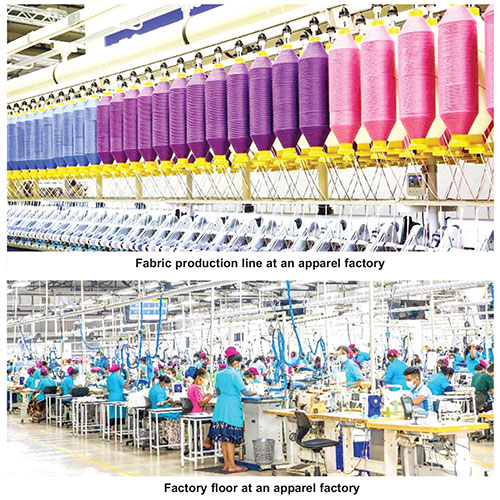
Sri Lanka’s apparel sector contributes 6% to the country’s GDP and accounts for almost half of all merchandise exports. The sector provides direct employment to 350,000 workers and an additional 700,000 Sri Lankans receive livelihood opportunities as part of the larger supply chain. Sharad Amalean, Chairman of the Joint Apparel Association Forum (JAAF), talks about JAAF’s vision for Sri Lanka’s apparel industry, the sector’s resilience through the global pandemic and Sri Lanka’s potential for becoming a global hub for innovation in apparel manufacturing and design. Excerpts from an interview:
Q: How is the global fashion and apparel industry evolving? Where does Sri Lanka fit in?
A: It’s easy to think of apparel as a commodity product, but take a look at the industry and global marketplace, and it will be evident how wrong that view can be. There is so much design, innovation and creativity that is visible throughout the industry. All this innovation goes into products that are constantly being reimagined and reinvented. There is very little doubt that the industry will reach the level of US$2.2 trillion by 2025, as many experts have predicted.
China and India have emerged as major marketplaces and as competitors, so the competitive landscape has widened. True, the pie has become larger, but the effort needed to increase the size of each slice for each brand has also increased significantly. Brands have initiated several strategic moves, such as acquiring other brands and entering into regional partnerships with like-minded organisations to develop supply chain strength across the globe. Bilateral and regional trade agreements between nations have also contributed to the growth of the industry globally.
As rapid as these changes have been, they also provide countries like Sri Lanka significant opportunities. If we are willing to pursue them and evolve into a solutions provider instead of just manufacturers, we will be able to thrive and grow along with the global industry.
Q: How has the pandemic shaped the apparel industry? How are manufacturers and brands recovering from the setbacks of COVID-19?
A: The pandemic taught us many lessons, both as individuals and as an industry. While we have seen consumers prioritising value and durability over fast fashion, they have also increased their attention on ethical manufacturing, sustainability and inclusivity.
With sharp price points and constant pursuit of cost efficiencies, the apparel industry is faced with competing priorities. The pandemic has brought these aspects even more sharply into focus; brands and companies have increased their vigilance on the social, environmental, governance and ethical aspects of manufacturing. What this means is that only those that take a holistic view of their production and eco-system will thrive while those with scant respect for ethics, the environment and social responsibility will not find favour with customers.
Having built a reputation of being a sustainable and ethical manufacturing destination, Sri Lanka is well placed to thrive in this evolutionary phase. Although in the past our contribution to these external aspects has impacted Sri Lanka’s cost-competitiveness, we now see buyers support and partner with our efforts. These have enabled them to provide complete supply chain transparency to their end consumers.
Even in a post-pandemic landscape, these focus areas will continue to be scrutinised; it is and will be the way forward for the industry.
Q: Sri Lanka’s apparel industry has mapped out a vision for 2030. What does this vision entail, and is Sri Lanka on track to achieve it?
 A: During the pandemic, there was a growing sense of doubt creeping in as to whether we could maintain our momentum as we approach 2030. Despite the challenges we faced, the industry showed tremendous resilience. The fact that we managed to achieve revenue levels of 2019 despite the dip in 2020 is a testament to that fact. If this growth continues, we will be on track to achieve our revenue target of $8 billion by 2025.
Our vision for 2030, however, is much more complex and aspirational, going well beyond just revenue growth. Whilst several of our partner organisations are making strides towards this vision, there is still much to be done in order bring the plan to fruition. As an industry we need to capitalise on opportunities such as the Port City, which could be a springboard not just for our Vision 2030 but for Sri Lanka as a whole. The project has been laid out as an opportunity for global partnerships; we need to intensify our efforts to convince global customers and brands to set up in Sri Lanka. This will enhance Sri Lanka’s image and aid the industry in providing complete solutions, reducing the turnaround time between concept and product development significantly.
Several partner organisations are moving swiftly towards creating a solutions hub, by providing customers with service offerings beyond what is currently provided. Take logistics: despite current challenges, organisations are offering customers flexibility and effective and multiple distribution solutions, even serving the end consumer in some cases. Given the positive response from customers, we are confident that we are well on our way towards realising this part of our Vision 2030.
Talent is another area we are paying considerable attention to: the development of a strong talent pool that could be deployed globally and will continue to support the Sri Lankan apparel industry. There already is considerable demand for Sri Lankan talent globally, owing to their expertise. We have suffered a ‘brain drain’ because our international competitors offer better prospects. We intend to give our employees opportunities to work at our global partner organisations. That will support their aspirations, and also help the industry retain its talent for the country as we traverse the road to 2030.
Q: Can Sri Lanka build on its innovations and specialisation within the apparel sector?
A: Whether it’s a product or process, our industry has contributed to and with innovation. There are a significant number of Sri Lankan innovations that have been commercialised globally. Examples include impact protection gear to enhance performance and protect athletes in high impact sports, virtual photoshoots using 3D avatars, virtual design technology that has cut costs and improved delivery time as well as medical and infection control apparel.
It is imperative that we foster a culture of invention and innovation in the industry, but also be creative and prudent in maximising the potential of our ideas. Considering the effort and scale that we put into commercialising products, and the constraints in market access, we need to pick our best options and partners to ensure maximum benefit to Sri Lanka. It is this thinking that we need to foster in order to make the best use of our talent and ideas and take them global.
When it comes to technology, larger players in the industry invest significantly to upgrade frequently. Smaller organisations have financial and scale constraints. This is where we need to show our customers the capabilities they can back and support, to develop our technology and systems.
In all of these areas, it is essential that we engage with global partners positively; that will be vital to help us gain access to new markets and scale up.
Sharad Amalean is the Chairman of the Joint Apparel Association Forum (JAAF) and is a co-founder and Board Member of MAS Holdings (Pvt) Ltd. Having previously served as the CEO of MAS Holdings, Sharad has now transitioned to a new phase of his corporate journey overlooking strategic investments and diversification activities of the organization. He is also instrumental in supporting the organization to develop the next generation of leaders as the company journeys towards the future.



SpaceX has debuted on US markets with a market valuation of more than $2 trillion, minting CEO Elon Musk as the world’s first trillionaire.
Shares opened on Friday at $150 per share, marking a 11 percent increase from the initial public offering (IPO) price of $135, valuing the company at $1.96 trillion and putting the aerospace company on track to become the sixth-largest company in the United States.
The stock surged 18 percent to $159 per share, up from the $135 it had been priced at, as the trading day came to a close.
Markets more broadly ticked higher amid a possible interim peace deal between the United States and Iran that could open the Strait of Hormuz. The Dow Jones Industrial Average is up 0.6 percent, the Nasdaq is up 0.2 percent, and the S&P 500 is up 0.35 percent as trading wraps up for the week.
The company sold $75bn in shares, immediately valuing it at $1.77 trillion. The IPO was oversubscribed four times higher than was otherwise expected, according to the Reuters news agency.
Of the institutional investors allocated, according to Bloomberg News, as much as 70 percent went to what are called long-only investments — a strategy in which holders buy assets based on the expectation that their value will grow over time — and sovereign wealth funds, including those from Saudi Arabia and Kuwait as well.
SpaceX President Gwynne Shotwell and Chief Financial Officer Bret Johnsen rang the opening bell at Nasdaq MarketSite in New York City at 9:30am local time as US markets opened.
On Thursday, protesters gathered outside the MarketSite to protest the IPO amid continued allegations that Grok, part of xAI, a subsidiary of SpaceX, allowed users to create non-consensual deepfake sexualised images before the IPO debut.
Shares of SpaceX did not trade until the middle of the trading day as the exchange collected buy and sell orders and underwriters delayed trading until supply and demand were balanced.
“We would expect SpaceX to see an immediate pop in trading due to the hype around the deal, north of 20 percent perhaps,” said Samuel Kerr, global head of equity capital markets at Mergermarket. “Anything lower would actually make me nervous.”
Exchanges and trading firms are eager to avoid the technical mishaps that marred Meta’s 2012 debut. With SpaceX widely viewed as a dress rehearsal for a new generation of mega-listings, market participants will also be watching for signals on investor appetite in advance of forthcoming IPOs for AI heavyweights Anthropic and OpenAI.
The landmark listing cemented Musk’s status as the first trillionaire ever and propelled SpaceX into the ranks of the world’s most valuable companies — even though the firm posted a loss of nearly $5bn last year and generated only a fraction of the revenue brought in by similarly valued tech giants.
The surge comes amid growth driven by its Starlink subsidiary, which drives as much as 80 percent of its revenue.
On Friday, SpaceX launched its Falcon 9 rocket with 29 satellites into space from Cape Canaveral in Florida.
[Aljazeera]

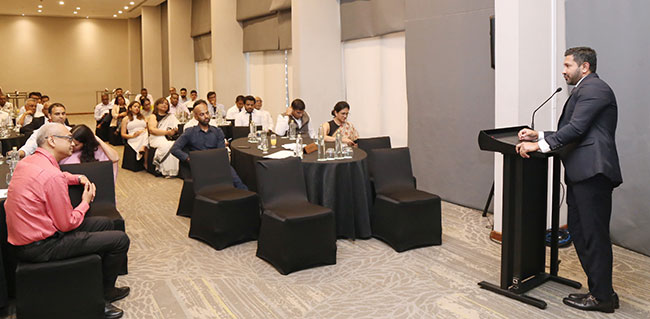
The Indo-Lanka Chamber of Commerce & Industry (ILCCI), affiliated to The Ceylon Chamber of Commerce, hosted an interactive session on Sri Lanka’s Investment Future: Policy, Opportunity & Growth at Jetwing Colombo Seven. The session was attended by Dr. Satyanjal Pandey as Chief Guest, while Aritha Wickramasinghe delivered the keynote address in his capacity as Chief of Staff to the Office of the Presidential Special Envoy on Foreign Investment, Hanif Yusoof.
ILCCI President M. Raghuraman, in his remarks, expressed appreciation to Dr. Pandey for his service during his tenure in Sri Lanka and underscored the timeliness and importance of the session topic in the context of the current global economic and geopolitical climate.
Addressing the gathering, Dr. Pandey observed that in a period marked by geopolitical and economic turbulence – reliability, trustworthiness, and secure supply chains have become increasingly important. He also highlighted the strong and growing economic partnership between India and Sri Lanka, noting several significant Indian investments in Sri Lanka, including those by ITC Limited and CEAT Limited, while indicating that further investments are expected in the future.
As a representative of the state, Aritha Wickramasinghe stated that it is the responsibility of the government to ensure that, even amid global turbulence, Sri Lanka remains stable in its policy direction, credible in its economic management, and consistent in its engagement with investors. He also emphasised the opportunities available to the Sri Lankan economy through deeper engagement with India’s fast-growing economy, noting that while India and Sri Lanka are neighbours, the relationship is regarded as one of family rather than mere proximity.
The session which included a highly engaging and interactive Q&A session with the audience, concluded with a productive exchange of views between the distinguished guests, speakers and participants, reaffirming the importance of continued dialogue and collaboration in strengthening investment and economic ties between Sri Lanka and India.
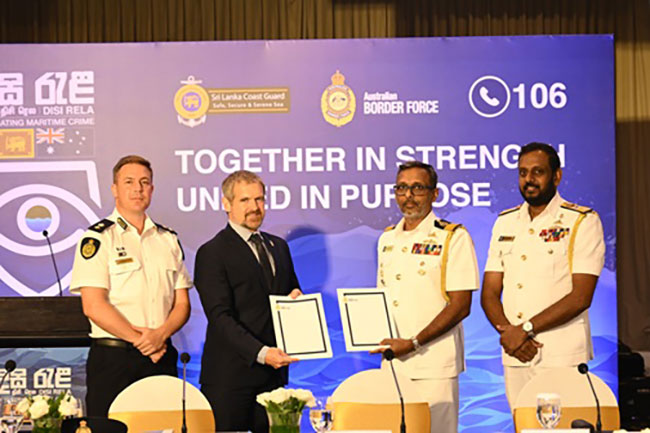
The Australian Border Force and Sri Lanka Coast Guard have launched Disi Rela 2026, marking the third consecutive year of the joint maritime security initiative aimed at strengthening maritime surveillance, operational capability, and public awareness across Sri Lanka’s coastal regions.
This year, Disi Rela 2026 expands its community engagement and public awareness activities to Sri Lanka’s Eastern Province, following successful activations conducted in the Western and Southern Provinces in previous years.
Meaning “keeping a watchful eye over the maritime environment,” Disi Rela reflects the continued partnership between Australia and Sri Lanka to strengthen maritime security, combat transnational maritime crime, and promote safer seas across the region. Through intelligence sharing, operational cooperation, advanced equipment support, and public awareness initiatives, both countries continue to work together to address threats including people smuggling, drug trafficking, illegal fishing, and other unlawful maritime activities.
Over the past three years, the Australian Government has supported Sri Lanka’s maritime security efforts under the Disi Rela initiative through the donation of 24 surveillance drones, three all-terrain vehicles (ATVs), three Stabicraft patrol vessels, and the establishment of a dedicated 24/7 hotline number — 106.
Further strengthening Sri Lanka Coast Guard’s operational capability, the Australian Government will donate an additional five all-terrain vehicles (ATVs) under Disi Rela 2026 to support coastal surveillance and rapid response operations.
In reflecting upon the continued partnership and shared commitment of both nations to safeguard Sri Lanka’s maritime boundaries and coastal communities, the Director General of the Sri Lanka Coast Guard,

Landslide Earyly Warnings issued to the districts of Kalutara, Nuwara Eliya and Ratnapura

INS Sharda departs Colombo concluding replenishment visit

Special Dengue Prevention Week declared in Colombo District from June 15 to 21

The leader of the indigenous Vedda community Uru Warige Wannila Aththo Meets Prime Minister Dr. Harini Amarasuriya

SpaceX IPO debuts in US markets, Musk becomes world’s first trillionaire

Fans on concourses instead of in seats, claims FIFA

‘Dates have the highest sugar content to fight Coronavirus’

Sunday Island 27 December – Headlines

#SundayIsland 17th December – Headlines

Sunday Island – 28th March

Sunday Island Headlines – 21 March

Sunday Island – 21st February – Headlines
-

 News7 days ago
Women’s T20 World Cup 2026 warm-up: Chamari Athapaththu’s 94 helps Sri Lanka beat Pakistan
-

 News7 days ago
Lankan-Canadian inducted to Toronto Sports Hall of Fame
-

 Editorial6 days ago
Probe Sallay’s complaint
-
 News4 days ago
Local firms move millions of dollars overseas for phantom imports: Govt.
-

 News2 days ago
CIABOC summons Yoshitha over his participation in British Navy training programme
-

 Editorial7 days ago
Prez in the dock
-

 Features7 days ago
Entering MIT for my Ph.D program, coping with harsh Boston winter and breasting the tape
-
 Midweek Review4 days ago
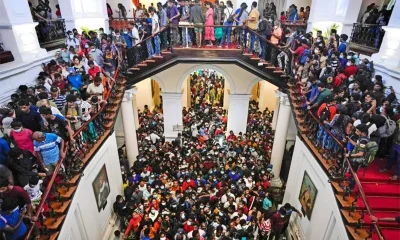
July 09: An inexcusable overall security failure and exceptional contingency plan