
Business
Youth migration: Challenges and opportunities for Sri Lanka

By Thisuri Ekanayake
 A great deal of discussion is underway on what appears to be the latest wave of migration from Sri Lanka. These conversations focus on the desire of young people to migrate in search of greener pastures in the face of the soaring cost of living and uncertainty about the country’s future. While the exact scale and nature of youth migration remain unclear, the costs of brain drain dominate these discussions. The brain drain concern is valid, yet focusing on it alone can limit our understanding of the complex implications of migration. This blog argues that apart from its challenges, youth migration can also present some surprising opportunities for socio-economic development if strategically managed.
Youth Migrants
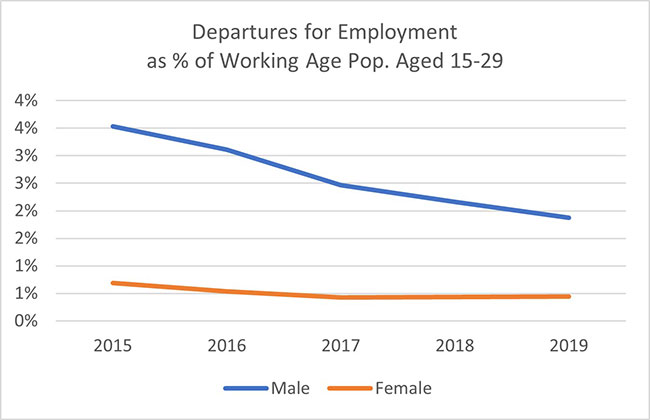
According to the latest Social and Economic Statistics and the Labour Force Surveys of Sri Lanka, departures for foreign employment among young people aged 15-29 years in relation to their population has not seen a noticeable rise in the recent past.
While it can be argued that the perceived increase in migration is a more recent phenomenon accentuated by the pandemic in 2020, it is also possible that young people depart more frequently for other pursuits such as education, for which statistics are not publicly available. To further complicate matters, it is unclear whether most youth consider education as a pathway for long-term residence abroad or intend to return to Sri Lanka with their acquired qualifications.
An Opinion Tracker Survey carried out by the Institute of Health Policy provides a clearer answer. This survey suggested that youth aged 18-29 have the highest desire to migrate at around 48%. But it was people in areas such as the Western province who indicated greater capability of preparing for migration. This is likely due to the high initial cost including airfare, tuition fees, and initial living expenses. Departures in categories other than short-term employment, therefore, seem to be mainly associated with high and middle-income groups. One frequently discussed implication of this is brain drain or the emigration of highly knowledgeable people. Out-migration can also affect economic growth as these social segments provide a stable source of demand for goods and services and contribute to investments. Beyond economic impacts, such communities also hold significant socio-political power in the country. Although understanding the full extent of the desire of young people to migrate remains difficult due to the lack of comprehensive data, a more strategic approach is still warranted to mitigate the adverse effects of migration and leverage its unique advantages.
Youth Migration and Development
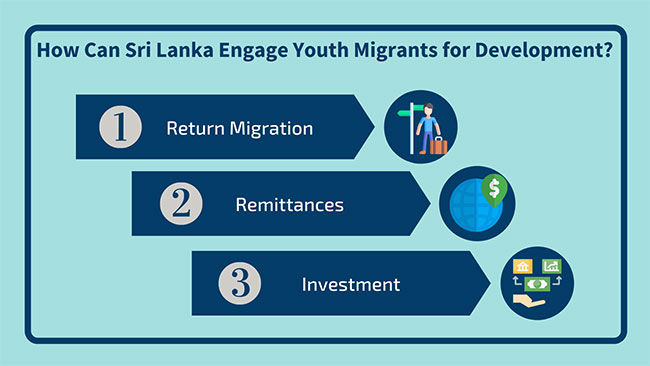
Return Migration
 As human capital is one of the most valuable resources in Sri Lanka, brain drain can be detrimental. Conversely, return-migration of those who have acquired greater knowledge and skills would increase the stock of human capital. However, the challenges of absorbing returning youth must also be acknowledged, since there can be a mismatch in acquired skills, expectations, and the existing labour market demand. Aside from this, a high unemployment rate (26.5%) among those aged 15-24 years is already prevalent in the country. As such, it is necessary to create more opportunities for youth especially in areas such as science and technology which have a potential for growth and innovation, and also facilitate a conducive business environment and financial system so that knowledge and skills can be utilised in a productive, profitable manner.
Remittances
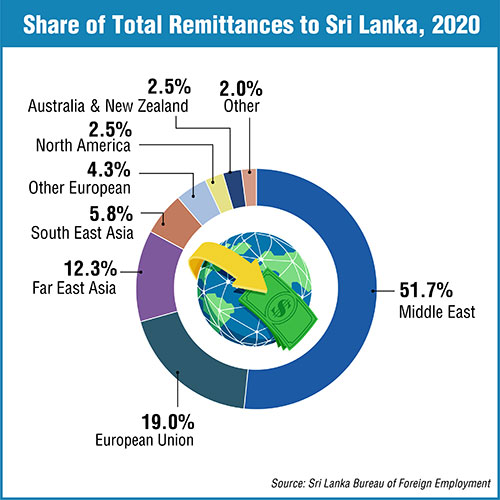
Migration and remittances have been widely discussed in relation to the current foreign exchange shortage in the country. Although there is some difficulty in estimating the remittances by the youth alone due to data availability, the Sri Lanka Foreign Employment Bureau finds that in 2020, the overall highest contributions originated from areas such as the Middle East (51.7%) and the European Union (19%) whereas destinations such as North America or Australia and New Zealand only account for 2.5% of the total remittances each. This can be expected as many who depart to the former regions are temporary workers regularly remitting to support their families and livelihoods in Sri Lanka.
There is some potential then, to improve flows from the latter regions with sizable communities of Sri Lankans or those of Sri Lankan origin. Proactive engagement of young people can be carried out especially through networks such as school or university alumni associations, voluntary groups, and educational institutions in collaboration with government and non-government bodies.
Investment
 As a somewhat risk-averse society, investment and entrepreneurship in Sri Lanka tend to suffer, especially among the youth. But this is understandable given the volatile economic conditions, relatively poor business environment (99th position in the Ease of Doing Business Index in 2020), limited capital, and negative societal attitudes. Conversely, youth from diaspora communities, once securely established are likely to have greater access to capital and may also be less risk-averse due to their exposure to new norms and attitudes.
Another benefit of connecting with expatriate communities is that they tend to be mutually interested in maintaining ties with their country of origin due to various reasons including economic opportunities, a desire to support family and friends and even to contribute towards national development. Identifying and communicating opportunities, as well as facilitating ventures through simpler processes and incentives are some measures that can be taken to achieve this win-win outcome.
In short, while some young people have recently shown a greater desire to migrate, this scenario presents both challenges as well as opportunities. Young migrants residing abroad maintain a significant potential to contribute to Sri Lanka’s development if they are proactively engaged. However, such initiatives should be carried out with caution since false commitments and major inconveniences can dishearten and discourage migrant communities from further attempts at maintaining ties with their motherland.
Link to the full Talking Economics Blog: https://www.ips.lk/talkingeconomics/2022/02/07/youth-migration-challenges-and-opportunities-for-sri-lanka/
Thisuri is a Research Assistant working on migration and urbanisation policy research at IPS. She holds a BA (Honours) in Economics from the University of Colombo. Thisuri participated in the 2020 IMF Fund Challenge and was selected to present a paper at the FISU World Conference on Innovation, Education and Sport in Lucerne, Switzerland. As an undergraduate, Thisuri received a scholarship for obtaining the best results in the first-year examination of the Faculty of Arts. (Talk with Thisuri: thisuri@ips.lk)

Corporate accolades underscore the alignment between its operational excellence and national development
In an era where national competitiveness is intrinsically tied to digital connectivity, strengthening the country’s digital backbone has become an urgent priority. Within this context, the evolving role of Sri Lanka’s leading telecommunications provider, SLT-MOBITEL, offers valuable insight into how technological infrastructure can underpin broader economic resilience.
Telecommunications and digital networks are foundational to economic transformation. By expanding high-speed broadband access, upgrading enterprise cloud capabilities, and bridging the urban-rural connectivity divide, SLT-MOBITEL helps reduce business transaction costs, streamline supply chains, and enable micro, small, and medium enterprises to reach global markets.
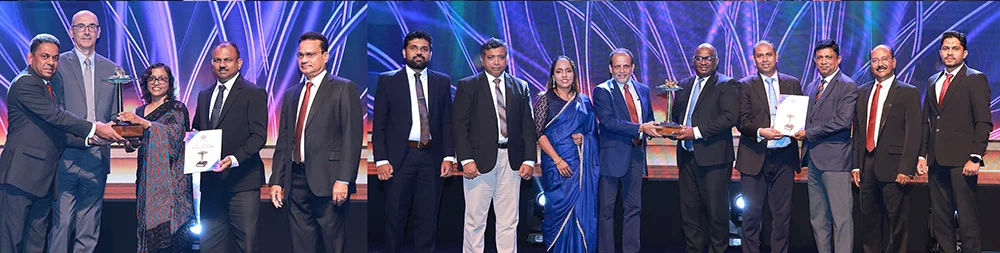
Recent corporate accolades further underscore this alignment between operational excellence and national development. SLT-MOBITEL’s triple triumph at the National Business Excellence Awards 2026 – winning in the Infrastructure and Utilities sector, Performance Management, and ICT Services categories – highlights its growing impact. Notably, the recognition of eChannelling’s contributions to digital healthcare reflects a broader strategic pivot toward integrated technology solutions.
“Institutional efficiency of this nature is critical for attracting foreign direct investment, as global partners increasingly assess a country’s digital maturity and systemic stability before committing capital,” noted industry observers.
Moreover, the company’s transition from a conventional telecom utility to a comprehensive digital solutions provider aligns seamlessly with Sri Lanka’s national digitalisation agenda. As the country pursues public sector modernisation, enhanced e-governance, and a competitive knowledge economy, the private sector must step up to deliver secure, scalable, and future-ready networks. Investments in data centres, cybersecurity frameworks, and advanced ICT infrastructure act as strategic buffers, ensuring that Sri Lanka’s economic apparatus remains agile and resilient amid future global uncertainties.
However, industry experts caution that while these achievements are commendable, SLT-MOBITEL still has a considerable distance to cover in fully enabling a truly digital economy.

Port City Colombo (PCC) took a prominent role as Platinum Sponsor at the second edition of Sri Lanka Beyond Your Dreams, a high-level diplomatic and investment engagement hosted by the Consulate General of Sri Lanka in Dubai and the Northern Emirates. The event, held on 2nd September 2026 at the Hilton Dubai Al Habtoor City, brought together over 400 senior UAE-based business leaders, investors, diplomats, and institutional stakeholders, alongside Sri Lanka’s most senior government representatives.
The gathering was graced by Dr. Thani bin Ahmed Al Zeyoudi, UAE Minister of Foreign Trade, as Guest of Honour, and Vijitha Herath, Sri Lanka’s Minister of Foreign Affairs, Foreign Employment and Tourism. A high-level Sri Lankan delegation – including the Secretary to the Prime Minister, the Chairman of the Board of Investment, the Chairman of the Export Development Board, and the Director General of Commerce – underscored the government’s strong commitment to deepening economic diplomacy with the UAE.
In his keynote address, Minister Herath reaffirmed the centuries-old ties between Sri Lanka and the Arab region, emphasising the UAE’s vital role as a key economic partner. He stressed the urgency of finalising a Comprehensive Economic Partnership Agreement (CEPA) with the UAE, which would establish a robust framework to elevate trade, investment, and bilateral cooperation. Declaring Sri Lanka “open and ready for business,” he positioned Port City Colombo as the physical embodiment of this economic mission – a modern Special Economic Zone (SEZ) with a dedicated legal framework and competitive incentives, offering UAE investors a natural gateway to South Asia while maintaining strong Gulf connectivity.

American Premium Water has secured four wins at Dragons of Sri Lanka Awards 2026, including three Gold Dragons and one Black Dragon, marking a significant milestone for the brand following its relaunch last year.
Part of the prestigious Dragons of Asia awards, Dragons of Sri Lanka brings the program’s regional platform to the local market, celebrating creative and effective marketing communications, with entries evaluated on strategic thinking, creativity, execution and impact. Established in 2000, Dragons of Asia is one of Asia’s premier results-driven marketing awards programs.
For American Premium Water, the achievements are particularly significant given that the company’s debut at the Dragons awards has resulted in four Dragons across four categories. In the distinction of Gold Dragons, American Premium Water was recognized across three categories including Product Launch or Re Launch, Cause, Environment or Sustainability and Creative Excellence while the Black Dragon was awarded in recognition of Small Budget.
Competing alongside leading brands and agencies in Sri Lanka, American Premium Water’s four wins demonstrate the strength and effectiveness of its recent work. Winning three Gold Dragons across three distinct categories highlights the breadth of the brand’s achievements, while the Black Dragon for Small Budget further emphasizes its ability to create meaningful impact through focused and efficient investment.


Sri Lanka reiterates its territory won’t be used against India

UK-led Core Group calls Jaffna mass graves a ‘stark reminder’ but stops short of calling for international accountability

India underscores security and defence in overall partnership with SL

If Sri Lanka wants ‘real’ stability, only one way to achieve it, in a short time

Human dignity comes centre stage in Afghan refugee deportation crisis

‘Dates have the highest sugar content to fight Coronavirus’

Sunday Island 27 December – Headlines

#SundayIsland 17th December – Headlines

Sunday Island – 28th March

Sunday Island Headlines – 21 March

Sunday Island – 21st February – Headlines
-

 News5 days ago
Namal remanded until Sept. 18 over Airbus deal investigation
-

 Latest News4 days ago
Tharanga creates history with Diamond League crown in Brussels
-

 News4 days ago
Dispute which triggered listed company director being detained at BIA resolved
-

 Features3 days ago
After the parade: What a traffic OIC’s walk-out tells us
-

 Opinion6 days ago
In Memory of Dr Upatissa Pethiyagoda
-

 Editorial5 days ago
Power vs Equality
-

 Latest News6 days ago
SLPP MP Namal Rajapaksa arrested by CIABOC
-
Editorial3 days ago
Arrests as theatre