
News
Prof. Yuan Longping, Hybrid Rice and Local Ignoramuses


by Dr. MP Dhanapala
Some people are allergic to genetic improvement of crops. They are free to provide an appropriate technology to convince farmers to propagate and have their share of traditional crop species to lead a healthy life, ignoring the green revolution, improved crop species and use of agro-chemical inputs inclusive of plant nutrients.
I use the term “appropriate technology” to imply its feasibility, sustainability and economic viability from the farmers’ point of view. In this process, one should demarcate clearly between green revolution and green agriculture. The latter is yet ill- defined with no definite field tested technological recommendations for different crops developed or established.
Similarly, the sustainable agricultural enthusiast can engage in so called environment friendly non-toxic food production to feed the nation at an affordable cost. Surprisingly, the past cropping season (Maha 21/22) was deliberately ignored by the advisors and experts of sustainable green agriculture, without proper guidance and demonstrations to the farmers in all sectors of agriculture.
Everything was in a disarray and the responsible officers of the sector remained tight-lipped while securing their positions in office. Was this sustainable green agriculture? Are we to repeat the same? This needs an immediate and definite answer/solution before the Yala season begins in 2022. Farmers cannot proceed without well defined technological package.
To my mind, the agriculture we had until the first half of the 20th century was presumably sustainable and may have been green. The animal husbandry component together with farming systems and crop rotation, and sometimes the shifting/slash and burn cultivation system based on mixed-cropping associated with crop diversity were apparently considered Eco-friendly concepts in operation. But we failed to produce adequate food for the increasing population.
The land resources diminished gradually with more land being utilized to rear animals; then there was the population explosion. This situation led us to more intensive, demand-driven mono crop culture. Mechanization and other scientific innovations, inclusive of agrochemicals made good the acute shortage of labor as a result of people moving away from agriculture to white-collar jobs. This was influenced by education and urbanization.
How many of those who advise and insist on sustainable and green agriculture are prepared to engage in agriculture as their sole livelihood? Have they ever cultivated land to earn their livings? Probably not. But we have people from all sectors, including Buddhist monks (I am a Buddhist) promoting sustainable green agriculture with no strategies defined for successful implementation. They are unwilling to be full-time farmers. They preach and predict that in a few years’ time, agriculture would return to normal to feed the nation. They have no empathy with the farmers. This is the bitter reality.
The nostalgic eco-friendly scenario anticipated with sustainable green agriculture – forest cover, natural springs, unpolluted creeks and water bodies full of fish, soil microbes, flora and fauna etc. may well be only a dream that would not reappear on earth again. This lives in the minds of those who knew a more spacious era. We then had over 80 percent of forest cover in the country, Now it’s down to less than 30 percent with denudation of forests alongside the population explosion.
If we had the forest cover and a small population as in the past, then we could have continued life in a sustainable environment as we did centuries ago eating healthy food provided by nature. But now we have grown to a little over 22 million confined to 64.5 thousand square kilometers of land in an electronic age. We travel in carbon emitting limousines and supersonic aircraft consuming the resource of the earth without a care of what would happen the next day. Some of us only mark-time till we get the opportunity to migrate to greener pastures; but the poor and the incapable must continue to survive in this environment.
If one can supply the so-called healthy food at affordable prices for every inhabitant, then there is no necessity for a Green Revolution (not green agriculture) or Norman Bourlogue and his innovative approach to improve food production. We need food more than anything else, with the majority of our people born without silver spoons in their mouths.
The green revolution (not green agriculture) was brought about to produce more food for the increasing population within the country. Had we unlimited cultivable lands, the green revolution is meaningless as sustainable green agriculture was in place with rice and other field crops; but we were forced to improve productivity of crops within our limited agricultural land resource. This is the reason why the Norman Borlaugs of this world appeared. He was man who employed the modern plant type concept to improve productivity of wheat per unit area of land. This thinking migrated into rice and other cereal crops.
The modern Indica rice varieties were developed since the isolation of semi-dwarf rice mutant, Dee-Geo-Woo-Gen (DGWG), in Taiwan. There were two improved varieties, Taichung Native 1 (TN1) from Taiwan and IR 8 from the International Rice Research Institute (IRRI), introduced to Sri Lanka in the 1960s. But they failed to gain farmer acceptance. Sri Lanka too had a dwarf mutant of rice, K8 natural mutant (K8 nm), isolated at the Ambalantota Regional Rice Research Station.
K8 was known to be a sister-line of H4, the landmark cross-bred rice variety in Sri Lanka. The genetic improvement of rice in Sri Lanka was reported comprehensively in my newspaper article titled, “Rice Genetic Improvement Odyssey of Past Centuries” in the Sunday Island of 17/10/2021. This was to keep the misinformed or uncertain general public updated about the recorded historical developments of rice in Sri Lanka.
Some educated non-agriculturists distort the facts to convey to the general public that conventionally bred varieties were either hybrids or genetically modified entities. Probably the critics have forgotten the elementary Mendelian genetics they learned in “O Level” classes in schools. I invite attention of anyone who believes these critics to read the Sinhalese translation of the article titled “Are Modern Rice Varieties Genetically Modified Hybrids?” in page 11-17 in Govikam Sangarawa, 51 (2), June, 2020, Dept. of Agriculture..
Now, let me introduce Prof. Yuan Longping as the father of real hybrid rice. His contributions are in no way secondary to that of Norman Borlaug. He initiated the three parental hybrid rice technology to exploit heterosis/hybrid vigor to improve yield potential of rice and developed hybrid rice in China capable of out-yielding the conventionally cross-bred varieties by a substantial margin.
This procedure cannot be simply explained to convince the “local Longpings” who look at it without any background knowledge and experience in floral morphology and genetics of rice. Some of Prof. Longping’s “Super Hybrids” are capable of yielding 18 t/ha (360 bushels/ac) in high potential environments. Though he left us nine months ago and is not with us any more, Prof. Longping admitted that conventionally bred varieties in such specific environments are capable of yielding 16 t/ha (320 bu/ac).
I have listened to this statement of Prof. Longping on two occasions while answering a question raised by the IRRI hybrid rice breeder, Dr. Sant Virmani. Our national average yields of conventionally bred varieties are slightly below 5 t/ha (100 bu/ac) within the country, but I am confident that ours too can reach the potential of above 15 t/ha (300 bu/ac) or more in a matching environment.
The limiting factor is the potential of our environment; the edaphic (soil) and climatic factors specifically. Those who are misinformed that the conventionally bred (cross-bred) varieties are hybrids, can visit RRDI, Batalagoda to learn the breeding process of hybrid rice. The major constraints associated with the program are development of perfect cytoplasmic male sterile parent (A line) and its maintainer parent (B line); fertility restoration parent (R line); standard heterosis or pronounced hybrid vigor and the enhanced cross pollination capacity between the A and R lines (the rice plant is a hermaphrodite and an obligate inbreeder (cleistogamy); seed production process in isolation (space or time) without contamination and finally the unwarranted criticism by the local Longpings.
Now, we in Sri Lanka inclusive of all the local Longpings, can taste hybrid rice from China. All or some of the one million tons of Chinese rice to be imported shortly have to be hybrids, as more than 60 percent of the Chinese rice crop is from hybrid rice. Although one can conveniently avoid answering the questions in the media about the cultivation process (green or non-green), the yield potential of hybrid rice cannot be realized through sustainable green agriculture; it has to be some form of non-green agriculture involved in the process of commercial rice production in China.
The health-concerned local Longpings can investigate and compare the status of Cadmium (Cd), Arsenic (As) and Lead (Pb) and verify the quality and suitability of the imported rice for consumption by the general public. I am inclined to consume it any way, as I am from the farming community and confident that no Chinese can survive without kidneys.
I have expressed my gut feelings about the non-green rice cultivation advocated during my tenure in office at the Rice Research and Development Institute (RRDI), Batalagoda, in the newspaper article titled “Expert Advisor, Sustainable Farming and the Rice Farmer”, Sunday Island of 07/11/ 21. After serving 31 years at Batalagoda, with my family living with me and consuming non-green rice and other food items, we have suffered no ill effects. This is a real life experience.
Unfortunately the facts are being distorted by critics to their advantage. Accuracy and precision are two key words in scientific statements. In my newspaper article titled “Beyond Illusion to Reality with Traditional Rice”, Sunday Island of 10/10/2021, I have highlighted this fact as some conclusions were arrived at when evidence is inaccurate and incomplete.
Recently, in a U-tube discussion, the resource person was very confidently elaborating that Carbon and Nitrogen were subjected to pressure in the synthesis of urea and in the process Cadmium and Arsenic appear as contaminants. Is this how urea is synthesized? How come that something not in the raw material appears in the ultimate product? Also, in the same program, the resource person insisted that thunder showers make nitrate from atmospheric nitrogen and that is adequate to raise the rice crop in the field.
I knew nitrate as a negatively charged ion (NO3-), but not as a chemical compound called nitrate, and the lightening process will produce nitric acid (HNO3) identified in Sinhala as “Akunu Wathura”. (Plants grow better during rainy days irrespective of thunder showers. Here, the confounded effects of many factors are involved in the process. Availability of Sulphur in the form of Sulphur Dioxide (SO2) is reported from rain water analysis locally, but one can quantify the availability of adequate N in rain water in the form of any nitrogenous compound, by analyzing the rain water in March/April, the peak period of lightning and thunder showers.)
The media person in the program was patiently listening to and admiring the resource person. This reflected on his quality and knowledge more than the inaccuracy and the lack of precision of the two statements. Many unscientific and inaccurate statements of this kind may seep into society and get registered in the minds of laymen if the media is negligent, incompetent or qualified to do their job properly. The most sensible and rational strategy to come out from the present fertilizer dilemma in rice cultivation is suggested in the write-up “Are We Making Rational Decisions in the Rice Sector?”, Sunday Island of 12/09/2021.
Scientists never lie or distort facts to their advantage. If it happens, he is not fit to represent the scientific community any more. Prof. Yuan Longping was a dedicated scientist of extremely high caliber. Moreover, he was a very humble, down to earth gentleman. He made somethings happen that the rice scientists thought was extremely difficult, if not impossible. This would be appreciated only if you understand the morphology (hermaphroditism) and pollination mechanism (cleistogamy) of the rice floret (spikelet).
Prof. Yuan Longping’s hybrid rice research was immensely supported by the government of China. That made hybrid rice a reality by making its cultivation mandatory to some extent. Chinese understand the value of research. Hybrid rice is apparently the ultimate technological innovation or climax in rice breeding, if we are to protect ourselves from hunger.
It is too early to execute hybrid rice cultivation in our country as we need further research to confirm its practicability within our infra structure. However, our Longpings are protesing against hybrid rice at the outset itself, even prior to the development of hybrids without understanding the real mechanism underlying the breeding process. That is the difference between progressive and stagnating nations, probably governed by inherent genes.
I will conclude this disclosure quoting Prof. Yuan Longping, “The ship (hybrid rice) is always above the surface of water (conventional varieties)” i.e. when you improve the potential of conventional varieties, a hybrid can be developed to surpass the yield potential of that variety.
(The writer if a Retired Director/Rice Research & Development Institute, Bathalagoda)
Tel. 071 8412444, e mail: maddumadhanapala@yahoo.com


By Chaminda Silva
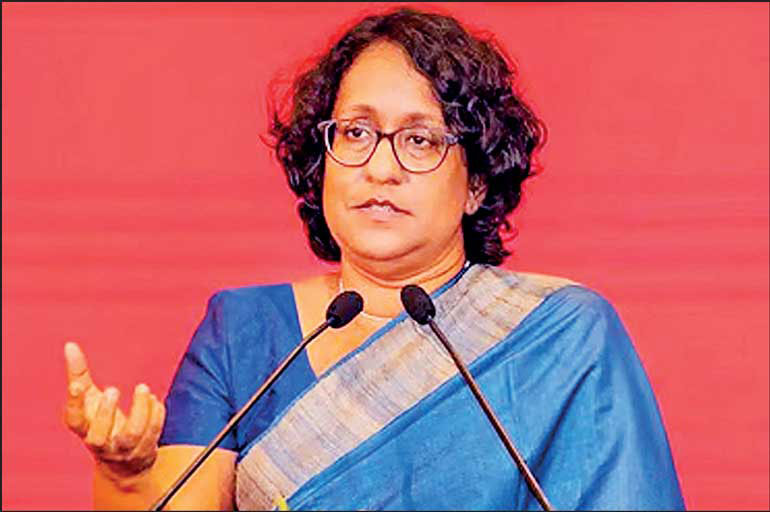
The government’s ambitious plans to overhaul Sri Lanka’s school education system and introduce new curricula could face serious implementation difficulties, with teacher unions warning that a longstanding and severe shortage of teachers remains unresolved.
The warning came as Prime Minister Dr. Harini Amarasuriya announced yesterday that new curricula would be introduced for Grades 2 and 6 next year, while also stating that the government planned to recruit around 30,000 new teachers across the education system by February.
However, the Ceylon Teachers’ Union (CTU) questioned whether the government would be able to provide the teachers required to implement the proposed reforms, claiming that the recruitment process itself had become mired in problems.
CTU General Secretary Joseph Stalin accused the government of making misleading claims about teacher recruitment and said the shortage that had affected schools for more than a year would continue into next year.
“There is currently a severe teacher shortage in the school system,” Stalin told a press conference in Colombo yesterday.
He said the government had previously acknowledged that there were about 46,000 teacher vacancies in the school system, but the figure was later revised to around 36,000.
“Those vacancies have remained unfilled for more than a year and a half. The school system has continued to operate with a severe teacher shortage throughout this period,” he said.
Stalin questioned how the government intended to introduce new curricula while thousands of existing teaching vacancies remained unfilled.
He said the Government had initially announced plans to recruit 23,000 teachers, despite the number of vacancies being significantly higher.
Although a gazette notification, relating to the recruitment had been issued, only around 17,000 applicants had been summoned for the initial round of interviews, he added.
Stalin said interviews were expected to begin in November and that appointments would, therefore, be made only from January onwards.
“If there are more than 36,000 teacher vacancies, the Government has decided to recruit only 23,000 teachers, and only around 17,000 have been called for interviews.
Who will take responsibility for the remaining vacancies?” he asked.
He said the problem was not merely one of numbers but also involved the Government’s recruitment procedure.
According to Stalin, shortcomings and ambiguities in the gazette notification issued for the recruitment examination had contributed to the present crisis.
“We primarily believe that the lack of proper procedures in the gazette notification issued for the recruitment examinations has contributed to this crisis. The ambiguities in the notification itself have led to the recruitment process becoming a major issue,” he said.
The shortage was also affecting the transfer system, Stalin mentioned.
A large number of teachers had been unable to obtain transfers because replacements were not available, with some teachers remaining at the same school for 12 or 13 years, he claimed.
As replacements had not been recruited, such teachers would have to remain at their present schools for another year, he said.
“This is a serious crisis. However, the situation is even more critical for students who are left without teachers,” Stalin said.
He also questioned the Government’s plans to close schools with fewer than 50 students.
“We suspect that this move is to take the teachers from these schools and redeploy them to other schools to fill vacancies there.”
The union’s concerns come at a time when the Government is pushing ahead with a major overhaul of the education system.
Addressing the Badulla District Women’s Conference yesterday, Prime Minister Amarasuriya said the Government would introduce new curricula for Grades 2 and 6 next year as part of its wider education reforms.
She said a new curriculum had already been introduced for Grade 1 this year, while new curricula for Grades 2 and 6 would be introduced over the next two years.
The Prime Minister said the Government was developing a new education system aimed at securing the future of all children, with the emphasis shifting away from producing students, focused solely on examinations.
The Government’s objective was to nurture a generation capable of facing future challenges successfully and confidently, she said.
The Prime Minister also announced that interviews for the recruitment of 17,000 teachers would commence on November 20.
She said approval had also been granted to recruit 2,000 academic staff members for the university system, with that recruitment process already under way.
The Government plans to recruit approximately 30,000 new teachers across the education system by February next year, she said.
A special programme would also be implemented to improve infrastructure facilities in schools, the Prime Minister added.
The contrasting positions highlight a potentially significant gap between the Government’s education reform timetable and the capacity of the existing school system to deliver it.
While the Government has set out a timetable for introducing new curricula and recruiting tens of thousands of teachers, the CTU argues that the existing shortage, delays in recruitment and unresolved transfer problems could leave schools struggling to provide adequate teaching staff when the reforms take effect.
With the Government planning to introduce another round of curriculum changes next year, the ability to fill vacancies in time could, therefore, become a crucial test of whether its broader education reform programme can be implemented as planned.

The Norochcholai coal power plant will remain disconnected from the national grid for several days following Saturday’s countrywide power failure, as authorities continue to follow safety procedures after the incident.
The National System Operator (NSO) said the 810-megawatt plant had been shut down as a precaution after the sudden power outage on October 17 and would not be reconnected to the grid until the necessary safety measures were completed.
The temporary loss of 810 MW of generating capacity would be managed through careful electricity supply arrangements to minimise the impact on consumers over the coming days, the NSO said.
It said the prevailing rainy weather was expected to help sustain hydropower generation at high levels, while a projected decline in electricity demand would further ease pressure on the system.
The countrywide blackout occurred at around 11.43 a.m. on October 17 after a generating unit disconnected from the national grid, creating an imbalance that caused the entire power system to collapse within less than 30 seconds.
Restoration efforts began shortly afterwards. By 12.11 p.m., major hydropower generating units had been brought back online and the power system was restarted simultaneously in four separate sections.
The restoration process was complicated by small-scale power generation facilities that were not under the direct control of the system control centre. However, electricity supplies were progressively restored through the activation of distribution feeders from 12.37 p.m.
By around 3 p.m., power had been restored to essential services, including major hospitals, water treatment plants and the airport.
Grid substations across the country had been reconnected by around 5 p.m., restoring electricity to the majority of consumers, the NSO said.
The operator stressed that the sudden disconnection of a generating unit as a safety measure was a normal occurrence at power plants. However, such a disconnection resulting in a complete collapse of the national power system was not considered normal.
An internal investigation has, therefore, been launched to establish the sequence of events that led to the islandwide outage and determine its underlying causes, the NSO said.
By Norman Palihawadane
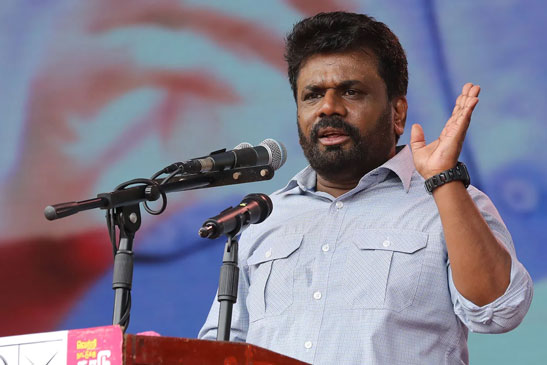
President Anura Kumara Dissanayake yesterday said a businessman, arrested with a caches of firearms, ammunition and hand grenades, had links to a politician, as authorities continued investigations into the seizure.
Addressing a public gathering in Badulla, the President said the suspect was among those being investigated in connection with operations targeting organised crime and that authorities were aware of his political connections.
He also referred to a video footage allegedly showing the suspect firing at people in the Weliweriya area, describing it as an example of the dangerous activities associated with individuals possessing illegal firearms.
The 38-year-old businessman, who is reportedly the owner of a cinema, and a relative of a politician, was arrested following a search conducted by officers of the Colombo District Crime Division at the cinema on Hanwella Road, in the Kirindiwela Police Division, on October 17.
Police said the search had been carried out based on information received by investigators.
The weapons and ammunition seized included two foreign-made pistols, a revolver, a foreign-made repeater firearm and a foreign-made 12-bore firearm.
Police also recovered hundreds of rounds of ammunition, including 398 rounds of 12-bore ammunition, 278 rounds of 9mm ammunition, 49 rounds of .32-calibre ammunition and 3,083 rounds of .22-calibre ammunition, along with two live hand grenades.
The suspect, a resident of the Millathe area, is being questioned as investigations continue.
The Police Media Division said police would seek a detention order to facilitate further questioning of the suspect and advance the investigation.
The Colombo District Crime Division is conducting further investigations into the cache of weapons and the suspect’s alleged activities and connections.

Showers or thundershowers will occur in most parts of the island after 1.00 p.m

CTU: Teacher shortage casts doubt on govt.’s education reforms

Norochcholai to remain offline for several days after blackout

President links businessman held with arms to politicians

CID probe sought into tusker’s death amid fears of elephant-killing syndicate

Bill to allow remote witness testimony in courts

‘Dates have the highest sugar content to fight Coronavirus’

Sunday Island 27 December – Headlines

#SundayIsland 17th December – Headlines

Sunday Island – 28th March

Sunday Island Headlines – 21 March

Sunday Island – 21st February – Headlines
-

 Latest News6 days ago
Nissanka’s return headlines Sri Lanka’s Test squad against Pakistan
-

 News6 days ago
Sri Lanka, India caught in US-Iran ship crisis
-

 Latest News6 days ago
Imran Khan’s PTI braces to fight federal takeover of Khyber Pakhtunkhwa
-

 Latest News6 days ago
Missiles intercepted near Riyadh after Saudi coalition hits Yemen fuel depot
-

 News3 days ago
Asgiri Mahanayake calls for immediate release of Gnanasara Thera
-

 Features2 days ago
Kotahena:A Small Enclave, An Extraordinary Legacy
-

 Latest News6 days ago
Kusal Mendis’ unbeaten 87 hands Sri Lanka consolation win
-
 News7 days ago
Mahinda and Shiranthi hospitalised