
News
Prez to consolidate power

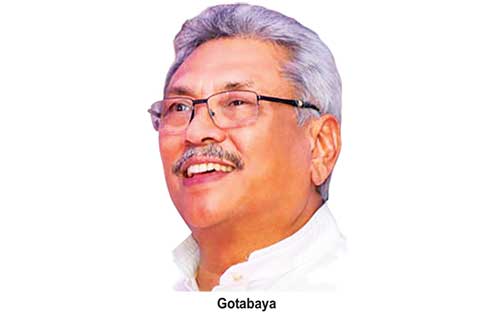
* Constitutional Council to be abolished
* No provision for civil society members
* Dual citizens can enter parliament
* A person aged 30 can run for President
* Restriction on number of Cabinet ministers, deputies removed
* Parliament can be dissolved within one year
* Romesh de Silva heads team tasked with preparing draft new Constitution
By Shamindra Ferdinando
The Constitutional Council (CC) introduced in terms of the 19th Amendment in 2015 is to be abolished by the 20th Amendment (20A) gazetted yesterday (3).
In place of the 10- member CC, the 20A has proposed a Parliamentary Council comprising the Prime Minister, the Speaker, the Opposition Leader and nominees (one each) of the Prime Minister and the Opposition Leader.
The 20th Amendment stipulates that the nominees of the Premier and the Opposition Leader belong to the communities other than the communities represented by the Prime Minister, the Speaker and the Opposition Leader.
In terms of the 19th Amendment, the CC headed by the Speaker, included three civil society representatives as well as a representative of the President. The 20A has done away with both civil society representatives and the presidential nominee.
Cabinet spokesman Mass Media Minister Keheliya Rambukwella and co-cabinet spokespersons, Ministers, Dr. Ramesh Pathirana and Udaya Gammanpila refrained from commenting on the provisions of the 20A in spite of the media repeatedly seeking their comments.
The Attorney General on Sept 2, ruled that the 20A could be enacted by a two-thirds vote sans a referendum. SLPP National List member Justice Minister Ali Sabry, PC, worked out the 20th Amendment.
In line with 20A, the President will have the authority to make appointments to the Election Commission, the Public Service Commission, the National Police Commission, the Human Rights Commission of Sri Lanka, the Commission to Investigate Allegations of Bribery or Corruption, the Finance Commission and the Delimitation Commission (all in Schedule I) having obtained observations of the Parliamentary Council.
The President will seek the observations of the Parliamentary Council in appointing the Chief Justice and judges of the Supreme Court, the President and the judges of the Court of Appeal and the members of the Judicial Service Commission other than the Chairman (all under Schedule II/Part I) and the Attorney General, the Auditor General, the Parliamentary Commissioner for Administration (Ombudsman) and the Secretary General (Schedule II/Part II).
In terms of the 20th Amendment, the immunity of the President, both in official and private capacity has been restored.
The SLPP, both at the presidential and parliamentary elections held in Nov 2019, and Aug 2020, respectively, campaigned for a two-thirds majority to do away with the 19th Amendment. The SLFP obtained 145 seats and with the support of its allies can muster the required two thirds.
There is provision in the 20th Amendment for the President to remove the nominees of the Prime Minister and the Opposition Leader in the Parliamentary Council.
The Parliamentary Council has to submit its observations as regards the President’s nominees to the above mentioned offices within one week. In case, the Parliamentary Council fails to respond within a week after the President sought its observations, there is provision for the President to go ahead with the appointments.
There is provision for leaders of recognised political parties to propose suitable persons to the Commissions categorized under Scheduled I for the President’s consideration.
The 20th Amendment also seeks to do away with the restriction on the number of ministers to 30 and non-cabinet ministers to 40 introduced by the 19th Amendment. The President will be head of the cabinet.
The 20th A seeks to provide space for the President, in consultation with the President, if necessary, to determine the number of ministers and also appoint ministers who are not members of the cabinet of ministers. There is also provision for the appointment of Deputy Ministers, from time to time, in consultation with the Prime Minister, if necessary, to assist members of the cabinet.
In terms of the 20th Amendment, the President can remove Prime Minister, a member of the cabinet, any other minister or a Deputy Minister.
The President has retained the constitutional authority to dissolve parliament after completion of sittings for a period of one year. The 19th Amendment, deprived the President the power to dissolve parliament until the House completed four and half years of five-year term.
The 20th Amendment has retained the five-year term for the President and two term restriction.
The 20th Amendment provides for the introduction of emergency Bills.
The age of presidential contestants has been reduced to 30 from 35. The 20th Amendment also paved the way for dual citizens to contest parliamentary election.
Addressing the media at the Information Department, cabinet spokesperson said that a nine member expert committee headed by Romesh De Silva, PC had been asked to prepare a new draft Constitution. The media was told that the 20th Amendment was temporary measure until consensus could be reached on a brand new Constitution. The team comprises Gamini Marapana, PC, Manohara de Silva, PC, Sanjiva Jayawardena, PC, Samantha Ratwatte, PC, Professor Nasima Kamurdeen, Dr. A Sarweswaran, Professor Wasantha Seneviratne and Professor G. H. Peiris.





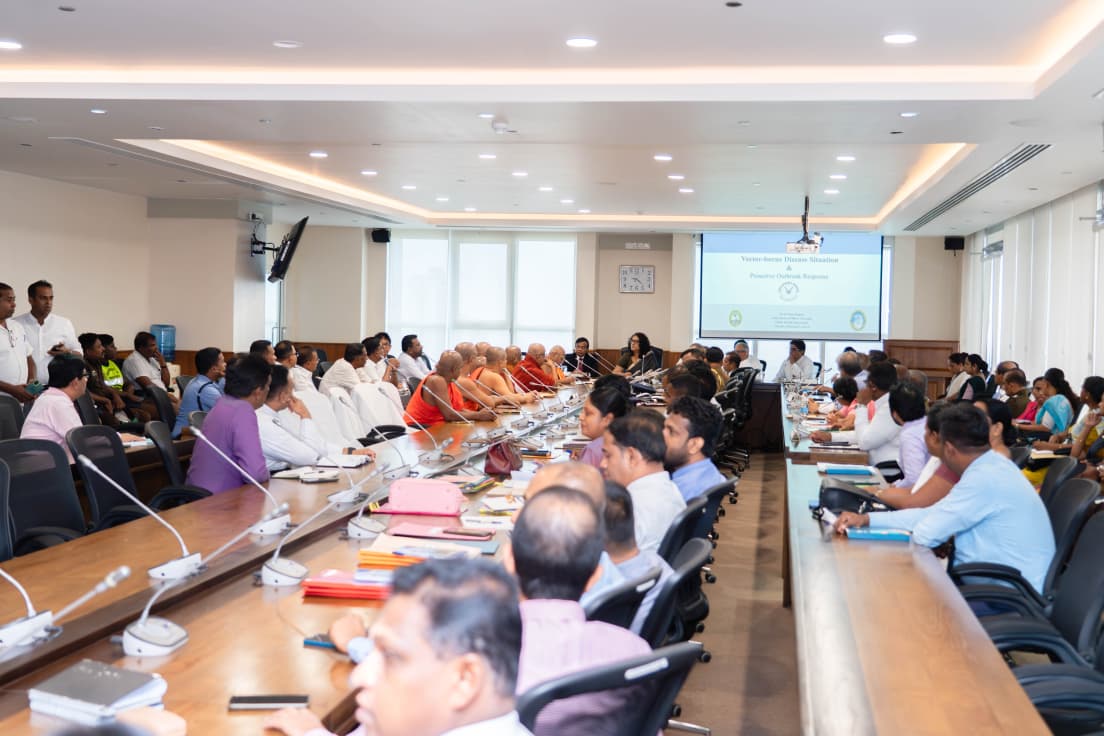
A decision has been taken to declare a Special Dengue Prevention Week from 15 to 21 of June by the Colombo District Dengue Control Committee to curb the spread of the disease in the Colombo District.
This decision was taken at the meeting of the Colombo District Dengue Control Committee held on Friday (12) at the Colombo District Secretariat under the patronage of Prime Minister Dr. Harini Amarasuriya.
Compared to last year, the number of dengue cases reported this year has increased significantly. According to the National Dengue Control Unit, approximately 39,100 dengue cases have been reported island wide to date, of which 25.8% have been recorded in the Colombo District. Following this situation, the Colombo District has been identified as a high-risk district.
Health authorities informed that the increasing spread of the disease has been influenced not only by the nature of circulating virus but also to the lack of sufficient immunity among the population. They further noted that the recent period of heavy rainfall has aggravated the spread of Dengue.
It was also identified that the current outbreak is being reported more frequently from public places such as government institutions, private establishments, schools, and religious venues rather than from residential premises. Observations have identified improperly managed solid waste and drainage systems in offices and other public locations as major breeding grounds for mosquitoes.
Accordingly, during the Dengue Prevention Week from 15 to 21 June, a series of measures will be implemented, including, organising community clean-up campaigns in government and private institutions, schools, residential areas, and other public spaces; Conducting inspections of high-risk premises by Divisional Secretariats and taking legal action, where necessary, followed by awareness programmes; Distributing informational leaflets, displaying banners, and carrying out public awareness campaigns through the media. Health authorities also requested school administrations not to involve students below Grade 10 in school cleaning programmes and to immediately notify the relevant Medical Officer of Health (MOH) office if a student is diagnosed with dengue.
The programme is expected to receive the active support and participation of the district’s political leadership, religious leaders of all faiths, public officials, local government institutions, the tri-forces, the police, and the general public.
The event was attended by the Chairperson of the District Coordination Committee, Members of Parliament, representatives of local government authorities, government secretaries, police officers, and officials representing the education and health sectors, among others.
[Prime Minister’s Media Division]
News
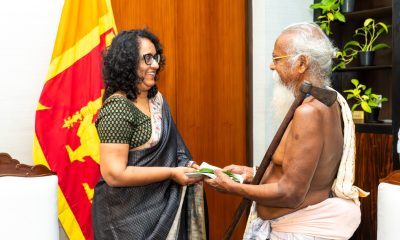
The leader of the indigenous Vedda community Uru Warige Wannila Aththo Meets Prime Minister Dr. Harini Amarasuriya

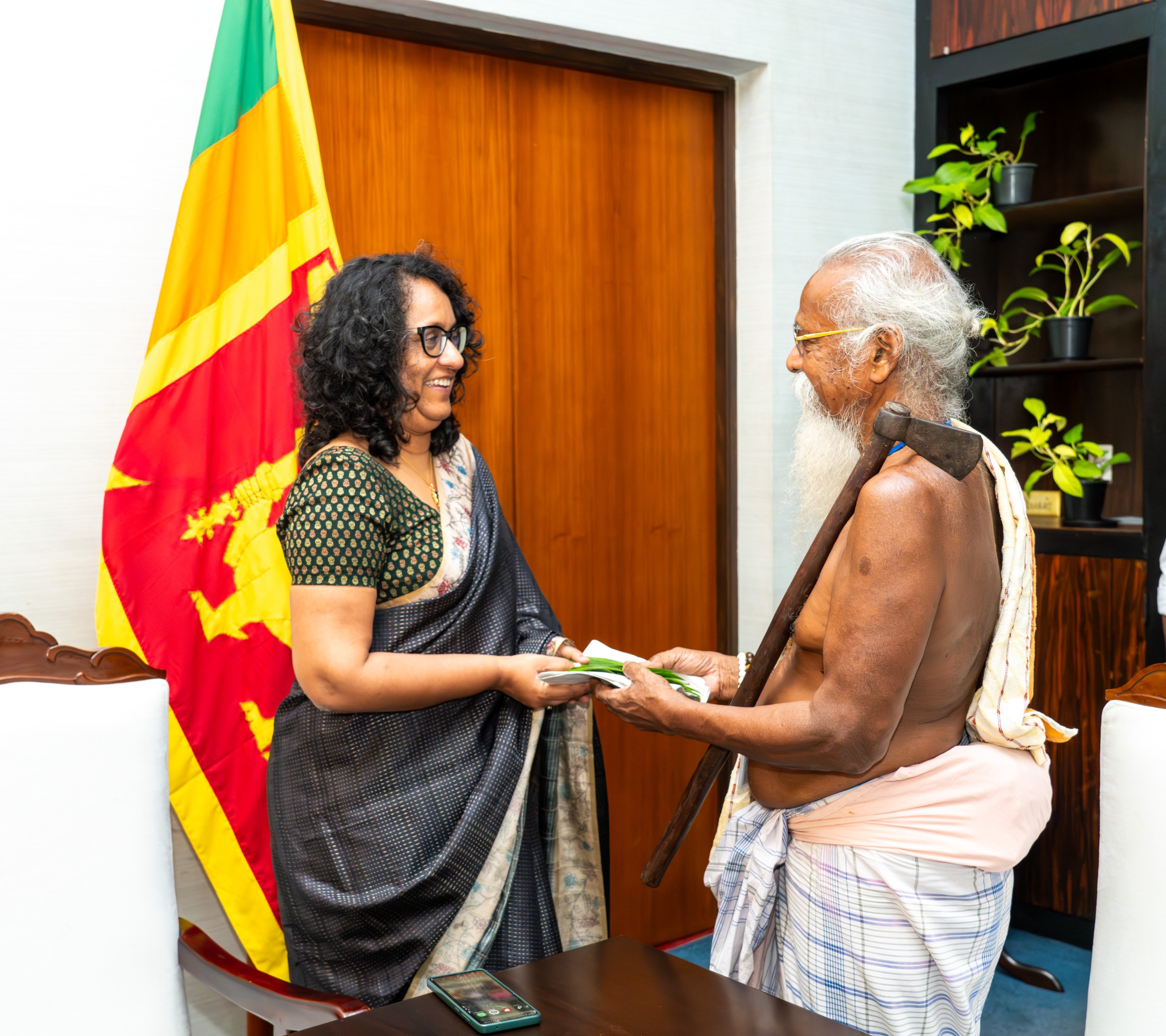
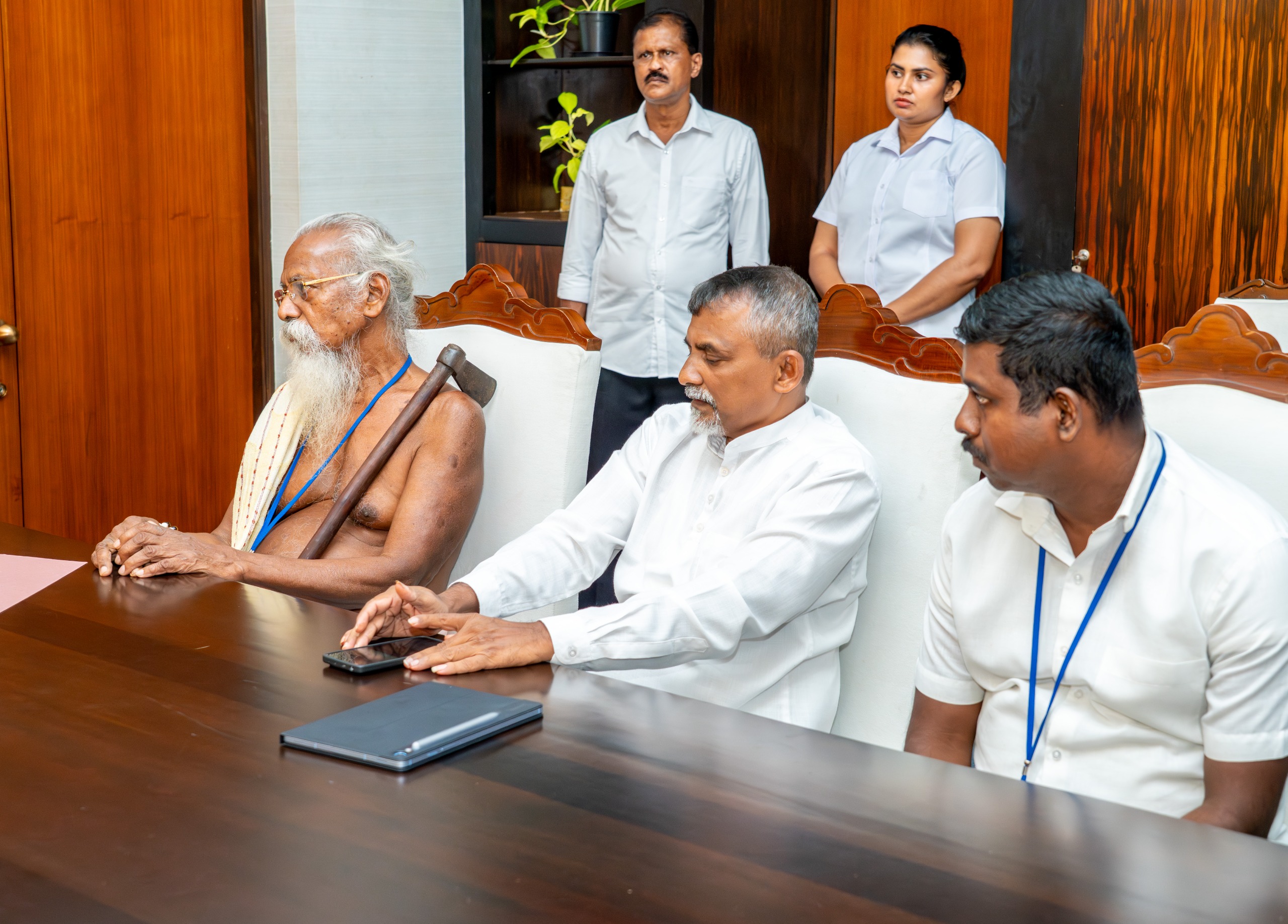
A meeting between the Leader of the indigenous Vedda community, Uru Warige Wannila Aththo and Prime Minister Dr. Harini Amarasuriya was held on Friday (12) at Parliament.
During the meeting, discussions focused on the challenges faced by the indigenous community and the Leader of the community, Uru Warige Wannila Aththo drew the Prime Minister’s attention to the difficulties encountered by indigenous people in accessing and using their traditional ancestral lands.
The Prime Minister emphasized that the indigenous community has the right to enjoy and use its traditional lands without obstruction and stated that the necessary legal measures to safeguard these rights would be expedited.
The Indigenous Leader also raised concerns over the lack of relief assistance provided so far to the residents of Hennanigala who were affected by the recent Cyclone Ditwah. The Prime Minister immediately instructed the relevant officials to ensure that these families receive proper relief assistance without delay.
The discussion also focused on the shortcomings and needs of the Dambana School, and the Prime Minister emphasized that the matter would be looked into and that the necessary measures would be taken.
[Prime Minister’s Media Division]

CLA backs concerns raised by BASL over move to increase retirement age of senior judges
The Commonwealth Lawyers Association (CLA) on Thursday noted concerns raised by the Bar Association of Sri Lanka (BASL) over a reported move to amend the Constitution to increase the retirement age of judges of the Court of Appeal and the Supreme Court.
In a statement, the CLA said the BASL, in a letter dated May 25, 2026, addressed to the President, had expressed grave concern that the Government was considering a constitutional amendment to extend the retirement age of senior judges, currently fixed under Article 107(5) of the Constitution.
Full text of CLA statement: The Commonwealth Lawyers Association (CLA) notes the letter of the Bar Association of Sri Lanka (BASL) issued on 25th May 2026 to His Excellency the President of Sri Lanka. The BASL has expressed grave concern that the Government of Sri Lanka is considering the introduction of an amendment to the Constitution to increase the retirement age of the Judges of the Court of Appeal and the Supreme Court.
The retirement age of senior judges is presently fixed by Article 107(5) of the Constitution. Any amendment would require a Constitutional Amendment. Constitutional amendments should not be made in a piecemeal or ad hoc manner as this could reduce the sanctity of the Constitution. Further, constitutional reform must be foreshadowed by adequate public and stakeholder consultation, as a requirement of due process in a democracy.
The Constitution of Sri Lanka recognizes the Independence of the Judiciary and its importance in preserving and maintaining the rule of law.
The Commonwealth (Latimer House) Principles on the three Branches of Government state in Principle IV that:
“An independent, impartial, honest and competent judiciary is integral to upholding the rule of law, engendering public confidence and dispensing justice.”
The CLA’s Goa Declaration 2023 states that:
“The independence and impartiality of the judiciary must be upheld and protected by governments, including under domestic laws, regulations and policies “
The CLA considers that any steps to diminish public confidence in the judiciary is antithetical to the rule of law and must be avoided.
The letter from BASL to the President of Sri Lanka states:
“Extending the retirement age of the sitting Judges of these Courts at this point of time is likely to be viewed by the public as a blatant attempt to interfere with the judiciary.”
The BASL letter goes on to state:
“The independence of the Judiciary and the public confidence reposed in it, are indispensable pillars of the rule of law and the democratic framework of (Sri Lanka). In that regard it is of paramount importance that the Judiciary must not only remain independent in fact but also must be seen by the public to be wholly independent, impartial, and free from even the slightest perception of influence, favour, accommodation, or impropriety.”
The CLA supports the reasoned and principled position adopted by BASL and calls upon the authorities in Sri Lanka:
To refrain from proceeding with the proposed constitutional amendments seeking to increase the retirement age of members of the Judiciary;
To resist piecemeal and ad hoc amendments to the Constitution of Sri Lanka.
To adhere to due process of consultation and stakeholder engagement in constitutional reform;
To desist from taking any steps which would undermine confidence in the Judiciary and irreparably diminish the independence of the judiciary; and
To ensure adherence to the rule of law and respect for the independence of the judiciary.

Special Dengue Prevention Week declared in Colombo District from June 15 to 21

The leader of the indigenous Vedda community Uru Warige Wannila Aththo Meets Prime Minister Dr. Harini Amarasuriya

SpaceX IPO debuts in US markets, Musk becomes world’s first trillionaire

Fans on concourses instead of in seats, claims FIFA

Co-hosts Canada begin 2026 World Cup campaign with a draw against Bosnia-Herzegovina.

Showers will occur at times in the Western, Sabaragamuwa and North-western provinces and in Galle, Matara, Kandy and Nuwara-Eliya districts

‘Dates have the highest sugar content to fight Coronavirus’

Sunday Island 27 December – Headlines

#SundayIsland 17th December – Headlines

Sunday Island – 28th March

Sunday Island Headlines – 21 March

Sunday Island – 21st February – Headlines
-
 News6 days ago
Women’s T20 World Cup 2026 warm-up: Chamari Athapaththu’s 94 helps Sri Lanka beat Pakistan
-

 News7 days ago
Lankan-Canadian inducted to Toronto Sports Hall of Fame
-

 Editorial6 days ago
Probe Sallay’s complaint
-
 News4 days ago
Local firms move millions of dollars overseas for phantom imports: Govt.
-

 Editorial7 days ago
Prez in the dock
-
 News2 days ago
CIABOC summons Yoshitha over his participation in British Navy training programme
-

 Features7 days ago
Entering MIT for my Ph.D program, coping with harsh Boston winter and breasting the tape
-
 Midweek Review4 days ago
July 09: An inexcusable overall security failure and exceptional contingency plan