
Editorial
Token cuts no more than a sick joke


Our regular contributor, Sanjeewa Jayaweera who’s written another article on economizing on our overseas missions in this issue of our newspaper has picked exactly the right word, “tokenism,” to describe what the government has done a few days ago to reduce Sri Lanka’s 67-strong overseas missions by three by closing the high commission in Nairobi and two consulates in Frankfurt and Cyprus. He had previously made the point that about half our embassies, high commissions and consulates must be closed, making a logical case for doing so in the context of the foreign exchange crunch and the consequent hardship Lankans are facing today. Diplomatic representation overseas is an expensive business and Jayaweera has dug out a number, an estimated USD 58 million, the country spends annually in maintaining this expensive luxury. How correct this is we do not know but it would be interesting to find out what this token saving after much huffing and puffing actually is.
It has frequently and correctly been said that we are a developing third world country with champagne tastes and a toddy income. There is no doubt that in the modern world all countries must have diplomatic representation where their interests so demand. That does not mean that missions must be established any and everywhere; wherever set up, they must meet realistic cost-benefit criteria. Given our economic circumstances particularly at present, the number of resident overseas missions we support is much more than sheer profligacy or extravagance. It is no less than an abomination. Singapore, for example, maintains 36 resident overseas missions against our 67, Jayaweera has said. This admirably led small city state is geographically much smaller than us, with a smaller population and with hardly any natural resources. But thanks to late Prime Minister Lee Kuan Yew and, to a lesser extent, his successors, it has achieved its current prosperity wielding influence disproportionate to its size. None of our foreign ministers, with the exception of the late Lakshman Kadirgamar, has demonstrated the intellectual brilliance and effectiveness of the various foreign ministers of Singapore. The name of S. Rajaratnam, a Singaporean of Lanka descent, who was his country’s foreign minister from 1965 and 1980 comes readily to mind.
But we stray from the point we wish to make here – that we can’t afford the number of overseas missions our taxpayers are made to fund despite limited resources in Treasury coffers and a foreign exchange strapped economy unable to pay even for essential imports like food, medicine and fuel. Apart from the wasteful expenditure incurred funding several unnecessary overseas missions, particularly during the more recent post-Independence years, our rulers have made a pork barrel of positions in such missions making patronage appointments from top down at all levels. Successive governments are guilty of this sin. It will be a useful exercise to add up the number of progeny and spouses as well as relatives of various ministers, politicians and holders of influential positions in the government who have benefited from such postings. Some of them have behaved disgracefully and at least one is facing the music abroad at present.
Family members of powerful politicians and others able to influence them have been found sinecures in our overseas missions for different reasons – all of them bad and at taxpayer expense. In some instances it was for purposes of educating children abroad and sometimes to even look after political brats studying in foreign universities. As Jayaweera has said today, even the professional foreign service is doing little to make effective cuts on expenditure on overseas missions by limiting their presence to only places where they are absolutely essential. He has admitted that this may well be for reasons of self-interest. Professional diplomats too would not want to reduce the number of countries where they may be posted. It is already very late to effect the necessary economies and it is high time that a government, blaming everything on Covid, makes a serious effort to make essential economies not only in the number of our overseas missions but also in other areas of public expenditure. Cutting a few litres of fuel from what is allowed to ministers and adding five years to the period an MP must serve to qualify for a pension is laughable.
While cutting down on our overseas diplomatic presence, we have to maximize the potential of those we retain by staffing and funding them adequately to enable them to cover a broader compass. It is essential that we get the maximum mileage from what we have. A single mission in a region can adequately represent us in many countries if their resources are effectively deployed. Better use can also be made of honorary consuls but the right appointments must be made. We’re told that various economies are being made within our overseas missions including limiting funds permitted for representation. It is no secret that some diplomats spend allowances paid to them to entertain their own friends and relatives rather than those in the countries to which they are accredited who can be of assistance to us.
Given the necessary will, much can be done to limit public expenditure. How serious our rulers are in effecting economies can be seen in the various year-end bashes hosted at public expense, greeting cards flying like confetti from political office holders and complementaries not paid out of their own pockets that are as widely distributed now as in better years. The private sector has made many visible economies in these areas. But not the government. The band will continue to play while the ship sinks – nava gilunath band chune as the local idiom has it.


Thursday 3rd September, 2026
The price of a kilo of wheat flour has recently been increased by Rs. 17, and the All Ceylon Bakery Owners’ Association has lost no time in jacking up the price of a 450g loaf of bread by Rs. 10. Loaves of bread weighing 450g are as rare as hen’s teeth in this country. But supposing the average weight of a loaf of bread is 450g, as claimed by bakers, and an equal amount of wheat flour is used to produce it, the actual cost increase resulting from the wheat flour price hike would be Rs. 7.65 per loaf, and not Rs. 10. However, it is public knowledge that producing a 450g loaf does not require an equivalent amount of wheat flour, since water and other ingredients also go into making bread. If this fact is taken into account, the cost increase attributable to the flour price hike should be even lower. Thus, the recent flour price hike has been a boon for bakers.
The Consumer Affairs Authority (CAA) is apparently unconcerned about how bakers do their cost calculations and determine bread prices. It also takes no action against those who sell bread below the stipulated weight. Consumers have to grin and bear it.
The government should direct the CAA to make a decisive intervention to prevent the exploitation of the public struggling to keep their heads above water, with the cost of living soaring. That is the least it can do to mitigate the impact of the double whammy of increasing cost of living and decreasing real incomes.
The government must not lose sight of the fact that Sri Lanka ranks 120th out of 130 countries in the latest Visual Capitalist global minimum wage comparison, based on data from the International Labour Organisation. The report puts Sri Lanka’s monthly minimum wage, measured in purchasing-power terms, at the equivalent of USD 200, placing it among the lowest in the world. Sri Lanka has also ranked last among the South Asian countries covered by the index. Pakistan has ranked 68th with USD 570, followed by Nepal at 78th with USD 490, Bangladesh at 89th with USD 379 and India at 111th with USD 233.
Bakers are not alone in exploiting the public. Eatery owners also fleece consumers mercilessly. They have also made the most of the recent wheat flour price hike, increasing the prices of a range of products, including hoppers, kottu roti and string hoppers, by disproportionate amounts. If the petrol price goes up by Rs. 30 per litre, trishaw operators jack up fare by Rs. 10 per km as if a tuk-tuk did only 3 km to a litre of petrol.
The government is no better. It continues to impose the so-called loss-recovery levy of Rs. 50 on a litre of fuel, claiming that the Ceylon Petroleum Corporation’s legacy debt has to be recovered. But the Petroleum Dealers’ Association is of the view that the CPC’s losses have been fully recovered. Its spokesman has told the media that there is no justification whatsoever for the continuation of the levy, and urged the government to remove it immediately and provide some relief to consumers. The government has not countered that claim.
Strangely, the Opposition remains silent on the exploitation of consumers. It has not demanded an explanation from the government regarding the petroleum dealers’ claim that the CPC’s losses have been fully recovered and the loss-recovery levy should be done away with. It has also refrained from challenging the padded cost calculations used by bakers, eatery owners, taxi operators and others to justify higher prices and fares. It lacks the courage to criticise private bus operators who have become a law unto themselves, even opposing the metro bus service, which has stood commuters in good stead.
Every nation is said to get the government it deserves. Apparently, the same goes for the Opposition in this country. Both the self-proclaimed Marxist government and its ‘social democratic’ rivals would do well to learn from India, where ‘Cockroaches’ have shaken the Modi administration and the Congress-led Opposition.
Wednesday 2nd September, 2026
Five suspects have been arrested over the recent detection of more than 471 kg of ‘ICE’ (crystal methamphetamine) concealed in a freight container. Three of the suspects are Pakistani nationals, and the others are Sri Lankans. The container carrying drugs came from Pakistan for onward shipment to Cameroon.
Given the sheer cargo volumes handled by ports around the world, there is reason to believe that a large number of shipping containers carrying narcotics go undetected. Freight containers have become a major conduit for the global trafficking of narcotics because millions of them move through ports with enormous volumes of legitimate cargo, and therefore drugs hidden in them often go undetected.
It may be recalled that last year, a World Customs Organization analysis of more than 2,600 drug seizures revealed that shipping containers accounted for 85% of detections and 80% of the narcotics seized by volume. Criminal networks exploit legitimate consignments, container structures and vulnerabilities in the maritime supply chain, sometimes with the help of insiders and powerful politicians in some countries. Cocaine reportedly dominates drug trafficking in containers though heroin, etc., are also smuggled by sea.
During the past one and a half decades or so, several major narcotics detections have involved freight containers in Sri Lanka. In 2010, a consignment of 35 kg of heroin was detected at the Port of Colombo in a container from Pakistan; in 2013, Customs seized 131 kg of heroin concealed in a 40-foot container from Karachi. In 2014, another haul of 93 kg of heroin was found in a container shipped from Pakistan. In 2017, a huge consignment of 218 kg of cocaine was detected in a shipping container carrying sugar. In 2023, Customs seized 16 kg of heroin concealed in a refrigerated container that had arrived from Karachi. These narcotics detections indicate that Sri Lanka has become a transit point for drugs trafficked among Asia, Europe and other destinations. Sri Lanka Customs itself has noted that narcotics are smuggled into the country not only for domestic consumption but also in transit to other countries linking Europe and Asia.
Narcotics as well as other illegal materials have been found even in shipping containers released by the Customs after inspections. The aforementioned stock of cocaine weighing 218 kilos was detected in a cargo container carrying imported sugar, delivered to the Ratmalana Economic Centre. Besides, in 2019, as many as 263 shipping containers were found to carry hospital waste from the UK. It was revealed that a considerable number of such containers had previously entered the country. This is why containers must not be released through the green channel.
Prudence demands that the Customs thoroughly inspect all containers for which politicians seek priority clearance. The haul of 131 kilos of heroin detected in 2013 had been smuggled in a shipping container that the Office of the then Prime Minister D. M. Jayaratne requested the Customs to green-channel on a priority basis.
In January 2025, the incumbent government made use of a port delay to have 323 red-flagged containers released without mandatory Customs checks. The possibility of racketeers making the most of that situation to secure the release of containers carrying contraband through the green channel cannot be ruled out.
The then Additional Director General of Customs Seevali Arukgoda, addressing the media, took great pains to convince the public that there had been no illegal cargo in the 323 containers. He said the Customs had perused all documents pertaining to them, and they had carried goods such as cement, textiles, motor spares, solar panels and pesticides. Smugglers do not mention illegal goods in the documents submitted to the Customs, do they? Most of all, how can the Customs say for sure that there were no illegal goods concealed in those containers that were not inspected at all? It was obvious that Arukgoda was defending the government. He was appointed Director General of Customs, and after his retirement, he was appointed to a senior post in the President’s Office.
The issue of green-channelling so many red-flagged containers will not go away; it is bound to be probed under a future government. The Commission to Investigate Allegations of Bribery or Corruption and the CID arrest former ministers and ex-bureaucrats for lesser offences.
Tuesday 1st September, 2026
Minister of Public Security Ananda Wijepala recently claimed that efforts to bring back former Central Bank Governor Arjuna Mahendran, a citizen of Singapore, wanted in connection with the 2015 Treasury bond scam, had run into a brick wall as the latter was living under a different name in Singapore. According to information received by the Criminal Investigation Department (CID), Mahendran had changed his name to Harjan Alexander, Wijepala said.
Mahendran has denied Minister Wijepala’s claim as baseless. He has issued a rebuttal, signing it as Arjuna Mahendran, and giving his residential address in Singapore. Has the CID got it wrong? Has Mahendran sought to mislead investigators? Has Singapore refused to extradite Mahendran? If so, why? What legal hurdles stand in the way of Mahendran’s extradition? The government should provide answers to these questions.
Following the conclusion of a special presidential commission probe into the bond scam, Mahendran left the country quietly when it became clear that the UNP-led Yahapalana government and the then Prime Minister Ranil Wickremesinghe, who had brought him as the Central Bank Governor, could no longer shield him. Political parties have since used the Treasury bond scam as a political slogan during election campaigns, but none of them is obviously keen to go to the extent of having Mahendran extradited.
When the SLPP made a solemn pledge, in the run-up to the 2019 regime change, to bring back Mahendran from Singapore expeditiously, if it was voted into power, we argued that he would be safe under an SLPP government as well, given his political connections. The SLPP government reneged on its promise after winning elections. As actor-turned-politician Ranjan Ramanayake has famously said, friendship transcends politics in Sri Lanka.
A brief look at political dynamics and alignments during the Yahapalana period may help one understand why the successors of the UNP-led government (2015-2019) have not pulled out all the stops in trying to have Mahendran extradited. It is doubtful whether there is any political party that has not benefited from the bond scammers’ largesse. Many MPs also received funds from the company involved in the bond scam.
The Yahapalana government’s survival, after losing a working majority due to the breakaway of the SLFP, with the then President Maithripala Sirisena turning hostile towards PM Wickremesinghe, was mainly due to successful political and legal interventions made by the JVP and the ITAK; they propped up that beleaguered administration, effectively frustrating the efforts of President Sirisena and former President Mahinda Rajapaksa to muster a working parliamentary majority after sacking Wickremesinghe as the PM and to dissolve Parliament when their plan went awry.
The NPP government, led by the JVP, does not want to open a can of worms by bringing Mahendran back to stand trial, for it was honeymooning with the UNP when the Treasury bond scam was committed in early 2015. The JVP was even represented on the Yahapalana government’s National Executive Council, at the time of the bond scam. One may recall that the COPE (Committee on Public Enterprises) under the then JVP MP Sunil Handunetti’s chairmanship, refrained from apportioning the blame for the bond scam to PM Wickremesinghe, as evident from its final report although the JVP is now castigating him.
The SJB bigwigs who have embarked on an anti-corruption crusade took great pains to cover up the bond scam in and outside Parliament, as members of the Yahapalana government. Some of them were members of the COPE; they even sought to dilute the COPE report on the bond scam by having a slew of footnotes incorporated into it. Unsurprisingly, the SJB leaders are not demanding Mahendran’s extradition. In fact, they pretend that the Treasury bond scam never happened, and Mahendran does not exist. So much for their commitment to upholding accountability.
Nothing could be more naïve than to expect any government to have Mahendran extradited. It is a textbook example of waiting for Godot.

22A: SC urged to suspend hearing, appoint full bench

Govt. seeks NATO assistance

Recent ‘Ice’ detection at the Colombo Port made on US intelligence – Embassy

Sri Lanka launches National Food Safety Policy with support from FAO and EU

Mendis, Nissanka return for England white ball series

Janashakthi Life delivers 36% revenue growth, ‘outperforming the industry’

‘Dates have the highest sugar content to fight Coronavirus’

Sunday Island 27 December – Headlines

#SundayIsland 17th December – Headlines

Sunday Island – 28th March

Sunday Island Headlines – 21 March

Sunday Island – 21st February – Headlines
-

 News6 days ago
Eight politicians in drug kingpin probe
-

 Features4 days ago
“Wrap Me Up in My Blazer”— A Gentlemanly Bradby Reminiscence
-

 Business6 days ago
Sri Lanka opens up: A new season of direct connectivity
-

 Features3 days ago
When Sri Lankan stories find their own voice
-
 Latest News7 days ago
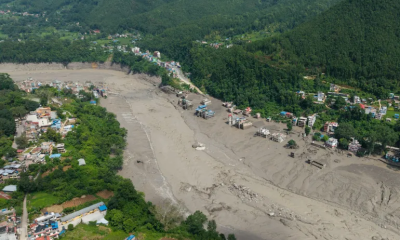
Nepal-Tibet floods: What happened, what caused them and who is missing?
-

 Features6 days ago
Redefining ageing in Sri Lanka
-

 Editorial6 days ago
The toxic legacy of two lakes
-
 Business6 days ago
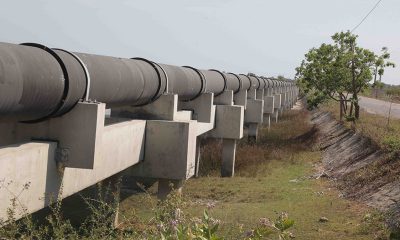
Jaffna Teaching Hospital secures lifeline water supply via ADB-funded Thalaiyadi sea water desalination plant