
Features
Climate repair through rubber cultivation


by Dr Sunil.E Fernando
Environmental Benefit of Growing Rubber
Hevea brasiliensis, or the rubber tree, began its epic journey in 1875, when Sir Henry Wickham brought 70,000 seeds from the Rio Tapajos area, in the upper Amazon, to Kew gardens in London. Of these, 1911 seedlings were planted in the Gampaha botanical gardens, initiating an agricultural revolution in S-E Asia and an industrial revolution globally. Apart from giving 14 million tons of Natural Rubber (NR) consumed annually, worldwide, rubber trees have other attributes (listed below) as well.
 * Extracting 24.9 Kilograms of Carbon dioxide which is also a Greenhouse Gas (GHG) from air, to produce one Kilogram of latex
* Splitting Oxygen from Carbon dioxide and water and adding it to the atmosphere while producing rubber latex.
* Yielding 2.1 cubic meters/tree of wood from Carbon dioxide as biomass in every 30-year cycle of the tree.
* Producing easily biodegradable litter, compared to monocultures like Teak.
* Requiring comparatively less chemical fertilisers, water and pesticides.
* Retaining biodiversity as a tropical plant by co-existing with other species and allowing for intercropping E.g Ginger, Turmeric, Banana, and even Coffee and Cinnamon.
* The uniqueness of the rubber tree is its ability to fix Carbon dioxide almost instantaneously into a rubber hydrocarbon on a daily basis with just water and energy from sunlight. For a similar conversion, nature took millions of years, turning biomass to a hydrocarbon, Petroleum.
Thus, the rubber tree is a natural chemical factory trapping energy from the Sun, propagating a chemical reaction giving, a hydrocarbon, while releasing Oxygen to the atmosphere and accumulating a renewable timber resource. Tapped from year five , the tree removes GHG by converting it to a useful commercial raw material, unlike any other plant species, for 11 months of the year for a minimum period of 25 years.
Why Excess Carbon Dioxide is bad?
Carbon dioxide present in the atmosphere is a double-edged sword. It is an essential prerequisite to make one of the most vital building materials, Carbohydrates, to benefit all living forms. However, its increase in the atmosphere, and in the Oceans, brings about undesirable effects of global warming. “CARBON DIOXIDE-Earth” reports that, its concentration increased from 330 Parts per million (ppm) in 1975 to 408 in September 2019, and further to 415 ppm in September 2020.
Carbon dioxide absorbs Infrared Radiation (heat radiation) from the Sun through molecular vibrations. Unlike other common gases in the atmosphere, like Nitrogen and Oxygen, it emits this absorbed energy back into the surrounding warming the location. Ozone, Methane and Nitrous Oxide are other GHG’s function in a similar manner, absorbing energy from the Sun and emitting heat thus warming the atmosphere.
However, GHG’s also performs a useful function by maintaining atmospheric temperatures, without converting Earth into an ice ball. Nevertheless, high concentration of GHG in atmosphere will emit more heat increasing atmospheric temperature beyond what is required to sustain and enhance global warming. The imbalance in CHG is created by excessive human activity like burning fossil fuels and releasing gases like Sulphur dioxide responsible for acid rain. While farming and especially raising cattle/sheep for meat as well, release large quantities of Carbon dioxide and Methane, etc. In addition, abandoned oil/gas wells and coal mines emit Methane is large quantities as well increasing CHG in the atmosphere.
Two confirmed methods to lower ill effects of GHG’s are,
a) Produce less of it, and
b) Increase plant cover
Carbon dioxide is the raw material for all forms of Carbohydrates, Proteins and Fats produced by plants providing for growth and energy in all life forms. What is alarming is the excess Carbon dioxide produced, through human interaction accumulating in the atmosphere and in Oceans. Dissolved Carbon dioxide in seawater raises temperature while forming Carbonic acid, thus increasing Ocean acidification. Ocean acidification reduces the ability of sea creatures to fix Calcium as Calcium Carbonate in bones and shells. While Calcium carbonate helps build rigid structures in their bodies it is another form of Carbon sink, besides being a valuable raw material, as well.
Carbon Dioxide Accumulation
Antoine Lavoisier said that in a chemical reaction, matter is neither created nor destroyed. Though producing GHG’s through human intervention a new matter is not created, it leads to an unsustainable imbalance in the environment. This is what causes the problem. See Figure.
In the 21st century Carbon dioxide cycle, there are less of trees and more exhausts due to auto and factory emissions leading to this imbalance. Carbon dioxide is a GHG not only produced by burning fuels and biomass. Humans exhale One Kilogram of it daily. Increase in human population does not increase Carbon dioxide as what we exhaled came from plant-based materials. But when the human population went up from 1 billion 200 years ago to seven billion as of now, increase in human activity led to an imbalance of CHG in the atmosphere and in the Oceans due to accelerated faster release of these gases. Meanwhile, excessive consumption and population pressure, led to lower forest cover that can absorb Carbon dioxide. Thus, the imbalance of accumulating gases that are capable of absorbing excessive amount of heat from the sun, and releasing it through molecular vibrations creates the global warming experienced now.
Biosynthesis of Natural Rubber (NR)
About 2000 plant species produce natural rubber as biological necessity, but Hevea brasiliensis (botanical name for normal rubber tree) produce commercially exploitable dispersion of it in water as latex. The biological reasons for production rubber latex by the rubber tree is not clear, but having a layer of latex just below the top of the bark of the tree, prevent pathogenic microorganisms entering the tree in case of an injury to it.
Latex, which contains about 30% rubber hydrocarbon, is found in horizontally arranged interconnected cells called Laticifers in the bark of the tree. Latex is commercially extracted by making careful incision or “tapping” of the bark. High yielding rubber plantations with about 400 trees per Hectare have reported a production of 2500 Kg/Rubber/Year. However, the theoretical yield potential of rubber is estimated at, 7,000 to 12,000 kg/Ha/Year. A tree giving 15 to 30 grams of rubber per day, tapping on alternative days, yield 2.6-5.2 Kg of rubber per year. According to Apollo Vredestein R and D, on average 1.9 Kg of natural rubber goes into a tire and a tree produces enough rubber to make 2 tires per year or 50 in its lifetime.
Plants take in Carbon dioxide for survival and convert it into an edible/useful form of a Carbohydrate, containing Carbon, Hydrogen and Oxygen as the first stage. Part of the Carbohydrate becomes a source of energy and the rest become precursor for Fats and Proteins, which perform vital functions of all living organisms. Plants also convert carbohydrates into other polymeric forms including Cellulose. Some Cellulose produced ends up as wood becoming a Carbon sink for a considerable period of time.
In the rubber trees, the process of Carbon Dioxide fixation extends further by converting part of Carbohydrates produced, consisting of Carbon, Hydrogen and Oxygen into a rubber containing only Carbon and Hydrogen, which is more akin to Petroleum. The wonder tree makes this hydrocarbon in a few minutes, while nature took millions of years to convert biomass derived from Carbon dioxide like cellulose to give Petroleum.
(To be continued)



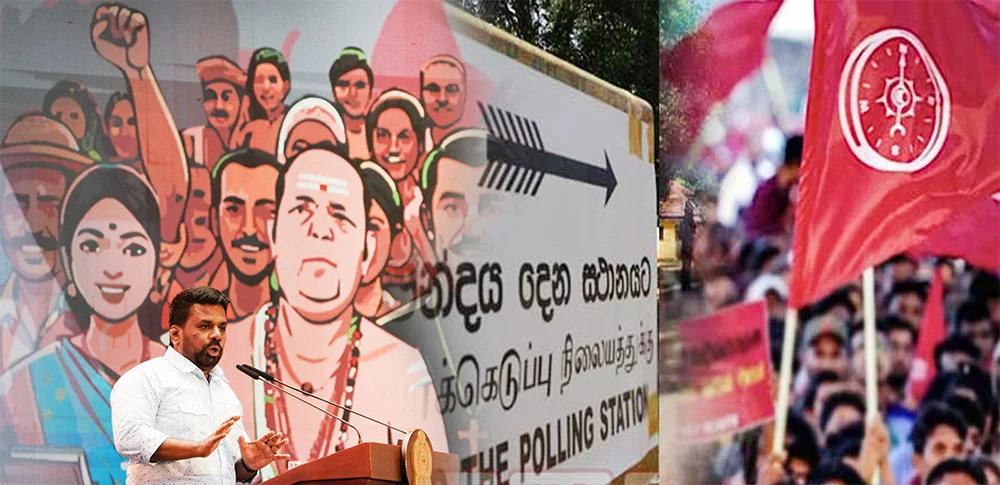
 President Anura Kumara Dissanayake’s demeanour, body language, and speaking style appear to have changed noticeably in recent weeks, a visible sign of embarrassment. The most likely reason is a stark contradiction between what he once publicly criticised and analysed so forcefully, and what his government is actually doing today. His own recent speeches seem to reflect that contradiction, sometimes coming across as confused and inconsistent. This is becoming widely known, not just through social media, YouTube, and television discussions, but also through speeches on the floor of Parliament itself.
Doing exactly what the previous government did
What is now becoming clear is that instead of doing things the way the President promised, his government is simply carrying on with what the previous administration, particularly Ranil Wickremesinghe’s government, was already doing. Critically, some of the most senior positions in the state, positions that demand the most experienced and capable officers, are being filled by people who are loyal to the JVP/NPP party but lack the relevant qualifications and track record.
Such politically motivated appointments have already taken place across various government ministries, some state corporations, the Central Bank, the Treasury, and at multiple levels of the public service. There have also been forced resignations, bans on resignations, and transfers of officials.
What makes this particularly serious is that President Dissanayake has had to come to Parliament repeatedly to defend and “clean up” the reputations of officials he himself appointed. This looks, at times, like a painful and almost theatrical exercise.
The coal procurement scandal, and a laughable inquiry
The controversy around the country’s coal power supply has now clearly exposed a massive disaster: shady tenders, damage to the Norochcholai power plant, rising electricity bills due to increased diesel use to compensate, a shortage of diesel, higher diesel prices, and serious environmental damage. This is a wide and well-documented catastrophe.
Yet, when a commission was appointed to investigate, the government announced it would look into events going back to 2009, which many have called an absurd joke, clearly designed to deflect blame rather than find answers.
The Treasury scandal, 10 suspicious transactions
At the Treasury, what was initially presented as a single transaction, is alleged to involve 10 transactions, and it is plainly a case of fraud. A genuine mistake might happen once or twice. As one commentator said sarcastically, “If a mistake can happen 10 times, it must be a very talented hand.” These explanations are being treated as pure comedy.
Attempts to justify all of this have sometimes turned threatening. A speech made on May 1st by Tilvin Silva is a case in point, crude and menacing in tone.
Is the government losing its grip?
Former Minister Patali Champika has said the government is now suffering from a phobia of loss of power, meaning it is struggling to govern effectively. Other commentators have noted that the NPP/JVP may have taken on a burden too heavy to carry. Political cartoons have depicted the NPP’s crown loaded with coal, financial irregularities, and political appointments, bending under the weight.
The problem with appointing loyalists over qualified professionals
 Appointing own supporters to senior positions is not itself unusual in politics. But it becomes a betrayal of public trust when those appointed lack the basic qualifications or relevant experience for the roles they are given.
A clear example is the appointment of the Treasury Secretary, someone who was visible at virtually every NPP election campaign event, but whose qualifications and exposure/experiences may not match the demands of such a critical position. Even if someone has a doctorate or professorship, the key question is whether those qualifications are relevant to the role, and whether that person has the experience/exposure to lead a team of seasoned professionals.
By contrast, even someone without formal academic credentials can succeed if they have the right skills and surround themselves with advisors with relevant exposure. The real failure is when loyalty to a political party overrides all other considerations, that is a fundamental betrayal of responsibility.
The problem is not unique to this government. In 2015, the appointment of Arjuna Mahendran as Central Bank Governor was a similar blunder. His tenure ended in scandal involving insider dealing and bond market manipulation. However, in that case, the funds involved were frozen and later confiscated by the following government, however legally questionable that process was.
The current Treasury losses, by contrast, may be unrecoverable. Critics say getting that money back would be next to impossible.
The broader damage: Demoralisation of capable officials
When loyalists are placed above competent career officials in key positions, it demoralises the best public servants. Some begin to comply in fear; others lose motivation entirely. The professional hierarchy breaks down. Junior officials start looking over their shoulders instead of doing their jobs. This collective dysfunction is ultimately what destroys governments.
Sri Lanka’s pattern: every government falls
This pattern is deeply familiar in Sri Lankan history. The SWRD Bandaranaike government, which swept to power in 1956 on a wave of popular support, had declined badly by 1959. The coalition government, which came to power reducing the opposition to eight seats, lost in 1977, and, in turn, the UNP, which came in on a landslide, in 1977, crushing the SLFP to just eight seats, suffered a similar fate by 1994.
Mahinda Rajapaksa came to power in 2005 by the narrowest of margins, in part because the LTTE manipulated the Northern vote against Ranil Wickremesinghe. But he was re-elected in 2010 on the strength of ending the war against the LTTE. Still, by 2015, he was voted out, because the benefits of winning the war were never truly delivered to ordinary people, and because large-scale corruption had taken root in the meantime. Gotabaya Rajapaksa didn’t even last long enough to see his term end.
Now, this government, too, is showing early signs of the same decline.
The ideological contradiction at the heart of the NPP
There is another challenge: though the JVP presents itself as a left-wing, Marxist-socialist party, many of those who joined the broader NPP coalition, businesspeople, academics, professionals, do not hold such ideological views. Balancing a left-leaning party with a centre-right coalition is extremely difficult. The inevitable tension between the two pulls the government in opposite directions.
The silver lining, however, is that this has produced a growing class of “floating voters”, people not permanently tied to any party, and that is actually healthy for democracy. It keeps governments accountable. Independent election commissions and civil society organisations have a major role to play in informing these voters objectively.
In more developed democracies, voters receive detailed candidate profiles and well-researched information alongside their ballot papers, including, for example, independent expert analyses of referendum questions like drug legalisation. Sri Lanka is still far from that standard. Here, many people vote the same way as their parents. In other countries, five family members might each vote differently without it being a scandal.
Three key ministries, under the President himself, all in trouble
President Dissanayake currently holds three of the most powerful portfolios himself: Defence, Digital Technology, and Finance. All three are now widely seen as performing poorly. Many commentators say the President has “failed” visibly in all three areas. The justifications offered for these failures have themselves become confused, contradictory, and, at times, just plain pitiable.
The overall picture is one of a government that looks helpless, reduced to making excuses and whining from the podium.
A cautious hope for recovery
There are still nearly three years left in this government’s term. There is time to course-correct, if they act quickly. We sincerely hope the government manages to shed this sense of helplessness and confusion, and finds a way to truly serve the country.
(The writer, a senior Chartered Accountant and professional banker, is Professor at SLIIT, Malabe. The views and opinions expressed in this article are personal.)

The appointment of former minister Eran Wickremaratne to chair the Sri Lanka Cricket Transformation Committee is significant for more than the future of cricket. It signals a possible shift in the culture of governance even as it offers Sri Lankan cricket a fighting possibility to get out of the doldrums of failure. There have been glorious patches for the national cricket team since the epochal 1996 World Cup triumph. But these patches of brightness have been few and far between and virtually non-existent over the past decade. At the centre of this disaster has been the failures of governance within Sri Lanka Cricket which are not unlike the larger failures of governance within the country itself. The appointment of a new reform oriented committee therefore carries significance beyond cricket. It reflects the wider challenge facing the country which is to restore trust in public institutions for better management.
The appointment of Eran Wickremaratne brings a professional administrator with a proven track record into the cricket arena. He has several strengths that many of his immediate predecessors lacked. Before the ascent of the present government leadership to positions of power, Eran Wickremaratne was among the handful of government ministers who did not have allegations of corruption attached to their names. His reputation for financial professionalism and integrity has remained intact over many years in public life. With him in the Cricket Transformation Committee are also respected former cricketers Kumar Sangakkara, Roshan Mahanama and Sidath Wettimuny together with professionals from legal and business backgrounds. They have been tasked with introducing structural reforms and improving transparency and accountability within cricket administration.
A second reason for this appointment to be significant is that this is possibly the first occasion on which the NPP government has reached out to someone associated with the opposition to obtain assistance in an area of national importance. The commitment to bipartisanship has been a constant demand from politically non-partisan civic groups and political analysts. They have voiced the opinion that the government needs to be more inclusive in its choice of appointments to decision making authorities. The NPP government’s practice so far has largely been to limit appointments to those within the ruling party or those considered loyalists even at the cost of proven expertise. The government’s decision in this case therefore marks a potentially important departure.
National Interest
There are areas of public life where national interest should transcend party divisions and cricket, beloved of the people, is one of them. Sri Lanka cannot afford to continue treating every institution as an arena for political competition when institutions themselves are in crisis and public confidence has become fragile. It is therefore unfortunate that when the government has moved positively in the direction of drawing on expertise from outside its own ranks there should be a negative response from sections of the opposition. This is indicative of the absence of a culture of bipartisanship even on issues that concern the national interest. The SJB, of which the newly appointed cricket committee chairman was a member objected on the grounds that politicians should not hold positions in sports administration and asked him to resign from the party. There is a need to recognise the distinction between partisan political control and the temporary use of experienced administrators to carry out reform and institutional restructuring. In other countries those in politics often join academia and civil society on a temporary basis and vice versa.
More disturbing has been the insidious campaign carried out against the new cricket committee and its chairman on the grounds of religious affiliation. This is an unacceptable denial of the reality that Sri Lanka is a plural, multi ethnic and multi religious society. The interim committee reflects this diversity to a reasonable extent. The country’s long history of ethnic conflict should have taught all political actors the dangers of mobilising communal prejudice for short term political gain. Sri Lanka paid a very heavy price for decades of mistrust and division. It would be tragic if even cricket administration became another arena for communal suspicion and hostility. The present government represents an important departure from the sectarian rhetoric that was employed by previous governments. They have repeatedly pledged to protect the equal rights of all citizens and not permit discrimination or extremism in any form.
The recent international peace march in Sri Lanka led by the Venerable Bhikkhu Thich Paññākāra from Vietnam with its message of loving kindness and mindfulness to all resonated strongly with the masses of people as seen by the crowds who thronged the roadsides to obtain blessings and show respect. This message stands in contrast to the sectarian resentment manifested by those who seek to use the cricket appointments as a weapon to attack the government at the present time. The challenges before the Sri Lanka Cricket Transformation Committee parallel the larger challenges before the government in developing the national economy and respecting ethnic and religious diversity. Plugging the leaks and restoring systems will take time and effort. It cannot be done overnight and it cannot succeed without public patience and support.
New Recognition
There is also a need for realism. The appointment of Eran Wickremaratne and the new committee does not guarantee success. Reforming deeply flawed institutions is always difficult. Besides, Sri Lanka is a small country with a relatively small population compared to many other cricket playing nations. It is also a country still recovering from the economic breakdown of 2022 which pushed the majority of people into hardship and severely weakened public institutions. The country continues to face unprecedented challenges including the damage caused by Cyclone Ditwah and the wider global economic uncertainties linked to conflict in the Middle East. Under these difficult circumstances Sri Lanka has fewer resources than many larger countries to devote to both cricket and economic development.
When resources are scarce they cannot be wasted through corruption or incompetence. Drawing upon the strengths of all those who are competent for the tasks at hand regardless of party affiliation or ethnic or religious identity is necessary if improvement is to come sooner rather than later. The burden of rebuilding the country cannot rest only on the government. The crisis facing the country is too deep for any single party or government to solve alone. National recovery requires capable individuals from across society and from different sectors such as business and civil society to work together in areas where the national interest transcends party politics. There is also a responsibility on opposition political parties to support initiatives that are politically neutral and genuinely in the national interest. Not every issue needs to become a partisan battle.
Sri Lanka cricket occupies a special place in the national consciousness. At its best it once united the country and gave Sri Lankans a sense of pride and international recognition. Restoring integrity and professionalism to cricket administration can therefore become part of the larger task of national renewal. The appointment of Eran Wickremaratne and the new committee, while it does not guarantee success, is a sign that the political leadership and people of the country may be beginning to mature in their approach to governance. In recognising the need for competence, integrity and bipartisan cooperation and extending it beyond cricket into other areas of national life, Sri Lanka may find the way towards more stable and successful governance..
by Jehan Perera

Court vacation this year came with an unexpected lesson, not from a courtroom but from the streets of Dhaka — a city that moves, quite literally, on three wheels.
Above the traffic, a modern metro line glides past concrete pillars and crowded rooftops. It is efficient, clean and frequently cited as a symbol of progress in Bangladesh. For a visitor from Sri Lanka, it inevitably brings to mind our own abandoned light rail plans — a project debated, politicised and ultimately set aside.
But Dhaka’s real story is not in the air. It is on the ground.
Beneath the elevated tracks, the streets belong to three-wheelers. Known locally as CNGs, they cluster at junctions, line the edges of markets and pour into narrow roads that larger vehicles avoid. Even with a functioning rail system, these three-wheelers remain the city’s most dependable form of everyday transport.
Within hours of arriving, their importance becomes obvious. The train may take you across the city, but the journey does not end there. The last mile — often the most complicated part — belongs entirely to the three-wheeler. It is the vehicle that gets you home, to a meeting or simply through streets that no bus route properly serves.
There is a rhythm to using them. A destination is mentioned, a price is suggested and a brief negotiation follows. Then the ride begins, edging into traffic that feels permanently compressed. Drivers move with instinct, adjusting routes and squeezing through gaps with a confidence built over years.
It is not polished. But it works.
And that is where the comparison with Sri Lanka becomes less about what we lack and more about what we already have.
Back home, the three-wheeler has long been part of daily life — so familiar that it is often discussed only in terms of its problems. There are frequent complaints about fares, refusals or the absence of meters. More recently, the industry itself has become entangled in politics — from fuel subsidies to regulatory debates, from election-time promises to periodic crackdowns.
In that process, the conversation has shifted. The three-wheeler is often treated as a problem to be managed, rather than a service to be strengthened.
Yet, seen through the experience of Dhaka, Sri Lanka’s system begins to look far more settled — and, in many ways, ahead.
There is a growing structure in place. Meters, while not perfect, are widely recognised. Ride-hailing apps have added transparency and reduced uncertainty for passengers. There are clearer expectations on both sides — driver and commuter alike. Even small details, such as designated parking areas in parts of Colombo or the increasing standard of vehicles, point to an industry slowly moving towards professionalism.
Just as importantly, there is a human element that remains intact.
In Sri Lanka, a three-wheeler ride is rarely just a transaction. Drivers talk. They offer directions, comment on the day’s news, or share local knowledge. The ride becomes part of the social fabric, not just a means of getting from one point to another.
In Dhaka, the scale of the city leaves less room for that. The interaction is quicker, more direct, shaped by urgency. The service is essential, but it is under constant pressure.
What stands out, across both countries, is that the three-wheeler is not a temporary or outdated mode of transport. It is a necessity in dense, fast-growing Asian cities — one that fills gaps no rail or bus system can fully address.
Large infrastructure projects, like light rail, are important. They bring efficiency and long-term capacity. But they cannot replace the flexibility of a three-wheeler. They cannot reach into narrow streets, respond instantly to demand or provide that crucial last-mile connection.
That is why, even in a city that has invested heavily in modern rail, Dhaka still runs on three wheels.
For Sri Lanka, the lesson is not simply about what could have been built, but about what should be better managed and valued.
The three-wheeler industry does not need to be politicised at every turn. It needs steady regulation — clear fare systems, proper licensing, safety standards — alongside encouragement and recognition. It needs to be seen as part of the solution to urban transport, not as a side issue.
Because for thousands of drivers, it is a livelihood. And for millions of passengers, it is the most immediate and reliable form of mobility.
The tuk-tuk may not feature in grand policy speeches or infrastructure blueprints. It does not run on elevated tracks or attract international attention. But on the ground, where daily life unfolds, it continues to do what larger systems often struggle to do — show up, adapt and keep moving.
And after watching Dhaka’s streets — crowded, relentless, yet functioning — that small, three-wheeled vehicle feels less like something to argue over and more like something to get right.
(The writer is an Attorney-at-Law with over a decade of experience specialising in civil law, a former Board Member of the Office of Missing Persons and a former Legal Director of the Central Cultural Fund. He holds an LLM in International Business Law)
by Sampath Perera recently in Dhaka, Bangladesh

Ahmedabad to host IPL 2026 final on May 31

Man charged with attempted Trump assassination indicted for assaulting Secret Service officer

Vivek Ramaswamy wins Republican nomination for Ohio governor

Trump says US to pause operation to guide vessels through Strait of Hormuz

Samson, Kartik, spinners set up Chennai Super King’s clinical win

State Banquet Hosted by the President for the Maldivian President and Delegation

‘Dates have the highest sugar content to fight Coronavirus’

Sunday Island 27 December – Headlines

#SundayIsland 17th December – Headlines

Sunday Island – 28th March

Sunday Island Headlines – 21 March

Sunday Island – 21st February – Headlines
-

 News6 days ago
Rooftop Solar at Crossroads as Sri Lanka Shifts to Distributed Energy Future
-
 News1 day ago
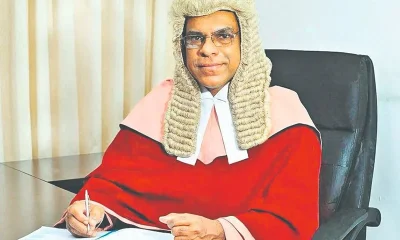
CJ urged to inquire into AKD’s remarks on May 25 court verdict
-
 News5 days ago
“Three-in-one blood pressure pill can significantly reduce risk of recurrent strokes”
-
 News2 days ago
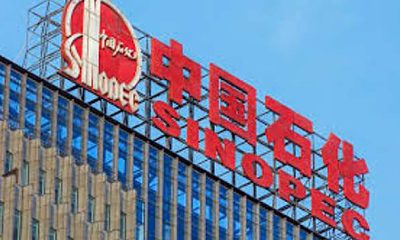
USD 3.7 bn H’tota refinery: China won’t launch project without bigger local market share
-

 News5 days ago
Alarm raised over plan to share Lanka’s biometric data with blacklisted Indian firm
-
 News4 days ago
Ten corruption cases set for court in May, verdict ordered in one case – President
-
 News3 days ago
Easter Sunday Case: Ex-SIS Chief concealed intel, former Defence Secy tells court
-

 News5 days ago
USD 2.5 mn fraud probe: Interdicted MoF official found dead at home