
News
Research finds palm oil cultivation is an eco-disaster


By Ifham Nizam
A study conducted by the Central Environmental Authority (CEA) had revealed that an oil palm tree in particular needs about 400 litres of water per day. Therefore, there was a risk of groundwater depletion due to continuing with palm oil cultivation, a senior Environment Ministry official warned.
The government has taken a strong decision against promoting Palm Oil (Katu pol) cultivation in Sri Lanka, especially taking into consideration its disastrous impacts on endemic species here, Environment Minister Mahinda Amaraweera said.
Minister Amaraweera inquired from officials of the Central Environmental Authority regarding the latest situation on the Palm Oil cultivation undertaken in the country, especially by certain plantation companies.
The Minister stressed that the government had taken steps to deactivate palm oil cultivation in several stages and not to promote it in any way.
Also, in line with the recommendations made to the Presidential Task Force for a Sustainable Economic Development in the face of climate change, which has recommended the phasing out of the palm oil cultivation already undertaken here and instead the cultivation of eco-friendly plants on those lands.
The Minister made the inquiries while discussing the reports prepared for tabling in Parliament on the five year audit reports of the Central Environmental Authority and GSMB Technical Services (PVT) Limited, a state-owned enterprise. Dr. Anil Jasinghe, Secretary to the Ministry of Environment and Hemantha Jayasinghe, Director General of the Central Environmental Authority were also present.
Officials said that steps could not be taken to manage palm oil cultivation under the National Environmental Act.
CEA also said that environmentalists as well as various experts had commented on the depletion of groundwater, damage to water sources and the adverse effects on certain wildlife, especially from palm oil cultivation.
Palm oil currently meets about 35 percent of the world’s vegetable oil needs as it is a good substitute for vegetable oil. Also, the area required for one tonne of palm oil is less than the rest.
Accordingly, the Minister instructed them to continue with measures to undo oil palm cultivation. The Minister also instructed the Central Environmental Authority to conduct further formal research on oil palm cultivation and the environmental damage caused by it.



Several ex-Cabinet ministers questioned; Ranil, Sajith, too likely to be summoned
The Commission to Investigate Allegations of Bribery or Corruption (CIABOC) has initiated an inquiry into the shifting of the Agriculture Ministry situated at Rajamalwatte, to a building belonging to the D. P. Jayasinghe Group of Companies, at Rajagiriya, during the Yahapalana government.
The building was rented for a five-year period at a cost of over Rs 1 bn by the yahapalana government within months after the then President Maithripala Sirisena declared opened the 10-storey building complex.
The CIABOC yesterday morning recorded former yahapalana minister Gayantha Karunatilleke’s statement in connection with the investigation. Later in the day, CIABOC recorded the statement of SJB General Secretary Ranjith Maddumabanadara. Earlier CIABOC summoned former ministers Thalatha Atukorale, Wajira Abeywardena and Lakshman Kiriella. At the time of the finalisation of the deal, KIriella was in the UNP.
Sources said that former PM and President Ranil Wickremesinghe, too, was likely to be questioned in this regard. Responding to The Island queries, sources pointed out even SJB leader Sajith Premadasa was expected to be questioned.
The then Speaker Karu Jayasuriya is on record as having said that the building was rented in keeping with a decision taken by the government and not Parliament.
The UNP-SLFP coalition shifted the Agriculture Ministry to accommodate 16 Sectoral Oversight Committees therein.
Although the government paid as much as Rs. 21.5 mn monthly rent to D.P.A. Jayasinghe Company, the Agriculture Ministry failed to move in for over a year. The then Agriculture Minister Duminda Dissanayake sought Cabinet approval on Dec 1, 2015 to rent the building.
According to inquiries conducted earlier by the Presidential Commission appointed to probe state sector corruption, the Agriculture Ministry sought Cabinet approval for a new building after the then Prime Minister Wickremesinghe submitted a cabinet proposal on 21 September, 2015, to use the Agriculture Ministry building for Parliament’s sectoral oversight committees.
PM Wickremesinghe’s Secretary Saman Ekanayake has told the Commission that public funds could have been saved if the several vacant floors of Suhurupaya belonging to the Defence Ministry had been made available to the Agriculture Ministry.
By Shamindra Ferdinando ✍️
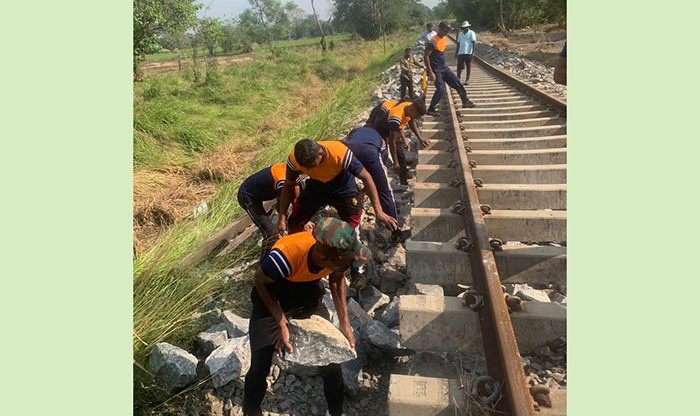
Railway sources said that the damages caused to railway tracks could be more than USD 300 mn.
According to UNDP Rapid Crisis Assessment Sri Lanka’s railroad system, over 278 km of railways were exposed to cyclone-related flooding, including 35 railroad bridges nationwide. This figure reflects flooding only, but other hazards (such as localised debris, landslides, or damage to a single bridge) can also disrupt operations, meaning that even relatively small obstructions can render long stretches of railway non-operational. Like road exposure, railway exposure limits mobility and the capacity of affected populations to access key services and infrastructure.
At the level of divisional secretariats, Colombo and Thimbirigasyaya in Colombo District, Ja Ela in Gampaha District, as well as Mannar Town and Nanaddan in Mannar District all registered over 10 km of exposed railways each.
Commissioner-General of Essential Services B.K. Prabath Chandrakeerthi is on record as having said that only 478 kilometers of Sri Lanka’s 1,593-km railway network were currently usable following extensive damage caused by the recent cyclone.

Under Secretary of State for Political Affairs Allison Hooker arrived in Colombo yesterday (11) to underscore US interest in defence, trade and maritime security in line with their Indo-Pacific strategy.
The US embassy here issued the following statement: “Under Secretary Hooker will meet with Sri Lankan counterparts to discuss a wide range of bilateral issues, focused on deepening economic and commercial ties, strengthening defence cooperation, and supporting Sri Lanka’s economic and maritime sovereignty.
The United States and Sri Lanka share a strong and enduring partnership rooted in our mutual commitment to regional security, economic growth, and prosperity for our peoples. Through close cooperation on defence, trade, and maritime security, we are working together to advance a free, open, and resilient Indo-Pacific region.
As we continue to build on our strategic partnership, the United States also stands with the people of Sri Lanka as they respond to the devastating impacts of Cyclone Ditwah. We remain committed to working together to address both immediate challenges and long-term opportunities for our two nations, reflecting our ongoing commitment to the U.S.-Sri Lanka partnership.”

Showers or thundershowers will occur at times in the Northern, North-Central, Eastern and Uva provinces and in Puttalam, Matale and Kurunegala districts

Rs 1. 3 bn yahapalana building deal under investigation

SL Railways suffers staggering losses; more than 2/3 of rail tracks out of service

US, SL advancing free, open, and resilient Indo-Pacific region: Embassy

Vetaran lankan artistes domiciled in UK felicitated in London ceremony

Forced disappearances, a contentious issue warranting NPP’s attention – FSP

‘Dates have the highest sugar content to fight Coronavirus’

Sunday Island 27 December – Headlines

#SundayIsland 17th December – Headlines

Sunday Island – 28th March

Sunday Island Headlines – 21 March

Sunday Island – 21st February – Headlines
-

 News4 days ago
Over 35,000 drug offenders nabbed in 36 days
-

 Features2 days ago
Finally, Mahinda Yapa sets the record straight
-

 News3 days ago
Cyclone Ditwah leaves Sri Lanka’s biodiversity in ruins: Top scientist warns of unseen ecological disaster
-

 Business6 days ago
LOLC Finance Factoring powers business growth
-

 News6 days ago
CPC delegation meets JVP for talks on disaster response
-

 News6 days ago
A 6th Year Accolade: The Eternal Opulence of My Fair Lady
-

 News4 days ago
Rising water level in Malwathu Oya triggers alert in Thanthirimale
-
 Features5 days ago
The Catastrophic Impact of Tropical Cyclone Ditwah on Sri Lanka: