
Features
I’ve witnessed a coup attempt before — and history bodes poorly for America’s future

by Alfred Mccoy, Tom Dispatch
As an eyewitness, I can recall the events of January 6th in Washington as if they were yesterday. The crowds of angry loyalists storming the building while overwhelmed security guards gave way. The slavishly loyal vice-president who would, the president hoped, restore him to power. The crush of media that seemed confused, almost overwhelmed, by the crowd’s fury. The waiter who announced that the bar had run out of drinks and would soon be closing…
Hold it! My old memory’s playing tricks on me again. That wasn’t the U.S. Capitol in January 2021. That was the Manila Hotel in the Philippines in July 1986. Still, the two events had enough similarities that perhaps I could be forgiven for mixing them up.
I’ve studied quite a number of coups in my day, yet the one I actually witnessed at the Manila Hotel remains my favorite, not just because the drinks kept coming, but for all it taught me about the damage a coup d’état, particularly a political coup, can do to any democracy. In February 1986, a million Filipinos thronged the streets of Manila to force dictator Ferdinand Marcos into exile. After long years of his corruption and callous indifference to the nation’s suffering, the crowds cheered their approval when Marcos finally flew off to Hawaii and his opponent in the recent presidential election restored democracy.
But Marcos had his hard-core loyalists. One Sunday afternoon, four months after his flight, they massed in a Manila park to call for the restoration of their beloved president. After speakers had whipped the crowd of 5,000 into a frenzy with — and yes, this should indeed sound familiar in 2021 — claims about a stolen election, thousands of ordinary Filipinos pushed past security guards and stormed into the nearby Manila Hotel, a storied symbol of their country’s history. Tipped off by one of the Filipino colonels plotting that coup, I was standing in the hotel’s entryway at 5:00 p.m. as the mob, fury written on their faces, surged past me.
For the next 24 hours, that hotel’s marbled lobby became the stage for an instructive political drama. From my table at the adjoining bar, I watched as armed warlords, ousted Marcos cronies, and several hundred disgruntled soldiers paraded through the lobby on their way to the luxury suites where the coup commanders had checked themselves in. Following in their wake were spies from every nation — Australian secret intelligence, American defense intelligence, and their Asian and European counterparts — themselves huddled in groups, whispering mysteriously, trying (just like me) to make sense of the bizarre spectacle unfolding around them.
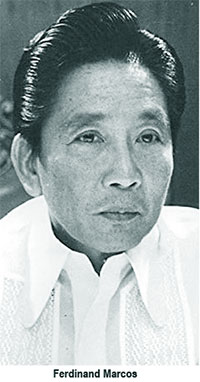 Later that same evening, Marcos’s former vice-president, the ever-loyal Arturo Tolentino, appeared at the head of the stairs flanked by a security detail to announce the formation of a “legitimate” new government authorized by Marcos who had reportedly called long-distance from Honolulu. As the vice president proclaimed himself acting president and read off the names of those to be in his cabinet, Filipino journalists huddling nearby scribbled notes. They were furiously trying to figure out whether there was a real coalition forming that could topple the country’s democracy. It was, however, just the usual suspects — Marcos cronies, leaders largely without followers.
By midnight, the party was pretty much over. Our waiter, after struggling for hours to maintain that famed hotel’s standard of five-star service, apologized to our table of foreign correspondents because the bar had been drunk dry and was closing. Sometime before dawn, the hotel turned off the air conditioning, transforming those executive suites into saunas and, in the process, flushing out the coup plotters, their hangers-on, and most of the soldiers.
All day long, on the city’s brassy talk-radio stations and in the coffee shops where insiders gathered to swap scuttlebutt, Marcos’s loyalists were roasted, even mocked. The troops that had rallied to his side were sentenced to 30 push-ups on the parade ground — a source of more mirth. For spies and correspondents alike, the whole thing seemed like a one-day wonder, barely worth writing home about.
But it wasn’t. Not by a long shot. A coterie of colonels deep inside the Defense Ministry, my source among them, had observed that comedic coup attempt all too carefully and concluded that it had actually been a near-miss.
A year later, I found myself standing in the middle of an eight-lane highway outside the city’s main military cantonment, Camp Aguinaldo, ducking bullets from rebel soldiers who had seized the base and watching as government Marines and dive bombers attacked. This time, however, those colonels had launched a genuine coup attempt. No drinks. No waiters. No wisecracks. Just a day of bombs and bullets that crushed the plotters, leaving the country’s military headquarters a smoking ruin.
Two years later, the same coup colonels were back again for another attempt, leading 3,000 rebel troops in a multipronged attack on a capital that trembled on the brink of surrender. As a cavalcade of rebel armor drove relentlessly toward the presidential palace with nothing in their way, American President George H.W. Bush took a call aboard Air Force One over the Atlantic about a desperate request from his Philippine counterpart and ordered a pair of U.S. Air Force jet fighters to make a low pass over the rebel tanks and trucks. They got the message: turn back or be bombed into extinction. And so Philippine democracy was allowed to survive for another 30 years.
Message from the Manila Hotel
The message for democracy offered from the Manila Hotel was clear — so clear, in fact, that it helps explain the meaning of tangled events in Washington more than 30 years later. Whether it’s a poor country like the Philippines or a superpower like the United States, democracy is a surprisingly fragile construct. Its worst enemy is often an ousted ex-president, angry over his humiliation and perfectly willing to destroy the constitutional order to regain power.
No matter how angry such an ex-president might be, however, his urge for a political coup can’t succeed without the help of raw force, whether from a mob, a disgruntled military, or some combination of the two. The Manila Hotel coup teaches us one other fundamental thing: that coups need not be carefully planned. Most start with a handful of conspirators plotting some symbolic attack meant to shake the constitutional order, while hoping to somehow stall the security services for a few critical hours — just long enough for events to cascade spontaneously into a desired government collapse.
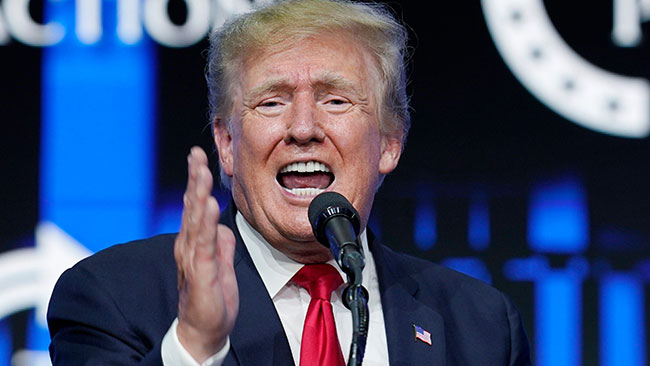
Whether in Manila or Washington, coup plotting usually starts right at the top. Just after the news networks announced that he had lost the election last November, Donald Trump launched a media blitz with spurious claims of “fraud on the American public,” firing off 300 tweets in the next two weeks loaded with false charges of irregularities and sparking loud, long protests by his loyalists at vote-counting centers in Michigan and Arizona.
When that response got little traction and Biden’s majority kept climbing, Trump began exploring three alternate routes, any of which might have led to a constitutional coup — manipulating the Justice Department to delegitimize the election, rigging the ratification of electoral votes in Congress, and the paramilitary (or military) option. At a White House meeting on December 18th, Michael Flynn, Trump’s former national security advisor, urged the president to “invoke martial law as part of his efforts to overturn the election” and accused his staff of “abandoning the president,” sparking “screaming matches” in the Oval Office.
By January 3, rumors and reports of Trump’s military option were circulating so credibly around Washington that all 10 living former defense secretaries — Dick Cheney, Donald Rumsfeld, and Mark Esper, among them — published a joint appeal to the armed forces to remain neutral in the ongoing dispute over the election’s integrity. Reminding the troops that “peaceful transfers of power… are hallmarks of our democracy,” they added that “efforts to involve the U.S. armed forces in resolving election disputes” would be “dangerous, unlawful, and unconstitutional.” They warned the troops that any “military officials who direct or carry out such measures would be… potentially facing criminal penalties.” In conclusion, they suggested to Trump’s secretary of defense and senior staff “in the strongest terms” that “they must…refrain from any political actions that undermine the results of the election.”
To legitimate his claims of fraud, according to the New York Times, the president also tried — on nine separate occasions in December and January — to force the Justice Department to take actions that would “undermine an election result.” In response, a mid-ranking Trump loyalist at Justice, a nonentity named Jeffrey Clark, began pressuring his boss, the attorney-general, to write Georgia officials claiming they had found “significant concerns that may have impacted the outcome of the election.” But at a three-hour White House meeting on January 3rd, Acting Attorney General Jeffrey Rosen balked at this evidence-free accusation. Trump promptly suggested that he could be replaced by that mid-ranking loyalist who could then send the fraud letter to Georgia. The president’s own top appointees at Justice, along with the White House counsel, immediately threatened to resign en masse, forcing Trump to give up on such an intervention at the state level.
Next, he shifted his constitutional maneuvering to Congress where, on January 6th, his doggedly loyal vice president, Mike Pence, would be presiding over the ratification of results from the Electoral College. In this dubious gambit, Trump was inspired by a bizarre constitutional theory advanced by former Chapman University law professor John Eastman — that the “Constitution assigns the power to the Vice President as the ultimate arbiter.”
In this scenario, Pence would unilaterally set aside electoral votes from seven states with “ongoing disputes” and announce that Trump had won a majority of the remaining electors — making him once again president. But the maneuver had no basis in law, so Pence, after scrambling desperately and unsuccessfully for a legal justification of some sort, eventually refused to play along.
A Political Coup
With the constitutional option closed, Trump opted for a political coup, rolling the dice with raw physical force, much as Marcos had done at the Manila Hotel. The first step was to form a crowd with some paramilitary muscle to stiffen the assault to come. On December 19th, Trump called on his hard-core followers to assemble in Washington, ready for violence, tweeting: “Big protest in D.C. on January 6th. Be there, will be wild!”
Almost immediately, the Internet’s right-wing chat boards lit up and indeed their paramilitaries, the Proud Boys and Three Percenters militia, turned up in Washington on the appointed day, ready to rumble. After President Trump roused the crowd at a rally near the White House with rhetoric about a stolen election, a mob of some 10,000 marched on the Capitol Building.
Starting at about 1:00 p.m., the sheer size of the crowd and strategic moves by the paramilitaries in their ranks broke through the undermanned lines of the Capitol Police, breaching the building’s first-floor windows at about 2:10 p.m. and allowing protesters to start pouring in. Once the rioters had accomplished the unimaginable and seized the Capitol, they were fresh out of plans, reduced to marching through the corridors hunting legislators and trashing offices.
At 2:24 p.m., President Trump tweeted: “Mike Pence didn’t have the courage to do what should have been done to protect our Country.” On the far-right social media site Parler, his supporters began messaging the crowd to get the vice president and force him to stop the election results. The mob rampaged through the marbled halls shouting “Hang Mike Pence.” Hunkered down inside the Capitol, Representative Adam Kinzinger (R-Illinois) tweeted: “This is a coup attempt.”
At 2:52 p.m., Representative Abigail Spanberger (D-Virginia), a former CIA agent, tweeted from inside the barricaded House chamber: “This is what we see in failing countries. This is what leads to the death of democracy.”
At 3:30 p.m., a small squad of military police arrived at the Capitol, woefully inadequate reinforcements for the overwhelmed Capitol Police. Ten minutes later, the D.C. Council announced that the Defense Department had denied the mayor’s request to mobilize the local National Guard. While the crowd fumbled and fulminated, some serious people were evidently slowing the military’s response for just the few critical hours needed for events to cascade into something, anything, that could shake the constitutional order and slow the ratification of Joe Biden’s election.
In nearby Maryland, Republican Governor Larry Hogan had immediately mobilized his state’s National Guard for the short drive to the Capitol while frantically phoning Acting Secretary of Defense Christopher Miller, who repeatedly refused him permission to send in the troops. Inside the Pentagon, Lieutenant General Charles Flynn, the brother of the same Michael Flynn who had been pushing Trump to declare martial law, was participating in what CNN called those “key January 6th phone calls” that refused permission for the Guard’s mobilization.
Following a phone call from the mayor of Washington and its police chief pleading for help, Secretary of the Army Ryan McCarthy “ran down the hall” of the Pentagon to get authorization for the Guard’s mobilization. After a crucial delay of 90 minutes, he finally called the Maryland governor, outside the regular chain of command, to authorize the Maryland Guard’s dispatch. Those would indeed be the first troops to arrive at the Capitol and would play a critical role in restoring order.
At about 4:30 p.m., Trump finally tweeted: “These are the things and events that happen when a sacred landslide election victory is so unceremoniously and viciously stripped away from great patriots who have been badly & unfairly treated for so long. Go home in love & peace.”
Ten minutes later, at 4:40 p.m., hundreds of riot personnel from the D.C. police, the FBI, and the Department of Homeland Security arrived, along with the Maryland Guard, to reinforce the Capitol Police. Within an hour, the protesters had been pushed out of the building and the Capitol was declared secure.
Just five days later, Dr. Fiona Hill, a senior Russia expert on the National Security Council under Trump, reviewed these events and concluded that President Trump had staged a coup “in slow motion… to keep himself in power.”
History’s Lessons
Beyond all the critical details of who did what and when, there were deeper historical forces at play, suggesting that Donald Trump’s urge for a political coup that would return him to power may be far from over. For the past 100 years, empires in decline have been roiled by coup attempts that sometimes have overturned constitutional orders. As their military reverses accumulate, their privileged economic position erodes, and social tensions mount, a succession of societies in the grip of a traumatic loss of global power have suffered coups, successful or not, including Great Britain, France, Portugal, Spain, the Soviet Union, and now the United States.
Britain’s plot was a bit fantastical. Amid the painful, protracted dissolution of their empire, Conservative leaders plotted with top generals in 1968 to oust leftist Labour Prime Minister Harold Wilson by capturing Heathrow airport, seizing the BBC and Buckingham Palace, and putting Lord Mountbatten in power as acting prime minister. Britain’s parliamentary tradition simply proved too strong, however, and key principals in the plot quickly backed out.
In April 1974, while Portugal was fighting and losing three bitter anticolonial wars in Africa, a Lisbon radio station played the country’s entry in that year’s Eurovision Song Contest (“After the Farewell”) just minutes before midnight on an evening that had been agreed upon. It was the signal to the military and their supporters to overthrow the entrenched conservative government of that moment, a success which became known as the “Carnation Revolution.”
However, the parallels between January 6th and the fall of France’s Fourth Republic in the late 1950s are perhaps the most telling. After liberating Paris from Nazi occupation in August 1944, General Charles de Gaulle headed an interim government for 18 months. He then quit in a dispute with the left, launching him into a decade of political intrigue against the new Fourth Republic, whose liberal constitution he despised.
By the mid-1950s, France was reeling from its recent defeat in Indochina, while the struggle against Muslim revolutionaries in its Algerian colony in North Africa turned ever more brutal, marked as it was by scandals over the widespread French use of torture. Amid that crisis of empire, an anti-elite, anti-intellectual, antisemitic politician named Pierre Poujade launched a populist movement that sent 56 members to parliament in 1956, including Jean-Marie Le Pen, later founder of the far-right National Front.
Meanwhile, a cabal of politicians and military commanders plotted a coup to return General de Gaulle to power, thinking he alone could save Algeria for France. After an army junta seized control of Algiers, the capital of that colony, in May 1958, paratroopers stationed there were sent to capture the French island of Corsica and to prepare to seize Paris should the legislature fail to install de Gaulle as prime minister.
As the country trembled on the brink of a coup, de Gaulle made his dramatic entry into Paris where he accepted the National Assembly’s offer to form a government, conditional upon the approval of a presidential-style constitution for a Fifth Republic. But when de Gaulle subsequently accepted the inevitability of Algeria’s independence, four top generals launched an abortive coup against him and then formed what they called the Secret Army Organization, or OAS. It would carry out terror attacks over the next four years, with 12,000 victims, while staging three unsuccessful assassination attempts against de Gaulle before its militants were killed or captured.
The Coup of 2024?
Just as the Filipino colonels spent five years launching a succession of escalating coups and those French generals spent four years trying to overthrow their government, so Trump’s Republicans are working with ferocious determination in the run-up to the 2022 and 2024 elections to ensure that their next constitutional coup succeeds. Indeed, if you look back on events over the past year through the prism of such historical precedents, you can see all the components for a future political coup falling into place.
No matter how improbable, discredited, or bizarre those election fraud claims are, Republican loyalists persist in endless ballot audits in Arizona, Wisconsin, Pennsylvania, Georgia, and Texas. Their purpose is not really to find more votes for Trump in the 2020 election, but to maintain at least the present level of rage among the one-third of all Americans and more than half of all Republicans who believe that Joe Biden’s presidency is fraudulent.
Since the 2020 election coincided with the new census, Republicans have been working, reports Vox news, to “gerrymander themselves into control of the House of Representatives.” Simultaneously, Republican legislators in 19 states have passed 33 laws making it more difficult for certain of their residents to vote. Driven by the white nationalist “replacement theory” that immigrants and people of color are diluting the pool of “real American” voters, Trump and his Republican loyalists are fighting for “ballot integrity” on the principle that all non-white votes are inherently illegitimate. As Trump put it on the stump in 2016:
“I think this will be the last election that the Republicans have a chance of winning because you’re going to have people flowing across the border, you’re going to have illegal immigrants coming in… and they’re going to be able to vote and once that all happens you can forget it. You’re not going to have one Republican vote.”
In case all that electoral manipulation fails and Trump needs more muscle for a future political coup, right-wing fighters like the Proud Boys are still rumbling away at rallies in Oregon, California, and elsewhere across America. Just as the Philippine government made military rebels do a risible 30 push-ups for the capital crime of armed rebellion, so federal courts have generally been handing out the most modest of penalties to rioters who attempted nothing less than the overthrow of U.S. constitutional democracy last January 6th.
Among the 600 rioters arrested as of August, dozens have been allowed to plead guilty to misdemeanors and only three had been sentenced to jail time, leaving most cases languishing in pretrial motions. Already Republicans like Senator Ted Cruz have rallied to their defense, writing the U.S. attorney general to complain about an “unequal administration of justice” with “harsher treatment” for Capitol defendants than those arrested in Black Lives Matter protests.
So, in 2024, as the continuing erosion of America’s global power creates a crisis of confidence among ordinary Americans, expect Donald Trump to be back, not as the slightly outrageous candidate of 2016 or even as the former president eager to occupy the White House again, but as a militant demagogue with thundering racialist rhetoric, backed by a revanchist Republican Party ready, with absolute moral certainty, to bar voters from the polls, toss ballots out, and litigate any loss until hell freezes over.
And if all that fails, the muscle will be ready for another violent march on Washington. Be prepared, the America we know is worsening by the month.

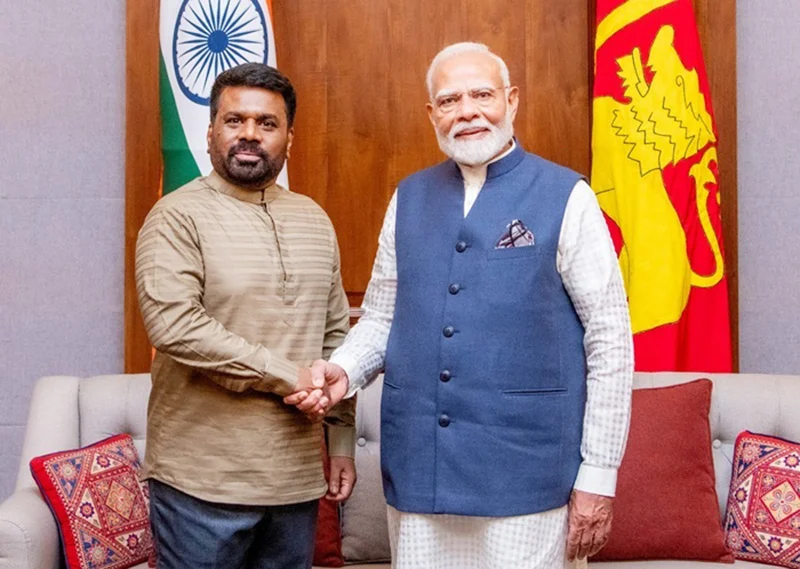
Indian Prime Minister Narendra Modi once again signaled the priority India places on Sri Lanka by swiftly dispatching a shipload of petrol following a telephone conversation with President Anura Kumara Dissanayake. The Indian Prime Minister’s gesture came at a cost to India, where there have been periodic supply constraints and regional imbalances in fuel distribution, even if not a countrywide shortage. Under Prime Minister Modi, India has demonstrated to Sri Lanka an abundance of goodwill, whether it be the USD 4 billion it extended in assistance to Sri Lanka when it faced international bankruptcy in 2022 or its support in the aftermath of the Ditwah cyclone disaster that affected large parts of the country four months ago. India’s assistance in 2022 was widely acknowledged as critical in stabilising Sri Lanka at a moment of acute crisis.
This record of assistance suggests that India sees Sri Lanka not merely as a neighbour but as a partner whose stability is in its own interest. In contrast to Sri Lanka’s roughly USD 90 billion economy, India’s USD 4,500 billion economy, growing at over 6 percent, underlines the vast asymmetry in economic scale and the importance of Sri Lanka engaging India. A study by the Germany-based Kiel Institute for the World Economy identifies Sri Lanka as the second most vulnerable country in the world to severe food price surges due to its heavy reliance on imported energy and fertilisers. Income per capita remains around the 2018 level after the economic collapse of 2022. The poverty level has risen sharply and includes a quarter of the population. These indicators underline the urgency of sustained economic recovery and the importance of external partnerships, including with India.
It is, however, important for Sri Lanka not to abdicate its own responsibilities for improving the lives of its people or become dependent and take this Indian assistance for granted. A long unresolved issue that Sri Lanka has been content to leave the burden to India concerns the approximately 90,000 Sri Lankan refugees who continue to live in India, many of them for over three decades. Only recently has a government leader, Minister Bimal Rathnayake, publicly acknowledged their existence and called on them to return. This is a reminder that even as Sri Lanka receives support, it must also take ownership of its own unfinished responsibilities.
Missing Investment
A missing factor in Sri Lanka’s economic development has long been the paucity of foreign investment. In the past this was due to political instability caused by internal conflict, weaknesses in the rule of law, and high levels of corruption. There are now significant improvements in this regard. There is now a window to attract investment from development partners, including India. In his discussions with President Dissanayake, Prime Minister Modi is reported to have referred to the British era oil storage tanks in Trincomalee. These were originally constructed to service the British naval fleet in the Indian Ocean. In 1987, under the Indo Lanka Peace Accord, Sri Lanka agreed to develop these tanks in partnership with India. A further agreement was signed in 2022 involving the Ceylon Petroleum Corporation and the Lanka Indian Oil Corporation to jointly develop the facility.
However, progress has been slow and the project remains only partially implemented. The value of these oil storage tanks has become clearer in the context of global energy uncertainty and tensions in the Middle East. Energy analysts have pointed out that strategic storage facilities can provide countries with greater resilience in times of supply disruption. The Trincomalee tanks could become a significant strategic asset not only for Sri Lanka but also for regional energy security. However, historical baggage continues to stand in the way of Sri Lanka’s deeper economic linkage with India. Both ancient and modern history shape perceptions on both sides.
The asymmetry in size and power between the two countries is a persistent concern within Sri Lanka. India is a regional power, while Sri Lanka is a small country. This imbalance creates both opportunities for partnership and anxieties about overdependence. The present government too has entered into economic and infrastructure agreements with India, but many of these have yet to move beyond initial stages. This has caused frustration to the Indian government, which sees its efforts to support Sri Lanka’s development as not being sufficiently appreciated or effectively utilised. From India’s perspective, delays and hesitation can appear as a lack of commitment. From Sri Lanka’s perspective, caution is often driven by domestic political sensitivities and concerns about sovereignty.
Power Imbalance
At the same time, global developments offer a cautionary lesson. The behaviour of major powers in the contemporary international system shows that states often act in their own interests, sometimes at the expense of smaller partners. What is being seen in the world today is that past friendships and commitments can be abandoned if a bigger and more powerful country can see an opportunity for itself. The plight of Denmark (Greenland) and Canada (51st state) give disturbing messages. Analysts in the field of International Relations frequently point out that power asymmetries shape outcomes in bilateral relations. As one widely cited observation by Lord Parlmeston, a 19th century prime minister of Great Britain is that “nations have no permanent friends or allies, they only have permanent interests.” While this may be an overly stark formulation, it captures an underlying reality that small states must navigate carefully.
For Sri Lanka, this means maintaining a balance. It needs to clearly acknowledge the partnership that India is offering in the area of economic development, as well as in education, connectivity, and technological advancement. India has extended scholarships, supported digital infrastructure, and promoted cross border links that can contribute to Sri Lanka’s long term growth. These are tangible benefits that should not be undervalued. At the same time, Sri Lanka needs to ensure that it does not become overly dependent on Indian largesse or drift into a position where it functions as an appendage of its much larger neighbour. Economic dependence can translate into political vulnerability if not carefully managed. The appropriate response is not to distance itself from India, but to broaden its partnerships. Engaging with a diverse range of countries and institutions can provide Sri Lanka with greater autonomy and resilience.
A hard headed assessment would recognise that India’s support is both genuine and interest driven. India has a clear stake in ensuring that Sri Lanka remains stable, prosperous, and aligned with its broader regional outlook. Sri Lanka needs to move forward with agreed projects such as the Trincomalee oil tanks, improve implementation capacity, and demonstrate reliability as a partner. This does not preclude it from actively seeking investment and cooperation from other partners in Asia and beyond. The path ahead is therefore one of balanced engagement. Sri Lanka can and should welcome India’s partnership while strengthening its own institutions, fulfilling its domestic responsibilities, and diversifying its external relations. This approach can transform a relationship shaped by asymmetry into one defined by mutual benefit and confidence.
by Jehan Perera
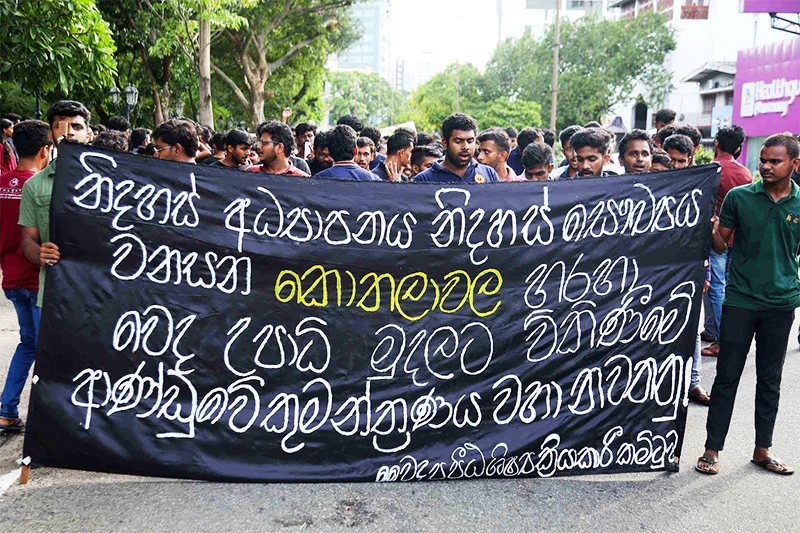
 This Article is formed from listening to university students from across the country for two research initiatives, one on academic freedom and another on higher education policy. In speaking with students, the fears they carry could not be ignored. Students navigate university education, with anxieties about their future and fears that they and their university education are inadequate, all while managing their families’ daily struggles. I explore students’ anxieties and the extent to which we, the public, and higher education policies must take responsibility for their experiences.
The Neoliberal University
For decades, universities have been transforming. Neoliberal policies, promoted by the World Bank, have reduced public education expenditure and weakened the State’s commitment to public institutions. These policies frame individuals as responsible for their success and failure, minimising structural realities, such as poverty and precarity. They instrumentalise education, treat students as “products” for a “competitive’ job market, while education markets feed on students’ insecurities. Students are made to feel lacking in “soft skills”, or skills seemingly necessary to navigate classed-corporate structures, and lacking in technical skills, or those needed to operate technologies used within the private sector.
Student activists and, sometimes teachers, have challenged this worldview, demanding State commitment to free education. Governments sometimes yield but also fear the consequences of student politics and have long waged campaigns to discredit student activism. It is within this context that students pursue education.
Portrayal of students
A Peradeniya student told me student-organised events must meet “high standards”, because of the negative public perceptions of university students. I understood what she meant; I had heard of our ‘ungrateful’, ‘wasteful’, ‘unemployable’, and ‘entitled’ students. The media and decades of government propaganda have reinforced these depictions.
About 10 years ago, when government moves to privatise higher education were strong, a corporate executive, complaining about traffic caused by “yet another useless protest”, was unable to explain why they protested. News coverage, I realised, framed these protests as public inconveniences, rarely addressing students’ demands. A prominent advocate, of neoliberal educational policy, reinforced this narrative, saying “state university students make up just 10 percent of their cohorts”, gesturing dismissively as if to say their concerns were insignificant. Such language belittles student activists and youth, renders them voiceless and allows their concerns, such as classed worldviews, and access barriers to and privatisation of education, to be easily dismissed.
It is in this environment that the conception of the useless university student, fighting for no reason, has developed. Students must carry this misrepresentation, irrespective of their own involvement in activism.
Not being good enough
Attacks on free higher education and the absence of meaningful reforms designed to address students’ problems, now weigh on students’ minds. Students question whether their education is relevant and current, pointing to outdated equipment, software, and curricula. University administrators acknowledge these constraints, which reflect Sri Lanka’s ranking as one of the lowest in the world for the public funding of education and higher education.
Rarely has the World Bank, so influential in driving educational policy, highlighted the public funding crisis and, instead, emphasises technological deficiencies, the public sector’s “monopoly” of higher education and limited private sector involvement. It downplays the reality that few families can privately afford such funding arrangements.
Students are also bombarded with fee-levying programmes, promising skills and access to jobs, preying on students’ insecurities. Many, while struggling to make ends meet, enrol in off-campus pricy professional courses, such as in accountancy, marketing, or English.
The arts student
Some students worry their education is too theoretical and “Arts-focused.” A student from the University of Colombo described having to justify her decision to pursue an arts degree. The public, she said, saw this as a waste of her time and the country’s resources. She courageously wore this identity, yet questioned if she was, in fact, unemployable as she was being led to believe.
She does not, however, draw on the fact that arts education has long been the “cheap” option that governments have offered when pressured to expand higher education. While arts education may need fewer laboratories and equipment, they require adequate investments on teachers, strong on content and pedagogy, to closely engage with individual students; aspects of arts education which have systematically been disregarded.
As access broadens, particularly in the arts, more students from marginalised backgrounds have entered universities; students who may feel alien in systems aligned with corporate interests. Thus, students quite different from the classed conception of the “employable graduate,” whose education has systematically been under-funded, graduate from arts programmes frustrated, diffident, and ill-suited for jobs to which they are expected to aspire.
The dysfunctional university
Students voice criticisms of their teachers, as myopic, unworldly, and unfair. Their perspective reflects the universities’ culture of hierarchy and its intolerance of difference, on the one hand, and the weak institutional structures on the other. They are symptoms of years of neglect and attempts by governments to delegitimise universities, to shed themselves of the burden of funding higher education through anti-public sector rhetoric.
Some students, marginalised for being anti-rag, women, or ethnic minorities, feel an added layer of burdens. Anti-rag students, or more often, students who do not submit to university hierarchies, whether enforced by students or staff, are ostracised, demeaned and sometimes subjected to violence. Students unable to speak the institution’s dominant language face inadequate institutional support. Women describe being ignored and silenced in student union activities and left out of student leadership positions.
Furthermore, quality assurance processes rarely prioritise academic freedom or students’ right to exist as they wish, except when they complement the process of creating a desirable graduate for the job market. These processes focus on moulding professionals and technicians, as one would form clay, disregarding students’ anxieties from being alienated from themselves by such efforts.
Problems at home
Beyond the campus, parents face debt, illness, and precarious work. Students are acutely aware of these struggles. Some describe parents collapsing from the strain and sometimes leaving them to carry the family’s difficulties. A student described feeling guilty for being at the University while his family struggled to survive. To ease the burden on their families, students earn incomes by providing tuition, delivering food, and carrying out microbusinesses.
Tied to their concerns over having to depend on their families, is their fear of being “unemployable”, a term that places the blame of unemployment on students’ skill deficiencies. Little in this discourse connects the lack of decent work and jobs for them and their parents to the weak economy and job markets into which successive batches of graduates must transition. Much of the available jobs in the country are those that require little in the form of education, and those, too do little to provide a living wage. Students must, therefore, compete for a limited number and breadth of frankly not very desirable work. Yet, it is they who must feel the weight of unemployability.
Committing to students
Universities frequently fail to recognise students’ worries. Instead, we, coopt neoliberal discourses, telling students to become more marketable and competitive, do and learn more, be confident, improve English, learn to inhabit those classed spaces with ease; often without the support that should accompany these messages.
We expect these students, insecure and anxious, to think critically, and demonstrate curiosity and higher-order analyses. When they collapse under the pressure, universities respond by providing mental health services. While such services are needed, they risk individualising and pathologising systemic problems. They represent yet again the inherent flaws with solutions that emerge from neoliberal ideological positions that treat individuals as the source of all success and failure. Such perspectives are likely to reinforce students’ anxieties, rather than address them.
As Sri Lanka revisits education policy reforms, there is an opportunity to change our framings of education and to recognise these concerns of students as central to any policy. The state must renew its commitment to free education and move from the neoliberal logic that has guided successive reform efforts; we, as the public, must restore our hope and expectations from free education. Education across disciplines, the arts, as well as STEM (science, technology, engineering and mathematics), must be strengthened. Students’ freedom to inhabit university spaces as they wish, must be respected and protected by institutions. Education policies must be tied to broader economic and labour reforms that ensure families can safely earn a living wage and graduates can access a rich range of decent meaningful work.
(Shamala Kumar teaches at the University of Peradeniya)
Kuppi is a politics and pedagogy happening on the margins of the lecture hall that parodies, subverts, and simultaneously reaffirms social hierarchies.
by Shamala Kumar

 Mihiri Chethana Gunawardena is certainly on the right track, in the music scene.
The plus factor, where Mihiri is concerned, is that she has music deeply rooted in her upbringing, and is now doing her thing in the Maldives.
Her father, Clifton Gunawardena, was a student of the legendary Premasiri Kemadasa and former rhythm guitarist of the Super 7 band.
Mihiri took to music, after her higher studies, and her first performance was with her father, while employed.

Mihiri Chethana Gunawardena
After eight years of balancing both worlds – working and music – she chose to follow her true calling and embraced music as her full-time profession.
Over the years, Mihiri has worked with some of the top bands in the local scene, including D Major, C Plus from Negombo, Heat with Aubrey, Mirage, D Zone Warehouse Project and Freeze.
In fact, she even put together her own band, Faith, in 2017, performing at numerous events, and weddings, before the Covid pandemic paused their journey.
What’s more, her singing career has taken her across borders –performing twice in Dhaka, Bangladesh, with the late Anil Bharathi and the late Roney Leitch, and multiple times in the Maldives, including a special New Year’s Eve performance with D Major.

In the Maldives, on a one-month contract
Last year, Mihiri was in Dubai, along with the group Knights, for the Ananda UAE 2025 dance.
She continues to grow as a solo artiste, now working closely with the renowned Wildfire guitarist Derek Wikramanayake, and performing, as a freelance musician, travelling around the world.
Right now, she is in the Maldives, on a one-month contract, marking a new chapter in her evolution as a solo vocalist.
On her return, she says, she hopes to create fresh cover songs and original music for her fans.
Mihiri believes in spreading joy and positivity through her singing, and peace and happiness for everyone around her, and for the world, through music.

Steps are taken to accelerate the recovery efforts following Cyclone Ditwah despite Global Economic Challenges

Qalandars fine Afridi for violating security protocols

Sooryavanshi, Archer, Burger demolish Chennai Super Kings

Showers may occur at a few places in the Western and Sabaragamuwa provinces and in Galle and Matara districts after 2.00 pm

Burning of low-grade coal at N’cholai plant increases pollution: Parliament

Tariff shock from 01 April as power costs climb across the board

‘Dates have the highest sugar content to fight Coronavirus’

Sunday Island 27 December – Headlines

#SundayIsland 17th December – Headlines

Sunday Island – 28th March

Sunday Island Headlines – 21 March

Sunday Island – 21st February – Headlines
-

 News7 days ago
Senior citizens above 70 years to receive March allowances on Thursday (26)
-

 Features4 days ago
A World Order in Crisis: War, Power, and Resistance
-

 News5 days ago
Energy Minister indicted on corruption charges ahead of no-faith motion against him
-

 News6 days ago
US dodges question on AKD’s claim SL denied permission for military aircraft to land
-

 Business6 days ago
Dialog Unveils Dialog Play Mini with Netflix and Apple TV
-

 News7 days ago
CEB Engineers warn public to be prepared for power cuts after New Year
-

 Sports5 days ago
SLC to hold EGM in April
-
 Latest News5 days ago
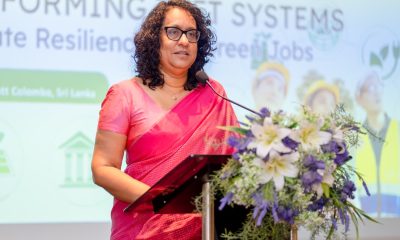
A strong Technical and Vocational Education and Training (TVET) system equips individuals with practical, relevant, and future-oriented skills helping to innovate responsibly towards a greener and sustainable future – PM