
Business
Swisstek Aluminium switches to Green Energy through Mega Roof Solar Project


Completes 1,500 KW solar generation project with Rs. 156 mn investment
Swisstek Aluminium Limited, an aluminium product manufacturer that has grown into an industry mainstay in Sri Lanka over the past 12 years, and caters to both local and international markets, announced its contribution towards the national sustainability drive through the installation of solar power generation facilities at its factory complex. This shift to renewable energy is expected to affect positively on its export share, considering the global shift towards cleaner production methods that is pushing suppliers to source materials from more eco-friendly manufacturers.
A rooftop solar panel array was chosen as the most feasible option owing to the factory’s large area and roof capacity, and thus, a total of 3,340 photovoltaic panels were installed under the Ceylon Electricity Board’s net plus scheme, with Swisstek making a significant investment of over Rs. 156.5 million in the project. This initiative contributes more than 2.1 million Kilowatt hours to the national grid annually, in a sustainable manner.
The rooftop solar array enables the generation of up to 30% of the factory’s power consumption requirement through a renewable source, vastly reducing the carbon footprint generated by Swisstek’s operations.
Swisstek Aluminium further explained that the factory, which handles the powder coating and anodizing treatment processes of extruded aluminium products, was recording heavy levels of energy consumption due to the resource-intensive processes being undertaken. With rising electricity rates and the globally increased demand for corporate sustainability, the management decided to implement renewable power generation facilities, thus bringing down the company’s operating costs as well as its ecological impact.
While the company benefits from the reduced operating costs due to this on-site generation facility, the move towards solar power is also in line with the national goal of producing 70% of the national energy requirement from renewable sources by 2030, while marking Swisstek Aluminium’s products as being ahead of its competitors in yet another aspect, in the form of sustainable production. Further company produces and supplies a wide range of solar brackets and accessories to major solar installation companies as a leading partner.
Commenting on the achievement, Swisstek Aluminium Chief Executive Officer Tharindu Atapattu stated, “At Swisstek Aluminium, our quality promise also comes with a commitment to becoming the most environmentally-friendly manufacturer for aluminium extrusions in Sri Lanka. Completing this renewable energy generation project marks a huge step towards ensuring sustainability, as we have reduced a large portion of our carbon footprint.Swisstek
“In this way, we aim to continue contributing towards the country’s progress towards its goals of achieving an export-oriented economy, as well as reducing the demand for non-renewable energy, which we hope will set an example for other industries to follow suit. Especially given the current situation, we believe it is up to all of us to do our part in taking Sri Lanka forward.”
Atapattu further noted, “We aim to further increase renewable powder generation capacity to 100% by undertaking similar efforts in the future, thus achieving a carbon-neutral production process through our next phase of development.”


The Asian Development Bank is no longer treating digitalisation as a secondary development theme. Increasingly, the bank views digital infrastructure as the economic nervous system of Asia’s future growth model – a strategic national asset now considered as critical to economic competitiveness as highways, ports, and power grids.
That shift carries an important message for countries like Sri Lanka: modernise digital systems rapidly or risk falling behind regional competitors.
This was among the clearest signals emerging from the 59th Annual Meeting of the ADB held in Samarkand from May 3 to 6, where digital connectivity and technology-driven growth dominated many of the bank’s strategic discussions.
The ADB is steadily repositioning itself from being primarily a traditional infrastructure lender into a major catalyst for digital transformation across Asia and the Pacific. At multiple forums in Samarkand, bank officials and sector experts repeatedly stressed that digital connectivity is no longer simply a technology issue. It is now deeply tied to productivity, governance, financial inclusion, education, healthcare, climate resilience, and regional economic integration.
A key figure driving this agenda is Antonio García Zaballos, Director of the Digital Sector Office at the ADB. Widely recognised for his expertise in telecommunications regulation and broadband policy, Zaballos emphasised that digital infrastructure should be treated as essential national infrastructure rather than a luxury service.
Under the ADB’s Strategy 2030 framework and subsequent policy reviews, digital transformation has emerged as one of Asia’s defining development priorities. The bank’s digital agenda now broadly focuses on expanding broadband access, building digital public infrastructure, supporting e-governance, promoting fintech and digital payments, strengthening cybersecurity, developing AI-ready economies, and advancing regional digital integration.
Discussions in Samarkand also highlighted a persistent reality: despite rapid mobile and internet growth across Asia, the region’s digital divide remains severe. Millions in rural communities, small businesses, and low-income populations still lack affordable and reliable digital access. For the ADB, digitalisation is therefore not merely an innovation agenda, but also an inclusion challenge.
One of the strongest indications of the bank’s ambitions came with the announcement of a regional connectivity initiative involving energy and digital infrastructure investments worth up to US$70 billion by 2035. A central component is the proposed “Asia-Pacific Digital Highway” – a major initiative aimed at expanding fibre-optic networks, satellite systems, and regional data centres.
ADB President Masato Kanda observed that energy and digital access would ‘define the region’s future,’ while emphasising that cross-border digital networks could reduce costs and widen economic opportunity across Asia and the Pacific.
Zaballos and other ADB officials also stressed the importance of regulatory modernisation, public-private partnerships, and regional coordination to build stronger broadband ecosystems. Their policy focus increasingly includes affordable internet access, cybersecurity frameworks, digital public infrastructure, cross-border data governance, and digital inclusion for underserved populations.
Another major pillar of the ADB’s strategy involves digital economy agreements and harmonised regional regulations. According to ADB research released in 2025, digital trade, AI governance, cross-border payments, and cybersecurity standards are rapidly becoming central to regional economic integration.
The bank increasingly sees fragmented digital regulations as a growing obstacle to regional commerce. As a result, it is promoting interoperable payment systems, common digital standards, regional cybersecurity cooperation, and coordinated cross-border data governance frameworks.
This has particular relevance for South Asia, where digital fragmentation still limits deeper regional trade integration.
For Sri Lanka, the implications are significant. Although the country enjoys relatively high mobile penetration and comparatively strong digital literacy, major gaps remain in rural broadband access, government digital integration, SME digitalisation, cybersecurity preparedness, and digital export competitiveness.
ADB’s growing emphasis on digital public infrastructure and regional connectivity could align closely with Sri Lanka’s ambitions to expand fintech services, IT exports, e-governance systems, and digital entrepreneurship.
The larger question now is whether policymakers – particularly the Ministry of Digital Economy – can move quickly enough to position Sri Lanka within this rapidly evolving regional digital architecture. In Asia’s next development cycle, digital readiness may well determine which economies move ahead – and which are left struggling to catch up.
By Sanath Nanayakkare
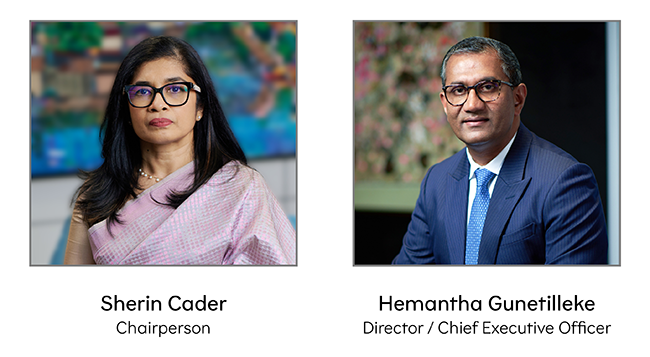
Nations Trust Bank PLC (NTB) commenced the financial year on a positive note, delivering a strong performance for the three months ended 31st March 2026, with a Profit After Tax (PAT) of LKR 4.6Bn, marking a 12% yearonyear increase. The results were supported by steady asset growth, stable Net Interest Margins (NIMs), and prudent risk management, reflected in a low Net Stage 3 Ratio of 1.10%. A robust capital position further supported the Bank’s performance, with Return on Equity (ROE) reaching 18.98%, indicating the Bank’s continued momentum and a positive outlook for growth in the year ahead.
Nations Trust Bank, Director and Chief Executive Officer, Hemantha Gunetilleke, stated,
“The Bank’s performance in 1Q 2026 highlights its strength and the progress of its strategy as we move into the next phase of growth. This is reflected in the expansion of our loan book and our continued focus on supporting customers across consumer, commercial and corporate segments. In doing so, the Bank has contributed to broader economic growth in Sri Lanka, supporting investment and expansion across key sectors. As we further strengthen our capital and liquidity positions, we remain focused on delivering value through high service standards, improved digital capabilities, and a strong customer focus.”
Business
LOLC Life Assurance expands branch network to strengthen customer accessibility and service excellence

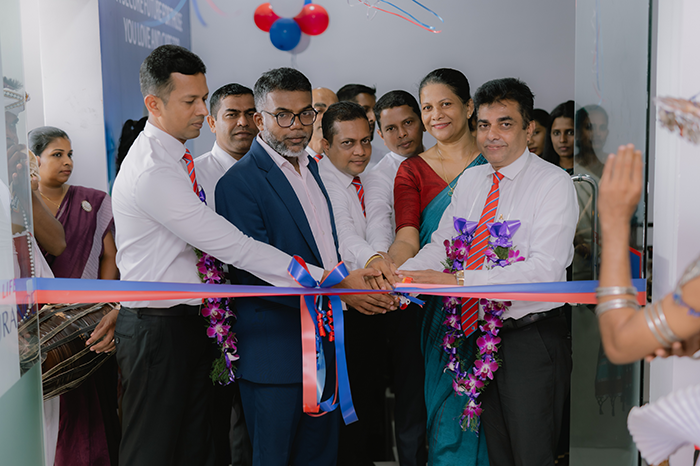
LOLC Life Assurance continues to reinforce its commitment to delivering accessible, customer-centric life insurance solutions through the strategic expansion of its branch network across key locations in Sri Lanka. The recent opening of new branches in Mathugama and Beruwala marks a significant milestone in enhancing customer accessibility, improving service convenience, and delivering inclusive insurance protection across these strategically important key regional markets.
This expansion reflects the company’s continued focus on bringing life insurance services closer to customers, ensuring greater convenience, improved responsiveness, and stronger community-level engagement. By strengthening its physical presence, LOLC Life Assurance aims to provide personalised support and seamless access to its comprehensive range of life protection and investment solutions.
The new Beruwala branch, located at No. 207, Galle Road, Beruwala, and the Mathugama branch, located at No. 110/1, Aluthgama Rd, Mathugama were officially opened by Mr. Jayantha Kalinga, Chief Operating Officer of LOLC Life Assurance together with the company’s senior management team. As a trusted life insurer in Sri Lanka, LOLC Life Assurance remains committed to innovation, superior customer experience, and inclusive financial protection, further strengthening its vision of becoming a lifelong partner that offers security, care, and confidence at every stage of life.
The relocation of the Jaffna branch to No 62/3, Stanley Road, Jaffna reflects the company’s ongoing efforts to optimise its branch network through improved infrastructure and enhanced accessibility. The branch was officially reopened in the presence of Mr. Chandana L. Aluthgama, Executive Director and Mr. Jayantha Kalinga, Chief Operating Officer of LOLC Life Assurance, providing a more modern and customer-friendly environment aligned with the region’s growing economic activity. The upgraded facility is expected to further enhance customer experience by ensuring efficient access to the company’s full suite of life insurance solutions.

Sri Lanka’s World Cup winning team conduct coaching session in KL

Fatima Sana smashes fastest fifty in women’s T20Is

On the hunt for China’s most famous green tea

Marsh onslaught, Akash three-for dent Chennai Super King’s playoffs chances

ICC suspends funding to Cricket Canada over governance-related issues

Showers will occur at times in the Western, Sabaragamuwa, Central, North-western and Northern provinces and in Anuradhapura, Galle and Matara districts

‘Dates have the highest sugar content to fight Coronavirus’

Sunday Island 27 December – Headlines

#SundayIsland 17th December – Headlines

Sunday Island – 28th March

Sunday Island Headlines – 21 March

Sunday Island – 21st February – Headlines
-

 News7 days ago
Lanka Port City officials to meet investors in Dubai
-

 News4 days ago
Ex-SriLankan CEO’s death: Controversy surrounds execution of bail bond
-

 Features5 days ago
When University systems fail:Supreme Court’s landmark intervention in sexual harassment case
-
Features5 days ago
High Stakes in Pursuing corruption cases
-

 Midweek Review4 days ago
A victory that can never be forgotten
-
 Features7 days ago
Serving as MR’s Deputy Finance Minister and the travel the job entailed
-

 Features7 days ago
Bengal Turns BJP, Didi Falls
-
 News6 days ago
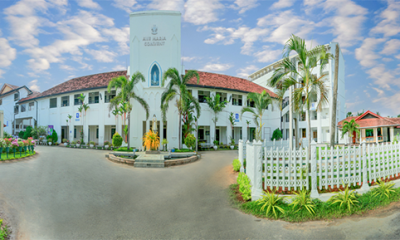
150th anniversary celebrations of Ave Maria Convent, Negombo