
News
Imported liquid Nano-Nitrogen fertiliser not organic, says a group of academics

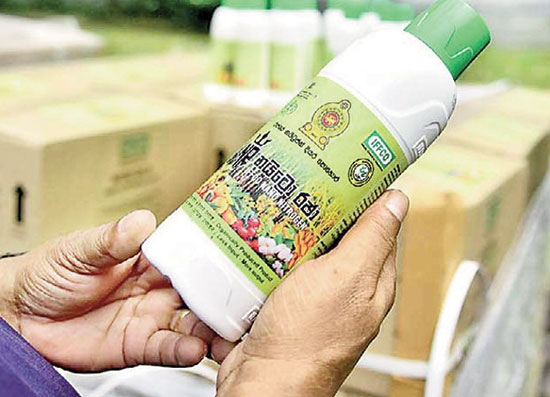
The liquid Nano-Nitrogen fertiliser from Indian Farmers Fertiliser Cooperative Ltd. (IFFCO) imported by the government is a synthetic chemical fertiliser, and not an organic fertiliser, academics attached to the Agriculture and Technology Faculties of State Universities said yesterday.
They issued a statement under the Federation of University Teachers’ Associations (FUTA) letterhead:
“The Nano-Nitrogen fertilizer of IFFCO is a urea-based formulation where urea is coated with polymers to make nano-size particles. Therefore, this fertilizer is a synthetic chemical fertiliser, and not an organic fertilizer. The Nano-Nitrogen fertilizer is recommended to apply as a foliar spray and said to contain 4% Nitrogen. This is rather a new product, which has very recently (2021 March) received approval for large scale production from the Ministry of Agriculture of India. Anyhow, nano-fertilisers are not accepted in organic agriculture in Sri Lanka as indicated in the standard of requirements for organic agriculture (SLS1324:2018),” the statement said.
FUTA added that the Ministry of Agriculture claims that three applications of 2.5 L of this fertilizer at a time (i.e. 7.5 L in total) is adequate to provide required nutrients for the cultivation of one hectare of paddy crop. When applied at this rate, Nano-Nitrogen fertilizer would provide only 300 g of Nitrogen per one hectare.
“However, in general, nearly 105 kg of nitrogen is taken up by the paddy crop yielding 4-5 tons of grains per hectare. Accordingly, Nano-Nitrogen fertiliser should be applied at a rate of 1,250 L per hectare if it is the only source of nitrogen added to the crop, which is an impossible task to be realized within a cropping season,” the academics said.
Given below is the statement in full: “The government of Sri Lanka recently imported liquid Nano-Nitrogen fertilizer from Indian Farmers Fertilizer Cooperative Ltd. (IFFCO). From an initial order of 3.1 million liters, 45,000 liters (90,000 bottles, each carrying 500 ml) were airlifted on 19th October 2021 to Sri Lanka. We have learned that there are many misconceptions being publicized in the mass media on this Nano-Nitrogen fertilizer. As a concerned group of agricultural professionals in the country, academics attached to the Agriculture and Technology Faculties of State Universities in Sri Lanka, we wish to provide correct scientific facts about the imported fertilizer and express our views on this matter as follows.
“The Nano-Nitrogen fertilizer of IFFCO is a urea-based formulation where urea is coated with polymers to make nano-size particles. Therefore, this fertilizer is a synthetic chemical fertilizer, and not an organic fertilizer. The Nano-Nitrogen fertilizer is recommended to apply as a foliar spray and said to contain 4% Nitrogen. This is rather a new product, which has very recently (2021 March) received approval for large scale production from the Ministry of Agriculture of India. Anyhow, nano-fertilizers are not accepted in organic agriculture in Sri Lanka as indicated in the standard of requirements for organic agriculture (SLS1324:2018).
“In media briefings conducted by the Ministry of Agriculture, we learned that three applications of 2.5 L of this fertilizer at a time (i.e. 7.5 L in total) is adequate to provide required nutrients for the cultivation of one hectare of paddy crop. When applied at this rate, Nano-Nitrogen fertilizer would provide only 300 g of Nitrogen per one hectare. In general, nearly 105 kg of nitrogen is taken up by the paddy crop yielding 4-5 tons of grains per hectare. Accordingly, Nano-Nitrogen fertilizer should be applied at a rate of 1,250 L per hectare if it is the only source of nitrogen added to the crop, which is an impossible task to be realized within a cropping season.
“In their official website, IFFCO has indicated that this Nano-Nitrogen fertilizer should be applied only as a top dressing along with a reduced rate of urea, while phosphorus and potassium sources are to be supplied at full rate as per the recommendations. All research reports on this liquid fertilizer have recommended using this fertilizer to fulfil only partial requirements of Nitrogen for crops and often used with 50% recommended dose of urea. Therefore, Nano-Nitrogen is more appropriate to be viewed as a supplementary source of Nitrogen than a major nutrient source.
“Spraying liquid fertilizer may not be practical for some crops unless the farmers have access to drone technology. This is because spraying large areas and taller crops such as maize and sugarcane is not practical with commonly used spray tanks. Moreover, the effectiveness of these foliar fertilizers depends on the ground-cover by leaf area, weather conditions and application technology. Therefore, it is a necessity to provide clear guidance to the farmers on correct application procedures.
“In this context there is a serious question as to what should be recommended to the farmers in Sri Lanka, as the sources of nitrogen, phosphorus and potassium nutrients are limited in the market with the recent ban imposed on importing synthetic ‘chemical’ fertilizer. It is important to note that the benefit of Nano-Nitrogen cannot be realized when the crop suffers from nutrient imbalances. The Nano-fertilizer is applied at a much lower rate than regular urea fertilizer application mainly because it is a foliar spray. Applying the Nano-Nitrogen fertilizer at high concentrations, in the absence of soil application of Nitrogen fertilizer such as urea, could damage leaves. Therefore, the available option would be to have repeated application of Nano-Nitrogen fertilizer at a lower dosage.
“It should be noted that nano-fertilizers are more expensive than regular nitrogen fertilizers. Thus, considering the cost of the fertilizer and labor cost for application, the use of foliar fertilizers in a crop like paddy is expensive and will increase the cost of production.
“Any fertilizer imported to the country needs to be tested following the accepted protocols prior to giving approval for importation and after the shipment has arrived in order to assure quality and to avoid any negative impacts. Sri Lanka does not have developed SLS standards for nano-fertilizers, yet. These standards should be developed to assure quality of the product free of biurate-like toxic substances. Besides, recommendations should not be made in an ad-hoc manner without conducting any field investigations.
“Furthermore, in the eco-friendly/green agriculture concept, much attention is given to improve and regenerate soil fertility. However, foliar application of fertilizers will not contribute to enhancing soil fertility. Therefore, while failing to achieve higher crop yields, it is highly unlikely that the expensive Nano-Fertilizer we have imported will help in realizing the objectives of green-agriculture.”

News
Prime Minister of Sri Lanka holds a bilateral meeting with Minister for Education and Skills Development of Bhutan

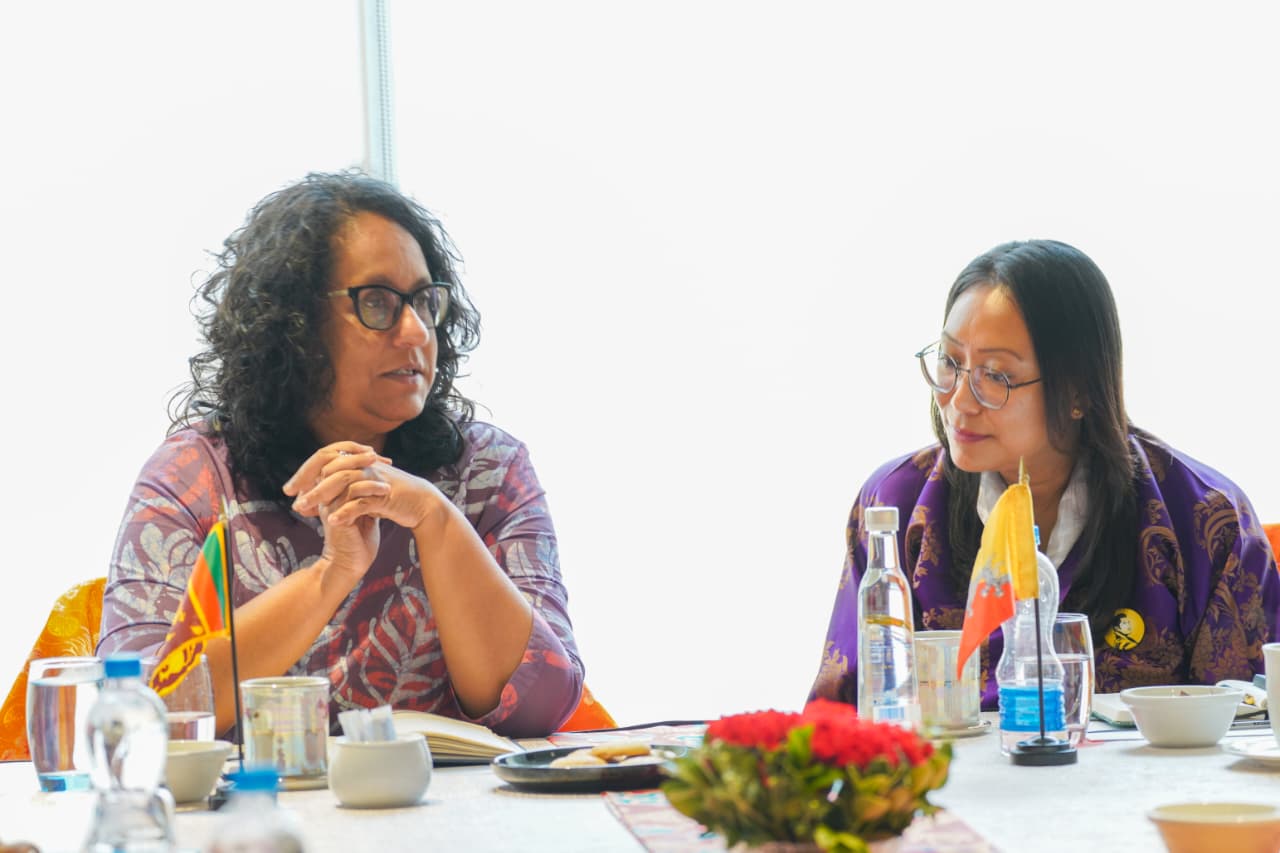
On the sidelines of the inaugural Global Conscious Food Systems Summit 2026, being held in Bhutan from 31 August to 4 September 2026, Prime Minister of Sri Lanka, Dr. Harini Amarasuriya, in her capacity as Minister of Education, Higher Education and Vocational Education, held a productive bilateral meeting with Yeezang De Thapa, Minister for Education and Skills Development of Bhutan, on 03 September 2026.
The discussions focused on further strengthening and expanding Sri Lanka-Bhutan cooperation in the education sector, with particular emphasis on developing mutually beneficial initiatives through enhanced Government-to-Government engagement.
Both sides underscored the importance of deepening institutional cooperation and exploring new avenues for collaboration in education, higher education and vocational training, with a view to creating greater opportunities for students, educators and academic institutions of both countries.
During the meeting, both sides agreed to initiate discussions towards the finalization and signing of a Memorandum of Understanding (MoU) on cooperation in the fields of education and vocational training. It was also agreed that the implementation of the MoU could be facilitated through the establishment of a Joint Working Group, headed at the Secretary level, with meetings to be convened annually to review progress, identify new areas of cooperation, and facilitate the effective implementation of agreed activities.
The major areas of cooperation discussed included enhancing collaboration among universities and academic institutions, promoting academic and faculty exchanges, joint research and university programmes, strengthening training and capacity-building opportunities for educators and teachers, and sharing expertise and best practices in the education and vocational training sectors.
The two sides also discussed strengthening child protection and safeguarding mechanisms, promoting ethical values among students, and addressing violence against children while ensuring their safety, protection, well-being and access to quality education.
Opportunities for Bhutanese students to pursue undergraduate studies at universities in Sri Lanka were also discussed, with particular emphasis on Dentistry, Medicine (MBBS), and allied health disciplines such as Physiotherapy. The discussions further covered opportunities for postgraduate studies in medical and health sciences at Sri Lankan universities, as well as enhanced collaboration among universities and other academic institutions of the two countries.
The meeting provided a valuable opportunity for Sri Lanka and Bhutan to advance cooperation in education and vocational training and explore new avenues for long-term collaboration for the mutual benefit of students, educators and academic institutions of both countries.
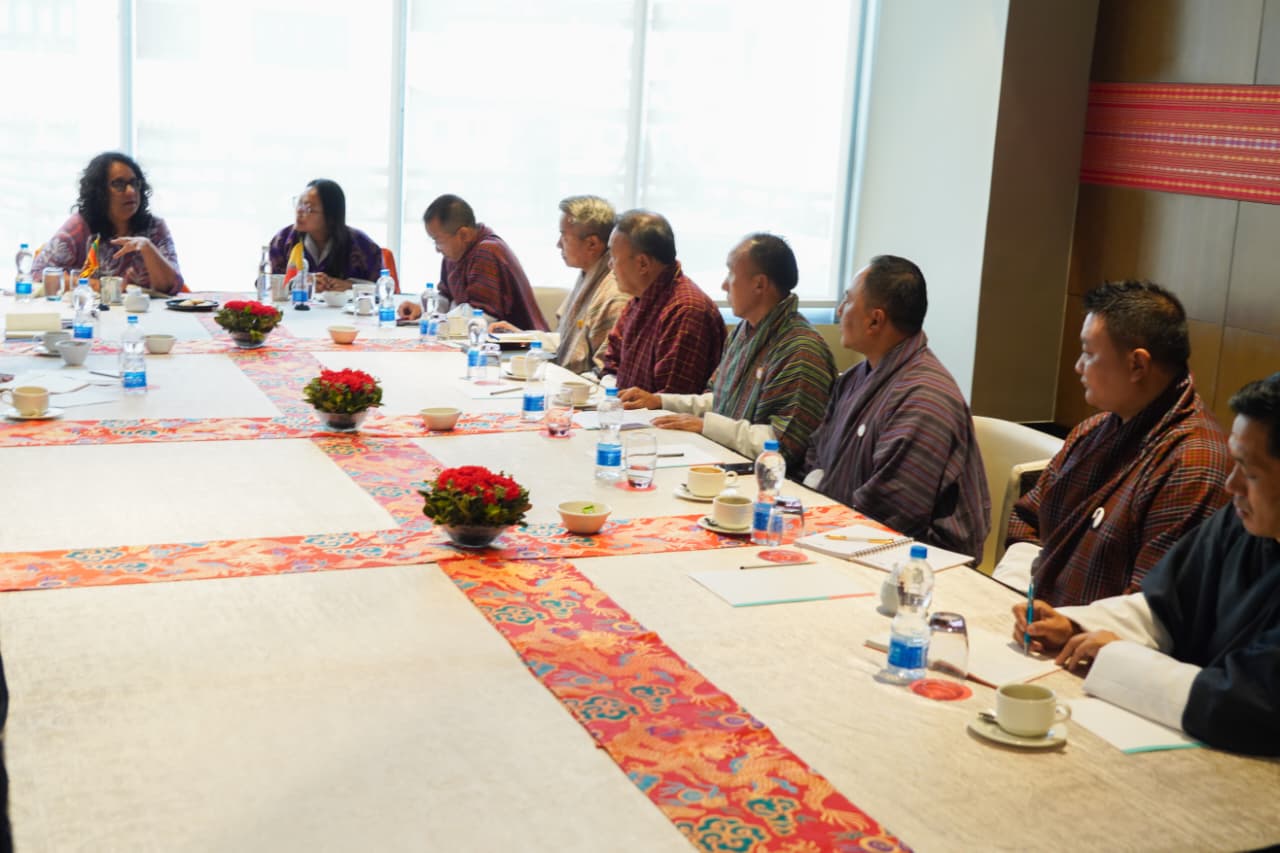
(Prime Minister’s Media Division)
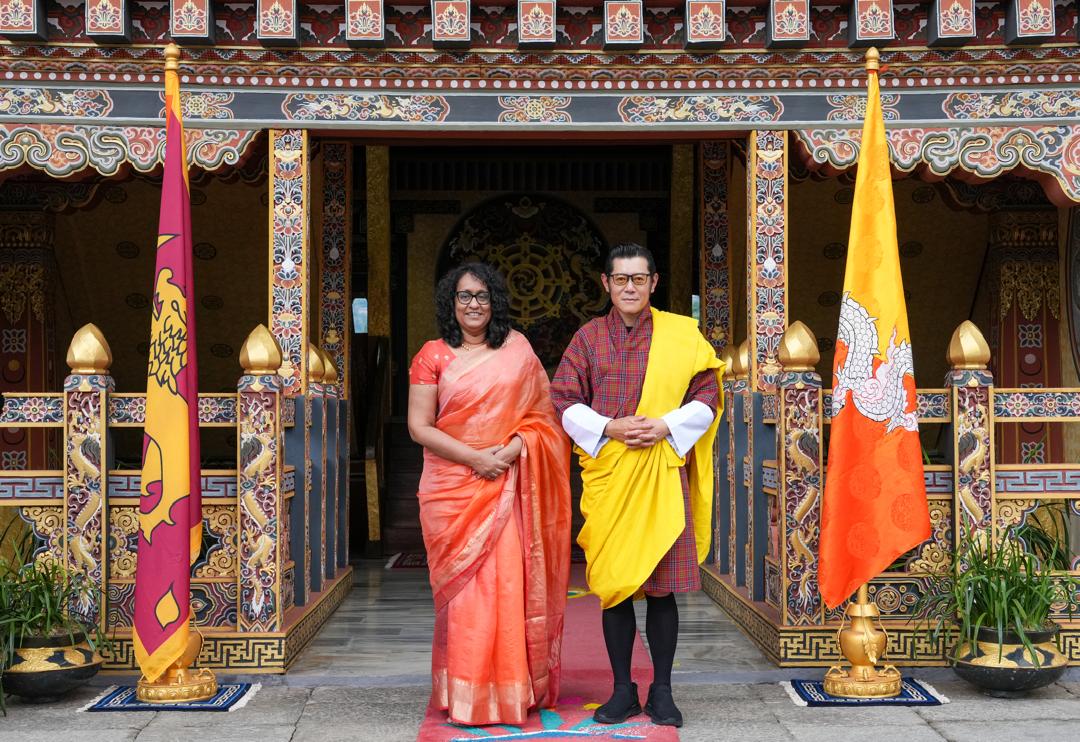
Prime Minister Dr. Harini Amarasuriya had an audience with His Majesty King Jigme Khesar Namgyel Wangchuck at the Tashichhodzong in Thimphu on September 02, during her official visit to the Kingdom of Bhutan.
The cordial discussion focused on Bhutan’s future development priorities and opportunities for cooperation between the two countries.
His Majesty expressed Bhutan’s interest in drawing on Sri Lanka’s experiences and expertise in areas relevant to its development plans. The discussion also focused on promoting investment between the two countries, including the possibility of establishing an investment zone in Bhutan.
The two sides also exchanged views on demographic challenges facing Bhutan, including the increasing migration of young people and its impact on the country’s population and future workforce.
The meeting highlighted the importance of strengthening bilateral cooperation and sharing experiences and best practices in support of the sustainable development of both countries.
(Prime Minister’s Media Division)

Sri Lanka Podujana Peramuna (SLPP) Member of Parliament Namal Rajapaksa has been arrested by the Commission to Investigate Allegations of Bribery or Corruption (CIABOC).
Namal Rajapaksa had been summoned by CIABOC to provide a statement in connection with investigations into the controversial Airbus deal. He was subsequently arrested by CIABOC after recording his statement for over 5 hours.

Prime Minister of Sri Lanka holds a bilateral meeting with Minister for Education and Skills Development of Bhutan

Prime Minister Meets His Majesty the King of Bhutan

Kusal Mendis, Binura Fernando ruled out of T20I series in England

SLPP MP Namal Rajapaksa arrested by CIABOC

Devapathiraja clinch U15 Division I title with 33-run win over Royal

Mandhana’s record ton powers India into semi-finals

‘Dates have the highest sugar content to fight Coronavirus’

Sunday Island 27 December – Headlines

#SundayIsland 17th December – Headlines

Sunday Island – 28th March

Sunday Island Headlines – 21 March

Sunday Island – 21st February – Headlines
-

 Features6 days ago
“Wrap Me Up in My Blazer”— A Gentlemanly Bradby Reminiscence
-

 Features5 days ago
When Sri Lankan stories find their own voice
-
 Features6 days ago
JVP/NPP government as seen from outside by Lionel Bopage now domiciled in Australia
-

 News5 days ago
BASL takes exception to Justice Ganepola being denied a place in SC
-

 Editorial7 days ago
Govt. trying to dupe UN Rapporteur?
-

 Features6 days ago
Prof. Savitri Goonesekere: What has she done?
-

 News2 days ago
Denied of promotion to SC despite vacancies, justice Gurusinghe retires
-

 Latest News2 days ago
Grade 5 scholarship exam results released