
Sports
Leading lights of ICC Men’s T20 World Cup

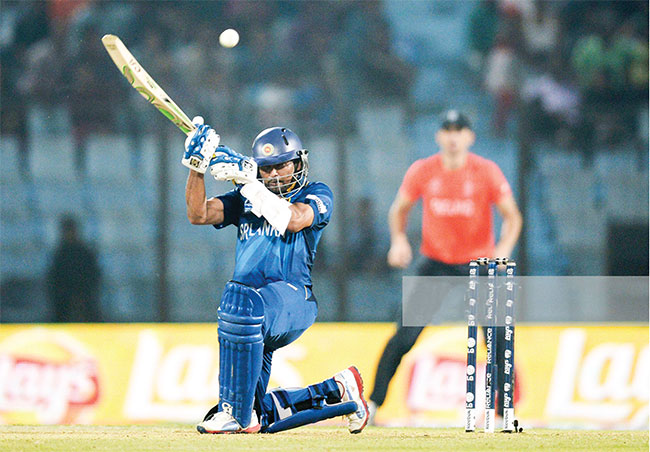
The measure of great players is the ability to perform on the biggest stage and in T20 cricket, it does not come any bigger than the ICC Men’s T20 World Cup.
Over the course of the previous six editions, there have been many stunning individual performances.
Taken as a whole though, it is no surprise that the players who have performed the most consistently since 2007 are also among the very best players the game has seen.
So, as we prepare for the start of the ICC Men’s T20 World Cup 2021, we take a look at 10 players who have had a huge impact on the history of the tournament with their consistent excellence:
Shahid Afridi (Pakistan) – 39 wickets and 546 runs in 34 matches
The greatest wicket-taker in the history of the ICC Men’s T20 World Cup, Pakistan’s Shahid Afridi is one of the poster boys of the format capable of having an impact with bat and ball.
His crowning achievement came in 2009 when he inspired Pakistan to the title, earning Player of the Match honours for his performance in the eight-wicket win over Sri Lanka in the final.
In that game Afridi took one for 20 with a miserly spell before hammering an unbeaten 54 off 40 balls to see his side home.
His 39 wickets are the most of any player in the tournament, while he is just outside the top ten all-time runs scorers with 546, and only Tillakaratne Dilshan has played more than Afridi’s 34 matches.
Shakib Al Hasan (Bangladesh) – 567 runs and 30 wickets in 25 matches
The only player on this list who has not reached at the least the semi-finals of the competition, it is mark of Shakib Al Hasan’s achievements that he has been so successful despite playing in a struggling side.
One of just eight men who will be playing in 2021 having also featured in the inaugural tournament, Shakib has been one of the great all-rounders in the ICC Men’s T20 World Cup.
He joins Afridi as the only players to have scored at least 500 runs and taken 30 wickets in the tournament, and if his performances in England two years ago are anything to go by, his taste for the big occasion is only increasing.
Samuel Badree (West Indies) –24 wickets in 15 matches
Not quite as prolific as some players on this list, but West Indian spinner Samuel Badree had a remarkable impact on the competition between 2012 and 2016.
In tandem with Sunil Narine for the first two of those tournaments, Badree showed just how dangerous spinners can be in T20 cricket, opening the bowling for the West Indies.
His bowling average of 13.58 is the best in the tournament’s history, while an economy rate of 5.52 is second only to Narine.
When you consider those figures, it is no surprise that West Indies enjoyed great success during that period, with Badree crucial to the triumphs in 2012 and 2016.
AB de Villiers (South Africa) – 717 runs and 30 catches in 30 matches
AB de Villiers will go down as one of, if not South Africa’s greatest player across all three formats, and he certainly shone on the global stage in ICC Men’s T20 World Cups.
His 717 runs are good enough for fifth all time and of that top five, only Chris Gayle has a better strike rate than De Villiers’ 143.4.
Of course, the Proteas superstar offered more than just his batting. Whether it was as a wicket-keeper or just an outfielder, he influenced the game like few others.
De Villiers’ 23 catches as an outfielder are eight more than anyone else in the tournament, with seven more and a pair of stumpings when he had the gloves on.
Tillakaratne Dilshan (Sri Lanka) – 897 runs in 35 matches
The 2021 ICC Men’s T20 World Cup will be the first tournament in which Tillakaratne Dilshan will not feature, having played more matches than anyone in the competition’s history.
The Sri Lankan great sits third all time in terms of runs scored (897) and also contributed to the addition of a new word to cricket’s lexicon, and a new shot to a batter’s armoury, with the ‘Dilscoop’ that he mastered in 2009.
He was outstanding in that tournament, including an unbeaten 96 in the semi-final against the West Indies as he made 317 runs to be named Player of the Tournament. The fact that Pakistan removed him for a duck is probably a big factor in why Sri Lanka lost the final.
Chris Gayle (West Indies) –920 runs in 28 matches
The man born to play T20 cricket, Chris Gayle has made the format his own and ‘The Universe Boss’ will look to make it a hat-trick of titles in the UAE and Oman.
Curiously, Gayle has scored three and four in the two finals he has played so far, but the Windies have won them both anyway.
In the other 26 matches he has played, he has racked up 913 runs, second only to Mahela Jayawardene. By the end of the 2021 tournament, Gayle will hope to have joined Jayawardene in the 1000-run club.
As destructive as they come, Gayle has smashed 60 sixes in the tournament, nearly double the next most from Yuvraj Singh with 33, and is the only player to have notched two ICC Men’s T20 World Cup centuries.
Mahela Jayawardene (Sri Lanka) – 1016 runs in 31 matches
No-one has scored more runs at ICC Men’s T20 World Cups than Sri Lankan great Mahela Jayawardene, the only player to have topped 1000 runs in the tournament.
He played in every competition from 2007 to 2014, bowing out in style as he helped Sri Lanka claim the title in his final appearance.
In that match he made a run-a-ball 24 as Sri Lanka chased down India’s total of 130/4 to win the tournament for the first time, becoming the first player to make it four figures in the process.
Among other highlights, he enjoyed a purple patch at the 2010 T20 World Cup when he scored 81, 100 and 98 not out in three successive innings as Sri Lanka reached the semi-finals.
Virat Kohli (India) – 777 runs in 16 matches
The list of candidates for the best player never to have won the ICC Men’s T20 World Cup starts and ends with Virat Kohli. The India skipper averages an absurd 86.33 in the 16 matches he has played.
With a half-century in more than half his innings, Kohli has been as consistent a player as the tournament has seen.
He has been named Player of the Tournament in each of the last two editions of the competition, averaging more than 100 in both editions, while his lowest score in a knockout game is the 72 not out he scored against South Africa in a semi-final win in 2014.
Lasith Malinga (Sri Lanka) – 38 wickets in 31 matches
The most prolific wicket-taker in the history of T20 internationals, Lasith Malinga is second only to Shahid Afridi at the ICC Men’s T20 World Cup.
The master of the yorker, Malinga was the ultimate death bowler, capable of crushing toes and splaying wickets in the deciding moments of matches.
It is also a testament to his importance within the Sri Lankan team that Malinga was captain of the side that won the title in 2014, in a squad featuring the likes of Mahela Jayawardene and Kumar Sangakkara.
And even in a match where he did not take a wicket, the way Malinga restricted India to just 11 runs from overs 18 and 20 of their innings in the final, was crucial to the eventual six-wicket success.
Kevin Pietersen (England) – 580 runs in 15 matches
In the vein of Samuel Badree, Kevin Pietersen’s influence on the tournament was relatively short, but his star shone incredibly bright.
The driving force behind England’s march to glory in 2010 in the Caribbean, Pietersen’s 580 runs in just 15 innings is a phenomenal return.
Only Kohli and Mike Hussey average more than Pietersen’s 44.61 by players with at least ten innings, and his strike-rate of 148.33 is the best of anyone in the top ten all-time run scorers.
He also has the silverware to go with it – being named Player of the Tournament as an aggressive England side powered their way to the title.
He scored 248 runs in that tournament, capping off a run of three editions in which he was England’s most devastating batter.


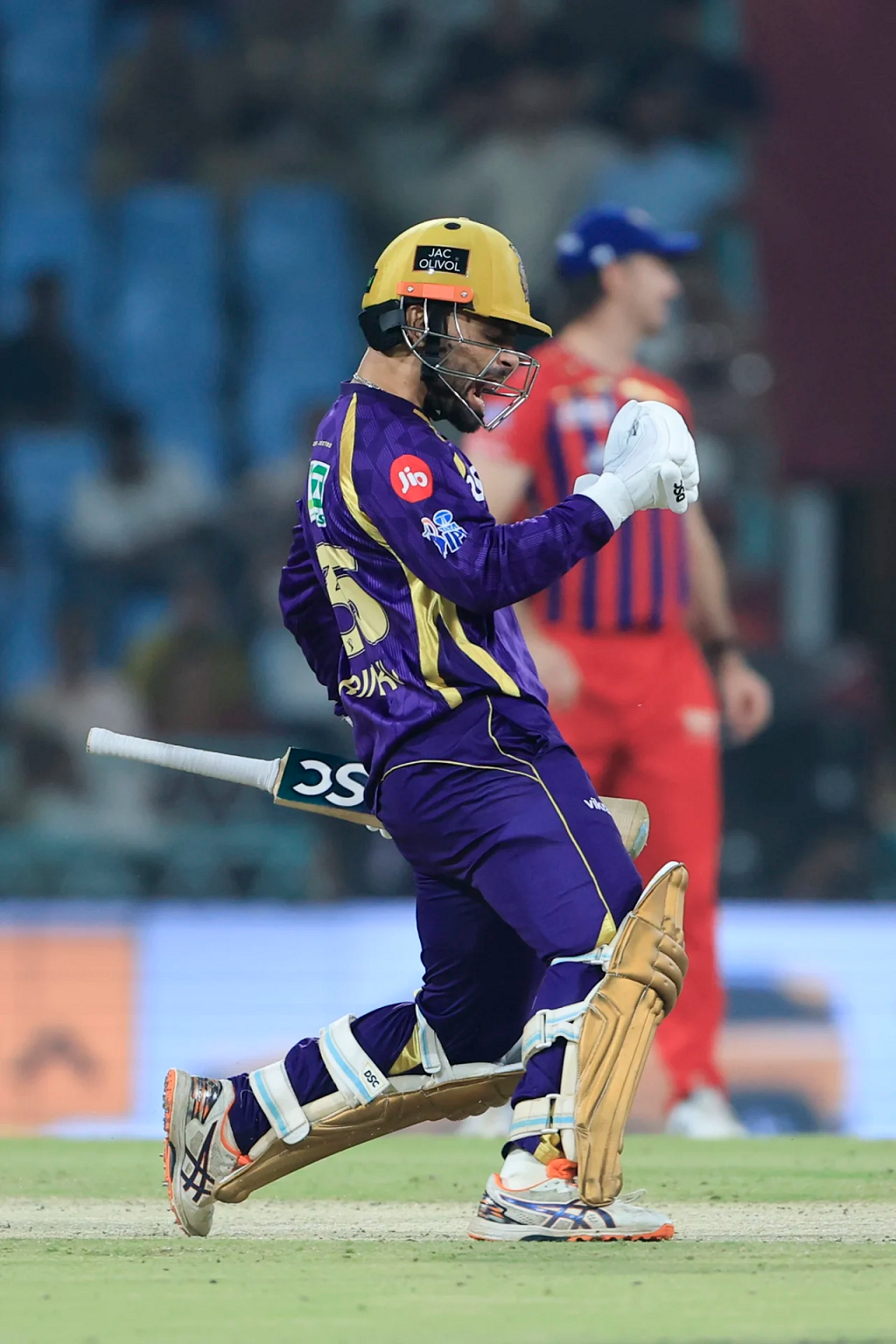
In a battle between the bottom-placed teams, momentum shifted hands multiple times before Kolkata Knight Riders (KKR) beat Lucknow Super Giants (LSG) in the Super Over, with Rinku Singh playing a pivotal role throughout the game.
Before the Super Over (effectively four balls across both innings), the 20th over of each innings in regulation time had the biggest say in an error-strewn game. After 19 overs, KKR were 129 for 7. Rinku smashed Digvesh Rathi for four successive sixes in a 26-run over to take them to 155 for 7. Rinku finished on 83 not out off 51 balls, his highest score in T20s
In the chase, LSG needed 17 from six balls with Himmat Singh and Mohammed Shami at the crease. Kartik Tyagi conceded successive no-balls off beamers before dismissing Himmat, but served up a half-volley with seven needed from one ball, and Shami launched it over long-off to tie the game.
The Super Over was an anti-climax. Sunil Narine bowled Nicholas Pooran first ball and had Aiden Markram caught off the third, with Rishabh Pant managing a single in between. Here, too, Rinku had a hand to play. When Markram launched Narine towards long-on, Rovman Powell sprinted round to his left, caught the ball at the boundary, and flicked the ball towards long-off, where Rinku completed the catch. This was in addition to his four catches earlier in the match.
Then, taking strike in KKR’s Super Over, he drove Prince Yadav’s first ball through cover point for four to seal the win.
Before all that, Mohsin Khan’s maiden five-for in T20 cricket had KKR reeling. In the second over of the innings, he had Tim Seifert caught at extra cover with a 142.4kph delivery. It was the second successive duck for Seifert, and a third wicket-maiden for Mohsin in this IPL.
In his next over, Mohsin slipped in a slower ball at 124.6kph. Ajinkya Rahane charged down the pitch but ended up miscuing the ball to Aiden Markram, who back-pedalled from mid-off to take the catch.
Angkrish Raghuvanshi pushed the last ball of the fifth over towards mid-on and set off for a single. Cameron Green sent him back while Shami went for a direct hit at the striker’s end. Raghuvanshi made a big U-turn and ended up taking the throw on his body as he dived to make ground. The LSG players appealed for obstructing the field, and the TV umpire gave it out, saying the batter “clearly changed his direction”.
Raghuvanshi wasn’t happy. He first argued with the on-field umpires, and then flung his helmet in anger as he neared the boundary line.
Mohsin returned to bowl the seventh over of the innings and straightaway had Rovman Powell gloving a pull to Pant. Cameron Green tried to counterattack. He hit two sixes off George Linde and one off Mohsin, but when he attempted another pull off Mohsin, he ended up skying it behind the stumps. Pant ran towards the boundary and completed the catch. Anukul Roy chipped the very next ball to short midwicket, giving Mohsin his five-for. Immediately after that, Mohsin was replaced by Impact Player Himmat, meaning he was not available to bowl the Super Over later.
KKR were 73 for 6 after 11 overs, and it became 93 for 7 when Ramandeep Singh fell. Manish Pandey was padded up in the dugout, ready to come in as Impact Player. But he was not required as Rinku kept fighting. He reached 43 off 40 balls by the end of the 18th over and then opened up. He started the 19th by hitting Shami for 6, 4, 4 before taking Digvesh Rathi apart in the 20th. It also meant KKR could use Varun Chakravarthy as their Impact Player.
LSG reunited their tried-and-tested opening pair of Mitchell Marsh and Markram, but their union lasted only seven balls; Vaibhav Arora had Marsh caught at mid-on for 2. Arora bowled three overs in the powerplay and gave away only 13 runs. LSG finished the powerplay at 37 for 1, and by the end of the eighth over, the required rate had touched nine.
Both Markram and Pant perished in trying to keep up with the asking rate. Pooran’s poor run continued; Varun had him caught at short third for 9 off 12 balls. Mukul Choudhary had burst onto the scene with a whirlwind half-century in a similar chase against KKR earlier in the season but on Sunday, he lasted just two balls.
At 93 for 5, needing another 63 from 28 balls, LSG seemed to be down and out. But Himmat and Linde took them closer, and Shami levelled the scores with his last-ball six. But KKR made no mistake in the Super Over.
Brief scores:
Kolkata Knight Riders 155 for 7 in 20 overs (Ajinkya Rahane 10, Cameron Green 34, Rinku Singh 83*; Mohsin Khan 5-23, George Linde 1-18) beat Lucknow Super Giants 155 for 8 in 20 overs (Aiden Markram 31, Rishabh Pant 42, Ayush Badoni 24, Himmat Singh 19, Mohammed Shami 11*; Anukul Roy 1-19, Vaibhav Arora 2-24,Cameron Green 1-12, Sunil Narine 1-23, Varun Chakravarthy 2-33, Kartik Tyhagi 1-41) via Super Over
[Cricinfo]
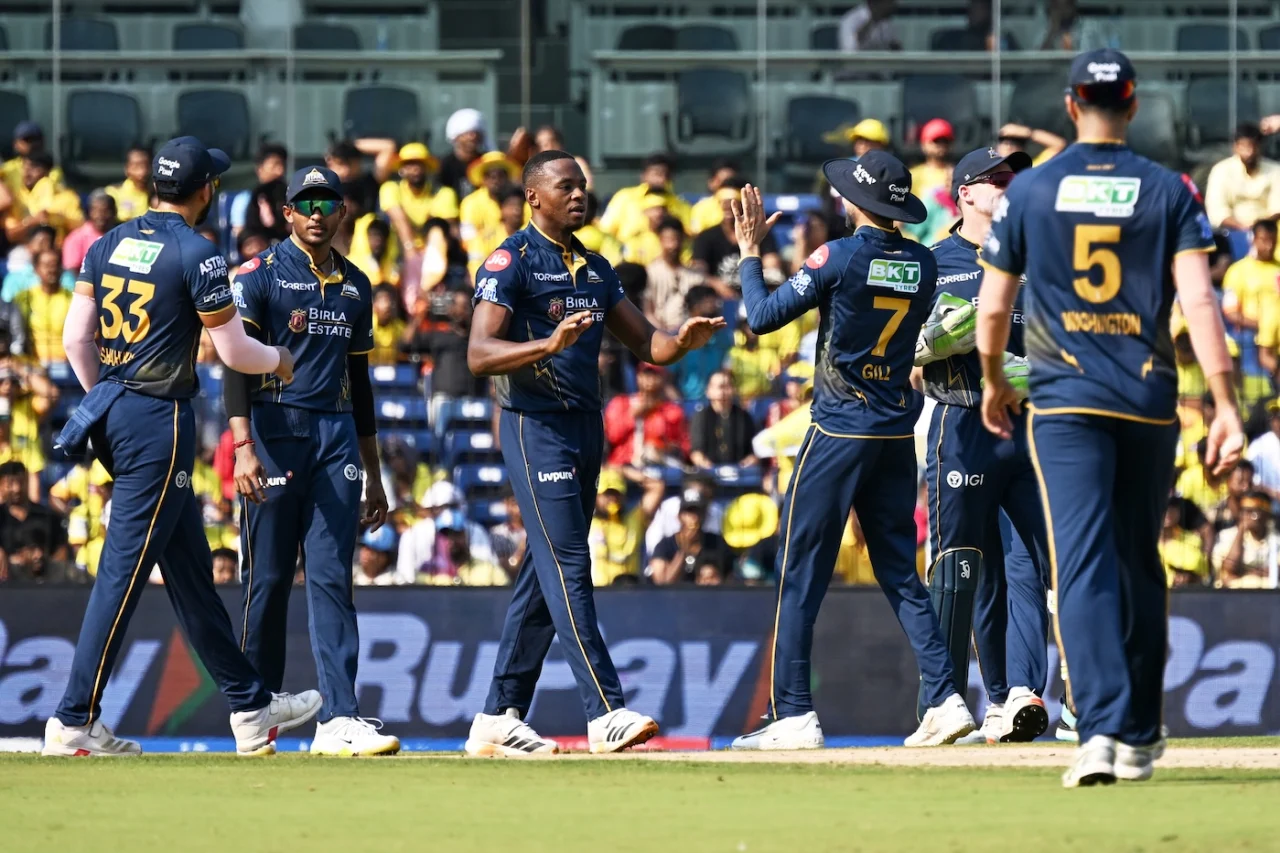
A powerplay burst from the best new-ball attack in the IPL broke Chennai Super Kings [CSK]. Kagiso Rabada picked up 3 for 25 to spearhead an eight-wicket win for Gujarat Titans and push them up to fifth place on the points table. CSK had held that position and now drop to sixth.
There seemed to be a misconception about the pitch. At the toss, Rutraj Gaikwad spoke about it being dry and not minding defending a total, the implication being spin might come into play later. What happened was the exact opposite. GT bowled Rabada and Mohammed Siraj right through the powerplay and CSK were unable to cope with the pace and bounce on offer. CSK even brought in Sarfaraz Khan as the Impact Player at the four-over mark but it didn’t work out as he fell for a golden duck.
They were 28 for 3, the third-lowest six-over score this season. Rabada was magnificent, as he usually is when someone ticks him off. Two boundaries by Sanju Samson in his first over made him mad. Two wickets in his second over, including Samson’s, made him happy. Siraj and Jason Holder went at less than run a ball. Rabada picked up 3 for 25 from four overs. GT’s spinners though leaked 43 runs in four overs. Rashid Khan bowled only six balls and gave away 21 runs.
This was an under-strength GT attack too with Prasidh Krishna not playing. Still, they denied CSK a boundary for 31 balls between overs 3.5 and 9.1. They made them wait 11.6 overs to bring up fifty, making it their second-slowest in the IPL. Gaikwad was out there for all of it. He got off the mark with two boundaries. But with all the help the quicks were getting and wickets falling at the other end, he set his stall out to play the full 20 overs. Gaikead scored 74 of CSK’s 158. He played out 30 dot balls, the joint-second highest in an IPL innings.
A crowd of 31,506 came to Chepauk. They roared for the fifty coming up even though it took 72 balls. They go gaga for Dewald Brevis’ entry, when he takes the knee just as he enters the field. He’s made 64 runs in 53 balls this season. He’s flattering to deceive. MS Dhoni isn’t attending a single match day but his disembodied voice keeps ringing out over the loud speakers saying “start the whistles”. And they do start. There is belief in Chennai but it started to fade around the 14th over of the chase when people started heading for the exit.
Brief scores:
Gujarat Titans 162 for 2 in 16.4 overs (Sai Sudharsan 87, Shubman Gill 32, Jos Buttler 39*; Akeal Hosein 1-46, Noor Ahmed 1-29) beat Chennai Super Kings 158 for 7 in 20 overs (Sanju Samson 11, Rutraj Gaikwad 74*, Shivam Dube 22, Kartik Sharma 15, Jamie Overton 18; Mohammed Siraj 1-23, Kagiso Rabada 3-25, Manav Suthar 1-22, Arshad Khan 2-43) by 8 wickets
[Cricinfo]

Sri Lanka’s Tuskers showed bite but not quite enough teeth as New Zealand’s Under-85kg side edged a bruising 27-16 win in the opening leg of their two-match series at Racecourse on Saturday.
Under lights for the second straight year, the visitors rode pressure, precision and a late sucker punch to take first blood in a contest that swung on momentum and discipline.
New Zealand struck early at the breakdown, forcing a turnover penalty with Sri Lanka pinged for holding on. Taine Cordell-Hull made no mistake from the tee to open the scoring.
The hosts hit back with purpose. A knock-on gifted them a scrum platform and the pack went to work, grinding through tight phases. Scrum-half Harsha Maduranga pulled the strings before releasing Mursheed Zubair, whose inside ball sent centre Akash Madushanka on a hard, direct line to crash over for the opening try.
But just as Sri Lanka found their rhythm, New Zealand pounced. Maduranga’s clearance was charged down by Josh Gellart and the ricochet sat up kindly for Simon Sia to dot down, restoring the visitors’ lead.
The Tuskers’ forwards continued to carry with intent, their rolling maul chewing up metres before the ball was shifted wide for winger Janindu Dilshan to finish in the corner. Any momentum, however, was short-lived, Dilshan was sin-binned moments later for foul play, leaving the hosts a man down.
New Zealand wasted little time exploiting the overlap. Kicking deep and setting up camp, they drove a clinical maul, with number eight Pasia Asiata peeling off the back to power over and swing the contest again.
It remained a tight arm-wrestle. Cordell-Hull added another penalty on the stroke of halftime after Sri Lanka strayed inside their own 22, while a potential home try was chalked off for offside. Thenuka Nanayakkara slotted a penalty from advantage to keep Sri Lanka within touching distance, the visitors taking a slender 16-13 lead into the break.
New Zealand resumed with the same clinical edge, winning an early breakdown penalty that Cordell-Hull converted to stretch the margin. Sri Lanka refused to fold, upping the tempo and earning a lifeline when Asiata was shown yellow for a high tackle on Madushanka. Nanayakkara kept the scoreboard ticking, trimming the deficit once more.
But the visitors held their nerve. After soaking up sustained pressure, they forced penalties of their own and Jarred Percival stepped up to bisect the uprights, giving New Zealand breathing space heading into the final quarter.
The killer blow came late. With Sri Lanka chasing the game, a loose clearance towards touch was snapped up quickly by Ben Kelt, catching the defence napping. The move opened up broken field, Pieter Swarts slicing through before sending Matt Treeby over in the corner to seal it in the 77th minute.
New Zealand finished with three tries and four penalties to Sri Lanka’s two tries and two penalties, a late flourish settling a contest that had been on a knife edge for long periods.
The Tuskers will take heart from a far sharper display, but it is New Zealand who carry the upper hand into the second leg in Kandy next week.
by Carlos Van de Berg

Police officers donate LKR 9,687,462 from day’s salary to ‘Rebuilding Sri Lanka’ Fund

Iran’s top diplomat in Russia as Tehran intensifies efforts to end the war

Rinku, Narine win Kolkata Knight Riders error-strewn Super Over game

Rabada and Sudharsan crush Chennai Super Kings

Showers or thundershowers will occur at several places in most parts of the island after 1.00 pm

Heat Index at Caution Level in the Northern, North-central, North-western, Western, Sabaragamuwa, Southern, and Eastern provinces and in Monaragala district during the day time

‘Dates have the highest sugar content to fight Coronavirus’

Sunday Island 27 December – Headlines

#SundayIsland 17th December – Headlines

Sunday Island – 28th March

Sunday Island Headlines – 21 March

Sunday Island – 21st February – Headlines
-

 News7 days ago
Rs 13 bn NDB fraud: Int’l forensic audit ordered
-

 News5 days ago
Lanka faces crisis of conscience over fate of animals: Call for compassion, law reform, and ethical responsibility
-
 News4 days ago
Whistleblowers ask Treasury Chief to resign over theft of USD 2.5 mn
-

 News4 days ago
No cyber hack: Fintech expert exposes shocking legacy flaws that led to $2.5 million theft
-

 News20 hours ago
BIA drug bust: 25 monks including three masterminds arrested
-

 Business2 days ago
Nestlé Lanka Announces Change in Leadership
-

 News5 days ago
USD 2 mn bribe: CID ordered to arrest Shasheendra R, warrant issued against ex-SriLankan CEO’s wife
-

 News2 days ago
Hackers steal $3.2 Mn from Finance Ministry