
Sports
Leading lights of ICC Men’s T20 World Cup

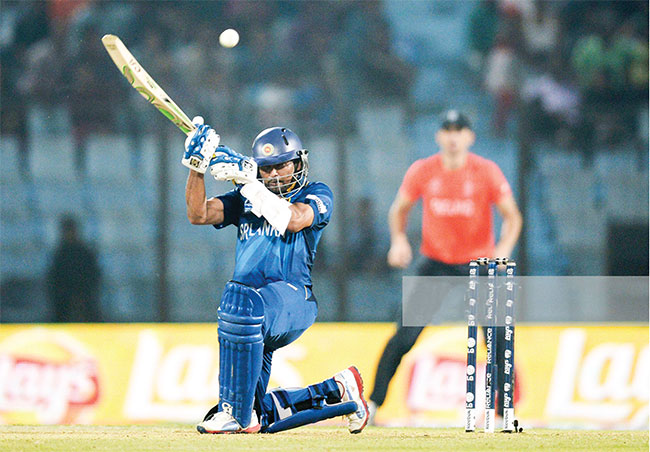
The measure of great players is the ability to perform on the biggest stage and in T20 cricket, it does not come any bigger than the ICC Men’s T20 World Cup.
Over the course of the previous six editions, there have been many stunning individual performances.
Taken as a whole though, it is no surprise that the players who have performed the most consistently since 2007 are also among the very best players the game has seen.
So, as we prepare for the start of the ICC Men’s T20 World Cup 2021, we take a look at 10 players who have had a huge impact on the history of the tournament with their consistent excellence:
Shahid Afridi (Pakistan) – 39 wickets and 546 runs in 34 matches
The greatest wicket-taker in the history of the ICC Men’s T20 World Cup, Pakistan’s Shahid Afridi is one of the poster boys of the format capable of having an impact with bat and ball.
His crowning achievement came in 2009 when he inspired Pakistan to the title, earning Player of the Match honours for his performance in the eight-wicket win over Sri Lanka in the final.
In that game Afridi took one for 20 with a miserly spell before hammering an unbeaten 54 off 40 balls to see his side home.
His 39 wickets are the most of any player in the tournament, while he is just outside the top ten all-time runs scorers with 546, and only Tillakaratne Dilshan has played more than Afridi’s 34 matches.
Shakib Al Hasan (Bangladesh) – 567 runs and 30 wickets in 25 matches
The only player on this list who has not reached at the least the semi-finals of the competition, it is mark of Shakib Al Hasan’s achievements that he has been so successful despite playing in a struggling side.
One of just eight men who will be playing in 2021 having also featured in the inaugural tournament, Shakib has been one of the great all-rounders in the ICC Men’s T20 World Cup.
He joins Afridi as the only players to have scored at least 500 runs and taken 30 wickets in the tournament, and if his performances in England two years ago are anything to go by, his taste for the big occasion is only increasing.
Samuel Badree (West Indies) –24 wickets in 15 matches
Not quite as prolific as some players on this list, but West Indian spinner Samuel Badree had a remarkable impact on the competition between 2012 and 2016.
In tandem with Sunil Narine for the first two of those tournaments, Badree showed just how dangerous spinners can be in T20 cricket, opening the bowling for the West Indies.
His bowling average of 13.58 is the best in the tournament’s history, while an economy rate of 5.52 is second only to Narine.
When you consider those figures, it is no surprise that West Indies enjoyed great success during that period, with Badree crucial to the triumphs in 2012 and 2016.
AB de Villiers (South Africa) – 717 runs and 30 catches in 30 matches
AB de Villiers will go down as one of, if not South Africa’s greatest player across all three formats, and he certainly shone on the global stage in ICC Men’s T20 World Cups.
His 717 runs are good enough for fifth all time and of that top five, only Chris Gayle has a better strike rate than De Villiers’ 143.4.
Of course, the Proteas superstar offered more than just his batting. Whether it was as a wicket-keeper or just an outfielder, he influenced the game like few others.
De Villiers’ 23 catches as an outfielder are eight more than anyone else in the tournament, with seven more and a pair of stumpings when he had the gloves on.
Tillakaratne Dilshan (Sri Lanka) – 897 runs in 35 matches
The 2021 ICC Men’s T20 World Cup will be the first tournament in which Tillakaratne Dilshan will not feature, having played more matches than anyone in the competition’s history.
The Sri Lankan great sits third all time in terms of runs scored (897) and also contributed to the addition of a new word to cricket’s lexicon, and a new shot to a batter’s armoury, with the ‘Dilscoop’ that he mastered in 2009.
He was outstanding in that tournament, including an unbeaten 96 in the semi-final against the West Indies as he made 317 runs to be named Player of the Tournament. The fact that Pakistan removed him for a duck is probably a big factor in why Sri Lanka lost the final.
Chris Gayle (West Indies) –920 runs in 28 matches
The man born to play T20 cricket, Chris Gayle has made the format his own and ‘The Universe Boss’ will look to make it a hat-trick of titles in the UAE and Oman.
Curiously, Gayle has scored three and four in the two finals he has played so far, but the Windies have won them both anyway.
In the other 26 matches he has played, he has racked up 913 runs, second only to Mahela Jayawardene. By the end of the 2021 tournament, Gayle will hope to have joined Jayawardene in the 1000-run club.
As destructive as they come, Gayle has smashed 60 sixes in the tournament, nearly double the next most from Yuvraj Singh with 33, and is the only player to have notched two ICC Men’s T20 World Cup centuries.
Mahela Jayawardene (Sri Lanka) – 1016 runs in 31 matches
No-one has scored more runs at ICC Men’s T20 World Cups than Sri Lankan great Mahela Jayawardene, the only player to have topped 1000 runs in the tournament.
He played in every competition from 2007 to 2014, bowing out in style as he helped Sri Lanka claim the title in his final appearance.
In that match he made a run-a-ball 24 as Sri Lanka chased down India’s total of 130/4 to win the tournament for the first time, becoming the first player to make it four figures in the process.
Among other highlights, he enjoyed a purple patch at the 2010 T20 World Cup when he scored 81, 100 and 98 not out in three successive innings as Sri Lanka reached the semi-finals.
Virat Kohli (India) – 777 runs in 16 matches
The list of candidates for the best player never to have won the ICC Men’s T20 World Cup starts and ends with Virat Kohli. The India skipper averages an absurd 86.33 in the 16 matches he has played.
With a half-century in more than half his innings, Kohli has been as consistent a player as the tournament has seen.
He has been named Player of the Tournament in each of the last two editions of the competition, averaging more than 100 in both editions, while his lowest score in a knockout game is the 72 not out he scored against South Africa in a semi-final win in 2014.
Lasith Malinga (Sri Lanka) – 38 wickets in 31 matches
The most prolific wicket-taker in the history of T20 internationals, Lasith Malinga is second only to Shahid Afridi at the ICC Men’s T20 World Cup.
The master of the yorker, Malinga was the ultimate death bowler, capable of crushing toes and splaying wickets in the deciding moments of matches.
It is also a testament to his importance within the Sri Lankan team that Malinga was captain of the side that won the title in 2014, in a squad featuring the likes of Mahela Jayawardene and Kumar Sangakkara.
And even in a match where he did not take a wicket, the way Malinga restricted India to just 11 runs from overs 18 and 20 of their innings in the final, was crucial to the eventual six-wicket success.
Kevin Pietersen (England) – 580 runs in 15 matches
In the vein of Samuel Badree, Kevin Pietersen’s influence on the tournament was relatively short, but his star shone incredibly bright.
The driving force behind England’s march to glory in 2010 in the Caribbean, Pietersen’s 580 runs in just 15 innings is a phenomenal return.
Only Kohli and Mike Hussey average more than Pietersen’s 44.61 by players with at least ten innings, and his strike-rate of 148.33 is the best of anyone in the top ten all-time run scorers.
He also has the silverware to go with it – being named Player of the Tournament as an aggressive England side powered their way to the title.
He scored 248 runs in that tournament, capping off a run of three editions in which he was England’s most devastating batter.



A 36 ball 63 by Sahan Arachchige and three wickets each by Eshan Malinga [3-13] and Tharindu Rathnayake [3-19] helped Galle Gallants defeat Jaffna Kings by 60 runs in the 10th match of the Lanka Premier League 2026. Galle Gallants lead the points table with three wins from four outings.
Scores:
Galle Gallants 193/8 in 20 overs [Chris Lynn 46, Sahan Arachchige 63, Dasun Shanaka 12, Dinura Kalupahana 10, Mohammad Nawaz 27; Mohamed Shiraz 1-23, Dunith Wellalage 1-13, Shakib Al Hasan 1-27, Dilshan Madushanaka 2-35, Lizaad Williams 2-37]
Jaffna Kings 133 in 17.5 overs [Kamil Mishara 15, Ibrahim Zadran 11, David Weise 22, Dunith Wellalage 56; Dasun Shanaka 1-21, Tharindu Rathnayake 3-19, Akif Javed 1-22, Eshan Malinga 3-13, Vijayakanth Viyaskanth 1-32]
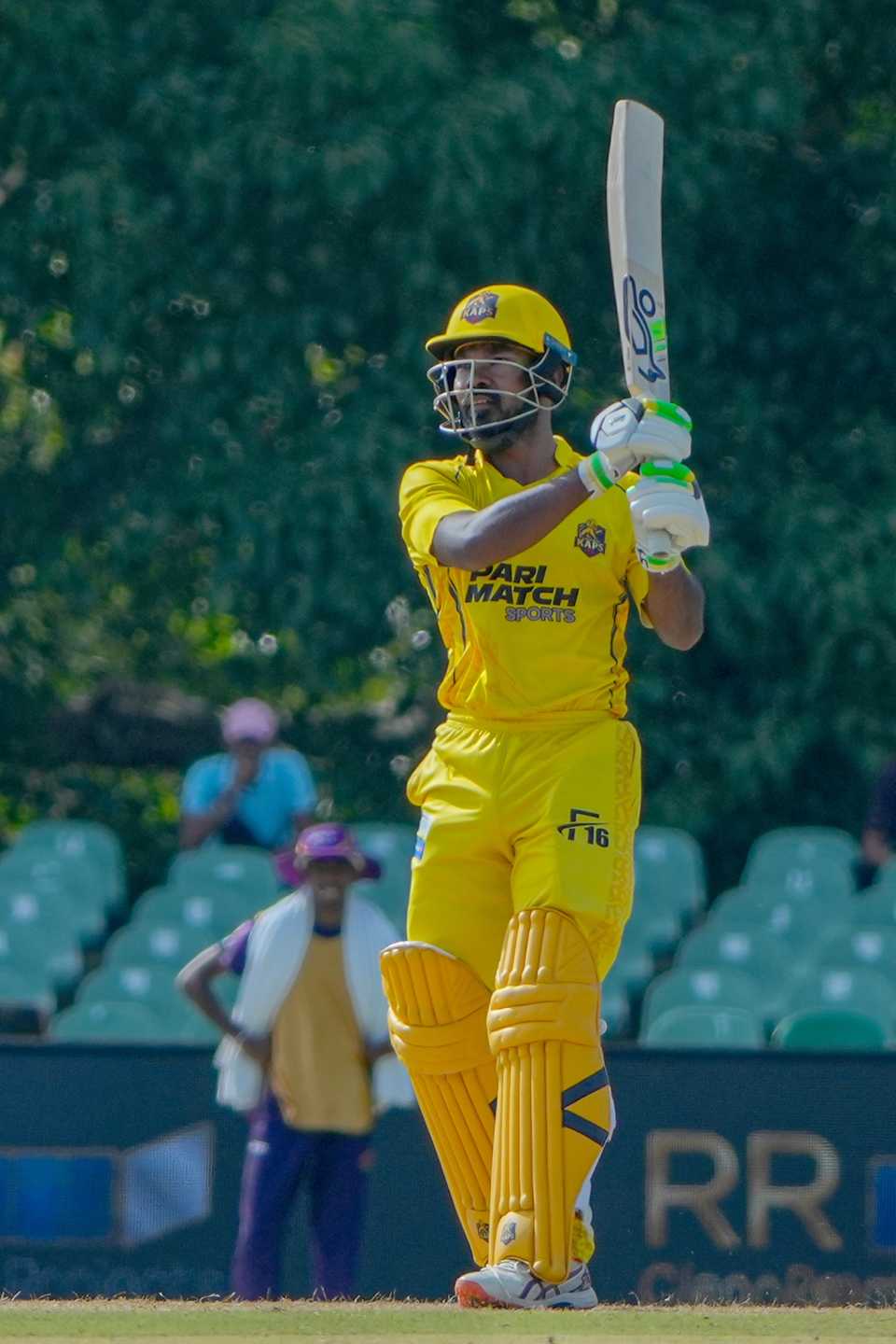
Half centuries by Rubin Hermann and Janith Liyanage and a three wicket haul by Mujeeb Ur Rahman helped Colombo Kaps defeat Kandy Royals by 24 runs in the 9th match of the Lanka Premier League 2026 played at Dambulla on Thursday [23rd July]’
Scores:
Colombo Kaps 192/9 in 20 overs [Rubin Hermann 53, Sharujan Shanmuganathan 14, Janith Liyanage 52*, James Neesham 24, Binura Fernando 21; Vijay Shankar 1-0, Shaheen Shah Afridi 2-34, Nuwan Thushara 1-31, Moeen Ali 2-31, Dushan Hemantha 2-20]
Kandy Royals 169/8 in 20 overs [Kusal Perera 19, Dale Phillips 38, Vijay Shankar 30, Angelo Mathews 39*, Dushan Hemantha 11*; Shahnawaz Dahani 1-35, Wanuja Sahan 1-24, Mujeeb Ur Rahman 3-34, Malsha Tharupathi 1-29, James Neesham 1-07]

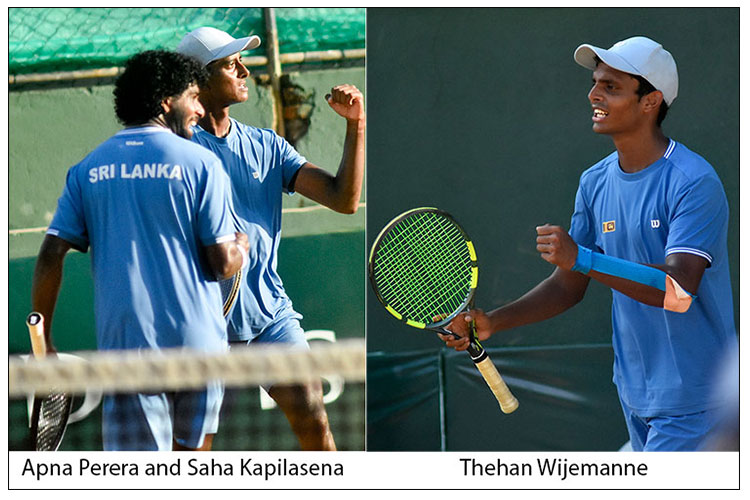
Hosts Sri Lanka made a winning start to their Davis Cup Asia/Oceania Group IV campaign, edging out Qatar 2-1 in a closely contested opening-day tie at the Sri Lanka Tennis Association courts in Colombo on Wednesday.
The visitors struck first when Mubarak Alharrasi defeated Sri Lanka’s Apna Perera 6-3, 4-6, 6-2 in a hard-fought opening singles encounter, giving Qatar an early 1-0 lead.
Sri Lanka bounced back in the second singles as Thehan Wijemanne produced a spirited comeback to overcome Mossa Alharrasi 3-6, 6-4, 6-4. After dropping the opening set, Wijemanne showed great composure to win the next two sets and level the tie at 1-1.
The decisive doubles match proved to be a tense affair, with Apna Perera returning to partner Saha Kapilasena. The Sri Lankan duo held their nerve in two tie-breaks to defeat Jabar Al Mutawan and Mossa Alharrasi 7-6, 7-6, sealing the tie 2-1 for the hosts.
Sri Lanka’s ability to recover from the opening singles defeat highlighted the team’s resilience as Wijemanne’s comeback victory and the doubles pair’s clutch performance ensured a successful start to their campaign. The hosts will now look to build on the opening-day victory as they continue their quest for promotion in the Asia/Oceania Group IV competition.

Sheikh Hasina ally resigns as Bangladesh’s president

Oil prices hit $100 for the first time since May

US hits dozens of trading partners with new wave of tariffs

Arachchige, Rathnayake and Malinga pump Jaffna

Hermann, Liyanage and Mujeeb steer Colombo Kaps to a 23 run win

Showers expected in the Western and North-western provinces and in Galle and Matara districts

‘Dates have the highest sugar content to fight Coronavirus’

Sunday Island 27 December – Headlines

#SundayIsland 17th December – Headlines

Sunday Island – 28th March

Sunday Island Headlines – 21 March

Sunday Island – 21st February – Headlines
-
 Features6 days ago
Two memorable excerpts from a former SLAF commander’s memoir
-

 Business6 days ago
‘Giving up was never an option’: The fisherman who fought back after losing millions in SL
-
 Latest News6 days ago
Davis cup Asia/Oceania Group IV 2026 to be held in Colombo from 20th to 25th July
-

 Life style6 days ago
Taste of the Swiss Alps comes to Colombo
-
 Features6 days ago
Erdoğan’s New Republic
-
 Midweek Review3 days ago
Three high-profile alleged suicides shaping key investigations
-
 News7 days ago
Evidence recorded in money laundering case against Yoshitha Rajapaksa
-

 News7 days ago
Dengue outbreak gallops ahead: Infections surpasses 73,455, leaving 50 dead