
Sports
Bearding the lion in its own den

36th Anniversary of Sri Lanka’s first ever Test match at Lord’s – Part 2
by Rohan Wijeyaratna
By now it was clear Gower and the selectors had grievously erred in under estimating the visitors, while over-estimating themselves. Far from being overawed, Sri Lanka had risen to the occasion and set in motion a prolonged leather hunt, that was fast becoming an embarrassment to England. As they drearily dragged themselves on to the field for the third successive day at Lord’s, the truth slowly dawned upon all, that England hadn’t seen off even half the visiting side yet.
The only wicket for the day
But let’s not get too far ahead of the story. The wicket of Ranatunga midway through the second afternoon was the only success England enjoyed on day two. Possessing a composure and temperament that was well beyond his years, Ranatunga played a commendable hand for one so young in consolidating the Sri Lankan middle order. He enjoyed some luck along the way when Gower spilled him in the gully when on 66, but by lunch on day two, Sri Lanka were healthily placed at 271 for three, with Ranatunga on 74 and Wettimuny on 137. England had toiled hard in the morning session for no return.
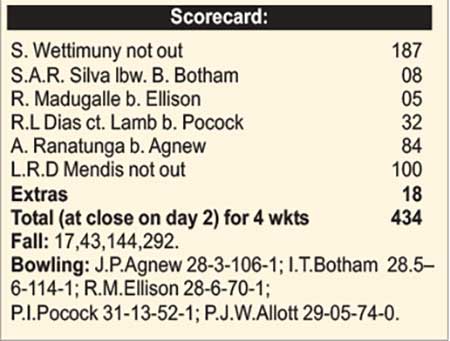
Reputedly, the English crowds are the fairest in the world. It is a repute they wear very well. On this occasion they were genuine in their appreciation of the Lankan batting, even though it was at the expense of their own team. Tragically, with a Test hundred at Lord’s beckoning him, Ranatunga playing forward to Agnew, allowed a shaft of light to remain between bat and pad and was castled through it. He had made 84 in 248 minutes of batting, having added 148 for the fourth wicket. Sri Lanka were 292 for four, when Duleep Mendis walked in.
Unfinished business
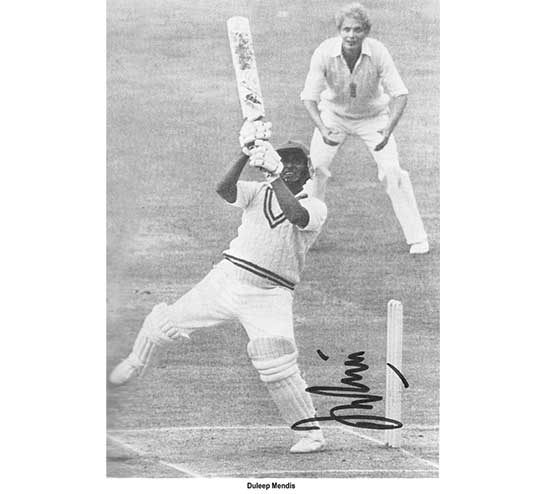
 Mendis knew he had some unfinished business in England. As previously mentioned (The Island – 23rd May, 2020), he could have won his side a famous victory nine years before, in the inaugural Prudential World Cup, but by knocking himself out via his own outer edge to a Thomson ‘screamer’ at a time when he had the Australian attack by its throat, he failed to fulfill that dream. That was when fate intervened and prevented what threatened to be a major tournament upset, when he and Sunil Wettimuny were involved in a furious attack on Ian Chappell’s men. Now at Lord’s, Mendis had Sunil’s younger brother for company and the stage could not have been better set for him to deliver a vintage ‘Mendis Special’. The wicket held no terrors; the bowling was near pedestrian; his team was well placed, and the man at the other end was looking like the Rock of Gibraltar by the minute! In short, Mendis could not have asked for a better setting to make the stage, indubitably his!
A man apart
England on the other hand seemed reminded that Mendis met his nemesis in 1975 whilst hooking. Thanks possibly to some old rope well swallowed, their bowlers determined they would give him a working over, with the short ball. Accordingly, Allott began with a hurried delivery that pitched and arrived head high to Mendis on an inconvenient off stump trajectory. Somewhat taken aback and definitely hurried, the batsman managed a reflex hook down to long leg – a shot of no great conviction. This encouraged all other leather flingers to smack their lips, dreaming of possibilities. Soon it was Agnew pitching short at Mendis. Back and across went the portly skipper, picking up the ball from his off and hooking it down to long leg for four. Agnew bowled slightly short again and Mendis – now going back, smoked it venomously wide of extra cover for four, to bring up the 300. With each shot he now played, Mendis assumed greater authority. Agnew next bowled a more fullish length and Mendis drilled it right back at him, like a blast from a cannon. It was a stinging blow and technically a chance, though Agnew had no hope in hell of catching it. A back footed square slash to a wide, short, Agnew delivery seemed almost violently dismissive. Everyone by now had come to realize they were watching a very special passage of play in the match, and a very special person enacting it. Everyone had also begun to realize that Duleep Mendis was a man apart, from those who preceded him.
But England hadn’t still lost hope. On came England’s man for all seasons – Ian Botham; now specifically tasked to remove this bothersome Mendis. It took no great intelligence to figure Botham would try and bounce out Mendis, and it took no even greater intelligence to figure, Mendis would accept the challenge. The crowd was expectant. The moment of truth had arrived.
Mendis versus Botham
A languid drive from Wettimuny to deep point brought him on to 154; the highest score by any batsman in his country’s first Test in England. It also brought Mendis on strike. Botham resuming, ran in and delivered. It was a mean bouncer on the off stump and curving in; head high and rising. There was a flurry of activity and in the blink of an eye the ball had disappeared into the Mound stand backward of square for six! The momentarily stunned crowd now broke into loud cheer. Not to be outdone, Wettimuny in the next over from Ellison, gloriously executed a cracking cover drive off his back foot to bring up his best score in Test cricket – 160 off 383 balls in 514 minutes of batting. The ball was now back in Botham’s hand for the following over.
 Botham with his best days of pace behind him, was still, stubborn as a mule. He hadn’t probably heard that in the far outposts of the great empire, there were men who were no respecters of reputations. Possibly with such a bulldog mindset, Botham ran in and bounced again. Out came the hook shot in a flash; six more over square leg and into the Mound Stand! Although visibly wounded, Botham was still not ready to give up. Repositioning the two men he already had for the shot on the leg side boundary, he bounced one last time. It was on a middle and leg line and inconveniently close to Mendis’ head. Mendis undaunted, hooked yet again! The ball evaded the two men on the fence and ended up in the Mound stand for a third successive time. A visibly angry Botham was now seen muttering some ‘unprintables’ at his captain, for no doubt persisting with this daft idea of bouncing Mendis out. The Lankan skipper had now moved to 49, hammering three sixes off Botham in two overs and leaving no one in any doubt as to who was bossing the show in this particular contest. With each of his blows over the ropes, the crowd erupted, and with the third, the cheering rose to a crescendo. This was sensational stuff! Duleep Mendis the Lankan lion had bearded the British lion in its own den! At tea, Sri Lanka were 370 for four with Mendis on 52 and Wettimuny on 173.
Ran ‘em ragged
It took only 14 balls after tea for play to be suspended through bad light for 94 long minutes. Hence when play resumed, close of play was extended well beyond six o’clock. Between Mendis’ arrival and the eventual close of play, the score had surged by another 142 runs with Mendis making exactly one hundred of them. They came off 112 deliveries and mostly in fading light; sometimes almost too dark to recognize the dusky Sri Lankan skipper from 22 yards away! Thrice Mendis refused the offer of light and finally when he accepted, it was only after he had reached three figures. By now he had shown that between him and those that came before, there was a clear distinction. While most of the others applied grace and beauty from a bygone era around their technical correctness, Mendis’ method remained simple. He either blocked it or smashed it. And there was nothing vulgar about it at all. It was just that when in the mood he had this god given ability to reduce any bowling attack to pulp, without slogging. Simply put, Mendis ran England ragged. He was without doubt, the master of all he surveyed, that afternoon.

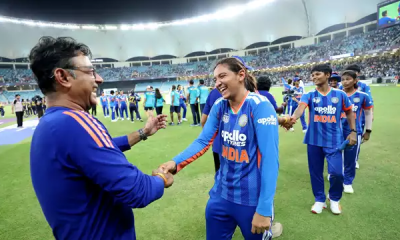


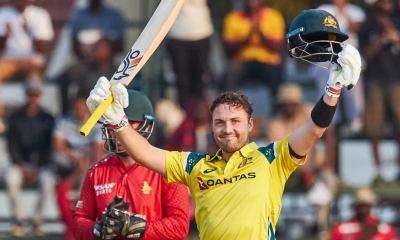



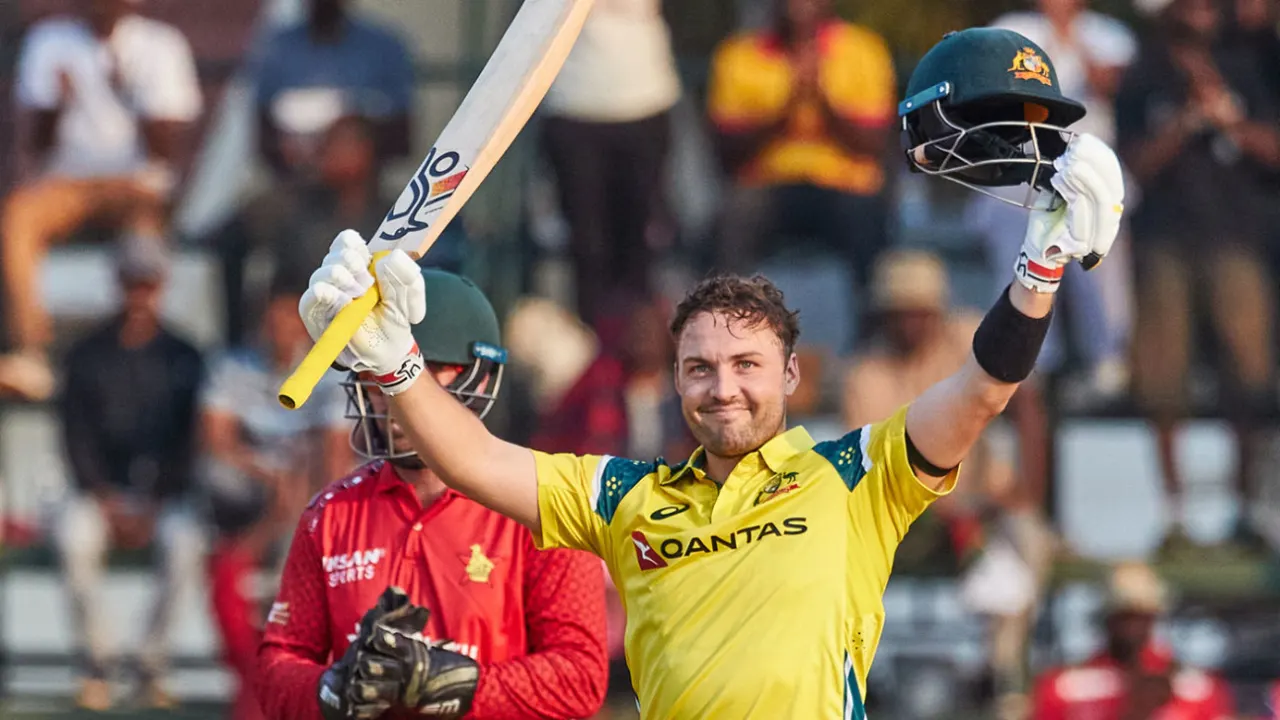
Australia concluded their first Zimbabwe tour after 12 years with a clean sweep of the hosts, who were unable to deliver a consolation win to a festive Harare crowd, as Nathan Ellis held his nerve alongside No. 11 Spencer Johnson in a match-winning tenth-wicket stand of 27. Zimbabwe do not have any internationals at home for the rest of the 2026 and, after posting their second-highest total batting first against Australia, saw the match slip from their grasp in the dramatic closing stages.
Pressure changed sides throughout the last quarter of the contest. Australia were cruising on 162 for 3 in the 26th over, when Brad Evans removed Alex Carey for the third of his four wickets and set the cat among the pigeons as wickets fell regularly. Josh Inglis was holding the chase together with his second ODI hundred but when he fell 45 were still needed. Then Ellis, who had earlier taken 3 for 50, put together a superbly-measured 36 not out to secure a thrilling win.
Their chase was built largely on the efforts of Inglis, who was the third Australian to reach a hundred in the series, after Matt Renshaw in the opening match and Travis Head in game two. In contrast, Zimbabwe did not have a century-marker, though Sikandar Raza and Craig Ervine scored two fifties each, including in this match and were the leading run scorers across the three matches.
Zimbabwe also had two of the three top bowlers and will know that it was in moments, not personnel terms, that they lost to Australia. In this match, there were four major ones. The first came when Innocent Kaia, batting well on 55, had to retire hurt with what looked like a hamstring injury to interrupt an 80-run fourth wicket stand with Ervine and stall Zimbabwe. The second was when Ervine, on 59, tried to accelerate with 10 overs left to go and holed out to long-on to spark a collapse of 4 for 22 which left Zimbabwe short of the 300 that was in their sights.
Then, in the field, Inglis, on 48, cut Ernest Masuku in the air to backward point and Wessly Madhevere leapt to his right but could not hold on. The drop proved costly even though Madhevere took a stunner to dismiss Carey. Madhevere’s biggest mistake was still to come. In the penultimate over when Ellis launched Masuku to deep midwicket, Madhevere got under the ball and spilled the chance.
With nine runs needed off the last six balls, Raza then gave Madhevere the ball, even though Graeme Cremer had an over in hand having caused problems in his first ODI in 2018. The first ball went for six and left Madhevere inconsolable at the end.
Inglis was in early after Evans struck twice in his first two overs. He had Head caught at deep backward square when he flicked off his pads and then found Mitchell Marsh’s inside edge to leave Australia were 25 for 2 in the fourth over. Inglis announced himself with a swivel pull that went for four and was brutal through the point area. He greeted Cremer’s return by sending his first ball – a full toss – through mid-on for four. But Cremer came back well and bowled Cooper Connolly with a classic leg break to announce his return in some style.
Inglis and Carey put on 85 for the fourth-wicket to keep Australia in control and Inglis’ big challenge came when Australia started to wobble. They were on 203 for 5 after 35 overs, 69 runs away from victory, and in the space of two overs Raza had Ollie Peake out lbw and Cremer got Xavier Bartlett with a googly. Then, Blessing Muzarabani was brought back to keep Australia under pressure and bounced Ellis, who fended him skywards but the chance fell out of Brendan Taylor’s reach. Muzarabani finished the series wicketless.
Inglis reached his century with a strong sweep against Cremer off his 94th ball and victory was still 55 runs away. When Raza bowled Inglis in the 42nd over, Zimbabwe were ahead in the contest but the management of their attack towards the end will raise questions. Muzarabani was bowled out after 44 overs and Evans with two overs to go. Cremer, despite his experience, was overlooked for his final over.
That won’t be the only area Zimbabwe will leave with questions. Their batting line-up underwhelmed in parts, especially after they chose to put runs on the board in the final match. They started off reasonably well and were on 34 without loss after six overs before their opening pair gave way.
Ben Curran’s poor returns in white-ball cricket continued when he gloved Johnson down leg and was caught behind for 7. His partner Brian Bennett didn’t fare much better. After showing promise with classy flicks off the pads and crunching pulls off short balls, Bennett skied a Ellis delivery to Head at midwicket to depart for 30. Bennett has not crossed 40 in his last eight ODI innings, despite getting several starts. Zimbabwe were 57 for 2 at the end of the powerplay.
Taylor took his time to get to a 16-ball nine before he was bowled by an Adam Zampa flipper and his form will also be a concern. Kaia, whose first runs had come off a thick inside edge, offered a chance on 27 when he was out of his crease early as Renshaw fired in a delivery down leg. Inglis fumbled and recovered but could not stump Kaia, who put the early jitters aside to play some classy strokes. He drove Renshaw through mid-on and pulled Johnson flat and hard to bisect the fielders in the deep. His fifty came just after the innings’ halfway mark, off 59 balls, and marked the first time he had crossed the milestone in 12 innings, since January 2023.
Kaia and Ervine got Zimbabwe into a good position and when Kaia retired on 148 for 3, it was up to Raza and Ervine to accelerate. They brought up the Zimbabwean 200 with 10 overs to go but the final flourish never came. Ervine was eager to up the ante but could not clear Renshaw at long-on and Madhevere sent an Ellis slower ball to cover to give Australia two wickets in two overs.
Evans showed glimpses of his finishing skills with back to back fours off Johnson but then top-edged a short ball to give Johnson a second wicket and Cremer was out lbw to a pinpoint Ellis yorker. Raza reached fifty soon after that and farmed strike for the final five overs to end unbeaten on 81 which gave Zimbabwe a competitive total, but agonisingly not quite enough.
Scores:
Australia 272 for 9 in 49.5 overs (Josh Inglis 103; Brad Evans 4-47, Graeme Cremer 2-53, Sikandar Raza 2-42) beat Zimbabwe 271 for 8 in 50 overs (Innocent Kaia 55 retired hurt,Craig Ervine 59, Sikandar Raza 81*; Spencer Johnson 2-50, Nathan Ellis 3-50, Adam Zampa 2-53) by one wicket
[Cricinfo]

Kenya’s Agnes Ngetich took a second off the women-only half-marathon world record on Sunday when she won the World Athletics Road Running Championships in Copenhagen, stopping the clock at one hour, five minutes, and 15 seconds.
Ngetich, who also broke the women-only 10km (6.2-mile) world record last year, pushed to the front from the outset on a sunny morning in the Danish capital and led until the end, finishing 50 seconds ahead of compatriot Veronica Loleo, who came in second.
The previous record was set by Peres Jepchirchir, another Kenyan, when she won the World Half Marathon title in Poland in 2020.
The overall women’s half-marathon world record is held by Ethiopia’s Letesenbet Gidey, who clocked 1:02:52 in 2021 at the mixed-gender Valencia Half Marathon in Spain.
Sunday’s win was the latest major title this year for the 25-year-old Ngetich, who also won the team half marathon in Copenhagen and the World Cross Country Championships in Florida in the US in January.
(Aljazeera)

Trophy row unlikely to repeat in Japan

Powerful explosions at Syrian army site near Aleppo injure at least four

Government committed to ensuring the rights of children with disabilities and providing equal opportunities – PM

Ellis and Inglis break Zimbabwe hearts to secure one-wicket thriller

Kenya’s Ngetich breaks women-only half-marathon world record by a second

Showers about 100 mm are likely at times in the Western, Sabaragamuwa and North-western provinces and in Galle, Matara, Kandy and Nuwara-Eliya Districts

‘Dates have the highest sugar content to fight Coronavirus’

Sunday Island 27 December – Headlines

#SundayIsland 17th December – Headlines

Sunday Island – 28th March

Sunday Island Headlines – 21 March

Sunday Island – 21st February – Headlines
-

 News4 days ago
US embassy won’t comment on IGP’s probe into joint drug raid
-

 News3 days ago
Bid for Basil’s extradition nears final stage: Police
-

 Features6 days ago
The emptying university: why are academics leaving?
-

 Business4 days ago
All-new Bolero MaXX unveiled in Sri Lanka
-

 News2 days ago
Shanakiyan urges urgent action over reported death sentence for Lankan in Saudi Arabia
-
 Opinion6 days ago
Who committed genocide and created mass graves in Sri Lanka?
-

 Opinion4 days ago
A journalist who wrote across the divide
-

 Weather6 days ago
Showers above 100 mm expected at times in the Western, Sabaragamuwa, Central, Uva and Southern provinces, and in Ampara and Batticaloa districts