
Sports
Killi; Sri Lanka’s Mr.Cricket

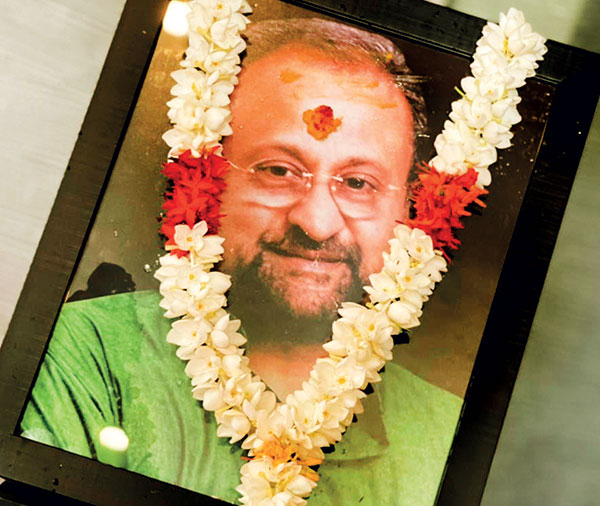
Personal recollections of a great benefactor: Mr. R. Rajamahendran
by Sidath Wettimuny
I embarked on my working life towards the end of 1976. I had to decide between two offers – one from The Maharaja Organisation (‘MO’), and one from Ceylon Tobacco. I opted to join Maharaja’s, especially because my brother Mithra was an accountant there and as I was not keen to work for a company that sold cigarettes.
I went to work with great excitement looking forward to an induction of sorts. To this date, I smile when I think of that unique briefing I received from Mr. E.C. Baha, the then Assistant to the Managing Directors, Mr. Maharaja and Mr. Rajamahendran (‘Killi’ to most, but always ‘Sir’ to me). It was short, sharp and to the point.
‘Sidath, you can cut work. But do not cut cricket practices. You will be in serious trouble!, Mr. Baha declared. Highly amused, I left the meeting and got down to work at Maharaja’s.
 Mercantile cricket was serious business, and the MO team was the team to contend with at the Mercantile tournament. Our team was star studded with many Sri Lankan national players. Prior to every match, Killi gave us a briefing. Besides strategizing, he inculcated and instilled in us the importance of being professional in our attitude. He always stressed that the difference between an amateur and a professional was that of attitude and approach to the game. This advice, no doubt, progressively made us better players.
During this period, there was a popular belief that playing in the League in England would provide our budding national players valuable experience and exposure, especially to different types of wickets. I was one of the many beneficiaries to be sponsored by Killi to play a season of League Cricket in the North of England.
I will never forget my introduction to England!
After a long and tiring Aeroflot flight, via Moscow, I landed in the UK and had the most bizarre and horrendous experience. The immigration queue was very long and two of the cricketers who flew in with me, Tony Opatha and Anura Ranasinghe, had gone through ahead of me. Due to a misunderstanding about the purpose of my visit, I ended up spending almost 24 hours at the immigration waiting room.
At the point of deep despair, fearing I could be sent back, I was utterly relieved to see the figure of Killi striding towards me. He chuckled and informed me that he had been in Austria, heard of my detention, and took the next flight to London, to sign a bond and get me released. I had tears pouring down my face as I walked out beside him. Yet again, thanks to him I was able to experience and enjoy my first season of League Cricket during the summer.
In the following years, the MO supported and sponsored many aspiring and already selected Sri Lankan national players, including giants like Duleep Mendis and Roy Dias, to play League Cricket in the UK. Killi was totally focused on ensuring that we cricketers developed our skills, and gained experience in the game at a more professional level of cricket. He strongly believed that our skills matched that of any other nation, but what we lacked was a professional attitude. He gave us the impetus and motivation to think and dream big about what we can achieve as national cricketers. Killi employed and supported nearly 100 national cricketers– a statistic unmatched by any other organization or individual. His contribution to cricket in Sri Lanka cannot be quantified!!
Another unforgettable incident I had with him was when I was sitting for my ACCA Part II examination. I found it hard to balance the hours of cricket with my studies. I had a lot of pressure from home to secure my accountancy qualification. When my boss refused a request for study leave, I had to make a decision on whether to continue working and playing cricket, or to leave and focus on accountancy studies. I appealed to Killi, as I grappled with this decision. I recall meeting him and his brother in the MO Boardroom where, dressed in his typical dapper style, he was standing behind his chair. On hearing my predicament, he told me ‘I say, may I give you some advice? I can find ten accountants down the road, but if you do something for your country as a national cricketer, I will value you more. You will have greater opportunities in the future.’
Those words of advice stayed with me and comforted me as I kept postponing my studies. In the meantime, cricket took centre stage in my life. To date, I am extremely grateful for Killi’s words of wisdom, as even the business that I currently am in was initiated through my cricket contacts in the UK, after I stopped playing cricket.
The spirit of cricket at the MO was very special. In the early 1980s, a one-off ‘Super Tournament’, comprising winners of the different tournaments, was held in a very competitive atmosphere. The MO qualified as the winners of the Mercantile Tournament. Duleep and I were in a peculiar situation, as we were playing for the MO against our own Club, the SSC. Sunil and Mithra, who were stalwarts of the SSC team, teased us about how the SSC would thrash the MO team. Their continuous teasing made us determined to score. At the match, Duleep and I both made hundreds and helped secure a win for the MO…much to the chagrin of my two brothers!
When the powerful combination of Hon. Gamini Dissanayake and Killi took over the Board of Control for Cricket in Sri Lanka their invaluable contribution and tireless efforts helped Sri Lanka gain Test status. Even in this aspect Killi’s contribution to cricket in Sri Lanka was huge!
Before our historic maiden cricket tour of England in 1984, Killi sponsored five national players to go ahead of the team to London. He arranged for practices at the Lord’s indoor facilities, which gave us the opportunity to play a practice match for an MCC team. I have no doubt that this initial exposure helped us to build our confidence and to cope with our maiden Test at Lord’s.
I’m certain gratitude and tributes to Mr. Killi Rajamahendran from all the cricketers who had the privilege of knowing him, will be endless. Behind his tough exterior was a heart of gold; we are all hearing more and more of his generosity to many, on many fronts.
One regret I personally have is when, in 2015, while Chairing the Interim Committee of SLC, I was very keen to name all the Hospitality Boxes at the Khettarama Stadium with the names of personalities who significantly contributed to the game of cricket.
The first two boxes were to be named after Hon. Gamini Dissanayake and Mr Rajamahendran. However, due to the premature departure of that Interim Committee, this naming did not happen. It would have been appropriate to name a box after Mr. Rajamahendran, the single largest benefactor to Sri Lankan Cricket. In any event, in my opinion, Mr. Rajamahendran will always be Sri Lanka’s ‘Mr. Cricket’.






Will the Women’s T20 Asia Cup semi-final against Sri Lanka be a full-circle moment for Pakistan ?
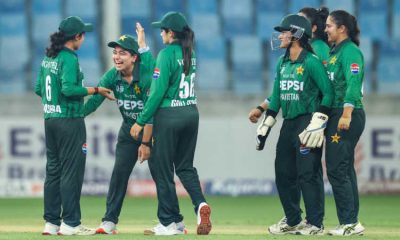
Sri Lanka beat Pakistan in the semi final 9f the 2024 edition to qualify for their first Asia Cup final since 2008. Now Pakistan enter this contest having not been at an Asia Cup final since 2016. Moreover, the two teams played a bilateral series only last month. So there is enough familiarity.
Sri Lanka are unbeaten in this tournament, notching up easy wins over UAE and Indonesia before being pushed hard by Bangladesh.Chamari Athapaththu has topped the wickets tally, this time, her seven-for against Indonesia providing a reminder of what she can do in spin-friendly conditions at the Dubai International Cricket Stadium. Her pairing with Imesha Dulani at the top of the batting order has given Sri Lanka a close-to-ideal combination. Nilakshika Silva’s half-century from a tricky spot against Indonesia, and Harshitha Samarawickrama’s composure in a tight chase against Bangladesh have instilled confidence in their batting order.
Pakistan, on the other hand, are slightly short on batting confidence. They posted 119/9 against Thailand and were bowled out for 55 against India. It was only thanks to their bowlers that they could brush Tailand aside. Pakistan also lost the three-match bilateral series against Sri Lanka last month, though they did not have Fatima Sana’s services then.
Shawaal Zulfiqar’s presence at the top allows them to start at a higher gear, and Muneeba Ali’s experience only adds to the heft. Both are yet to fire together in this tournament, and Pakistan would hope it comes in the semi-final in order to end their finals drought.
Being Sri Lanka’s trailblazer, there is so much focus on Athapaththu that it is easy to miss that Harshitha Samarawickrema, still only 28, has already completed a decade in international cricket. She is the vice-captain, and almost the captain-in-waiting when Athapaththu decides to relinquish the role. Samarawickrama has grown in consistently winning games for Sri Lanka. Her unbeaten 48 off 37 against Bangladesh on Sunday is a case in point. Moreover, that knock has also highlighted her versatility. Primarily a top-order bat, she was moved down to No. 5 in order to accommodate Vishmi Gunaratne in the middle-order. She batted in that spot at home against Pakistan last month and finished the chase. Expect Samarawickrama to sit easy under the spotlight against Pakistan in a win-or-go-home contest.
Fatima Sana’s 407 T20I runs in 2026 have come at a strike rate of 150.74, the fourth best this year (minimum 300 runs). There were calls for her to bat higher up than her usual Nos. 7 and 8. Add to it, she has picked up 23 wickets, the most for Pakistan. While she has taken five wickets in the Asia Cup thus far, she is yet to show off her batting might. That is partly down to the surfaces in Dubai. Sri Lanka, though, would be a little wary of her considering she can bash spin, and strikes at 143.24 against them.
Team news
With both teams coming off wins, they are likely to go in with the same teams. Sri Lanka might be tempted to play slinger Mithali Ayodhya since it is a knockout match
Sri Lanka (probable): Imesha Dulani, Chamari Athapaththu (capt), Sanjana Kavindi, Vishmi Gunaratne, Harsthitha Samarawickrama, Kavisha Dilhari, Nilakshika Silva, Kaushini Nuthyangana (wk), Sugandika Kumari, Chethana Vimukthi/Mithali Ayodhya, Chamudi Praboda
Pakistan (probable): Muneeba Ali (wk), Shawaal Zulfiqar, Gull Feroza, Ayesha Zafar, Sadaf Shamas, Fatima Sana (capt), Umm-e-Hani, Eyman Fatima, Tuba Hassan, Nashra Sandhu, Sadia Iqbal
(Cricinfo)
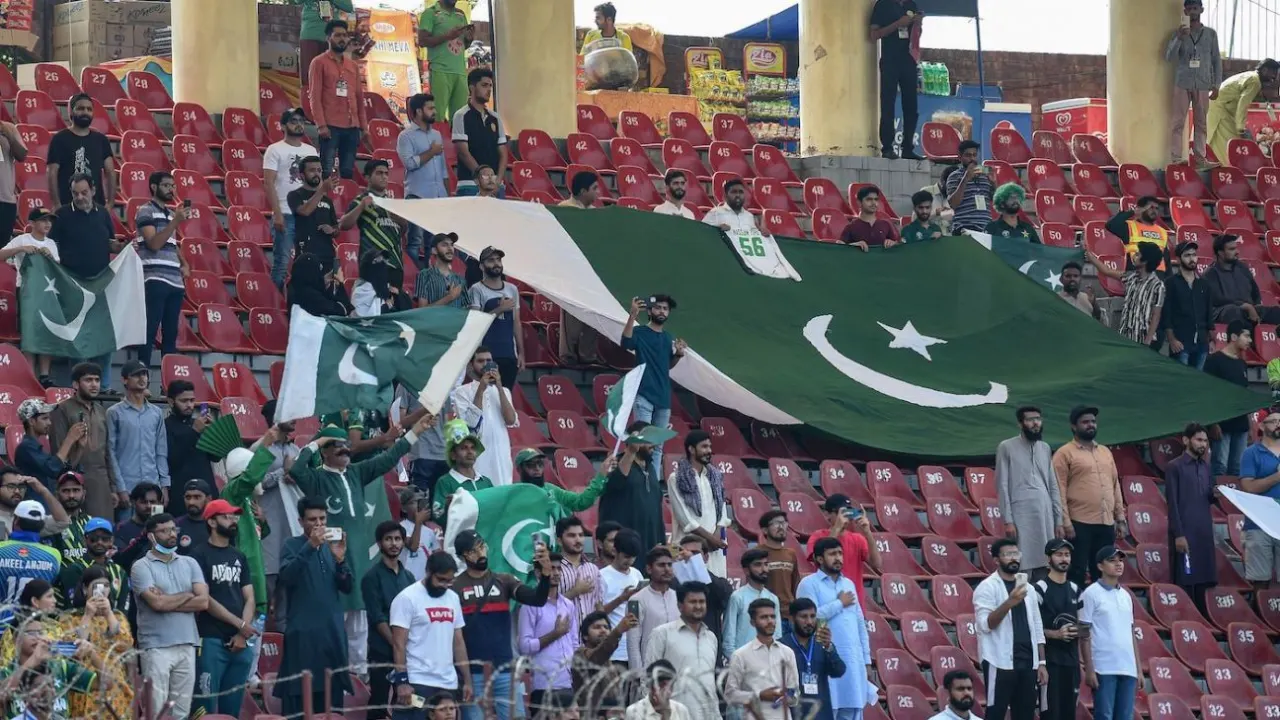
A Pakistan Under-19 cricket team suddenly became the centre of focus when it was mistaken for a group of asylum seekers in Portsmouth. A group of protesters gathered outside the Marriott Hotel in Portsmouth after reports that asylum seekers were staying there. The situation had to be later diffused when it was ascertained that the hotel was hosting the Pakistan Under-19 team.
According to the Guardian, the situation became tense when a crowd gathered outside the Marriott hotel after reports that about 40 men who did not seem to be English arrived at the hotel. George Madgwick, a Reform councillor, called the hotel to mediate between the Pakistan Under-19 staff and the assembled crowd, following which the crowd dispersed.
“I spoke to the coach of the team, who was very understanding,” Madgwick told the Guardian. “I went out to the protesters and told them, ‘You’ve got it wrong guys, it’s a cricket club.’ They left within a couple of minutes. It was a massively unfortunate incident.
“From the perspective of the people of Portsmouth who are already on high alert, this was a coach from the same company which was turning up with about 40 foreign men.”
The ECB has been in touch with the Pakistan management following the incident and is reviewing security arrangements.
The Pakistan Under-19 team played a four-day game against England Under-19 in Arundel from September 2 to 5, which they lost by ten runs. The two teams faced off in a Youth ODI on September 9, with Pakistan winning by 177 runs. Pakistan’s senior men’s team are also playing the third and final Test against England at Edgbaston.
[Cricinfo]
by Rex Clementine
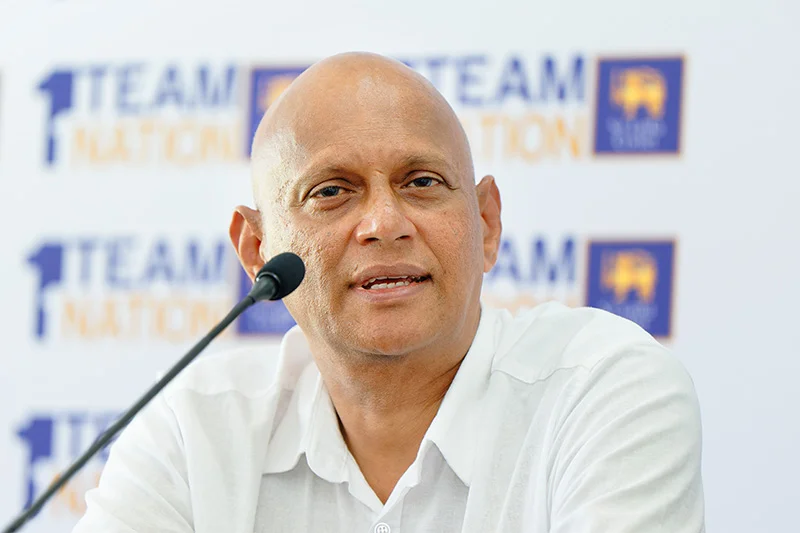
Sri Lanka’s Chairman of Selectors Kapila Wijegunawardene held his first media briefing yesterday since assuming office four months ago, a period in which several decisions have left the cricketing fraternity scratching their heads.
To his credit, the Chief Selector admitted that picking Lahiru Kumara for the tour of the Caribbean without first proving his fitness had been a mistake. It proved a costly one too, with the fast bowler breaking down after sending down just one over.
The former medium pacer was considerably more guarded when confronted with other contentious issues, including Dhananjaya de Silva’s defensive captaincy and the decision to recall Niroshan Dickwella after more than three years in the wilderness.
“We learned a tough lesson after what happened in the Caribbean with Lahiru Kumara and now we have made it mandatory for players to prove their fitness in domestic cricket when they come back from injuries,” Wijegunawardene told reporters.
That perhaps summed up the philosophy of this selection panel. Having burned their fingers once, caution appears to be the watchword. There seems little appetite for bold calls – the sort Duleep Mendis made when he gave Sanath Jayasuriya and Romesh Kaluwitharana licence to tear into attacks during the field restrictions, or Sidath Wettimuny when he entrusted the vice-captaincy to a 22-year-old Mahela Jayawardene.
Ironically, as Wijegunawardene addressed the media, NCC were taking on Moors in a domestic T20 quarter-final right in front of his eyes at the SSC. One of those making an impression was seam bowling all-rounder Milan Rathnayake, who dismissed Dickwella for a second ball duck.
Wijegunawardene was duly asked why Milan had not been considered for the forthcoming tour of England.
Until now, the impression had been that the selectors were investing in Milan, giving the all-rounder sufficient international exposure with an eye on next year’s World Cup in South Africa. Suddenly, however, it appears to be back to square one, with Wijegunawardene indicating that the selectors have turned again to Dasun Shanaka for the all-rounder’s slot.
Shanaka has not played an ODI for more than two and a half years and has earned his recall largely on the strength of his T20 form. Yet he has repeatedly struggled to convince in the 50 over format, particularly if the selectors view him primarily as a batting all rounder.
This is where the selectors appear to have failed to do their homework. A proper analysis of Shanaka’s record would tell them that his batting has seldom been reliable enough in ODI cricket. The numbers tell that story quite clearly.
What the numbers will not tell you is that Dasun has instigated more bloodless coups than General Zia-ul-Haq and General Pervez Musharraf put together.

Pakistan seek revenge, Sri Lanka eye another Asia Cup final

Trump says every adult American will get $5,000 if Republicans win midterms

Protesters mistake Pakistan’s U-19 team for asylum seekers in Portsmouth

Steps are being taken to provide accommodation facilities for 16,000 university students – Prime Minister

Showers will occur in the Western and Sabaragamuwa provinces and in Kandy, Nuwara-Eliya, Galle and Matara districts.


‘Dates have the highest sugar content to fight Coronavirus’

Sunday Island 27 December – Headlines

#SundayIsland 17th December – Headlines

Sunday Island – 28th March

Sunday Island Headlines – 21 March

Sunday Island – 21st February – Headlines
-

 News6 days ago
Namal remanded until Sept. 18 over Airbus deal investigation
-

 Latest News5 days ago
Tharanga creates history with Diamond League crown in Brussels
-

 News5 days ago
Dispute which triggered listed company director being detained at BIA resolved
-

 Features4 days ago
After the parade: What a traffic OIC’s walk-out tells us
-
 Opinion7 days ago
In Memory of Dr Upatissa Pethiyagoda
-

 Editorial6 days ago
Power vs Equality
-
Editorial4 days ago
Arrests as theatre
-
 Latest News6 days ago
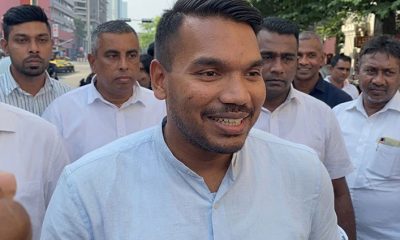
SLPP MP Namal Rajapaksa arrested by CIABOC