
News
Compasssion for Living Beings: calling for a Ban on Trap guns, Hakka Pattas and Leopard Noose Snares

Dr Sarala Fernando
In today’s world of the Covid pandemic and climate change disasters, the increase of human violence is seen in the many family murders and child abuse cases reported in the Sri Lanka press. Nevertheless the government has not hesitated to take strong policy decisions in the right direction, raising the age of employment for children, cracking down on child abuse and internet trafficking, etc.
In the same way, when the Covid crisis has led to a noticeable increase in poaching of wild animals, will the government, recalling the teachings of the Compassionate One, move to ban cruel and indiscriminate devices for killing like trap guns, hakka patas and leopard snares? Will our young members of parliament take the lead to protect the biodiversity treasure which is our heritage and provide the spark for the new thinking and national conservation efforts?
In a predominantly Buddhist country it is incomprehensible that so many deadly devices are in common use for killing wild animals in the most gruesome way, causing maximum pain and suffering. In the case of trap guns and hakka pattas, these indiscriminate traps also end up harming humans. Recently a young entrepreneur was walking around his own land in Kurunegala when a trap gun set up by poachers exploded causing the bullet to explode in his leg requiring urgent surgery and a painful process of recovery thereafter. He was lucky that he didn’t lose the leg. Hakka pattas are known to have exploded while they are being put together, and there are cases where children have been severely injured after picking up what looks like fruit without knowing it contains explosives. Numerous baby elephants have died in great suffering from hakka patas while foraging, being low off the ground and ignorant of man’s cruelty.
Moreover, there is a security risk, why are we allowing people to get familiar with indiscriminate weapons and making explosives in killing devices? Surely after three decades of armed conflict and the proliferation of locally manufactured bombs, land mines and other explosive traps, we would know better than to encourage such expertise at the village level?
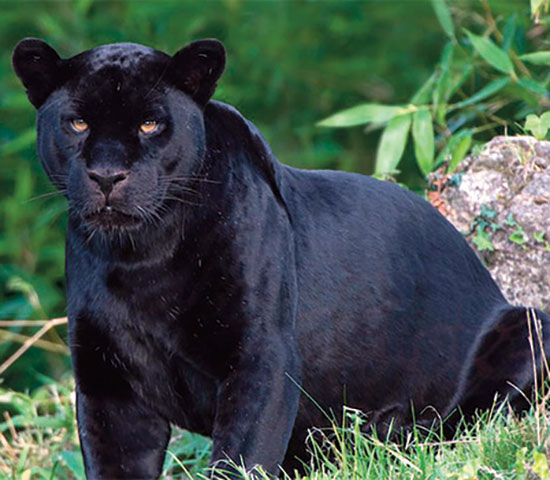
Recently there was wide publicity on International Day of the Leopard, highlighting the value of the Sri Lanka leopard (Panthera pardus kotiya) as a specific sub-species. An Australian zoo announced the success of its captive breeding programme mentioning that only 800 such leopards existed in the wild. Yet of late there have been many reports in Sri Lanka of leopard killings. The discovery of a plethora of leopard noose snares in the upcountry suggests a new element, that a criminal gang linked to the illegal trade in wild animal parts for traditional Asian medicine may be in operation as some animals have been found with their teeth and claws removed. The sighting of a rare black leopard was reported and within a few weeks was found noosed to death- no one knows whether the body parts, worth hundreds of thousands of rupees, were removed or how they were disposed of. Will the wild life department or police provide any answers?
During the armed conflict when there was awareness of the dangers of weapons proliferation, a national commission was set up under then Secretary of Defence, Gotabaya Rajapaksa to deal with the proliferation of illicit small arms and light weapons, the first in the region. It was able to seek out, confiscate and destroy 35,000 small arms in a public event in 2005. Yet today this threat to national security seems all but forgotten with one Minister in charge of Wildlife, a former Army Commander, even suggesting that hundreds of guns be bought and placed in the hands of Civil Defence forces to solve the human-elephant conflict, drawing huge protests from environmentalists. Added to this is the new -fangled rush to promote pistol shooting in schools, setting up of pistol shooting ranges and even bringing back spearfishing, all in the name of “adventure” sports. Look at the present situation in the US where the powerful NRA gun lobby has managed to stall every initiative on gun control despite the horrific shootings and deaths reported from schools around the country. Is this what we want in Sri Lanka?
Now that there is a growing constituency among the youth in this country to promote environmental protection, heritage and healthy life styles like yoga, why not the young members of parliament get together across the benches, to make a start to prioritize these matters ? They should push for inclusion of a specific reference in the new constitution which resembles the Indian clause 51- A(g) which states “It shall be the duty of every citizen of India to protect and improve the natural environment including forests, lakes, rivers and wildlife and to have compassion for living creatures.”
While waiting for the new Constitution (which may or may not come), an alternative practical approach is to enact the basic legislation for the protection of animals, the Animals Rights Bill, which has been stagnating for years without getting through Parliament. Will the young parliamentarians lead the way in getting this important legislation through?
Calling for a ban on animal slaughter is a good step towards encouraging compassion towards animals, reminding also of the appeal for the “kiri amma” popularized by former Speaker Lokubandara. But has such a policy been carefully processed for implementation? For example how will this work with simultaneously encouraging dairy farming for local production of milk and what does one do with the released cattle? In India, shameful to relate, it has been reported that while cows may not be slaughtered, these animals are sent over the border to their death in Bangladesh and even strung on wires and hauled across at the boundary.
Sri Lanka lags behind South Asian countries like India, Bhutan and Maldives in respect of priority given by policy makers to environmental and wild life protection. In India, Prime Minister Modi who loves the wild, has led the way in a national campaign to protect the tigers, giving authority to local wild life officers to strictly control traffic including tourists and re-locate villages where required, even to close certain roads to the public after dark; these efforts have succeeded to such an extent in increasing tiger numbers that there is now a new project to bring back the cheetahs. Bhutan and Maldives have built their tourism and won international recognition while earning valuable foreign exchange by strong environmental safeguards displaying sensitivity to the carrying capacity of the land while protecting the natural heritage of mountains (in Bhutan) and the marine environment and surrounding seas (in Maldives).
The opposite has happened in Sri Lanka, where basic efforts even to control the number of jeeps going into Yala have been stymied by political pressure. Now it seems new roads and construction activity are planned for Yala in the name of tourism, ignoring existing protection legislation and adding to the pressure on the animals. Sri Lanka tourism is giving priority to open up more land in ecologically sensitive areas for new hotel construction, in this time of natural disasters and climate change, with rocks rolling down and earthslips frequently recorded in the sensitive hill areas, what is this lunacy for Sri Lanka tourism to even entertain such projects as building cable cars for tourists in those areas?
Even as the government seems interested only in maximizing tourist flows and the revenue from our national parks, sadly even the international lending agencies are supporting more institutional development for wild life officers, rather than encouraging active field work to protect the parks and animals. In the past, those officers in charge of the parks may not have had degrees and diplomas, but they had walked and patrolled every foot of the range under their watch and took good care of the land to ensure it could provide the necessary food and water for the animals so that they did not need to go crop raiding outside the parks. Even during the armed conflict when Yala was overlooked by the STF under an inspired security leader, the needs of the animals were protected from both terrorists and poachers.
Today it has fallen to the private sector led by concerned young environmentalists who have begun the clearing of invasive species from the parks to allow the grasses to grow and the surrounding trees and shrubs to return to life . The rescue of Bundala many years ago was inspired by MAS joined by HNB and have led to similar initiative today in Minneriya under the Federation of Environmental Organizations which is now working to remove invasive species from Lunugamvehera, providing much needed grasses and food for the elephants. Perfect platform for public-private partnership and sustainable tourism?
(Sarala Fernando, retired from the Foreign Ministry as Additional Secretary and her last Ambassadorial appointment was as Permanent Representative to the UN and International Organizations in Geneva . Her Ph.D was on India-Sri Lanka relations and she writes now on foreign policy, diplomacy and protection of heritage).

Latest News
“May this sacred Poson Festival illuminate every heart with compassion, loving-kindness and wisdom”- President

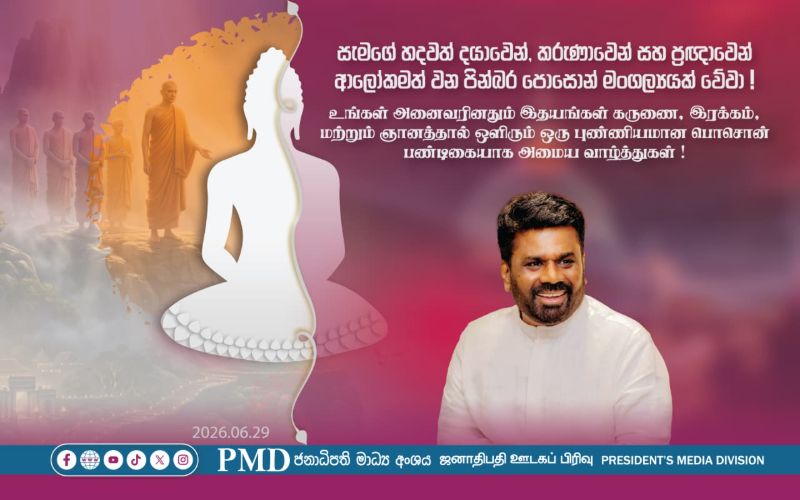
Presiden Anura Kumara Dissnayake in his Poson Day message wished that this sacred festival illuminate every heart with compassion, loving-kindness and wisdom
The President’s Poson Day message:
“The arrival of Arahat Mahinda Thera marked the beginning of Sri Lanka’s emergence as a centre of Theravada Buddhist philosophy and tradition. That momentous event, which gave rise to both a spiritual awakening and a far-reaching social transformation, extended far beyond its religious significance and laid the foundation for a more advanced cultural, social and political order throughout the country.
Buddhism not only established a strong foundation for the nation to flourish but also brought about a transformation in education. By turning temples into centres of learning and monastic education, it fulfilled a vital social role as a hub of knowledge, fostering a profound spiritual renaissance among the people. Moreover, it inspired remarkable developments in architecture, painting, irrigation engineering, building design, wood carving and other artistic traditions, elevating our nation to a position of distinction and pride before the world.
As the present-day heirs to such a glorious and noble heritage, we all bear an inescapable responsibility to revive the values and moral principles that are gradually fading from society and to work together towards building a civilised State. In this endeavour, we are already engaged in the struggle to restore civility across all spheres of public life, including Parliament and State institutions.
No nation can achieve genuine progress without an ethical foundation. The Cūḷa Hatthi Padôpama Sutta, expounded by Arahat Mahinda Thera, underscores the importance of gradual training and disciplined development. By re-establishing on Sri Lankan soil the proud legacy of the civilised society that came with Buddhism, let us join hands with unwavering determination to build a modern and enlightened State founded upon the ethical, social and environmental values that our nation so urgently requires.
I therefore invite all citizens to unite in this noble endeavour with strength and conviction.
May this sacred Poson Festival illuminate every heart with compassion, loving-kindness and wisdom”.


The Law Association for Asia and the Pacific (LAWASIA) has backed the campaign by the Bar Association of Sri Lanka against the government’s effort’s to extend the retirement ages of judges of the Superior Courts.
T.L Yap, President of LAWASIA, in a statement dated 26 June, has expressed concern over the NPP government’s move in the wake of President Anura Kumara Dissanayake’s recent statement in Parliament on the delay in making the appointments.
The text of the statement: “LAWASIA shares the concern expressed by the Bar Association of Sri Lanka (BASL) on 25th May 2026 in a letter to His Excellency the President of Sri Lanka regarding the prospect of the Government of Sri Lanka introducing an amendment to the Constitution which would increase the retirement age of the Judges of the Court of Appeal and the Supreme Court.
LAWASIA supports the sentiments expressed by BASL in its letter of 25 May, namely: “Extending the retirement age of the sitting Judges of these Courts at this point of time is likely to be viewed by the public as a blatant attempt to interfere with the judiciary… The independence of the Judiciary and the public confidence reposed in it, are indispensable pillars of the rule of law and the democratic framework of (Sri Lanka).
In that regard it is of paramount importance that the Judiciary must not only remain independent in fact but also must be seen by the public to be wholly independent, impartial, and free from even the slightest perception of influence, favour, accommodation, or impropriety”
The Constitution of Sri Lanka recognizes the independence of the judiciary and its importance in preserving and maintaining the rule of law. The retirement age of senior judges is presently fixed by Article 107(5) of the Constitution. Constitutional amendment in any jurisdiction is a serious matter which must not be undertaken lightly. LAWASIA’s principal concern is that the proposed constitutional amendment has the appearance of an ad hoc initiative without adequate public consultation. This in turn has the potential to undermine public confidence in the judiciary.
An independent, competent and respected judiciary is the cornerstone of any democracy. LAWASIA has long advocated the fundamental importance of this principle.
The essence of LAWASIA’s formal position in relation to the independence of the judiciary lies in the Beijing Statement of Principles on the Independence of the Judiciary in the LAWASIA Region, adopted at the Conference of Chief Justices held in Beijing in 1997 and subsequently signed by 32 Chief Justices from across the Asia-Pacific.
The Beijing Statement in essence emphasizes the fundamental importance of the independence of the judiciary, and comments on a range of related issues including the objectives of the judiciary, the appointment of judges, the tenure of judges, judicial conditions and the relationship between the judiciary and the executive.
Endorsing the concerns raised by another international organization, the Commonwealth Lawyers Association, LAWASIA accordingly calls upon the authorities in Sri Lanka to:
• refrain from proceeding with the proposed constitutional amendments seeking to increase the
retirement age of members of the Judiciary;
• resist piecemeal and ad hoc amendments to the Constitution of Sri Lanka.
• adhere to due process of consultation and stakeholder engagement in constitutional reform;
• desist from taking any steps which would undermine confidence in the Judiciary and
irreparably diminish the independence of the judiciary; and
• ensure adherence to the rule of law and respect for the independence of the judiciary.
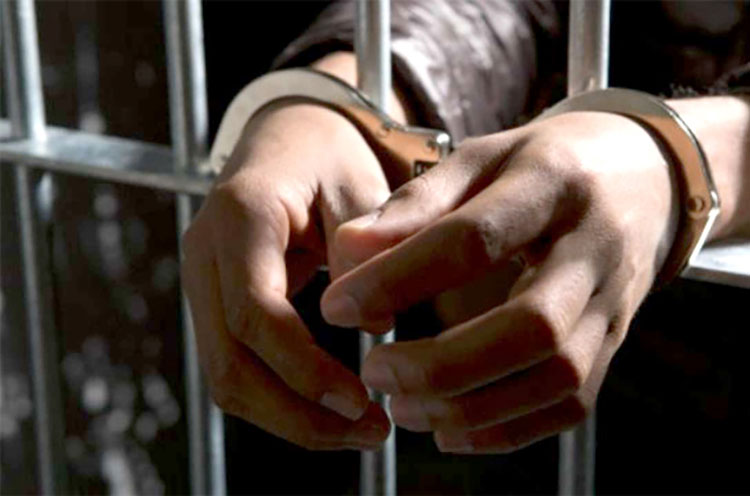
A total of 7,300 young people, below the age of 21, had been arrested on suspicion since the launch of the nationwide ‘Ratama Ekata’ anti-drug operation, DIG in charge of the Police Narcotics Bureau, Ashoka Dharmasena, told The Island yesterday.
DIG Dharmasena said the suspects included about 150 females under the age of 21. He added that more than 214,000 suspects had been taken into custody since the commencement of the national anti-narcotics operation.
The operation was launched with the primary objectives of disrupting the supply of narcotics across the country, reducing the demand for illegal drugs and rehabilitating those addicted to narcotic substances, he said.
DIG Dharmasena said law enforcement authorities had so far seized more than 15,000 kilogrammes of narcotics, including cannabis, during the ongoing operation.
He also noted that police had achieved considerable success in intercepting narcotics smuggled into the country by sea, contributing significantly to efforts to curb the illicit drug trade.
The Police Narcotics Bureau said the nationwide operation would continue as part of the government’s broader strategy to dismantle drug trafficking networks and minimise the social impact of narcotics.
by Norman Palihawadane ✍️

South Korea football coach quits as president calls for probe into World Cup loss

Europe’s heatwave linked to 1,300 deaths, WHO says, as Germany hits record 41.7C

Padikkal fifty, Sudeera five-for before India A, Sri Lanka A settle for draw

“May this sacred Poson Festival illuminate every heart with compassion, loving-kindness and wisdom”- President

Canada score late to beat South Africa and reach last 16 at World Cup 2026

Tector and Moondra headline Ireland’s historic series sweep against India

‘Dates have the highest sugar content to fight Coronavirus’

Sunday Island 27 December – Headlines

#SundayIsland 17th December – Headlines

Sunday Island – 28th March

Sunday Island Headlines – 21 March

Sunday Island – 21st February – Headlines
-

 News12 hours ago
LAWASIA warns against ad hoc initiative to increase judges’ retirement ages
-
 Opinion7 days ago
Ranasinghe Premadasa: The man who would not take ‘No’ for an answer
-
 News2 days ago
Another 1,132 Sri Lankan Personnel to be deployed for United Nations Peacekeeping Missions
-

 Opinion6 days ago
Sri Lanka’s national security: Justice, reconciliation, and forward-looking vigilance
-

 News6 days ago
US Assistant Secretary of State for South and Central Asian Affairs meets President
-

 News4 days ago
Kelaniya emerges as highest ranked Lankan uni in Times Higher Education Sustainability Impact Ratings
-
 Opinion5 days ago
A triumph for Pakistan’s skilled diplomacy at Iran-US talks
-

 Editorial7 days ago
FCID’s big catch