
News
Compasssion for Living Beings: calling for a Ban on Trap guns, Hakka Pattas and Leopard Noose Snares


Dr Sarala Fernando
In today’s world of the Covid pandemic and climate change disasters, the increase of human violence is seen in the many family murders and child abuse cases reported in the Sri Lanka press. Nevertheless the government has not hesitated to take strong policy decisions in the right direction, raising the age of employment for children, cracking down on child abuse and internet trafficking, etc.
In the same way, when the Covid crisis has led to a noticeable increase in poaching of wild animals, will the government, recalling the teachings of the Compassionate One, move to ban cruel and indiscriminate devices for killing like trap guns, hakka patas and leopard snares? Will our young members of parliament take the lead to protect the biodiversity treasure which is our heritage and provide the spark for the new thinking and national conservation efforts?
In a predominantly Buddhist country it is incomprehensible that so many deadly devices are in common use for killing wild animals in the most gruesome way, causing maximum pain and suffering. In the case of trap guns and hakka pattas, these indiscriminate traps also end up harming humans. Recently a young entrepreneur was walking around his own land in Kurunegala when a trap gun set up by poachers exploded causing the bullet to explode in his leg requiring urgent surgery and a painful process of recovery thereafter. He was lucky that he didn’t lose the leg. Hakka pattas are known to have exploded while they are being put together, and there are cases where children have been severely injured after picking up what looks like fruit without knowing it contains explosives. Numerous baby elephants have died in great suffering from hakka patas while foraging, being low off the ground and ignorant of man’s cruelty.
Moreover, there is a security risk, why are we allowing people to get familiar with indiscriminate weapons and making explosives in killing devices? Surely after three decades of armed conflict and the proliferation of locally manufactured bombs, land mines and other explosive traps, we would know better than to encourage such expertise at the village level?
Recently there was wide publicity on International Day of the Leopard, highlighting the value of the Sri Lanka leopard (Panthera pardus kotiya) as a specific sub-species. An Australian zoo announced the success of its captive breeding programme mentioning that only 800 such leopards existed in the wild. Yet of late there have been many reports in Sri Lanka of leopard killings. The discovery of a plethora of leopard noose snares in the upcountry suggests a new element, that a criminal gang linked to the illegal trade in wild animal parts for traditional Asian medicine may be in operation as some animals have been found with their teeth and claws removed. The sighting of a rare black leopard was reported and within a few weeks was found noosed to death- no one knows whether the body parts, worth hundreds of thousands of rupees, were removed or how they were disposed of. Will the wild life department or police provide any answers?
During the armed conflict when there was awareness of the dangers of weapons proliferation, a national commission was set up under then Secretary of Defence, Gotabaya Rajapaksa to deal with the proliferation of illicit small arms and light weapons, the first in the region. It was able to seek out, confiscate and destroy 35,000 small arms in a public event in 2005. Yet today this threat to national security seems all but forgotten with one Minister in charge of Wildlife, a former Army Commander, even suggesting that hundreds of guns be bought and placed in the hands of Civil Defence forces to solve the human-elephant conflict, drawing huge protests from environmentalists. Added to this is the new -fangled rush to promote pistol shooting in schools, setting up of pistol shooting ranges and even bringing back spearfishing, all in the name of “adventure” sports. Look at the present situation in the US where the powerful NRA gun lobby has managed to stall every initiative on gun control despite the horrific shootings and deaths reported from schools around the country. Is this what we want in Sri Lanka?
Now that there is a growing constituency among the youth in this country to promote environmental protection, heritage and healthy life styles like yoga, why not the young members of parliament get together across the benches, to make a start to prioritize these matters ? They should push for inclusion of a specific reference in the new constitution which resembles the Indian clause 51- A(g) which states “It shall be the duty of every citizen of India to protect and improve the natural environment including forests, lakes, rivers and wildlife and to have compassion for living creatures.”
While waiting for the new Constitution (which may or may not come), an alternative practical approach is to enact the basic legislation for the protection of animals, the Animals Rights Bill, which has been stagnating for years without getting through Parliament. Will the young parliamentarians lead the way in getting this important legislation through?
Calling for a ban on animal slaughter is a good step towards encouraging compassion towards animals, reminding also of the appeal for the “kiri amma” popularized by former Speaker Lokubandara. But has such a policy been carefully processed for implementation? For example how will this work with simultaneously encouraging dairy farming for local production of milk and what does one do with the released cattle? In India, shameful to relate, it has been reported that while cows may not be slaughtered, these animals are sent over the border to their death in Bangladesh and even strung on wires and hauled across at the boundary.
Sri Lanka lags behind South Asian countries like India, Bhutan and Maldives in respect of priority given by policy makers to environmental and wild life protection. In India, Prime Minister Modi who loves the wild, has led the way in a national campaign to protect the tigers, giving authority to local wild life officers to strictly control traffic including tourists and re-locate villages where required, even to close certain roads to the public after dark; these efforts have succeeded to such an extent in increasing tiger numbers that there is now a new project to bring back the cheetahs. Bhutan and Maldives have built their tourism and won international recognition while earning valuable foreign exchange by strong environmental safeguards displaying sensitivity to the carrying capacity of the land while protecting the natural heritage of mountains (in Bhutan) and the marine environment and surrounding seas (in Maldives).
The opposite has happened in Sri Lanka, where basic efforts even to control the number of jeeps going into Yala have been stymied by political pressure. Now it seems new roads and construction activity are planned for Yala in the name of tourism, ignoring existing protection legislation and adding to the pressure on the animals. Sri Lanka tourism is giving priority to open up more land in ecologically sensitive areas for new hotel construction, in this time of natural disasters and climate change, with rocks rolling down and earthslips frequently recorded in the sensitive hill areas, what is this lunacy for Sri Lanka tourism to even entertain such projects as building cable cars for tourists in those areas?
Even as the government seems interested only in maximizing tourist flows and the revenue from our national parks, sadly even the international lending agencies are supporting more institutional development for wild life officers, rather than encouraging active field work to protect the parks and animals. In the past, those officers in charge of the parks may not have had degrees and diplomas, but they had walked and patrolled every foot of the range under their watch and took good care of the land to ensure it could provide the necessary food and water for the animals so that they did not need to go crop raiding outside the parks. Even during the armed conflict when Yala was overlooked by the STF under an inspired security leader, the needs of the animals were protected from both terrorists and poachers.
Today it has fallen to the private sector led by concerned young environmentalists who have begun the clearing of invasive species from the parks to allow the grasses to grow and the surrounding trees and shrubs to return to life . The rescue of Bundala many years ago was inspired by MAS joined by HNB and have led to similar initiative today in Minneriya under the Federation of Environmental Organizations which is now working to remove invasive species from Lunugamvehera, providing much needed grasses and food for the elephants. Perfect platform for public-private partnership and sustainable tourism?
(Sarala Fernando, retired from the Foreign Ministry as Additional Secretary and her last Ambassadorial appointment was as Permanent Representative to the UN and International Organizations in Geneva . Her Ph.D was on India-Sri Lanka relations and she writes now on foreign policy, diplomacy and protection of heritage).


By Chaminda Silva
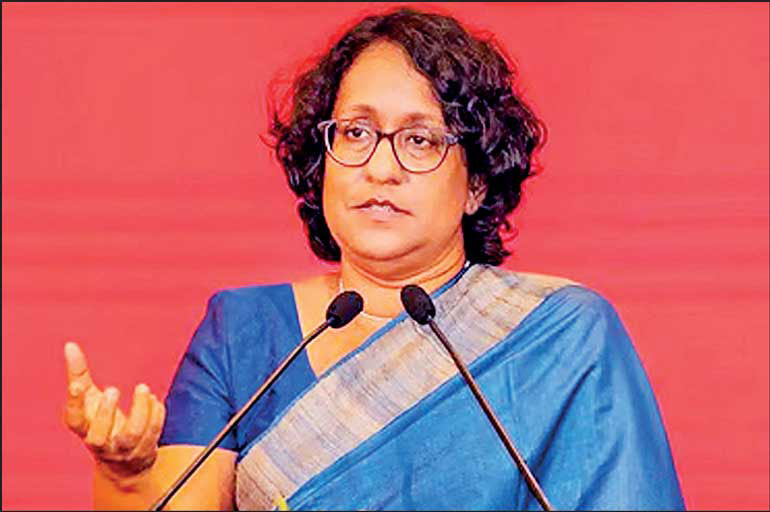
The government’s ambitious plans to overhaul Sri Lanka’s school education system and introduce new curricula could face serious implementation difficulties, with teacher unions warning that a longstanding and severe shortage of teachers remains unresolved.
The warning came as Prime Minister Dr. Harini Amarasuriya announced yesterday that new curricula would be introduced for Grades 2 and 6 next year, while also stating that the government planned to recruit around 30,000 new teachers across the education system by February.
However, the Ceylon Teachers’ Union (CTU) questioned whether the government would be able to provide the teachers required to implement the proposed reforms, claiming that the recruitment process itself had become mired in problems.
CTU General Secretary Joseph Stalin accused the government of making misleading claims about teacher recruitment and said the shortage that had affected schools for more than a year would continue into next year.
“There is currently a severe teacher shortage in the school system,” Stalin told a press conference in Colombo yesterday.
He said the government had previously acknowledged that there were about 46,000 teacher vacancies in the school system, but the figure was later revised to around 36,000.
“Those vacancies have remained unfilled for more than a year and a half. The school system has continued to operate with a severe teacher shortage throughout this period,” he said.
Stalin questioned how the government intended to introduce new curricula while thousands of existing teaching vacancies remained unfilled.
He said the Government had initially announced plans to recruit 23,000 teachers, despite the number of vacancies being significantly higher.
Although a gazette notification, relating to the recruitment had been issued, only around 17,000 applicants had been summoned for the initial round of interviews, he added.
Stalin said interviews were expected to begin in November and that appointments would, therefore, be made only from January onwards.
“If there are more than 36,000 teacher vacancies, the Government has decided to recruit only 23,000 teachers, and only around 17,000 have been called for interviews.
Who will take responsibility for the remaining vacancies?” he asked.
He said the problem was not merely one of numbers but also involved the Government’s recruitment procedure.
According to Stalin, shortcomings and ambiguities in the gazette notification issued for the recruitment examination had contributed to the present crisis.
“We primarily believe that the lack of proper procedures in the gazette notification issued for the recruitment examinations has contributed to this crisis. The ambiguities in the notification itself have led to the recruitment process becoming a major issue,” he said.
The shortage was also affecting the transfer system, Stalin mentioned.
A large number of teachers had been unable to obtain transfers because replacements were not available, with some teachers remaining at the same school for 12 or 13 years, he claimed.
As replacements had not been recruited, such teachers would have to remain at their present schools for another year, he said.
“This is a serious crisis. However, the situation is even more critical for students who are left without teachers,” Stalin said.
He also questioned the Government’s plans to close schools with fewer than 50 students.
“We suspect that this move is to take the teachers from these schools and redeploy them to other schools to fill vacancies there.”
The union’s concerns come at a time when the Government is pushing ahead with a major overhaul of the education system.
Addressing the Badulla District Women’s Conference yesterday, Prime Minister Amarasuriya said the Government would introduce new curricula for Grades 2 and 6 next year as part of its wider education reforms.
She said a new curriculum had already been introduced for Grade 1 this year, while new curricula for Grades 2 and 6 would be introduced over the next two years.
The Prime Minister said the Government was developing a new education system aimed at securing the future of all children, with the emphasis shifting away from producing students, focused solely on examinations.
The Government’s objective was to nurture a generation capable of facing future challenges successfully and confidently, she said.
The Prime Minister also announced that interviews for the recruitment of 17,000 teachers would commence on November 20.
She said approval had also been granted to recruit 2,000 academic staff members for the university system, with that recruitment process already under way.
The Government plans to recruit approximately 30,000 new teachers across the education system by February next year, she said.
A special programme would also be implemented to improve infrastructure facilities in schools, the Prime Minister added.
The contrasting positions highlight a potentially significant gap between the Government’s education reform timetable and the capacity of the existing school system to deliver it.
While the Government has set out a timetable for introducing new curricula and recruiting tens of thousands of teachers, the CTU argues that the existing shortage, delays in recruitment and unresolved transfer problems could leave schools struggling to provide adequate teaching staff when the reforms take effect.
With the Government planning to introduce another round of curriculum changes next year, the ability to fill vacancies in time could, therefore, become a crucial test of whether its broader education reform programme can be implemented as planned.

The Norochcholai coal power plant will remain disconnected from the national grid for several days following Saturday’s countrywide power failure, as authorities continue to follow safety procedures after the incident.
The National System Operator (NSO) said the 810-megawatt plant had been shut down as a precaution after the sudden power outage on October 17 and would not be reconnected to the grid until the necessary safety measures were completed.
The temporary loss of 810 MW of generating capacity would be managed through careful electricity supply arrangements to minimise the impact on consumers over the coming days, the NSO said.
It said the prevailing rainy weather was expected to help sustain hydropower generation at high levels, while a projected decline in electricity demand would further ease pressure on the system.
The countrywide blackout occurred at around 11.43 a.m. on October 17 after a generating unit disconnected from the national grid, creating an imbalance that caused the entire power system to collapse within less than 30 seconds.
Restoration efforts began shortly afterwards. By 12.11 p.m., major hydropower generating units had been brought back online and the power system was restarted simultaneously in four separate sections.
The restoration process was complicated by small-scale power generation facilities that were not under the direct control of the system control centre. However, electricity supplies were progressively restored through the activation of distribution feeders from 12.37 p.m.
By around 3 p.m., power had been restored to essential services, including major hospitals, water treatment plants and the airport.
Grid substations across the country had been reconnected by around 5 p.m., restoring electricity to the majority of consumers, the NSO said.
The operator stressed that the sudden disconnection of a generating unit as a safety measure was a normal occurrence at power plants. However, such a disconnection resulting in a complete collapse of the national power system was not considered normal.
An internal investigation has, therefore, been launched to establish the sequence of events that led to the islandwide outage and determine its underlying causes, the NSO said.
By Norman Palihawadane
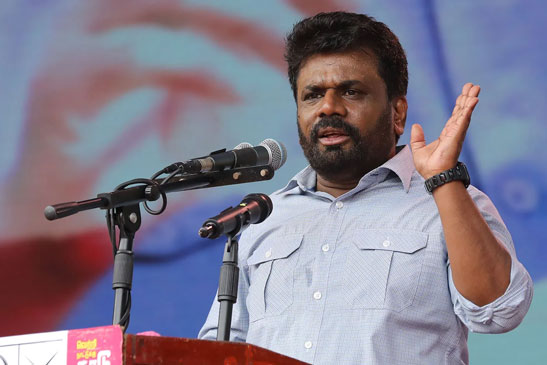
President Anura Kumara Dissanayake yesterday said a businessman, arrested with a caches of firearms, ammunition and hand grenades, had links to a politician, as authorities continued investigations into the seizure.
Addressing a public gathering in Badulla, the President said the suspect was among those being investigated in connection with operations targeting organised crime and that authorities were aware of his political connections.
He also referred to a video footage allegedly showing the suspect firing at people in the Weliweriya area, describing it as an example of the dangerous activities associated with individuals possessing illegal firearms.
The 38-year-old businessman, who is reportedly the owner of a cinema, and a relative of a politician, was arrested following a search conducted by officers of the Colombo District Crime Division at the cinema on Hanwella Road, in the Kirindiwela Police Division, on October 17.
Police said the search had been carried out based on information received by investigators.
The weapons and ammunition seized included two foreign-made pistols, a revolver, a foreign-made repeater firearm and a foreign-made 12-bore firearm.
Police also recovered hundreds of rounds of ammunition, including 398 rounds of 12-bore ammunition, 278 rounds of 9mm ammunition, 49 rounds of .32-calibre ammunition and 3,083 rounds of .22-calibre ammunition, along with two live hand grenades.
The suspect, a resident of the Millathe area, is being questioned as investigations continue.
The Police Media Division said police would seek a detention order to facilitate further questioning of the suspect and advance the investigation.
The Colombo District Crime Division is conducting further investigations into the cache of weapons and the suspect’s alleged activities and connections.

Showers or thundershowers will occur in most parts of the island after 1.00 p.m

CTU: Teacher shortage casts doubt on govt.’s education reforms

Norochcholai to remain offline for several days after blackout

President links businessman held with arms to politicians

CID probe sought into tusker’s death amid fears of elephant-killing syndicate

Bill to allow remote witness testimony in courts

‘Dates have the highest sugar content to fight Coronavirus’

Sunday Island 27 December – Headlines

#SundayIsland 17th December – Headlines

Sunday Island – 28th March

Sunday Island Headlines – 21 March

Sunday Island – 21st February – Headlines
-

 Latest News6 days ago
Nissanka’s return headlines Sri Lanka’s Test squad against Pakistan
-

 News6 days ago
Sri Lanka, India caught in US-Iran ship crisis
-
 Latest News6 days ago
Imran Khan’s PTI braces to fight federal takeover of Khyber Pakhtunkhwa
-

 Latest News6 days ago
Missiles intercepted near Riyadh after Saudi coalition hits Yemen fuel depot
-

 News3 days ago
Asgiri Mahanayake calls for immediate release of Gnanasara Thera
-

 Features2 days ago
Kotahena:A Small Enclave, An Extraordinary Legacy
-

 Latest News6 days ago
Kusal Mendis’ unbeaten 87 hands Sri Lanka consolation win
-
 News7 days ago
Mahinda and Shiranthi hospitalised