
Sports
Making Olympic dream a reality


by Rex Clementine
After Duncan White won the nation’s first Olympic medal in London, it took Sri Lanka 52 years to win their second Olympic medal in Sydney. If you believe in law of averages, our next medal should come somewhere in 2052. If you are over the age of 40 now, there is a good chance that you would be dead by the time the nation wins the next medal in Olympics. But then, there’s also something called if there’s a will there’s a way.
Perhaps, you don’t have to wait for as many as 52 years to win an Olympic medal if you can come across a genius like Susanthika. It is a well documented fact that she was a rare talent and she was destined for greatness from the moment her skills were spotted as a teenager. All what you need is someone with immense skill to break all the barriers and she remains an inspiration to millions of Sri Lankans.
But you tend to remember Arjuna’s words. Some players come along once in 50 years; Aravinda de Silva, Sanath Jayasuriya and Muttiah Muralitharan are the examples that he gives. The same is true with Susanthika.
However, some countries seem to be doing it with limited resources. Look at New Zealand. Despite a population of five million, they are among the top ten in the medals tally having already won six golds. Well, they have the sporting infrastructure, one may say. Fine, but what about Philippines, a developing country like us. They have already won two medals including a gold. Well, they have over 100 million population another may say. Then what about Cuba? With a population less than us (11 million), and an economy not so great, they have so far claimed 11 medals including four golds! Fabulous.
What prevents our athletes from reaching greater heights is an interesting question our readers may ask. One of the main issues that sportsmen in our country face is that the games they play are not professional. Except for cricket, all other sportsmen are amateurs. A good majority of them, thanks to their sporting skills find employment in the private sector and then instead of fine tuning their sporting skills, they do 8 – 5 jobs as business establishments are under pressure to perform constantly.
Businessmen who loved sports like Rienzie T. Wijetilleke, Hemaka Amarasuriya and late R. Rajamahendran are a rare breed who wanted their employees to train morning and evening and told them not to turn up for work. They will of course have an axe to grind if their sports stars didn’t perform up to expectations.
This is where the Sports Ministry needs to step in. Usually, the Ministry steps three months prior to a competition requests mercantile establishments to free the athletes to compete in global competitions. But sportsmen and women in other parts of the world are training six hours a day on a daily basis for four years.
Is there any possibility that the Sports Ministry identifies around five sports where there are medal prospects – ideally individual sports – and then offer these athletes annual contracts and ask them to train without worrying about earning a living. Surely, it’s not going to cost them an arm and a leg.
There’s three years for the next Olympics and with expertise coaching, the nation can have some hope of not waiting for half a century to win an Olympic medal. If there’s a will, there’s a way.






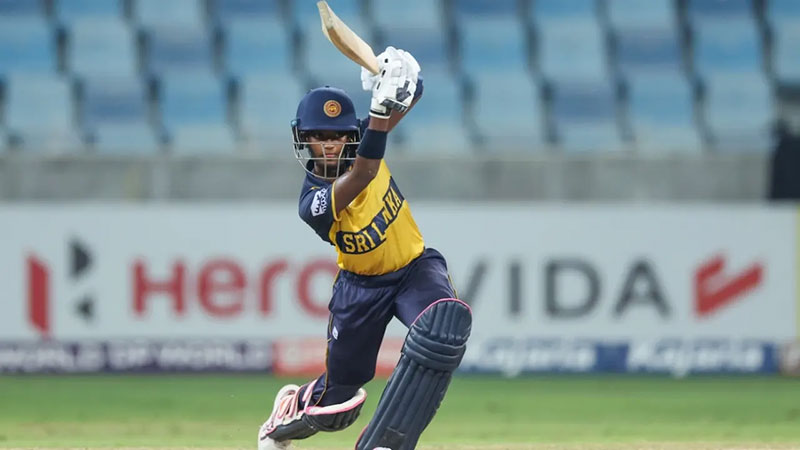
The quarter-finals of the Asian Games women’s competition, putting top-notch teams against teams without much experience of playing at the highest level, were expected to be mismatches. It took till the third game – Bangladesh vs China was washed out and Thailand gave Pakistan a fright for a proper one-side affair, though, as Sri Lanka bashed 160 after opting to bat, and their bowlers then stopped Malaysia 86 runs short.
Fresh off their appearance in the final of the Women’s T20 Asia Cup, Sri Lanka were always expected to dominate, but it didn’t quite start the way they wanted, with Imesha Dulani run out for another low score in the third over – she hasn’t topped 25 in eight innings since her century against Pakistan on July 31.
Chamari Athapaththu, however, stitched together an 80-run stand off just 53 balls with Hasini Perera for the second wicket, scoring 56 runs in 27 balls to Perera’s 23 in 26 in the collaboration. After the two batters fell, Kavisha Dilhari played a similar role to Athapaththu in the stand with Harshitha Samarawickrama, scoring 36 in 19 in a stand worth 62 in 37 balls.
Athapaththu top-scored with 63 in 37 balls, while Dilhari’s unbeaten 44 came off just 27 balls. For Malaysia, offspinner Nurin Imanina impressed with 3 for 29 from her four overs, picking up all the wickets to fall to bowlers.
In reply, Malaysia were three down inside the powerplay, with Dilhari picking up two of the wickets to fall on her way to returns of 2 for 4 from three overs. Athapaththu chipped in with two wickets of her own to finish with 2 for 3 from two overs, while Mithali Ayodhya got 2 for 15 from three.
It’s not like there was no resistance from Malaysia: Winifred Duraisingam scored 28, though it took her 47 balls to do it, while Mahirah Izzati Ismail scored 24, another slow effort, taking her 42 balls.
Scores:
Sri Lanka Women 160 for 4 in 20 overs (Athapaththu 63, HasinMithali Ayodhya 2-15i Perera 23, Kavisha Dilhari 44*, Harshitha Samarawickrema 25; Nurin Imanina 3-29) beat Malaysia Women 74 for 7 in 20 overs (Winifred Duraisingam 28, Mahirah Izzati Ismail 24; Mithali Ayodhya 2-15, Kavisha Dilhari 2-04, Chamari Athapaththu 2-03, ) by 86 runs
[Cricinfo]
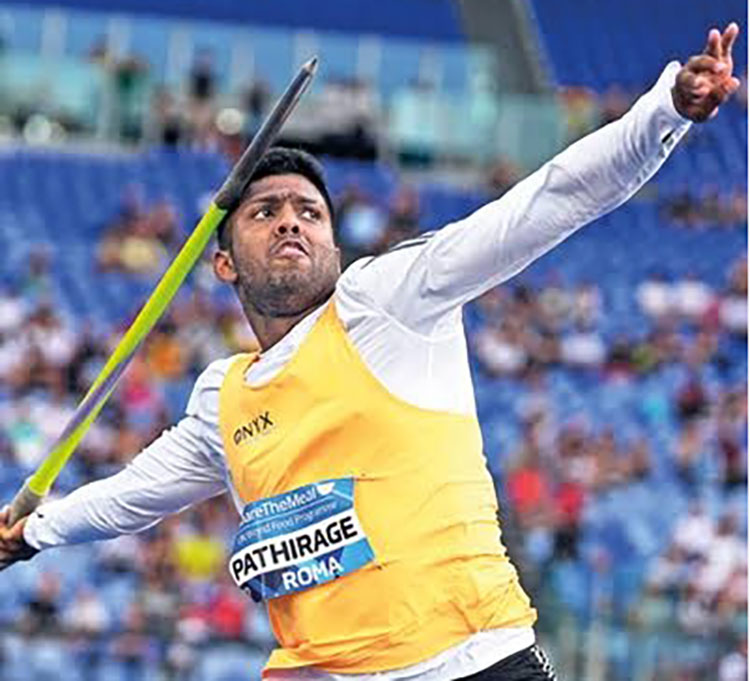
Champion javelin thrower Rumesh Tharanga has set his sights on Arshad Nadeem’s Olympic record at the 2028 Los Angeles Games. Speaking at a public event with just days ahead of his departure to the Asian Games where he is set to meet the reigning Olympic champion Nadeem, Tharanga explained his future plans.
While revealing his plans to continue competing until the 2036 Olympics in India, Tharanga said that he would aim at Nadeem’s Olympic record at the next edition in Los Angeles in 2028.
Nadeem’s Olympic record stands at 92.97 metres. Tharanga is set to meet the Olympic champion once again this season at the Asian Games in Japan where he is Sri Lanka’s brightest medal prospect in individual events.
Speaking at a public event, Tharanga said he plans to compete at three Olympic Games — Los Angeles in 2028, Brisbane in 2032 and the 2036 Games in India — before retiring from international athletics.
”I will participate in the 2028 Olympic Games and the 2032 Olympic Games in Brisbane. I intend to retire after the 2036 Olympic Games in India,” Tharanga said.
His main target, however, is the Olympic record.
Tharanga said he intends to surpass the 92.97-metre mark set by Pakistan’s Arshad Nadeem when he won the Olympic title at the Paris 2024 Games.
”My next focus is on securing an Olympic record at the 2028 Games in Los Angeles,” he said.
”I believe I can achieve an average above 90 metres in Los Angeles. My main focus is on setting an Olympic record,” he added.
Tharanga’s declaration comes after a remarkable rise in the international arena, with the Sri Lankan establishing himself among the world’s leading throwers.
With Los Angeles now firmly in his sights, Tharanga is targeting a performance that would take the Olympic javelin record beyond the 92-metre barrier — before embarking on his final two Olympic campaigns in Brisbane and India. (RF)

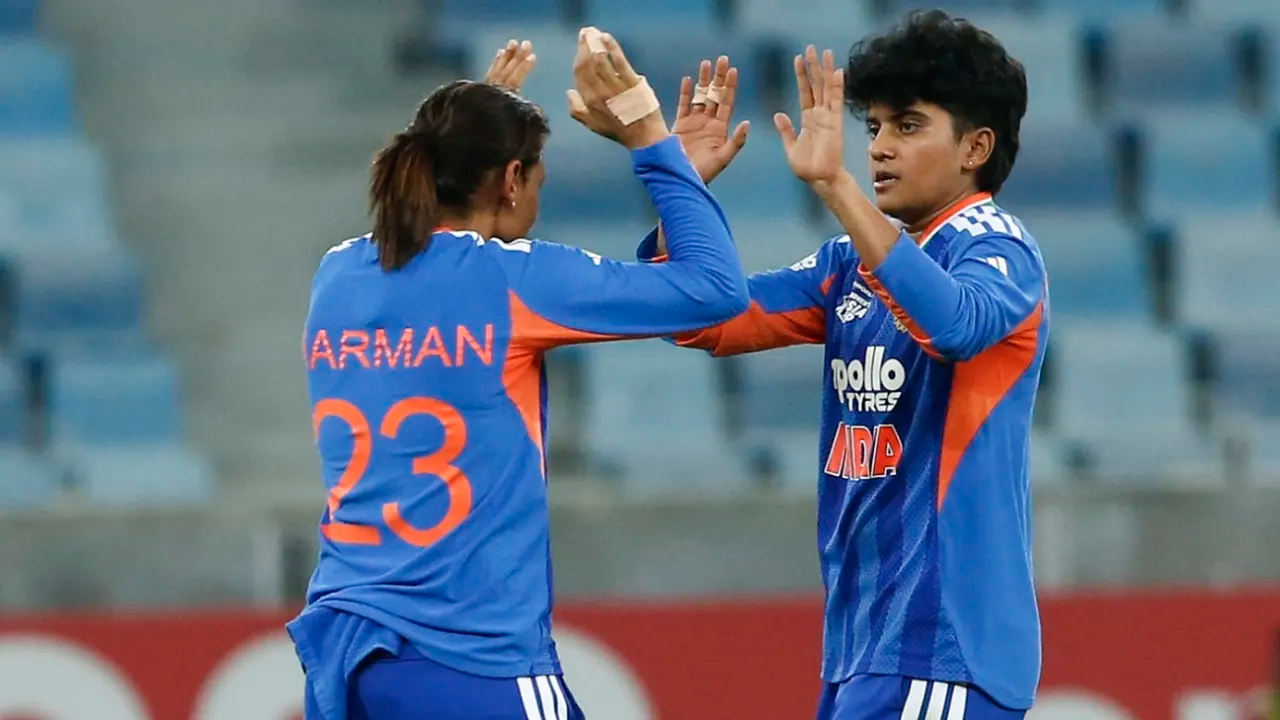
Defending gold-medal winners India overcame hosts Japan by eight wickets in the fourth quarter-final of the women’s cricket competition at the Asian Games in Nisshin on Friday. India chased down 58 in five overs to comfortably secure their place in the semi-finals. They will now face Bangladesh on September 20.
Japan did not exit the competition empty-handed. Their effort to bat as close to the full 20 overs as possible, their running between the wickets and their fielding effort were big positives. But they were bowled out for 57 in 19.5 overs after a solid start, leaving India with little to chase.
India, who opted to field, made the most of a pitch offering turn and bounce, which made stroke-making difficult for Japan. Shree Charani led the attack with another four-wicket haul, continuing an impressive run after taking 4 for 20 in the Women’s T20 Asia Cup final. She struck twice off consecutive balls in the seventh over, removing opener Haruna Iwasaki for 10 before having captain Mai Yanagida caught behind for a duck, but couldn’t convert it into a hat-trick.
Iwasaki and Ayaka Kato Stafford had put on 24 for the opening wicket, but Japan struggled to build partnerships once the stand was broken. Kato-Stafford top-scored with 25 off 47 balls, while Iwasaki made 10 off 22. Japan lost their last eight wickets for just 33 runs.
Charani finished with 4 for 10 from her four overs, while Shafali Verma took 2 for 13 and Deepti Sharma claimed 1 for 14.
Shrevanka Patil, returning to international cricket for the first time in three months after recovering from an ankle ligament injury suffered during the T20 World Cup in June, took 1 for 8 from 3.5 overs. Japan’s innings ended when Patil bowled Nonoha Yasumoto for a duck.
Chasing 58, Shafali opened the innings aggressively, smashing four boundaries in the first over to immediately put Japan under pressure. G Kamalini, who opened in place of Smriti Mandhana, and No. 3 Bharti Fulmali then threw their wickets away to fielders at long-on and point respectively. Left-arm seamer Yasumoto, who dismissed Kamalini, also delivered a wicket-maiden with the new ball.
Shafali finished the game with a six over long-on, staying unbeaten on 40 off just 15 balls. She struck six fours and two sixes at a strike rate of 266.66, as India won with 15 overs to spare.
Scores:
India Women 59 for 2 in 5 overs (Shafali Verma 40*, Richa Ghosh 12*; Nonoha Yasumoto 1-08, Ayaka Kato-Stafford 1-14) beat Japan Women 57 in 19.5 overs (Haruna Iwasaki 10, Ayaka Kato-Stafford 25; Shree Charani 4-10, Shreyanka Patil 1-08, Deepti Sharma 1-14, Shafali Verma 2-13) by eight wickets
[Cricinfo]

Advisory for strong winds and rough seas for Multi-day boats in the Bay of Bengal

Showers in the Western, Sabaragamuwa and North-western provinces and in Galle, Matara, Kandy and Nuwara-Eliya Districts

Some NPP manifesto promises may be difficult to fulfil – CIABOC DG

Yoshitha and ex-Navy chief Karannagoda’s case fixed for PTC

Court orders probe into Wimal’s rally speech

Court to rule on Dilith’s writ petition on September 30

‘Dates have the highest sugar content to fight Coronavirus’

Sunday Island 27 December – Headlines

#SundayIsland 17th December – Headlines

Sunday Island – 28th March

Sunday Island Headlines – 21 March

Sunday Island – 21st February – Headlines
-

 News6 days ago
Gnanasara Thero absconding after SC ruling
-

 Opinion5 days ago
From Galkissa (Mount Lavinia) to Tambuttegama
-

 Latest News7 days ago
ITS Giuseppe Garibaldi’ departs Colombo
-

 Business6 days ago
HNB Finance strengthens Board with four independent directors
-

 News2 days ago
US embassy won’t comment on IGP’s probe into joint drug raid
-
 Sports6 days ago
Culture within cricket team worrying authorities
-

 Features5 days ago
Sri Lanka’s university crisis: Brain drain and union action demand urgent reform
-

 Features4 days ago
The emptying university: why are academics leaving?