
Business
Finance minister urged to give fresh impetus to doing business conditions in Sri Lanka

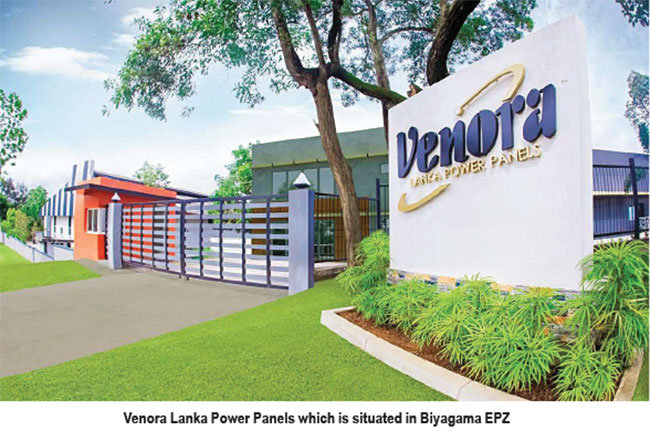
‘Venora Group lost export orders worth US$ 300,000-400,000 due to foreign exchange issue’
‘Many companies do value addition below 10%, but government is allowing that to happen’
By Sanath Nanayakkare
Venora Group of Companies Chairman and MD – who is also the Chairman of Mechanical-Electrical-Plumbing (MEP) Industry Forum Sri Lanka told The Island Financial Review recently that he was confident the new finance minister Basil Rajapaksa could give visionary leadership to transform Sri Lanka’s ease of doing business ranking to be among the first 50-60 or so in the world.
Venora Group Chief – Engineer Sagara Gunawardana who is wearing two industrial caps said, “New Finance Minister Basil Rajapaksa has a huge task before him in the current challenging context. I am confident that he can rise to the challenges the country is faced with because when he was the minister of economic development from 2010-2015, he did a remarkable job at that time. He was able to attract foreign investors to come here by creating an environment conducive to trade and investment. He is very knowledgeable on what needs to be done to foster strategic relationships with all actors of the economy; namely manufacturers, suppliers, exporters, importers and state institutions related to trade.”
 Talking about his group he said,” We are working on six or seven apartment projects in Colombo City limits. They consist of 20 to 30 floors up to 50 floors. In addition, we have undertaken installations at medium and large-scale hotel projects in the South. Although tourism has been hit hard by the pandemic, some investors are still keen on investing in Tourism related businesses. The single digit interest rates introduced by the government could be a main driver for this development. Investors used to borrow at 17%-18% a few years ago and the decision made by the government to get the banks to lend at current rates has encouraged investment, leading to a faster recovery of the economy. Another key reason that has strengthened the confidence of the business community is the government’s accelerated vaccination drive in all parts of the country. It is encouraging to see how the vaccination numbers have increased in the country and I urge everyone to get vaccinated because that is our best hope while other prevention measures must also continue.”
“Venora has been awarded the manufacturing and installation contract of power panels at the new dairy farm project in Ambewela, Pattipola owned by United Dairy Lanka (Pvt.)Ltd., Further, we have undertaken contracts of this nature for a few high-rises coming up in Union Place, Colombo including the iconic TRI-ZEN by John Keells Properties, 447 Luna Tower which is a Japanese investment and we are also working with the new Peoples’ Bank Head office and Akuregoda Ministry of Defence complex.”
“Mainly we are manufacturers of power panels and we export our products under a BOI entity named Venora Lanka Power Panels situated in Free Trade Zone at Biyagama. The COVID-19 pandemic situation opened the doors for us to export power panels to a few projects in Singapore,Bangladesh,Ethiopia and Kenya as the supply chains there were badly disrupted during the time, therefore, I urge Sri Lankan manufacturers to stay resilient and drive ahead their plants and the workforce to export finished goods because that’s where our future is.”
“According to the World Bank, Sri Lanka is ranked 99 among 190 economies in the ease of doing business. The rank of Sri Lanka improved to 99 in 2019 from 100 in 2018. This means foreign investors have almost 100 investment destinations on their radar, when we invite them to invest in Sri Lanka. This is a hard fact and we have to come up with solutions for it.”
“Authorities need to understand why foreign investors would want to come to Sri Lanka and create those conditions to attract them to the country.”
“Chinese investments in Sri Lanka are a lot. But what we need to be mindful about is whether they do enough value addition in Sri Lanka.. I know many companies that do value addition below 10% and the government is allowing that to happen. We should take a cue from late legendary businessman Upali Wijewardena, the founder and chairman of Upali Group which diversified from confectionery to electronics and automobile assembly with greater value addition on the Sri Lankan soil.”
“Today Micro Cars in Peliyagoda and Mahindra -Ideal Lanka facility in Welipenna assemble vehicles and they source some of their components locally. That’s the kind of investment we need to bring into Sri Lanka because the name of the game is ‘greater value addition’ within the country instead of just attracting FDI to the country.”
“We should invite Toyota, BMW and other reputed brands to assemble their cars here. Today a lot of our trained technicians especially those who pass out from the German Training School go to countries like Australia for employment. If we have the right companies here, we can retain this human resource in the country and allow them the opportunity to boost our production economy, taking a holistic approach to growth.”
“In recent past we could see that professional engineers and other skilled workers migrating to foreign countries because there is a high demand for them in those countries.”
“Everyone is aware that we have a US dollar shortage in the country. Due to this, we encounter difficulties in opening letters of credit (LCs) to import intermediary goods for our export orders. This has badly affected our export orders. Our local customers know about the restrictions and difficulties and they remain patient, but that’s not the case with our foreign customers. Sometimes banks take as long as a month to open an LC which leads to long lags in purchase order lead times. And this makes it impossible for us to deliver the orders on time, so we don’t accept such time-bound orders. In the past few months due to this issue. Venora Group lost export orders worth about US$ 300,000-400,000.”
“A key strategy to have our foreign reserves improved is to have foreign direct investments (FDIs) that earn foreign exchange for us. I know that between 2010 and 2015, the BOI invited a lot of investors from Japan and other countries. In fact, they came here, but now with the current situation of issues with LC opening and labour issues, some of them relocated their operations in Vietnam, Bangladesh and other countries. Investment authorities in Bangladesh and Ethiopia offer a one-stop-shop for investors. In Sri Lanka, the procedure is still cumbersome.”
“The Greater Colombo Economic Commission (GCEC) in the 1980s helped set up various industries in the country by offering favourable investment conditions for reputed investors with free-hold land, tax holidays etc. Today Sri Lanka offers little for such investors. And on the top of it, there is no consistent and cohesive investment policy in the country.”
“Policies on investment tend to change when governments change. From the standpoint of investors, this affects the predictability of their investments in important respects. What we need to put in place are ‘openings’ in the investment promotion process, not ‘barriers’.
“Foreign investors have almost 100 investment destinations on their radar when we invite them to come and invest in Sri Lanka. These are the cold hard facts that we need to address as we try to promote Sri Lanka as an investment destination.”
“Minister Basil Rajapaksa has the ability to streamline the affairs effectively to boost our exports and increase our foreign exchange earnings. I am confident that he will come up with a strategy for this and implement it. I am also confident that he can make reforms to upgrade Sri Lanka’s ease of doing business ranking to be among the first 50-60 or so in the world. Such an improved assessment of business conditions in Sri Lanka will be well-received by investors and private corporations across the world,” he said.

Business
Sri Lanka Climate Summit flags need to ‘mainstream climate action into country’s growth story’
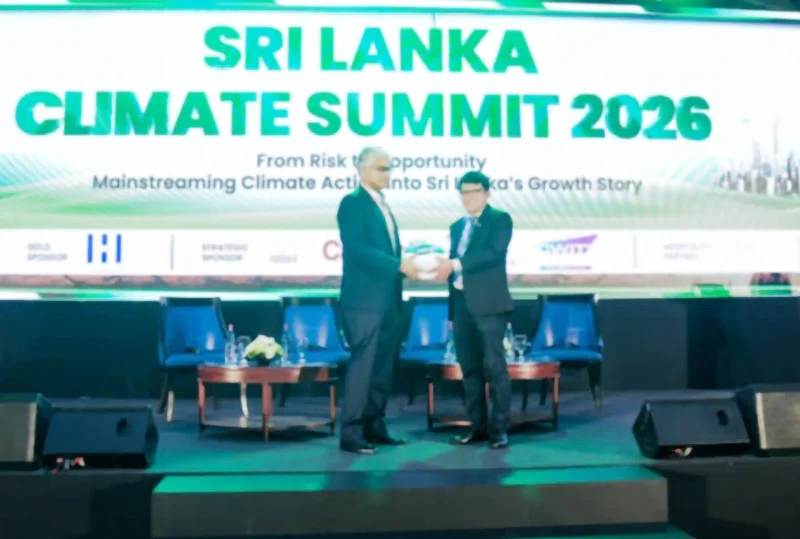
Sri Lanka has reached a critical juncture where climate action must evolve from policy discussions into tangible investments capable of driving economic growth, strengthening competitiveness and attracting international capital, speakers at the second Sri Lanka Climate Summit 2026 organised by the Ceylon Chamber of Commerce said.
Held under the theme “From Risk to Opportunity: Mainstreaming Climate Action into Sri Lanka’s Growth Story,” the summit at Taj Samudra yesterday brought together policymakers, multilateral agencies, financiers and private sector leaders to assess whether Sri Lanka is climate-ready for investment and how climate resilience can be transformed into an economic advantage.
Delivering the welcome address, Chairman of the Ceylon Chamber of Commerce, Krishan Balendra, said climate action could no longer be treated as a separate sustainability agenda.
“As Sri Lanka enters its next phase of economic growth and recovery, climate action must become part of our competitiveness agenda, our investment agenda and ultimately our national growth story, Balendra said.
He noted that since the inaugural Climate Summit in 2024, the Chamber had moved beyond advocacy to practical implementation through initiatives promoting Environmental, Social and Governance (ESG) practices, climate disclosures, green innovation and public-private collaboration.
The Chamber has also established a public-private working group jointly led by the Ministry of Environment and the Chamber to support implementation of Sri Lanka’s Nationally Determined Contributions (NDCs) and emerging carbon market frameworks.
Environment Minister Dr. Dhammika Patabendi, delivering the keynote address titled “Sri Lanka’s Climate State of the Nation 2026, said the government was positioning climate resilience as a cornerstone of economic transformation.
“We are working directly with the Chamber to transform global climate risks into Sri Lanka’s greatest competitive advantages, the minister said.
He highlighted landmark amendments to the National Environment Act aimed at modernising environmental governance while providing greater certainty to investors.
According to Patabendi, the reforms would shift environmental compliance from a reactive and punitive model to a proactive framework that provides businesses with greater operational clarity before projects commence.
The minister also stressed that environmental compliance is increasingly becoming a prerequisite for access to premium export markets.
“Enhanced environmental standards act as an economic shield for our exporters, validating the ‘Made in Sri Lanka’ brand as an ethically secure, low-carbon choice, he said.
Patabendi reaffirmed Sri Lanka’s comm
itment to achieving 70 percent renewable energy generation by 2030 and carbon neutrality by 2050, while highlighting significant opportunities in wind energy development, including an estimated 56 gigawatts of offshore wind potential.
Vimlendra Sharan, FAO Representative for Sri Lanka and the Maldives, described Sri Lanka as a country that is simultaneously “climate vulnerable and climate ambitious.”
“The real question is whether Sri Lanka is climate investment ready. That journey has only just begun, Sharan observed.
He argued that climate readiness required transforming vulnerabilities and ambitions into structured, financeable and scalable investments.
One of the country’s biggest challenges, according to Sharan, is the limited pipeline of bankable climate projects.
“The major gap is the lack of investment-ready projects. We also need stronger project preparation capacity, more data and better evidence to unlock larger volumes of climate finance, he said.
Speakers agreed that climate resilience is no longer merely an environmental issue but an economic imperative affecting trade, investment flows, supply chain access and long-term growth prospects.
By Ifham Nizam
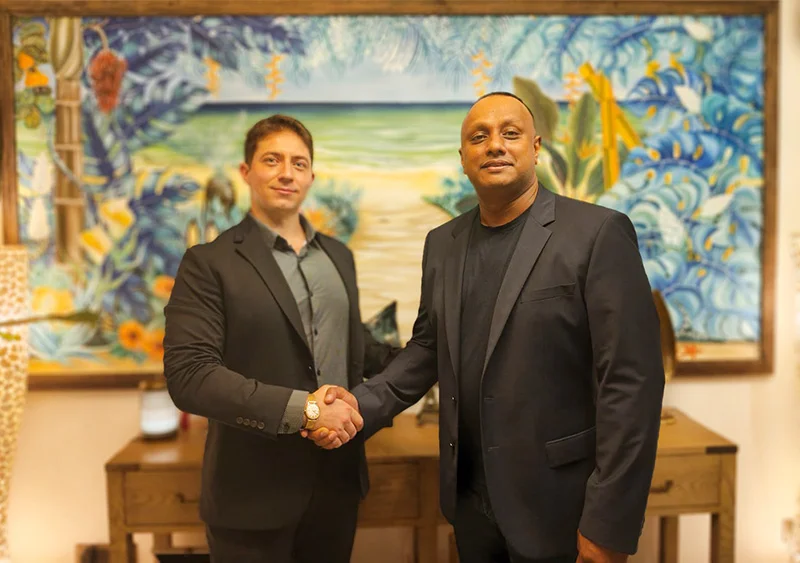
A leading Australia-based sustainable energy solutions company, ‘365 Future Energy’, is now exploring possibilities to enter Sri Lanka to provide sustainable energy solutions to Sri Lanka at affordable prices.
‘365 Future Energy’ CEO, Isuru Yapa, together with internationally recognized energy technology entrepreneur Ludovico Finotto,visited Sri Lanka this week.
” If we could set up this plant here it would benefit Sri Lanka because it could store sustainable energy to stabilise the national grid, supply energy at an affordable operational cost and manage the energy supply system in a more stable manner, Ludovico Finotto, founder and CEO of ‘QiOn Technologies’ a globally recognized innovator in the energy, automotive and high-performance electronics sectors, said.
With over 18 years of international experience, Finotto has played a leading role in advanced developments related to electric mobility, energy storage, charging infrastructure, hydrogen technologies, marine electrification and smart energy systems in more than 24 countries.
Speaking to the Island Financial Review he said that the purpose of this strategic visit is to explore sustainable energy solutions, evaluate emerging opportunities within Sri Lanka’s energy sector and identify potential investment and technology partnerships that can contribute to the country’s future energy transformation.
‘365 Future Energy’ is focused on delivering innovative and environmentally responsible energy solutions, supporting the global transition toward renewable and sustainable power infrastructure. Through this visit, the company aims to better understand Sri Lanka’s growing energy demands and assess opportunities for collaboration in renewable energy technologies, energy storage systems, EV charging infrastructure and next-generation sustainable energy developments.
‘365 Future Energy’ believes Sri Lanka holds strong potential for future-focused sustainable infrastructure projects and clean energy investments. The company’s leadership team will engage with local stakeholders, businesses, and industry representatives during the visit to discuss opportunities for innovation, energy efficiency, and long-term sustainable growth, company sources said.
By Hiran H Senewiratne

Celebrating the spirit of Vesak, Serendib Flour Mills served the community through a Tea Bun Dansala and Plain Tea Dansala held near the Orugodawatta Bridge on 29 May 2026, distributing 12,500 buns and 12,500 cups of tea to devotees and members of the public.
The Dansala commenced with the blessings and presence of a venerable monk, reflecting the values of compassion, generosity and service that define Vesak. The initiative was carried out through the collective commitment of the Serendib Flour Mills team, who came together to serve the community and support those observing the sacred occasion.
Through this initiative, Serendib Flour Mills reinforced its belief that nourishment extends beyond food, living in the kindness shared, the relationships built and the communities uplifted. Guided by its purpose of “Nourishing the Nation,” the company remains committed to creating nourished futures through meaningful acts of service and care.

Formulation of a Draft Economic Development Bill to expedite the process of Digital Transformation and Digital Economic Development
Cabinet approval for Sri Lanka Community and Health Survey – 2026/2027
A National Water Tariff Policy for all Water Supply and Sanitation Services
National Policy on Green Hydrogen in Sri Lanka
Cabinet nod to amend the Customs Ordinance
Cabinet nod to submit the Anti-Corruption (Declaration of Assets and Liabilities through Centralized Electronic System) Regulations 2026, made under Section 156 of the Anti-Corruption Act, No.9 of 2023, for approval by Parliament

‘Dates have the highest sugar content to fight Coronavirus’

Sunday Island 27 December – Headlines

#SundayIsland 17th December – Headlines

Sunday Island – 28th March

Sunday Island Headlines – 21 March

Sunday Island – 21st February – Headlines
-

 Latest News6 days ago
Kusal Mendis, Pathum Nissanka, bowlers put Sri Lanka 1-0 up
-
 News6 days ago
New US tariffs proposed on 60 countries, including Sri Lanka
-

 Features5 days ago
Power crept into the Sangha and is now tearing it apart
-
 Features5 days ago
Kondachchi wind farm and battery storage project to boost energy security, says Power Ministry Secretary
-
 Features5 days ago
Saudi Arabia sets new benchmark in Hajj management as 1.7 million pilgrims complete sacred journey
-

 News3 days ago
Women’s T20 World Cup 2026 warm-up: Chamari Athapaththu’s 94 helps Sri Lanka beat Pakistan
-

 News4 days ago
Asst. Manager, security officer arrested over Rs 30 mn snatch at Horana PB branch
-

 Editorial2 days ago
Probe Sallay’s complaint