
News
GMOA Executive Committee opposes KNDU Bill


By Rathindra Kuruwita
The Government Medical Officers’ Association’s (GMOA) Executive Committee had unanimously decided that the Kotelawala National Defence University bill would have a disastrous impact on education and social stability, GMOA Secretary Dr. Senal Fernando said yesterday.
Dr. Fernando told The Island that the GMOA had also prepared a report on the KNDU highlighting the flaws in the Bill.
“We have no problem with a military university and the current act that governs the KDU is enough for that. There is no need for a university that operates outside the University Act,” Dr. Fernando said.
The report said that in the 2019 policy document of President Gotabaya Rajapaksa, there was a promise to expand state universities and to develop their facilities. Those steps were proposed because the President admitted the importance of strengthening state university system and the need for students to enjoy academic freedom.
“However, this bill proposes the creation of a university outside this existing system. An institution that is not regulated by the University Grants Commission (UGC). We fear that this will be the beginning of a series of institutions outside the purview of the UGC,” the GMOA report says.
The KNDU bill will also degrade the quality of Sri Lankan degrees, the GMOA’s report says, adding that the members of the current administration opposed the KNDU proposed by the yahapalana government and the current bill is a carbon copy of the previous one.
“All the establishments under the UGC are administered under a national policy. To enter a university one must pass the GCE AL examination and get a stated Z score. This score determines what course one can offer. However, we do not know under what criteria that students will be taken into KDU, under the proposed act. This is important because the new act opens the doors of the university to others outside those of the defence establishment,” the GMOA said.
The GMOA added that the governing body of the KDU, as proposed by the act, comprises nine members. Out of that, five are military officers in active duty.
“They are the Chief of Defence Staff, Army Commander, Navy Commander and Air Force Commander. Moreover, the act proposes that the Vice Chancellor should also be a senior Army Officer. Meanwhile, two others are Secretary to the Ministry of Defence and an Additional Secretary to the Ministry. Thus seven out of nine are associated with the Defence Ministry and five are direct members of the military. There are only two non- military people,” he said.
The GMOA has said in its report that the quorum of the governing body is only five and therefore, decisions can be taken by the military officers. “This is not the governance structure of an institution that plans to offer degrees to civilians.
“This body also decides on the method of recruitment, setting courses, salaries of teachers, establishment and repealing of positions, creating links with other public and private institutions. They are also given independent monetary powers. This is the establishment of an independent body with self-determination.”
The KNDU will also be able to attract the best teachers from state universities. This will lead to shortages of lecturers in state universities and that will lead to a drop of quality in these institutions, the doctors’ union has said.
“However, this university will also be able to secure government funding outside allocations to the Ministry of Defence. This means that a chunk of money that would have gone to government education will be channeled into a private institution outside the purview of the UGC.”
All these factors will lead to unrest in other universities, which in turn would affect the smooth functioning of those establishments. “For example medical students lost a year because they boycotted classes opposing SAITM, the GMOA has said, arguing that a graduate from a military university will be conditioned to follow orders from above. However, only a scholar who was able to think independently could contribute to the development of the country.
“Civilian students who join the KNDU will not be able to talk or negotiate with the university administration. Let’s assume that they are unhappy with the service provided by the university, can the students gather, organize and win their rights? The answer is a resounding no. The students can’t even run a student council, which is a hallmark of any university.”
Article 07 of the bill states that if the Minister of Defence feels that anything that happens in the university is a threat to national security or affects the functioning of the university, he can order the governing body to take action.
“So, students have to submit to any decision taken in the name of ‘national security. This is ludicrous.”


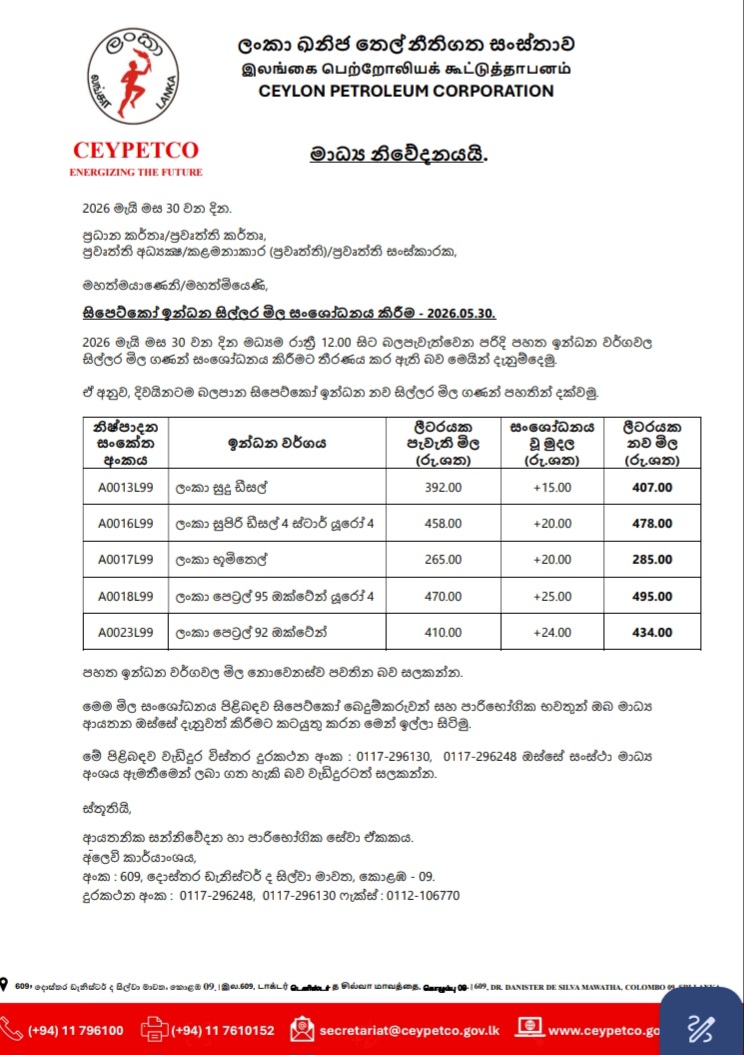
The Ceylon Petroleum Corporation (CEYPETCO) has announced a revision of fuel prices, effective from midnight on Saturday (May 30).
Accordingly,
the price of Auto Diesel has been increased by Rs. 15 to Rs.407 per liter,
the price of Super Diesel has been increased by Rs. 20 to Rs. 478 per liter.
the price of Petrol 92 Octane has been increased by Rs. 24 to Rs. 434 per liter
the price of Petrol 95 Octane up by Rs. 25 to Rs. 495 per liter
the price of kerosene by Rs. 20 to Rs. 285 per liter.

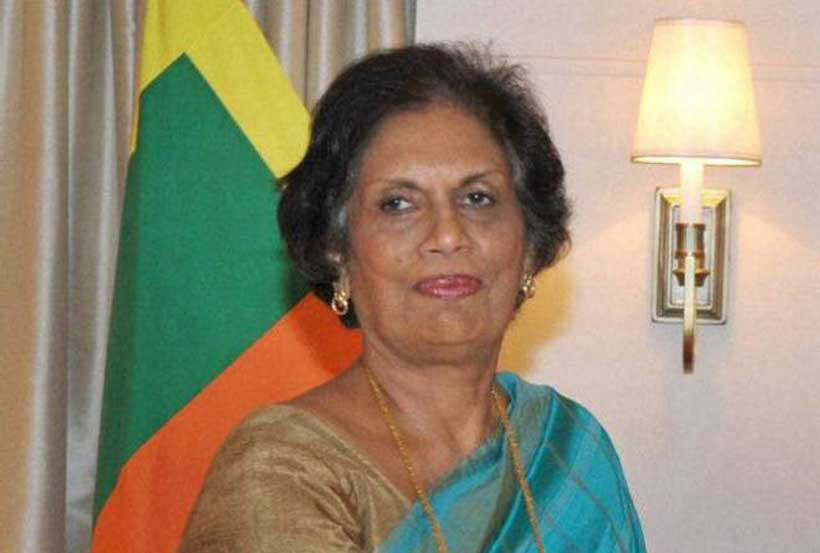
Former President Chandrika Bandaranaike Kumaratunga has called for a comprehensive reform programme within Sri Lanka’s Buddhist clergy, warning that repeated efforts to strengthen the Sasana have in the past been derailed by opposition from within sections of the Sangha itself.
In a statement addressed to the Mahanayake Theras of the three Buddhist chapters, Kumaratunga stressed that the long-term preservation of Buddhism depends on safeguarding both the Dhamma and Vinaya, or disciplinary code, and urged urgent internal reform to address what she described as deep-rooted structural weaknesses.
She noted that Buddhist history has consistently demonstrated that periods of institutional crisis were addressed through reform processes, citing precedents from the First Buddhist Council to reforms during the Kandyan era under Welivita Sri Saranankara Thera.
Referring to post-independence efforts, Kumaratunga said initiatives taken during the 1956 Bandaranaike administration to strengthen Buddhism were left incomplete following the assassination of former Prime Minister S.W.R.D. Bandaranaike.
She further stated that during her own presidency, plans to convene a Buddhist Council under the guidance of the late Madihe Pannasiha Mahanayake Thera had received government backing but were ultimately abandoned due to resistance from certain sections within the clergy.
The former President alleged that, on both occasions, vested interests benefiting from existing weaknesses within the Buddhist establishment had worked to obstruct meaningful reform efforts.
Warning that Buddhism in Sri Lanka is currently facing serious challenges, she called for a broad internal dialogue within the Sangha to identify root causes and implement both short- and long-term corrective measures.
Kumaratunga urged the Mahanayake Theras to take the lead in convening a Dharma Sanghayana, or Buddhist Council, and said she was prepared to work with senior lay Buddhist leaders to support such an initiative.
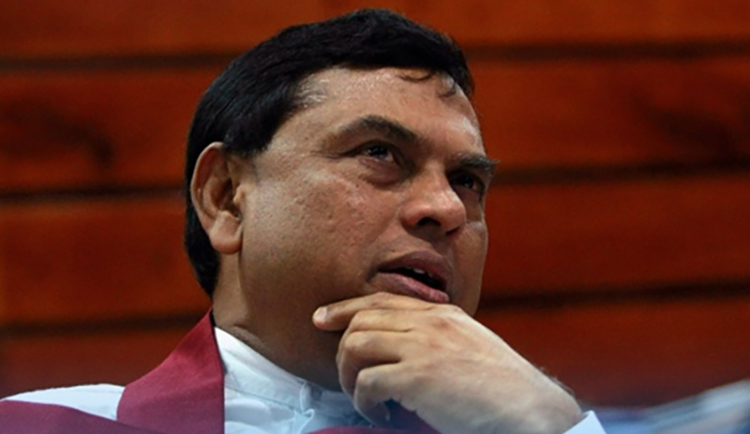
The Colombo Fort Magistrate’s Court on Friday ordered the arrest of former Minister Basil Rajapaksa, Tourism Promotion Bureau Chairman Bhashwara Gunaratne, Managing Director Rumi Jauffer and several others over the alleged misuse of Rs. 7.8 million belonging to the Tourism Promotion Authority during the 2014 Uva Provincial Council election campaign.
Magistrate Pasan Amarasena directed the Criminal Investigation Department (CID) to arrest and produce the suspects before court, after it was informed that they would be named under the Public Property Act on the advice of the Attorney General.
The CID told court that attempts to take the suspects into custody from their residences had been unsuccessful as they were not present.
The Magistrate also imposed an overseas travel ban on the suspects and ordered that the Controller of Immigration and Emigration be notified.
Investigations have reportedly revealed that the funds were used to print 12,000 T-shirts bearing an image of former President Mahinda Rajapaksa on one side and the name of a political party on the other.
According to the CID, the T-shirts were later distributed at a political event held in the Monaragala District.

‘Disappointing’ – Sangakkara on Sam Curran turning out for Surrey with IPL still on

Truck carrying Afghan returnees from Pakistan flips on highway, killing 18

PSG beat Arsenal to win back-to-back Champions League titles after shootout

What Hegseth’s comments at Shangri-La Dialogue say about US foreign policy

Home comfort vs championship pedigree as Gujarat Titans and Royal Challengers Bengaluru collide in IPL 2026 final

Minhas’ record-breaking debut sets up handsome Pakistan victory

‘Dates have the highest sugar content to fight Coronavirus’

Sunday Island 27 December – Headlines

#SundayIsland 17th December – Headlines

Sunday Island – 28th March

Sunday Island Headlines – 21 March

Sunday Island – 21st February – Headlines
-
 News6 days ago
Police probe underway to ascertain links between criminals deported from UAE and local politicians
-
 News5 days ago
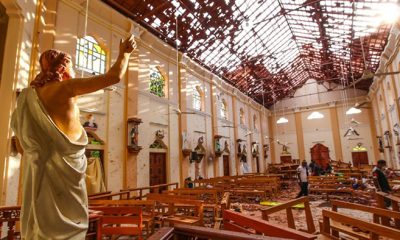
Easter Sunday carnage: Court told Maulana’s statement cannot be accepted without cross-examination
-

 News1 day ago
IMF urges Lanka not to meddle with exchange rate
-
 News5 days ago
UK passport holder hiding here wants to have deportation order rescinded to leave without blemish
-
 Opinion5 days ago
Undermining the democratic political framework
-
 Features2 days ago
The Division Bell Mystery
-
 News6 days ago
Dickoya double murder suspect arrested
-
 Midweek Review4 days ago
Israeli-US aggression won’t go unanswered -Iranian Ambassador