
News
SLPP cannot survive by suppressing truth and printing money, says Kabir

‘Govt deprived Treasury of wherewithal to tackle crisis’
By Shamindra Ferdinando
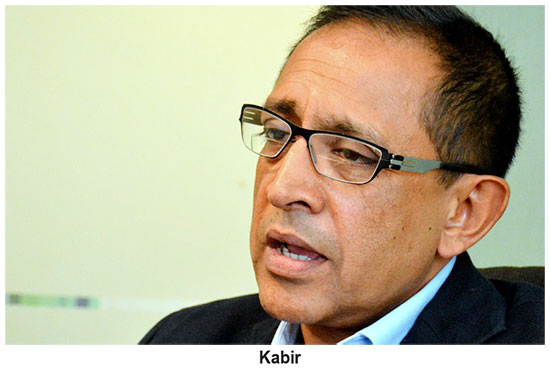
Samagi Jana Balavegaya lawmaker Kabir Hashim alleges that the Finance Ministry report for 2020 is meant to deceive both the Parliament and the public. The former UNPer insists the cash-strapped SLPP government cannot overcome the rapidly developing financial crisis by suppressing the truth or printing money.
The Finance Ministry was making a desperate bid to hide the actual situation by painting a wrong picture, says Kegalle District lawmaker, Senior Vice President of the SJB Hashim.
In a brief interview with The Island, over the last weekend MP Hashim explained how mismanagement of the national economy had caused irreparable damage and losses at a time the country was struggling to cope up with the rampaging Covid-19 pandemic.
Referring to parliamentary proceedings on June 23, 2021, Hashim said that he had an opportunity to take up the erroneous Finance Ministry, 2020 annual report in the presence of Premier Mahinda Rajapaksa who is also the Finance Minister. The MP alleged that the Finance Ministry, in addition to issuing wrong figures deliberately left out critically important data in a bid to deceive the public.
Responding to another query, Hashim pointed out how the 2020 Finance Ministry annual report estimated the national debt at Rs 14.8 trillion though figures released by the National Audit Office and Auditor General raised questions in respect of the overall accounting process. According to MP Hashim, as much as Rs 170 bn in loans had been left out of 2020 Finance Ministry report. Alleging malpractices in the accounting process, the SJB official alleged that Treasury bonds worth Rs 290 bn hadn’t been properly taken into account as at Dec 31, 2020. Asked whether he took responsibility for the claims he made, MP Hashim said that he was repeating what he told Parliament. “Of course, my statement made in Parliament on June 23 didn’t receive the desired media coverage.”
Lawmaker Hashim questioned why the Finance Ministry conveniently refrained from mentioning Japan seeking compensation to the tune of Rs. 5,896 bn from cash strapped Sri Lanka for the cancellation of the Japan International Cooperation Agency (JICA)-funded Colombo Light Rail Transit (LRT) project. The top SJB spokesperson said that the government owed an explanation over the cancellation of the LRT project finalised during the previous administration.
Underscoring the need for financial and political stability, the former UNP Chairman described the government as a patient warded in an Intensive Care Unit (ICU) with multiple organ failure though it sometimes talked big, in an obvious bid to deceive those struggling to make ends meet. The national economy suffered debilitating setbacks due to the SLPP’s ruinous fiscal policies, the MP said, alleging the incumbent government caused a catastrophe at the beginning by depriving the Treasury of much needed revenue. MP Hashim emphasized that the Treasury suffered a loss of colossal amount of money due to unprecedented tax cuts soon after the change of government. The losses suffered due to exemption of VAT alone was quite big, the SJB MP said, lambasting the government for delivering a deadly blow to the national economy. According to the SJB MP, the Treasury lost a staggering Rs 600 bn due to tax cuts and of that amount approximately half as a result of VAT exceptions.
The then Joint Opposition/ SLPP quiet shamelessly attacked the previous government efforts to streamline the tax collection process, the MP said. Specific measures to enhance tax revenue were depicted as fleecing of the public by those who played politics with the national economy. “Now they are in charge. Obviously, they lacked at least basic vision to sustain the national economy,” MP Hashim said, alleging the SLPP’s foolish strategies resulted in downgrading of Sri Lanka’s status.
The MP challenged Trade Minister Bandula Gunawardena to compare the prices of dhal, sugar, sprats, salmon, rice and milk powder at the time the 2015 change of government and the time of the 2019 presidential election. Contrary to the SLPP boasts, the incumbent government caused itself serious damage by depriving the Treasury the wherewithal to meet the crisis, the former Minister said.
Alleging Scottish economist John Law (1671-1729) had ruined France in the 1700s due to his shortsighted strategies, MP Hashim claimed that the SLPP was following a policy very much similar to that utterly destructive strategy. Unrestrained printing of money was part of that foolish strategy, the former Minister said, alleging that by April 2020 the SLPP printed money amounting to Rs 165 bn. MP Hashim said that the ugly truth was having had preached throughout the 2015-2019 period how to manage the economy the big talkers ruined the economy.
Lawmaker Hashim flayed the government over the unprecedented sugar tax scam, runaway rice prices against the backdrop of Agriculture Minister Mahindananda Aluthgamage’s ridiculous claim of record paddy yield last year. Subsequently, the government announced plans to import 100,000 metric tonnes of rice, MP Hashim said, urging the government to address real issues without further delay.
Finance Minister Mahinda Rajapaksa, who was also the State Minister of Money and Capital Market and State Enterprise Reforms and State Minister of Samurdhi, Household Economy, Micro Finance, Self-Employment and Business Development owed a clear explanation, he said.
Those who boasted of having the world’s best intelligence service couldn’t locate hoarded paddy/rice in spite of growing criticism of continuing shortages, the MP said. How could they ‘catch’ those who had been involved with the 2019 Easter Sunday bomber Zahran Hashim or fugitive CBSL Governor Arjuna Mahendran if rice millers couldn’t be tackled.
MP Hashim demanded the SLPP to give up political power if it couldn’t do what it promised.
Commenting on the SLPP being split over fuel price hikes, the SJB top gun said that the government should explain what it did with funds amounting to USD 1.3 bn (Rs 253 bn) saved due to much lower crude oil prices in the world market in 2020. MP Hashim asked what happened to Rs 48 bn paid by the CEB to the CPC in 2020. The SJB also demanded an explanation as regards Rs 50 bn in the much- touted oil price stabilization fund established by the SLPP administration. The former Minister emphasized as the CBSL and COPE confirmed the setting up of the stabilization fund, the government should explain what had really happened, the former UNP Chairman said.
Declaring that in Murban terms the price of barrel of crude oil remained at USD 60, MP Hashim demanded an explanation from the government why prices of diesel, petrol and kerosene sharply increased. MP Hashim explained how in terms of forward booking purchases were made on prices in the market two months before.
The former Minister said that Fisheries Minister Douglas Devananda recently claimed that the government planned to increase the price of a litre of kerosene by Rs 35 though he managed to thwart the move. According to a Fisheries Ministry statement carried on page 1 on June 30 edition of The Island Minister Devananda managed to restrict the increase of the price of a litre of kerosene to Rs 7.
MP Hashim said that EPDP leader Devananda’s colleagues had challenged his claim.
Responding to queries as regards the state of the economy in the wake of the Covid-19 eruption, lawmaker Hashim said that the SLPP leadership was blind to the difficulties experienced by the middle class and those who survived on daily wages.
Pointing out that Treasury Secretary S.R. Attygalle, in response to a query posed by SJB lawmaker Dr. Harsha de Silva based on Energy Minister Udaya Gammanpila’s take on the financial crisis, at a meeting of a parliamentary watchdog committee, MP Hashim said that the country was now in bind.
The former Minister said that the people weren’t interested about the internal conflicts within the ruling party. The government should be ashamed of itself for the ridiculous battle between a section of the SLPP and Energy Minister Gammanpila and the ‘boru’ show over Basil Rajapaksa’s return on the National List.
“The SLPP administration is in tatters,” the former Minister said declaring the people recognized the SJB’s role as the main Opposition. The government was in such a desperate situation it propagated the lie that the SJB would disintegrate with the return of UNP leader Ranil Wickremesinghe to Parliament.
MP Hashim asked whether various declarations made by members of the SLPP parliamentary group, backing Basil Rajapaksa’s return, reflected the failure on the part of the government less than a year after last parliamentary polls. The bottom line is that the near two-thirds majority enjoyed by the SLPP in Parliament didn’t reflect in its handling of the developing situations, the former Minister said.

News
If we are to live fulfilling and happy lives, we need unity, mutual understanding, harmony, as well as art – PM

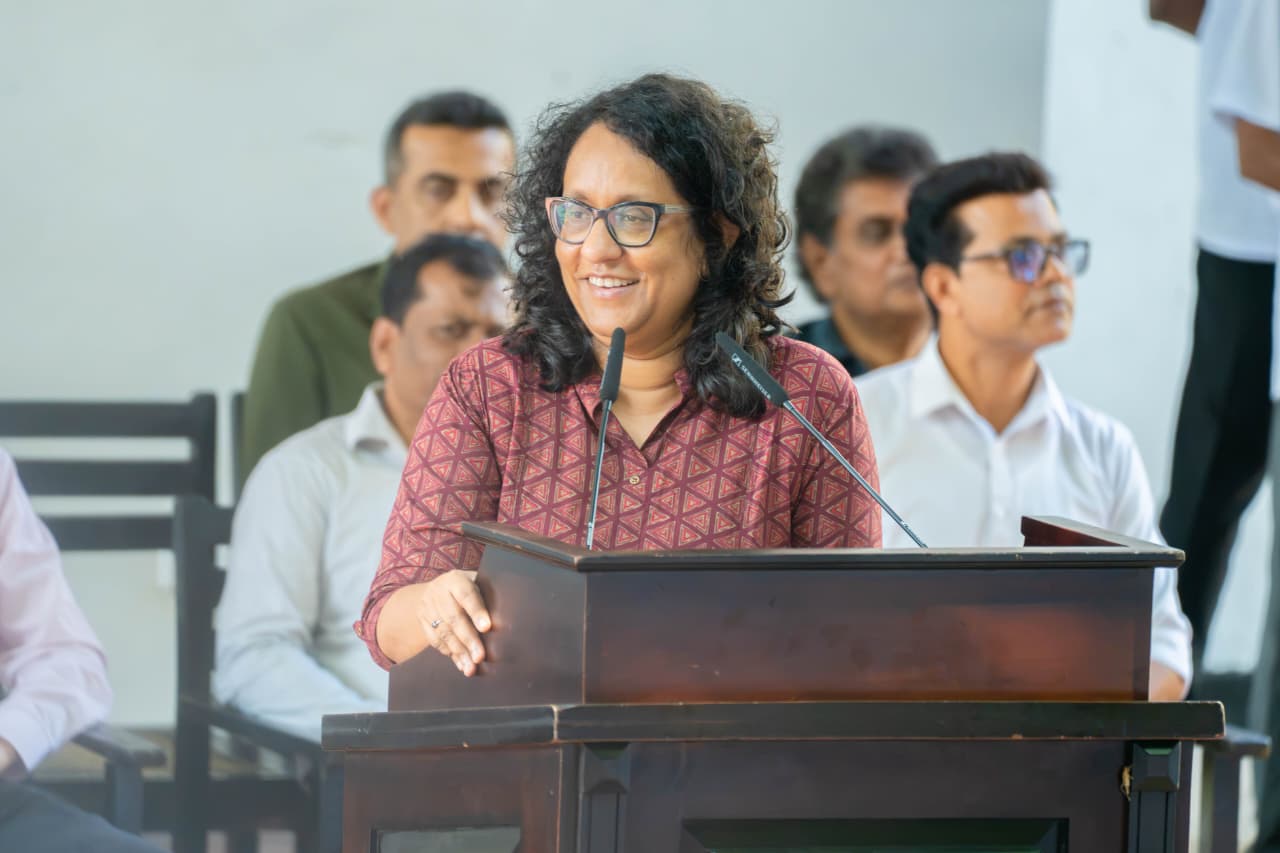
Prime Minister Dr. Harini Amarasuriya stated that art, together with unity, mutual understanding and harmony, is essential for people to lead fulfilling and happy lives. She further emphasized the importance of preserving our identity while remaining open-minded and prepared to face the challenges of a rapidly changing society.
The Prime Minister made these remarks while participating in the opening ceremony of a special educational and cultural trade exhibition and festival organized jointly by the Wayamba Janakala Foundation and the Siyapatha Kala Sangamaya, with the vision of revitalizing the artistic heritage of the Seven Korales and creating a culturally empowered individual who appreciates the arts. The event was held at the Wayamba Janakala Centre on Saturday, 12 September 2026.
The exhibition will be held from 12 to 18 September, from 10.00 a.m. to midnight. The cultural festival has been organized for school students, teachers, youths, and adults.
At the commencement of the exhibition, the Prime Minister opened the exhibition stall of the Department of Education and officially launched the website of the Janakala Foundation.
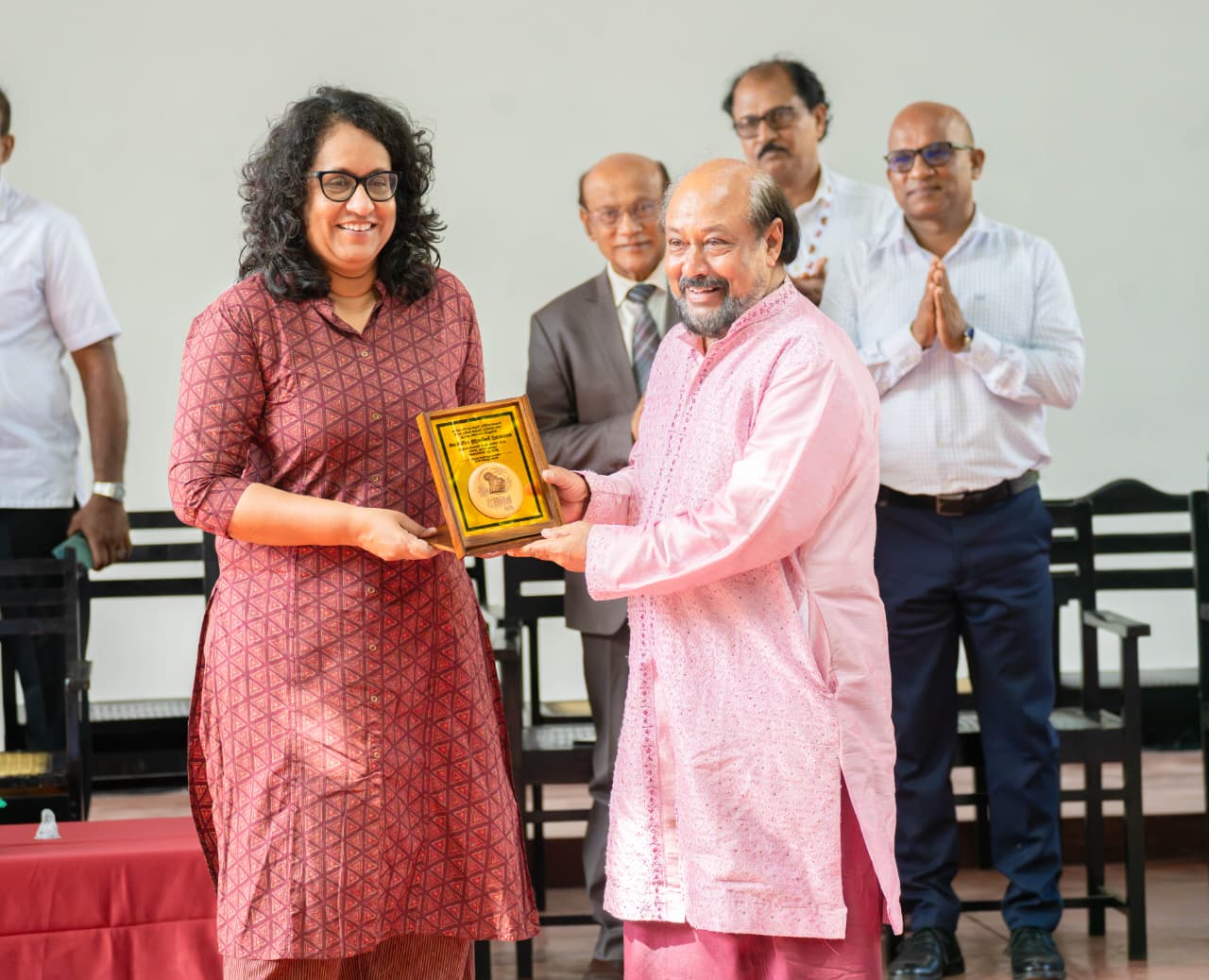
Veteran artists representing the North Western Province who have made an outstanding contribution to the field of art, including Professor Mudiyanse Dissanayake, Nibiriyagama Bandara, Anton Coorey and Charitha Wickramasinghe, were also felicitated by the Prime Minister on this occasion.
Addressing the occasion, the Prime Minister further stated:
“We believe that art and culture, both are important in realizing the thriving nation and beautiful life that we aspire. It is equally important to see and learn about the heritage of our country and, through our experiences, engage in a dialogue on how we can take these traditions forward by incorporating them into our lives in ways that are relevant to the present day.
As the Member of Parliament mentioned to me, films are being screened here, educational programmes and workshops are being conducted, and there are a number of performing arts presentations. Through all of these activities, what we hope to achieve is to enrich the lives of the people of the North Western Province. Being ‘rich’ does not mean economic prosperity alone. Building roads, constructing buildings and developing housing facilities are all necessary. But these alone are not sufficient. We can build a modern city out of concrete and still live empty lives devoid of happiness, sensitivity or fulfilment. If we are to truly make our lives fulfilling and create happiness, however, we need things such as these. We need unity, mutual understanding and harmony.
We must also learn through experience how to conduct ourselves in public spaces and how to remain safe within society. We cannot assume that we can protect ourselves simply by separating ourselves from everything and remaining closed off. While preserving our identity, we must be prepared to face the challenges ahead with an open mind if we are to learn how to live safely in a complex society that is changing rapidly due to technology.
Therefore, today, I encourage you to speak to someone you have never spoken to before. Try to understand their life. Share your ideas and experiences with someone who has come from a place far away from you, someone who does not speak your language, or someone who belongs to a different religion or culture. It is through such interactions that our lives become broader and we gain an understanding of new things.
That is also why art and culture are essential to our lives. A good book can take us to places we have never been. A good work of art or a film can bring us closer to another person’s experience in a way that allows us to feel it ourselves. Therefore, I invite everyone to enjoy and appreciate the arts today with a very open mind and a sense of enthusiasm.
I am grateful to everyone who worked hard and dedicated themselves to making this event possible. I wish for these seven days of programmes to be highly successful and to provide everyone with seven days of memorable experiences.
The occasion was attended by the Governor of the North Western Province Tissa Warnasuriya, Deputy Ministers Namal Karunarathna and Namal Sudarshana, Member of Parliament Dharmapriya Dissanayake, other Members of Parliament, the Mayor of Kurunegala, Chairpersons of Pradeshiya Sabhas, Chairman of the Janakala Foundation Anil K. Senadheera, government officials, school students, residents of the area.


(Prime Minister’s Media Division)
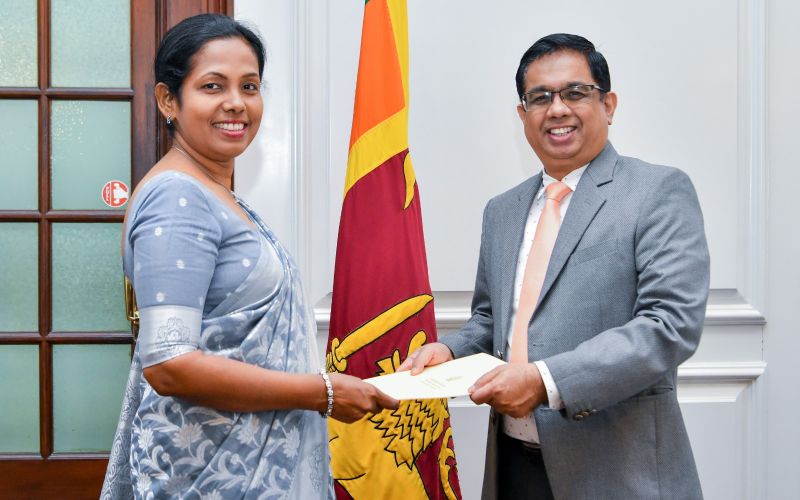
President Anura Kumara Dissanayake has appointed Dr. Roshanie Dissanayake as the Secretary to the Ministry of Science and Technology.
The letter of appointment was handed over to Dr. Dissanayake by Secretary to the President Dr. Nandika Sanath Kumanayake at the Presidential Secretariat on Friday (11) morning.
Dr. Roshanie Dissanayake has also served as an Additional Secretary (Sri Lanka Administrative Service – Special Grade) at the Ministry of Public Administration, Provincial Councils and Local Government.
President’s Media Division (PMD)

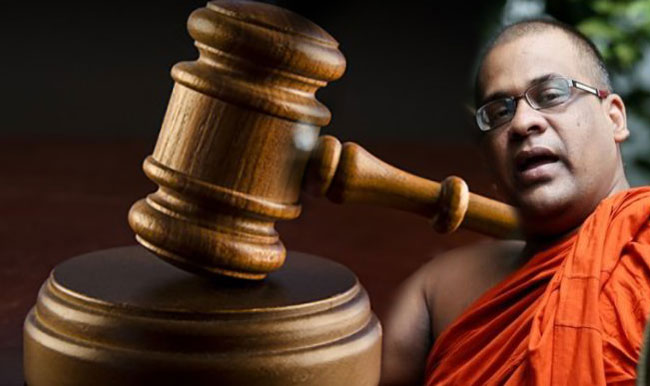
Ven. Galagoda Aththe Gnanasara Thero was not at his temple in Rajagiriya when prison officials visited the premises yesterday to take steps following the Supreme Court ruling that nullified the presidential pardon granted to him, police sources said.
Prison officials who visited the temple on Nawala Road, Rajagiriya, were reportedly informed by those present that the Thero’s whereabouts were unknown. The development comes a day after the Supreme Court declared former President Maithripala Sirisena’s 2019 pardon of Gnanasara Thero null and void.
The three-member Supreme Court bench comprising Justices Janak De Silva, Dr. Sobhitha Rajakaruna and Sampath B. Abayakoon held that the pardon was arbitrary, violated the public trust and principles of natural justice, and was made beyond the proper exercise of the President’s constitutional discretion.
The case arose from Gnanasara Thero’s conduct at the Homagama Magistrate’s Court in January 2016 during proceedings relating to the disappearance of journalist and political cartoonist Prageeth Eknaligoda.
The Court of Appeal convicted him on four counts of contempt of court in 2018 and imposed concurrent prison terms amounting to six years. He had served about nine months when Sirisena granted him a presidential pardon on May 23, 2019.
The Supreme Court found that although Article 34 empowers the President to grant pardons, that power is held in trust for the people and is subject to constitutional limitations and judicial review. The Court concluded that Sirisena had effectively acted on the recommendation of the Additional Secretary (Legal) without demonstrating that he had independently considered the relevant material.
Justice De Silva held that the pardon was “arbitrary”, violated public trust and the rules of natural justice, and was ultra vires the President’s powers. The Court consequently found that the decision violated the fundamental right to equality guaranteed by Article 12(1) of the Constitution.
The ruling effectively restores the legal position under the original conviction, leaving Gnanasara Thero without the benefit of the 2019 pardon. The Supreme Court also clarified that a pardon does not erase a conviction or sentence, but merely relieves an offender from serving the sentence to the extent specified in the pardon.
Gnanasara Thero, the General Secretary of the Bodu Bala Sena, had been convicted over his conduct during proceedings concerning the disappearance of Eknaligoda, who went missing in January 2010 and has not been located.
Sandhya Eknaligoda, Prageeth Eknaligoda’s wife, was among those who challenged the presidential pardon before the Supreme Court, alongside the Centre for Policy Alternatives and its Executive Director Dr. Paikiasothy Saravanamuttu.
The detailed account of the judgment indicates that the Court’s ruling primarily nullified the pardon and restored the legal effect of the original sentence, with the implementation of the sentence falling to the relevant authorities.
Police sources said that the Supreme Court, however, did not permanently close the door on executive clemency. It held that a future President could grant Gnanasara Thero another pardon, provided the power is exercised lawfully and after proper consideration of all relevant material.
The Supreme Court has so far overturned three presidential pardons granted to two former Presidents. In January 2024, the Court declared former President Gotabaya Rajapaksa’s pardon of former MP Duminda Silva unlawful and invalid. In June 2024, it invalidated two pardons granted by former President Maithripala Sirisena to Royal Park murder convict Jude Shramantha Anthony Jayamaha — the first in May 2016, which commuted his death sentence to life imprisonment, and the second in October 2019, which released him from prison. Jayamaha, who was convicted of the murder of 19-year-old Yvonne Johnson, remains at large. Most recently, on September 10, 2026, the Supreme Court declared Sirisena’s 2019 pardon of Ven. Galagoda Aththe Gnanasara Thero null and void, ruling that it was arbitrary and inconsistent with the Constitution.

If we are to live fulfilling and happy lives, we need unity, mutual understanding, harmony, as well as art – PM

Dr. Roshanie Dissanayake appointed Secretary to the Ministry of Science and Technology

Death toll from Philippines ferry fire rises to 76, with more still missing

Anthropic boss Dario Amodei calls for AI development to slow down

It’s spin vs spin as India and Sri Lanka battle for Asia Cup title

Atmospheric conditions are favorable for afternoon thundershowers in most parts of the Island today [13]

‘Dates have the highest sugar content to fight Coronavirus’

Sunday Island 27 December – Headlines

#SundayIsland 17th December – Headlines

Sunday Island – 28th March

Sunday Island Headlines – 21 March

Sunday Island – 21st February – Headlines
-

 Sports3 days ago
DDS set to lose Test captaincy
-

 Features7 days ago
After the parade: What a traffic OIC’s walk-out tells us
-

 Editorial7 days ago
Arrests as theatre
-

 News6 days ago
Thailand shuts door on undesirables from Sri Lanka
-

 Latest News7 days ago
Harshitha’s composed knock seals Sri Lanka’s semi-final berth
-

 News3 days ago
Sri Lanka faces new grid challenge as rooftop solar surges: former CEB GM
-
 Business6 days ago
CEB successor company breaks into top three in competitive BESS tender
-

 News7 days ago
‘Choka Malli’ slips out of country before travel ban