
Sports
University sports continue virtually with Gamer.LK’s Inter-University Championship

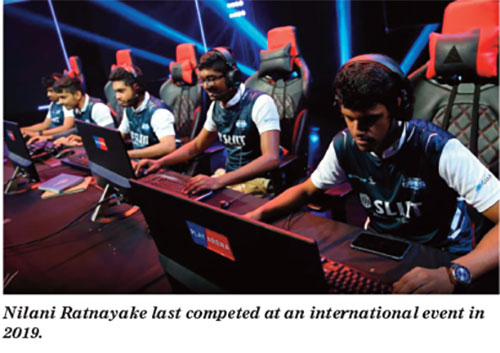
With traditional sports coming to a standstill in the pandemic-stricken “new normal” – Esports take the limelight as university students go head-to-head virtually in their favorite video games. Organised annually by Sri Lanka’s premier Esports tournament organiser Gamer.LK, the Inter-University Esports Championship powered by Softlogic and Dell this year will attract participation surpassing those of its traditional sports counterparts. Samsung Sri Lanka joins as Smartphone partner and the event is energized by Red Bull.
Held for the sixth consecutive year, the event features 16 of Sri Lanka’s favorite video game titles spanning mobile, PC and console. University students from across the country are able to participate remotely from the safety of their own homes, coming together in a virtual arena connected via the internet. The featured titles are Call of Duty 4 – 5v5, Call of Duty Mobile – Solo, Clash Royale – 1v1, DOTA 2 – 5v5, FIFA 21 – 1v1, Assetto Corsa – Race, Free Fire – Solo, League of Legends – 5v5, Mario Kart Tour – 1v1, Mobile Legends – 5v5, Rainbow Six Siege – 5v5, Real Cricket – 1v1, Rocket League – 1v1, PUBG Mobile – Solo, Valorant – 5v5, Call of Duty: Warzone (exhibition) – Solo.
Last year’s championship was the first time the event was taken online fully, and still saw no shortage of players. There were over 630 registered players across 57 universities and higher education institutions from all over Sri Lanka. The competition between the universities has also never been more fierce, with each year a different university stepping up to take the title of champion from former victors.
Previous winners of the Inter-University Esports Championship:
● 2020 – National School of Business Management (NSBM)
● 2019 – Informatics Institute of Technology (IIT)
● 2018 – Sri Lanka Institute of Information Technology (SLIIT)
● 2017 – International College of Business & Technology (ICBT)
● 2016 – Asia Pacific Institute of Information Technology (APIIT)
This year’s Inter-University Esports Championship is powered by Softlogic and Dell. Softlogic Holdings PLC is a diversified conglomerate in Sri Lanka, and is known to be one of Sri Lanka’s most dynamic and progressive conglomerates, with industry leadership in six business verticals — ICT, Healthcare, Retail, Financial Services, Automobiles and Leisure.
Softlogic has always been in the forefront of introducing the best technologies the world has to offer to the Sri Lankan consumer. Softlogic has contributed to the development of the Sri Lankan IT infrastructure immensely over the years through decades of dedicated service as a retailer of high quality consumer electronics.
It is this same ambition that drove Softlogic to officially become an authorized distributor of Dell laptops and computers in Sri Lanka in early 1990s. Since then, Softlogic has been offering a wide range of computers and laptops suitable to be used at home, work, to study, gaming or simply for entertainment.
With the global demand for e-sports on the rise, Softlogic has been an avid supporter of the growing gaming community in Sri Lanka. To extend this support to the gaming communities, Softlogic will offer some of the world’s best Gaming Dell laptops and computers at unbeatable prices, exclusive discounts plus interest free easy payment schemes via all Softlogic and Softlogic MAX outlets island-wide, as well as on www.mysoftlogic.lk.
Samsung Sri Lanka comes onboard as the official Smartphone Partner. Samsung has been at the forefront of developing products and services for gamers and promoting E-sports in Sri Lanka over the years, as it was identified that the youth are very passionate about it. As a result, Samsung has successfully initiated and completed three large scale gaming competitions in 2020 alone with over 1000 participants from all around Sri Lanka and a staggering 175,000 people streaming the tournaments each time. Samsung continues to amplify E-Sports in Sri Lanka not only with such events but with their products as well. Samsung’s recent introduction of Galaxy S21 series has features such as Game booster technology, display with 120Hz refresh rate, gaming processors and much more on offer. Samsung has revitalised their technology to be more focused on proving the ultimate gaming experience to its users.
Red Bull steps up to Energize the championship with their signature brand of flair and energy. Giving wings to Sri Lankan gamers by partnering with and conducting unique Esports events, Red Bull has been a significant part of Sri Lanka’s Esports growth over the years. Red Bull Campus Cricket was replicated on the virtual battlefield with Red Bull Campus Clutch earlier this year, where Sri Lanka’s top campus Valorant team was given the opportunity to represent the country on a global stage. Red Bull MEO was conducted in 2020 giving Sri Lankan PUBG Mobile athletes the opportunity to showcase their skills amongst the world’s best. One of Sri Lanka’s largest PUBG Mobile events in 2021, Red Bull Fight or Flight, had over 400 squads competing for glory.
Registrations for the Inter-University Esports Championship will conclude on the 29th of June.


No Sri Lanka Cricket (SLC) representative was invited to the ICC’s quarterly meeting in Ahmedabad over the weekend, but the fact that the ICC board has not slapped sanctions on SLC’s new Transformation Committee is being quietly celebrated by the new board in Sri Lanka, a board member said.
The Transformation Committee was appointed by the nation’s government in May, replacing the elected set of SLC office-bearers. The ICC had taken a dim view of government interference in SLC in 2023, as well as in 2015, imposing sanctions on each of those occasions.
But athough the ICC had sent deputy chair Imran Khwaja on what was effectively a fact-finding trip to Colombo in May, no sanctions attributed to government interference have followed, even after the latest ICC meeting.
“So far what we feel is that no news is good news,” said a Transformation Committee member. In late 2023, the ICC had suspended SLC from its board due to government interference. On that occasion, the country’s sports minister was accused of overreach.
The latest, sweeping administrative changes in Sri Lanka, which includes the ousting of the elected board and the installation of a committee tasked ostensibly with transforming Sri Lankan cricket, have so far only drawn ICC scrutiny rather than tangible consequences. The ICC statement said only this: “In Sri Lanka, ICC Deputy Chair Imran Khwaja and Devajit Saikia (BCCI) have visited and met with relevant stakeholders to assess ongoing developments.”
The Transformation Committee headed by Eran Wickramaratne has repeatedly expressed that its goal remains to rewrite an outdated SLC constitution, in order to better align the organisation with the requirements of Sri Lanka’s public.
“Even in the debates in parliament, which were not driven by party loyalties, it has been acknowledged that there has to be a change at Sri Lanka Cricket,” said Wickramaratne, chair of the new Transformation Committee and a former politician. “The job we have is to change the SLC constitution. The stakeholders in that change are the Sri Lankan people. The people can give their ideas. Other stakeholders can also express their ideas. We thought our first role is to listen to those ideas.”
SLC hopes Transformation Committee members will be invited to future ICC meetings.
ESPNcricinfo has reached out to the ICC for comment on SLC participation in meetings, but the ICC is yet to respond.
[Cricinfo]
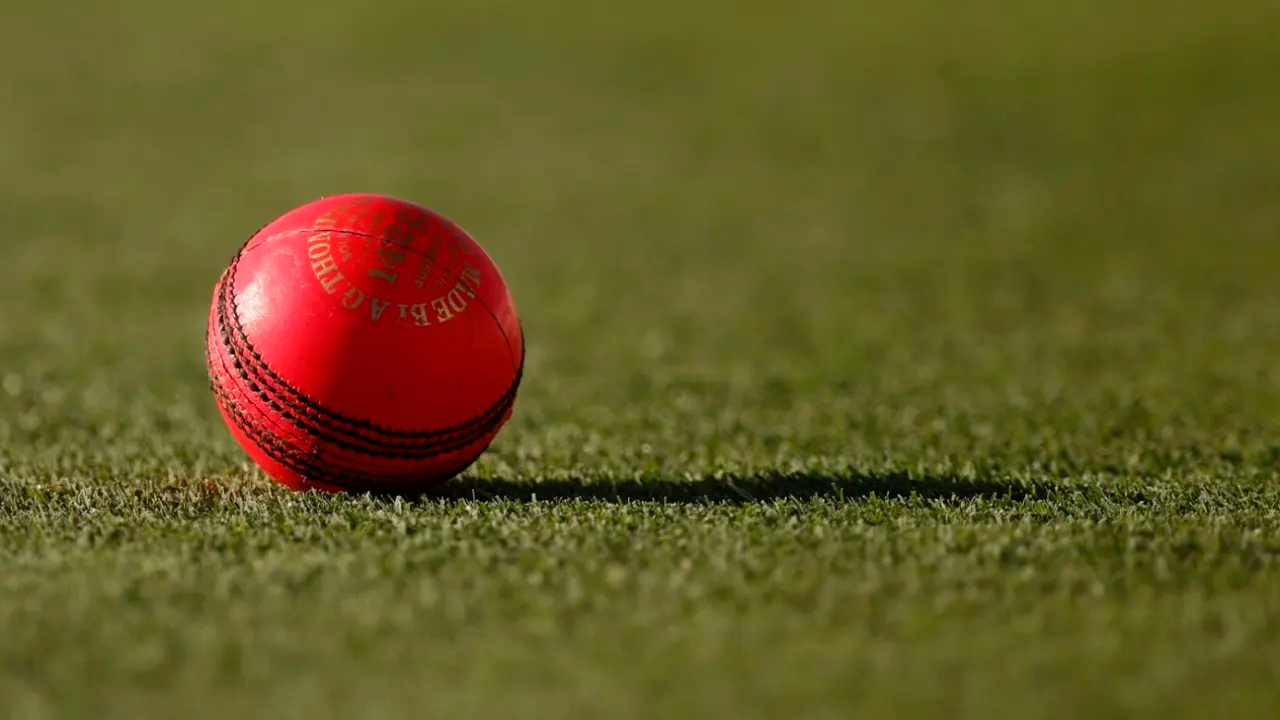
In an attempt to reduce the impact of bad light on Test matches, the ICC has approved a trial of switching from a red ball to a pink ball before the start of a Test that is likely to be affected by bad light, subject to the prior agreement of both participating teams.*
The decision was one of several recommendations from the Chief Executives Committee that were approved by the ICC Board at a meeting in Ahmedabad on Sunday. Until now pink balls were used exclusively in day-night Test matches, which are also regularly played largely in Australia and no where else, but the trial of changing from a red ball to a pink ball during a day Test seeks to allow play to continue under lights and minimise the time and overs lost to bad light.
It is understood that the process for the playing conditions to take effect won’t be in place in time for the series between England and New Zealand from June 4. The ICC also said it would undertake research “on lighting technology for match officials and venues to reduce lost play due to poor light, with ICC co-funding R&D projects alongside Marylebone Cricket Club (MCC).”
The ICC board also approved a recommendation that will allow head coaches – or designated staff – to enter the field of play during scheduled drinks intervals and consult with their players in ODIs and T20Is. This was not permitted in international cricket – messages could only be relayed by the players running drinks – but has been a feature in franchise T20 leagues like the IPL, where coaches interact with their players during strategic timeouts.
In T20I internationals, the ICC said the break between innings would be 15 minutes, and batters would be required to be ready at the resumption of play.
In 2025, the ICC had begun trials to give bowlers leeway down the leg side for wide calls, and it has decided to permanently adopt the practice of using guide lines to help umpires adjudicate wides down the line side, especially when a batter is moving around his crease.
And in the case of suspect bowling actions, the ICC said it would help match officials access Hawk-Eye data when considering whether to report a bowler.
[Cricinfo]
Sachin Tendulkar may not be a fan of them, but impact subs are making their way into the Lanka Premier League, as is a stipulation that an Under-23 player (one born on or after July 1, 2003) has to be a part of each side’s playing XI at all times – even after the use of an impact sub. These were two key elements playing on the minds of the five franchises as the LPL draft 2026 took place on Monday in Colombo.
Both these changes ensured that squad composition – right from the four pre-signings to the 16-18 players drafted on the night – had to be fairly well thought out, with teams needing to decide which roles to entrust to a largely unproven talent while simultaneously balancing their squads for maximum impact. Complicating matters further was the relative dearth in the Under-23 category, with many of Sri Lanka’s Under-19 talents due to play India in July and thus unavailable for the tournament.
It was also revealed that Pathum Nissanka and Matheesha Pathirana are both nursing injuries, despite the former being named in the touring party for the West Indies. It is understood that his workload is being managed, with the player expected to undergo surgery in order to be fit for India’s tour of Sri Lanka later this year.
In terms of the teams, four of the five sides revealed new owners and coaching staff, with fresh team names to go with them. Only the Dambulla Sixers remained unchanged – though they had gone through a tumultuous period in 2024, with two changes in ownership prior to the start of the season. Jaffna are now the SC Jaffna Kings, Galle are the Galle Gallants, Kandy the Kandy Royals and Colombo the Colombo Kaps.
The draft itself concluded in a little under four hours, with each team tasked with drafting squads of at least 18 players, with the option of two additional signings at the end. In total there were 14 mandatory rounds of drafting, with two optional rounds for the teams that decided to participate.
Players were split into three categories – Platinum (US$ 50,000), Gold ($30,000), Classic ($20,000) – with each having a separate category for local and foreign players. There were also categories for Associate ($15,000) and Emerging Under-23 ($10,000) players.
Vijay Shankar the recently retired Indian national, IPL breakout star Eshan Malinga, fiery Pakistan opener Sahibzada Farhan, and the experienced pair of Angelo Mathews and Dinesh Chandimal were some of the notable pre-signings, while Avishka Fernando and Charith Asalanka were both first-round picks despite neither able to find a place in the Sri Lankan T20 squad. Rahmanullah Gurbaz and Mohammed Nawaz headlined the overseas picks.
The final squads are as follows:
SC Jaffna Kings: Taskin Ahmed, Dunith Wellalage, Shakib Al Hasan, Bhanuka Rajapaksa, Avishka Fernando, David Wiese, Dilshan Madushanka, Kamil Mishara, Traveen Mathews, Ibrahim Zadran, Mohommed Shiraz, Chamindu Wickramasinghe, Nuwanidu Fernando, Sandeep Lamichhane, Lizaad Williams, Dipendra Airee, Kugathas Mathulan, Praveen Manisha, Nishan Madushka
Colombo Kaps: Ben McDermott, Kamindu Mendis, Jimmy Neesham, Kusal Mendis, Binura Fernando, Mujeeb Ur Rahman, Sadeera Samarawickrama, Milan Ratnayake, Janith Liyanage, Shahnawaz Dahani, Jeffrey Vandersay, Thanuka Dabare, Movin Subasingha, Mohammed Haris, Hasan Mahmud, Kushal Bhurtel, Malsha Tharupathi, Sharujan Shanmuganathan, Wanuja Sahan, Anthony Pragasam
Kandy Royals: Vijay Shankar, Angelo Mathews, Moeen Ali, Wanindu Hasaranga, Nuwan Thushara, Rahmanullah Gurbaz, Kusal Perera, Asitha Fernando, Garuka Sanketh, Daniel Sams, Vishen Halambage, Muditha Lakshan, Lahiru Udara, Dale Phillips, Zahir Khan, Brandon McMullen, Sahan Mihira, Pawan Sandesh, Dushan Hemantha, Isitha Wijesundera
Galle Gallants: Litton Das, Eshan Malinga, Rassie Van Der Dussen, Dasun Shanaka, Charith Asalanka, Mohammad Nawaz, Pramod Madushan, Lasith Croospulle, Vijayakanth Viyaskanth, Akif Javed, Sahan Arachchige, Chamika Karunaratne, Tharindu Rathnayake, Sam Harper, Mehidy Hasan Miraz, Haider Ali, Dinura Kalupahana, Uri Koththigoda, Kasun Rajitha, Sachindu Colombage
Dambulla Sixers: Reeza Hendricks, Dinesh Chandimal, Sahibzada Farhan, Dushmantha Chameera, Maheesh Theekshana, Fazalhaq Farooqi, Niroshan Dickwella, Pavan Rathnayake, Akila Dananjaya, Mohammed Wasim, Dhananjaya Lakshan, Ramesh Mendis, Sachitha Jayatilake, Gulbadin Naib, Dian Forrester, Shadley Schalkwyk, Vishva Kumara, Gayana Weerasinghe
Pre-signings:
SC Jaffna Kings – Taskin Ahmed, Dunith Wellalage, Shakib Al Hasan, Bhanuka Rajapaksa
Galle Gallants – Litton Das, Eshan Malinga, Rassie Van Der Dussen, Dasun Shanaka
Kandy Royals – Vijay Shankar, Angelo Mathews, Moeen Ali, Wanindu Hasaranga
Colombo Kaps – Ben McDermott, Kamindu Mendis, Jimmy Neesham, Kusal Mendis
Dambulla Sixers – Reeza Hendricks, Dinesh Chandimal, Sahibzada Farhan, Dushmantha Chameera
[Cricinfo]

Pakistan naval trio arrives at Colombo Port

Sri Lanka Cricket relieved at ICC’s mild response to Transformation Committee

ICC approves red-to-pink ball change to reduce bad-light impact in Test cricket

LPL introduces impact subs for 2026 season

Protesters call on Kenyan government to halt femicide crisis

US Defense Department bars journalists from its press office

‘Dates have the highest sugar content to fight Coronavirus’

Sunday Island 27 December – Headlines

#SundayIsland 17th December – Headlines

Sunday Island – 28th March

Sunday Island Headlines – 21 March

Sunday Island – 21st February – Headlines
-
 News3 days ago
IMF urges Lanka not to meddle with exchange rate
-
 Business4 days ago
Sri Lanka’s construction industry losing ground while no one watches
-
 News3 days ago
State of emergency extended
-
 Midweek Review6 days ago
Israeli-US aggression won’t go unanswered -Iranian Ambassador
-

 Features4 days ago
The Division Bell Mystery
-
 News1 day ago
UNP challenges NPP move to amend Vihara – Devalagam Act
-
 News5 days ago
RTI query of Ditwah funds: Presidential Secretariat mum on key questions
-
 News3 days ago
Fort Magistrate to announce whether to summon Arsecularatne PC to testify at Kapila’s inquest