
Opinion
Protecting Sri Lanka’s maritime rights

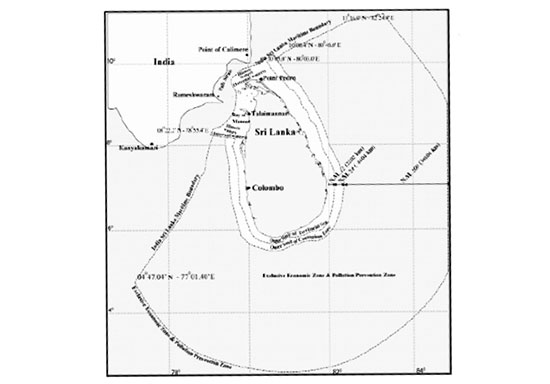
Your editorial, Poaching: Grasp the nettle (The Island of 09 June), provides a good analysis of the issue concerning the poaching of fishery resources in Sri Lanka waters, particularly in the Palk Bay and the Gulf of Mannar.
The maritime boundary between Sri Lanka and India was settled by two agreements entered into by the two countries in 1974 and 1976. Accordingly, fishing vessels and fishers of the two countries were debarred from fishing in the waters, the territorial sea and the exclusive economic zone of each other.
Subsequently, the Maritimes Zones Law, No. 22 of 1976 was enacted with provisions for the President to declare the limits of the agreed maritime boundary between the two countries, and different maritime zones of Sri Lanka, such as the historic waters, territorial sea, contiguous zone, exclusive economic zone, pollution prevention zone and the continental shelf. This law prohibits unauthorised fishing in any of the maritime zones of Sri Lanka by any foreign vessel. The President did declare the maritime zones of Sri Lanka by a proclamation published in the Gazette 248/1 of 15-01-1977. Since then unauthorized fishing by Indian vessels on the Sri Lanka side of the Palk Bay and the Gulf of Mannar became illegal.
However, part of the agreement relating to fishing has never been honoured by India, whose fishers continued to fish on the Sri Lanka side of the Palk Bay, and on the Sri Lanka side of the Gulf of Mannar, which jointly form the historic waters of Sri Lanka. According to the Presidential Proclamation, waters on the Sri Lanka side of the Palk Bay form part of the internal waters of Sri Lanka while those on the Sri Lanka side of the Gulf of Mannar form part of the territorial sea (provisions of the Law of the Sea Convention of 1982 relating to internal waters and territorial sea do not contradict such declarations provided they are made on the provisions of the customary international law). On the other hand, although prior to signing of the Maritime Boundary Agreement of 1976, Sri Lankan fishing vessels were fishing in the Wadge Bank, which fell in the EEZ of India since the Agreement came into effect, no Sri Lankan vessels has been found fishing in that area.
At present, three days a week more than 1,000 Indian trawlers fish on the Sri Lanka side of the maritime boundary in violation of the law relating to fisheries in Sri Lanka. Any Sri Lankan vessel, irrespective of the part of Sri Lanka where it is fishing, should have been registered as a fishing vessel of Sri Lanka and obtained a fishing licence. Further, no such vessel is allowed to engage in mechanised bottom trawling.
There have been many discussions between the two countries since the 1990s to stop this illegal practice by Indian trawlers. Such discussions only end up with agreed minutes, but no solution. Fisheries (Regulation of Foreign Fishing Boats) Act, No 59 of 1979 provides for a High Court Judge to impose a penalty of a fine of Rs. 1.5 million on any foreign vessels engaged in unauthorised fishing in Sri Lanka waters. However, this provision was never used against any Indian trawler caught in Sri Lanka waters with unauthorised fishing, owing to practical difficulties. Subsequently, in 2017, the Fisheries and Aquatic Resources (Amendment) Act, No. 11 was enacted to impose a two-year jail term or a fine of at least Rs. 50,000 with a view to controlling this problem. Although the Sri Lanka Navy takes into custody Indian trawlers and hands them over with fishers to Fisheries authorities, the moment they get a letter from the Indian High Commission asking for their release, all are released. In this context, sinking unusable buses in the sea in this area appears to be a practical solution to the problem. For that also India has expressed objections. Sri Lanka has sovereign rights to take any decision in regard to its internal waters, and territorial sea (subject to the right of innocent passage of any foreign vessel) and historic waters (these form part of either internal waters or the territorial sea). Therefore, it is not necessary to stop this activity, just because India is objecting.
As regards the claim by India that Sri Lankan vessels also engage in unauthorised fishing in India waters, it should be noted that they are taken into custody rarely in very small numbers; that, too, mostly in the Indian EEZ, while they are returning after fishing in the Arabian sea. Any vessel has the right to navigation in the EEZ of any country. Even when innocent Sri Lankan fishers happen to be caught by the Indian authorities, they are made to suffer in Indian jails.
A few years earlier also, you expressed concern on this issue by an editorial, Saying it with fish, when Sri Lanka released all Indian fishers who were in jail in Sri Lanka pending trials, as a gesture of thanks for India’s vote at the UN in favour of Sri Lanka. Thank you for your concerns.
A. HETTIARACHCHI
hetti-a@sltnet.lk

In planning a long trip to Sri Lanka from the UK, I was disappointed to see different hotel pricing for foreign visitors when compared to local rates. Like many travellers, I prefer to book directly with hotels, rather than international hotel consolidators, as more money goes to local businesses. But the assumption that foreigners should pay more is simply distasteful. As such, I’ve chosen another long-haul destination that does not follow such practices, and hope that Sri Lanka will change its approach to overseas visitors in the near future.
Neil Roskilly Wetherlee UK
We are living in ‘Trump times’ characterised by never ending craziness but it is not confined to the USA alone. I will come to our part of the world later. As a large part is due to Trump, perhaps, normalcy may return when he ends his second term on 20th January 2029, at 12.00PM Eastern Standard Time. We cannot be sure of that either because the ‘Great man’ may decide to govern the world for ever, after having purchased Greenland and forcing Canada to be the 51st state of the US!
Trump had an unprecedented opportunity, being only the second to be elected to a non-consecutive second term as the US President, the other being Grover Cleveland at the tail end of the nineteenth century. If only he kept to his campaign promises, his name would have been written in history in golden letters but the complete transformation, following the election, is likely to make his name go down as one of the craziest!
It is a moot point whether even Trump knows what he is going to do that day, when he wakes up, considering the illogicality of some actions, best illustrated by the ad-hoc imposition of tariffs without any discussions or negotiations. The adverse effects of these, to the world economy, is yet to be seen compounded, of course, by the continuing war with Iran. He promised to be a ‘Peace-maker’ but turns out to be a war-monger, like many of his predecessors! His excuse was that he went to war because he was denied the Nobel Peace Prize.
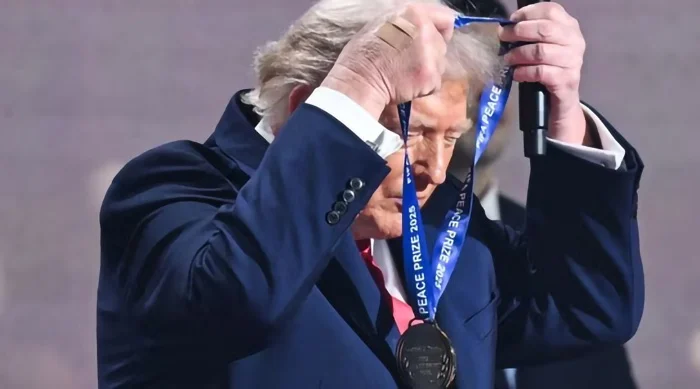
Well, he got the FIFA Peace Prize from FIFA President Gianni Infantino, another shameless leader who is ruining the ‘Beautiful Game’. When a US team member was given the red-card, Trump, who claims to know better than referees, decided it was not so, with a successful appeal to Infantino. During the next World Cup match, Belgium, supercharged with this injustice, thrashed the USA team 4-1.
Even the Semiquincentennial celebration of the US was not about the country but about himself! In fact, a cynic may point out that most of what the US has left behind, over the 250 years, is death and destruction. Paradoxically, whilst fighting a war with Iran to prevent it acquiring nuclear capabilities, the US is the only country to have dropped Atom Bombs, not one but two. Even though Japan was on the verge of admitting defeat, ‘Little Boy’, a uranium-based bomb, was dropped over Hiroshima on 6th August, 1945. Not giving time for Japan even to consider surrender, the second ‘Fat Man’, a plutonium implosion bomb, was dropped over Nagasaki, just three days later. Why did the US drop two A-bombs in rapid succession? It was to test the two different types of bombs they had.
Over the past 250 years, the US has started wars in many countries and, in most instances, lost leaving behind a trail of devastation and destruction. In spite of all that, it is continuing its war with Iran, a war that was started with false intelligence supplied by the war-monger Netanyahu who predicted the instantaneous fall of the Clerical regime in Iran. This war has turned out to be a blessing in disguise for Iran, as it realised the economic value of the Strait of Hormuz. The language Trump uses in reference to Iran is despicable. What sane person, nay a world leader, refers to flattening of a country and erasure of a civilisation?
Back in Sri Lanka, we know that most of our modern-day politicians are also self-serving. They are also very good at amassing wealth, when in power, just like the Trump family had done. However, what is of concern is the rapid decline in the standards of some vital professional classes. Special reference has to be made to the Attorney-General’s Department. Perhaps, the present holder is a decent man but some of his predecessors brought the high position into disrepute.
Dappula Livera allegedly concocted a conspiracy theory about the Easter Sunday terror mastermind as President Gotabaya Rajapaksa denied him an extension in service as the Attorney General. If he has any information about such a conspiracy, it is his bounden duty to come out with facts but has not done so.
A remark recently made by Deputy Solicitor General Dileepa Pieris about gallantry medals awarded to military personnel is said to have caused an affront to the dignity of Air Force officer Shantha Jayathilleke, who has received the highest decoration awarded to a living officer and sought to represent the interests of former Director of State Intelligence Service Maj. Gen. (retd.) Suresh Sallay as permitted by the Penal Code.
When political leaders and professionals holding high office behave in this manner, is there any hope for the nation?
By Dr. Upul Wijayawardhana
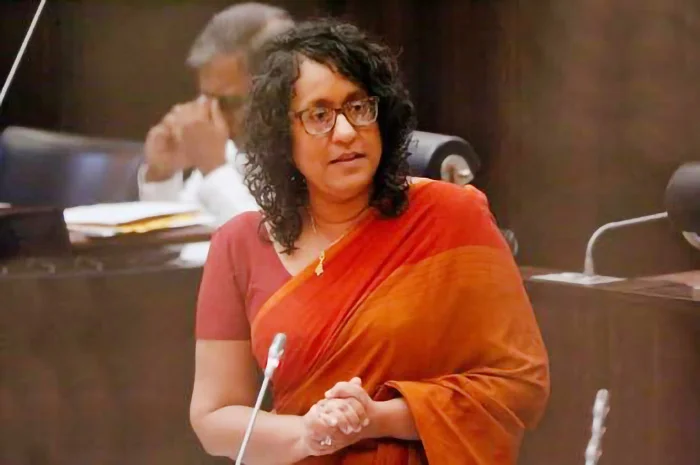
Education has always been one of the strongest foundations of Sri Lanka’s social and economic development. In today’s rapidly changing world, however, education must prepare students not only for examinations but also for life, employment, innovation, and responsible citizenship. Recognising this need, the government of Sri Lanka has introduced a new programme of education reforms. As Prime Minister and Minister of Education, Higher Education and Vocational Education, Dr. Harini Amarasuriya has played a leading role in guiding and promoting these reforms, with the aim of creating a more inclusive, modern, and student-centered education system.
One of the Prime Minister’s most significant contributions has been providing a clear vision for transforming the education system. Rather than focusing only on examination results, the reforms seek to develop students’ creativity, critical thinking, communication skills, problem-solving abilities, and emotional well-being. This approach recognizes that success in the twenty-first century requires a broad range of skills that go beyond memorisation.
A major feature of the reforms is the introduction of a new curriculum. The Prime Minister has emphasised that revised syllabuses will be introduced in stages, beginning with Grades 1 and 6, before expanding to other grades over the following years. The updated curriculum is designed to make learning more engaging, practical, and relevant to modern society. It encourages inquiry-based learning, teamwork, creativity, and the application of knowledge to real-life situations rather than relying solely on textbook learning.
Teacher development has also been identified as a key priority. The Prime Minister has repeatedly stressed that meaningful reforms cannot succeed without well-trained and motivated teachers. As a result, the government has planned professional development programmes to help teachers understand the new curriculum, adopt modern teaching methods, and integrate digital technology into classroom instruction. Strengthening teachers’ skills ensures that students receive a higher quality education and are better prepared for future challenges.
Improving school infrastructure is another important contribution under the Prime Minister’s leadership. Many schools across Sri Lanka continue to face shortages of classrooms, laboratories, libraries, and digital learning facilities. The reform programme aims to reduce these disparities by giving priority to improving physical infrastructure, upgrading learning environments, and ensuring that children from rural and urban areas have more equal educational opportunities. These investments are expected to create safer, more effective, and more inclusive learning spaces for all students.
The reforms also place strong emphasis on digital education. As technology continues to shape every aspect of modern life, students need digital literacy to succeed in higher education and future careers. The Prime Minister has supported initiatives to expand the use of digital tools in teaching and learning while encouraging schools to make greater use of educational technology. By promoting digital learning, the reforms seek to narrow the technological gap between schools and prepare students for a knowledge-based economy.
Another noteworthy contribution is the promotion of vocational and skills-based education. Traditional education has often placed greater emphasis on academic achievement, while practical skills received less attention. The new reforms aim to change this balance by introducing vocational subjects within the school system and creating clearer pathways for students who wish to pursue technical and vocational careers. This approach helps students develop employable skills while supporting the country’s economic growth and workforce needs.
The Prime Minister has also encouraged a more balanced approach to student assessment. Instead of measuring success only through final examinations, the reforms seek to include continuous assessment, classroom activities, projects, and practical learning experiences. Such an approach recognises different learning styles and provides students with more opportunities to demonstrate their abilities. It also reduces excessive pressure associated with high-stakes examinations and supports the overall development of children.
Inclusivity is another important aspect of the Prime Minister’s contribution. The reform process has involved experts, educators, and advisory committees representing diverse communities. The government has emphasised that curriculum development should reflect fairness, inclusiveness, and respect for Sri Lanka’s multicultural society. By involving different stakeholders in the planning process, the reforms aim to build a national education system that serves all children equally.
Despite these promising initiatives, implementing large-scale education reforms is not without challenges. Teacher training, infrastructure development, adequate funding, and effective monitoring are essential for the long-term success of the programme. Public awareness and cooperation among parents, teachers, school administrators, and policymakers will also play a vital role in ensuring that the reforms achieve their intended outcomes. Sustained commitment from the government and continuous evaluation will be necessary to address emerging issues and improve implementation over time.
The Prime Minister of Sri Lanka has made a significant contribution to the country’s new education reforms by promoting a modern, inclusive, and future-oriented vision for education. Through curriculum modernization, teacher development, improved infrastructure, digital learning, vocational education, and better assessment methods, the reforms seek to prepare students not only for examinations but also for lifelong learning and responsible citizenship. If implemented successfully, these reforms have the potential to strengthen Sri Lanka’s education system, reduce inequalities, and equip future generations with the knowledge, skills, and values needed to contribute positively to national development in an increasingly competitive global environment.
Saumya Aloysius
saumyaaloysius@gmail.com

Bangkok pub fire death toll rises to 32 with 15 in intensive care

England vs Argentina: FIFA World Cup semifinal – Messi, Kane and prediction

ICC adds Super Series and Super 7 twist to 2027 ODI World Cup

Trump meets Iraq PM at White House, promises ‘a lot of deals’

A few showers may occur in the Western, Sabaragamuwa and North-western provinces and in Kandy, Nuwara-Eliya, Galle and Matara districts

Negombo Prison riot: No convicts among 21 inmates killed

‘Dates have the highest sugar content to fight Coronavirus’

Sunday Island 27 December – Headlines

#SundayIsland 17th December – Headlines

Sunday Island – 28th March

Sunday Island Headlines – 21 March

Sunday Island – 21st February – Headlines
-
 News6 days ago
Herath warns prospective migrant workers not to get fleeced by racketeers
-
 Features4 days ago
Prison riots and politics: NPP’s biggest challenge and Sri Lanka’s biggest opportunity
-

 Editorial5 days ago
What’s the world coming to?
-
 Foreign News6 days ago
Tensions erupt in Indian state after 11-year-old raped and murdered
-
 Features6 days ago
Devanesan Annan – in Memoriam
-
 News7 days ago
Negombo Prison riot: Ensuring protection of prisoners fundamental responsibility of the state – UN
-
Editorial6 days ago
Punishment in hellholes
-
 News6 days ago
Representatives of the Organization of Professional Associations (OPA) of Sri Lanka meet the Prime Minister