
Sports
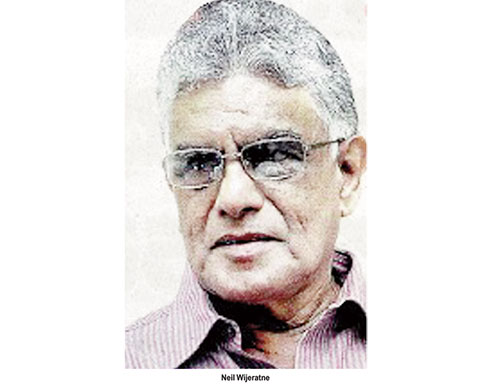
Neil’s books on rugby bring back nostalgic memories

By A Special Sports Correspondent
These are days where sportsmen and women can review their lives and careers. Some would say it’s a must do during these times where there are travel restrictions. We all experience such a period some time during our lives when we are made inactive. From a rugby perspective there is so much literature to read up. Innovative people can do a documentary on rugby or short film clip and post on social media and youtube. This writer remembers the two books penned on rugby by one time recorder of Sri Lanka Rugby Neil Wijeratne.
These are great days to read his two books ‘Rugby Across the Straits’ and our very own ‘Sevens Saga’-which caps the rugby sevens history of the island.
Wijeratne is still the person to go to when a writer wants information for a sports article. He is a serious historian and takes great pain in collecting his facts and figures for his compilations. He has been generous in parting with whatever statistics he has when budding writers and journalists tap him as a source.
 He was pushed to keeping sports records on pen and paper because destiny didn’t afford him the opportunity to be a sportsman. Many feel that sport was richly rewarded because this brought the writer out in Wijeratne.
Wijeratne showed his prowess in writing as a schoolboy and penned his first novel ‘Mihiduma Atharin’ in 1968. That pen kept flowing and he produced many gems in writing; his compilations coming out in English and Sinhala languages.
He is one person who saw rugby’s changing face from being an amateur sport to its professional status. Those who speak with him will vouch that his cherished memories were when players played for the love of the game and remained as amateurs.
His writings highlight those achievements by ‘amateur’ rugby players. He mentions of players like Apisai Nagata, Sari de Sylva, Nalin de Silva, Didacus de Almeida, Michael Jayasekare and Nalaka Weerakkody in a note of acknowledgement in his book Sevens Saga. He leaves out two great names that of Hisham Abdeen and Priyantha Ekanayake in that list. But who are we scribes to challenge his thoughts as a writer? May be a writer like Wijeratne sees subtle intriguing qualities and more interesting traits in these players he has mentioned because that total package makes their presence on the field so much interesting.
Wijeratne picked up those bits of information which the spectator might have missed out on and brings them out in his writings. He also never forgot about to write on lesser known sports personalities and people who contributed to sport from behind the scenes.
We Sri Lankans have often caught the attention of overseas crowds when contesting international sevens tournaments. This could be one reason why he dedicated effort and time to pen the early history of the island’s sevens rugby.
According to him it had all happened in 1931 on a February 1st in Ratnapura when the Police team took on a planters combined outfit that marked the first rugby sevens game in Sri Lanka. The writer in his book goes on to find out the exact population in Ratnapura (8497) which adds flavour to the article and brings back nostalgic memories of the past. According to Wijeratne the person credited for introducing rugby sevens to this nation is Welshman K.F Jenkins who was stationed here as a probationary Assistant Superintendent of Police.
 As rugby progressed and more clubs came into being Wijeratne simply expanded his horizons. From rugby sevens tournaments in Colombo’s Longden Place and Race Course he has captured the action in tournaments like Sabaragamuwa Sevens, Kurunegala Sevens, Ruhunu Sevens, Uva Sevens, Dimbula Sevens travelling the length and breadth of Sri Lanka. He also writes about Sri Lanka hosting its first international rugby tournament -the Cargills International Sevens-which was won by Fiji Islanders’. The team comprised all Fijian players, who played domestic rugby here, except for Chandrishan Perera, who was probably included here to keep the interest of the local crowd in the tournament till the end. The old style of playing rugby is captured by Wijeratne in his punchy style of writing English. In the article titled ‘Some days are diamond days’ dedicated to Sri Lanka’s Bowl Championship win at the 1994 Fiji Sevens he writes ‘Sri Lanka was very much famous in Fiji not because of any rugby prowess of theirs, but as a country where the Fijians are looking ahead to make lucrative playing careers. Wijeratne brings out the best of Sri Lanka rugby when the islanders are on top and dazzling and still can keep the reader glued to the page with his descriptive writing when the ‘Tuskers’ are struggling with defeat staring in the face.
Still for Wijeratne, he can’t help but find space for two legends like Abdeen and Priyantha Ekanayake in the book ‘Sevens Saga’. He writes extensively on Sri Lanka’s 1984 Bowl Championship win where Abdeen led from the front as skipper. The author underscores the leadership skills and rise to fame of Ekanayake in selected sections of the book. When one begins to think that the book is not complete without the mention of two rugby stalwarts who gave so much opportunities for rugby players one finds the names of Kishin Butani and Malik Samarawickreme and some of their contributions to sevens rugby.
During these lockdown days where rugby activity is absent Wijeratne’s books are ideal to do more than pass the time; they are educative as well.
In his characteristic way of saying it Wijeratne’s rugby books ‘offer a nostalgic pilgrimage to recapture everlasting moments in rugby seen in this island’.


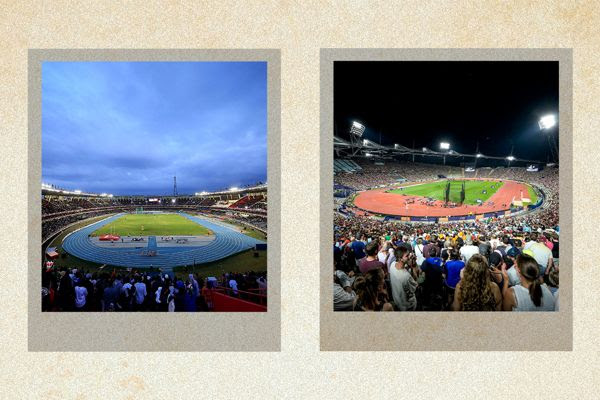
Nairobi and Munich have been selected to host the 2029 and 2031 World Athletics Championships, respectively, following one of the strongest bidding processes in the history of the sport’s flagship event.
The decision, made during the 242nd World Athletics Council Meeting in Budapest on Monday and Tuesday (14-15), means that the World Athletics Championships will be held in Africa for the first time when the Kenyan capital stages the 2029 edition, before returning to Germany for a third time two years later, this time in Munich’s iconic Olympic Stadium.
“We were fortunate to have four outstanding bids for 2029 and 2031, and this was not an easy decision for the Council,” said World Athletics President Sebastian Coe. “The quality, ambition and commitment demonstrated by all four candidates underlines the strength and global appeal of the World Athletics Championships.
“With this Council decision today, we continue to fulfill our mission of growing athletics worldwide with the hosting of our World Athletics Championships in Asia, Africa and Europe over its next three editions.
“Nairobi and Munich ultimately presented two compelling propositions. They offer very different but equally exciting opportunities for our sport, and I am delighted that we can now begin working with both cities to stage two world-class championships.”
World Athletics Championships Nairobi 29
Nairobi’s selection represents a landmark moment for athletics, bringing its biggest global event to Africa for the first time.
The championships will build on a growing record of successful World Athletics events staged across Africa. Kampala in Uganda hosted the World Cross Country Championships in 2017, Nairobi staged the World U18 Championships later that year and the World U20 Championships in 2021, while Gaborone in Botswana hosted the World Athletics Relays in 2026 – the first edition of that event to be held in Africa. Together, those events have helped build significant experience and expertise in staging global athletics competitions across the continent.
Within that wider progression, Nairobi has established particularly strong credentials as a host city. Having previously bid to host the 2025 championships, awarded to Tokyo, Nairobi returned with an even stronger proposition for 2029, drawing on almost a decade of experience in staging major international athletics events.
The 2017 World U18 Championships demonstrated the extraordinary appetite for athletics in Kenya, with huge crowds packing the Kasarani Stadium throughout the competition. Nairobi has since established the Kip Keino Classic as one of Africa’s leading one-day meetings, with the event forming part of the World Athletics Continental Tour Gold since the tour was launched in 2020.
That experience provided firm foundations for a 2029 bid that combined strong operational planning and financial guarantees with a renovated Kasarani Stadium, which is undergoing a complete structural overhaul of all facilities ahead of hosting the Africa Cup of Nations (AFCON) 2027 two years before the World Athletics Championships, and a compelling vision for the first World Athletics Championships in Africa.
The strength of Kenya’s connection with athletics is also reflected in World Athletics fan research. Some 68% of Kenyan people surveyed rated their interest in athletics as high, compared with a global average of 39%, making Kenya the most athletics-interested market surveyed. Kenya has the highest net promoter score of any market, and athletics is the country’s second-most-followed sport, behind only football. Kenya is the fourth-highest country in terms of followers of World Athletics social media channels.
That passion is matched by sustained success at the highest level. Kenya is the second-most-successful nation in World Athletics Championships history and finished second on the medal table at the World Athletics Championships Tokyo 25, winning seven gold medals and 11 medals in total.
“Nairobi presented a compelling and emotional bid, and taking the World Athletics Championships to Africa for the first time will be historic,” said Coe. “Kenya is one of the great athletics nations. The sport is woven into the fabric of the country, and athletes such as world gold medallists Faith Kipyegon, Vivian Cheruiyot, Eliud Kipchoge, Hellen Obiri and David Rudisha, as well as two-time Olympic champion Kip Keino, multiple world cross-country champion Paul Tergat and multiple world half marathon champion Tegla Loroupe, have shaped the history of our sport.
“It was important that the World Athletics Championships should come to Africa when we had the right host, the right bid and the right circumstances. Nairobi has demonstrated emphatically that this is their moment.”
World Athletics Championships Munich 31
Munich’s successful bid will bring the World Athletics Championships back to Germany for the first time since Berlin staged the event in 2009.
Germany has repeatedly demonstrated its ability to stage major athletics events to a high standard and attract large and enthusiastic crowds. Berlin hosted the European Championships in 2018, while Munich’s Olympic Stadium was the centerpiece of the 2022 multi-sport European Championships, with athletics attracting some 267,000 spectators.
Those championships also provided a memorable sporting experience for the host nation, with Germany topping the medal table.
German athletics has since enjoyed renewed international momentum. Germany won five medals, including one gold, at the World Athletics Championships Tokyo 25 before finishing third on the medal table at the European Championships in Birmingham.
Germany also has one of the largest memberships of any federation and a strong vision and strategy to grow the sport.
“Germany has proved time and again that it is an outstanding and dependable host for major athletics events,” said Coe. “Berlin 2009 remains one of the memorable editions of the World Championships, and we have since seen tremendous support for the sport at the European Championships in Berlin and Munich.
“We wholeheartedly believe in the vision for Munich Olympiapark – one of the iconic venues in world sport – to merge the German people’s enthusiasm for athletics with the special flair of an art and culture festival to create a unique and powerful overall experience. The atmosphere in 2022 was exceptional and the attendance figures demonstrated the appetite that exists in the city and across Germany for major events.
“The Olympiapark is also a symbol of sustainability, and we are assured that this will be a core value in the planning and implementation of the World Championships, aligned with international best practices and the Athletics for a Better World Gold Event standard.
“We know Munich can deliver major championships, we know Germany has an audience for athletics, and we believe Munich 2031 has all the ingredients to be a spectacular World Athletics Championships.”
The World Athletics Championships will next take place in Beijing on 10-19 September 2027. Both Nairobi 2029 and Munich 2031 will also take place in September in line with the objective for the global athletics calendar to reach its climax at the end of the season with a major global championship.
[World Athletics]
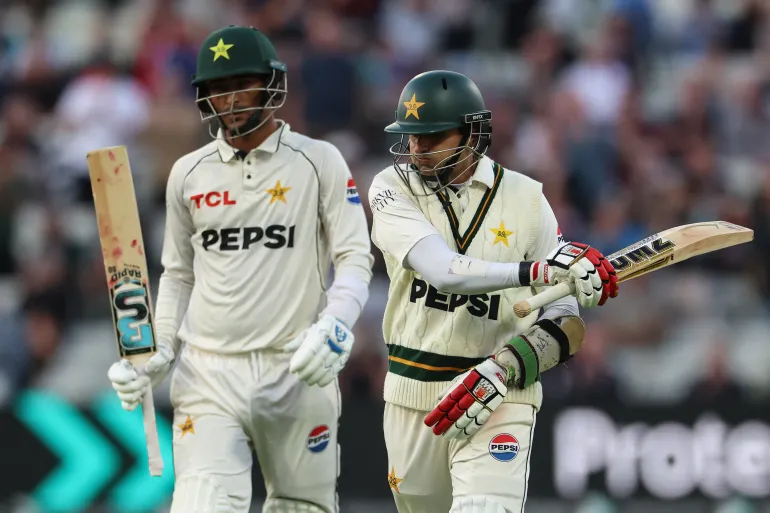
Pakistan were deducted 11 points in the World Test Championship and their players docked 50 percent of the match fees due to a slow over rate during last week’s Test match against England in Birmingham, the International Cricket Council (ICC) has said.
The visitors were 11 overs short of their target as England won the match by eight wickets to sweep the series, the ICC said in a statement on Monday.
The sanction was imposed by Ranjan Madugalle of the Emirates ICC Elite Panel of Match Referees after on-field umpires Paul Reiffel and Chris Gaffaney, third umpire Allahudien Palekar and fourth umpire Russell Warren levelled the charge.
The deduction leaves Pakistan rooted to the bottom of the standings with five points in nine matches.
Australia, who have won eight of their 10 Tests in the current cycle, lead the table with defending champions South Africa second.
The top two teams meet in the final at the Oval in London in June 2027.
Pakistan’s next Tests are against Sri Lanka in a two-match home series in November.
It was England’s first Test series win since 2024, while Pakistan have now lost 16 of their last 21 games.
Root’s men had appeared set for a quickfire win in three days on Friday before debutant fast bowler Razaullah launched an audacious assault with the bat, clubbing nine sixes as he raced to 81 off 63 balls.
The 21-year-old number nine, who also took four wickets in England’s first innings, put on 121 for the ninth wicket with fellow paceman Abbas (42) as England floundered.
Razaullah’s heroics changed the mood music, but they came too little, too late for Pakistan, who endured a miserable series, losing the first Test by an innings and 103runs and the second by 194 runs.
The tourists sent seven players home after their crushing defeat in the second Test at Lord’s and brought in seven replacements, with Razaullah among them.
They also sacked head coach Sarfaraz Ahmed and assistant Umar Gul as their tour descended into chaos.
Pakistan made four changes to their side for the third Test, and they put up a fight despite being dismissed for a paltry 133 in their first innings.
Captain Babar Azam admitted his team would have to take stock after a one-sided series.
“We had a couple of changes after losing two matches. Playing in England is very difficult. We were trying to do our best in the third match,” he said.
“We need to sit down and look hard at our mistakes, decide our playing XI.”
[Aljazeera]
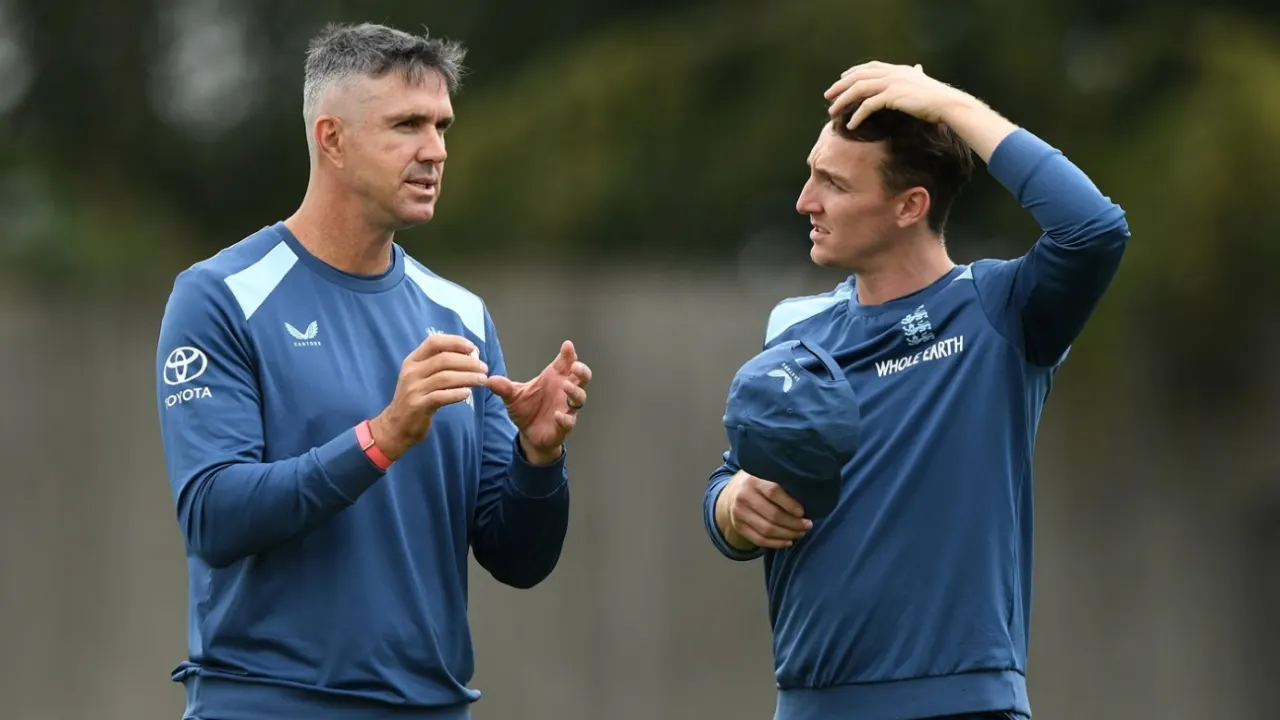
In flashing bright neon the warning signs are there, clear for all to see. And if you’re of Sri Lankan persuasion, the overhead announcement is likely already underway to assume the brace position ahead of the upcoming spate of white-ball fixtures against England. This one won’t be easy, folks.
Sri Lanka’s last white-ball tour of England came in 2021, and if the two thumping defeats in their warm-up fixtures to England Lions are anything to go by it seems they would do well to steer clear of a similar whitewash. Another fairly obvious omen is Sri Lanka’s recent T20I record, which has seen 10 losses across their 15 completed matches this year.
Against England, meanwhile, they have lost each of their past 12 T20Is with their last victory coming at The Oval back in May 2014 – one of three victories away to England in seven attempts.
Then we get to England’s current form, which has seen them as recently as this past July drub the reigning world champions, India, 4-0. So yeah, it’s hard not to fear the worst for the visitors.
The weather, expected to be wet, could be a buffer of sorts, while the pitches towards the end of the English summer are potentially now drier and – Sri Lanka hope – might aid spin. Indeed, the Lankans have stacked their squad with four spin-bowling options, and will be banking heavily on the likes of Maheesh Theekshana and Wanindu Hasaranga – both of whom sat out the warm up games – to stymie an English batting unit that seems to be permanently stuck in top gear.
But this a Lankan unit with the capacity to land hefty blows. Even in the absence of talismanic skipper Kusal Mendis, Sri Lanka have genuine firepower at the top of the order in Pathum Nissanka and Kamil Mishara, while the return of Charith Asalanka – catapulted from outcast to skipper in the span of a few months – offers grit and power in the middle.
The question however will be if they’re able to perform at the level needed consistently enough to challenge a finely-tuned English white-ball machine.
While the focus might usually be on how Sri Lanka handle pace and bounce ahead of an England tour, at the tail end of particularly hot summer, it’s Adil Rashid’s legbreaks that might have the visitors sweating. While the traditional view of subcontinental teams is that they are competent players of spin, when it comes to Rashid and Sri Lanka that narrative has been flipped on its head.
Rashid enters this series in exceptional T20I form. In 2026, he has claimed 24 wickets while maintaining an overall economy rate of 7.98. Across 16 games in this period he’s gone wicketless just twice. But these numbers improve significantly when he faces Sri Lanka, against whom he has taken 17 wickets at an average of just 13.76 and strike rate of 15. More impressively, he has completely suffocated their scoring options, operating at an outstanding economy rate of 5.48 – by a distance his best against any side he has faced more than once.
In February Dushmantha Chameera recorded his career-best T20I figures of 5 for 24 against England in Pallekelle. He carried that momentum into the T20 World Cup, finishing the tournament with 10 wickets across six matches as Sri Lanka’s most reliable fast-bowling option. His 20wickets in 2026 have come at a strike rate of just 12.
However, Chameera’s immediate form heading into the opening T20I is worrying. Returning from a groin strain, he has looked understandably rusty during the recent warm-up games. In Chelmsford, he was taken apart for 34 runs in just 1.2 overs, followed by another tough outing at Beckenham where he conceded 23 runs in 1.2 overs without taking a wicket. If Chameera can shake off his recent match rust and find rhythm early on, his extra bounce and pace can genuinely trouble England’s top order. But if he struggles with his radar, a flat Southampton surface could prove punishing.
England have rung in the the changes, some enforced others by way of rotation. Phil Salt (quadriceps), Jacob Bethell (knee) and Sam Curran (groin) all miss out through injury, which sees Sonny Baker, Jamie Overton and debutant Aneurin Donald make their way in. There’s also a first T20I since October 2025 for Jordan Cox. Jofra Archer meanwhile gets a rest off the back of the Test series with Pakistan; he is expected to come in for Josh Tongue for the second T20I.
England: Aneurin Donald, Jos Buttler (capt & wk), Harry Brook, Tom Banton, Jordan Cox, Will Jacks, Jamie Overton, Liam Dawson, Josh Tongue, Sonny Baker, Adil Rashid
Sri Lanka are expected to go with five frontline bowling options, which indicates towards the inclusion of the ambidextrous spinner Tharindu Ratnayake, who impressed in the warm-up games with the bat.
Sri Lanka: (probable) Pathum Nissanka, Kamil Mishara (wk), Kamindu Mendis, Charith Asalanka (capt), Janith Liyanage, Dasun Shanaka Tharindu Ratnayake Wanindu Hasaranga Maheesh Theekshana Dushmantha Chameera Eshan Malinga
[Cricinfo]

Draft of the Appropriation Bill for the Financial Year 2027 su mitted to the Parliament
Cabinet approves aditional Rs. 2,500 million to the Paddy Marketing Board to purchase 2026 Yala harvest
Cabinet nod to host the 8th Asian Regional Conference of the Commonwealth Parliamentary Association and the 3rd Joint Asian and South-East Asian Regional Conference of the Commonwealth Parliamentary Association

SAARC Training Workshop on Financial Modeling for Renewable Energy Projects from 5th to 7th October in Colombo
National Children’s Week from 25th September to 01st October

Nairobi and Munich to host 2029 and 2031 World Athletics Championships

‘Dates have the highest sugar content to fight Coronavirus’

Sunday Island 27 December – Headlines

#SundayIsland 17th December – Headlines

Sunday Island – 28th March

Sunday Island Headlines – 21 March

Sunday Island – 21st February – Headlines
-

 Sports5 days ago
DDS set to lose Test captaincy
-

 News5 days ago
Sri Lanka faces new grid challenge as rooftop solar surges: former CEB GM
-

 Latest News5 days ago
Shafali, Deepti power India into sixth T20 Asia Cup final
-

 Opinion7 days ago
Navigating Sri Lanka’s Israeli Dilemma
-

 Latest News4 days ago
Sri Lanka thwart Fatima Sana challenge to secure Asia Cup final spot
-

 News3 days ago
Gnanasara Thero absconding after SC ruling
-

 Features6 days ago
Lost for 90 years: Rare Goby resurfaces in Jaffna
-

 News4 days ago
Ammunition cache found in old Kandy bungalow