
Sports
Three questions for Sri Lanka, three questions for Bangladesh

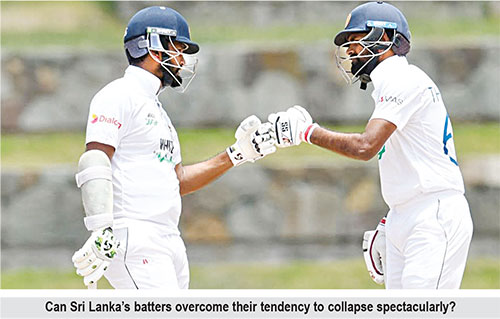
The two-match series in Pallekele will present two uncertain teams a stiff examination of their Test-match mettle Sri Lanka are seventh in the Test rankings, and have not won a match against top-nine opposition since August 2019. Bangladesh are ranked ninth and are coming off a difficult 2-0 Test defeat at home to West Indies. ESPNcricinfo looks at some of the biggest challenges the two teams will attempt to overcome through the course of their two-Test series in Pallekele.
Sri Lanka
Spin bowling
To win in Sri Lanka, spinners generally need to take a lot of wickets. One of Sri Lanka’s problems has been that since the retirement of Rangana Herath, their spin attack has fallen away somewhat. Where their spinners collectively averaged 27.80 at home in Herath’s last three years, they average 32.62 since his exit.
In this series, they will be without Lasith Embuldeniya, their most promising slow-bowling prospect, after he picked up a serious soft-tissue injury in the Caribbean. They are also without Dilruwan Perera, whose effectiveness had dipped substantially (he averages 32.17 at home since Herath’s retirement in November 2018). They’ll likely rely on wristspin via Wanindu Hasaranga or Lakshan Sandakan (or both), with Dhananjaya de Silva’s offspin in support. But neither Hasaranga nor Sandakan have seemed up to leading a Test attack so far, partly because their control has been inconsistent between spells.
Although this series is being played in Pallekele where seamers may play more of a role than they do in Galle, Sri Lanka will likely need big wickets from the spinners too.
Batting collapses
Although since December Sri Lanka’s batting has been sporadically impressive, such as in the first innings at Centurion or the second innings at North Sound, these successes have been interspersed with dramatic, harrowing collapses. In their last 12 Test innings, Sri Lanka have failed to make 200 on five occasions. Two of the worst nosedives came in their last series at home, against England, against modest bowling, when they were out for 135 and 126 – innings in which they surrendered the series. If they go into self-destruct mode again, they could cede another match.
Fitness
Coach Mickey Arthur has been adamant that players raise their standards, and have ruled certain players out of contention purely on fitness grounds. And still, Sri Lanka’s long history with muscle and soft-tissue injuries continues to plague them. In addition to being without Embuldeniya in this series, they are also missing seamer Kasun Rajitha, while rookie batter Pathum Nissanka has been struggling with a niggle as well (but is expected to be fit for the series). There are many theories on why injuries seem to plague Sri Lanka more than most other teams. Some find fault with the conditioning, others point to a lack of recent cricket, or to developmental issues going back to the players’ formative years. Whatever the case, rare is the series from which Sri Lanka emerge with all their key players intact.
Bangladesh
Overseas troubles
 Bangladesh’s Test record is such that it is considered inevitable they will not threaten on foreign soil. They have won only one away Test in the last five years, and since that one win, which came in Sri Lanka in 2017, they have lost each of their nine Tests on the road, all by heavy margins.
A big part of their problem is the inability to take 20 wickets abroad – a feat they have only managed five times in their history. Their spinners have been effective on favourable pitches at home, but these have left the fast bowlers with little to do. This lack of bowling at home translates into a lack of rhythm and effectiveness abroad. It has been eight years since a Bangladesh fast bowler won them an overseas Test.
The Shakib-sized hole
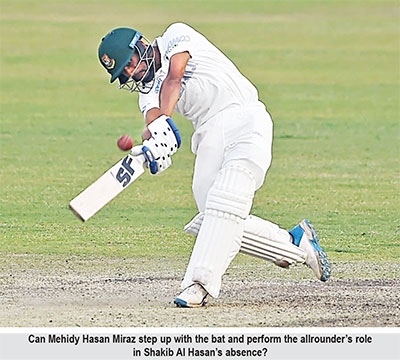
What would make it more difficult for Bangladesh in Sri Lanka this time is Shakib Al Hasan’s absence. His stature as a Test allrounder makes him particularly difficult to replace. Mehidy Hasan Miraz performed admirably against West Indies recently but he has a lot to do to earn the allrounder’s tag. This time the selectors have picked the 34-year old Shuvagata Hom as a batting allrounder when five years ago, during his last Test appearance, he was counted as a bowling allrounder. This is the sort of confusion that can arise when Shakib isn’t around; no Shakib is always an advantage to the opposition.
Catching
Bangladesh’s catching was one of the most worrying aspects of their disastrous New Zealand tour last month. They dropped ten catches in the ODIs and T20Is, which cost them results and momentum, and netted a bit of embarrassment as well. When the team returned from the tour, newcomer Nasum Ahmedoffered an explanation for the dropped catches that was the stuff of internet memes: “Their sky is very clear and their weather is nothing like ours.”
The real story, however, was different. The 2-0 home defeat to West Indies in February shook the team, leading to a team-wide lack of confidence. As is often the case in cricket, this lack of confidence made for a poor fielding side.
(ESPN Cricinfo)


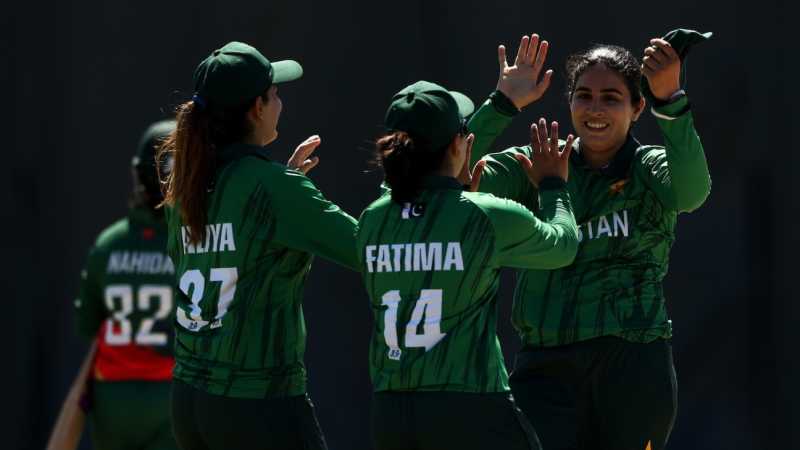
At 67 for 5 in the 12th over, Pakistan were under the cosh against Bqngladesh in their bronze-medal playoff at the Asian Games women’s competition. That’s when Fatima Sana walked out, slammed 45 in 30 balls, and gave Pakistan 145, which was 31 too many for Bangladesh, especially after Umm-e-Hani picked up three top- and middle-order wickets to end with 3 for 10 from her four overs.
Bangladesh’s big concern, of late and in general, has been the number of dot balls they play out in a typical T20 innings. In this game, it was a marginal improvement from the loss to India in the semi-final – they had 43 dot balls here compared to 61 in that game. But it was still fewer than the 48 they bowled to Pakistan in the first half. The difference was Sana, who scored at 150.00 to change the complexion of the contest.
Pakistan’s start had been decent, thanks to Gull Feroza, after they won the toss and opted to bat. Feroza and Shawaal Zulfiqar added 46 in 41 balls before being separated in the seventh over. The one to be dismissed was Feroza, who had scored 31 in 23 balls. Zulfiqar batted on before becoming the third batter to fall, having struggled to 17 off 27 balls. And the wickets kept falling, Shorna Akter picking up two of them to leave Pakistan in a mess with five batters gone.
Sana had a solid stand for the sixth wicket with Aliya Riyaz, who scored 25 in 22 balls and added 67 with Sana in just 43 balls. The control Bangladesh had was gone with the two hitting five sixes between them.
The target for Bangladesh, which looked like it might be in the region of 100, was suddenly closer to 150. And the chase never took off. Umm-e-Hani struck in the third over, then in the fifth over, and again in the 16th over. By then, Bangladesh were floundering: 77 for 5 with under five overs to go.
The resistance came from senior pro Sharmin Akther, who scored an unbeaten 46 in 45 balls, but there was nothing around her, and Pakistan ran out comfortable, 31-run victors.
Scores:
Pakistan women 145 for 8 in 20 overs (Shawaal Zulfiqar 17, Fatima Sana 45, Gull Feroza 31, Aliya Riyaz 25; Sanija Akter Meghla 1-28, Nahida Akter 2-21, Shorna Akter 2-16, Ritu Moni 2-27) beat Bangladesh women 114 for 7 in 20 overs (Dilara Akter 12, Nigar Sultana 25, Sharmin Akhter 46*, Nahida Akter 10*; Tasmia Rubab 1-25, Fatima Sana 1-25, Umm-e-Hani 3-10, Nashra Sandhu 1-19, Ayesha Zafar 1-10) by 31 runs
(Cricinfo)

India Women won the toss and chose to bat first in the Asian Games women’s cricket final in Nishin, Japan.
India: Smriti Mandhana, Shafali Verma, G Kamalini, Harmanpreet Kaur (capt), Richa Ghosh (wk), Bharti Fulmali, Deepti Sharma, Shreyanka Patil, Kranti Gaud, N Shree Charani, Nandani Sharma
Sri Lanka: Imesha Dulani, Chamari Athapaththu (capt), Hasini Perera, Kavisha Dilhari, Harshitha Samarawickrama, Hansima Karunaratne, Kaushini Nuthyangana (wk), Kawya Kavindi, Mithali Ayodhya, Chamudi Praboda, Sugandika Kumari
(Cricinfo)
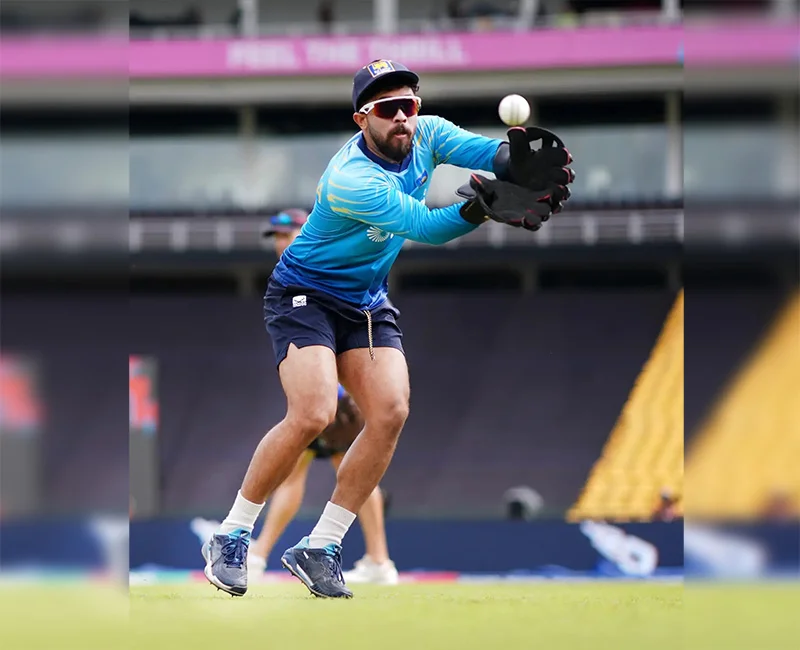
The reins of Sri Lanka’s ODI captaincy will return to Kusal Mendis as the wicketkeeper batter makes his international comeback following a lengthy injury lay off.
Mendis, a regular across all three formats for much of the last decade, was forced into a rare spell on the sidelines after suffering a hamstring injury during the LPL.
The injury ruled him out of the home Test series against India and he subsequently missed the T20I leg of the tour of England, with Charith Asalanka taking over the captaincy. Mendis will lead the side today in the first ODI against England.
 Mendis had returned to action for SSC in last week’s domestic T20 tournament, featuring in both the semi-final and final. He struck a crucial half-century in the semi-final against NCC to help SSC book their place in the final and having proved his match fitness, was flown to England to take charge of the ODI side.
Sri Lanka will hope his return can provide the spark that was conspicuously absent during a chastening T20I series, where the tourists were swept 3-0.
More worrying than the scoreline was the manner of the defeats. Sri Lanka barely landed a punch, with the batting repeatedly folding and the side often failing to use its full quota of 20 overs. It is hardly a new headache either. The shortcomings of the batting unit in the shortest format have been evident for some time, but a remedy remains elusive.
The fact that not a single Sri Lankan batter managed a half-century throughout the three match series only underlined the scale of the problem.
Today’s game will be played at Chester-le-Street in Durham, the northernmost international cricket venue in England. A short drive from Scotland, Durham was also once home to Sri Lankan great Kumar Sangakkara, who had a stint in county cricket with the club.
All-rounder Janith Liyanage, who has developed into a steadying influence in the middle order, is expected to feature, while prolific young run scorer Pavan Rathnayake is also pushing strongly for a place.
Sri Lanka also have the option of promoting Kamil Mishara to open alongside Pathum Nissanka, which would preserve the left-hand, right-hand combination at the top of the order.
Asitha Fernando, who did not feature in the T20I series, returns for the ODIs and is tipped to share the new ball with Dushmantha Chameera. The third seamer’s berth appears to be a toss up between Dilshan Madushanka and Eshan Malinga.
There is no shortage of spin either, with Sri Lanka having to choose from Maheesh Theekshana, Dunith Wellalage and uncapped leg-spinner Sachindu Colombage.
Today’s game gets underway at 5pm Sri Lanka time.
The second match will be played at Headingley on Thursday before the tour concludes in London on Sunday, with The Oval hosting the final ODI, a day game beginning at 3pm Sri Lanka time.

Fatima Sana and Umm-e-Hani secure bronze for Pakistan in Asian Games

India bat first in Asian games womens cricket final

Showers about 100mm will occur in the Western, Sabaragamuwa, Central and North-western provinces and in Galle and Matara Districts

Govt. confident of 2/3 majority despite NPP split speculation

Justice Corea appointed Acting President of the Court of Appeal

Protest against setting up of cement factory in highly populated area near BIA

‘Dates have the highest sugar content to fight Coronavirus’

Sunday Island 27 December – Headlines

#SundayIsland 17th December – Headlines

Sunday Island – 28th March

Sunday Island Headlines – 21 March

Sunday Island – 21st February – Headlines
-

 News5 days ago
US embassy won’t comment on IGP’s probe into joint drug raid
-

 News4 days ago
Bid for Basil’s extradition nears final stage: Police
-

 News3 days ago
Shanakiyan urges urgent action over reported death sentence for Lankan in Saudi Arabia
-

 Business5 days ago
All-new Bolero MaXX unveiled in Sri Lanka
-

 News2 days ago
Namal Rajapaksa Buddhist gambit fails, bail denied
-

 Opinion5 days ago
A journalist who wrote across the divide
-

 Editorial6 days ago
More fuel price shocks shrouded in secrecy
-
 Sports6 days ago
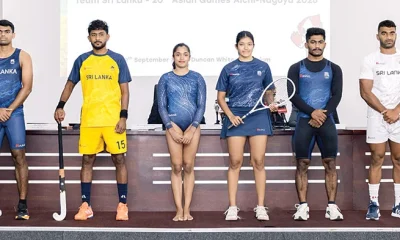
MAS Holdings, official clothing sponsor of Sri Lanka team at Aichi–Nagoya 2026 Asian Games