
Features
Aragalaya gathers steam and GR is forced to abdicate

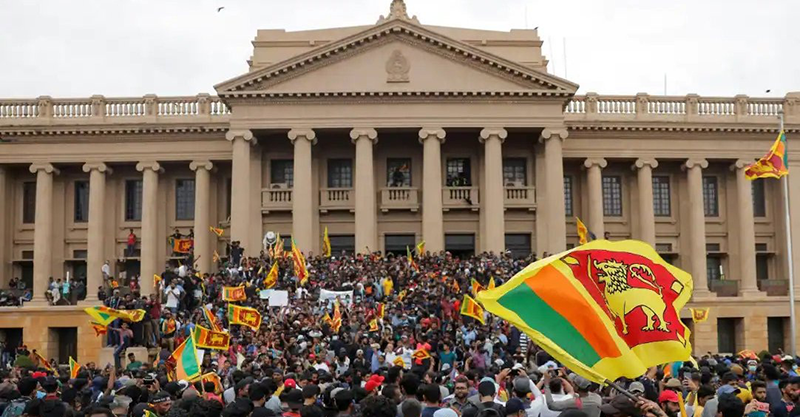
FSP outdid JVP in providing muscle to Gall Face protesters
(Excerpted from Vol. 3 of the Sarath Amunugama autobiography) ✍️
Mostly due to the day long power cuts, non-availability of essential commodities and constant discussion about rampant corruption and family bandyism, middle class people began to come onto the streets. They attempted to set up candle light vigils since they were driven out of their unlit homes. This was the first time that professionals in large numbers began to experience such direct action. A leader was necessary to galvanize these new protesters. This leadership was provided by Hirunika Premachandra of the Samagi Jana Balavegaya. She was the daughter of a radical politician who had been killed in a political fracas between two gangs which were loyal to MR.
With the Rajapaksas backing the more powerful opposing side, Hirunika and her radical followers joined the UNP and later the SJB. She became the darling of the Aragalaya. Hirunika was adept at embarrassing GR by focusing on his weaknesses. It was rumoured that GR was brainwashed by a “miracle worker” called Gnana Akka who had a shrine in Anuradhapura. The President was following the far out recommendations of this shaman and was seen visiting her shrine frequently for domestic favours. What was even more reprehensible was that armed services personnel were used to build her a shrine and a nearby hotel.
Maithripala Sirisena told me that Gnana Akka had been a hospital attendant who became a soothsayer after suffering the trauma of seeing her husband murdered by the JVP. She had been interdicted by the health authorities but with her reputation rising among politicians and armed service bigwigs he had rehired her as the telephonist at the Anuradhapura state hospital. Her reputation had soared during the ethnic war because many army high-ups were located in Anuradhapura. With many risks taken in the battlefield they sought her mystic reassurances of safety and long life. Hirunika broke this bubble by leading a demonstration of her supporters, mostly females, to surround Gnana Akka’s premises and even clash with the armed guards who had been deployed there.
This embarrassed GR but more was to come. On the evening of Thursday 31st Hirunika brought out a number of suburbanites in the Nugegoda area for a candle lit vigil to protest the power cuts which were affecting them badly. Unlike the Colombo rich who had the means to invest in power generators, suburbanites were particularly vulnerable. The number of protesters grew and when information reached them that GR and his wife were at that time in their private residence in Pangiriwatte Lane, they began to march towards the poorly guarded residence.
Still at this stage GR could not believe that he had become unpopular. I had visited his residence several times before GR became President. It was a simple house with a newly constructed annexe. What struck me was the number of books and Buddha statutes that were strewn all over his sitting area. GR also had an impressive library. He was known to be the most erudite of the Rajapaksa family, which never claimed to be very educated. The Pangriwatta house was not well protected and did not even have a second exit in case of a crisis.
On this day fighting broke out and it was later divulged that the security apparatus – particularly the Army – did not respond promptly and effectively. Several vehicles including a bus was set on fire. In the meanwhile television, particularly a channel that gave much publicity to the Aragalaya, went `live’ on this encounter and the country was made privy to the helplessness of its leader in the face of a determined opposition.
With TV showing the fighting around Pangiriwatte lane many “Colombians” moved towards Mirihana – some to enjoy the spectacle of their President besieged by a group of ladies led by Hirunika. She had been traumatized by the decision of the Rajapaksas to back her father’s killers. This led her to the UNP and later to the SJB where she shot to fame as an active member of Parliament. Hirunika took a particular delight in attacking the Rajapaksas. As mentioned earlier she had led a demonstration in Anuradhapura against “Gnana Akka”. This led to the secrets of the GR-Gnana mystical connection being aired in public.
The Aragalaya paved the way for a large number of women to enter the public domain. This was not surprising since they had to bear the brunt of the shortages in the country. For instance TV cameras panned to desperate women in suburban high rises who had no access to electricity, gas, water, sanitation and other services which left them marooned and desperate on the top floors of their buildings. On the other hand university teachers, especially women teachers, turned up in strength sending the message that all classes were presently suffering.
An important consequence of the Aragalaya was that the populace began to find a new respect for intellectuals as witnessed by the emphasis placed by all parties to “Viyath” or candidates with high academic qualifications in their electoral lists. In contrast to the traditional left that attempted to foster workers representatives [eg; DG William, Pantis, Wimalasena, Piyadasa etc] the JVP and the new Left forgot the workers and emphasized their links with Universities and “intellectuals” to give them credibility with middle class voters [eg. Harini Amarasuriya and the group of women MPs from the NPP].
Minorities
A noticeable sociological fact was the strong support given to the Aragalaya by minorities. They were responding to many slights that GR had visited on them. GR was behaving in a foolish way by tilting away from the traditional middle ground in ethnic relations that all previous Presidents had followed. For instance MR as President would emphasize the multi-ethnic, multi religious character of the Sri Lankan state. He even went further by addressing minorities in Tamil language. GR, who was a captive of the hard “Sinhala Right” led by “Jatika Chintanayists” took great pains to identify himself with the majority and distance himself from the minorities, whom he openly accused of not voting for him.
To emphasize his Sinhala Buddhist vote base he took his oaths in Anuradhapura – the Sinhala Buddhist heartland. A committee was appointed to “Save ancient Buddhist sites” in Northern and Eastern provinces. This triggered a series of confrontations between the Tamils, Muslims and Sinhalese extremists who had been held in check by the Yahapalana regime. While justifying his actions by referring to constitutional provisions for the safeguarding of Buddhism, GR also set up a “Supreme Council” of senior Buddhist monks which was a long time request of the Jatika Chintanaya. GR was the only President who took the ideas of JC ideologue Nalin de Silva seriously and thereby alienated the majority of citizens of all races and religions who opted for coexistence and harmony in a modern Sri Lankan state.
In an obvious display of his fealty to JC he appointed Nalin de Silva as our Ambassador to Myanmar. De Silva who resigned his post after a short stay in Myanmar became a dedicated opponent of Aragalaya. With the success of the Aragalaya he migrated to the US and began a polemical battle with “anti-national” elements but he died not long after.
Another decision which riled the minorities was the use of armed services to construct Buddhist shrines. A religious site in Kaltota near Balangoda was shared by both Buddhists and Muslims in the area. The Muslims called it Dafter Zailani after a saint who was said to be buried there. When I was the AGA of Ratnapura in 1964 I visited this site after complaints of religious clashes were reported to government. I worked out a compromise with the villagers of both communities.
Conflict was ignited mainly by urban Buddhists and Muslims who saw political opportunities in this situation. Balangoda was an electorate which had a large Muslim population and would even elect a Muslim – Aboosally – as a UNP MP battling it out with the Ratwattes in their home town. An activist Buddhist monk from Kandy started a campaign to make an urban type temple in Kaltota with a lot of publicity in the Sinhala media. He had managed to get the support of the army chief Shavendra Silva and GR who deployed army engineers to construct a mammoth and, garish, edifice full of symbolism with lions guarding the temple entrance. Kaltota was converted into a Buddhist pilgrimage site with all its attendant commercial ventures including the sale of gifts, “puja” offerings, amulets and talismans – a modern phenomenon well documented for northern Thailand by Stanley Tambiah in his monumental work on Thai Buddhism.
Catholics in the country were traumatized by the Easter bombings. With over 250 worshipers killed and over 500 injured it was by far the biggest blow to the church in modern times. It was made possible by the monumental stupidity of our intelligence authorities and negligence by political authorities. The world wide protest was led by Cardinal Malcolm Ranjith and it drew the support of even the Pope. They all with one voice called for a full and fair inquiry and were not satisfied with the follow-up by the GR administration. Thus a large number of Catholics, as well as Christians, were seen among the protesters.
They in their religious habits were easily visible in the Aragalaya. Young priests who mingled with the protesters invoked the image of Jesus of Nazareth – the scourge of the Pharisees and the money lenders who populated the Temple [Trees?]. All in all it was clear that the minorities who had voted against GR in the Presidential contest were energized by the Aragalaya. They were its well wishers as seen in the positive interventions like those of MP and distinguished lawyer Sumanthiran regularly in Parliament and in the courts on behalf of the protesters.
Political interventions
As to be expected Aragalaya which arose out of the desperation of the public at the unprecedented breakdown of public utilities, drew the attention of political parties in the Opposition. The SJB which sought to capitalize on the failures of the GR regime attempted to intervene with Sajith Premadasa and a few front rankers visiting Galle Face. However they were thwarted when encircled by JVP and FSP activists who were camping out in the field. A well known JVP actor threatened bodily harm and Sajith and his advisors had to beat a hasty retreat. However support to the Aragalaya came from the SJB and UNP through covert means when their rich supporters began to provide food supplies to the “hard core” camping out in the green.
This was popularly known as “Buriyani” assistance as TV cameras caught food trucks rolling in with supplies. The real beneficiary of this activity was Ranil who was “the last man standing” when GR later began a bargain basement sale of the premiership. This led to the remarkable ascent which carried him to the Presidency for the remaining tenure of the ousted GR.
We can now turn to the role of the Marxist parties that formed a strong protective ring for the Aragalaya. The old left parties – the LSSP and C -, were shown up as having no strength to intervene significantly at this juncture. As coalition partners of the Rajapaksas they had expended their political capital and except for individual contributions of veterans like DEW Gunasekera, they had nothing left to offer. The two main leftist parties in contention in the Aragalaya were the JVP [and their umbrella front the NPP] and the Frontline Socialist Party [FSP] popularly known as the Peratugamis. Both drew their origins from Wijeweeras JVP and were former comrades who had split on both ideological and organizational issues which followed the JVP decision to support the SLFP on two previous occasions. While Anura Dissanayake and Tilvin Silva led the JVP\NPP Kumar Gunaratnam led the FSP.
It was Lenin, not Marx, who was the ideologue and tactician of the October uprising. Lenin’s Bolshevik party which was only nominally a working class party, made use of the revolutionary situation created by the mutiny of the Czars navy and army. In this melee Lenin with his small but disciplined Bolshevik party co-opted the Mensheviks led by Trotsky and gave leadership to an insurrection. He propounded the theory of the “Vanguard party” in a non industrialized society which was symbolized by his Bolshevik party.
Both the JVP and the FSP recognized the potential of the Aragalaya which seemed to them to make Lenin’s strategy replicable in the emerging local context. Perhaps they imagined a St Petersburg in the congregation in Galle Face and other spots in the densely populated working class districts of Colombo where workers and lower middle class people were trapped in high rise buildings. But while Lenin could mobilize cadres from the armed services especially for the attack on the Winter Palace, on the banks of the river Neva, both the JVP and the FSP had to depend on their youth organizations as their shock troops.
In this the FSP was far ahead of the JVP. The FSP had their tightly organized “Antare” or University Students Federation which they had taken over from the JVP having used many tactics including physical violence. The “ragging” which greeted new entrants was turned into a violent induction into the “Antare” which even the JVP compared to a fascist organization. Ignoring a hoary tradition in our state universities they prohibited speakers of other political persuasions, including the JVP from setting foot on the Campus. The FSP/Antare could mobilize an impressive “army” of radical university students who would march almost every week along the streets of Colombo thereby keeping up the tempo of the protests and exposing the unpreparedness of the Police who any way was demoralized by GRs inactivity.
The “Antare” and its young leaders like Mudalige and Nagamuwa who were photogenic and vocal, gave a head start to the FSP and Kumar Gunaratnam’s tactics seemed to have an effect on the wider public. The JVP, without a similarly strong youth front, had to fall back on their trade unions and urban party cadres to make an impression. This naturally highlighted the role of Lal Kantha their trade union boss [assisted by Handunnetti in charge of University agitation] who was a maverick thinker in the leadership ranks of the JVP. Every time the non political protesters were under threat the large scale demonstrations of the Antare and the trade unions of the JVP, which regularly filled the streets with their supporters thereby getting extensive live TV coverage, gave them confidence and indeed brought more of their ranks to Galle Face.
Unlike later under the Ranil administration, the Police response was a guarded one. After a dousing from the Police water cannons the student demonstrators dispersed without much violence. However the President was increasingly under siege. He was forced to abandon his office and transfer his location to the Presidents House which was a strategic mistake since this left the whole Galle Face area in the hands of the Aragalayites. They cheekily focused an improvised “light and shadow” display on the outer walls of the Presidents office. GR was unable to go to his own office and had to operate from the Presidential Palace. The armed services were unable to get the head of state to function from his own office.
Panic sets in
With the demonstrations increasing in tempo GR began to examine his options. Since he was not an office bearer of the SLPP he was cut off from the party machinery and had to depend on the advice of a few Ministers. The SLPP bank benchers had no access to him and were grumbling that mismanagement had led to a break down of civic life which prevented them from even visiting their electorates. The economic crisis prevented any compensatory pork barrel financing at electorate level. Their cry for vehicle permits and other “perks” were ignored by GR who was facing an empty exchequer.
Since one of the main complaints of the Aragalaya was about family bandyism, GR was advised to remove Mahinda and Basil Rajapaksa from their respective portfolios. Basil [a. k. a Kaputa] who was singled out as the main culprit of the debacle resigned his finance minister’s portfolio on June 9. 2022 adding to the momentum of the insurgents which was gathering steam by the day. This led to a family conflict with GR requesting MR also to step down while the latter’s immediate family was strongly against such a move.
This put MR in a spot even though, in fairness to the former President, he had indicated that he was willing to step down. He had confided in his favourite editor of a Sinhala newspaper, who was a go between him and GR, that he should be summarily sacked by the President so that he would not have to face his family who was pressing him not to resign. It was this tug of war that probably led to a pivotal act of folly which finally led to the downfall of GR and the Rajapaksa regime.
(Available at Vijitha Yapa Bookshop)


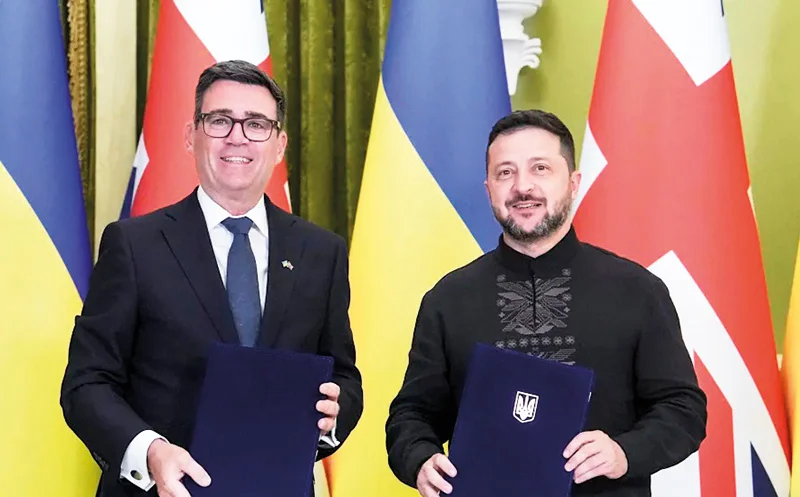
 The present offer by the UK to strengthen Ukraine’s defense capabilities in the missile technology field in particular comes as ‘a stitch in time’ and the initiative is also likely to be appreciated considerably by democratic opinion world wide for the possible morale-boosting effect it would have on Ukraine. Besides continuous arms support, the conviction that the world’s frontline democracies are behind it would prove a huge plus in Ukraine’s eyes in its grinding fightback against the Russian invasion.
While continued US support for Ukraine could not be considered ‘a given’ any more, British Prime Minister Andy Burnham’s words during a recent visit to Kyiv that the UK would stand by Ukraine ‘for as long as it takes’ is the kind of assurance that Ukraine needs at present. For, the conflict in Ukraine is essentially a war of liberation conducted by the latter against an invader and deeply at issue here is the upholding of International Law and its foundational concepts, such as national sovereignty and a nation’s right to political self-determination. The world of democracy is of the firm view that the latter ideals cannot be compromised, come what may.
The UK has its work cut out in this connection. It would find it difficult to convince the Trump administration that it should staunchly stand by Ukraine but it could campaign vigorously with the rest of the West and the EU fold in particular to unflaggingly support the embattled and over-run country.
Ukraine has shown an impressive adeptness in using drone technology in particular against her enemy and has even manufactured her own hardware in this respect but using the relevant blueprints handed over by the UK for the manufacture of more sophisticated cruise missiles, for instance, may prove financially difficult, going forward. It is left to be seen whether the UK and the rest of the West who are with Ukraine will continue to be with her, considering their own rising financial constraints.
The latter impediments could only multiply in the future. Oil, gas and energy prices are on the rise and the latter costs are glaringly reflected in kitchens and meal tables the world over. As we go along consumer discontent would steadily intensify and governments, East and West, would need to figure out with considerable rigour and foresight how such disaffection could be ably managed. Failing which, in most democratic societies, the chances are that publics would be out on the streets demanding that their grievances be redressed forthwith.
These rising concerns are reflected in a recent move by some EU governments to consider imposing what is described as ‘a windfall tax’ on the profits specified major oil companies operating within their shores have made in the wake of the US-Israel war on Iran. The rationale apparently is to use such tax earnings to cushion the rising cost of living of their publics and bolster the respective countries’ social expenditure.
In a recent letter to the president of the EU Council the EU governments referred to said, among other things, while drawing attention to the ‘discontent that is growing over the rising cost of living’: ‘A common approach’ is needed that ‘ensures those who profit from the crisis contribute their share to reducing the burden on the general population.’ Meanwhile, Oxfam with reference to the above development is on record as calling for a ‘permanent windfall tax of at least 50% on profits exceeding a 10% return on investment.’
Such are the rising economic pressures on the majority of Western governments. The question to be posed is how consistent they would be in their assistance to Ukraine if they decide consensually to stand by her. The soaring cost of living in the West compels the conclusion that there could be no guarantee that Western assistance to Ukraine, particularly in the defense and security fields, would be of a longstanding kind.
Of particular concern would be the fact that the weapons systems on offer from the UK to Ukraine could be increasingly costly to manufacture going forward. Besides they would need to be manufactured and put into action without delay.
However, these considerations should in no way deflect Ukraine’s supporters from the principled policy stance of defending her to the extent possible. Because at issue is the defense of International Law and the democratic system of government from their enemies; fascism and authoritarian rule.
While during World Wars 1 and 2 the US was with the major democracies of the West, this time around with regard to Ukraine, the US has chosen to be at cross-purposes with them. For instance, in relation to tariff matters and defense expenditure, in the NATO context, the US is pursuing a hard line which puts it at polar opposites with the West. Thus it is no longer possible to talk unreservedly of a ‘Western democratic alliance’. Put plainly, the cause of democratic development has been weakened.
A measure of relief for the supporters of Ukraine in the West could come by way of the upcoming mid-term polls in the US. If the Democratic Party fares well in them the pressure would be on the Trump administration to defer to opposition opinion at home, accommodate the best interests of Ukraine in its West European policy and perhaps even work towards a diplomatic solution to the Ukraine crisis in cooperation with Russia. Accordingly, the Democratic Party would need to put the Trump administration on the defensive, so to speak.
Until such time Ukraine’s Western supporters have no choice but to remain committed to it, ensure its steadfast defense against the invasion and work judiciously towards keeping the economic pressures at home in check.
Interestingly, at the present juncture in international politics the US could be said to be more weak than strong. For example, it has to some extent been militarily humbled by Iran; so much so it is resorting to economic means to keep Iran in check.
In keeping with this strategy, the US has launched ‘a new big wave of anti-Iran economic sanctions’ at the time of writing, aimed at cutting Iran away from all its major income sources. Some of these relate to digital assets, technology, gold, aviation and shipping. The hoped for result is the complete severance of Iran from the US dollar system.
However, while the UK and EU have no choice but to adhere to their policy of backing Ukraine, going forward they would need to dialogue more closely with the US and ensure that it cooperates with them on outstanding questions, such as Ukraine and the strengthening of democracy. The well being of the world is served when the latter aim is pursued.
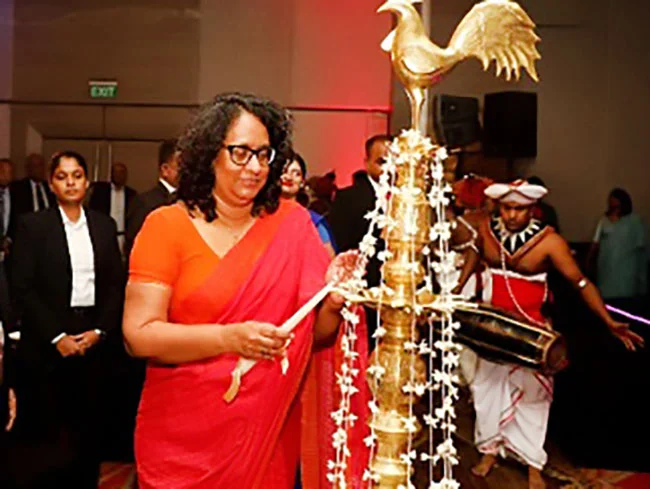
OPA 39th Annual Conference calls for Sri Lanka to move Beyond Recovery towards Sustainable Transformation
The Orgnisation of Professional Associations (OPA) successfully concluded its 39th Annual Conference, held recently at the Cinnamon Grand Colombo, under the theme “Envisioning Sri Lanka: Beyond Recovery”.
Held under the patronage of Jayantha Gallehewa, President of the OPA, with the leadership and guidance of Tisara De Silva, President-Elect and Chairman of the 39th Annual Conference, the Conference brought together leading professionals, academics, business leaders and representatives of the public and private sectors to deliberate on Sri Lanka’s next phase of national development.
The Inaugural Session, on August 2026, was graced by Prime Minister Dr. Harini Amarasuriya, as the Chief Guest; Andrew Patrick, British High Commissioner to Sri Lanka, as the Guest of Honour; and Murtaza Jafferjee, Chairman of the Advocata Institute, Sri Lanka, as the Keynote Speaker.
In her address, Prime Minister Dr. Harini Amarasuriya emphasised that overcoming the economic crisis alone should not be Sri Lanka’s ultimate objective, stressing that recovery must serve as the foundation for a broader economic and institutional transformation necessary for sustainable national progress. Reflecting on the difficult period experienced by the country, the Prime Minister noted that Sri Lanka had faced significant economic, social and institutional challenges, which had weakened public confidence and created uncertainty about the country’s future.
She stressed that “recovery only provides the foundation” and that Sri Lanka can move forward sustainably only by using that foundation to bring about meaningful transformation.
The Prime Minister observed that the theme of the OPA’s 39th Annual Conference, “Envisioning Sri Lanka: Beyond Recovery,” aptly encapsulated these national aspirations. She emphasised that Sri Lanka’s objective should not merely be to return to the conditions that existed before the crisis, but to forge a stronger national foundation characterised by robust institutions, a resilient economy, high-quality public services and an enabling environment in which every citizen has the opportunity to thrive.
She further underscored that Sri Lanka’s future development cannot be secured through economic growth and physical development alone. She emphasised that the effective mobilisation of the country’s knowledge, skills and professional expertise, is equally essential to achieving sustainable and inclusive national progress
The Technical Sessions held on 12 August 2026 brought together 19 distinguished experts and professionals representing academia, industry, banking and finance, public health, technology, management and business leadership. Their diverse expertise provided a multidisciplinary platform to examine the critical challenges, emerging opportunities and strategic choices that will shape Sri Lanka’s next phase of development, with particular emphasis on economic transformation, institutional strengthening, digitalisation, private-sector growth, human capital and sustainable development.
The deliberations were structured around four principal sub-themes: “Resilient Recovery and Sustainable Economic Development”; “Future Readiness: Innovation & Transformation”; “Policy for Impact: Advancing Equity, Sustainable Living, and National Well-Being”; and “Leadership, Governance and National Responsibility.”
Across these thematic areas, the sessions explored the structural reforms, institutional requirements and policy choices necessary to move Sri Lanka beyond economic stabilisation towards a more productive, competitive, resilient and inclusive economy. The discussions brought together diverse professional perspectives, enabling participants to examine national priorities through economic, technological, industrial, financial, social and governance lenses.
Particular emphasis was placed on the need to move beyond the diagnosis of problems towards pragmatic, evidence-based and implementable solutions. The deliberations recognised that sustainable national progress requires not only sound policies, but also effective institutions, professional competence, innovation, responsible leadership and the capacity to translate policy into tangible outcomes.
The sessions further underscored the importance of collaboration across sectors, recognising that Sri Lanka’s complex development challenges cannot be addressed in isolation. Stronger engagement among Government, private sector, professional associations, academia and civil society was identified as essential to fostering a coherent national response and ensuring that professional knowledge and expertise are effectively translated into policy and action.
Collectively, the Technical Sessions provided a substantive platform for knowledge exchange, critical reflection and forward-looking dialogue, reinforcing the OPA’s commitment to bringing the country’s professional expertise to bear on the task of building a resilient, innovative, equitable and prosperous Sri Lanka.
The OPA expressed its sincere appreciation to Prime Minister Dr. Harini Amarasuriya, the Chief Guest; Andrew Patrick, British High Commissioner to Sri Lanka and Guest of Honour; and Murtaza Jafferjee, Chairman of the Advocata Institute, Sri Lanka and Keynote Speaker, for their distinguished contributions to the Conference.
Much of what the 39th Annual Conference achieved would not have been possible without the leadership, commitment and generous contributions of Jayantha Gallehewa, President of the OPA; Tisara De Silva, President-Elect and Chairman of the 39th Annual Conference; Eng. Ravi Rupasinghe, General Secretary; Dharshana Wijemanne, Treasurer; Bhanu Wijayaratne, Convener & the Chairman of the Session Planning Committee of the 39th Annual Conference Committee, Past Presidents and Office Bearers; Presidents and representatives of Member Associations; members of the Executive Councils and General Forum; and the distinguished Session Chairmen, Resource Persons and professionals who shared their time, expertise and insights in pursuit of the Conference’s shared vision. The OPA remains immensely grateful to all those whose collective contributions enriched the 39th Annual Conference and strengthened its role as a meaningful platform for professional exchange, informed dialogue and national reflection.
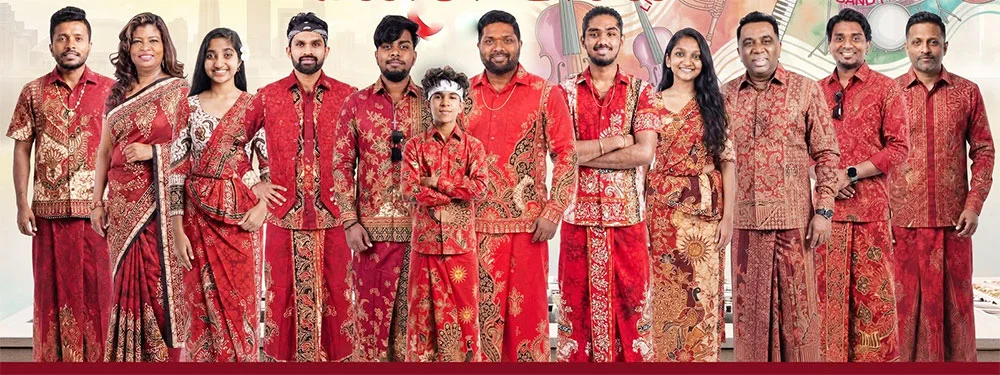
 For Sri Lankans living 14,000 kilometres from home, the sound of home has never felt closer — and that’s thanks to one man and his band.
Since stepping into the spotlight, Gamini Hemalal and the Ceymphony Band have turned into the heartbeat of the Sri Lankan community in Toronto.
Their mission is simple: bring the music, bring the memories, bring the people together. And it’s working.
What turned out to be the talk-of-the-town was their intimate musical evening with Sri Lanka’s legendary crooner Sohan Weerasinghe.

Sohan Weerasinghe: Had
everyone on their feet at the
Angus Glen Golf Club, in
Toronto, Canada
It was a ‘full house’ long before the big date. Tickets vanished within days — demand was that overwhelming.
According to those who were there, it was a truly amazing evening. The hall was packed, the energy electric. Sohan didn’t just sing — he owned the stage.
With his velvet vocals, his charm, and that signature style, he had everyone on their feet. The ladies, especially, couldn’t get enough. No wonder they call him “The Ladies’ Man!”
One attendee summed it up perfectly:
“We had so much fun. It is truly a blessing to have our kids around us, enjoying these beautiful moments together. Thank you, Gamini Hemalal, for such a wonderful evening, with an amazing crowd and an incredible atmosphere. Your hard work and dedication truly made it a special night.
“We also need to say a big thank you to the Ceymphony Band for delivering such an outstanding performance. You all were absolutely amazing! Our entire family had a fantastic time, and we truly enjoyed every moment.

Ceymphony Band: Extremely popular in the scene in Toronto
“Wishing you all continued success. Keep up the amazing work, we can’t wait for the next.”
And the next is already on the cards: ‘Halloween Pissu Baila Party 2026,’ on Friday, 30th October, at the famous Angus Glen Golf Club.
Gamini promises a crazy night of baila, music, dancing and Halloween vibes with the Ceymphony Band. Action runs from 8:00 PM to 12:00 midnight, with plenty of prizes to be won.

Gamini Hemalal: Amazing work for the Sri Lankan community,
in Toronto, Canada
Gamini is also putting together a special event, connected with the 2027 Avurudu celebrations — ‘Avurudu Musical Show 2027,’ a uniquely styled musical Avurudu celebration … Ceymphony Band style.
It’s scheduled to be held on Saturday, 10th April, 2027, also at the Angus Glen Golf Club.
Through music, Gamini Hemalal and Ceymphony are doing what diaspora bands do best — they’re shrinking the distance between two worlds.
One baila beat at a time, one full house at a time, they’re making sure that even in Canada, Sri Lankans feel like home.
Yes, there is plenty of action, indeed, for the Sri Lankan community in Toronto, Canada.

Showers above 50 mm are likely in the Western, Sabaragamuwa and North-western provinces and in Kandy, Nuwara-Eliya, Galle and Matara districts

Patali alleges NPP conspiring to put off elections indefinitely

August 15 Super Dvora tragedy: Search continues for missing officer’s body

Tripartite MoU to expand free cardiothoracic surgeries at KDU Hospital

Jaffna to mark Int’l Day of the Disappeared

Unfolding El Niño and burning issues

‘Dates have the highest sugar content to fight Coronavirus’

Sunday Island 27 December – Headlines

#SundayIsland 17th December – Headlines

Sunday Island – 28th March

Sunday Island Headlines – 21 March

Sunday Island – 21st February – Headlines
-
 News6 days ago
Country’s first woman Surveyor General appointed
-

 Business5 days ago
SriLankan Airlines makes ShakthiSAT Mission possible for talented Sri Lankan student
-
 Features6 days ago
Medical education in Sri Lanka: Then and now
-
 Latest News6 days ago
Imran Khan moved to private hospital amid deteriorating health
-
 Latest News6 days ago
Government has declared 21, 22 and 23 August 2026 as national days of mourning
-
 Features4 days ago
My secondary schooling after Royal Primary
-

 Latest News5 days ago
Tharanga edges out Chopra in 88m javelin battle
-
 News6 days ago
22A: Opp. demands all available SC judges hear petitions